Disclosure: As an Amazon Associate, dailyhomedecorating.com earns from qualifying purchases. Links on this page are affiliate links; they cost you nothing extra. Prices and availability change often, so check the current Amazon listing before you buy.
Every decor purchase has two columns, and throw pillows pros and cons are unusually household-dependent: the same pillow that transforms one family’s sofa becomes another family’s daily irritation. This article lays out both sides honestly — the genuine advantages that make throw pillows the most-used soft furnishing in many homes, and the real drawbacks that make other households give them away within a year. Neither column is universal. Your job while reading is to recognise your own household in the trade-offs: how you sit, how you wash, who shares your sofa, and how much visual calm you need. The verdict at the end is not a score; it is a matching exercise between the two columns and the way your home actually runs.
Key Takeaways
- The strongest pro is versatility: one pillow works as decor, back support, guest bedding and a lap desk.
- The strongest con is maintenance gravity: covers need washing and pillows need moving, every day, forever.
- Most cons shrink dramatically with the insert-and-cover system and a strict pillow count.
- Most pros evaporate in display-only rooms where pillows are never actually used.
- Safety is not a trade-off: pillows never belong in an infant’s sleep space, whatever the pros.
- The category rewards honest households and punishes aspirational ones.
Throw Pillows Pros And Cons — Quick Verdict: Who They Suit and Who They Do Not
Throw pillows suit households that live on their furniture: families whose sofa hosts reading, work, naps and guests; renters who need reversible change; anyone whose seating is deeper or lower than their body prefers. They do not suit households that prize clear surfaces, cannot keep a laundry rhythm for covers, or are furnishing rooms that are looked at more than lived in. Between those poles sits the majority — households that will love two or three well-chosen pillows and resent six careless ones. Almost every pro and con below scales with count and care, which is why the honest answer to the category is so often a number rather than a yes or no.
In this guide
The Pros
Pro: The Fastest Reversible Refresh in Decor
No other purchase changes a room’s character this quickly, this reversibly, or at this many price points. A pair of covers recolours a sofa in minutes; a texture swap changes its entire mood; and everything reverses without tools, holes, paint or commitment. For renters, for the trend-curious, for anyone whose taste is still forming, this is a structural advantage no furniture purchase can match. The refresh is also divisible — one cover pair at a time — so a room can evolve in small, affordable steps instead of waiting for a redecoration budget. Rooms that evolve gradually tend to end up better matched to their owners than rooms decorated in a single decisive weekend, and pillows are the mechanism that makes gradual possible.
Pro: Real Ergonomic Support
This is the pro the photographs never show and owners value most. Sofas are built to a compromise depth that fits almost nobody perfectly; a pillow behind the back shortens the seat for shorter legs, a pillow under an elbow raises a book, a lumbar fills the curve that a flat backrest ignores. Older relatives sit longer and more comfortably; readers stop shifting; laptop workers on sofas stop hunching. A furnishing that quietly improves posture and comfort for hours every day is not decoration that happens to be soft — it is equipment, and it should be judged, and bought, as equipment.
Pro: One Purchase, Many Rooms and Roles
Few household objects migrate as usefully as a pillow. The sofa’s pair becomes the guest bed’s backrests, the reading chair’s support, the floor’s extra seating when friends bring children, the car’s passenger comfort on a long drive, the lap desk under a tablet, the fort wall, the pet’s claimed throne. Each migration multiplies the value of the original purchase without any additional spend, and it is why owners consistently rate pillows as better value a year later than on delivery day: the roles accumulate in ways nobody predicted at checkout.
Pro: Seasonal and Mood Flexibility
A cover wardrobe lets one sofa dress for the year: light, matte and calm for bright months; deep, plush and warm for dark ones; something festive for a fortnight in December. The psychological effect is disproportionate to the effort — a room that changes slightly with the seasons feels attended to, and households report enjoying their main room more after a fifteen-minute rotation. Because covers store flat, this flexibility costs a drawer rather than a storage unit, which makes it available even to small homes that must refuse most other forms of seasonal decor.
Pro: Guest Comfort on Demand
Hosts gain a quiet superpower: instant comfort adjustment for bodies unlike their own. The tall uncle gets the lumbar; the grandmother gets the firm square behind her back; the overnight guest gets reading props and an extra layer of bed support. None of this requires buying guest-specific anything — the everyday set simply redeploys. Households that host even monthly find this pro alone justifies a good set, because guest comfort is remembered long after guest meals are forgotten.
Pro: Protection for Bigger Investments
Pillows take the wear so that furniture does not have to. Bodies lean on washable covers instead of sofa arms; seat cushions distribute weight more evenly when sitters are properly supported; sleeping pillows escape nightly crushing duty as reading backrests. Replacing a cover costs a fraction of reupholstering an arm or replacing a misshapen bed pillow. This protective dividend never appears in marketing, because it accrues to other products, but over years it is one of the most concrete financial arguments in the pro column.
Pro: A Low-Stakes Way to Learn Your Taste
Because covers are cheap and reversible, pillows are the safest classroom in decor. You can test whether you actually like living with saturated colour, bold pattern or heavy texture — on the furniture, in your light, with your household — before committing to any of it in paint, rugs or upholstery. A failed experiment costs one cover pair and teaches a permanent lesson. Households that use pillows this way make fewer expensive mistakes everywhere else in the home, a compounding benefit that rarely gets credited to the humble pillow that taught it.
The Cons
Con: The Daily Relocation Tax
Every pillow on a bed is moved every night and every morning; every pillow on a sofa is moved by every sitter, every day. This tax is small per movement and enormous in aggregate, and it falls unevenly — usually on whoever makes the bed and tidies the room. Sets bought beyond a household’s true count convert directly into daily labour and low-grade resentment, and the resentment attaches to the category rather than to the count where it belongs. The tax is the single most common reason pillows end up donated, and it is entirely self-inflicted at the moment of purchase.
Con: A Permanent Laundry Obligation
Covers collect dust, oils, crumbs and everything a living room produces, and they only stay pleasant if they are washed — regularly, forever. That obligation is easy to accept in theory and easy to abandon in a busy month, at which point the pillows become the least clean textiles in the room while sitting in its most prominent place. Households that cannot sustain the rhythm should treat this con as decisive rather than minor: either choose the most forgiving wash-and-go covers and build the habit, or skip the category and spend on textiles already inside an existing laundry routine.
Con: Quality Is Invisible Until It Fails
You cannot see fill density, zip quality or seam strength in a listing, and the category’s failures are slow: an insert that flattens across a season, a zip that gives up at the fourth wash, a colour that fades unevenly in sunlight. This invisibility punishes bargain hunting more than in most categories, because the cheap version often looks identical on arrival and diverges only over months. The defence is boring but effective — established brands, conservative first orders, and the fold test applied without sentimentality at every rotation.
Con: They Eat the Space They Decorate
Pillows occupy the exact resource they beautify: sitting and lying room. On small sofas and loveseats, two generous pillows can consume a third of the usable width, and on beds they consume floor or chair space for half of every day. Small homes feel this con at full strength; a studio flat has no spare surface for a pillow diaspora. The category therefore has a spatial budget as real as its financial one, and exceeding it makes a home feel smaller and more cluttered even as it looks, in a photograph, more styled.
Con: Dust and Upkeep for Sensitive Households
Stated plainly and without medical claims: soft furnishings gather household dust, and a collection of rarely washed pillows in a small, closed room is a meaningful dust reservoir. People who know they are sensitive to dust will feel this con more than others, particularly with pillows on beds where they spend the night. The con is manageable — washable covers, frequent laundering, fewer pillows in bedrooms — but it is not imaginary, and households affected should weight it heavily and take specific advice from their clinician rather than from decor content.
Con: Style Ages Faster Than Furniture
Pillow trends cycle quickly — a shape, a weave, a colour story can date within a few seasons — and a large matched set dates all at once, turning a room’s most visible accent into its most dated one. This con punishes exactly the buying pattern the photographs encourage: many, matched, fashionable. It barely touches the system buyer, whose covers are cheap to retire one pair at a time, and whose inserts and core neutrals carry on underneath the fashion layer undisturbed.
Con: The Showroom Temptation
The subtlest con is behavioural: beautiful pillows invite protection, and protected pillows corrupt a living room. When residents perch carefully, guests apologise for sitting, and children are warned away from the sofa, the room has stopped serving the household and started employing it. Any furnishing that makes people behave worse in their own home carries a real cost, and pillows — precisely because they are soft, movable and meant to be used — suffer this failure mode more visibly than most. If a set cannot be sat on freely, it is the wrong set at any price.
What the Trade-Offs Mean for You
Read the two columns against four facts about your household. First, traffic: daily-living rooms harvest the pros; display rooms harvest only the cons. Second, laundry reality: a household that washes bedding weekly will absorb cover care without noticing, while a household that struggles with existing laundry will feel every wash as a new burden. Third, space: large furniture forgives generous pillows; small furniture taxes every centimetre. Fourth, people: guests, children, pets and older relatives each amplify specific pros and cons — guests amplify the comfort pros, pets amplify the laundry con, small children amplify both the play value and the washing, and babies redraw the map entirely, as the next section states.
The safety line is not a trade-off and does not enter the balancing. Decorative pillows must never be placed in a crib or any sleep space for a baby under one year old; infant sleep surfaces stay bare, firm and flat, with nothing soft or loose in them. Any bed or surface where an infant might sleep — including during visits and travel — gets cleared of pillows first. Households in the baby stage can still enjoy every pro in this article on sofas and chairs; the bedroom simply waits, and no entry in the pro column is worth arguing with that.
How the Main Options Compare
Set against its nearest alternatives, the throw pillow’s profile sharpens. A throw blanket matches pillows on warmth and colour, beats them on storage and laundry simplicity, and loses on support and structure — it cannot hold a back up or a room’s silhouette together. A single lumbar pillow captures most of the ergonomic pro with a fraction of the relocation tax, but offers little visual transformation. Upgraded sleeping pillows beat decorative ones for bedroom comfort per purchase, while doing nothing for the living room. The honest summary: pillows win when a room needs looks and support together; the alternatives win when it needs only one of the two. The products below are the reference points this article uses — presented as prose, with slots where verified links will be added when this guide is published.
Utopia Bedding Throw Pillow Inserts — Where the Pros Start
Most pros in the left column depend on the insert, and these polyester inserts are the reference foundation: firm, consistent, sold in sensible multi-packs, and resilient enough that the ergonomic and protection pros actually materialise. Their con is character — a structured, uniform feel rather than a luxurious sink — which matters in formal rooms and barely anywhere else. In trade-off terms, they maximise the support and longevity pros while minimising the quality-invisibility con, because their behaviour is predictable from the first week.

Phantoscope Velvet Throw Pillow Covers — the Refresh Pro, Embodied
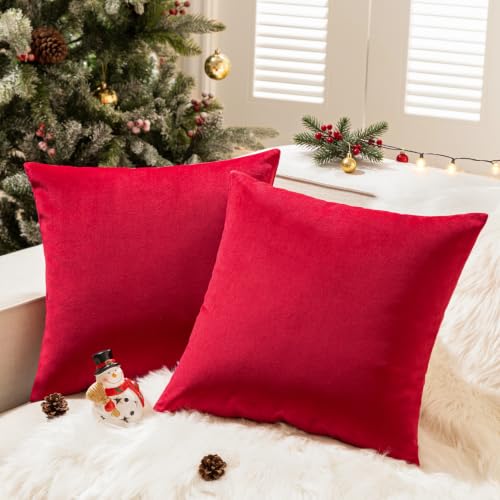
These covers are the seasonal-flexibility pro in product form: pairs of short-pile velvet-look covers in a wide colour range, ready to re-dress the same inserts across the year. The pros are the soft hand, the warm light-play and the rotation economics; the cons are pet hair that needs rolling and pressure marks that need an occasional steam. For households whose main attraction is the refresh, this is the pick that delivers it with the least friction.

MIULEE Linen Throw Pillow Covers — the Low-Maintenance Pro
The faux-linen covers answer the laundry con most directly: a relaxed weave that washes easily, wears its creases as character, and asks for no ironing and no ceremony. Their trade-off is formality — they will never look crisp or tailored — and lighter shades show marks sooner. For households that identified laundry as their decisive con, these covers are how the pro column wins anyway.
Woven Nook Decorative Throw Pillows — the Statement, With Its Cons Attached
Woven Nook’s textured pillows concentrate the category’s extremes in one product: the strongest visual pro — genuine woven texture that finishes a room almost alone — paired with the strongest care cons, since loops trap debris and resist quick cleaning, and a finished construction that cannot join a cover rotation. They are the right buy when texture is the missing layer and traffic is kind; they are the clearest illustration in this guide that a pro and a con are often the same property viewed from two households.
How to Buy Smart
Buying smart in this category means engineering the cons down before purchase. Cap the count at one pillow per real leaning place. Default to the insert-and-cover system so washing, rotation and replacement stay cheap. Choose fabric by your worst week, not your best — the week with muddy paws, a stomach bug or a houseful of guests is the week your covers must survive. Buy inserts from established bedding brands, size them one up from covers, and test zips and seams on arrival while returns are painless. Stage the purchases: core pair first, statement later, so every addition answers a gap you have actually felt.
For the full decision framework, work through our throw pillows buying guide; for the value question in money-free terms, see are throw pillows worth it; and for the hands-on assessments, throw pillows review and throw pillows reviews. Companions that shift the same trade-offs: blankets for the living room for warmth without the relocation tax, and blankets that regulate temperature for the bedroom alternative.
Setup and Care That Reduce the Cons
Half of the con column is a care problem wearing a disguise, and a light routine disarms it. Wash covers monthly in busy rooms, always inside out and zipped, and dry them gently; air and fluff inserts on the same day so the reset is total. Keep a lint roller where the sofa is, not where the laundry is, because the thirty-second fix happens in the room. Steam velvet piles back to life instead of replacing them. Store off-season covers washed and flat. And run the twice-yearly audit: fold-test every insert, retire what nobody touched, and let the count drift toward your household’s truth rather than your original ambition.
Dust deserves its own sentence in the routine: the households that manage it best simply wash covers on the same rhythm as bedding, so pillows never become the oldest textiles in the room. Keep decorative pillows off the beds of anyone who notices dust at night, and treat the rest as ordinary housekeeping. For the neighbouring textiles, washable body pillows and contour memory foam pillows cover the sleeping side of the pillow world.
Bottom Line
Throw pillows are a genuinely two-sided purchase, and the sides are predictable: the pros belong to households that use their furniture hard and wash their textiles willingly; the cons belong to households that furnish for photographs, protect what they buy, or exceed their true pillow count. Neither column is a verdict on the product — both are descriptions of a match. Make the match honestly, with the safety line held absolute and the count held low, and this category delivers some of the best value in home furnishing. Make it aspirationally, and the same products become a cautionary tale with good cheekbones.
If you take one sentence from this article to the shop, take this one: buy the pillow your household will use on its worst week, in the fabric your laundry can forgive, in the count your sofa can seat. Everything else — colour, texture, trend — is negotiable, seasonal and cheap to change later. The households in the pro column are not luckier than the households in the con column; they simply answered those three questions before the prettier ones.
The Balance by Fabric
Each fabric rewrites the two columns in its own hand, which is why general verdicts about throw pillows mislead. Velvet-look polyester brings strong pros — warmth, light-play, washability, a forgiving attitude to daily creasing — against moderate cons: pet hair clings, pressure marks need steaming, and the look leans formal in rooms that want to relax. Linen looks invert the profile: unbeatable ease and calm, graceful ageing, creases worn as character, against a permanent inability to look crisp and a vulnerability to visible marks in pale shades. Neither fabric is better; each simply moves weight between the columns, and the right choice is the one whose cons your household will never notice.
Textured weaves push both columns to extremes: the visual and tactile pros are the strongest in the category, and the care cons are too — trapped debris, snagging, slower and gentler cleaning, no place in a wash-and-go system. Cotton canvas is the quiet balancer: modest pros in durability and ease, modest cons in refinement. Faux fur and long piles are seasonal specialists whose pros are real for one reading corner in winter and whose cons — shedding, matting, dust retention in the pile — disqualify them from working roles. Read your own household into this paragraph and the fabric decision, which looked like a style choice, reveals itself as the trade-off decision it always was.
The Balance by Fill
Fill shifts the columns just as decisively. Polyester’s pros are practical dominance: consistent support, easy care, no natural-fill dust load, predictable behaviour across a whole set. Its cons are aesthetic and tactile — a uniform, structured feel that never quite mimics luxury, and a lifespan that ends in gradual flattening rather than graceful ageing. Feather blends reverse the ledger: the sink, the mouldability and the tailored crease are genuine luxuries, paid for with daily fluffing, higher cost, escaping feathers and a worse fit for dust-conscious or animal-avoiding households. Foam’s firmness is a pro in lumbar duty and a con everywhere a body wants to sink. There is no neutral fill; there is only the fill whose disadvantages your household is built to ignore.
The Balance by Room
Rooms vote differently too. In the living room the pros run up the score — daily ergonomic use, guest duty, visual transformation — and the cons are diluted by the room’s existing cleaning rhythm. In the bedroom the columns tighten: reading support is a real pro, but the nightly relocation tax is at its maximum and the dust consideration sits closest to the sleeper. In the guest room the pros win quietly, because low total hours mute every con while the comfort pro lands at full strength on the people you most want to impress. In children’s spaces the play pros are enormous for older children and the washing cons are equally enormous, while for babies the entire discussion is replaced by the safety rule: no pillows in the sleep space at all. A household is not one verdict but four, and wise buyers let each room reach its own.
How the Balance Shifts Over Time
New owners feel the pros first: the transformed room, the compliments, the first film night with proper back support. The cons arrive on a schedule — the first wash day, the first month of bed-making with a full stack, the first season change with nowhere to store the spares. This is why the category’s reputation splits so sharply between month-one reviewers and year-one owners, and why this article weights the slow variables — laundry, storage, count — as heavily as the immediate ones. The good news is that time also compounds the pros for system owners: rotations keep the look fresh, inserts keep their spring, and the set keeps finding new roles. The balance at year two is not the balance at week two, and it moves in favour of whoever bought a system and against whoever bought a photograph.
Children and pets rewrite the timeline too. A set bought for a quiet couple meets a baby, then a toddler, then a dog, and each arrival re-weights the columns: washability climbs from minor pro to survival trait, delicate textures slide from charming to untenable, and the safety rules move from footnote to household law. Buying with one eye on the household you are becoming — covers that will forgive the next stage, counts that can shrink as well as grow — is the difference between a set that adapts for a decade and one that is quietly donated at the first life change.
The Money Column, Without Numbers
Prices in this category move too much to print honestly, but the shape of the money trade-off is stable enough to describe. On the pro side: pillows deliver more visible change per purchase than any competing furnishing, the system structure means later improvements cost cover-money rather than furniture-money, and the protective dividend quietly extends the life of sofas and bedding that cost far more. On the con side: the category invites accumulation, and five impulse purchases of finished pillows can quietly exceed the cost of one deliberate system while delivering half its lifespan. The money verdict follows the same rule as every other column — deliberate buyers win, accumulators lose, and the product itself is innocent in both outcomes.
Profiles: How the Columns Land on Real Households
The Young Family
For a family with school-age children, the pros dominate if the buying is disciplined: the sofa becomes homework headquarters, film-night seating and fort material, and every pillow is used to exhaustion. The cons that bite are laundry volume and count creep, both controlled by washable covers and a hard ceiling of one pillow per seat. The family’s correct set is small, tough and cheerful about being sat on — and its pillows will be remembered, which is not a benefit any spreadsheet captures.
The Couple in a Small Flat
Space taxes everything here. The pros — a bed that becomes a sofa, colour without furniture, a drawer-sized seasonal change — are exactly the ones a small home needs, and the cons concentrate in storage and seating width. Two firm squares and one lumbar, in a two-family cover rotation, is this household’s whole correct answer; a third square would tip the columns. Small homes do not need to refuse the category; they need to run it at its most disciplined.
The Empty-Nest Hosts
With children grown, the laundry con fades, the guest pro takes centre stage, and finer fabrics become viable for the first time in decades. This household can finally buy the feather-blend sink and the textured statement, because the traffic that forbade them has moved out. Their risk flips to the showroom temptation — a beautiful, untouched room — and the defence is to keep hosting, keep using, and let the pillows work for the grandchildren’s visits.
The Allergy-Aware Household
Handled without medical claims: this household’s columns are dominated by one consideration, and its strategy is subtraction plus rhythm — fewer pillows, smooth washable covers, the fastest laundry cycle in this guide, and a pillow-free bedroom for the sensitive sleeper. Within those rails the pros remain available in the living room, which is where they matter most. Anyone whose symptoms are more than mild should be guided by their clinician about their home environment; this article’s role is only to show which product choices make a home easier to keep low-dust.
Myths That Distort Both Columns
Myth one: more pillows means a more finished room. In practice the finish line is the count at which every pillow has a job; beyond it, each addition subtracts comfort and adds labour while adding nothing visual that a guest can name. Myth two: expensive pillows are automatically comfortable. Comfort lives in fill behaviour and size fit, both of which mid-tier products routinely get right and premium products occasionally get wrong for a given body. Myth three: pillows are unhygienic by nature. They are hygienic by rhythm; the variable is the household, not the object.
Myth four: a matched set is the sophisticated choice. Matched sets date together, wear together and forbid the gradual evolution that keeps rooms feeling current; the mixed, system-based set is both the designer’s method and the economist’s. Myth five: decorative pillows are pointless because they are decorative. The ergonomic record says otherwise — the category’s most-valued function in owner households is support, and its decorative function is the bonus. Each myth survives because it contains a photograph’s worth of truth; each collapses under a year of living, which is the only test this article trusts.
Storage, Longevity and Letting Go
The final trade-off is what happens at the end. Pros: a system degrades gracefully — covers retire one at a time, inserts announce their own retirement through the fold test, and sound retired pillows donate well to shelters, guest rooms and children’s play corners. Cons: finished pillows degrade as units, bulky shapes store badly, and households without a letting-go habit accumulate a soft archaeology of past tastes in cupboards and spare rooms. Build the exit into the ownership: audit twice a year, donate while things still have life, and keep the active set at the size your rooms vote for. A category this easy to enter should be equally easy to leave, one pillow at a time.
The Environmental Column
A complete accounting includes the planet, briefly. On the pro side, pillows are long-lived, repairable textiles: a cover can be re-sewn, an insert replaced alone, and a sound set serves for years and donates well, which compares favourably with fast furniture that fails as a unit. The system model is inherently the greener one, because the durable component — the insert — is bought once and the changing component is a flat piece of fabric. On the con side, synthetic fills and covers are petroleum-derived, textured novelty pillows are often bought as disposable fashion, and every unnecessary pillow is embodied material serving no one in a cupboard. The environmental verdict rhymes with every other verdict in this article: buy few, buy a system, keep it for years, and the category is defensible; buy many, buy finished, replace often, and it is not.
A Word on Comfort Claims
Because pillows touch backs and necks, marketing around them sometimes drifts toward health language, and this article declines to follow. A well-placed pillow can make a sofa more comfortable and a reading session longer; that is a furnishing claim, and it is as far as honest decor writing goes. Pillows are not treatments, supports in the medical sense, or remedies for back pain, and anyone with persistent pain or a diagnosed condition should take advice from their clinician about seating and sleep, not from a pros-and-cons article. Keeping that boundary clean is itself a pro of buying from straightforward sources: the products in this category are pleasant, useful objects, and they do not need borrowed medical authority to justify themselves.
The One-Paragraph Version
If this entire analysis must fit in a breath: throw pillows are worth their place when they are few, firm, washable and used daily, and they are a burden when they are many, delicate, protected and merely seen. Every pro in this article flows from use; every con flows from display. Decide which household yours is — honestly, by watching your own sofa for a week — and the category will sort itself into the right column without further help from anyone.
Decision Shortcuts for the Impatient
If the full analysis is more than your Saturday allows, these shortcuts preserve most of its accuracy. If your sofa is where your household actually lives, buy two firm pillows in washable covers this week and stop reading. If your sofa is mostly photographed, buy one lumbar and stop entirely. If you have a baby in the house, buy for the living room only and keep every pillow out of every sleep space, no exceptions and no debate. If you have pets, let washability outrank beauty in every single choice and the cons will never find you. If you are between homes or renting, buy the system and the two-family rotation, because portability is your dominant pro.
And if you already own pillows you dislike, run the diagnosis before buying anything: fold-test the inserts, inspect the zips, and count how many pillows your household touched yesterday. Most unhappy sets need one of three cheap fixes — new inserts under good covers, a count reduction, or a laundry rhythm — rather than replacement. The pros and cons of the pillows you already own are as adjustable as the ones you are considering, which is the most hopeful sentence in this article and a good place to act from.
What to Do With This Analysis
Take the two columns to your own sofa, literally. Sit where you usually sit, notice what your back does, count the pillows within reach and ask when each was last washed and last leaned on. That five-minute audit converts this general article into your household’s specific verdict more reliably than any further reading. Then act on the smallest sufficient change: it might be two inserts, one cover pair, a donation bag, or nothing at all. The households that get this category right are not the ones that researched longest; they are the ones whose purchases matched their audit. Everything in the pro column is available to a household willing to be honest, and everything in the con column is optional — which is, in the end, the most encouraging verdict a pros-and-cons article can honestly deliver.
A closing observation from the households that navigated this category best: they talk about their pillows the way they talk about their kitchen knives — few, chosen, maintained, and slightly invisible because they simply work. Nobody boasts about them and nobody apologises for them. That unremarkable quality is the true end-state of the pro column, and it is reachable from almost any starting point with one honest audit, one count correction and one laundry rhythm. The dramatic transformations belong to the first week; the quiet competence belongs to every week after, and it is worth more.
It is worth pausing on one asymmetry before the questions begin: almost every con in this article is reversible. A set that is too large can shrink; a cover that cannot cope can be replaced; a laundry habit can be built in a month. Almost every pro, by contrast, compounds — support enjoyed daily, guests made comfortable repeatedly, furniture protected continuously, taste educated purchase by purchase. Decisions whose downsides are reversible and whose upsides compound are, as a class, good decisions to make carefully and then stop re-litigating. Buy the small system, run the audit twice a year, and let time do the arguing.
Living With the Trade-Offs: How the Throw pillows Balance Plays Out Over a Season
A pros and cons list is a snapshot, but a throw pillows is a long-term housemate. Advantages that look decisive on paper can shrink once the seasons turn, and drawbacks that seem minor in a showroom can grow teeth in February or during a busy holiday week. The fairest way to weigh a throw pillows is to follow one full season of ordinary use and ask how each side of the ledger behaves when the weather, the light and the household routine all change. This section does exactly that, so the balance you act on reflects lived experience rather than first impressions.
When the Advantages Grow — and When They Fade
The strengths of a good throw pillows tend to compound quietly. A design that saves steps, stores more, or cleans easily gives that benefit back every single day, and over a season those small repayments add up to the real value of the purchase. By contrast, advantages based on novelty — an unusual finish, a fashionable shape, a feature you showed to guests twice — fade within weeks. When you re-read any pros list, sort each point into one of those two families: daily-compounding benefits deserve heavy weight, while novelty benefits deserve almost none, however attractive they looked at the point of ordering.
When the Drawbacks Bite Hardest
Weaknesses in a throw pillows rarely bite at random; they bite at predictable pressure points. Guests arriving, a seasonal deep clean, a heatwave, a power cut, a house move, or a child or pet entering a new stage will each stress a different limitation. Think through those moments for the throw pillows you are considering and ask whether the drawback is an occasional annoyance you can plan around or a recurring friction you will meet every week. An occasional annoyance is a fair price for a strong advantage elsewhere; a weekly friction almost never is, and it is the single most common reason owners replace a throw pillows long before it wears out.
Use these seasonal pressure tests to judge the trade-offs in any throw pillows:
- Picture the throw pillows during your busiest week of the year and decide whether its main drawback would matter more, less, or about the same.
- Picture it during the opposite season from now — high summer if it is winter, the dark months if it is spring — and re-check light, heat, moisture and ventilation around it.
- Ask who else in the household touches the throw pillows most, and weigh the cons from their height, strength and habits rather than your own.
- Separate the drawbacks you can fix with an accessory or a habit change from the ones built into the design itself.
- Give the throw pillows a simple verdict for each season rather than one verdict for the year, and only buy when it passes the seasons you care about most.
Think about noise, light and heat as neighbours of the throw pillows, not afterthoughts, since a choice that performs well but disturbs the room around it rarely stays popular for long. Remember that guests experience your throw pillows without instructions, so anything that needs explaining, warning or demonstrating is worth simplifying before it is worth defending. Plan for the throw pillows to be moved at least twice in its life — for cleaning, redecorating or a change of room — and favour designs that forgive being shifted, tilted or carried. Look at the edges and undersides when you judge build quality, because those are the places makers save money first and the places owners discover last. Ask how the throw pillows behaves on your worst floor, wall or surface rather than your best one, since homes are uneven and listings are photographed in perfect rooms. Keep the receipt, delivery note and a photograph of the label together, because warranty conversations go smoothly when dates and model details are at hand. If two people in the household disagree about the throw pillows, let the person who will use or maintain it most have the deciding vote on practical questions. Beware of buying for the household you hope to become; the throw pillows that serves the household you already are will be used this week, not someday. A tape measure, a spirit level and ten patient minutes prevent more throw pillows regrets than any amount of comparison shopping after the fact. When a listing is vague about a dimension, material or included part that matters to you, treat the vagueness itself as information and look for a clearer seller. Photograph your room at the time of day you will use the throw pillows most, and compare candidates against that light rather than against bright midday photographs. Small households should weight compactness and easy storage more heavily, while large households should weight durability and simple operation, because the failure modes differ.
Judged across a season, most throw pillows choices become clearer, not harder. The right model is rarely the one with the longest pros list; it is the one whose drawbacks land in the moments you can tolerate and whose strengths land in the moments you repeat every day. Hold any candidate up against your own calendar before you commit, and the pros and cons stop being abstract and start being a forecast you can trust.
Frequently Asked Questions
What is the biggest disadvantage of throw pillows?
For most households it is not price or quality but the ongoing tax: pillows must be moved every time someone sits or sleeps, and covers must be washed regularly to stay pleasant. Both obligations are small individually and relentless collectively, and both scale directly with how many pillows you own. This is why experienced owners cap their count ruthlessly and choose wash-and-go covers — the biggest disadvantage in the category is almost entirely a purchasing decision, made once, that can be unmade just as easily.
Do throw pillows actually improve comfort, or are they just decorative?
They genuinely improve comfort when they are firm enough and placed where bodies lean. Most sofas are deeper than most sitters, and a supportive pillow behind the back or under an elbow corrects that mismatch for hours at a time — readers, older relatives and anyone working from a sofa feel it immediately. The decorative-only reputation comes from underfilled pillows chosen purely by colour, which collapse under a leaning adult and serve neither purpose. Buy the insert like equipment and the comfort pro is real; buy it like confetti and it is not.
How do I get the pros without the laundry burden?
Choose the system and the fabric together: removable covers in forgiving, machine-washable fabrics — smooth linen looks and easy-care weaves forgive the most — washed on the same rhythm as your bedding so no new habit is required. Keep the count low, because two covers in the wash is a non-event and six is a project. Add one spare cover for the hardest-working pillow so a spill never leaves the sofa bare. Households that align pillows with an existing laundry routine report that the burden effectively disappears.
Are throw pillows unhygienic?
They are exactly as hygienic as their washing rhythm. A cover laundered monthly and an insert aired regularly is a clean textile by any household standard; a pillow that has never been washed since purchase is not, and the difference is behaviour, not the product. Like all soft furnishings they collect household dust between washes, which is why washable covers matter and why sensitive sleepers do better without decorative pillows on their own beds. Anyone with significant allergy concerns should take personalised advice from a clinician.
Are throw pillows safe around babies and toddlers?
Around babies, the rule is absolute: no pillows in a crib or any infant sleep space, ever — babies under one year sleep on a bare, firm, flat surface with no soft items, and any surface where an infant might nap must be cleared of decorative pillows first. For toddlers and older children who are awake and supervised, pillows are normal household objects and popular play props; keep covers washed, seams sound, and small decorative elements secure. The distinction is sleep versus awake, and it should be applied without exception.
How many throw pillows is too many?
Too many begins the moment a sitter must move a pillow to sit down, or a bed’s pillows spend their nights on the floor. As a working ceiling, allow roughly one pillow per regular seat on a sofa and no more than a third of the seating length overall; on a bed, only pillows that work nightly as reading props justify their storage. Every household’s true number is discovered by use, not by styling — start below your instinct, live with the set, and let a felt gap, not a photograph, authorise each addition.