Disclosure: As an Amazon Associate, dailyhomedecorating.com earns from qualifying purchases. Links on this page are affiliate links; they cost you nothing extra. Prices and availability change often, so check the current Amazon listing before you buy.
This throw pillows buying guide exists because throw pillows look like the simplest purchase in home decor and quietly punish guesswork more than almost any other. Guess the size and the pillow slouches or bursts. Guess the fill and it flattens by spring. Guess the fabric and it fades, traps pet hair or refuses to wash. None of these failures is visible in a product photo, which is why this guide is organised around the decisions that actually determine whether a pillow looks right and lasts: the insert-versus-cover system, size against your furniture, fill behaviour, fabric against your household’s real life, and the small construction details — zips, seams, edges — that separate a three-year pillow from a three-month one. Work through it in order and you will buy once, correctly, instead of twice.
Key Takeaways
- Buy inserts and covers as a system: inserts one size larger than covers for a full, tailored look.
- Match pillow size to sofa seat depth — deep sofas take large squares, shallow sofas and chairs take smaller ones.
- Polyester fill is the washable workhorse; feather blends feel luxurious but demand fluffing and cost more.
- Choose cover fabric by household reality: washable and forgiving beats delicate and perfect.
- A smooth hidden zip and strong seams matter more than a marginal difference in colour.
- Two or three well-chosen pillows outperform six matched ones on almost every sofa.
What Throw Pillows Do and the Main Types
A throw pillow is a soft furnishing with three jobs: it finishes a piece of furniture visually, it adjusts that furniture to the human body, and it lets a room change character without changing furniture. Every buying decision in this guide serves one of those three jobs, and every disappointment in the category comes from a pillow asked to do a job its construction cannot. A slinky, underfilled pillow cannot support a back. A delicate, dry-clean texture cannot survive a toddler household. A pillow the size of a postage stamp cannot anchor a deep sectional. Type, size and build must be matched to the job first and the colour palette second.
Square Pillows: the Default Format
The standard square — in small, medium and large formats — is the backbone of nearly every arrangement. Squares layer well, rotate between rooms, take the widest range of covers, and suit sofas, beds and armchairs alike. Most households should build their core set from squares in one or two sizes and add variety through fabric and colour rather than through exotic shapes. When in doubt, the square is the answer; the rest of this guide is about choosing its size, fill and skin correctly.
Lumbar and Rectangular Pillows: the Support Specialists
Long, low rectangles exist primarily for bodies: they fill the gap between a deep seat and a shorter back, prop a reader in bed, and give armchairs the support their cushions lack. Visually they break up a row of squares and anchor the front of an arrangement. A set containing one lumbar among squares looks more designed and feels more comfortable than squares alone, and households with any back-comfort priorities should treat the lumbar as a core purchase rather than an accessory.
Bolsters and Round Pillows: the Accents
Cylindrical bolsters and round pillows are punctuation, not sentences. A bolster suits daybeds, benches and the ends of sofas; a round pillow softens a very angular arrangement. Both take fewer cover options and earn their place in smaller numbers. Buy them after the core set works, in fabrics that echo rather than compete, and expect them to be the first pieces retired when taste changes — which is fine, because accent is their job.
Complete Pillows Versus Insert-and-Cover Systems
The most consequential fork in this entire guide is whether to buy finished pillows — insert and cover permanently together — or a system of separate inserts and removable covers. Finished pillows are simpler and sometimes carry textures that only work as one piece, and a single statement pillow bought finished is a perfectly good purchase. But for a working set, the system wins on every axis that matters over time: covers wash, covers rotate seasonally, a tired insert can be replaced without losing a beloved cover, and one insert wardrobe serves many looks. This guide assumes the system as the default and flags where finished pillows make sense.
In this guide
Throw Pillows Buying Guide: Top Picks at a Glance
The picks below are presented as prose guidance, with slots where verified purchase links will be added at publishing. Judge them by the role each fills in a system, because that is how they were chosen: a foundation insert, two cover families covering the velvet and linen looks most rooms want, one textured statement, and one easy-care cover line for hard-working homes.
Best foundation insert — Utopia Bedding Throw Pillow Inserts. A polyester-filled insert in a plain woven shell, sold in multi-packs across the standard square sizes. Firm, consistent and forgiving, it is the insert this guide would build a first system on. Tier: entry-to-mid, and the best value in the whole category because everything else sits on top of it.
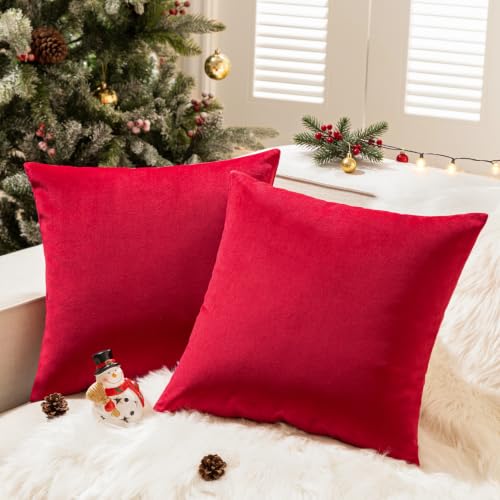
Best velvet covers — Phantoscope Velvet Throw Pillow Covers. Short-pile velvet-look covers sold in pairs, with hidden zips and a wide colour range for seasonal rotation. Soft hand feel, washable with ordinary care, and the fastest route to a warmer winter room. Tier: entry-to-mid; the rotation economics are the point.
Best linen-look covers — MIULEE Linen Throw Pillow Covers. A faux-linen weave with a relaxed, natural texture that suits lighter, calmer rooms and summer rotations. Forgiving of everyday creasing — the fabric’s character includes it — and easy to wash. Tier: entry; ideal first covers for a new system.
Best textured statement — Woven Nook Decorative Throw Pillows. Finished pillows with woven, boho-leaning faces whose texture carries a plain sofa almost single-handedly. Buy as the statement layer over a system of simpler companions. Tier: mid; the texture is the purchase.
Best easy-care covers — Deconovo Throw Pillow Covers. Practical covers from a brand built on functional home textiles, with straightforward fabrics and construction aimed at homes that wash often and expect things to survive it. Tier: entry; the hard-working household’s default.
How Big Should Your Throw Pillows Be?
Size is the decision buyers get wrong most, because listings show pillows on furniture that may be nothing like yours. Start from your sofa’s seat depth — the distance from the front edge to the backrest. Deep seats swallow small pillows and reward large squares; shallow seats and most armchairs are overwhelmed by them and look best with smaller squares and lumbars. A pillow should occupy roughly the visual height of the seat back it leans against without towering over it, and a sitter should be able to lean back with the pillow behind them and still feel the sofa’s own backrest doing its share.
The second sizing rule is the insert rule, and it is absolute: buy inserts one size up from the cover. A cover filled exactly to its nominal size looks polite and slightly sad; the same cover over the next size up looks plump, tailored and expensive, with corners that fill instead of flapping. This single habit explains most of the gap between styled photographs and real sofas. The exception is lumbar pillows, where a same-size insert keeps the long, low profile crisp rather than sausage-like.
Third, count honestly. A standard three-seat sofa usually wants two or three pillows; a sectional can carry one per corner plus one at the chaise; a loveseat wants two at most. Pillows should never occupy more than about a third of the seating length, because the remaining two-thirds is for people. If your household must excavate to sit, the set is too big whatever the photographs promised, and removing one pillow will improve both the look and the living.
Which Fill Should You Choose?
Fill decides how a pillow feels on day one and whether it still works in year two. Polyester fill — the modern synthetic standard — is light, washable in many constructions, consistent from pillow to pillow, and the practical default for family sofas, guest rooms and anyone who wants support without ceremony. Quality varies: denser fills hold a chopped, tailored edge and spring back after leaning, while the cheapest fills mat down within months. Since fill quality is invisible online, buy inserts from established bedding brands and treat suspiciously light pillows as the false economy they usually are.
Feather and down-blend fills offer the luxurious, mouldable sink that design magazines love, and they take a beautiful karate-chop crease. The costs are real: daily fluffing to redistribute fill, higher prices, occasional escaping feathers, and a poor fit for anyone who prefers to avoid animal fills or who finds natural fills dusty in their home. They suit low-traffic, high-care rooms — a formal sofa, a primary bedroom — better than a family den. Foam fills, usually in lumbar and bolster shapes, hold the firmest, most architectural forms and give the most deliberate back support, but feel unyielding as casual cushions and suit support roles rather than lounging.
Whichever fill you choose, run the fold test across its life: fold the pillow in half and let go. A healthy fill springs open; a tired one stays folded. That test, applied at the seasonal rotation, tells you when an insert has earned replacement — and in a system, replacing the insert alone restores the whole pillow for a fraction of starting over.
Which Cover Fabric Fits Your Life?
Fabric is where lifestyle honesty pays the highest interest. Velvet-look polyester is the modern default for good reason: a soft, light-catching pile that reads warm and expensive, washes well on gentle cycles, resists the daily crease, and hides minor marks better than flat weaves. It suits living rooms that want warmth and bedrooms that want softness. Its weakness is pet hair, which clings enough to need a roller, and a slight tendency to show pressure marks that steam or brushing releases.
Linen and linen-look fabrics bring the opposite character: matte, breathable, relaxed, with a natural slub texture that forgives creasing by making it part of the look. They are the summer fabric and the calm-room fabric, washing easily and ageing gracefully into softness. Pure linen costs more and wrinkles with commitment; faux-linen polyester versions deliver the look with easier care and are the sensible choice for most households. Cotton canvas sits nearby — sturdy, casual, excellent for kids’ spaces and sunrooms, less refined in formal rooms.
Textured weaves — the bouclés, chunky knits and woven boho faces — deliver the strongest visual and tactile interest and the weakest practicality. Loops and piles trap crumbs and hair, snag on jewellery and pet claws, and ask for gentler, slower cleaning. They earn their place as one statement layer in lower-traffic spots, not as the fabric of a family sofa’s working set. Faux fur and long-pile covers are the extreme of the same trade: delightful in a winter reading corner, a burden everywhere else. Choose the fabric for the room’s real traffic, and the fabric will never disappoint you.
How Much Do Zips, Seams and Edges Matter?
More than colour, in the long run. The zip is the component you will use every wash day for years: it should be hidden for looks, run smoothly without catching fabric, and feel substantial rather than brittle. A failed zip strands a good cover, so test it on arrival and treat a gritty or flimsy zip as a return reason, not a quirk. Seams should be straight, evenly stitched and finished inside so they do not fray through wash cycles; corners deserve a squeeze, because corner seams bear the stress of an oversized insert.
Edges shape the silhouette. A plain knife edge is the clean, modern default and the easiest to wash and store. Piped or corded edges look tailored and help a pillow hold its outline on formal furniture, at the cost of slightly fussier care. Flanged edges — a flat border of fabric around the seam — read relaxed and suit linen looks and bedrooms. None is better in the abstract; match the edge to the room’s formality and your appetite for ironing, in that order.
How to Prioritise by Use Case
The Family Sofa
Priorities: washable covers, polyester inserts, mid-tone fabrics, count discipline. Buy the Utopia Bedding inserts as the base, dress them in Deconovo or MIULEE covers that can go through the wash without a meeting, and keep the count at one per regular seat. Texture statements can visit this sofa as a single Woven Nook pillow if the household accepts its gentler cleaning; otherwise keep texture in the throw blanket instead. For more family-proofing ideas, see sofas for homes with kids and blankets for the living room.
The Reading Bedroom
Priorities: support first, softness second. Two firm squares behind the sleeping pillows plus one lumbar is the classic reading stack, and it converts a bed into a chair every night. Velvet-look covers from Phantoscope or MIULEE suit the room’s softness, and inserts should be the firmest you buy anywhere in the house, because they work as furniture nightly. Bedroom pillow care overlaps with bedding care — pillow protectors for cooling pillows and pillowcases for feather and down pillows cover the neighbouring textiles.
The Rental Refresh
Priorities: impact per purchase and portability. Two inserts and four covers — a light pair and a rich pair — transform a neutral rental sofa across seasons and pack into a single box at moving time. Choose colours from the rug and curtains you already own rather than from a trend, because the pillows’ job is to connect what exists. The worth analysis behind this profile is in are throw pillows worth it.
The Guest Room
Priorities: comfort signals and easy freshness. Guests judge a room by whether they could read in bed and sit comfortably; two supportive squares answer both. Covers should wash and dry quickly between visitors, and a calm, hotel-neutral palette outperforms personality here. A mid-tier system serves this room for years because total use hours stay low — the one room where entry-tier inserts genuinely suffice.
The Picks in Detail
Utopia Bedding Throw Pillow Inserts
The foundation recommendation of this guide. These inserts use a polyester fill inside a simple woven shell, come in the standard square sizes and multi-packs that make building a set straightforward, and hold a fuller shape than the bargain inserts they are usually compared with. They fluff back willingly, tolerate life as floor cushions, and their consistency means a set of four behaves like a set. Buy one size up from your covers. Best for: first systems, family sofas, guest rooms. Not suited for: buyers chasing a down-like sink or a featherweight feel.
Strengths: dependable fullness, easy sizing, multi-pack convenience. Trade-offs: a firmer, more structured hand than natural fills; the plain shell is a working component, not a finished look, so covers are mandatory rather than optional.

Phantoscope Velvet Throw Pillow Covers
The velvet rotation standard. Sold in pairs with hidden zips, in a colour range wide enough to build a genuine seasonal wardrobe, these covers deliver the warm, light-shifting finish that makes neutral sofas look intentional. The pile is short enough to stay practical, the fabric washes inside out on gentle cycles, and the colours hold their depth through repeated laundering better than most entry velvet. Best for: seasonal decorators, renters, winter warmth. Not suited for: anyone expecting inserts in the package — these are covers only.
Strengths: colour range, soft hand, rotation economics. Trade-offs: pet hair needs a roller; deep pile colours show pressure marks until steamed or brushed back.

MIULEE Linen Throw Pillow Covers
The calm-room cover. MIULEE’s faux-linen weave has the slubbed, natural texture of linen with polyester’s easier temperament: it washes without drama, creases in a way that reads as character, and lightens a room’s mood in a way velvet cannot. The palette leans natural and muted, which makes these covers the natural partners for the season opposite your velvet pair. Best for: summer rotations, Scandinavian and relaxed rooms, first covers. Not suited for: formal rooms wanting a crisp, pressed finish.
Strengths: relaxed texture, easy washing, graceful ageing. Trade-offs: lighter colours show marks sooner than mid-tones; the look is deliberately unpressed, which not every room wants.

MIULEE Velvet Throw Pillow Covers
The shade-hunter’s velvet. Where MIULEE’s velvet line earns its place beside the Phantoscope pair is breadth: an especially wide spread of sizes and colours that solves the awkward sofa, the odd chair and the rug that demands a very specific tone. The finish is matte and modern, the zips are concealed and smooth for the tier, and pairs are priced for experimentation. Best for: colour-matching projects, odd sizes, first velvet trials. Not suited for: maximum hair release in heavy-shedding homes.
Strengths: size and colour breadth, matte finish, low-regret trial. Trade-offs: like all short velvet, it holds some pet hair; very pale shades ask for a faster wash rhythm.
Woven Nook Decorative Throw Pillows
The statement layer, bought finished. Woven Nook’s pillows lead with woven texture — patterns and hand-feel that carry a plain sofa with a single pair. They are the one pick in this guide bought as complete pillows, because the woven face is the product. Place them where traffic is kind, pair them with smooth companions, and let them be the texture the room was missing. Best for: neutral rooms lacking texture, boho and relaxed schemes. Not suited for: high-crumb, high-claw zones or anyone wanting a wash-and-go cover system.
Strengths: genuine texture, instant visual completeness, strong pairing with plain fabrics. Trade-offs: loops hold debris and need gentler cleaning; as finished pillows they cannot join a cover rotation.
Deconovo Throw Pillow Covers
The wash-day realist’s cover. Deconovo’s background is functional home textiles, and its covers show it: straightforward fabrics, honest construction and an expectation that they will be laundered often and survive it. They are the covers to put where life actually happens — the family sofa’s working seats, the kids’ reading corner, the sunroom. Best for: high-traffic homes, frequent washers, practical budgets. Not suited for: buyers seeking statement texture or designer colour stories.
Strengths: durability mindset, easy care, sensible construction. Trade-offs: the aesthetic is functional rather than decorative; statement seekers should layer one textured piece over them.
First Setup and Care Essentials
When inserts arrive compressed, give them time and violence in equal measure: shake, knead, and fluff them thoroughly, then let them expand for a day before judging fullness — most fills need hours to reach their working loft. Dress the insert by folding it in half, feeding it into the cover, then working the corners of the fill into the corners of the cover before zipping; a pillow dressed carelessly stays lopsided no matter how good its parts are. Finish with the tailored crease if you like the look: a firm hand chop at the top centre of a full square gives the styled silhouette.
Care rhythm decides lifespan. Covers wash monthly in busy rooms: inside out, zipped shut, gentle cycle, dried flat or on low heat. Inserts get aired and fluffed the same day so the system resets together. Velvet piles revive with cool steam; linen looks are best un-ironed; textured weaves get a shake and a lint roll before any wash. Keep one plain rule for dust: like every soft furnishing, pillows gather household dust between washes, and people sensitive to dust do best with washable covers washed often and decorative pillows kept off their beds. That is housekeeping guidance, not a medical claim — significant allergy concerns belong in a conversation with a clinician.
And the safety essential that outranks every styling note in this guide: decorative pillows are for sofas, chairs and adult beds only. They never belong in a crib or any sleep space for a baby under one year old — infant sleep surfaces stay bare, firm and flat. If a baby ever sleeps in an adult bed or a borrowed space, every decorative pillow comes off it first. Style resumes when the child is older; the rule does not bend in the meantime.
Mistakes to Avoid
Buying covers without measuring, and inserts at the cover’s own size, are the twin errors behind most slouchy sofas — measure, then size the insert up. Buying a matched set of six because the photograph was beautiful creates the excavation problem and ages all at once; buy two or three, live with them, then add. Choosing fabric by photograph instead of by household guarantees the delicate-cover-in-a-dog-home regret. Skipping the zip check strands good covers at the first wash. And the quietest mistake: buying finished pillows for every role, then discovering that changing anything means replacing everything. The system exists precisely to forgive changing taste.
Round out your reading with the two-sided assessment in throw pillows pros and cons, the category deep-dive in throw pillows review, the multi-design roundup in throw pillows reviews, and — for the chair that always needs a partner pillow — swivel chairs for the living room.
Colour and Pattern Strategy That Survives Trends
The most durable pillow arrangements are built from the room outward, not from a trend inward. Start with the largest fixed colours you already own — sofa, rug, curtains, wall — and let the pillows connect them: pull one colour up from the rug, echo another from the curtains, and the sofa suddenly looks curated rather than accidental. A working formula is one solid in a sofa-adjacent tone, one solid in an accent colour drawn from elsewhere in the room, and one pattern or texture that contains both. That trio can dress almost any sofa in any style, and each piece can be replaced independently as rooms evolve.
Pattern scale matters as much as colour. Large patterns need large pillows and viewing distance; small, busy patterns on small pillows dissolve into noise across a room. Mix scales deliberately — one larger motif, one small or geometric, solids to rest the eye — and keep the total number of competing patterns on one sofa at two. Texture can substitute for pattern entirely in calm rooms: a velvet, a linen look and a woven face in near-identical tones create depth without a single printed motif, which is why tone-on-tone texture sets age the most gracefully of all.
Finally, buy colour in the replaceable layer. Walls and sofas are expensive to change and taste in them should be conservative; covers are the cheapest colour in the room and can carry the brave choice — the saturated rust, the deep green, the seasonal blush — precisely because retiring them costs little. Households that put their courage in covers and their caution in furniture almost never feel trapped by a past trend, and their rooms evolve by drawer-sized purchases rather than by skip-sized ones.
How to Read a Listing Honestly
Listings for pillows are written to sell the photograph, so learn to extract the facts that predict ownership. Find the contents first: does the price buy covers only, inserts only, or a finished pillow? A remarkable share of disappointment in this category is a buyer expecting a pillow and receiving a cover — read until the package contents are unambiguous. Next, find the actual dimensions and compare them with your furniture measurements, not with the styled image, which may show the pillow on a much smaller chair to make it look generous.
Then interrogate the construction words. A hidden zip is good; a zip described with a brand or as heavy-duty is better; no zip at all means a cover that cannot be removed, which means a pillow that cannot be properly washed — treat that as a decisive fact, not a detail. Fill descriptions deserve the same scepticism: generous words about plushness mean little, while the insert’s weight in hand and its behaviour in the fold test mean everything, which is why first orders in a system should be small until a brand’s fill quality is proven in your own home.
Photographs deserve a final, specific check: look for the corners. Full, squared corners signal a properly sized, adequately filled insert; limp, flapping corners in the seller’s own styled shots tell you exactly how the pillow will look on your sofa, only worse. Also note whether the colour is shown in more than one light — velvet especially shifts dramatically between daylight and lamplight, and a listing that shows both is being honest with you in a way worth rewarding.
Planning a Seasonal Rotation
A rotation is what turns the insert-and-cover system from theory into the best value in soft furnishings, and it takes ten minutes to plan. Choose two cover families with opposite characters — typically a light, matte family for the brighter months and a deeper, plusher family for the darker ones — in colours that both work with your fixed furniture. Linen-look neutrals and velvet depth are the classic pairing because they share almost no properties except compatibility with the same sofa. Store the off-season set washed, flat and together, so rotation day is a fifteen-minute change rather than a laundry project.
Rotation day is also audit day, and the audit is where the system pays for itself a second time. Fluff every insert, run the fold test, check zips and seams while covers are off, and move pillows between rooms according to where they were actually used. The guest room’s fresh pair can trade with the sofa’s tired pair; the reading lumbar can inherit a cover the sofa retired. A household that audits twice a year owns pillows that always look current and feel supportive, bought at a fraction of the cost of replacing finished pillows on the same schedule.
Where to Spend and Where to Save
Spend on inserts, because they are felt through everything and replaced least often. Spend on the one statement texture if your room needs it, because a single genuine texture outperforms three imitations. Spend on zips and construction in the covers you will wash most, because wash-day durability is where covers live or die. Save on trend colours, which are precisely the purchases you will want to retire first; save on accent shapes, which are punctuation; and save on guest-room everything, where low total hours make mid-tier performance indistinguishable from premium.
The one false economy to avoid is the ultra-cheap insert. It flattens fastest exactly where use is heaviest, makes good covers look bad, and gets replaced often enough to cost more than the honest mid-tier insert it undercut. In pillows, as in most soft furnishings, the cheapest component is the one you touch through all the others — and that is never the place to economise.
Sizing Worked Examples
Abstract rules land better as furniture. Take a deep three-seat sofa in a family room: two large squares at the ends give leaning support where people actually sit, one lumbar in the centre-front adds the support a shorter adult needs, and the arrangement stops there — three pillows, every seat served, nobody excavating. The covers might be velvet for the squares and a linen look for the lumbar, sharing one colour drawn from the rug. That set, rotated seasonally, will look designed in every photograph and feel designed at every film night.
A shallow apartment loveseat wants the opposite discipline: two smaller squares at most, or one square and one lumbar, because every pillow on a loveseat competes directly with a person for the same scarce width. A reading bed wants height and firmness — two firm squares standing behind the sleeping pillows and a lumbar across the front — and the discipline there is nightly: the squares earn their storage because they work as furniture every evening, not because they decorate a bed nobody sees at noon.
An armchair takes exactly one pillow, chosen by the chair’s gap: a lumbar if the seat is deep, a small square if it is upright and narrow. A sectional’s chaise end takes one large square as a headrest alternative; the corner takes one that will inevitably become the household’s favourite and should therefore wear the most washable cover owned. Worked examples all teach the same lesson: the right number of pillows is the number of leaning places, and the right size is the size of the gap behind a seated person.
Buying for Specific Households
Homes With Dogs and Cats
Buy for hair and claws first, colour second. Smooth and short-pile fabrics release hair with a shake and a roller; loops and long piles harbour it. Mid-tones hide the interval between washes; zips must survive frequent laundering, so construction quality matters more here than anywhere. Keep one spare cover per working pillow so a muddy-paw incident never leaves the sofa bare for a wash cycle, and accept the faster rhythm as the honest cost of animals on furniture — a cost most pet households gladly pay, provided the textiles were chosen to make paying it easy.
Homes With Young Children
For children old enough to lounge, pillows are play infrastructure: choose the hardiest washable covers, polyester inserts that forgive being sat on, thrown and built with, and colours that do not show every juice incident. Keep counts low on adult furniture and give the play corner its own floor pillows so the sofa set is not conscripted daily. And hold the absolute line for the youngest members of the household: no pillows in cribs or infant sleep spaces at all, and no decorative pillows left on any surface where a baby under one year will sleep.
Homes With Dust-Sensitive Members
The strategy is fewer, washable, frequently laundered. Choose smooth covers that release dust in the wash rather than deep textures that hold it, wash on the fastest rhythm in this guide, air inserts on wash day, and keep decorative pillows out of the sensitive person’s bedroom entirely — their sleeping hours are the longest exposure and the easiest to protect. These are practical housekeeping steps, offered as such; anyone whose symptoms are significant should be guided by their clinician, not by a buying guide.
Small Homes and Studio Flats
Every object must multitask, and pillows can: a pair of firm squares turns a bed into a daytime sofa, a lumbar makes a dining chair work-friendly, and covers store flat in a single drawer. Choose one insert wardrobe and two cover families, resist accent shapes that store badly, and let the rotation do the decorating. In a small home the system advantage compounds, because the alternative — several finished pillows for several looks — has nowhere to live.
A Simple Buying Sequence, Start to Finish
If the whole guide compresses into one shopping order, it is this. First, measure your main sofa’s seat depth and count its real leaning places; that fixes size and count. Second, buy inserts — one size up from the covers you intend — from an established bedding brand, in the quantity your count demands and no more. Third, buy one pair of washable covers in the fabric your household’s life dictates, plus one contrasting pair for rotation if the first proves itself after a month. Fourth, live with the set through several wash cycles; only then add the lumbar, the statement texture or the seasonal second family, each solving a gap you have actually felt.
Followed in that order, the sequence makes every later purchase easier than the one before, because each step is informed by living with the last. Followed in reverse — statement first, system later — it produces the familiar cupboard of nearly-new pillows. The difference between a household that loves its pillows and one that apologises for them is rarely taste or budget. It is almost always sequence.
One closing thought on timing: pillow needs reveal themselves through living, not through shopping. The week after guests visit, the month a child starts reading on the sofa, the winter the reading chair becomes a habit — these are the moments the right purchase becomes obvious, and the system this guide describes is built to absorb them one piece at a time. Buy the foundation well, keep the covers honest, and let the set grow at the speed of your actual life rather than the speed of a styled photograph. That patience, more than any single product choice, is what a good buying guide is really for.
A note on buying during sales and seasonal clearances, since this category discounts rhythmically: the system structure makes you sale-proof in the best way. Inserts and staple covers in core colours are worth buying whenever the timing suits your budget, because they do not date; fashion covers are worth buying precisely when they are being cleared, because their job was always seasonal. What is never worth buying at any discount is the wrong size, the unzippable cover or the insert a tier below your sofa’s daily demands — a bargain that fails the lean test or the wash test is not a bargain at any number, which is why this guide prints none.
Putting the Shortlist to Work: A First-Month Reality Check for Your Throw pillows
A buying guide can rank features, but a throw pillows only proves itself once it is living in your home decor & lighting routine. The first month is the honest test period: the novelty fades, the daily habits settle in, and the small mismatches between a listing photo and your room become impossible to ignore. Use the weeks after delivery as a structured trial rather than a victory lap. Keep the packaging until you have lived with the throw pillows through ordinary weekdays and one busy weekend, because the two situations stress very different qualities. What follows is a practical way to judge whether the model you chose is genuinely right, and what to adjust while adjusting is still easy.
Week One: Fit, Clearance and the Walk-Past Test
Start with movement. Walk the routes you actually use — carrying laundry, a tray, a vacuum, or shopping bags — and notice whether the throw pillows narrows any of them. Open every door, drawer, lid or panel to its full travel and check it against walls, skirting and neighbouring furniture. Sit or stand where you will normally use it and look at it from that height, not from the doorway: proportions that looked balanced in a listing can feel top-heavy or lost once your eye level changes. If something feels awkward now, it will not improve with familiarity; small placement changes made in week one are far easier than returns made in month three.
Weeks Two to Four: Load It the Way You Really Live
Most throw pillows disappointments come from a gap between the staged use in photographs and the untidy reality of a working home. So load it honestly. Put the heavy, awkward, everyday items in first, not the photogenic ones, and leave it that way for a fortnight. Watch for the early warning signs that matter: flexing, wobbling, sticking, fading, lingering odours, or parts that need constant re-adjusting. Note which features you reach for daily and which you have not touched at all, because that pattern tells you what to prioritise — and what to ignore — if you ever buy a second one for another room.
Before the trial month ends, run through this short decision checklist for your throw pillows:
- Photograph the throw pillows in place from the doorway and from your usual seat, and judge the proportions from the pictures rather than from memory.
- Check every fixing, joint and moving part once by hand, and tighten or adjust anything that has settled after the first days of use.
- Move one item you use every day to the most reachable position, and one rarely used item to the least reachable, then see whether the layout still makes sense.
- Clean the throw pillows once using only the method the maker recommends, and note how long it honestly takes you.
- Write down the single change you would make if you bought again — size, finish, layout or configuration — while the reasoning is still fresh.
If the throw pillows will serve children or older relatives, test the key actions with the weakest grip and the shortest reach in the house in mind. Leave a little capacity unused — in size, storage or power — because a throw pillows run permanently at its limit ages faster and annoys sooner than one with headroom. Notice which parts are replaceable and which are not; a throw pillows whose wear parts can be swapped cheaply often outlasts a sealed design twice its price in spirit, if not in years. Consider the throw pillows from the perspective of the person who cleans around it, because designs that trap dust, block access or demand special products quietly tax every week of ownership. Think about noise, light and heat as neighbours of the throw pillows, not afterthoughts, since a choice that performs well but disturbs the room around it rarely stays popular for long. Remember that guests experience your throw pillows without instructions, so anything that needs explaining, warning or demonstrating is worth simplifying before it is worth defending. Plan for the throw pillows to be moved at least twice in its life — for cleaning, redecorating or a change of room — and favour designs that forgive being shifted, tilted or carried. Look at the edges and undersides when you judge build quality, because those are the places makers save money first and the places owners discover last.
If the throw pillows passes the month with only minor grumbles, you have bought well, and the remaining niggles are usually arrangement problems rather than product problems. If it fails on fit or on daily friction, act while the return window is open instead of hoping the irritation will fade. Either way, the trial turns a hopeful purchase into a known quantity, and that knowledge is what makes the next home decor & lighting decision faster and calmer.
Frequently Asked Questions
Should I buy inserts and covers separately or finished pillows?
Separately, for any pillow that will work for a living. The system lets you wash covers, rotate looks seasonally, and replace a tired insert without discarding a cover you love — which is how a set stays fresh for years instead of being replaced whole. Finished pillows make sense for a single textured statement whose woven face is the point, or for a guest room where simplicity beats flexibility. Most households do best with a system core plus, at most, one finished statement piece.
What size throw pillow is right for a standard sofa?
Start from seat depth: deep sofas take large squares comfortably, standard sofas suit medium squares, and shallow sofas and armchairs look best with smaller squares and lumbars. Whatever the cover size, buy the insert one size larger for the full, tailored fill that makes pillows look intentional rather than apologetic. If a pillow towers above the sofa’s backrest or forces a sitter to perch on the edge, it is too big for that furniture regardless of what the listing’s styled photo showed.
How many throw pillows should I buy to start?
Two. Live with them for a month and watch where they migrate and how often they are moved aside. Most households discover their true count is two or three per main sofa; a few genuinely use four on a large sectional. Starting small costs nothing — covers and inserts remain available — while starting with six creates the daily excavation ritual that makes people abandon pillows entirely. Add the lumbar or the statement piece only after the core pair has proven how your household actually sits.
How do I wash throw pillow covers without ruining them?
Remove the cover, turn it inside out, close the zip, and wash on a gentle cycle with similar colours; dry flat or on the lowest heat to protect the zip and seams. Velvet-look covers regain their pile with cool steam or a soft brush once dry, and linen-look covers are best left un-ironed so their relaxed texture survives. Textured weaves should be shaken and lint-rolled first and washed gently and less often. Inserts themselves usually need airing and fluffing rather than washing — check the maker’s label before immersing any fill.
Are throw pillows a problem for dust-sensitive people?
Like all soft furnishings, pillows collect household dust in covers and fill over time, so the practical answer is management rather than avoidance: choose washable covers, launder them on a regular rhythm, air the inserts, and keep decorative pillows off the bed of anyone who is noticeably sensitive, since a bed is where they spend the longest continuous hours. This is general housekeeping guidance, not medical advice; anyone with significant allergy symptoms should take advice from their clinician about their own home environment.
Can throw pillows go on a baby’s bed or in a crib?
No. Babies under one year old must sleep on a bare, firm, flat surface with no pillows, loose bedding or soft objects in the crib or sleep space at all. Decorative pillows belong on sofas, chairs and adult furniture, and they should be removed entirely from any bed or surface where an infant will sleep, including naps in borrowed rooms. Bed styling with pillows is for households past the infant stage; until then, keep the pillows in the living room and the sleep space completely clear.