Disclosure: As an Amazon Associate, dailyhomedecorating.com earns from qualifying purchases. Links on this page are affiliate links; they cost you nothing extra. Prices and availability change often, so check the current Amazon listing before you buy.
Short answer first: are throw pillows worth it? For most living rooms and bedrooms, yes — with conditions. Throw pillows are worth it when they are bought as a system of inserts plus washable covers, sized to the furniture they sit on, and chosen to do at least two jobs at once: visual warmth and physical comfort. They are not worth it when they are bought as pure decoration in sets that nobody is allowed to touch, when the covers cannot be washed, or when so many accumulate that sitting down becomes a relocation project. This guide works through the honest maths of value — not money maths, because prices swing too much to print, but the maths of use: how often a pillow earns its place, what it costs you in care and space, and which households get years of service from a small, well-chosen set.
The pattern that separates satisfied owners from regretful ones is almost never taste. It is rotation. A pillow that gets leaned on daily, whose cover goes through the wash monthly and comes back looking right, justifies itself within a season. A pillow that lives at the back of a deep sofa, flattened behind the ones in front, never gets used and quietly becomes clutter with good intentions. Worth, for a soft furnishing, is measured in contact hours — and contact hours are decided by size, fill, cover fabric and placement far more than by colour. Colour is what you notice in the shop. The other four are what you live with.
Key Takeaways
- Throw pillows are worth it when each one does two jobs — looks and lean-ability — and gets used weekly.
- Buy inserts and covers as a system: one good insert can wear several covers across seasons.
- Washable covers are the single biggest predictor of long-term satisfaction in homes with kids, pets or snacks.
- Two to three pillows per sofa seat run beats a deep pile nobody can sit through.
- Keep decorative pillows off infant sleep surfaces entirely — a crib for a baby under one year stays bare.
- Judge value by cost per year of use, not by the prettiest product photo.
Are Throw Pillows Worth It? What You Actually Get
Start with what a throw pillow genuinely delivers, because the category is often sold on photographs and judged on them too. The first delivery is visual: a plain sofa in a neutral fabric is a large, flat field of one colour, and pillows break that field into something that reads as finished. Two contrasting covers can pull a rug colour up onto the seating, tie curtains to upholstery, or give a rental room a deliberate look without a single permanent change. For renters especially, pillows are one of the few tools that change a room’s character while remaining fully reversible and portable to the next home.
The second delivery is ergonomic, and it is undersold. Most sofas are built deeper than most bodies. A firm pillow behind the lower back shortens the seat depth so feet reach the floor; a pillow under an elbow raises a book or a phone to a comfortable height; a pillow behind the head turns a low-backed sofa into a reading chair. Guests use them instinctively, children build with them, and anyone who has worked from a sofa for an afternoon knows the difference a well-placed lumbar pillow makes by hour three. A pillow that only looks good is half a product. The ones worth buying pass the lean test: they hold shape under a leaning adult without collapsing into a crepe.
The third delivery is seasonal flexibility. A set of covers costs a fraction of the furniture it refreshes, stores flat in a drawer, and lets one sofa wear linen-look neutrals in summer and velvet depth in winter. Compare that with the alternatives for refreshing a room — reupholstery, a new rug, repainting — and pillows are the cheapest lever with the largest visual travel. The catch, covered later, is that this only holds if the inserts underneath are good enough to keep. Cheap inserts that go lumpy in a year turn the whole system into repeat purchases.
Finally, there is the guest-room and spare-bed dividend. A pair of square pillows with fresh covers turns a daybed into a sofa by day, props readers in bed better than a second sleeping pillow, and gives overnight guests the extra support they are too polite to request. Households that host even a few times a year tend to rate their pillows as worth it on this alone, because the pillows work double shifts across rooms instead of decorating one corner permanently.
In this guide
The Real Costs Beyond Money
Money is the smallest cost of owning throw pillows, and the only one listings mention. The real costs are space, care and friction. Space first: every pillow on a bed must go somewhere at night, and every pillow on a sofa gets moved by every sitter, every day. A bed dressed with six decorative pillows generates a nightly relocation ritual and a floor pile that gathers dust exactly where you walk barefoot. Two pillows that stay on the bed as reading props earn their keep; six that commute to the floor do not.
Care is the second cost. Covers collect the same dust, skin oils and snack residue as any soft furnishing, and fabrics differ enormously in how they forgive it. Velvet-look polyester shakes out and washes well. Loose-weave linen-look covers wash well too but crease with personality. Heavily textured boho weaves trap crumbs and pet hair in their loops and need a lint roller and a gentle cycle rather than a quick shake. If nobody in the household will actually wash the covers, the pillows slowly become the least clean textiles in the room — which matters for the dust-sensitive, discussed below.
Friction is the third cost, and it is social. Pillows that must not be touched, squashed or rearranged turn a living room into a showroom and guests into suspects. The households that report the highest satisfaction treat pillows as working textiles: sat on, hugged, used as lap desks and floor cushions, washed without ceremony. If your instinct is to protect them, buy fewer, hardier ones rather than many delicate ones — the value equation flips entirely on how freely they can be used.
There is also a decision cost at purchase that owners underestimate. Size, insert fill, cover fabric, zip quality and colour all interact, and a wrong combination — a slinky cover over an undersized insert — looks tired from day one and never recovers. The buying-guide discipline of measuring your sofa, choosing inserts one size up for a full look, and matching cover fabric to your laundry reality takes twenty minutes and prevents most of the regret this category produces.
Who Throw Pillows Pay Off For
The Neutral-Room Renter
If your walls, sofa and floor are landlord neutrals, pillows are the highest-impact change you are allowed to make. A renter gains colour, pattern and seasonal change with zero deposit risk and full portability. The payoff profile is strong because the alternative levers — paint, curtains, rugs — are either forbidden, expensive or both. Two inserts and four covers, rotated, can carry a living room through a year of seasons, and everything packs into one box on moving day.
The Deep-Sofa Household
Homes with deep, low or very soft seating get an ergonomic payoff that has nothing to do with decoration. Shorter adults, older relatives and anyone who reads or works on the sofa benefits daily from back support that effectively customises the furniture. For this household the worth question answers itself within a week: the pillows are used every single day, for hours, and the cost per use drops to nearly nothing across a year. Prioritise firm inserts and covers with grip — velvet-look fabrics stay where they are put better than slinky satins.
The Frequent Host
Households that host — film nights, family Sundays, overnight guests — extract a third kind of value: flexible seating and sleeping support. Pillows become floor cushions for extra guests, backrests against the sofa base, spare bed props and lap trays for snacks. A host’s set works harder per pillow than any other profile, which is why hosts consistently rate the category worth it even with mid-tier products: utilisation forgives almost everything except covers that cannot be washed after a crowd.
Who Should Skip Them — or Buy Far Fewer
The Minimalist Who Hates Visual Noise
If a clear surface calms you and objects on furniture read as clutter, pillows will irritate you daily regardless of quality. One structured lumbar pillow in the sofa’s own tone is the honest maximum for this profile; a colourful set will be resented, then exiled to a cupboard. Skip the category confidently — a beautiful blanket folded over the sofa arm delivers warmth with a smaller footprint and no nightly relocation.
The No-Laundry-Capacity Household
If covers will realistically never be washed — no machine access, no time, delicate-only fabrics — pillows degrade into dust collectors and the worth case collapses. Either choose the most washable, forgiving covers available and commit to a monthly rhythm, or skip decorative pillows and spend on textiles you already wash, like throws and cushion-free upholstery. An unwashed pillow is worse than no pillow, especially in homes where someone is sensitive to household dust.
Homes With Babies in the Sleep Space
This is a safety boundary, not a preference. Decorative pillows — like all soft bedding — must never be placed in a crib or sleep space for a baby under one year old; infant sleep surfaces stay bare, with the baby on their back on a firm, flat mattress. Pillows on an adult bed that a baby sometimes visits must be moved off entirely during any sleep, including naps and co-sleeping-adjacent settling. If your household is in the infant stage, buy pillows for the sofa only, keep them out of the nursery sleep zone, and revisit bed styling when the child is older. No decorative payoff outranks this rule.
Strengths and Trade-Offs of Owning Them
Strengths
- Fastest reversible room refresh available — colour and texture change in minutes, with no tools and no permanence.
- Real ergonomic value on deep or low seating: back support, arm height, reading props and guest comfort.
- A cover system multiplies one purchase — a single good insert wears many looks across seasons and rooms.
Trade-offs
- They demand ongoing care: covers need regular washing and inserts need fluffing, or the whole set looks and feels tired.
- They consume sitting and sleeping space, and every extra pillow is moved by someone, every day.
- Quality is invisible in photos — fill and zip quality only reveal themselves over months of use.
Weigh those lists against your household honestly and the worth question mostly answers itself. High-use, wash-willing households land deep in the strengths column. Display-only or care-averse households land in the trade-offs. The products below are the ones we would point each profile toward — presented as prose guidance with placeholders where verified links will be added at publishing, so judge them on fit, not on a badge.

Phantoscope Velvet Throw Pillow Covers — the Seasonal Rotator
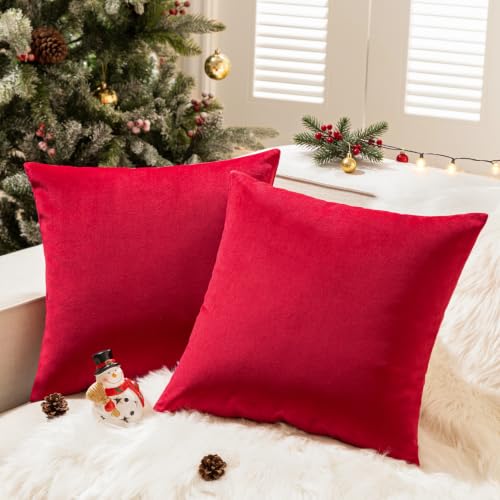
Sold as covers in pairs, the Phantoscope velvet-look covers are the classic rotation purchase: a soft, short-pile velvet finish in a wide colour range, with a hidden zip that keeps the look clean from both sides. As a worth-it proposition they shine because they convert one insert into many looks — the entry cost of a new season becomes a pair of covers, not a new pillow. The fabric shrugs off sofa life well, washes on a gentle cycle inside out, and the pile hides light creasing between uses. Best for: renters and seasonal decorators building a cover wardrobe. Not suited for: households wanting the insert included — these are covers only, so pair them with a proper insert below.
Utopia Bedding Throw Pillow Inserts — the Foundation Buy
If any single purchase decides whether throw pillows feel worth it in year two, it is the insert, and Utopia Bedding’s inserts are the workhorse foundation: a polyester fill inside a plain woven shell, sold in multi-packs and standard square sizes, firm enough to hold a chopped, tailored edge. They fluff back after leaning, survive being used as floor cushions, and make even inexpensive covers look plump rather than apologetic. Buy them one size larger than your covers for the full, designer-style fill. Best for: anyone starting a cover system or rescuing flat pillows they already own. Not suited for: buyers who want a down-like sink — this is structured support, not cloud softness.

MIULEE Velvet Throw Pillow Covers — the Everyday Velvet
MIULEE’s velvet covers sit in the same family as the Phantoscope pair but with an especially broad size and colour spread, which makes them the practical choice when your sofa needs an odd size or a very specific shade to meet a rug halfway. The fabric is a soft polyester velvet with a matte, modern finish rather than a shiny one, and the zips are concealed and smooth-running for a budget cover. In worth terms they are the low-regret experiment: the fastest way to test whether velvet warmth suits your room before committing to a full set. Best for: colour-matching projects and first velvet trials. Not suited for: heavy pet households wanting maximum hair release — short velvet holds some hair and needs the roller.
Woven Nook Decorative Throw Pillows — the Texture Statement
Woven Nook sells complete pillows with textured, boho-leaning woven faces — the pattern and texture are the entire point, and one pair can carry a plain sofa almost alone. As a value case they are the exception that proves the system rule: you are buying a finished statement, not a component, so the worth question is purely whether that texture is the missing layer in your room. They reward touch, photograph beautifully, and pair best with smooth companions rather than other busy weaves. Best for: neutral rooms missing texture more than colour. Not suited for: high-crumb, high-pet zones — the woven loops hold onto debris and ask for gentler, slower cleaning.
Alternatives to Consider Before You Commit
A good throw or blanket delivers warmth, texture and a colour accent with none of the relocation friction, and folds into a basket when not wanted. For many households one excellent throw outperforms four mediocre pillows on pure satisfaction per purchase. Consider also a single lumbar pillow: long, low and genuinely supportive, it covers the ergonomic case for throw pillows almost entirely while asking for one wash, one spot, one decision. And for the bedroom specifically, upgrading the sleeping pillows themselves — the ones under your head nightly — returns more comfort per purchase than any decorative layer on top of the bed.
There is also the make-do alternative hiding in most homes: pillows already owned but exiled to spare rooms. A new pair of covers resurrects them at cover cost, and the insert test is simple — fold the pillow in half; if it stays folded instead of springing open, the fill is tired and a fresh insert restores it. Resurrection beats accumulation: the most sustainable and economical set is usually the one you already half-own, refreshed with two covers and one honest insert upgrade.
How to Get the Most Value If You Buy
Start with two pillows, not six. Live with them for a month and count the touches: if both are used daily and the sofa still feels unfinished, add a third with confidence; if one lives on the floor, your correct number is one, and you have learned it cheaply. Buy inserts first and covers second, because the insert decides comfort and the cover is the cheap variable you can change when taste moves on. Keep a simple rotation: covers washed monthly in high-use homes, inserts aired and fluffed the same day, so the system resets together.
Choose fabrics for your real life, not your aspirational one. Homes with toddlers, dogs or red-wine evenings need washable, forgiving, mid-tone covers; a pale, delicate weave in that house is a countdown to resentment. Store off-season covers flat and clean in a drawer — never store a cover dirty, because stored dust and oils set into fabric. And place pillows where bodies actually lean: the corner seats and the reading end of the sofa earn pillows; the middle of a three-seater mostly displays them.
A note on dust and sensitivity, kept deliberately plain: like all soft furnishings, pillows collect household dust in their covers and fill over time, and people who are sensitive to dust often notice soft furnishings first. The practical answer is housekeeping, not alarm — washable covers washed regularly, inserts aired, and pillows kept off beds where a sensitive sleeper spends eight hours. This guide makes no medical claims; if someone in your home has significant allergy symptoms, that is a conversation for their clinician, and your pillow strategy should simply be fewer, washable, and frequently laundered.
The Decision Checklist
- Will each pillow be touched or leaned on at least a few times a week? If not, cut the count.
- Can every cover be machine washed in your real routine? If not, change the cover, not the intention.
- Do you have a home for bed pillows at night that is not the floor? If not, buy for the sofa only.
- Are the inserts firm enough to pass the lean test and sized one up from the covers? If not, fix the foundation first.
- Is any pillow destined for a baby’s sleep space? Then it does not get bought for that space at all — infant sleep surfaces stay bare.
- Would one throw or one lumbar pillow solve the actual problem? If yes, buy that instead.
Four or more honest yeses (with the safety line respected absolutely) means throw pillows will very likely be worth it in your home. Two or fewer means the money and the shelf space are better spent elsewhere, and there is no shame in that answer — a room with one perfect throw is better designed than a room apologising for its pillows. For the deeper buying criteria, see our throw pillows buying guide, and for the balanced two-sided view, throw pillows pros and cons. Our hands-on category assessment is in throw pillows review and the multi-design roundup in throw pillows reviews. For companions that complete a sofa, look at blankets for the living room and swivel chairs for the living room; for pillow care in the bedroom, pillowcases for feather and down pillows and washable body pillows are the relevant reads.
Judging Value the Cost-Per-Year Way
The fairest way to judge any soft furnishing is to spread its cost across the years and touches it will actually serve. A pillow set that is leaned on daily for four years has delivered thousands of small services — back support through films, naps, illnesses, homework sessions and long phone calls — and even a mid-priced set becomes trivially cheap per use. The same set bought for a formal room that hosts twice a year delivers almost nothing, and even a bargain version was wasted money. This is why blanket verdicts about the category fail: the product is identical, the utilisation is not, and utilisation is a property of your household, not of the pillow.
Run the thought experiment on your own rooms before buying. Which sofa hosts daily life? Which chair is decorative in practice? Pillows belong where bodies land. A useful rule: furnish the room you actually live in generously and the room you photograph sparingly. Households routinely invert this — six pillows on the formal sofa, none where the family actually collapses at 7 p.m. — and then conclude that pillows are pointless. The pillows were fine. The placement was fiction.
There is a second value lens worth applying: replacement avoidance. A sofa with supportive pillows is a sofa whose seat cushions wear more evenly, because bodies settle into supported postures instead of sliding into the same slumped corner. A bed with good reading pillows is a bed whose sleeping pillows are not crushed nightly into backrest duty. Protecting more expensive furniture and bedding with cheaper, washable, replaceable textiles is one of the quieter ways a pillow set pays for itself, and it never appears in the product photos.
Insert or Cover: Where the Value Actually Sits
New buyers almost always spend on the visible part — the cover — and economise on the invisible part, the insert. Experienced owners invert this, and understanding why settles most of the worth debate. The insert determines whether the pillow supports a leaning back, holds a tailored silhouette, springs back after a nap and survives being sat on by a teenager. The cover determines colour, texture and washability. A premium cover over a tired insert looks deflated within weeks and photographs like regret; a simple cover over a full, resilient insert looks expensive immediately.
The practical system follows from this: buy the best inserts your budget comfortably allows, in the size one step up from your covers, and treat covers as the seasonal, replaceable skin. Inserts in a polyester fill are the value workhorses — washable in many cases, hypoallergenic in the plain sense that they do not carry the natural-fill dust load, and consistent from pillow to pillow. Feather and down inserts feel luxurious and mould to the body, but they need more fluffing, cost more, and are the wrong choice where anyone dislikes the maintenance or the occasional escaping feather. Foam inserts hold the firmest shapes for lumbar duty but can feel unyielding as casual cushions.
Covers, meanwhile, should be bought with your washing machine in mind. A hidden zip that runs smoothly, seams that survive a gentle cycle, and fabric that does not demand ironing are worth more than a marginal difference in shade. This is also where the insert-versus-cover decision pays its second dividend: when a cover eventually fades or a household member tires of the colour, the system refreshes at cover cost. Owners who bought complete, inseparable pillows must replace the whole unit to change anything, which is how garages fill with nearly-new pillows nobody wants.
A Room-by-Room Worth Audit
The Living Room
The strongest case in the house. Daily use, guest duty, ergonomic need and visual impact all coincide here, and a modest set of two to four pillows on the main sofa will out-earn any other soft furnishing per purchase. Prioritise washable covers and firm inserts; this room’s pillows are working equipment. If budget forces a choice between rooms, furnish this one and skip the rest without guilt.
The Bedroom
A split verdict. Reading pillows earn their place nightly for anyone who reads, scrolls or watches in bed, and a pair of squares behind the sleeping pillows is a genuinely functional arrangement. Purely decorative daytime arrangements — the five-pillow hotel stack that gets dismantled every night — score worst in the whole category on value, because they generate daily labour and floor time while delivering minutes of visual pleasure to a room mostly seen in the dark. Buy the readers, skip the stack.
The Guest Room
Quietly excellent value. Guests rarely ask for anything, but they remember sleeping and sitting comfortably. Two supportive pillows on the guest bed serve as backrests for reading, extra props for side sleepers and a sofa substitute in a small room. Because guest-room pillows are used intensely but briefly, mid-tier products perform like premium ones here — utilisation is low in total hours, so wear accumulates slowly and the set stays fresh for years.
Kids’ Rooms and Play Spaces
For older children, floor-level pillows are genuinely valuable: reading corners, gaming perches, fort architecture and sleepover capacity all in one. Choose the hardiest washable covers you can find and accept a shorter cosmetic lifespan — these pillows will be lived on. The boundary remains absolute for the youngest: pillows are play objects for awake, supervised older children, never sleep items for babies, and a child’s bed styling should wait until they are well past the infant stage.
Common Ways People Waste Money on Throw Pillows
The first waste is buying by the set photograph: a styled image of six coordinated pillows tempts buyers to purchase six, when their sofa seats two people and their tolerance is two pillows. The second is matching everything — identical covers in identical sizes read as a showroom, age together, and offer no flexibility; a mixed pair with varied texture looks more designed and lets you replace one at a time. The third is ignoring the zip: a cover that cannot be removed cannot be washed, and an unwashed cover quietly caps the lifespan of the whole pillow regardless of fill quality.
The fourth waste is size guessing. Covers bought without measuring arrive slinky or bursting, and both look wrong in ways owners blame on the product. Measure the insert, size up for fullness, and check the sofa’s seat depth before choosing pillow dimensions — large squares overwhelm shallow sofas and small pillows vanish on deep ones. The fifth waste is buying for a household you do not have: delicate pale weaves for a home with muddy dogs, feather inserts for a home that hates fluffing, statement textures for a home that eats on the sofa. Every one of these purchases was reasonable for somebody else.
The Care Routine That Protects the Value
Worth is not only bought; it is maintained. A simple rhythm preserves both looks and hygiene: shake and plump inserts weekly when you change bedding or vacuum the sofa, wash covers monthly in high-use rooms and at every season change elsewhere, and air inserts in daylight on wash day. Wash covers inside out, zipped closed, on a gentle cycle, and dry them flat or on low heat so the zip and seams are not stressed. Velvet-look covers recover their pile with a cool steam or a gentle brush once dry; linen-look covers look best slightly unpressed, which conveniently matches the effort most households want to give them.
Spot-clean spills the day they happen — most sofa accidents become permanent only after they have dried into the fabric and been sat on for a week. Keep a plain rule for textured weaves: crumbs and hair lift off more easily before washing than after, so shake and roll first, then launder. Store rotation covers clean, flat and out of direct light. None of this is burdensome, but all of it is the difference between a set that looks intentional in year three and a set that looks apologetic by Christmas.
What Owners Say a Year Later
Ask owners a year after purchase and a consistent pattern emerges, more useful than any first impression. Almost nobody regrets the pillows they use daily, including owners who bought modestly priced sets; the daily lean forgives mid-tier fabric and imperfect colour matches. Regret concentrates in three places: sets bought for rooms that turned out to be display rooms, delicate covers in households that eat on the sofa, and oversized collections that made sitting down a negotiation. Notice that none of the three regrets is about the pillows themselves — all three are forecasting errors about the household’s own behaviour.
The other year-later finding is that owners consistently upgrade in one direction only: inserts. People replace tired inserts and keep beloved covers; they rarely do the reverse. That single behaviour tells you where the durable value sits and how to sequence a first purchase — foundation first, fashion second, and fashion in washable form. Owners also report that their second purchase is usually smaller than their first: experience teaches the true pillow count of a household, and it is almost always lower than the styled photograph suggested.
Finally, a year in, the pillows that remain in service have usually migrated. The formal pair drifts to the guest bed, the beloved battered one claims the reading chair, and the sofa holds the two that earned their places. This natural selection is healthy, and it is another argument for the insert-and-cover system: migration is only possible when pieces are separable, washable and not part of a fragile matched set. A pillow ecosystem that can reorganise itself around real life keeps delivering value long after a fixed arrangement would have been given away.
The Verdict by Tier: Entry, Mid and Premium
Because prices move constantly, this guide judges tiers qualitatively — what each level of spending actually buys you in this category, and where extra money stops mattering. At the entry tier you get polyester inserts and simple covers with basic zips. Honestly assessed, entry-tier pillows are worth it for guest rooms, kids’ play corners, rental staging and any first experiment: they deliver the look and basic support, and their shorter cosmetic lifespan matters less in low-hour roles. What entry tier cannot do is survive daily leaning for years without flattening, so it is the wrong economy for the main sofa.
The mid tier is where the category’s value peaks for most households. Inserts gain density and spring, covers gain fabric weight, smoother zips and better seam finishing, and the whole set starts surviving real laundry rhythms without fading or twisting. A mid-tier insert-and-cover system on a family sofa delivers the great majority of the premium experience — support, looks, washability — and holds it for years. If you buy one tier for the room you live in, this is it, and the worth-it verdict at this level is the clearest yes in this guide.
Premium spending buys natural fills, heavier woven fabrics, hand-finished textures and designer colour work. It is worth it in two situations: when texture is the entire design statement of a quiet room, where a woven or embroidered face is effectively artwork; and for buyers who keep furnishings for a decade and will maintain them properly. It is not worth it where covers will face toddlers, pets or weekly washing, because premium fabrics rarely forgive harder than mid-tier ones — the extra money buys refinement, not toughness. Knowing that distinction saves more money than any sale.
One last tier note concerns mixing. A mixed-tier set — premium inserts under mid-tier covers, one statement pillow among simple companions — routinely outperforms a uniform set bought at any single level, because it puts money exactly where each component’s quality is felt. The insert is felt through the cover; the statement texture is seen across the room; the everyday covers take the washing. Tier discipline, like pillow count discipline, is simply the habit of spending where use actually happens.
A Final Word on the Safety Boundary
Because this guide recommends pillows warmly in the right places, it should state the wrong place with equal clarity. Decorative pillows never belong in a baby’s crib, bassinet, playpen used for sleep, or any sleep surface for an infant under one year old. Soft items in an infant sleep space are a recognised hazard, and the safe arrangement is unadorned: a firm, flat mattress, a fitted sheet, and nothing else loose in the space. If a baby naps anywhere — a travel cot at a grandparent’s house, a temporarily cleared adult bed — the pillows come off first, every time, without exception.
The same caution, softened by age, applies to how pillows live around small children generally. Keep decorative pillows with any damaged seams, loose embellishments or tired zips out of toddler reach, wash covers that children hug and chew on more often than your adult standard, and store spare pillows up high rather than stacked where a climbing child can pull them down. None of this diminishes the category; it simply assigns pillows to the awake, supervised, adult-led parts of the home where they do their genuine good. A household that respects that boundary can enjoy everything else in this guide without reservation.
One more small habit separates the satisfied from the disappointed: a seasonal audit. Twice a year, when covers rotate, handle every insert. Fluff it, fold it, check the seams and the zip, and be honest about which pillows nobody touched since the last rotation. Retire the untouched ones to the guest room or donate them while they still have life, and let the survivors have the space. A set that is audited stays a set that is used — and a used set, as this entire guide has argued, is the only kind that was ever worth buying. The audit takes ten minutes twice a year, and it keeps the whole system honest in a way no single purchase decision can.
It is also worth naming the emotional return, because owners mention it and spreadsheets miss it. A sofa that looks finished makes a room feel cared for, and a cared-for room changes how a household uses it — people read there instead of retreating to separate screens, guests linger, evenings lengthen. Pillows are a small part of that effect, but they are the part you can change this weekend. Value that shows up as time spent together in the main room of the house is real value, and for many households it quietly settles the question this guide opened with.
The Break-Even Question: When a Throw pillows Earns Its Space, and When It Honestly Does Not
Worth it is a personal verdict dressed as a product question. The same throw pillows can be money well spent for one household and an expensive ornament for another, and the difference is almost never quality — it is frequency of use, fit with the space, and what it replaces. This section gives you a break-even way of thinking about the throw pillows: a simple accounting of cost per use, space per benefit, and effort per result, plus the honest signs that your household should skip it, borrow it, or buy the simpler version instead. Run your own numbers through it before you decide.
The Arithmetic That Actually Matters
Start with cost per use. Take the full cost of owning the throw pillows — purchase, any consumables, any accessories you genuinely need, and the space it occupies valued honestly — and divide it by a realistic count of uses in its first two years. Realistic is the key word: count the uses your calendar supports, not the uses your intentions promise in January. Then compare that figure with the alternatives you would actually use — hiring, borrowing, a service, or the simpler item you already own. A throw pillows that wins that comparison on your real schedule is worth it almost regardless of its badge; one that only wins on an imagined schedule is not.
The Signs on Each Side of the Line
On the worth-it side: you already do the task or feel the gap weekly; you have measured the space and it fits with room to live around; someone besides the buyer will use it too; and you can name what it replaces or retires. On the skip-it side: the purchase is motivated by a rare event, a visitor, or a version of your routine you have never actually kept; the space only works if something else is moved into storage; or the honest plan is to change your habits first and buy later. Neither list is a judgement — households change, and a throw pillows that fails the test this year may pass it easily after a move, a new job or a new family member.
Before you buy the throw pillows, answer these five questions out loud or on paper:
- How many times did I genuinely need this in the last three months — not wished for it, needed it?
- What exactly does it replace, retire or stop me paying for, starting in its first month?
- Where does it live when idle, measured and checked, and what currently in that spot gets moved?
- Who else in the household will use it without being asked, and who will maintain it?
- If it stopped working in a year, would I replace it immediately, manage without, or feel quietly relieved?
Ask how the throw pillows behaves on your worst floor, wall or surface rather than your best one, since homes are uneven and listings are photographed in perfect rooms. Keep the receipt, delivery note and a photograph of the label together, because warranty conversations go smoothly when dates and model details are at hand. If two people in the household disagree about the throw pillows, let the person who will use or maintain it most have the deciding vote on practical questions. Beware of buying for the household you hope to become; the throw pillows that serves the household you already are will be used this week, not someday. A tape measure, a spirit level and ten patient minutes prevent more throw pillows regrets than any amount of comparison shopping after the fact. When a listing is vague about a dimension, material or included part that matters to you, treat the vagueness itself as information and look for a clearer seller. Photograph your room at the time of day you will use the throw pillows most, and compare candidates against that light rather than against bright midday photographs. Small households should weight compactness and easy storage more heavily, while large households should weight durability and simple operation, because the failure modes differ. If the throw pillows will serve children or older relatives, test the key actions with the weakest grip and the shortest reach in the house in mind. Leave a little capacity unused — in size, storage or power — because a throw pillows run permanently at its limit ages faster and annoys sooner than one with headroom. Notice which parts are replaceable and which are not; a throw pillows whose wear parts can be swapped cheaply often outlasts a sealed design twice its price in spirit, if not in years.
The last question is the sharpest: immediate replacement means the throw pillows has become infrastructure in your home, and purchases like that are almost always worth it. Quiet relief means the opposite, however good the reviews were. Decide with your own arithmetic and your own answers, and whichever way the verdict falls you will have bought — or saved — with your eyes open, which is the only definition of value that survives contact with real life.
Frequently Asked Questions
How many throw pillows does a sofa actually need?
For most sofas, two to three is the working range: one at each end where people actually sit and lean, plus an optional third for a corner or a longer three-seater. More than that and the pillows begin displacing the sitters. Count seats, not cushions — each regular seat earns roughly one pillow, and the set is right when nobody has to move a pillow to sit down, yet every seat has support within reach. Beds need fewer still: one or two that double as reading props.
Are throw pillows worth it in a home with pets?
They can be, provided the covers are chosen for the reality: machine washable, mid-toned, and in fabrics that release hair with a shake or a roller rather than trapping it in loops. Velvet-look polyester and smooth linen-look weaves cope best; heavily textured weaves cope worst. Expect a faster wash rhythm than a pet-free home and treat that as the price of admission. If washing covers weekly sounds unrealistic, a washable throw over the sofa delivers most of the look with a fraction of the laundry.
How long should a good throw pillow last?
A decent insert should hold useful shape for several years of daily leaning if it is fluffed regularly and kept dry; covers typically tire first, fading or thinning at the zip and corners after a few years of washing. The system approach stretches lifespan: because covers are replaceable, the expensive-feeling part — the plump insert — keeps working while the look refreshes. A pillow whose insert stays folded when bent in half has reached the end, whatever its cover looks like, and replacing the insert alone revives the set.
Do throw pillows make dust and allergies worse?
Any soft furnishing collects household dust over time, and pillows are no exception; people sensitive to dust may notice a room full of rarely washed textiles. The mitigation is ordinary housekeeping rather than avoidance: choose washable covers, launder them regularly, air the inserts, and keep decorative pillows off the beds of sensitive sleepers. This is practical guidance, not medical advice — anyone with significant or worsening allergy symptoms should discuss their home environment with a clinician, who can advise on their specific situation.
Can babies or toddlers use throw pillows?
Babies under one year must never sleep with pillows or any soft bedding in their crib or sleep space — the surface stays bare, firm and flat, with the baby on their back. Decorative pillows belong on sofas and adult spaces, well away from infant sleep. Older toddlers and children commonly use pillows as play and lounging props under supervision, which is a different matter from sleep; even then, keep small decorative elements and loose covers in good repair, and move adult-bed pillows away entirely whenever a young child sleeps in that bed.
What is the cheapest way to test if throw pillows suit my home?
Borrow the effect before buying it: take pillows from a spare bed, dress them in any spare cases or even a folded throw, and live with the arrangement for a week. You will learn your true pillow count, your friction tolerance and whether the look genuinely lifts the room — all for nothing. If the trial delights you, invest in proper inserts first and one pair of washable covers; if the trial pillows migrate to a cupboard by day four, you have your answer at zero cost and zero clutter.