Disclosure: As an Amazon Associate, dailyhomedecorating.com earns from qualifying purchases. Links to Amazon on this page are affiliate links; they cost you nothing extra. Prices and availability change often, so check the current Amazon listing before you buy.
If you are hunting for the best mattresses for combination sleepers, you already know the problem no single-position mattress solves: you do not sleep in one position. You start on your back, roll to your side by midnight, wake half on your stomach, and finish the night in a configuration no sleep scientist has named. Each of those positions asks the mattress for something different — side sleeping wants shoulder and hip give, back sleeping wants lumbar support, stomach sleeping wants a firm, level surface — and the transitions between them want something else entirely: a surface responsive enough that rolling over is a movement, not an excavation. A mattress that serves one position beautifully and punishes the other two is, for you, a bad mattress two-thirds of the night.
So this guide grades on a different curve than most. Every pick below had to be genuinely competent in at least three positions and had to let you move between them without waking yourself up doing it. Medium and medium-firm feels dominate, because extremes serve specialists; responsive surfaces dominate, because a combination sleeper changes position many times a night and each change is a small test the mattress either passes silently or fails loudly. Cooling matters too, because a body in motion generates friction and heat. If your combination sleeping comes with a partner, Best Mattresses For All Sleeping Positions covers the household version of the problem, and if one of your positions is a nightly refuge from back discomfort, Best Mattresses For Bad Backs And Hips adds the support-first view.
Where to Buy
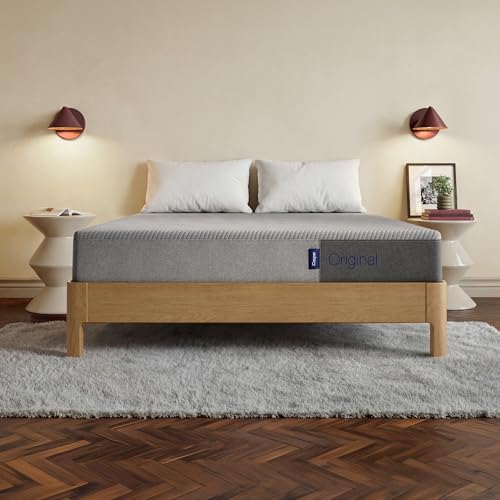
Every pick in this guide is sold on Amazon, where you can check the current price, size availability, trial terms, and delivery options on the listing itself. Start with our top pick, the Casper Sleep Original 11″ Memory Foam Queen Mattress – Medium Firm Feel | Breathable Mem — Check on Amazon. The other five picks are the Purple Mattress — Check on Amazon; the Tuft & Needle Original — Check on Amazon; the GhostBed Classic — Check on Amazon; the Layla Copper Infused Memory Foam Mattress — Check on Amazon; and the Nectar 12” Memory Foam Mattress — Check on Amazon. Prices move with size and promotions, so treat the listing, not any roundup, as the final word.
In this guide
Quick Picks
| Pick | Badge | Why it earns its place |
|---|---|---|
| Casper Sleep Original 11″ Memory Foam Queen Mattress – Medium Firm Feel | Breathable Mem | Best Overall | Zoned Support plus breathable foam: engineered for all positions, and explicitly designed for all sleepers. |
| Purple Mattress | Best Responsive Feel | The GelFlex Grid adapts instantly as you move — no waiting for foam to re-contour at 3 a.m. |
| Tuft & Needle Original Legacy Medium Firm Gel Foam Queen Mattress in a Box | CertiPUR-US c | Best Bounce-Back Foam | Adaptive foam with bounce-back support and a Flex layer that firms as you settle — built to be moved on. |
| GhostBed Classic 11 Inch Queen Memory Foam Mattress | Medium-Firm Feel | Best Balanced Feel | Gel foam plus aerated latex over a dense core: its maker designs it for stomach, back, side, and combo sleepers alike. |
| Layla 10” Copper Infused Memory Foam Mattress | Best Two Feels in One | Flippable: soft on one side, medium-firm on the other — two combination-sleeper answers in a single mattress. |
| Nectar 12” Memory Foam Mattress | Best for Back-Heavy Combos | Firm-leaning contour for combos who spend most of the night on back and stomach, with trial length to test the mix. |
Key Takeaways
- Combination sleepers need three things at once: per-position support, easy movement between positions, and a feel with no extreme in any direction.
- Responsiveness is the hidden spec: grids, latex, and adaptive foams re-contour instantly; classic memory foam makes you wait and climb.
- Medium and medium-firm feels dominate this guide because extremes serve one position and tax the others.
- Zoned designs quietly help combos: the support follows your torso’s heavy middle whichever way you rotate.
- Judge a combo mattress by your whole night — how you wake, how often you remember waking — not by how one position feels in a showroom minute.
How These Picks Were Chosen
The first filter was positional range: each pick’s verified listing had to support an all-positions claim in its design — zoned support for every sleeper, a grid that adapts as you move, foam engineered to firm as you settle, a maker designing explicitly for all four sleeper types, a flippable two-feel build, or a firm contour suited to the back-and-stomach end of the combo spectrum. The second filter was movement: surfaces were ranked by how they handle transitions, from the Purple’s instant grid response through adaptive and latex-blend foams to classic contouring foam, which appears here only in its firm-leaning form and with its trade-off stated plainly.
What was filtered out: ultra-plush mattresses that swallow side sleepers and strand them when they roll; extra-firm builds that serve stomach sleeping and tax everything else; and thin light-duty models without the support range a rotating body needs. Method notes: every claim traces to the verified pool entry for that model; the spec boxes reproduce only verified specs; and no static prices appear anywhere — the listing confirms price and trial terms on the day you shop. Health framing stays at comfort level throughout, because position-changing is a comfort and sleep-quality topic, not a medical one.
The 6 Best Mattresses for Combination Sleepers — Reviewed

Casper Sleep Original 11″ Memory Foam Queen Mattress – Medium Firm Feel | Breathable Mem
Our badge: Best Overall
The Casper Sleep Original leads this guide because its design brief is literally this keyword: a medium-firm mattress with Zoned Support, made for all sleepers. The zoning is the combo sleeper’s quiet ally — firmer foam under the hips, waist, and lower back, wherever your torso’s heavy middle happens to land — while the breathable open-cell foam keeps the surface from behaving like the slow, warm memory foam that makes position changes feel like work.
Strengths
- Zoned Support aligns the spine in side, back, and mixed positions by firming the torso’s zone
- Breathable Flex Foam lets air move, so a restless, heat-generating sleeper stays cooler
- Strong motion isolation keeps your position changes from becoming your partner’s
Trade-offs
- Still a foam response — faster than classic memory foam, slower than the Purple’s grid
- Zoning assumes your torso rests near the designed zones; very tall sleepers should check fit
- Medium-firm may feel firm to dedicated side sleepers during the break-in weeks
| Color | Light Gray |
| Size | Queen |
| Dimensions | 80 x 60 x 11 inches |
Walk the Casper through a combo night. On your back, the zoned firmness holds the pelvis while the surface fills the lumbar curve. Rolling to your side, the foam gives at the shoulder without the waist collapsing, because the zone under your middle stays supportive — the spine runs straight in both positions, which is the entire engineering problem of combination sleeping, solved by geometry rather than by asking you to pick a lane. On your stomach for the last hour, the medium-firm surface keeps hips from sinking into the arch that makes stomach sleeping ache.
The listing’s 100-night trial and 10-year limited warranty, CertiPUR-US foams, and the maker’s emphasis on foams that resist sagging all support the experiment this purchase really is. If you change positions all night and want one mattress engineered around that fact — rather than adapted to it — the Casper is the most direct answer in the pool.
Best for: True combination sleepers of all weights and the partners who share their bed / Not suited for: Sleepers who want either extreme — cloud-soft or board-firm
Choose it as the designed-for-combos default. Skip it if you are a one-position specialist. Check on Amazon

Purple Mattress
Our badge: Best Responsive Feel
The Purple Mattress solves the transition problem by eliminating it: its 2-inch GelFlex Grid does not need time to re-contour when you roll, because the grid’s columns buckle and recover mechanically, instantly, wherever your weight lands. There is no climbing out of a body-shaped crater at 3 a.m. — the surface you leave springs back, and the surface you arrive at is already shaped for you.
Strengths
- Instant adaptation: the grid cradles hips and shoulders and aligns the spine in every position, immediately
- Temperature-neutral with air channels — movement heat does not accumulate the way it does in foam
- Medium-firm support without sinking suits back, stomach, side, and combo sleepers per its design
Trade-offs
- The grid’s buoyant, slightly springy feel is distinctive and not for everyone
- At 100 pounds in its verified variant, it is the heaviest mattress in this guide
- Verified dimensions show an 11-inch build while the maker’s title cites a 9.25-inch profile — confirm the current spec table on the listing
| Color | White |
| Size | Queen |
| Dimensions | 80 x 60 x 11 inches |
| Weight | 100 pounds |
For the combination sleeper, the Purple’s party trick is really a sleep-quality feature: every position change on foam costs a small amount of effort and a small amount of wakefulness, multiplied by a dozen changes a night. On the grid, changes cost almost nothing, so you surface less from sleep to make them. Side sleepers get genuine point relief as columns buckle under the hip; back sleepers get an even, aligned platform; stomach sleepers get a surface that does not swallow the pelvis. Its maker cites a 2025 SleepScore Labs study where 86 percent felt more supported — passed along as the maker’s claim — and the design logic supports the positioning.
The Purple is also the cooling pick of this guide by construction, which matters for movers: the open grid cannot store heat the way a foam block does. If your combo sleeping includes waking up warm in whatever position you have landed in, start here — and cross-check its cooling against the gel specialists in Best Mattresses For Staying Cool.
Best for: Restless, warm combination sleepers who hate the stuck-in-foam feeling / Not suited for: Anyone who loves the classic slow memory foam hug
Choose it for zero-effort position changes. Skip it if you want to be cradled and held. Check on Amazon

Tuft & Needle Original Legacy Medium Firm Gel Foam Queen Mattress in a Box | CertiPUR-US c
Our badge: Best Bounce-Back Foam
The Tuft & Needle Original is foam engineered to behave less like foam: its T&N Adaptive foam is an open-cell, gel-and-graphite-infused material designed for contouring pressure relief with bounce-back support, and its Flex foam firms the deeper you settle. That progressive response is a combination sleeper’s friend — light contact feels cushioned, deep contact feels supported, and the surface returns energy when you roll instead of holding your shape hostage.
Strengths
- Bounce-back adaptive foam makes position changes easy while still contouring
- Progressive firming: the Flex layer supports more the deeper you sink, suiting every position’s depth
- Cooling gel, graphite, and a ventilated release layer target the heat restless sleepers generate
Trade-offs
- The responsive feel gives less of the deep, slow contour classic foam lovers seek
- The maker suggests allowing two weeks of break-in before judging — patience required
- Medium feel may under-cushion very light side sleepers’ shoulders
| Color | White |
| Size | Queen |
| Dimensions | 80 x 60 x 10 inches |
| Weight | 72 pounds |
The Tuft & Needle’s layering reads like a combo sleeper’s diary: a cooling cover for the warm phases, adaptive foam for the contour, a release layer for pressure, and flex foam that catches you at depth. In practice it feels like the middle path between the Casper’s zoning and the Purple’s mechanics — a foam bed that respects your momentum. Its maker quantifies the airflow improvement of its Flex foam against standard memory foam; the direction of the claim matches the design, and restless sleepers will feel the difference most in summer.
It is assembled in the USA, CertiPUR-US and GREENGUARD Gold certified per its listing, with a 100-night trial and 10-year limited warranty. At 10 inches it is the slimmest of the top picks here, which suits platform beds and sleepers who dislike a tall bed. For combination sleepers who want foam’s quiet and isolation without foam’s inertia, this is the most thoughtfully engineered option in the guide.
Best for: Combination sleepers who want foam comfort with spring-like manners / Not suited for: Deep-contour devotees and anyone unwilling to wait out a break-in
Choose it for the easiest movement in a foam bed. Skip it for maximum sink. Check on Amazon

GhostBed Classic 11 Inch Queen Memory Foam Mattress | Medium-Firm Feel
Our badge: Best Balanced Feel
The GhostBed Classic earns its place on a listing that names this keyword’s reader directly: a balanced medium-firm feel designed for stomach, back, side, and combo sleepers. Its four layers — cooling gel memory foam, aerated latex, and a high-density support core among them — produce a surface that is soft, supportive, and springy with minimal motion transfer, which is the combination profile in one sentence.
Strengths
- Aerated latex supplies the responsive layer that makes rolling over easy
- A high-density core holds alignment in every position and ages slowly
- Explicitly balanced tuning — no position is the favorite, none is the sacrifice
Trade-offs
- Balance means no single position gets a specialist’s perfect feel
- Medium-firm reads firm to light side sleepers
- Less motion isolation than the slowest foams, though still minimal by design
| Color | White |
| Size | Queen |
| Dimensions | 80 x 60 x 11 inches |
| Weight | 50 pounds |
The GhostBed’s latex layer is the mechanism behind its balance: latex pushes back proportionally and instantly, so the surface feels supportive on your back, giving at the shoulder on your side, and level under the pelvis on your stomach, without the sleeper doing anything but roll. The gel foam above it adds the contour and cooling first impression; the dense core below guarantees the whole stack keeps its shape through years of multi-position use. At 50 pounds in queen it is also the lightest full build in this guide, a practical mercy for a bed that may be rotated often to distribute its multi-directional wear.
Made in the USA and Canada with CertiPUR-US certified materials, the GhostBed is the safe-pair-of-hands pick: no gimmick to love or hate, no extreme to defend, just a well-layered medium-firm that treats every position respectably. Combination sleepers shopping for a partner with different habits will find it the easiest shared compromise here after the Casper.
Best for: Combination sleepers and couples who want one balanced, durable answer / Not suited for: Specialists in any single position
Choose it for balance with a durable core. Skip it if one position dominates your night. Check on Amazon

Layla 10” Copper Infused Memory Foam Mattress
Our badge: Best Two Feels in One
The Layla Memory Foam Mattress answers the combination sleeper’s uncertainty with a mechanical shrug: it is flippable, soft on one side and medium-firm on the other, so if your position mix changes — or your preference simply evolves — the second mattress is already in your bedroom, upside down. Its copper-infused memory foam adds a cooling and support story: copper-gel particles conduct heat away and firm up under load, giving more support where the body presses hardest.
Strengths
- Two firmnesses in one mattress hedge the combo sleeper’s biggest buying risk
- Copper infusion targets heat and adds load-responsive support in the foam itself
- The listing includes a long trial positioning and two memory foam pillows
Trade-offs
- Flipping a queen takes two people and a free afternoon — it is an option, not a nightly feature
- Both sides are memory foam, so the slow-response character remains whichever way up
- At 10.5 inches in depth it is mid-profile; heavier sleepers get less margin
| Color | Natural |
| Size | Queen |
| Dimensions | 80 x 60 x 10.5 inches |
| Weight | 69 pounds |
The Layla’s real combo-sleeper value shows up across months, not nights. Many combination sleepers are combination because their bodies change — an old shoulder injury flares for a season, training makes them back sleepers, life makes them side sleepers again. A flippable mattress absorbs that evolution without a new purchase: soft side for the side-sleeping season, firmer side when back and stomach take over. The copper story supports both orientations, since the infused foam sits in the comfort path either way up, and its load-firming behavior — particles condensing under weight and pushing back proportionally — mimics a mild zoning inside a uniform material.
Made in the USA to order per its listing, the Layla is the hedge pick: the one for shoppers whose honest answer to “what position do you sleep in?” is “it depends on the month.” If that is you, the flip is not a gimmick; it is the product.
Best for: Combination sleepers whose dominant position changes over time, and couples who disagree on firmness by season / Not suited for: Anyone who will never actually flip a mattress
Choose it for the built-in second chance. Skip it if your preference is settled and single. Check on Amazon

Nectar 12” Memory Foam Mattress
Our badge: Best for Back-Heavy Combos
The Nectar 12” Memory Foam Mattress closes the guide as the specialist end of the combo spectrum: a firm-leaning, contouring build whose maker positions it for any position but whose character — firm with a touch of comfort — serves best the combination sleepers who spend most of the night on their back and stomach, visiting their side rather than living there. Its slow foam response is the stated trade-off; its support is the compensation.
Strengths
- Firm support layer keeps back and stomach positions aligned, where combos spend their structured hours
- Contouring foam relieves pressure during side-sleeping intervals instead of punishing them
- The listing’s long trial lets a combo sleeper test their full rotation of positions across seasons
Trade-offs
- Slow memory foam response makes frequent position changes more effortful than on any other pick here
- Dedicated side sleepers will find the firm surface ungenerous at the shoulder
- At 78 pounds in queen, rotation and setup need two people
| Color | White |
| Size | Queen |
| Dimensions | 80 x 60 x 12 inches |
| Weight | 78 pounds |
Judge the Nectar by the ratio of your night. If your combination runs seventy percent back and stomach to thirty percent side, the firm contour is a feature: the positions you live in get assertive support, and the position you visit gets adequate, pressure-relieving contour. If your ratio runs the other way, the picks above will serve you better, and this guide’s ordering already told you so. The Nectar’s cooling top layer and dynamic support foam keep its foam character from becoming the warm, stuck experience that gives memory foam its combo-sleeper reputation.
Its long trial positioning is the safety net that makes a firm-foam experiment rational: you have months to discover your true position ratio across real life — travel, illness, training blocks — rather than guessing it in a showroom. For the back-heavy combination sleeper, that experiment often ends in a kept mattress.
Best for: Back-and-stomach-dominant combination sleepers who want firm support / Not suited for: Side-dominant sleepers and the most restless movers
Choose it if your combo leans back and stomach. Skip it if it leans side. Check on Amazon
Comparison Table
| Pick | Response speed | Feel | Movement story | Check price on Amazon |
|---|---|---|---|---|
| Casper Sleep Original | Moderate | Medium-firm, zoned | Zoning follows the torso | Check price on Amazon |
| Purple Mattress | Instant | Medium-firm, buoyant | Grid re-shapes immediately | Check price on Amazon |
| Tuft & Needle Original | Fast for foam | Medium, progressive | Bounce-back adaptive foam | Check price on Amazon |
| GhostBed Classic | Fast | Medium-firm, balanced | Aerated latex layer | Check price on Amazon |
| Layla Memory Foam Mattress | Slow | Soft / medium-firm (flippable) | Two feels hedge position changes | Check price on Amazon |
| Nectar 12” Memory Foam Mattress | Slow | Firm-leaning contour | Best for back-heavy mixes | Check price on Amazon |
How to Choose the Best Mattress for Combination Sleeping
Map Your Real Position Ratio
For a week, note the position you fall asleep in and the position you wake in; the truth is usually a ratio, not a single style. Buy for the ratio: side-heavy combos need more surface give, back-and-stomach-heavy combos need more support, and even splits need the balanced middle this guide leads with. A partner’s observations count too — most of us misreport our own nights generously.
Prioritize Response Speed
The defining combo-sleeper specification is how fast the surface adapts when you move. Instant (grid), fast (latex, adaptive foam), and slow (classic memory foam) are genuinely different nights. If you wake during position changes, shop the fast end; if you never remember moving, response speed matters less than per-position support. Our analysis in Best Mattresses For Insomnia touches the same wakefulness mechanics from a different angle — comfort framing only, since broken sleep has many causes.
Keep Firmness in the Middle Third
As general guidance, medium to medium-firm is the survivable range for all positions: soft enough for shoulders, firm enough for stomach-level hips. Extremes are specialist tools. Within the middle, let your ratio decide the lean, and let flippable designs like the Layla hedge when your ratio refuses to sit still.
Do Not Forget Heat and Noise
Movement generates heat and, on the wrong bed, noise. Breathable foams, grids, and coil-free quiet builds all serve the combo sleeper’s real goal: changing position without the bed commenting on it. A squeaking frame or a crinkly protector can undo a responsive mattress — audit the whole bed, not just the foam.
Exploit the Trial Honestly
Your body needs weeks to reveal its verdict, and a combination sleeper needs more trial than most because the test matrix is bigger: every position, several times, across real-life variation. Calendar the trial’s decision date, rotate your starting position deliberately during the first fortnight, and judge by remembered awakenings and morning feel — the two metrics that define combo sleep quality.
How Can You Tell If Your Mattress Is Failing Your Combination Sleeping?
Run a two-week audit before you buy anything. Note, each morning: the position you woke in, any shoulder or hip tenderness, how many position changes you actually remember, and whether you woke warm. Patterns diagnose the failure. Tenderness that follows side-waking means the surface is too firm or too thin at the points. Remembered, effortful rolling means the response is too slow — you are surfacing from sleep to move. Waking warm in every position means the bed stores heat faster than your body sheds it. And a back that aches after stomach-waking mornings means the pelvis is sinking below the line. Each diagnosis maps to a pick in this guide, which is why the reviews are organized by mechanism rather than by brand.
Problem: You wake up every time you roll over — Your surface response is too slow; move toward the grid, latex, or adaptive-foam picks, and check that bedding is not tucked tight enough to resist you.
Problem: Your shoulder aches on side-sleeping mornings — The surface needs more give at the point; zoned or softer-side options, plus a pillow height recheck, address it.
Problem: Your lower back aches after stomach-sleeping mornings — The pelvis is sinking; firm up the choice, and consider a thinner pillow or none for stomach intervals.
Problem: You and your partner wake each other — Motion is traveling: prioritize isolation (foam surfaces, pocketed designs) and confirm the frame is rigid.
Problem: Every position feels fine but you still wake tired — Heat and micro-awakenings are the usual suspects; audit bedding and room temperature before replacing a mattress that passes its other tests.
The Pillow Problem for People Who Move
Combination sleepers ask a pillow to do something unfair: be thick on their side, thin on their back, and nearly absent on their stomach. No single pillow wins all three, which is why combo sleepers so often blame mattresses for a pillow’s failure. The workable compromises are a medium-height, shapeable pillow you can punch into position as you roll, or a lower-profile pillow that serves back and stomach well and asks the mattress’s shoulder give to cover the side intervals. Notice that the picks in this guide with strong shoulder zones — the Casper’s zoning, the Purple’s buckling grid — effectively subsidize a lower pillow. Whatever you choose, re-evaluate the pillow whenever you change the mattress: the pair is one alignment system, and the Layla’s listing even bundles pillows for exactly this reason.
Combination Sleeping Across a Lifetime
Position ratios are not personality traits; they are life stages. Younger sleepers sprawl and stomach-sleep; injuries impose side or back seasons; pregnancy rewrites the map entirely for months; age tends to consolidate sleepers toward back and side with fewer, more deliberate turns. A combination sleeper shopping wisely buys for the current ratio with an eye on the trend — which is the deeper argument for the middle-feeling, responsive picks that lead this guide, and for the Layla’s built-in second feel. The mattress that serves a moving target is the one with no extreme to outgrow. Readers furnishing for a household of movers — kids, guests, partners — will find the same philosophy applied room by room in Best Mattresses For Sleeper Sofas and our guest-bed guides.
What About Hybrids? The Coil Option for Combination Sleepers
An attentive reader will notice this guide’s six picks are foam and grid designs, and may wonder whether a hybrid belongs in the conversation. It does — as a type. Pocketed coils return energy instantly, which makes position changes nearly free, and a hybrid’s foam-over-coil stack serves side, back, and stomach positions with the same balanced logic as the foam picks here. Our pool’s hybrids were assigned their own dedicated guide — Best Hybrid Mattresses Under $1000 — where the Sealy Dreamlife and Ashley Chime carry the combination argument with encased coils and a lumbar layer respectively. If your combination sleeping runs hot, or your foam mattresses have softened early in the past, audition a hybrid alongside the picks above; the trial system exists precisely so that foam and coil finalists can compete on your actual nights rather than on paper.
The hybrid’s trade-off for this audience is motion character: coils isolate well when pocketed, but a lively coil surface can feel bouncy to a partner, and the contour at the shoulder is shallower than deep foam’s. Combination sleepers who share with a light-sleeping partner often land back on foam for the stillness; combination sleepers who share with another mover often prefer the hybrid’s energy. There is no universal winner — there is your household’s physics, and two finalists, and a month of nights to separate them.
The Temperature Curve of a Moving Sleeper
Combination sleepers run a different thermal night than still sleepers. Movement generates friction heat; new positions expose the body to cool surface and then warm it; and each micro-awakening is a chance to notice being warm and convert it into a full awakening. This is why cooling design ranks so high in this guide’s picks even though the keyword never mentions temperature: the Casper’s breathable open-cell foam, the Purple’s open grid, the Tuft & Needle’s gel-and-graphite adaptive foam, and the GhostBed’s aerated latex are all, functionally, wakefulness-reduction features for movers. Bedding completes the system — breathable sheets and a duvet you can partially escape without a wrestling match — and seasonal bedding refreshes often cluster around Black Friday Bedding Deals 2026 for households equipping a new bed.
A practical test during any trial: note whether your remembered awakenings cluster in the warm second half of the night. If they do, the bed’s heat story — mattress, protector, bedding, room — is your problem to solve before firmness gets another thought. Movers cannot afford a warm bed, because warmth taxes exactly the transitions their sleep depends on.
Wear Patterns: Maintaining a Mattress You Use in Every Direction
A single-position sleeper wears a mattress in one postal code; a combination sleeper wears it everywhere, which is both better and worse news. Better, because load distributes across more of the surface, delaying the deep body impression that forms under a fixed sleeper. Worse, because no zone gets a rest, and softening — when it comes — arrives as a general loss of support rather than an obvious valley you can point to. The maintenance answer is disciplined rotation: head-to-foot every two to three months, so the torso zones trade places and the whole surface ages as one piece. Flippable designs like the Layla add a second axis to that rotation, which is part of their long-term value for this audience.
Judge aging by the morning metrics from the audit section — tenderness patterns, remembered effort, waking warmth — rather than by eye, because a combination sleeper’s mattress fails by feel before it fails by measurement. When those metrics degrade together after years of good service, the mattress has not betrayed you; it has completed the job. Replace it with the same mechanism that served you, one generation newer, and keep the rotation habit that made it last.
Couples With Different Styles: Sharing a Combination Bed
Combination sleepers complicate a shared bed exponentially: two movers, four positions, and a transfer problem in both directions. The couple version of this purchase adds one requirement to everything above — the surface must forgive not only your own transitions but your partner’s, arriving as neither earthquake nor echo. That is why the responsive-but-isolating middle of this guide matters more to couples than to anyone: foam that absorbs a partner’s 2 a.m. rotation protects your current position, while enough bounce lets your own next move happen without a struggle that wakes you both. Split-firmness and dual-sided designs exist beyond this pool for couples whose styles truly diverge; within it, the Layla’s two faces and the Purple’s position-blind grid are the closest answers, and both reward a two-person trial in which each partner logs their own mornings.
Travel and Guest Beds for Combination Sleepers
A combination sleeper away from home meets the category’s hardest test: unfamiliar beds chosen by other people. The practical defenses are portable — a familiar pillow restores the neck geometry your home bed provides, and a thin travel topper in the luggage can rescue a too-firm guest bed for a weekend. For your own guest room, the combination logic of this guide is the right shopping lens: guests arrive with every style, and a medium-firm, quick-recovering bed is the one that offends none of them. It is also worth saying plainly that one bad hotel night is weather, not data — judge your home mattress by your home log, and let travel be travel.
The Combination Sleeper’s Bedroom: Light, Temperature, and Movement
A combination sleeper’s room should be designed for a body in motion, and three details repay attention. Light first: a mover wakes more fully at each transition than a still sleeper does, so the room’s darkness is doing double duty — blackout coverage and the removal of standby LEDs protect the half-waking moments from becoming full ones. Temperature second: each position change is a small exposure event, flinging a limb or a whole side out of the covers, and a room held slightly cool with bedding that layers lets the mover thermoregulate by movement instead of by waking. Layout third: the bedside should be a no-collision zone — water within reach without sitting up, nothing breakable at flailing distance, and a clear floor path for the sleeper whose combination includes the occasional upright chapter. None of this replaces the mattress; all of it multiplies the mattress’s work, because a bed chosen for movement performs best in a room that forgives it. The combination sleeper who designs for motion rather than apologizing for it sleeps like it was the plan all along — which, in this guide’s view, it should have been.
Combination Sleepers and Napping: The Daytime Chapter
The combination sleeper’s nap is a compressed edition of their night: three positions in forty minutes, on a couch or a bed never designed for the tour. Two habits keep naps restorative rather than disorienting. Nap on the real mattress where possible, because its response speed is calibrated to your movement in a way the couch’s deep, slow cushions are not — the couch nap’s famous grogginess is partly a transition problem, a body surfacing from a surface it sank too far into. And keep the nap’s position honest: the mover who naps in a recliner’s fixed curve wakes with a preview of everything this guide warns against. Short, early, and on the good bed — the combination sleeper’s nap rule is the night’s rule in miniature.
Common Buying Mistakes
Buying for the Position You Fall Asleep In
Your starting position is a minority of your night. Buy for the ratio across the whole night — especially the position you wake in, which is the one your body chose unobserved.
Choosing Deep Memory Foam for Its Showroom Hug
The hug becomes a crater by the third position change. If you move often, response speed outranks first-minute contour every time.
Ignoring Your Partner’s Motion Experience
A combination sleeper is a motion source. Isolation is not a luxury feature in a shared bed; it is the price of both partners sleeping through your gymnastics.
Blaming the Mattress for a Pillow Mismatch
Shoulder and neck complaints in side intervals are often pillow height wearing a mattress costume. Audit the pillow before and after any mattress change.
Deciding in the First Week
Your movement habits were trained by the old bed. Give a new surface three weeks of real nights — all positions, real life — before the trial verdict.
Final Recommendation
Start with the Casper Sleep Original: designed for all sleepers, zoned where your torso lands, breathable when you move, and isolated when your partner does not. It is the combination brief, answered directly. The runner-up is the Purple Mattress — Check on Amazon — for sleepers whose main complaint is the effort and wakefulness of changing position, with the Tuft & Needle as the foam-feel version of the same responsiveness. Map your ratio, prize response speed, keep firmness in the middle, and let a full trial of real nights confirm the choice.
Frequently Asked Questions
What firmness is best for combination sleepers?
Medium to medium-firm is the reliable range: enough give for side-sleeping shoulders, enough support for stomach-sleeping hips. Lean softer if your ratio is side-heavy, firmer if it is back-and-stomach-heavy, and consider a flippable design if your ratio changes over time.
Is memory foam bad for combination sleepers?
Classic slow-response memory foam makes position changes effortful, which is why this guide favors responsive foams, latex blends, and a grid design. Modern adaptive foams narrow the gap considerably; the firm-leaning Nectar appears here for back-heavy combos with its trade-off stated.
How do I know if I am a combination sleeper?
If you fall asleep and wake in different positions, or a partner reports that you move through several positions nightly, you are one. A week of noting sleep and wake positions gives you the ratio to shop by.
Do combination sleepers need a special pillow?
They need a compromise pillow: medium height and shapeable, or a lower profile paired with a mattress that gives generously at the shoulder. Re-check pillow fit whenever you change mattresses, since the two form one alignment system.
Which pick is best for a couple with different styles?
The Casper and GhostBed lead for couples: balanced feels, strong isolation, and no positional favoritism. If one partner is a dedicated specialist, weight the choice toward their need and tune the other side with bedding and pillows.
How long should I trial a mattress as a combination sleeper?
At least three weeks. Your test matrix is larger than a single-position sleeper’s — every position, repeatedly, across normal life — and your movement habits need time to retrain to the new surface before mornings become meaningful data.


