Disclosure: As an Amazon Associate, dailyhomedecorating.com earns from qualifying purchases. Links to Amazon on this page are affiliate links; they cost you nothing extra. Prices and availability change often, so check the current Amazon listing before you buy.
The best hybrid mattresses under 1000 exist because of a simple frustration with both of the older mattress families. Pure memory foam contours beautifully but can sleep warm, feel slow when you change position, and soften where your hips land. A traditional innerspring breathes and bounces but presses back at shoulders and hips and telegraphs every movement across the bed. A hybrid — foam comfort layers over a pocketed coil core — is the engineered compromise, and at this budget tier it has become the default recommendation for shoppers who cannot decide which family they belong to. The coils bring airflow, edge support, and a support structure that does not take a set; the foam brings the contouring surface that makes the bed feel welcoming instead of bouncy.
This guide reviews the four hybrids in our verified pool and then, honestly, completes the list of six with two hybrid types we describe in prose only — a natural latex hybrid and a copper-cooling hybrid — because our pool contains no verified example of either to link you to, and inventing a product would be worse than describing the type. Every linked pick below traces to verified listing data; the budget in the keyword is treated as tier framing, and no static prices are printed, because hybrid pricing swings hard with size and promotions. If you are still deciding between constructions, Best Memory Foam Mattresses Under $500 shows what the same money buys in pure foam, while Best Mattresses For Combination Sleepers focuses on the position-changing sleepers hybrids suit best.
Where to Buy
The four linked picks in this guide are sold on Amazon, where you can check the current price, size availability, trial terms, and delivery options on the listing itself. Start with our top pick, the Sealy Dreamlife 12” Hybrid Mattress-in-a-Box — Check on Amazon. The other linked picks are the Signature Design by Ashley Chime 12 Inch Hybrid — Check on Amazon; the Serta Perfect Sleeper Ultimate — Check on Amazon; and the Linenspa 8 Inch Hybrid Mattress — Check on Amazon. The remaining two picks — a natural latex hybrid and a copper-cooling hybrid — are described in prose only below, with guidance on what to look for when you shop those types on Amazon. Treat each listing, not any roundup, as the final word on price.
In this guide
Quick Picks
| Pick | Badge | Why it earns its place |
|---|---|---|
| Sealy Dreamlife 12” Hybrid Mattress-in-a-Box | Best Overall | Encased coils, gel memory foam, and a real transition layer from an established maker — the complete hybrid formula. |
| Signature Design by Ashley Chime 12 Inch Hybrid Full Size Mattress in a Box | Medium Firm | Best for Back Support | A gel lumbar layer over 13-gauge pocketed coils, in a verified full size. |
| Serta Perfect Sleeper Ultimate 14.5″ Queen Mattress – Medium Pillow Top | CertiPUR-US cert | Best Pillow-Top Comfort | A zoned coil system under a plush pillow top — the most traditional, hotel-like feel here. |
| Linenspa 8 Inch Hybrid Mattress | Best Budget Hybrid | The entry point to hybrid construction, in a low profile for bunks, trundles, and guest rooms. |
| Natural Latex Hybrid (type — prose only) | Best Natural Option | Latex comfort over pocketed coils: responsive, breathable, and durable, described qualitatively since our pool has no verified example. |
| Copper-Cooling Hybrid (type — prose only) | Best for Hot Sleepers | Copper-infused foam over coils targets heat build-up; shop the type using the checklist in its review. |
Key Takeaways
- A hybrid pairs foam comfort with a pocketed coil core — contour on top, airflow, edges, and durable support underneath.
- At this tier, coil design is the quality tell: individually encased or pocketed coils isolate motion and support better than basic spring units.
- Four picks here are verified products you can buy from the links; two are hybrid types described in prose because our pool has no verified example to link.
- Hybrids suit combination sleepers and couples better than almost any other construction at this budget.
- Thickness ranges from 8 to 14.5 inches across these picks — match the profile to the sleeper and the frame, not to a bigger-is-better instinct.
How These Picks Were Chosen
The first filter was definitional: a pick had to be a true hybrid — a real coil support core under foam comfort layers — not a foam mattress with a marketing adjective. Our verified pool contains exactly four: the Sealy Dreamlife with encased coils, the Ashley Chime with pocketed coils and a lumbar layer, the Serta Perfect Sleeper with a zoned coil system and pillow top, and the Linenspa with a steel coil base in a low profile. Those four cover the category’s real range: the balanced flagship, the back-focused mid-profile, the plush traditional, and the budget low-profile.
Rather than pad the list with two foam mattresses wearing hybrid language, the final two places describe hybrid types that genuinely belong in this conversation — latex hybrids and copper-cooling hybrids — in prose only, with no links, no invented specifications, and no prices. What was filtered out entirely: all-foam models, however good, because this keyword’s promise is hybrid construction; and any product whose coil claims could not be verified in the pool data. Prices are never printed — the tier in the keyword frames the shopping, and the listing confirms the number on the day you buy. Every specification in the four linked reviews comes from the verified pool entry for that model.
The 6 Best Hybrid Mattresses Under 1000 — Reviewed

Sealy Dreamlife 12” Hybrid Mattress-in-a-Box
Our badge: Best Overall
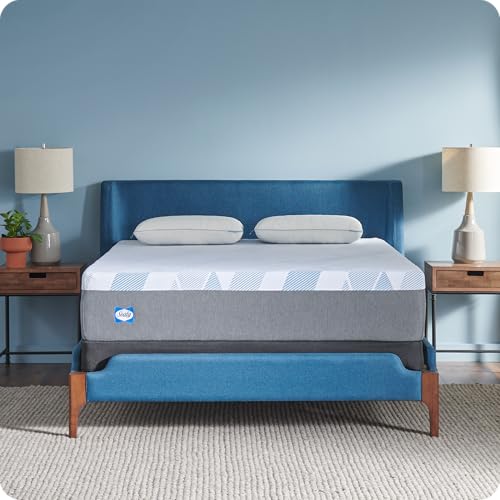
The Sealy Dreamlife 12” Hybrid is the most complete expression of the hybrid formula in this guide: 2 inches of SealyComfort gel memory foam for the contouring surface, 2.25 inches of high-density transition foam to smooth the hand-off, and 7 inches of individually encased coils doing the structural work. Each layer has a job, the jobs are the right ones, and the result is a mattress that feels plush for the first inch and increasingly supportive the deeper you settle.
Strengths
- Individually encased coils support each body zone independently and cut motion transfer
- A dedicated transition layer prevents the falling-through feeling between foam and coils
- Surface-Guard antimicrobial technology helps keep the sleep surface fresher between washes of the bedding
Trade-offs
- At just over 80 pounds in queen, setup and rotation are two-person jobs
- The balanced feel will not fully satisfy devotees of deep memory foam contour
- Coils need a flat, rigid base to stay quiet over the years
| Color | Dreamlife |
| Size | Queen |
| Dimensions | 80 x 60 x 12 inches |
| Weight | 80.604164 pounds |
In nightly use, the Dreamlife’s encased coils are the difference between a hybrid and a foam mattress with springs as decoration. Because each coil compresses on its own, your hips sink into their coils while your waist is held by theirs — the support is local, which is what spinal alignment actually requires. The gel foam surface keeps the first impression cool and contouring, and the transition foam keeps heavier sleepers from feeling the coil tops through the comfort layer, the classic failure of cheap hybrids. Couples will notice the motion story: a partner’s exit compresses one neighborhood of coils, not the whole street.
The Sealy name also brings process maturity: CertiPUR-US certified foams and a bed-in-a-box format that arrives compressed and expands on your frame. Give it a flat platform, rotate it seasonally, and the coil core should hold its support profile far longer than an all-foam base at this tier. For shoppers who want one recommendation to stop researching, this is the guide’s answer — the hybrid formula with no layer missing and no gimmick required.
Best for: Most shoppers — couples, combination sleepers, and anyone upgrading from basic foam or springs / Not suited for: Anyone who needs to move their mattress often, or who wants a deep foam hug
Choose it as the default hybrid at this tier. Skip it only if your heart is set on a pillow top or a natural build. Check on Amazon

Signature Design by Ashley Chime 12 Inch Hybrid Full Size Mattress in a Box | Medium Firm
Our badge: Best for Back Support
The Signature Design by Ashley Chime 12 Inch Hybrid builds its hybrid around the lower back: a high-density gel memory foam layer targets the lumbar zone, and beneath it sit 9-inch 13-gauge wrapped coils with two reinforced perimeter rows. It is verified in full size, it is adjustable-base compatible, and for back-focused sleepers shopping this tier, its spec sheet reads like it was written for them — see also Best Mattresses For Lumbar Support for the foam-side view of the same problem.
Strengths
- A dedicated gel lumbar layer concentrates support where back sleepers load the bed
- Wrapped coils minimize motion transfer while the perimeter rows firm up the edges
- Verified full-size dimensions make it the surest fit in this guide for a full bed
Trade-offs
- Medium-firm tuning feels firm to light side sleepers who need shoulder give
- Shoppers needing queen or king must confirm their size on the listing
- The support-forward feel offers less plushness in the first inch than the Serta
| Color | White |
| Size | Full |
| Dimensions | 74.4 x 53.3 x 12 inches |
| Weight | 62 pounds |
The Chime’s coil gauge deserves a plain-English note: 13-gauge wire is on the sturdy side, which is why this mattress reads medium-firm rather than plush, and why it holds up under back and stomach sleepers who flatten softer builds. The lumbar gel layer is not a token stripe of different foam — it is positioned and densified for the zone between the ribcage and the hips, the span where a mattress either holds the spine’s natural curve or lets it sag into a hammock. Sleepers whose mornings involve lower-back stiffness from a too-soft bed are this mattress’s natural audience, with the usual comfort-only caveat that persistent pain deserves professional advice.
As a full-size pick it also inherits the full bed’s virtues: it fits small rooms, arrives in a box, and its reinforced edges make its 53 inches feel honest. On an adjustable base, the wrapped coils flex as designed. Put it on a flat frame, and it is the hybrid in this guide most likely to still feel supportive at the end of its warranty.
Best for: Back and stomach sleepers, full-size beds, and anyone whose old mattress sagged in the middle / Not suited for: Light side sleepers who need a soft shoulder zone
Choose it when support outranks plushness. Skip it if you sleep on your side and run light. Check on Amazon

Serta Perfect Sleeper Ultimate 14.5″ Queen Mattress – Medium Pillow Top | CertiPUR-US cert
Our badge: Best Pillow-Top Comfort
The Serta Perfect Sleeper Ultimate is the traditionalist’s hybrid: a high-density zoned coil system below, and above it a medium pillow top with PillowSoft Aire foam and Cool Twist gel memory foam. At 14.5 inches it is the tallest mattress in this guide, and its feel — cushioned surface, structured support — is the closest thing here to a good hotel bed.
Strengths
- Zoned coils target support to the lower back and hips while cradling everywhere else
- The pillow top delivers immediate surface plushness without a separate topper purchase
- BestEdge foam encasement extends the sleep surface and firms the sitting edge
Trade-offs
- The tall profile can make standard sheets fit poorly and the bed high for shorter sleepers
- Pillow tops soften gradually over the years — the plush first impression evolves
- At over 82 pounds, it is the heaviest pick here to set up and rotate
| Color | Dark Blue |
| Size | Queen |
| Dimensions | 79.5 x 60 x 14.5 inches |
| Weight | 82.26 pounds |
The Serta’s zoning works like the Sealy’s encased coils but with a different philosophy: engineered zones of support rather than uniform independence. The center third of the bed — where hips and lumbar actually rest — gets the firmest support, while the shoulder zone gives more, which is the geometry side sleepers need and back sleepers tolerate happily. The rippling design of the PillowSoft Aire layer promotes airflow through the pillow top, addressing the stuffiness that plush tops can trap, and the gel memory foam swirled into the comfort layer adds contour without a slow, sinking feel.
Frame flexibility is a genuine Serta advantage: its listing names traditional frames, box springs, platform and slatted frames, bunky boards, and adjustable frames. That breadth suits shoppers keeping existing furniture — though, as with every coil mattress, the base must be flat and in good condition for the zoning to mean anything. Buy deep-pocket sheets, check your bed height arithmetic, and this is the pick for sleepers who tried bed-in-a-box foam and missed the bed they grew up trusting.
Best for: Sleepers who want a plush, traditional, hotel-style surface over zoned support / Not suited for: Low-profile frames, or anyone who struggles with tall beds
Choose it for comfort-first hybrid sleep. Skip it if you want a low, minimalist profile. Check on Amazon
Linenspa 8 Inch Hybrid Mattress
Our badge: Best Budget Hybrid
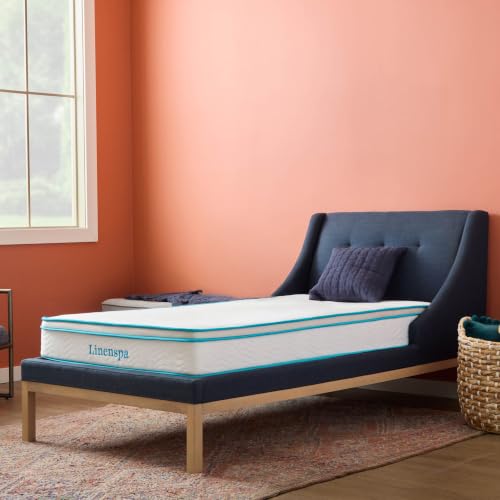
The Linenspa 8 Inch Hybrid Mattress is the entry ticket to hybrid construction: memory foam over durable steel coils in an 8-inch profile, verified in twin at 36 pounds. It exists for the beds where the other picks cannot go — bunk beds, trundles, daybeds, and guest rooms — and for budgets where the hybrid idea matters more than hybrid luxury.
Strengths
- Real coil support under foam comfort at the most accessible position in this guide
- Low profile respects bunk guardrails and trundle clearances that 12-inch mattresses violate
- Light enough for one person to carry, unbox, and lift onto a top bunk
Trade-offs
- An 8-inch hybrid is a light-duty build — not a heavy adult’s decade-long primary bed
- Verified size here is twin; other sizes must be confirmed on the listing
- Allow 24 to 72 hours for full expansion after unboxing
| Color | Mattress Only |
| Size | Twin |
| Dimensions | 74 x 39 x 8 inches |
| Weight | 36 pounds |
Within its intended jobs, the Linenspa is genuinely good at them. The coil layer keeps a thin mattress from feeling like a foam pad on plywood — the failure mode of cheap thin mattresses — and the medium-firm feel suits the back and stomach sleepers, kids, and guests who most often use these beds. In a guest room it outperforms its price position because guests judge a bed over two nights, not two years, and supportive-and-simple wins that test. It is also the natural hybrid for a child’s first real bed: supportive for growing bodies, inexpensive enough to size up out of without regret.
The honest boundary is load and time. A heavier adult sleeping nightly will ask more of 8 inches than 8 inches holds, and the right move then is up this list to the Chime or the Dreamlife. But as the budget hybrid — the one that proves coils-plus-foam works before you commit to the full-size version of the idea — the Linenspa has earned its place in this category for years, and it anchors the low end of this guide without apology.
Best for: Bunks, trundles, daybeds, kids’ rooms, and guest beds on a budget / Not suited for: A heavy adult’s long-term primary mattress
Choose it when profile or budget rules the decision. Skip it for a primary adult bed you expect to keep for a decade. Check on Amazon
Natural Latex Hybrid (type — prose only)
Our badge: Best Natural Option
This pick is a product type rather than a linked product, because our verified pool contains no latex hybrid to recommend honestly. A natural latex hybrid pairs a comfort layer of latex — Dunlop or Talalay — over a pocketed coil core, and it belongs in this guide because it serves the shopper the foam hybrids cannot: the one who wants natural materials, a buoyant and instantly responsive surface, and the longest-lived comfort layer in the category.
Strengths
- Latex responds instantly — no waiting for foam to contour, no stuck feeling when you roll over
- Open, pincore-ventilated latex sleeps temperature-neutral and pairs with coil airflow
- Latex comfort layers resist body impressions better than most foams over long horizons
Trade-offs
- Latex hybrids sit at the top of this keyword’s tier and often above it — verify the actual listing price
- The buoyant feel is wrong for sleepers who love being cradled and held by memory foam
- Latex is heavy; even in a box, these are awkward mattresses to move
Shop the type with this checklist: the listing should state whether the latex is natural, blended, or synthetic, and how thick the latex layer is; the coil core should be pocketed rather than a basic tied spring unit; and the cover should be a breathable natural-fiber fabric rather than a synthetic shell that wastes the latex’s airflow. In use, a latex hybrid feels like sleeping on top of the bed rather than in it — supportive, springy, and cool — which is why combination sleepers and hot sleepers who dislike foam put it on their shortlists. Because we cannot verify a specific model here, treat any candidate’s trial terms as essential: the feel is distinctive enough that you should be able to send it back.
Best for: Natural-material shoppers, hot sleepers, and anyone who finds memory foam too slow / Not suited for: Deep-contour lovers and the strictest budgets
Choose this type if responsiveness and materials matter more than the foam feel. Skip it if you want to be hugged by your mattress. (Prose-only pick — no link, by design.)
Copper-Cooling Hybrid (type — prose only)
Our badge: Best for Hot Sleepers
The second prose-only pick is the copper-cooling hybrid: copper-infused memory foam over a pocketed coil core. It belongs in this guide because heat is the number-one reason foam shoppers defect to hybrids, and copper infusion is the foam-side technology aimed squarely at it — copper particles conduct heat away from the surface while the coil core below keeps air moving through the mattress instead of trapping it in a solid foam block. Our pool’s cooling hybrids use gel rather than copper, so rather than mislabel one, we describe the type.
Strengths
- Copper-infused foam targets surface heat build-up, the coil core targets deep heat retention
- You keep memory foam’s contour and motion isolation, which latex and gel alternatives change
- Copper is also chosen by makers for its freshness-friendly properties in the foam
Trade-offs
- Cooling infusions moderate temperature; they do not refrigerate — very hot sleepers should also fix bedding and room temperature
- Quality varies widely by maker, and we cannot verify a specific model for you here
- Expect pricing toward the upper part of this keyword’s tier
Shop the type skeptically and specifically: look for the copper foam’s thickness (a token dusting in a thin top layer does less than a real comfort layer), pocketed rather than basic coils, and a breathable cover that does not seal the cooling layers under plastic-like fabric. Compare the candidate against the verified cooling picks elsewhere in this program — gel hybrids like the Dreamlife above, and the dedicated options in Best Mattresses For Staying Cool — and let trial terms protect you, because cooling claims are the hardest in the category to judge from a listing. For the hot sleeper who loves memory foam’s feel and refuses to give it up, this type is the compromise designed for you.
Best for: Hot sleepers who want to keep memory foam’s contour and isolation / Not suited for: Anyone expecting an actively cold bed, or shopping the bottom of the tier
Choose this type if heat is your deal-breaker and foam is your preference. Skip it if a verified, linkable pick matters more than the copper feature. (Prose-only pick — no link, by design.)
Comparison Table
| Pick | Profile | Coil design | Comfort layer | Check price on Amazon |
|---|---|---|---|---|
| Sealy Dreamlife 12” Hybrid | 12 inches | Individually encased coils | Gel memory foam + transition foam | Check price on Amazon |
| Signature Design by Ashley Chime 12 Inch Hybrid | 12 inches | 13-gauge wrapped coils | Gel memory foam with lumbar layer | Check price on Amazon |
| Serta Perfect Sleeper Ultimate | 14.5 inches | Zoned coil system | Pillow top with gel memory foam | Check price on Amazon |
| Linenspa 8 Inch Hybrid Mattress | 8 inches | Steel coils | Memory foam | Check price on Amazon |
| Natural Latex Hybrid (type) | Varies — check listing | Pocketed coils (look for this) | Natural latex | Check price on Amazon |
| Copper-Cooling Hybrid (type) | Varies — check listing | Pocketed coils (look for this) | Copper-infused memory foam | Check price on Amazon |
How to Choose the Best Hybrid Mattress
Read the Coil Story First
In a hybrid, the coil core is the mattress’s skeleton and its lifespan. Pocketed or encased coils move independently, isolate motion, and support locally; older tied spring units move as a trampoline and age as one. Coil gauge runs inverse to intuition — lower numbers mean thicker, firmer wire. For a primary bed at this tier, pocketed coils are the expectation, and any listing that will not say what its coils are is telling you something.
Count the Comfort Layers and Their Jobs
A good hybrid stacks at least a contouring layer and, ideally, a transition layer between comfort and coils. The transition layer is the unsung hero: without it, heavier sleepers feel coil tops and the bed feels thinner than its measurements. When you compare listings, map each layer to a job — contour, transition, support — and be suspicious of layers with no job but a trademarked name.
Match Firmness to Position, Not Preference Alone
As general guidance, side sleepers need a medium surface with shoulder give; back sleepers do best on medium to medium-firm with lumbar attention; stomach sleepers need firmness that keeps hips level; combination sleepers need a responsive medium that does not trap them mid-roll. Hybrids serve combination sleepers especially well because coils return energy that foam absorbs — one reason this category anchors our Best Mattresses For All Sleeping Positions conversation as well.
Check the Edges and the Base Requirements
Edge support decides whether the full width of the mattress is usable and whether sitting to dress feels stable. Reinforced perimeter coils or a foam encasement are the two mechanisms; either beats an unsupported edge. Then confirm your base: hybrids want flat, rigid, well-supported platforms or slats with narrow spacing, and an aging box spring undermines a new hybrid exactly as it undermines foam.
Let the Trial Decide Between Finalists
Hybrid feels vary more between brands than within any other category, because every maker balances foam and coil differently. At this tier, home trials are common — use them. Shortlist two, sleep on the first for a month, and only keep the mattress your body votes for. Confirm the current trial and warranty terms on the listing for the size you actually buy.
How Long Will a Hybrid Mattress Last, and How Do You Care for One?
A well-built hybrid at this tier should hold its support profile noticeably longer than an all-foam mattress at the same price, because the coil core does not take body impressions the way a foam base does. Care is simple but not optional: rotate the mattress head-to-foot a few times a year (hybrids are generally not flipped, since the comfort layers live on top), keep it on a flat and rigid base, use a protector from the first night, and vacuum the surface with an upholstery tool when you change bedding seasonally. Let a new hybrid expand fully — the listings here suggest from a day to 72 hours — before judging its feel, and expect a short break-in as the foams loosen.
Problem: The hybrid feels firmer than the showroom description — New foams break in over the first few weeks; walk the trial clock, not the first weekend, before deciding.
Problem: You hear the coils when you move — Check the base first: a flexing or uneven frame makes quiet coils noisy; a flat platform usually silences it.
Problem: The edge feels soft when you sit to dress — Confirm you are sitting over the reinforced zone and that the base extends fully under the mattress; an undersized base strands the edges.
Problem: One partner feels the other’s movements — Make sure the protector and bedding are not drum-tight, and that the frame is rigid; motion complaints often trace to the base, not the pocketed coils.
Problem: The bed sleeps warmer than promised — Swap to breathable sheets and a lighter duvet before blaming the mattress; bedding traps more heat than a coil core ever generates.
Hybrid Versus Memory Foam: The Honest Differences
Strip away marketing and three differences remain. Response: coils push back instantly, foam pushes back slowly, so hybrids feel easier to move on and foam feels more enveloping. Temperature: a coil core is mostly air, so hybrids shed heat that a solid foam block stores, which is why hot sleepers migrate here. Support aging: steel holds its shape for years while foam bases gradually soften where load concentrates, so hybrids tend to win the second half of a mattress’s life. Foam’s counter-arguments are real — superior motion isolation, deeper pressure contour, and usually a lower price for the same thickness — which is why the choice is about your sleep, not a league table. Couples who prioritize stillness may still belong in foam; sleepers who prioritize mobility, coolness, and longevity usually land here.
Who Should Skip a Hybrid Entirely?
Three shoppers should look elsewhere. The devoted deep-contour sleeper — the one who describes the perfect bed as a hug — will find even the plushest hybrid too structured, and the pillow-top Serta is as close as this guide gets. The ultra-light budget shopper furnishing a temporary space may be better served by a simple foam mattress whose whole cost is lower, as in Best Mattresses Under $600. And the shopper with a slatted frame they cannot modify and a mattress that must flex deeply for an adjustable base should verify compatibility model by model, because not every coil design bends happily. Everyone else — the undecided, the couples with different preferences, the foam-curious and the spring-loyal — is exactly who this category was built for, and exactly who the four verified picks above serve.
Firmness, Body Weight, and the Hybrid Equation
The most common reason a hybrid disappoints is not construction but calibration: the same mattress reads medium to one sleeper and firm to another, because firmness is a relationship between the bed and the body on it. Lighter sleepers rest mostly in the comfort layers, so a hybrid with a thin or dense comfort stack can feel unyielding at the shoulder no matter what the label says. Heavier sleepers blow through the comfort layers and meet the coils, so their experience is decided by coil gauge and transition foam — which is why the Dreamlife’s defined transition layer and the Chime’s sturdy 13-gauge coils matter more to them than any surface softness. When you read the four verified reviews above, read them with your own weight in hand: the Serta’s pillow top exists for the lighter, plush-seeking end of the scale; the Chime’s support stack exists for the heavier, structure-needing end.
Couples with a significant weight difference between partners are the hybrid’s natural constituency, and also its hardest test. The lighter partner needs surface give; the heavier partner needs deep support; a uniform foam mattress forces one of them to lose. A pocketed-coil hybrid localizes both experiences — each side’s coils compress under their own sleeper — which is why split preferences so often resolve here. If the difference is extreme, prioritize the heavier partner’s support needs and soften the lighter partner’s side with bedding, because support failures cause morning aches while surface firmness is adjustable with a topper or softer sheets. The same logic governs the guest-room version of the problem: an unknown sleeper is best served by the balanced middle of this guide, not by either extreme.
One more calibration that shoppers miss: the bed you are replacing sets your expectations. Coming from an old innerspring, almost any hybrid feels plush; coming from deep memory foam, almost any hybrid feels lively and firm. Neither impression is the mattress’s fault, and both fade within the trial window as your body recalibrates. Judge a hybrid at week three, not night three — and if you are furnishing more than the main bed, note that the low-profile end of this category also serves folding frames, a corner covered by Best Mattresses For Sleeper Sofas, while seasonal bedding to complete a hybrid upgrade often appears in Black Friday Bedding Deals 2026.
What a Hybrid Does to a Bedroom Over a Year
Ownership details rarely make it into buying guides, but they decide satisfaction. A hybrid’s coil core makes it heavier than the foam mattress it replaces — the verified picks here run from 36 pounds in a twin to over 82 pounds in a pillow-top queen — so plan two people for setup, rotation, and any future room rearrangement. The same coils make hybrids more tolerant of being stood on edge briefly during a move, though they should still travel flat when possible. Seasonally, hybrids ask little: rotate in spring and autumn, wash the protector, and check that the base’s center legs still touch the floor after any bed-making gymnastics. In summer, the coil core’s airflow pairs with lighter bedding to produce the coolest sleep the mattress can offer; in winter, the foam comfort layers insulate enough that most sleepers simply add a blanket rather than a heated pad. None of this is dramatic, and that is the point — a hybrid’s ownership story is boring in the way good appliances are boring, which is precisely what a shopper at this tier is paying for.
Hybrid Care and Longevity: Protecting the Investment
A hybrid’s two-material construction ages on two clocks, and caring for it well means respecting both. The foam clock runs on impressions and softening, concentrated where bodies lie; the coil clock runs on fatigue and noise, concentrated where bases flex. The care routine addresses both: rotate the mattress head-to-foot every three to six months so the foam’s workload migrates; keep it on the flat, rigid base its warranty describes, because a flexing foundation is the coil clock’s accelerator; and use a protector from the first night, since foam that absorbs spills and oils degrades faster than foam that merely supports.
Listen to the bed annually. A hybrid in good health is silent and level; new creaks usually indict the frame or foundation before the coils, and a dip you can feel with a straightedge across the surface is data for a warranty conversation, not a character flaw to endure. Vacuum the surface when sheets change, air the bed unmade for an hour on laundry day, and never fold or bend a hybrid for moving — the coil unit that gives it structure is exactly what bending damages. Treated this way, a well-built hybrid at this tier should hold its support map for the better part of a decade; treated carelessly, the same mattress can feel tired in three years. The difference is rarely the product. It is the base beneath it and the rotation nobody did.
Hybrid Sound and Feel: What Normal Feels Like
First-time hybrid owners sometimes return to the listing within a week with a sound complaint, so a calibration is worthwhile. A faint spring response when you sit down hard is normal — you have purchased a bed with steel in it. A soft creak from the base on the first nights usually settles as the foundation and frame seat themselves under new weight distribution. What is not normal: a localized crunch that repeats at the same spot, a coil you can feel through the comfort layers when you press with a palm, or a dip visible to the naked eye in the first month. Feel has its own calibration: a hybrid should feel like a mattress first and a mechanism never — the transition layers exist precisely so that the support announces itself as comfort rather than as machinery. Give the bed its two weeks, learn its normal sounds the way you learn a new house’s, and reserve concern for the specific, repeatable, localizable symptom.
Common Buying Mistakes
Buying the Word Hybrid Without Checking the Coils
Some mattresses wear the hybrid label over a minimal spring layer. Ask what the coil system is — pocketed, encased, zoned — and how tall it is. If the listing will not say, the coils are not the selling point they should be.
Ignoring the Transition Layer
Foam directly on coils can feel thin and lumpy under heavier sleepers. A defined transition layer, like the Dreamlife’s, is the mark of a hybrid designed rather than assembled.
Putting a New Hybrid on an Old Box Spring
A softened spring base sags, and the hybrid inherits the sag while taking the blame. Budget for a flat platform or verify your foundation is still rigid and level.
Choosing by Thickness Alone
A 14.5-inch pillow top and a dense 12-inch hybrid are different beds, not better and worse ones. Match profile to sleeper weight, frame height, and sheet depth instead of chasing the biggest number.
Skipping the Trial Because the Specs Looked Right
Hybrid balance is a feel, and feel cannot be fully specified. Buy where the listing’s trial lets your body cast the deciding vote.
Final Recommendation
The Sealy Dreamlife 12” Hybrid is this guide’s default answer: gel foam, a real transition layer, and encased coils in a 12-inch profile that suits couples, combination sleepers, and upgraders from either mattress family. The runner-up is the Ashley Chime — Check on Amazon — for back-focused sleepers and full-size beds, with the Serta waiting for anyone who wants the plush pillow-top version of the same idea. If your heart is set on latex or copper cooling, the prose-only reviews above give you the checklist to shop those types safely. Confirm size, price, and trial terms on the listing, put the mattress on a flat base, and give it a month — that is how a hybrid at this tier proves itself.
Frequently Asked Questions
What makes a mattress a true hybrid?
A true hybrid combines foam (or latex) comfort layers with a substantial coil support core, usually pocketed or encased coils. A thin foam mattress with a token spring layer, or a traditional innerspring with a foam pad, sits at the category’s edges — the picks here all have real coil cores.
Do hybrids sleep cooler than memory foam?
Generally yes: the coil core is mostly air space, so heat moves through a hybrid instead of soaking into a solid foam block. Gel or copper comfort foams and breathable covers add to the effect, though bedding and room temperature still matter.
Are hybrids good for couples?
Pocketed-coil hybrids are among the best couple mattresses at this tier: the coils isolate motion locally, the edges are reinforced for sitting and sleeping near the side, and the balanced feel compromises well between partners with different preferences.
How long should a hybrid under this budget last?
With a flat base, a protector, and seasonal rotation, a well-built hybrid’s coil core should hold its support noticeably longer than an all-foam base at the same tier. Comfort foams still soften gradually — that is normal wear, and it is why warranties and trials matter.
Can a hybrid go on an adjustable base?
Many can — the Ashley Chime in this guide documents adjustable compatibility — because pocketed coils and foam flex. Always confirm the specific model’s listing, since rigid or very thick designs may be excluded.
Why are two picks in this guide prose-only?
Our verified product pool contains four hybrids. Rather than mislabel foam mattresses as hybrids, we described two additional hybrid types — latex and copper-cooling — in prose, with shopping checklists and no links or invented specifications.


