Disclosure: As an Amazon Associate, dailyhomedecorating.com earns from qualifying purchases. Links to Amazon on this page are affiliate links; they cost you nothing extra. Prices and availability change often, so check the current Amazon listing before you buy.
The best mattresses for all sleeping positions have to pass a test no specialist mattress faces: they must be right four different ways in the same night, for bodies that may not even be the same body. Side sleeping demands give at the shoulder and hip with support at the waist. Back sleeping demands a filled lumbar curve over a level pelvis. Stomach sleeping demands a firm, flat refusal to let the hips sink. And the fourth position — the unnamed diagonal sprawl that most humans actually occupy by 4 a.m. — demands a surface forgiving enough to make improvisation comfortable. A mattress tuned for any one of these betrays at least one other, which is why “good for all positions” is not a marketing shrug but the hardest brief in the category.
The picks below earned their places by being genuinely competent everywhere rather than perfect somewhere: medium and medium-firm feels, responsive or zoned surfaces, support that follows the torso instead of the sleeper’s intentions. They serve two audiences at once — the individual who moves through positions nightly, and the household buying one mattress for people whose positions differ, from couples to guest rooms to the family bed a child invades at dawn. If your movement is the whole story, Best Mattresses For Combination Sleepers goes deeper on transitions; if one position dominates your night because of discomfort, Best Mattresses For Back And Shoulder Pain and the support guides will serve you more specifically.
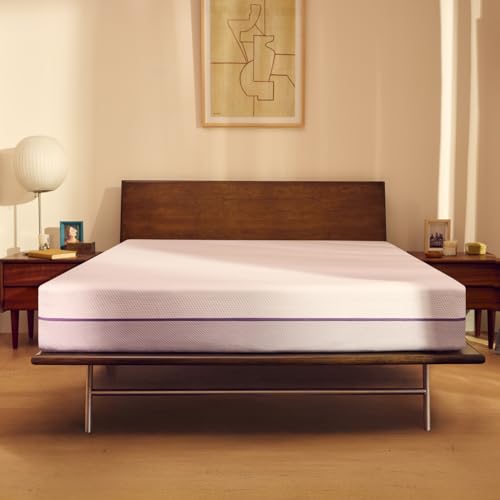
Where to Buy
Every pick in this guide is sold on Amazon, where you can check the current price, size availability, trial terms, and delivery options on the listing itself. Start with our top pick, the Purple Mattress — Check on Amazon. The other five picks are the Casper Sleep Original — Check on Amazon; the Tuft & Needle Original — Check on Amazon; the Nectar 12” Memory Foam Mattress — Check on Amazon; the GhostBed Classic — Check on Amazon; and the Leesa Original — Check on Amazon. Prices move with size and promotions, so treat the listing, not any roundup, as the final word.
In this guide
Quick Picks
| Pick | Badge | Why it earns its place |
|---|---|---|
| Purple Mattress | Best Overall | The GelFlex Grid gives at pressure points and holds everywhere else — position-proof by mechanism, in every posture. |
| Casper Sleep Original 11″ Memory Foam Queen Mattress – Medium Firm Feel | Breathable Mem | Best Zoned All-Rounder | Zoned Support aligns the spine in side, back, and mixed positions — designed explicitly for all sleepers. |
| Tuft & Needle Original Legacy Medium Firm Gel Foam Queen Mattress in a Box | CertiPUR-US c | Best Responsive Foam | Adaptive foam that firms as you settle — support that scales to whichever position you land in. |
| Nectar 12” Memory Foam Mattress | Best for Back and Stomach | Firm-leaning contour that holds the two positions where alignment is won or lost. |
| GhostBed Classic 11 Inch Queen Memory Foam Mattress | Medium-Firm Feel | Best Balanced Feel | Its maker designs it for stomach, back, side, and combo sleepers by name — balance as a spec. |
| Leesa Original 10″ Memory Foam Mattress | Best Gentle All-Rounder | Premium contouring designed with all sleep positions in mind — the softest landing that still supports. |
Key Takeaways
- All-position competence comes from mechanism — grids that buckle at points, zones that firm at the torso, foam that firms with depth — not from a medium label alone.
- Medium to medium-firm is the survivable range for every position; extremes are specialist tools.
- The position you wake in matters more than the one you fall asleep in; buy for the whole night’s census.
- For couples with different positions, local support (grid, zones, isolation) lets one mattress be two answers.
- Judge an all-rounder by its worst position, not its best — you will spend a third of your life in each.
How These Picks Were Chosen
Every pick had to clear a four-position bar using evidence from its verified listing: a design brief naming all sleepers or all positions, a mechanism that adapts by location or load, or a feel in the medium center with support architecture strong enough to hold the demanding positions (stomach’s level pelvis, side’s straight spine). The Purple’s grid and the Casper’s zones clear the bar by engineering; the Tuft & Needle’s progressive firming and the GhostBed’s explicit all-type tuning clear it by design intent; the Nectar and Leesa clear it as the firm and gentle ends of foam’s all-position range, with their leanings stated so you can place yourself.
What was filtered out: plush specialists that swallow stomach sleepers, firm specialists that grind side sleepers’ shoulders, and thin builds without the support range a rotating or mixed household needs. Method: claims trace to verified pool entries, spec boxes reproduce verified specs only, and no static prices are printed. Comfort framing throughout — positions are ergonomics, not medicine.
The 6 Best Mattresses for All Sleeping Positions — Reviewed

Purple Mattress
Our badge: Best Overall
The Purple Mattress leads because its mechanism is position-agnostic in a way materials rarely are: the 2-inch GelFlex Grid buckles under concentrated load — a shoulder, a hip — and stands firm under distributed load, so the same surface is soft exactly where a side sleeper needs softness and supportive exactly where a back or stomach sleeper needs a platform. Its maker positions it as medium-firm for every sleep position, built for spine alignment with less lower-back strain, over edge support foam and a durable base that does not sink.
Strengths
- Point-responsive support: gives at pressure points, holds at spans, automatically, in every position
- Temperature-neutral with air channels — position changes land on fresh, cool surface
- No sinking or sagging character keeps stomach and back alignment honest
Trade-offs
- The buoyant grid feel is unmistakably different from foam and not universally loved
- At 100 pounds in its verified variant, it is the heaviest pick here
- Verified dimensions show an 11-inch build while the maker’s title cites a 9.25-inch profile — confirm the current spec table on the listing
| Color | White |
| Size | Queen |
| Dimensions | 80 x 60 x 11 inches |
| Weight | 100 pounds |
Walk the Purple through the positions. Side: columns under the shoulder and hip collapse in sequence, the waist rests on uncollapsed grid, and the spine runs straight. Back: the load spreads, the grid holds, and the lumbar gets contact without a hammock. Stomach: the pelvis meets a surface that does not negotiate downward, so the lower back stays out of extension. The transitions cost nothing — the grid reshapes instantly — which is why this mattress also anchors our combination-sleeper guide. Its maker cites a 2025 SleepScore Labs study in which 86 percent felt more supported; we pass that on as the maker’s claim, while the mechanism is visible enough to judge with your own eyes in any listing photo.
For a household buying one mattress for unlike sleepers, the grid’s locality is the peace treaty: each body’s pressure map gets its own answer from the same surface. That is the closest any single mattress comes to being several mattresses, and it is why the Purple, despite its weight and its weirdness, leads this guide.
Best for: Mixed-position individuals and couples with different styles / Not suited for: Sleepers who want a classic foam hug
Choose it for mechanism over marketing. Skip it if you love sinking in. Check on Amazon

Casper Sleep Original 11″ Memory Foam Queen Mattress – Medium Firm Feel | Breathable Mem
Our badge: Best Zoned All-Rounder
The Casper Sleep Original is the foam answer to the same brief: a medium-firm mattress with Zoned Support — firmer foam under the hips, waist, and lower back — that its maker describes as designed for all sleepers. The zones are the torso’s constant: whichever position you occupy, your heavy middle needs holding and your extremities need give, and the Casper’s map provides both in a breathable, motion-isolating foam build.
Strengths
- Zoning serves side (straight spine), back (held pelvis), and stomach (level hips) with one map
- Breathable open-cell foam avoids traditional memory foam’s heat trap
- Advanced motion isolation suits couples whose positions and schedules differ
Trade-offs
- Foam response is slower than the grid’s — position changes take a breath
- Zones assume the torso rests near the bed’s designed center span
- Medium-firm may feel firm to dedicated light side sleepers in early weeks
| Color | Light Gray |
| Size | Queen |
| Dimensions | 80 x 60 x 11 inches |
The Casper’s all-position competence is quiet rather than theatrical: nothing about the surface announces a trick, but the mornings accumulate correctly in every posture. Side sleepers wake without the waist-sag ache; back sleepers without the lumbar gap; stomach sleepers without the arched lower back that soft foam guarantees. Its maker emphasizes foams that prevent sinking and sagging over years, which matters doubly for an all-rounder, because a mattress that softens unevenly stops being position-neutral — it becomes a specialist in whatever posture wore it down.
CertiPUR-US certified, with a 100-night trial and 10-year limited warranty in its listing, the Casper is the foam pick for shoppers who want the all-position brief answered by a mainstream, proven design. If the Purple’s feel is a bridge too far, this is your bridge.
Best for: All-position sleepers who prefer foam feel and couples with mixed styles / Not suited for: Anyone seeking an instantly responsive surface
Choose it for zoned foam intelligence. Skip it for grid mechanics. Check on Amazon

Tuft & Needle Original Legacy Medium Firm Gel Foam Queen Mattress in a Box | CertiPUR-US c
Our badge: Best Responsive Foam
The Tuft & Needle Original adapts by depth rather than by map: its Flex foam responds to body weight by firming the deeper you settle, so a light contact — a side sleeper’s arm, a back sleeper’s shoulders — feels cushioned, while a deep load — the pelvis in any position — meets rising support. Layered with gel-and-graphite adaptive foam for contour and cooling and a ventilated release foam for pressure relief, it is a medium mattress engineered to be appropriate everywhere.
Strengths
- Progressive firming scales support to load, which is what different positions actually vary
- Bounce-back response makes the surface feel alive rather than absorptive
- Cooling stack — gel, graphite, ventilation, cooling cover — serves warm sleepers in every posture
Trade-offs
- The maker suggests two weeks of break-in before the feel settles
- Less deep contour than classic memory foam for pressure devotees
- At 10 inches it is the slimmer profile among the top picks
| Color | White |
| Size | Queen |
| Dimensions | 80 x 60 x 10 inches |
| Weight | 72 pounds |
Progressive firming is an elegant answer to the all-position problem because positions differ mainly in how concentrated the load is: side sleeping concentrates it on two points, back sleeping spreads it, stomach sleeping concentrates it at the pelvis. A foam that firms with depth automatically gives the side sleeper’s points a deep, supported cradle and the back sleeper’s spread a gentle platform, without zones that must guess where your torso is. Add the maker’s airflow claims for its Flex foam and the result is a mattress that feels considered rather than compromised.
Assembled in the USA, CertiPUR-US and GREENGUARD Gold certified per its listing, with a 100-night trial and 10-year limited warranty, the Tuft & Needle is the responsive-foam pick for all-position sleepers who found classic memory foam too slow and hybrids too lively.
Best for: All-position sleepers who want foam with a pulse / Not suited for: Deep-sink contour lovers
Choose it for load-scaled support. Skip it for maximum cradle. Check on Amazon

Nectar 12” Memory Foam Mattress
Our badge: Best for Back and Stomach
The Nectar 12” Memory Foam Mattress represents the support end of the all-position range: a firm-leaning system of cooling fabric, contouring memory foam, and dynamic support foam that its maker positions as the optimal firmness for side, back, stomach, and in-between sleepers. The emphasis matters — back and stomach are the positions where alignment is structural, and the Nectar’s support layer holds those lines assertively while the contouring surface keeps side intervals comfortable rather than punishing.
Strengths
- Firm support holds pelvis level for back and stomach — the two alignment-critical positions
- Contouring foam relieves pressure at hips and back during side intervals
- The listing’s long trial positioning suits a mattress whose verdict accumulates slowly
Trade-offs
- Dedicated side sleepers, especially lighter ones, may find the surface ungenerous
- Slow foam response taxes frequent position changes
- At 78 pounds in queen, setup is a two-person job
| Color | White |
| Size | Queen |
| Dimensions | 80 x 60 x 12 inches |
| Weight | 78 pounds |
Every all-rounder leans somewhere; the Nectar leans toward the positions where a wrong mattress does the most harm. A too-soft bed fails a stomach sleeper’s lumbar every single night, while a firm-leaning bed merely under-cushions a side sleeper’s shoulder — an asymmetry this pick exploits honestly. Its contouring layer is the mitigation: memory foam’s pressure-spreading means side intervals are genuinely rested, not endured, and the cooling top layer keeps the deep foam from running warm.
For the sleeper whose census runs back-and-stomach dominant with side visits — a very common adult pattern — the Nectar’s ordering of priorities may match your body better than the perfectly balanced picks. Its long trial exists to let you verify exactly that, across weeks of real position data.
Best for: Back-and-stomach-dominant sleepers who visit their side / Not suited for: Side-dominant and very light sleepers
Choose it if your census leans back and stomach. Skip it if it leans side. Check on Amazon

GhostBed Classic 11 Inch Queen Memory Foam Mattress | Medium-Firm Feel
Our badge: Best Balanced Feel
The GhostBed Classic is the all-position brief stated as a product spec: a balanced medium-firm feel that its maker designs explicitly for stomach, back, side, and combo sleepers, built from cooling gel memory foam, aerated latex, and a high-density support core. The latex layer supplies the responsiveness that lets one feel serve every position — instant, proportional push-back — while the dense core guarantees the balance survives years of multi-directional wear.
Strengths
- Named all-sleeper design brief, executed with a responsive latex layer
- A high-density core holds the tuned balance longer than ordinary foam
- Minimal motion transfer keeps a partner’s positions from entering your night
Trade-offs
- Balance means no position gets a specialist’s ideal feel
- Medium-firm may read firm to light side sleepers
- Less enveloping than the contour-led picks
| Color | White |
| Size | Queen |
| Dimensions | 80 x 60 x 11 inches |
| Weight | 50 pounds |
The GhostBed is the guest-room and gift pick of this guide as much as the personal one: when the sleeper’s positions are unknown or plural — a guest room, a couple who have not compared notes, a teenager whose style is still forming — a balanced, durable, medium-firm is the choice with the fewest ways to be wrong. At 50 pounds in queen it is also the easiest of these mattresses to install and rotate, which matters for the multi-directional wear an all-position sleeper produces: rotate it on schedule and the whole surface ages as one.
Made in the USA and Canada with CertiPUR-US certified materials, it is the safe pair of hands in a guide full of mechanisms — proof that sometimes the all-position answer is not a trick but a well-executed middle.
Best for: Mixed households, guest rooms, and anyone buying for unknown positions / Not suited for: Specialists in a single position
Choose it for dependable balance. Skip it for a signature feel. Check on Amazon
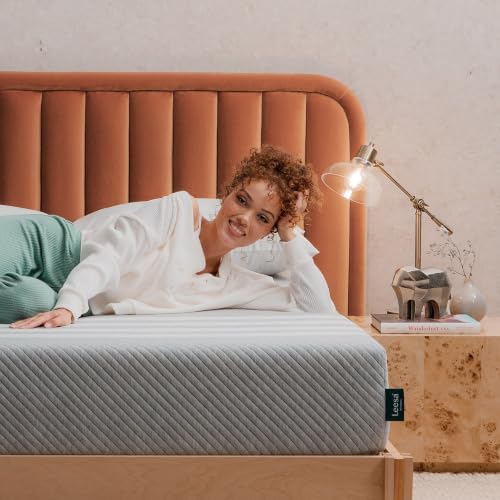
Leesa Original 10″ Memory Foam Mattress
Our badge: Best Gentle All-Rounder
The Leesa Original closes the guide at the gentle end: a premium all-foam mattress meticulously designed, in its maker’s words, with all sleep positions in mind — back, stomach, or side — for cooling, contouring, and pressure relief. Where the Nectar leans firm, the Leesa leans kind: a softer first impression over a supportive foam stack, wrapped in a breathable four-stripe twill cover.
Strengths
- Gentle contour serves pressure-sensitive sleepers in every position
- All-position design brief with premium foam execution
- Assembled in the USA with CertiPUR-US certified foam
Trade-offs
- The gentle feel gives stomach sleepers the least pelvic margin in this guide
- At 10 inches, heavier sleepers get less support depth
- No zoning or progressive mechanism — the universality is in the foam quality
| Color | Grey |
| Size | Queen |
| Dimensions | 80 x 60 x 10 inches |
| Weight | 71 pounds |
The Leesa’s case is for the sleeper — or the household — whose positions vary but whose pressure sensitivity does not: the tender shoulder, the hip that bruises its opinion into the morning, the lighter body that firmer all-rounders treat as an rounding error. Its contour spreads load widely in any posture, and its all-position tuning means no posture is the mattress’s enemy. Stomach-dominant and heavier sleepers should take the guide’s ordering seriously and start higher; everyone else will find the Leesa the most welcoming surface here.
Its maker’s donation program — a mattress to nonprofits for every ten sold — is noted because it reflects the confidence of a company whose returns are low enough to fund generosity. For a gentle universal bed, that is the right kind of signal.
Best for: Lighter and pressure-sensitive sleepers in any position / Not suited for: Heavier and stomach-dominant sleepers
Choose it for kindness with support. Skip it for maximum structure. Check on Amazon
Comparison Table
| Pick | Adaptation mechanism | Feel center | Best position lean | Check price on Amazon |
|---|---|---|---|---|
| Purple Mattress | GelFlex Grid buckling | Medium-firm | Even — all positions | Check price on Amazon |
| Casper Sleep Original | Zoned firmness | Medium-firm | Side + back | Check price on Amazon |
| Tuft & Needle Original | Progressive depth firming | Medium | Even — all positions | Check price on Amazon |
| Nectar 12” Memory Foam Mattress | Firm contour | Firm-leaning | Back + stomach | Check price on Amazon |
| GhostBed Classic | Latex response + dense core | Medium-firm | Even — all positions | Check price on Amazon |
| Leesa Original | Uniform premium contour | Medium, gentle | Side + back | Check price on Amazon |
How to Choose the Best Mattress for Every Position
Census Your Night Before Shopping
For a week, note the position you fall asleep in and the one you wake in — they are rarely the same, and the wake position is the one your body chose without consulting you. Buy for the census, not the intention: even splits want the balanced middle of this guide, skewed censuses want the pick that leans your way, and nobody should buy a specialist mattress for a generalist night.
Grade by the Worst Position
An all-rounder’s quality is its minimum, not its average. During the trial, deliberately start nights in your least-favored position and grade the morning. A mattress whose worst position is “fine” beats a mattress whose best is “amazing” and worst is “aching,” because you will live in all of them.
Choose an Adaptation Mechanism
Grid, zones, progressive foam, latex response — the mechanism is how the mattress knows what position you are in without being told. Uniform materials cannot adapt; they can only average. Averages serve households of one style; mechanisms serve everyone else. This is the single most useful question in the category: what does this mattress do differently when I roll?
Set the Pillow Strategy Per Position
Side sleeping wants a higher pillow, back a medium, stomach a thin one or none. A household of positions needs a compromise pillow — medium and shapeable — or a mattress whose shoulder give subsidizes a lower pillow, as the grid and zoned picks here do. Re-audit the pillow with any mattress change; the pair is one alignment system from head to hip.
For Couples, Buy Local Support
Two different position profiles in one bed need support that varies by location, not by compromise: grid locality, zoned maps, and deep isolation let each sleeper’s side behave as their position requires. The balanced middle (GhostBed) is the fallback when budgets or tastes rule out mechanisms. More on the two-body version of this problem lives in Best Mattresses For Big And Tall, where the bodies differ in size as well as style.
How Should You Trial a Mattress Meant for Every Position?
Structure the trial like the test it is. Week one: sleep naturally and note wake positions and morning feel in a line a day. Week two: deliberately rotate your starting position — side, back, stomach, side — and grade each morning against the position you started and woke in. Week three: return to natural sleeping and compare the trend. That protocol produces something rare in mattress shopping: evidence about your whole night rather than a showroom impression of one posture. Keep the frame and pillow constant during the trial so the mattress is the variable, calendar the decision date, and remember that break-in softens every foam here across the first fortnight — judge the mattress you will own, not the one that arrived.
Problem: Side mornings are great, stomach mornings ache — Your pelvis is sinking in prone position; lean firmer (Nectar) or add nothing and accept the trade if stomach is a small share of your census.
Problem: Your shoulder wakes numb on side nights — The surface needs point give — grid or zoned picks — and your pillow may be too low for the mattress’s sink depth.
Problem: Back sleeping feels perfect but you never stay there — That is information about you, not the mattress: buy for the positions you actually occupy, which the census, not the aspiration, records.
Problem: Your partner’s position habit ruins yours — Isolation and local support are the fix; a shared uniform surface transmits one sleeper’s posture to the other’s side.
Problem: Every position is fine but none is great — You may be the true all-rounder’s customer: the balanced picks trade peaks for consistency, and consistency across a whole night is its own kind of great.
Position by Position: What Each One Actually Needs
Side sleeping is a pressure problem wearing a posture costume: two points carry the body, the waist must be held, and the pillow must fill the shoulder’s width. Back sleeping is an alignment problem: the lumbar curve must be met, not flattened or bridged, and the pelvis must not sink below the ribcage’s line. Stomach sleeping is a discipline problem: the surface must refuse the pelvis, because the lumbar arches in direct proportion to pelvic sink, and the head’s turned position makes pillow minimalism a virtue. The sprawl — the diagonal, one-leg-out, half-prone invention of real sleep — is a forgiveness problem: it borrows a little from every position and needs a surface with no strong opinions. Read the six reviews above as answers to those four problems in different proportions, and your own census tells you the proportions you need. Sleepers whose sprawl is really restlessness will find the movement analysis in Best Mattresses For Insomnia a useful companion — comfort framing only, as always in that guide.
The Guest Room Test: Buying for Positions You Will Never Sleep In
An all-position mattress earns a second living in the guest room, where the sleeper’s style is unknown and the host’s reputation is on the line. The guest-room logic inverts personal shopping: peaks do not matter, minimums do, and the balanced, durable, medium-firm center of this guide — GhostBed for its named all-sleeper brief, Casper for its zoning, Leesa for its gentle welcome — outperforms any specialist a host might project onto their guests. Add a pillow wardrobe (two heights) rather than a single pillow, because the pillow is where an unknown position announces itself first. Hosts assembling the whole guest system can pair these picks with the folding and portable solutions in Best Mattresses For Sleeper Sofas — and time the bedding refresh around Black Friday Bedding Deals 2026 when the room is being done properly.
The All-Positions Bed Over Time: How Versatility Ages
Versatility has an aging curve, and it differs from a specialist bed’s in a way worth understanding before purchase. A single-position mattress wears where its sleeper lies — one zone, one pattern — while an all-positions bed distributes its life across the whole surface: the back zone, both side zones, the stomach’s central band. That distribution is longevity’s friend, but it has a subtle cost: the bed’s most-used compromises soften first, so a combination sleeper’s favorite transition path becomes, over years, a shallow valley the body starts to prefer and then to require. Rotation fights it directly — head-to-foot quarterly keeps the map honest — and the flippable designs reset it entirely. The five-year check is positional: test each position with the same attention you paid in the trial’s first week, because the position that fails first is the data point that tells you whether the bed is aging evenly or retiring early in one geography. A versatile bed maintained on schedule gives back its versatility for the better part of a decade.
Pillows for Every Position: Completing the System
The mattress is half the alignment system; the pillow is the other half, and for all-positions sleepers it is the harder half, because each position wants a different height. Back sleeping wants a low-to-medium pillow that fills the neck’s curve without pushing the chin down. Side sleeping wants the tallest loft — the full shoulder-to-head span held level — and stomach sleeping wants nearly nothing, or nothing at all. The combination sleeper’s solutions are practical rather than perfect: a medium, scrunchable pillow that can be punched taller for the side and flatter for the back is the classic; a two-pillow system, one firm and one soft, swapped by feel, serves sleepers whose positions come in long chapters; and the adjustable-fill pillow, added to or emptied in minutes, is the modern answer for the sleeper whose chapters change nightly. Whatever the choice, audition pillow and mattress together during the trial — a bed blamed for a sore neck is very often a pillow wearing the mattress’s name — and budget for the pillow with the same seriousness as the bed, because the spine does not care which component failed it.
All-Positions Beds for Changing Bodies: Pregnancy, Recovery, and Age
Some all-positions shoppers are not restless by temperament but by season: the pregnant sleeper migrating from back to side by medical guidance, the surgical patient whose cleared positions change month by month, the aging sleeper whose hip retires the side position it loved for decades. For these shoppers the versatile bed is not a luxury but the only rational purchase, because the position being shopped for is a moving target. The shopping emphases shift accordingly: edges matter more, since entries and exits multiply and may involve assistance; motion isolation matters more, since broken sleep compounds fragile recovery; and the trial matters most of all, because the body doing the judging will not be the body that keeps the bed. Choose the pick whose compromises are kindest at medium-firm, keep the packaging until the trial closes, and treat the purchase as equipment for a season of change — the bed’s job is to have no strong opinions while your body renegotiates its own.
All-Positions Sleepers and Mattress Height: The Forgotten Variable
Profile height rarely headlines an all-positions brief, and it quietly governs two of the category’s daily experiences. The first is transition mechanics: a mover crosses the surface dozens of times a night, and every crossing is easier on a bed whose height lets the sleeper roll rather than climb — too tall and each reposition becomes a small mountaineering event, too low and rising from the stomach position turns into a press-up. The second is edge geometry: position changes often end at the bed’s margins, and a tall, well-built edge is a usable sleeping zone while a tall, soft one is a slope the body slides down mid-dream. Match height to the sleeper’s leg length and the frame beneath — the top of the finished bed should meet roughly the back of the knee when standing beside it — and audit the bedding budget accordingly, since the tallest picks in this guide demand deep-pocket sheets that the slim ones waive. Height is the variable nobody shops for and everybody lives with; the all-positions sleeper, who uses more of the bed than anyone, has the most to gain from getting it right the first time.
Reading Reviews as an All-Positions Sleeper
Review sections are written disproportionately by single-position sleepers with strong verdicts, and the all-positions reader needs a translation method. Weight the reviews that describe movement — turning, transitioning, waking in a different position than sleep began — over the reviews that grade one posture for eight hours. Discount the firmness adjectives by the reviewer’s described body and position, since “too firm” from a light side sleeper can be your medium, and “perfect support” from a heavy back sleeper can be your hammock. Mine the long reviews for the second month: the all-positions failure mode is rarely night one, it is the slow discovery that one position of four has been quietly taxed, and only reviewers who kept the bed and kept moving report it. And contribute your own review when the trial closes, written for the mover who will read it at midnight next season — position by position, honest about the compromise, specific about the response speed. The category’s knowledge base is built one restless sleeper at a time.
All-Positions Sleepers and Aging: How the Mix Changes
The position mix is not a lifetime constant. Younger sleepers stomach-sleep freely and turn without cost; across the decades the stomach chapter usually shortens — necks and lower backs tax it first — while the side chapters lengthen and the back chapters stabilize. Shoulders and hips file their own amendments, retiring positions that were signatures for years. The purchasing consequence is to weight today’s secondary position more heavily than nostalgia suggests: the bed should serve the mix you are becoming, with the trial log recording the actual current distribution rather than the remembered one. A versatile mattress is, in this light, an unusually future-proof purchase — it does not ask the sleeper to predict which position survives — and it is why this category so often becomes the last mattress style a household buys, long after the single-position experiments have been given away.
The Guest Test: What Visitors Teach You About Your Own Bed
Every all-positions sleeper eventually receives an unplanned product review: the guest who sleeps in their bed — house-sitting, visiting, exiled by their own renovation — and reports in the morning. Guest data is uniquely honest because guests owe the bed nothing and notice everything a habituated owner has stopped seeing: the shallow valley on the favored side, the edge that has begun its slope, the position the bed quietly forbids. Collect these reports rather than defending against them; two guests naming the same geography is a rotation reminder or a replacement signal that no amount of owner testing surfaces as cleanly. And return the favor in other people’s houses by being the guest who can say, precisely and kindly, which position their bed serves and which it taxes — the all-positions sleeper is the best mattress reviewer any household knows, because they alone test the whole map.
The All-Positions Verdict: Learning to Love the Compromise
Every all-positions purchase ends at the same philosophical address: the bed is a compromise, and the compromise is the correct answer. Single-position sleepers get to optimize; movers get to be served everywhere at eighty-five percent, which across a whole night sums to more comfort than a bed that is perfect for one chapter and punitive for three. The sleepers who thrive on these mattresses are the ones who make peace with that arithmetic during the trial rather than auditing each position against a specialist ideal the category never promised. Judge the bed by the whole night’s average and the morning’s report, keep the rotation schedule that keeps the map honest, and let the specialist beds go to the specialists. Versatility, maintained, is not the absence of a perfect position — it is the presence of every position, every night, for years. That is the purchase this guide set out to describe, and for the sleeper who lives in all four positions, it is not a compromise at all. It is the only honest fit.
A Last Word Before the Shortlist
Bring one habit to the trial that this guide has recommended in every section: write the night down. Position on waking, the morning’s first report, a word for the transitions you remember. Three weeks of those small entries will tell you more about a versatile mattress than any specification sheet, because the all-positions sleeper’s experience is a pattern across nights rather than a verdict from one. The bed that serves the pattern is the bed to keep — and the log, kept, becomes the household’s reference for every bedding decision that follows this one.
Common Buying Mistakes
Buying for Your Falling-Asleep Position
It is the smallest share of your night and the only one you consciously choose. The census — especially wake positions — is the data; the intention is the advertising you do to yourself.
Choosing a Specialist for a Generalist Night
The perfect side-sleeper mattress is a stomach sleeper’s problem. If your night is plural, your mattress must be too.
Believing Medium Means All-Purpose
A uniform medium foam averages every position into adequacy. Mechanisms — grid, zones, progressive firming — adapt. Know which of the two you are buying.
Ignoring the Partner’s Census
In a shared bed there are two censuses and one mattress. Local support and isolation are how one rectangle honors both; a compromise feel honors neither fully.
Skipping the Structured Trial
An all-position claim needs an all-position test. Three unstructured nights measure your favorite posture; the rotation protocol in this guide measures the mattress.
Final Recommendation
Start with the Purple Mattress: its grid is the only mechanism here that answers each position at the exact points that position loads, and it does so instantly, coolly, and without asking the sleeper to adapt. The runner-up is the Casper Sleep Original — Check on Amazon — for shoppers who want the same all-position intelligence in a proven foam form. Census your night, grade by the worst position, run the rotation trial, and the mattress you keep will be the rare one that is right four ways at once.
Frequently Asked Questions
What firmness works for all sleeping positions?
Medium to medium-firm is the survivable center for every position: giving enough for side shoulders, firm enough for stomach pelvises. Within that range, adaptation mechanisms — grids, zones, progressive foam — matter more than the exact label.
Is a hybrid or foam better for all positions?
Both can work; this guide’s pool answers with foam and grid designs. Hybrids add responsive coil support that many all-position sleepers love — see our hybrid guide — while foam and grid lead on isolation and point adaptation.
How do I know my real sleeping positions?
Note sleep and wake positions for a week, and ask a partner if you have one. The wake position and the partner’s report are the honest data; your falling-asleep position is only the trailer.
Can one mattress really suit both a side sleeper and a stomach sleeper?
It is the hardest pairing, and mechanism-led designs — the Purple’s grid, the Casper’s zones — come closest, because they vary support by location and load rather than by a single firmness. A uniform mattress will always favor one of the two.
What pillow should an all-position sleeper use?
A medium-height, shapeable pillow you can adjust as you move, or a lower pillow paired with a mattress that gives generously at the shoulder. Re-check the pairing whenever the mattress changes.
How long should I trial an all-position mattress?
Three weeks minimum, with a deliberate rotation of starting positions in the middle week. Your test matrix is four positions wide; give it the nights to fill every cell before deciding.


