Disclosure: As an Amazon Associate, dailyhomedecorating.com earns from qualifying purchases. Links to Amazon on this page are affiliate links; they cost you nothing extra. Prices and availability change often, so check the current Amazon listing before you buy.
Shopping for the best mattresses for big and tall sleepers is frustrating for a specific reason: most mattresses are engineered around an average body, and a body that is taller, heavier, or both exposes every shortcut in that engineering within a year. The foam that felt supportive in the showroom compresses deeper under greater load and stays compressed longer. The edges that seemed fine collapse under a heavier sit. The queen that fit everyone else leaves a tall sleeper’s feet negotiating with the footboard. Big and tall shoppers do not need a different kind of mattress so much as they need more of everything a mattress is made of — more thickness, denser support, stronger edges, and length that respects their height.
One transparency note before the picks: our verified product pool contains no mattress marketed specifically as a heavy-duty or bariatric model, and it does not include manufacturer weight-capacity figures. So this guide will not invent capacities. Instead, it selects the pool’s most substantial builds — the tallest profiles, the coil-reinforced structures, the densest support cores, the strongest edge designs — and tells you exactly which verified characteristics matter for larger bodies, and which questions (starting with weight capacity) you must confirm on the listing before buying. That is the honest version of this guide, and it is more useful than a fabricated rating. Tall sleepers should also check the length discussion in Best King Mattresses Under $500, and anyone pairing the mattress with a new frame should start with Best Bed Frames For Tempurpedic Mattresses, where center support gets the attention it deserves.
Where to Buy
Every pick in this guide is sold on Amazon, where you can check the current price, size availability — including the longer sizes tall sleepers need — trial terms, and, importantly, the manufacturer’s stated weight capacity on the listing itself. Start with our top pick, the Serta Perfect Sleeper Ultimate 14.5″ Queen Mattress – Medium Pillow Top | CertiPUR-US cert — Check on Amazon. The other five picks are the Purple Mattress — Check on Amazon; the Sealy Dreamlife 12” Hybrid — Check on Amazon; the Nectar 12” Memory Foam Mattress — Check on Amazon; the Sweetnight CoolNest — Check on Amazon; and the GhostBed Classic — Check on Amazon. Treat the listing, not any roundup, as the final word on price and capacity.
In this guide
Quick Picks
| Pick | Badge | Why it earns its place |
|---|---|---|
| Serta Perfect Sleeper Ultimate 14.5″ Queen Mattress – Medium Pillow Top | CertiPUR-US cert | Best Overall | The tallest build in the pool: a zoned high-density coil system, deep edge encasement, and a pillow top over it all. |
| Purple Mattress | Best for Pressure Relief | The GelFlex Grid cradles hips and shoulders while a durable base refuses to sink — support that does not bottom out. |
| Sealy Dreamlife 12” Hybrid Mattress-in-a-Box | Best Coil Support | Seven inches of encased coils carry load the way only steel can, under gel foam and a transition layer. |
| Nectar 12” Memory Foam Mattress | Best Firm Foam | Firm-leaning contour with a dynamic support layer — the foam pick least likely to hammock a heavier back sleeper. |
| Sweetnight CoolNest Queen Mattress | Best Tall Profile | A 14-inch, 5-zone cooling build whose depth gives heavier bodies room to sink without reaching the base. |
| GhostBed Classic 11 Inch Queen Memory Foam Mattress | Medium-Firm Feel | Best Durable Core | A high-density support core under aerated latex — density is the budget shopper’s durability insurance. |
Key Takeaways
- For larger bodies, thickness plus density equals support: look for 12-inch-plus profiles, coil cores, or explicitly high-density foam bases.
- Our pool lists no manufacturer weight capacities — confirm the capacity for your exact size on the Amazon listing before buying. This step is not optional.
- Edge support is a daily feature, not a luxury: big and tall sleepers sit harder, dress on the edge, and need edges that hold.
- Tall sleepers should shop length first: confirm the mattress length against your height, and consider longer sizes on the listing.
- The frame is half the purchase: a heavy sleeper on a heavy mattress needs a frame with real center support and rated capacity.
- Coils age slower than foam under heavy load; foam’s counter-argument is pressure relief. The hybrids here split the difference.
How These Picks Were Chosen
The selection weighted four verified characteristics. First, profile: every pick is 11 to 14.5 inches in its verified variant, because a larger body needs material depth to distribute load before reaching the support base. Second, structure: two picks are coil hybrids, one is a zoned coil pillow-top, and the foam picks were chosen for their support architecture — a firm-leaning support layer, a high-density core, a 5-zone design — rather than their surface softness. Third, edges: the Serta’s deep foam encasement, the Purple’s edge support foam, and the hybrids’ perimeter construction all address the sit-on-the-edge reality. Fourth, pressure behavior: the Purple’s grid and the Sweetnight’s zones address the shoulder-and-hip concentration that heavier side sleepers feel most.
What was filtered out: every thin or light-duty model in the pool — 6-inch and 8-inch builds are honest products for other jobs and the wrong answer here — and soft, plush-first mattresses whose comfort layers would compress to their base under a larger sleeper. On method: because the pool carries no weight-capacity data, this guide makes no capacity claims for any pick and instructs you to verify capacity on the listing; any guide that prints a capacity it cannot source is guessing with your money. Specifications below are the verified pool specs; prices are never printed.
The 6 Best Mattresses for Big and Tall — Reviewed

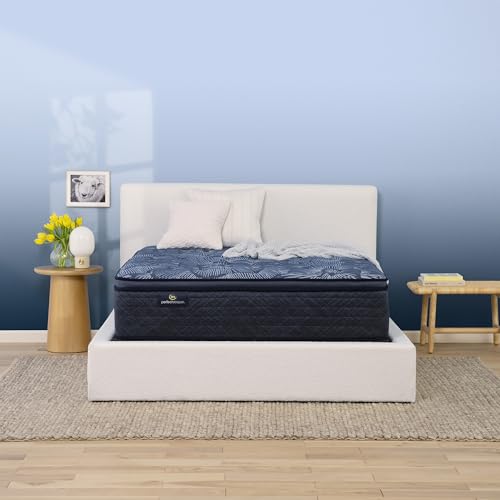
Serta Perfect Sleeper Ultimate 14.5″ Queen Mattress – Medium Pillow Top | CertiPUR-US cert
Our badge: Best Overall
The Serta Perfect Sleeper Ultimate leads this guide on sheer substance: 14.5 inches of mattress built on a high-density zoned coil system, wrapped in a deep foam edge encasement, and finished with a medium pillow top. For a larger body, each of those is a functional feature. The coils carry the load with targeted support for the lower back and hips; the depth means a heavier sleeper compresses comfort layers without arriving at the support floor; and the BestEdge encasement keeps the perimeter from collapsing under a heavier sit.
Strengths
- Zoned high-density coils aim support at the lower back and hips, where larger bodies load the bed most
- BestEdge foam encasement extends the sleep surface and resists edge roll-off and collapse
- The tallest profile in the pool gives deep material margin before the support core engages
Trade-offs
- Tall mattress plus a standard frame makes a high bed — measure total height if mobility is a concern
- At over 82 pounds in queen, setup and rotation are firmly two-person jobs
- The pillow top’s plushness will soften gradually over the years, as pillow tops do
| Color | Dark Blue |
| Size | Queen |
| Dimensions | 79.5 x 60 x 14.5 inches |
| Weight | 82.26 pounds |
The zoned coil design deserves translation for this audience: the center of the bed, under the hips and lumbar, gets the firmest support, because that is where a heavier body’s weight concentrates and where a mattress either holds the spine’s line or lets it sag. The pillow top then does the opposite job at the surface — PillowSoft Aire foam and Cool Twist gel memory foam cushion the shoulder and hip points — so the Serta delivers the support-and-cushion combination in a single build instead of asking the shopper to choose. Its listing’s compatibility breadth (traditional frames, box springs, platforms, slatted frames, bunky boards, adjustable frames) helps, with the standing warning that the base must be strong, flat, and rated for the combined load.
For tall sleepers, note the verified length of 79.5 inches and check the listing for longer options if you are over about six-foot-two; a mattress you fit inside is the first support feature of all. Paired with a genuinely sturdy frame, the Serta is the most complete big-and-tall answer our pool can offer: the most material, the most structure, and the strongest edges, in one bed.
Best for: Larger back and combination sleepers who want maximum substance and edge support / Not suited for: Low bed setups and anyone who cannot manage a heavy mattress
Choose it for the most mattress in the guide. Skip it if you need a low profile. Check on Amazon

Purple Mattress
Our badge: Best for Pressure Relief
The Purple Mattress replaces foam comfort with something mechanically different: 2 inches of GelFlex Grid, a flexible polymer lattice that buckles under concentrated pressure — shoulders, hips — and stays supportive under distributed weight. For a larger side sleeper, that behavior is close to ideal: the grid gives exactly where the body’s points press and holds everywhere else, over edge support foam and a durable base layer that its maker describes as support that does not sink.
Strengths
- The GelFlex Grid cradles pressure points while keeping the spine aligned — give and support in the same layer
- Air channels through the grid make it genuinely temperature-neutral, a real benefit for larger bodies that sleep warm
- A durable base and edge support foam resist the sinking and sagging heavier loads accelerate
Trade-offs
- The grid feel is unmistakably different — responsive and slightly buoyant — and not everyone loves it
- At 100 pounds in its verified variant, it is the heaviest pick in this guide by a wide margin
- Verified dimensions show an 11-inch build while the maker’s title cites a 9.25-inch grid mattress profile — check the listing’s current spec table for the exact configuration
| Color | White |
| Size | Queen |
| Dimensions | 80 x 60 x 11 inches |
| Weight | 100 pounds |
The Purple’s relevance to big and tall sleepers is load behavior. Foam under a heavy point load compresses toward its limit and pushes back with everything it has, which is why heavy side sleepers sometimes feel a firm mattress as a hard one at the hip. The grid instead redistributes: columns buckle under the hip and shoulder, spreading the load sideways into neighboring columns, so pressure drops without the whole surface sinking. The result reads as medium-firm support with soft spots exactly where your anatomy needs them — a trick no uniform material can perform.
Its maker cites a 2025 SleepScore Labs study in which 86 percent of participants felt more supported; we pass that along as the maker’s claim. What we can say from the verified build is that the design brief — aligned support, no sinking, temperature neutrality — matches this keyword’s needs point for point. Budget for two strong people and a planned path on delivery day; a 100-pound mattress does not get improvised up a staircase.
Best for: Heavier side sleepers and hot sleepers who want pressure relief without sinking / Not suited for: Anyone who cannot manage a very heavy mattress, or who wants a traditional foam feel
Choose it for the smartest pressure mechanics here. Skip it if moving the bed is a recurring event. Check on Amazon

Sealy Dreamlife 12” Hybrid Mattress-in-a-Box
Our badge: Best Coil Support
The Sealy Dreamlife 12” Hybrid puts 7 inches of individually encased coils under gel memory foam and a transition layer, and for larger bodies the argument is durability physics: steel springs do not take compression set the way foam bases do, so the support a big and tall sleeper feels in month one is much closer to the support they will feel in year five. Each coil compresses independently, so a heavier hip gets proportionally deeper support without dragging the whole surface down.
Strengths
- Encased coils deliver local, proportional support that resists long-term softening
- A 2.25-inch transition layer keeps heavier sleepers from feeling the coil tops through the comfort foam
- Gel memory foam surface plus coil airflow addresses the heat larger bodies generate
Trade-offs
- At just over 80 pounds in queen, it is a heavy install
- Coils demand a flat, rigid, capacity-rated frame to stay quiet and level
- The feel is a balanced hybrid — less contour than the deep foam picks
| Color | Dreamlife |
| Size | Queen |
| Dimensions | 80 x 60 x 12 inches |
| Weight | 80.604164 pounds |
The transition layer is the detail to appreciate: on a cheap hybrid, a heavier sleeper compresses the comfort foam fully and rests on coil tops, feeling every spring as a pressure point. The Dreamlife’s high-density transition foam spreads that load across many coils at once, so the support arrives as a platform instead of a row of points. That is the difference between a hybrid designed for real bodies and one designed for a price tag, and it is why this pick ranks as the coil recommendation for this audience.
CertiPUR-US foams and Surface-Guard antimicrobial technology support long service, and the reduced motion transfer matters for couples where one partner is larger: exits and entrances compress one neighborhood of coils, not the whole bed. Set it on the strongest flat frame in your budget — see the frame discussion in our guide to Best Mattresses For Back Issues for how bases and backs interact — and the Dreamlife is the pick most likely to feel unchanged after years of heavy use.
Best for: Heavier sleepers who prioritize durable support and cooler sleep / Not suited for: Solo movers and deep-contour devotees
Choose it for steel-backed longevity. Skip it for a plush foam hug. Check on Amazon

Nectar 12” Memory Foam Mattress
Our badge: Best Firm Foam
The Nectar 12” Memory Foam Mattress is the foam pick for larger bodies because its tuning runs firm with a touch of comfort: a contouring memory foam layer over a dynamic support foam that pushes back rather than merely receiving weight. Soft foam is where heavy sleepers go to hammock; the Nectar’s support layer is designed to hold the pelvis level, which is the entire ballgame for a heavier back or stomach sleeper.
Strengths
- Firm-leaning support holds spinal alignment under heavier loads better than plush foam
- Contouring foam still relieves pressure at the hips and back instead of pressing back at them
- The listing’s long trial positioning lets a larger sleeper judge durability of feel over months, not nights
Trade-offs
- Heavier side sleepers may still want more shoulder give than a firm foam offers
- Slow foam response makes position changes effortful on a wide bed
- At 78 pounds in queen, it is a two-person setup
| Color | White |
| Size | Queen |
| Dimensions | 80 x 60 x 12 inches |
| Weight | 78 pounds |
The Nectar’s system — breathable cooling fabric, contouring foam, dynamic support foam — addresses the heavier sleeper’s two foam complaints in order: heat, handled at the surface, and sink, handled by the support layer’s push-back. In practice, a heavier back sleeper feels held rather than nested, and a heavier stomach sleeper keeps hips level with shoulders instead of sagging into an arched lower back. Side sleepers get real contouring, though the firmness means the deepest pressure relief in this guide still belongs to the Purple and the Sweetnight.
The honest foam caveat applies: even a well-built foam base will soften gradually under heavy nightly load, faster than coils will. The Nectar counters with its support-layer design and a warranty positioning its maker describes as forever — confirm the current terms on the listing. For the big and tall shopper committed to foam’s motion isolation and pressure feel, this is the pool’s most defensible foam choice.
Best for: Heavier back and stomach sleepers who want foam isolation without the hammock / Not suited for: Side sleepers seeking maximum plushness
Choose it for the firmest foam support here. Skip it if you sleep on your side and run light. Check on Amazon
Sweetnight CoolNest Queen Mattress
Our badge: Best Tall Profile
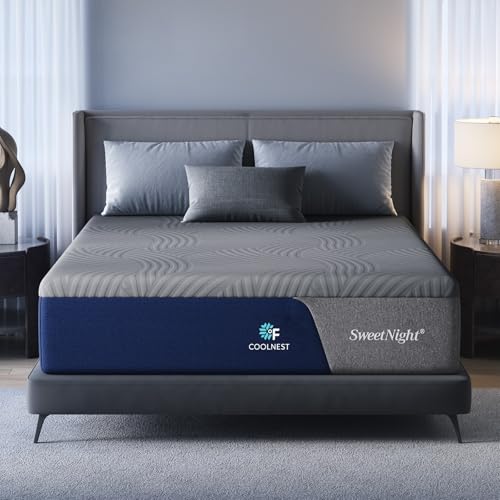
The Sweetnight CoolNest brings the deepest foam stack in this guide — 14 inches with a 5-zone ergo support design — plus a cooling system built from PCM high-resilience foam and gel-infused memory foam. Depth is a genuine support feature for larger bodies: more material between the sleeper and the base means pressure distributes over a thicker column, and the zones firm the support under the torso’s heavy middle while cushioning the ends.
Strengths
- Five support zones redistribute pressure while keeping the body’s line stable
- The 14-inch profile gives heavier sleepers the deepest sink margin in the guide
- The CoolNest cooling system targets the heat that larger bodies and foam together generate
Trade-offs
- Medium feel may let a heavier stomach sleeper’s hips sink more than ideal
- The tall profile requires deep-pocket sheets and raises total bed height
- Full expansion is listed at up to 72 hours
| Color | Grey & Blue |
| Size | Queen (U.S. Standard) |
| Dimensions | 80 x 60 x 14 inches |
| Weight | 68.67 pounds |
The CoolNest’s zone logic mirrors the Serta’s in foam form: support foam and comfort foam are arranged so the heavy middle of the body gets structure while the shoulder and legs get cushion. Its maker notes American Chiropractic Association recognition for the design — cited here as the maker’s claim — and the practical effect for a larger side sleeper is a hip that can settle into a deep, zoned stack without reaching the hard base that turns settlement into a pressure point. Motion isolation across the foam layers also suits couples of different sizes, since the lighter partner’s side of the bed behaves independently.
Cooling deserves its emphasis for this audience: more body mass in contact with foam means more stored heat, and the CoolNest’s breathable cover and layered cooling foams are the pool’s most elaborate answer short of the Purple’s open grid. If you are a larger side sleeper who runs hot, this is your pick; if you are a larger stomach sleeper, the firmer Nectar or the coil picks will hold your hips better.
Best for: Larger side sleepers who sleep hot and want maximum depth / Not suited for: Heavier stomach sleepers and low bed frames
Choose it for depth plus cooling. Skip it for firm stomach support. Check on Amazon

GhostBed Classic 11 Inch Queen Memory Foam Mattress | Medium-Firm Feel
Our badge: Best Durable Core
The GhostBed Classic closes the guide with the density argument: four layers including cooling gel memory foam and aerated latex over a high-density support foam core. Density is the unglamorous spec that decides foam longevity under load — a high-density core compresses less per night and recovers more completely — and for a big and tall shopper buying foam, it is the closest thing to insurance the category offers.
Strengths
- A high-density core supports spinal alignment and resists the softening heavy use accelerates
- Aerated latex adds responsive support and airflow at the surface
- At 50 pounds in queen, it is the lightest substantial pick here — kinder to move and rotate
Trade-offs
- At 11 inches it has less depth margin than the 12 to 14.5-inch picks for the heaviest sleepers
- Medium-firm responsiveness offers less deep contour for pressure points
- Very tall sleepers must confirm length options on the listing, as with every pick here
| Color | White |
| Size | Queen |
| Dimensions | 80 x 60 x 11 inches |
| Weight | 50 pounds |
The GhostBed’s feel — soft, supportive, and springy with minimal motion transfer, per its listing — suits the larger combination sleeper who changes position often and resents foam’s slow response at every roll. The aerated latex keeps the surface lively, the gel foam contours, and the dense core holds the whole stack’s shape. Made in the USA and Canada with CertiPUR-US certified materials, it is also the easiest of these six to live with logistically: rotations and room changes stay one-strong-person feasible at most sizes.
Its limit is arithmetic: 11 inches under a very heavy sleeper leaves less margin than the Serta’s 14.5 or the Sweetnight’s 14. Shoppers at the highest weights should start at the top of this guide; shoppers in the moderately big-and-tall range who value a responsive feel and a durable core will find the GhostBed the most balanced foam buy here. Either way, confirm the listing’s stated capacity for your size before ordering — the rule this guide repeats because it matters.
Best for: Larger combination sleepers who want a durable, responsive foam core / Not suited for: The heaviest sleepers, who should start with the deepest builds
Choose it for density-driven durability. Skip it if you need maximum profile depth. Check on Amazon
Comparison Table
| Pick | Profile | Support structure | Edge story | Check price on Amazon |
|---|---|---|---|---|
| Serta Perfect Sleeper Ultimate | 14.5 inches | Zoned high-density coils | Deep foam encasement | Check price on Amazon |
| Purple Mattress | 11 inches (verified dims) | GelFlex Grid over durable base | Edge support foam | Check price on Amazon |
| Sealy Dreamlife 12” Hybrid | 12 inches | Encased coils + transition foam | Coil perimeter | Check price on Amazon |
| Nectar 12” Memory Foam Mattress | 12 inches | Dynamic support foam | Firm foam perimeter | Check price on Amazon |
| Sweetnight CoolNest | 14 inches | 5-zone foam support | Deep foam perimeter | Check price on Amazon |
| GhostBed Classic | 11 inches | High-density foam core | Dense foam perimeter | Check price on Amazon |
How to Choose the Best Mattress for a Big and Tall Body
Start With Length and Capacity — the Two Gates
Before feel, two factual gates decide whether a mattress can serve you at all. Length: your mattress should exceed your height with room for a pillow and natural sprawl; standard queen and king lengths sit around 80 inches, and taller sleepers should look for longer variants on the listing. Capacity: the manufacturer rates each model and size, and exceeding the rating voids the support story and often the warranty. Our pool does not publish capacities, so read them on the listing for the exact size you are buying — and if a listing will not state one, treat that silence as your answer.
Buy Structure: Coils, Density, and Depth
Under greater load, support quality is structural. Pocketed or encased coils carry weight without taking a set; high-density foam cores resist compression fatigue; and depth — 12 inches and up — gives the load a longer path to distribute across. Thin, soft, or vague builds fail larger bodies first and fastest. When two finalists remain, choose the one whose support layer you can describe in a sentence of engineering rather than adjectives.
Treat Edge Support as a Safety Feature
Big and tall sleepers sit on the edge to dress, stand up from a lower point, and often sleep nearer the edge to give a partner room. Edges that collapse steal sleep surface and make standing a wobble. Look for named edge systems — encasement, reinforced perimeter coils, edge foams — and test the edge in the trial’s first week, while returns are easy. Couples should also weigh the width question honestly: a larger sleeper uses more of the bed’s width as well as its length, which is why the couples discussion below treats width as a shared budget.
Specify the Frame Like an Engineer
Combined sleeper-plus-mattress weight concentrates in the bed’s center. Your frame needs a rated capacity above that combined load, a center rail with legs that reach the floor on queen and king sizes, and slats or a surface that do not flex. A heavy-duty mattress on a decorative frame is a warranty dispute in waiting. Check the frame’s rating with the same seriousness as the mattress’s, and re-check center legs after every move.
Plan for Heat
Larger bodies store more heat against the sleep surface, and foam stores it with them. Prioritize airflow designs — coil cores, open grids, aerated latex, gel infusions — and pair them with breathable bedding. Our dedicated guide to Best Mattresses For Staying Cool ranks the cooling technologies in depth; in this guide, the Purple, Sealy, and Sweetnight carry the cooling brief.
How Do You Make a Mattress Last Under a Larger Sleeper?
Longevity under load is a routine, not a hope. Rotate the mattress head-to-foot every two to three months — more often than standard advice, because wear concentrates faster — so the heavy zones share duty with the fresh ones. Keep the protector on and wash it monthly; moisture is foam’s quiet enemy. Inspect the frame’s center legs and slats at every rotation, since a single shifted leg reintroduces the sag you paid to escape. Vacuum the surface seasonally, air the bed without bedding on laundry mornings, and never fold or drag the mattress by its cover during moves. Follow that routine and the structural picks in this guide will hold their support profile years longer than the same mattresses neglected.
Problem: A body impression has formed in your sleep zone — Rotate the mattress so the impression zone rests; if it rebounds over a few weeks it was surface settling, and if it does not, document it for a warranty conversation.
Problem: The edge has softened where you sit to dress — Vary your sitting spot, confirm the base extends fully under the mattress edge, and consider it a signal to prioritize encased edges at replacement time.
Problem: The bed feels lower than it used to — Measure the mattress and then check the frame: legs, slats, and center support settle too, and the frame half is cheaper to restore.
Problem: You sleep hotter than on your old bed — Strip the bedding variables first (protector type, sheet weave, duvet weight) before blaming the mattress’s core.
Problem: The frame creaks under load — Tighten every fastener and confirm center legs touch the floor; creaks are the frame asking for the attention the setup section prescribed.
Length: The Tall Sleeper’s First Specification
Height is the silent half of this keyword. A sleeper over six-foot-two on a standard 80-inch mattress lives with a small nightly negotiation — pillow pushed to the very top, feet at the very edge, knees bent by policy rather than preference. The fixes, in order: confirm the exact length of the size you are buying on the listing, because nominal sizes vary by fractions that matter at the margin; look for longer variants (several makers offer extended lengths in king sizes) before compromising on construction; and set the bed up without a footboard, which returns several inches of usable length for the cost of a design preference. A tall sleeper who solves length first and support second will sleep better than one who buys the world’s best support in a bed six inches too short — a point the couples in Best Mattresses For Sleeper Sofas learn in miniature every time a guest unfolds a sofa bed.
Couples of Different Sizes
When one partner is big and tall and the other is not, the mattress must be two beds in one rectangle. Local support is the mechanism: encased coils compress per sleeper, zoned foams firm the heavy middle without hardening the whole surface, and the Purple’s grid gives at points while holding across spans. The practical rule is to spec the mattress for the larger partner’s support needs — support failure cannot be fixed with bedding — and then soften the smaller partner’s experience with their pillow and their side’s bedding, which can be adjusted freely. Motion isolation completes the picture, because a larger partner’s movements carry more energy; foam surfaces and pocketed coils absorb it, and a rigid frame keeps the base from re-broadcasting it. Buy for the bigger body, tune for the smaller one, and both sleep like the bed was chosen for them. If the purchase is part of a wider bedroom refresh, Black Friday Bedding Deals 2026 is where the bedding half of that tuning often gets cheaper.
Why Firmness Labels Mislead Larger Bodies
Firmness is not a property of a mattress; it is a relationship between a mattress and the weight on it. The same medium-firm bed reads soft to a heavier sleeper, because greater load compresses more of the comfort stack and engages the support layer sooner, and reads firm to a lighter sleeper, who never gets past the surface. This is why big and tall shoppers so often report that a mattress rated medium felt nothing like the reviews promised: the reviews were written by average bodies accurately describing a different experience. The practical correction is to shop one step firmer than the label your weight-class peers recommend — a heavier back sleeper who wants a medium feel should audition medium-firm builds, and a heavier side sleeper who wants plush should audition medium ones — and then let the trial arbitrate, because your body is the only calibrated instrument in the process.
Position interacts with weight in ways worth spelling out. Heavier stomach sleepers need the firmest end of any range, because the pelvis is both the heaviest and the most position-sensitive load: if it sinks below the ribcage, the lumbar arches all night. Heavier side sleepers need the deepest comfort stack rather than the firmest, because their shoulder and hip loads concentrate on small areas that must be allowed to sink in a controlled way — the Purple’s grid and the Sweetnight’s zones exist for exactly this mechanics problem. Heavier back sleepers have the easiest brief: support the line, cushion the surface, and almost every pick in this guide will serve.
Setting Up a Heavy Mattress Without Hurting Yourself or the Bed
The picks in this guide weigh between 50 and 100 pounds in their verified variants, and their larger sizes weigh more, so setup is a logistics exercise. Plan the route first: measure the staircase turn and the bedroom door, decide which side of the frame the box gets opened on, and recruit a second adult before the delivery arrives, not after. Move the box with a hand truck or by sliding it on a blanket rather than dead-lifting it, and never drag the expanded mattress by its cover or handles-that-are-not-handles. Unbox on the frame itself: a heavy foam or hybrid that expands half-off a platform will need repositioning at full weight, which is how backs get hurt during a purchase meant to help them.
Once expanded, the checks that matter are structural. Confirm the mattress sits fully on the frame with no edge overhang, press along the center to feel for frame flex, and verify the center legs are vertical and loaded. Give the mattress its full expansion window — larger, denser builds can take the longer end of the ranges these listings describe — and sleep the first nights knowing the feel will firm up its final character over the first weeks. Register the warranty while the listing and order details are in front of you, photograph the setup for your records, and put the first rotation date on the calendar now, while motivation is high.
Rotation and Care Schedules for Heavier Loads
Everything a mattress endures, it endures faster under a bigger load — which makes the care schedule a structural feature for this audience rather than housekeeping. Rotation is the headline: head-to-foot every two to three months in the first year, when foam settles fastest, then quarterly thereafter. The goal is to keep any single zone from becoming the permanent crater of one sleeper’s hips; on a two-sided flippable pick like the Layla pattern, alternate flipping with rotating so all four orientations share the work across the years. Mark the schedule on the calendar the day the mattress arrives, because a rotation remembered is a rotation skipped.
The base deserves the same discipline: check center legs and slat spacing twice a year, since a base that has begun to bow concentrates the entire load story onto fewer coils and thinner foam spans. Keep the protector washed and intact — heavier sleepers run warmer and sweat more, and moisture is foam’s slow solvent. And weigh the bed’s report honestly at the five-year mark: measure impressions with a straightedge, note whether morning support has changed, and start the replacement conversation from data. A big and tall sleeper who maintains the bed on schedule routinely gets the full service life the maker promised; the same mattress, unrotated on a bowing base, can be retired by its third year with the sleeper blaming the product for the schedule’s sins.
When to Replace: The Big-and-Tall Timeline
Replacement timing for this audience should run on evidence, not anniversaries. The triggers, in order of reliability: a straightedge showing an impression that rotation no longer redistributes; morning support that has changed for two consecutive months on a sound base; new noises localized to one zone; and a partner’s report that the center ridge or the valley has become geography. Bigger sleepers who watch for the first trigger usually replace on their own schedule — planned, researched, trialed — rather than in the emergency purchase that a collapsed bed imposes, and the difference between those two purchases is the difference between this guide read calmly and a listing read at midnight.
Common Buying Mistakes
Buying the Average Mattress and Hoping
Standard builds are engineered around average loads. A larger body does not need hope; it needs depth, density, or coils — and a verified capacity for its size.
Skipping the Capacity Check
Every model and size carries a manufacturer rating. Exceeding it flattens support and can void the warranty. It takes one minute on the listing; skipping it is the most expensive minute in this purchase.
Forgetting the Frame’s Rating
The frame holds you plus the mattress. An unrated decorative frame under a combined heavy load flexes, creaks, and eventually fails — taking the mattress’s support story with it.
Choosing Plush Because It Felt Good for Ten Minutes
Soft surfaces flatter everyone briefly and support larger bodies worst over time. Judge support by the morning after a month, and let the trial carry the experiment.
Ignoring Length Until the First Night
A tall sleeper cannot retrofit inches. Confirm the length of the exact size on the listing before ordering, and skip the footboard.
Final Recommendation
Start with the Serta Perfect Sleeper Ultimate: the deepest build, a zoned coil core, and the strongest edges in this pool make it the most complete answer for larger bodies — after you confirm its capacity and length for your size on the listing. The runner-up is the Sealy Dreamlife Hybrid — Check on Amazon — for coil durability in a slightly lower profile, with the Purple as the pressure-relief alternative for side sleepers and the Nectar as the firm foam option. Whichever you choose: verify capacity, buy the frame as seriously as the mattress, and rotate on schedule. That is how a big and tall sleeper gets a bed that still feels new in year three.
Frequently Asked Questions
What thickness is best for big and tall sleepers?
As general guidance, 12 inches and above gives larger bodies the material depth to distribute load without bottoming out, especially in foam. Coil hybrids can perform at 12 inches with structure doing the work. Thin builds under 10 inches are light-duty products for this audience.
How do I find a mattress’s weight capacity?
Check the manufacturer’s information on the Amazon listing for the exact size you are buying — capacities are model- and size-specific, and our product pool does not publish them, so we do not guess. If a listing omits capacity entirely, contact the seller or choose a model that states one.
Are coils or foam better for heavier sleepers?
Coils generally age slower under heavy load because steel does not take a compression set; high-density foam cores are foam’s best answer. Hybrids combine a foam surface with coil durability, which is why two of this guide’s top three picks use them.
What size should a tall sleeper buy?
Buy length first: the mattress should exceed your height with room to spare. Standard queens and kings run about 80 inches long; sleepers well over six feet should look for extended-length options on the listing and avoid footboards that steal usable inches.
Why does edge support matter so much?
Larger sleepers sit harder on the edge, stand from it, and sleep nearer to it. A reinforced edge keeps the full width usable, makes dressing stable, and prevents the rolled-off feeling that shrinks the bed.
Do I need a special frame?
You need a frame rated for the combined weight of sleepers plus mattress, with a center rail and floor-reaching legs on larger sizes. It does not need to be marketed as heavy-duty, but its rating and center support must be real — verify both before the mattress arrives.


