Disclosure: As an Amazon Associate, dailyhomedecorating.com earns from qualifying purchases. Links to Amazon on this page are affiliate links; they cost you nothing extra. Prices and availability change often, so check the current Amazon listing before you buy.
Searching for the best mattresses for staying cool is usually a summer activity with a winter of evidence behind it: the nights you woke up warm, flipped the pillow to its cool side for the fourth time, kicked the duvet off and pulled it back in the same hour. Body temperature has to fall for sleep to deepen, and a mattress sits directly in that process — either as a heat sink that absorbs and sheds your warmth, or as an insulating block that stores it against you all night. Traditional memory foam earned its warm reputation honestly: a dense, closed structure that you sink into is a structure that wraps your body’s heat back around you. The good news is that cooling design has become a genuine engineering discipline, with real mechanisms — open structures, conductive infusions, phase-change layers, gel matrices — and not just blue coloring and the word “cool” in a larger font.
This guide separates the mechanisms from the marketing. Every pick below has a named, physical cooling story you can evaluate: a grid that air flows through, a PCM layer, gel and graphite conduction, copper infusion, charcoal moisture management. None of them refrigerates — a mattress is passive, and any guide implying otherwise is selling — but the difference between a heat-storing bed and a heat-shedding one is the difference between waking at 3 a.m. and not, multiplied by every warm night of the year. If your heat problem is really a movement problem, Best Mattresses For Combination Sleepers covers the friction side of the story, and if it arrives with a partner generating a second body’s worth of warmth, Best Mattresses For Insomnia discusses the light-sleeper version of the same physics, in comfort terms only.
Where to Buy
Every pick in this guide is sold on Amazon, where you can check the current price, size availability, trial terms, and delivery options on the listing itself. Start with our top pick, the Purple Mattress — Check on Amazon. The other five picks are the Sweetnight CoolNest — Check on Amazon; the Lucid 10 Inch Gel Memory Foam Mattress — Check on Amazon; the Tuft & Needle Original — Check on Amazon; the Layla Copper Infused Memory Foam Mattress — Check on Amazon; and the Novilla Bliss — Check on Amazon. Cooling performance is personal and seasonal, so weigh each listing’s trial terms — a summer trial is worth more to this keyword than a winter one.
In this guide
Quick Picks
| Pick | Badge | Why it earns its place |
|---|---|---|
| Purple Mattress | Best Overall | Air channels run through the GelFlex Grid itself — the only pick whose comfort layer is mostly moving air. |
| Sweetnight CoolNest Queen Mattress | Best Cooling System | A named CoolNest system: PCM foam, gel memory foam, and a 3D-woven breathable cover working as one stack. |
| Lucid 10 Inch Gel Memory Foam Mattress | Best Value Cooling | Gel infusion plus bamboo charcoal handles heat and humidity in a mid-profile, frame-flexible build. |
| Tuft & Needle Original Legacy Medium Firm Gel Foam Queen Mattress in a Box | CertiPUR-US c | Best for Restless Sleepers | Gel-and-graphite adaptive foam with ventilation — cooling that survives a night of position changes. |
| Layla 10” Copper Infused Memory Foam Mattress | Best Copper Cooling | Copper-gel particles conduct heat away through the foam, in a flippable two-feel build. |
| Novilla Bliss Queen Size Mattress | Best for Hot Couples | Gel foam, a breathable knitted cover, and deep motion isolation for two heat sources sharing one bed. |
Key Takeaways
- Cooling is a mechanism, not an adjective: look for open structures, conductive infusions (gel, graphite, copper), PCM layers, or coil/grid airflow — and be skeptical of unnamed “cooling technology.”
- The Purple’s grid is the strongest passive design here because air moves through the comfort layer itself; foam infusions conduct heat but cannot ventilate like an open structure.
- Bedding can defeat any mattress: a waterproof protector, flannel sheets, and a heavy duvet will reheat the coolest bed in this guide.
- Couples double the heat problem; isolation plus surface cooling (Novilla, Purple) is the shared-bed answer.
- Judge cooling across the whole night and the whole season — the first cool touch of a gel surface is marketing; the 4 a.m. temperature is the product.
How These Picks Were Chosen
The first filter was mechanistic honesty: each pick’s verified listing had to name how it handles heat, in materials a reader can reason about. The Purple’s GelFlex Grid ventilates. The Sweetnight stacks PCM foam, gel foam, and a ventilated cover into a named system. The Lucid pairs gel with bamboo charcoal for heat and moisture. The Tuft & Needle conducts with gel and graphite through open-cell foam and quantifies an airflow improvement over standard memory foam. The Layla conducts with copper. The Novilla pairs gel foam with a breathable cover and wins its place on the couples’ version of the problem.
What was filtered out: mattresses whose cooling claim was a word rather than a mechanism; deep, dense, unventilated foam builds however comfortable, because this keyword’s reader has already slept on one; and any pick whose cooling came only from a cover, since a cool-feeling cover over a heat-storing core is a five-minute feature. Method: every claim traces to the verified pool entry, spec boxes use verified specs only, and no static prices are printed. A standing caveat shapes the whole guide: mattress cooling is passive and comparative — these beds shed and conduct heat better than standard foam; none of them lowers a room’s temperature, and room and bedding remain half the system.
The 6 Best Mattresses for Staying Cool — Reviewed

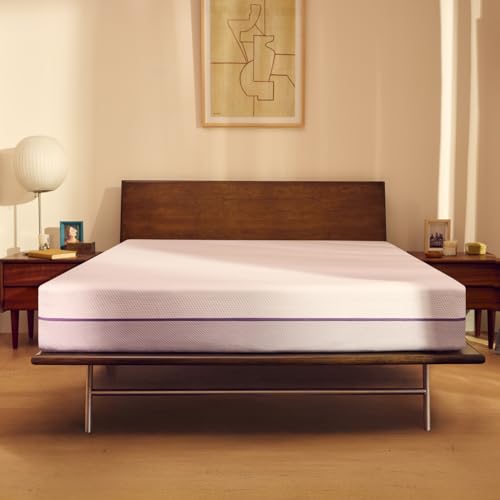
Purple Mattress
Our badge: Best Overall
The Purple Mattress leads this guide because its cooling is architectural rather than additive: the 2-inch GelFlex Grid is an open lattice with air channels running through it, so the comfort layer itself is mostly air space that heat can move through instead of soaking into. Its maker describes the design as temperature-neutral and breathable — the surface neither stores your heat like foam nor feels cold like metal, but simply declines to participate in warming you. For a hot sleeper, that neutrality is the most valuable thermal property a passive material can have.
Strengths
- Air channels through the grid ventilate the comfort layer continuously — no infusion required
- The grid cradles hips and shoulders while aligning the spine, so cooling costs no support
- Temperature-neutral feel stays consistent across seasons, unlike gel surfaces that equilibrate by morning
Trade-offs
- The buoyant grid feel is distinctive; foam devotees should use the trial honestly
- At 100 pounds in its verified variant, it is the heaviest mattress in this guide
- Verified dimensions show an 11-inch build while the maker’s title cites a 9.25-inch profile — check the listing’s current spec table
| Color | White |
| Size | Queen |
| Dimensions | 80 x 60 x 11 inches |
| Weight | 100 pounds |
The physics deserve a paragraph, because they explain the ranking. Foam infusions — gel, copper, graphite — conduct heat away from the surface into the mattress, which works until the mattress itself is warm; the heat has moved, not left. An open grid lets air do the carrying: body heat radiates and convects into channels that connect to the room, so the system has an exit. That is why the Purple’s coolness does not fade at 4 a.m. the way a gel surface’s cool first touch does. Its maker cites a 2025 SleepScore Labs study in which 86 percent of participants felt more supported — a support claim we pass along as the maker’s — while the temperature story stands on the visible structure: you can see the air in this mattress, and air is the cooling.
Practically, the Purple also suits hot sleepers who change position, because the grid adapts instantly and presents a fresh, room-temperature surface wherever you land — no warm crater to climb out of, no cool side to hunt for. Pair it with breathable sheets, skip the insulating protector if your situation allows a breathable one instead, and this is the closest a passive mattress comes to solving heat rather than managing it.
Best for: The hottest sleepers, couples, and anyone whose gel mattress felt cool at bedtime and warm by morning / Not suited for: Sleepers who want a traditional slow foam feel
Choose it for structural cooling. Skip it if you love being hugged by foam. Check on Amazon
Sweetnight CoolNest Queen Mattress
Our badge: Best Cooling System
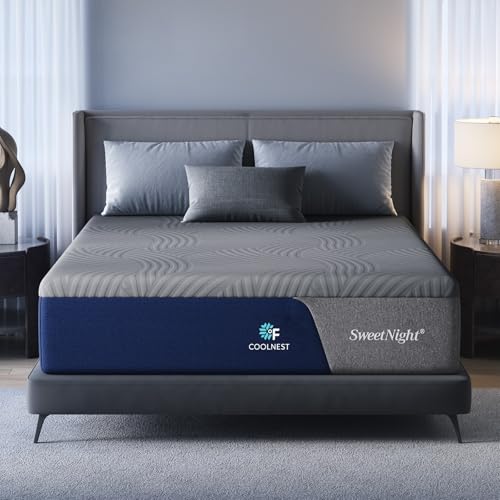
The Sweetnight CoolNest is the foam category’s most systematic answer: a named CoolNest system combining PCM high-resilience foam — phase-change material that absorbs heat as it warms — with gel-infused memory foam, inside a 14-inch build with a 5-zone support design and a 3D-woven cover whose ventilation pores its maker says improve breathability substantially over standard fabrics. Each layer handles a different stage of the night’s heat: the cover vents, the PCM absorbs the first surge, the gel conducts what remains.
Strengths
- Layered cooling: PCM absorption, gel conduction, and a ventilated cover in one system
- 5-zone ergo support means the cooling costs nothing in pressure relief or alignment
- The hollow-structure PCM foam promotes airflow through the comfort stack itself
Trade-offs
- PCM absorbs a finite amount of heat; in a genuinely hot room the system manages rather than defeats the night
- The 14-inch profile needs deep-pocket sheets and raises the bed
- Full expansion is listed at up to 72 hours
| Color | Grey & Blue |
| Size | Queen (U.S. Standard) |
| Dimensions | 80 x 60 x 14 inches |
| Weight | 68.67 pounds |
Phase-change material is the one foam technology that behaves like a battery for heat: it absorbs energy while changing phase at a set temperature, holding the surface near that temperature until the material is saturated. In a bedroom that starts the night warm and cools toward dawn — most bedrooms, most of the year — that timing is well matched: the PCM spends the hot hours absorbing and the cool hours resetting. Combined with gel conduction below it, the CoolNest stretches the comfortable window further into the night than either technology manages alone, which is what a system means.
The 5-zone support and deep motion isolation make this the hot side sleeper’s pick as much as the hot sleeper’s pick: you can bury a shoulder and hip in a deep, zoned stack — a high-contact, high-heat posture — and still have the cooling stack working at the surface. If you want foam’s feel with the most deliberate thermal engineering in the pool, the CoolNest is the answer the category gives.
Best for: Hot side sleepers and anyone in a warm bedroom who wants foam feel with engineered cooling / Not suited for: Low bed setups and stomach sleepers wanting firmness
Choose it for the deepest foam cooling system. Skip it if you want an open, airy structure. Check on Amazon

Lucid 10 Inch Gel Memory Foam Mattress
Our badge: Best Value Cooling
The Lucid 10 Inch Gel Memory Foam Mattress pairs the two most proven foam-cooling tools in one accessible build: gel infused into its 3-inch comfort layer to draw heat away from the body, and bamboo charcoal in the construction to absorb moisture and help regulate temperature through the night. Heat and humidity are partners — a sleeper who is dry feels cooler than a sleeper who is merely less warm — and the Lucid is the only pick here that assigns a material to each.
Strengths
- Gel for heat, bamboo charcoal for moisture: the two halves of warm-sleep discomfort, both addressed
- A defined three-layer build over a 5.5-inch high-density base keeps support honest
- Documented compatibility with adjustable bases, platform frames, and slatted frames — slatted bases aid airflow beneath the mattress too
Trade-offs
- At 10 inches it has less comfort material than the 12 and 14-inch picks
- Gel conduction moderates foam warmth rather than eliminating it for the very hottest sleepers
- Medium feel will not satisfy firmness seekers
| Color | White |
| Size | Queen |
| Dimensions | 79 x 59 x 10 inches |
| Weight | 57.9 pounds |
The Lucid’s frame documentation earns a cooling footnote most guides miss: a mattress on a solid platform has one ventilating face; a mattress on slats has two, and the underside airflow helps the whole stack shed the day’s absorbed heat between sleeps. The Lucid explicitly blesses slatted frames, so its owners can choose the airier installation without warranty anxiety. Its medium feel and layer structure — gel foam, transition, dense base — suit back and stomach sleepers, whose larger surface contact makes them quiet sufferers of foam warmth.
Made in the USA with CertiPUR-US certified foam and a 10-year limited warranty per its listing, the Lucid is the cooling pick for the shopper who wants the mechanisms that matter, at a mid-profile size that fits ordinary rooms and frames, without paying for the tallest stack in the guide. In a small, warm bedroom — this mattress’s natural habitat — it is very hard to beat per dollar of cooling.
Best for: Warm back and stomach sleepers in small rooms, and value shoppers / Not suited for: The very hottest sleepers, who should start with the Purple
Choose it for balanced, affordable cooling. Skip it for maximum thermal performance. Check on Amazon

Tuft & Needle Original Legacy Medium Firm Gel Foam Queen Mattress in a Box | CertiPUR-US c
Our badge: Best for Restless Sleepers
The Tuft & Needle Original cools the way restless sleepers need: continuously, in every position, without depending on the sleeper staying in one cooled spot. Its T&N Adaptive foam is open-cell and infused with cooling gel and heat-conducting graphite; its Flex foam is ventilated; its maker quantifies the airflow advantage of that Flex layer over standard memory foam; and a soft cooling cover finishes the surface. Because the foam is responsive — bounce-back rather than slow-sinking — every position change lands you on fresh, uncompressed, room-temperature surface instead of a pre-warmed dent.
Strengths
- Gel plus graphite conduction inside an open-cell structure — heat moves through, not just away from the skin
- Responsive surface means fresh, cool material at every position change
- Ventilated layers and a cooling cover complete the stack
Trade-offs
- The maker suggests a two-week break-in before judging the feel
- Less deep contour than classic memory foam
- Medium feel may under-cushion very light side sleepers
| Color | White |
| Size | Queen |
| Dimensions | 80 x 60 x 10 inches |
| Weight | 72 pounds |
Graphite deserves its sentence: it is the same heat-conducting idea as copper, distributed through the foam as a conductive network rather than a surface treatment, and paired with gel it gives the Tuft & Needle two conduction paths plus open-cell convection — three of the four passive mechanisms in one mattress, missing only the grid’s open architecture. For foam loyalists, this is as close to the Purple’s physics as foam gets.
Assembled in the USA, CertiPUR-US and GREENGUARD Gold certified per its listing, with a 100-night trial and 10-year limited warranty, it is also the easiest of these picks to live with: a 10-inch profile, ordinary frames, and a feel — medium, responsive, pressure-relieving — that partners tend to agree on. Hot sleepers who move a lot: this is your foam.
Best for: Hot combination sleepers and couples who want foam feel without foam heat / Not suited for: Deep-contour devotees
Choose it for cooling that follows you around the bed. Skip it for maximum sink. Check on Amazon

Layla 10” Copper Infused Memory Foam Mattress
Our badge: Best Copper Cooling
The Layla Memory Foam Mattress conducts heat with copper: gel-encapsulated copper particles are mixed into the memory foam, and when body weight condenses them, they form what its maker calls a thermal superhighway — a conductive path that pulls heat through the foam and away from the body. The same condensation firms the foam under load, so the copper works a second job as load-responsive support. And the whole mattress flips: soft on one side, medium-firm on the other, both copper-cooled.
Strengths
- Copper conduction is a real, physical heat path — not a surface tint or a cool-touch cover
- Load-firming copper foam supports more where you press hardest, suiting multiple positions
- Flippable firmness hedges the hot sleeper’s other risk: choosing the wrong feel
Trade-offs
- Conduction moves heat into the mattress; in a very hot room the whole system equilibrates warm
- Flipping a queen takes two people
- At 10.5 inches it is a mid-profile build for heavier sleepers
| Color | Natural |
| Size | Queen |
| Dimensions | 80 x 60 x 10.5 inches |
| Weight | 69 pounds |
The Layla’s copper density is the detail to weigh: its maker argues that copper-infused foam is a genuinely more expensive component than standard foam and positions the mattress as value despite it — the kind of claim a shopper can sanity-check against the category’s pricing on the listing page. What is verifiable from the design is the mechanism’s elegance: the harder you press, the denser the copper network becomes at exactly that spot, so the cooling and the support both concentrate where your body is actually generating heat and load. Side sleepers’ hips and shoulders — the hottest, heaviest contact points — get the most of both.
Made in the USA to order per its listing, with a long trial positioning and two included memory foam pillows, the Layla suits the hot sleeper who also cannot decide on firmness — a common pairing, since warm sleepers often misattribute a too-firm bed’s restlessness to heat and vice versa. Flip first, judge second, and let the copper handle the physics in both orientations.
Best for: Hot sleepers torn between soft and firm, and side sleepers with hot pressure points / Not suited for: Anyone who will never flip a mattress
Choose it for copper conduction plus a firmness hedge. Skip it if your preference is settled. Check on Amazon

Novilla Bliss Queen Size Mattress
Our badge: Best for Hot Couples
The Novilla Bliss closes the guide with the two-body problem: two sleepers generate roughly twice the heat, share one surface’s worth of dissipation, and disturb each other’s temperature regulation with every move. The Novilla’s answer combines gel memory foam that dissipates heat, a soft breathable knitted cover that minimizes moisture build-up, and triple-layer motion isolation so the thermal truce is not broken by movement — plus reinforced edges so both sleepers can claim the cooler perimeter of the bed.
Strengths
- Gel foam plus breathable cover addresses heat and humidity for two sleepers at once
- Deep motion isolation keeps one partner’s hot restlessness from becoming the other’s
- Reinforced edges let both sleepers use the full width, including its cooler margins
Trade-offs
- Foam conduction has limits for the very hottest couples — the Purple’s ventilation is stronger physics
- Full expansion can take up to 72 hours
- The contouring feel will not suit a partner who wants a springy surface
| Color | Bliss |
| Size | Queen (U.S. Standard) |
| Dimensions | 80 x 60 x 12 inches |
| Weight | 61.5 pounds |
The Novilla’s plant-infused comfort foam, which its maker says absorbs odor, is a small feature with outsized couple value: two bodies, warm nights, and bedding washed weekly add up to a freshness problem that purely thermal guides ignore. CertiPUR-US certification and a listing with a trial and 10-year protection round out a couples-first package. The honest ceiling is physics: if both partners run genuinely hot, graduate to the Purple’s open structure and treat the Novilla as the foam-feel alternative — and read the couples’ heat discussion in Best Mattresses For Big And Tall, where more body mass makes the same physics louder.
For the majority of couples — one hot sleeper, one normal, or two moderate ones — the Novilla’s gel-and-breathability stack inside a deeply isolating foam build is the balanced answer, and its 12-inch profile gives both partners real mattress to share.
Best for: Couples where heat and motion arrive together / Not suited for: The very hottest solo sleepers, who should start with the grid
Choose it for shared-bed cooling with isolation. Skip it for maximum solo ventilation. Check on Amazon
Comparison Table
| Pick | Cooling mechanism | Feel | Profile | Check price on Amazon |
|---|---|---|---|---|
| Purple Mattress | Open grid ventilation | Medium-firm, buoyant | 11 inches (verified dims) | Check price on Amazon |
| Sweetnight CoolNest | PCM + gel + ventilated cover | Medium, zoned | 14 inches | Check price on Amazon |
| Lucid 10 Inch Gel Memory Foam Mattress | Gel + bamboo charcoal | Medium | 10 inches | Check price on Amazon |
| Tuft & Needle Original | Gel + graphite, open-cell, ventilated | Medium, responsive | 10 inches | Check price on Amazon |
| Layla Memory Foam Mattress | Copper conduction | Soft / medium-firm flippable | 10.5 inches | Check price on Amazon |
| Novilla Bliss | Gel foam + breathable cover | Medium contour | 12 inches | Check price on Amazon |
How to Choose the Best Mattress for Staying Cool
Demand a Mechanism, Not an Adjective
Ask of every candidate: where does the heat go? Ventilation (grid, coils, open-cell) gives it an exit. Conduction (gel, graphite, copper) gives it a path into the mattress. Phase-change gives it a battery to charge. A listing that cannot answer the question in materials is selling a feeling that lasts until the foam warms through — about twenty minutes. The six picks here each answer it in a sentence.
Match the Mechanism to Your Heat Pattern
Fall-asleep-hot is a surface problem: conduction and cool-touch stacks (Sweetnight, Layla) shine in the first hour. Wake-at-3-a.m.-hot is a storage problem: the mattress has absorbed all it can, and only ventilation (Purple) or a cool room resets it. Hot-and-restless is a response problem: fresh surface at every move (Tuft & Needle, Purple). Name your pattern from a week’s memory before choosing the technology.
Audit the Bedding Before Blaming the Mattress
The layer against your skin decides more than the layer against the frame. A non-breathable waterproof protector is a plastic sheet wearing a friendly name; flannel and high-thread-count sateen trap air; a winter duvet in July defeats any mattress in this guide. Breathable protector, percale or linen sheets, and a seasonally honest duvet are the cooling system’s other half — and often the cheaper half to fix first, especially when seasonal bedding appears in Black Friday Bedding Deals 2026.
Give the Mattress Air From Below
A mattress on slats sheds heat from two faces; on a solid platform, from one and a bit. If your frame allows slats and your mattress’s listing blesses them — the Lucid’s does explicitly — the airier installation is free cooling. In humid climates the underside airflow also fights the moisture that charcoal layers absorb from above.
Trial Through Real Weather
A cooling mattress judged in a cool month has not been judged. If you buy in spring, calendar the trial’s end against the first hot weeks; if you buy in winter, weight the mechanism’s physics over your impressions, and keep the return option alive until heat gives its evidence. Your body in August is the only reviewer this keyword trusts.
How Can You Make Any Mattress Sleep Cooler Tonight?
While the new mattress is in transit — or as a test of whether you need one — run the cheap experiments in order. Lower the room temperature for the sleep hours only. Swap to the lightest breathable sheets you own and the lightest duvet, or a flat sheet alone. Remove any non-breathable protector for a few nights to learn its true thermal cost, then decide if a breathable version earns its place. Put a fan where it moves air across the bed, not just around the room. Shower warm before bed — the subsequent cooldown is a sleep signal, not just a comfort. If those five changes fix your nights, your mattress was innocent and you have saved a purchase; if they help but the bed still stores heat against you by morning, you have isolated the mattress as the remaining variable, and this guide’s mechanisms are your shopping list.
Problem: The mattress feels cool at bedtime and warm by 3 a.m. — That is conduction saturating; you need ventilation (grid or coils) or a cooler room, not a stronger gel claim.
Problem: You wake sweaty rather than just warm — Humidity is the issue: prioritize moisture management (charcoal, breathable covers and sheets) and room airflow over surface cooling.
Problem: Only the side touching the mattress is hot — Contact-area heat: responsive surfaces and position changes help; the Tuft & Needle and Purple present fresh material as you move.
Problem: Your partner is a furnace — Isolation plus individual bedding: two light duvets end the shared-heat negotiation better than any single mattress feature.
Problem: The whole room is the problem — Believe it. No passive mattress defeats a hot room; fix the room’s temperature first and let the mattress handle the remainder.
Cooling Technologies, Ranked by Physics
For shoppers who like the league table, here is the honest one, with the caveat that execution beats category. Ventilation sits on top because it is the only mechanism with an exit: air leaves, carrying heat to the room — grids and coil cores live here. Conduction sits second: gel, graphite, and copper move heat efficiently but store it in the mattress, so their advantage is largest in the night’s first half and in rooms that cool toward morning. Phase-change sits alongside conduction as a timed battery: superb while absorbing, neutral once saturated, perfectly matched to bedrooms that peak early. Moisture management — charcoal, breathable covers — ranks not by temperature but by perceived coolness, because dry skin reads cooler than damp skin at the same thermometer reading. And cool-touch covers rank last: real for five minutes, irrelevant by fifty. A mattress stacking several mechanisms — the Sweetnight’s PCM-plus-gel-plus-vented cover, the Tuft & Needle’s gel-plus-graphite-plus-ventilation — buys insurance across the night’s phases, which is why systems, not single features, fill this guide.
Hot Sleepers in Cold Houses: The Winter Side of the Story
An under-discussed truth: the hot sleeper’s problem does not retire in winter, because heated bedrooms are often warmer and drier than summer ones, and the duvet comes back. The cooling mattress earns its keep year-round for this audience, but the system balance shifts — in winter, bedding does the insulating and the mattress should stay neutral, which is precisely the Purple’s temperature-neutral design brief and the reason it leads a guide that might seem seasonal. If you run hot only in summer, weight your choice toward bedding changes and room cooling first, and buy the mattress for its other virtues with cooling as a tiebreaker. If you run hot in January under a blanket you refuse to surrender, you are this keyword’s core reader, and the mechanisms above are ranked for you.
Cooling on a Budget: What to Fix Before Replacing the Mattress
Before any mattress is convicted of heat, the cheaper suspects deserve their trial, because a meaningful share of hot sleeping is bedding and room, not bed. The duvet is the first: a winter-weight insert in a summer room defeats any mattress technology ever laminated, and swapping to a summer weight — or a flat sheet alone — is the single highest-yield cooling move in the house. The protector is the second: an old waterproof protector is a plastic sheet in disguise, and replacing it with a modern breathable one can change the surface climate overnight. Sheets follow — a percale or linen set in place of a dense microfiber changes the first-contact feel and the airflow at once. Only when those three have been swapped and the bed still runs hot has the mattress itself been fairly accused — and by then you also know your own heat signature well enough to choose its replacement precisely, which is the difference between buying a cooling mattress and buying a second warm one.
Humidity: The Hidden Half of Hot Sleeping
Hot sleepers in humid climates are fighting two enemies, and the second one — moisture — defeats cooling technologies that handle heat alone. Sweat cools by evaporating; air already saturated with water refuses the evaporation, and the sleeper lies in a warm, damp microclimate that no gel infusion can fully fix. The room is the lever: air conditioning dries as it cools, a dehumidifier in muggy shoulder seasons can matter more than two degrees of temperature, and bedding that moves moisture away from skin — cotton percale, linen, modern moisture-moving weaves — keeps the surface drier between the sleeper and the foam. Inside the mattress, this is where open structures earn their premium: a grid or coil bed gives humid air somewhere to go, while dense foam in a humid room is a sponge with good intentions. If your hot nights cluster in the humid months rather than the hot ones, shop airflow first and gel second — the calendar is telling you which enemy you actually have.
Cooling for Couples Who Run at Different Temperatures
Two sleepers rarely share a thermostat, and the mixed-temperature couple is this category’s diplomatic summit. The mattress can only be one climate; everything else must be negotiable. The working settlement layers the diplomacy above the bed: a shared cooling-leaning mattress as the neutral territory, then separate top layers — the classic two-duvet arrangement, one light and one lighter — so each sleeper tunes their own surface without a nightly border dispute. The hot sleeper takes the side nearer the window or the fan’s arc; the cool sleeper takes the wall side and the extra throw. Position matters inside the bed too: the center runs warmest, the edges coolest, which the hot sleeper can exploit on bad nights. Couples who formalize the settlement stop renegotiating it at 2 a.m., and the mattress — chosen cool, shared fairly — finally gets to be judged on its own merits.
Cooling Mattress Myths: What the Marketing Gets Wrong
This category collects myths the way foam collects heat, and a buyer armed against them shops measurably better. Myth one: gel makes a mattress cold. Gel foams absorb heat well at first contact and slow the warm-up; they do not refrigerate, and by the small hours a gel bed and a plain bed can converge — which is why this guide ranks structure above infusion. Myth two: more cooling features means a cooler bed. Stacked technologies can obstruct one another — a dense phase-change cover over a foam that needed airflow is a raincoat over a screen door — and the coherent designs here beat the crowded ones. Myth three: a cool showroom feel predicts a cool night. First contact is the easiest sensation to engineer and the least representative; the honest test is the trial’s third week, not the store’s third minute. Myth four: firmness is a cooling feature. Firm sleepers lie on top and expose more surface, which can feel cooler, but buying the wrong firmness for your back to gain a degree of airflow trades a decade of support for a sensation the bedding could have provided. Myth five: the mattress is the climate. Room, humidity, bedding, and body are the climate; the mattress is one vote among five. Shop the myths out of your decision and what remains — structure, airflow, honest trials — is exactly the shortlist this guide built. The foam-specific version of this same sorting, at a friendlier tier, is worked through in Best Memory Foam Mattresses Under $500.
Cooling Accessories That Actually Work: Fans, Pads, and Pillows
Between the room and the mattress sits a shelf of accessories, and the honest sorting is short. The fan is the undefeated champion: moving air across the bed’s surface does more for perceived coolness than any foam additive, costs the least, and fails only when it is aimed at the ceiling out of habit. Cooling pads divide by mechanism — the simple cotton or bamboo pad that merely replaces a plastic-feeling protector is a genuine upgrade in breathability, while pads promising active-feeling cold through gels and phase-change layers deliver a real but brief first-contact effect that suits sleep-onset problems better than all-night heat. Pillows matter disproportionately because the head is the body’s radiator and its sensor: a breathable, shredded or latex-style pillow that does not hold a warm crater changes the whole night’s perceived temperature out of proportion to its size. Buy in that order — airflow, surface, pillow — and most hot sleepers find the mattress they already own promoted a full category before any replacement is discussed.
A Word on Trial Timing: Audition in Your Worst Month
Cooling is the most seasonal claim in bedding, and trial timing quietly decides whether the verdict means anything. A cooling mattress auditioned in a mild spring will pass almost any test; the same bed in the year’s hottest, most humid fortnight faces the conditions it was actually bought for. Where the calendar allows, schedule the purchase so the trial window overlaps your climate’s worst weeks — and where it does not, weight the decision toward structure, the property that performs in every month, over surface technologies whose best hour is the showroom’s. Keep the room’s conditions logged beside the sleep notes during the trial, because a cool verdict earned in a heatwave is the only verdict worth framing. The hot sleeper who times the audition honestly rarely buys twice.
Common Buying Mistakes
Believing a Cool-Touch Cover Is a Cooling Mattress
The cover is the first five minutes. The core is the next eight hours. Shop the core’s mechanism and let the cover be a bonus.
Keeping the Plastic-Feeling Protector
A non-breathable protector seals the mattress’s cooling design under a vapor barrier. If protection is non-negotiable, buy the breathable version and accept its slightly higher price as part of the cooling system.
Judging Cooling in a Cool Season
Every mattress sleeps cool in February. Buy on mechanism, trial through heat when the calendar allows, and keep receipts and deadlines aligned with the weather.
Ignoring the Partner’s Thermal Vote
Two bodies, one surface: the hotter sleeper should drive the cooling spec, because the cooler sleeper can always add a blanket and the hotter one cannot subtract a mattress.
Expecting a Mattress to Air-Condition
Passive cooling manages your heat; it does not refrigerate a room. If the room is the problem, the honest purchase is the fan or the air conditioner, and the mattress is next season’s upgrade.
Final Recommendation
Start with the Purple Mattress: its open grid is the strongest passive cooling physics in this pool, and it surrenders nothing in support or pressure relief to achieve it. The runner-up is the Sweetnight CoolNest — Check on Amazon — for sleepers who want foam’s feel with a genuinely engineered cooling system, with the Tuft & Needle as the restless sleeper’s version of the same idea. Fix the bedding and the room first, choose the mechanism that matches your heat pattern, and trial through real weather. That is how a hot sleeper actually stays cool.
Frequently Asked Questions
What is the coolest type of mattress?
Designs that ventilate — open grids and coil-core hybrids — shed heat most completely, because air carries it out of the mattress. Among foam designs, stacked systems (PCM, gel, graphite, copper, breathable covers) manage heat best. This guide’s pool is foam-and-grid based, and the Purple’s grid leads it.
Do gel mattresses really sleep cooler?
Gel conduction genuinely moves heat away from the surface, and most sleepers feel the difference in the night’s first half. Its limit is storage: the heat stays in the mattress. Gel works best combined with ventilation, breathable bedding, and a room that cools overnight.
Why do I wake up hot at 3 a.m. specifically?
That is the hour when a heat-storing mattress reaches equilibrium with your body — it has absorbed all it can and now returns warmth as fast as you produce it. It is the signature of a storage problem, and ventilation or a cooler room, not more gel, is the fix.
Can bedding really defeat a cooling mattress?
Completely. A non-breathable protector, dense sheets, and a heavy duvet form an insulating shell the mattress cannot see through. Treat bedding as the other half of the cooling system — breathable protector, light weave sheets, seasonal duvet.
Is a cooling mattress worth it if I only sleep hot in summer?
Possibly not as your first purchase: room cooling and bedding changes may cover a seasonal problem. If you sleep hot year-round — including under winter bedding — a cooling design earns its place every night, and the temperature-neutral picks here will not feel cold in January.
What about the sleeper-sofa in my guest room that sleeps hot?
Folding mattresses trap heat against their mechanisms and decks; our live guide to Best Mattresses For Sleeper Sofas covers that thinner, warmer category and how to make it kinder to guests.


