Disclosure: Daily Home Decorating participates in the Amazon Associates program. We may earn from qualifying purchases through links in this guide at no additional cost to you. Mattress sizes, materials, and availability can change; verify the exact dimensions and compatibility before ordering.
A replacement mattress can improve an older pull-out sleeper sofa, but the replacement must fit the bed mechanism as well as the available sleeping surface. Sofa-bed mattresses are often thinner than standard residential mattresses, and the frame may fold around them. A mattress that feels comfortable in a bedroom can be too thick, too stiff, too short, or too wide for a sofa mechanism.
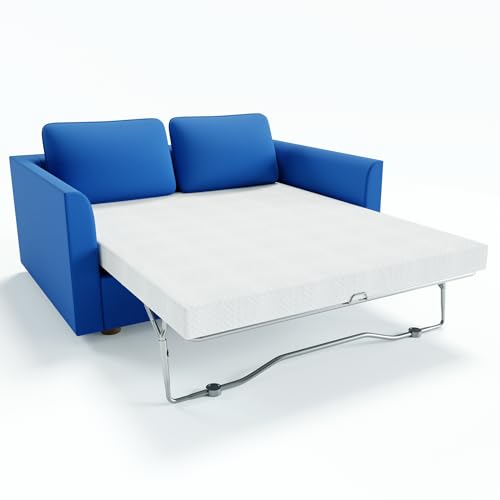
This guide explains how to measure a sleeper sofa, compare foam and cover options, and check fit before buying. The examples below are current Amazon listings returned by the Creators API; they are reference products, not hands-on rankings. Check the current model, dimensions, return terms, and the sofa manufacturer’s specifications.
Measure the original mattress and frame
Open the sofa bed fully and measure the mattress itself from seam to seam: length, width, and thickness. Measure at several points because an old mattress may have sagged or compressed. Do not assume the bed uses a standard “full” or “queen” mattress. Sofa-bed dimensions can differ from conventional bed sizes, and product labels may use a size name without matching standard measurements exactly.
Measure the metal or wood support frame separately. Look for bars, hinges, straps, and the gap between the mattress and the sofa’s folded components. The replacement must fit inside the mechanism when closed. If the mattress wraps around the frame or folds into a cavity, compare its dimensions and flexibility with the original.
Check the sofa’s owner manual or contact its manufacturer for replacement mattress specifications. Ask for the maximum thickness and exact sleeping surface dimensions. If the original mattress is missing, do not estimate from the sofa’s outside width. Measure the opened platform and account for the hinges and support arms.
Thickness and folding clearance
Thickness is one of the most important compatibility checks. A thicker mattress may feel more substantial but can prevent the sofa from closing or put pressure on the mechanism. A thin mattress may fit but provide less cushioning over support bars. Use the sofa maker’s recommended thickness whenever available.
Measure thickness without compressing the mattress and compare the product’s stated dimension. Foam expands after unpacking, and some manufacturers allow a recovery period. Read the instructions for expansion time before testing fit. Do not force the sofa closed over a mattress that feels too thick; this can damage the upholstery or mechanism.
If the manufacturer permits a topper, confirm how it affects folding and storage. A separate topper can be easier to remove for closing the sofa, but it may slide or need its own storage place. Do not add layers that interfere with the frame or create pressure on moving parts.
Foam types and feel
Replacement sleeper mattresses commonly use polyurethane foam, memory foam, gel-infused foam, or layered constructions. Product descriptions may call them “gel memory foam” or “cooling,” but terms differ by brand. Ask for foam layers, total thickness, firmness, and any available density information. A product’s name alone does not establish how it will feel.
Memory foam contours under pressure and can feel different at different room temperatures. Some people like the slower response; others prefer a quicker, firmer surface. Gel infusions are marketed for temperature management, but do not assume a cooling effect without product-specific information and user testing.
Layered foam may combine a supportive base with a softer top. Check whether the manufacturer describes each layer and whether the mattress is intended for a folding sofa frame. A mattress designed for a regular platform bed may not flex or fold correctly in a sofa mechanism, even when its dimensions appear close.
Support bars and comfort
Many sleeper sofas have a folding frame with crossbars or support elements beneath the mattress. If those bars are noticeable, first inspect the frame and any existing support deck. A mattress replacement may not correct a bent, damaged, or misaligned mechanism. Ask the sofa maker whether a support board or different replacement part is appropriate for that model.
Consider how the mattress will be used. Occasional guest use may have different priorities from frequent overnight use. Check the actual sleeping surface, thickness, firmness, and how it folds. For regular sleeping, try the mattress if possible and review the return policy carefully, since a thin replacement may feel different from a bedroom mattress.
A mattress topper may change the feel, but it also adds bulk and can affect folding clearance. Verify the sofa manual before using one. If pressure points or discomfort are a concern, a product description cannot assess individual needs; consider a different sleeping arrangement or consult a qualified professional if appropriate.
Cover, hygiene, and care
Some replacement mattresses include a removable cover; others have a fixed fabric shell. Check whether the cover can be washed, spot cleaned, or only professionally cleaned. “Removable” does not automatically mean machine washable. Follow the manufacturer’s instructions to avoid shrinkage or damage to the foam.
A washable cover can help with guest use, but pay attention to zipper placement and fit. A loose cover may bunch when the sofa folds; a tight cover may compress the mattress. If the cover is removable, check whether replacement covers are sold separately.
Let the mattress and cover dry fully after cleaning before folding the sofa. Trapped moisture in a closed compartment can cause odor or other problems. Store bedding separately when possible and keep the sofa-bed cavity clean and dry.
Certifications and material claims
Some foam products display a certification mark. Check what component and scope it covers. CertiPUR-US describes its program as applying to flexible polyurethane foam and publishes a consumer directory for checking participating companies. A foam credential does not automatically certify the entire mattress, cover, manufacturing process, or sofa frame. Read the program’s current details at CertiPUR-US foam certification information and verify the listed company.
Do not infer that “gel,” “green,” “plant-based,” or “fiberglass-free” means the product meets a particular standard unless the manufacturer provides documentation. If a specific material is important, ask the maker for a specification sheet and confirm it applies to the exact size and model you are buying.
Read safety labels and follow the product instructions. Foam materials and covers can have different fire, chemical, and care disclosures. A listing headline may not include every detail, so review the full product page and any documents supplied by the manufacturer.
Product examples to compare
These current Amazon listings illustrate different thicknesses, foam descriptions, and cover options. Confirm the measurements and compatibility with your exact sofa-bed frame before purchase.


Check how the sofa closes
Before ordering, ask how the original mattress folds into the sofa. Some mechanisms fold the mattress in sections; others roll or compress it. A replacement with a different construction may not bend at the same points. Confirm that the new mattress is designed for a pull-out sofa bed and that its materials tolerate the folding pattern.
Inspect the mechanism for straps or retainers that keep the mattress in place. The replacement should not cover or obstruct those parts. If the mattress has a removable cover or zipper, orient it according to the maker’s instructions so it does not catch during folding.
When the mattress arrives, allow it to expand as directed on a clear surface. Test the sofa mechanism without forcing it. If the frame resists closing, remove the mattress and contact the seller; do not use body weight or leverage to force the sofa shut.
Compatibility, returns, and delivery
Compare the return policy with the fact that mattress fit can only be confirmed after expansion. Some sellers may restrict returns once packaging is opened or may charge for pickup. Understand these terms before ordering and keep the packaging until fit is confirmed.
Check the package dimensions and weight. Foam mattresses may arrive compressed, but their expansion can take space. Plan a clean place to unpack the product and allow it to recover. If the sofa is in a small room, make sure there is enough room to test the mattress fully.
When asking a seller about fit, provide the sofa brand and model, the frame dimensions, the original mattress size, and its thickness. A generic answer that it fits a “full sleeper sofa” may not account for your exact mechanism. Written compatibility confirmation is more useful than a broad size label.
Common mistakes to avoid
The most common mistake is buying by size name alone. A “full” sofa mattress can have dimensions that differ from a standard full bed, and models vary. Measure the existing mattress and frame, and verify the replacement’s exact measurements.
Another mistake is choosing the thickest mattress without checking folding clearance. The mechanism may not close, or the mattress may press against the sofa’s upholstery. A third mistake is assuming a gel or memory foam description guarantees comfort. Feel and support depend on the complete construction and the sleeper.
Do not discard the original mattress until the replacement has been tested and the return period is understood. If the old mattress is badly compressed, its measured size may not represent the original dimensions; cross-check with the sofa manual or manufacturer.
Questions to ask the manufacturer
- What are the recommended replacement mattress dimensions for this model?
- What is the maximum permitted thickness when the frame is closed?
- Does the frame fold the mattress in a specific direction?
- Are support bars or a deck part of the original design?
- Can a mattress topper be used without affecting closure?
- What cleaning and care instructions apply to the mattress cover?
Keep the answers with your purchase record and verify that the replacement listing matches the sofa model. If the sofa manufacturer no longer supports the model, carefully compare dimensions and seek a return policy that allows a fit check.
Final checklist
- Measure mattress length, width, and thickness, plus the sofa frame.
- Confirm the mattress is designed to fold with the sleeper mechanism.
- Check foam type, cover care, and expansion instructions.
- Review certification scope and verify any material claims.
- Understand return terms before opening the package.
- Test closure gently and never force the mechanism.
The best mattress for a sleeper sofa is the one that fits the exact frame, folds as intended, and provides a surface the guest can use comfortably. Confirm dimensions and thickness with the sofa maker, then compare foam and cover details. A careful fit check matters more than a familiar bed-size label.
For related advice, see our sleeper sofa guide, sofa comfort and fit guide, and sofa construction guide.
Identify the sleeper mechanism
Pull-out sleepers, convertible futons, click-clack sofas, and jackknife RV sofas use different surfaces and folding motions. A replacement mattress for a pull-out frame may not suit a futon or a jackknife sofa. Identify the type from the original manual or the sofa’s model number before searching for a replacement.
Some sofa beds use a mattress that stays attached to the mechanism, while others use a separate mattress that lifts out. Check whether the mattress must wrap around a metal frame or fit inside a storage cavity. The construction of the mattress is as important as its nominal dimensions.
If the furniture is a convertible sofa without a separate mattress, replacing the cushions may be the correct path instead. Contact the manufacturer and ask whether the model accepts a standalone mattress. Do not place an aftermarket mattress on a mechanism that was not designed for it.
Compare firmness and sleeping positions
Foam firmness is a personal preference and may feel different on a narrow sofa bed than on a standard mattress. A thinner surface can make the support frame more noticeable. Ask whether the seller provides a firmness description and look for recent reviews that mention use on a similar sofa mechanism.
Consider the sleeping positions of guests. A side sleeper may notice pressure differently from someone who sleeps on their back, but the mattress dimensions and frame support remain the first compatibility checks. Do not rely on product claims to predict comfort for every guest.
Check whether the sleeping area has a center seam or transition. Some folding mattresses have sections that meet when opened. A topper could soften the feel, but it may not stay in place and can interfere with folding. Test any extra layer only if the sofa manufacturer allows it.
Inspect the original mattress for the cause of discomfort
Before buying, inspect the existing mattress and frame. Uneven support, a bent bar, a loose deck, or a sagging support strap can feel like a mattress problem. Replacing foam alone may not correct an issue caused by the mechanism. If you see a bent frame or broken support, contact the sofa manufacturer or a qualified furniture repair service.
Look for tears, stains, odor, and compressed areas. A mattress may be worn unevenly because one area is used more often or because the sofa has been stored folded for a long time. The pattern can help distinguish normal foam wear from a problem with the frame or the way the sofa closes.
Do not modify the frame or add improvised boards without approval. The sleeper mechanism has moving joints and specific supports. An alteration can change how it folds and may create damage. Use manufacturer-approved replacement parts or seek professional advice.
Make sleeping easier for guests
Leave room to open the sofa bed fully and walk around it. Measure the open footprint, including the edge of the mattress and any support legs. Move coffee tables and fragile items before unfolding. Keep the path to the door clear, especially if the bed will be used overnight.
Choose bedding sized for the actual mattress dimensions. A standard fitted sheet may not fit a sofa mattress that is shorter or thinner than a conventional bed. A loose sheet can bunch or pull off during the night. Check the mattress measurements before buying sheets, mattress protectors, or a topper.
Store bedding in a dry place separate from the sofa mechanism. Do not leave bulky linens inside the sofa cavity if they affect closure or airflow. A mattress protector may help with spills, but verify that it does not add too much thickness or create a slippery surface.
Compare total cost and product support
Compare the mattress price with delivery, return shipping, and any required cover or protector. A lower-priced replacement may have different materials or less support for returns. Check the warranty and the process for reporting a size mismatch or manufacturing defect.
Look for manufacturer contact details and support for the exact model. A mattress sold under a generic listing may have limited compatibility guidance. Ask for a product specification sheet that gives length, width, thickness, foam layers, cover care, and expansion instructions.
Do not compare a 4-inch foam mattress with a 5-inch model based only on thickness. Consider the sofa’s maximum clearance, the material layers, cover, and the manufacturer’s stated compatibility. The thickest option is not automatically the most comfortable or the best fit.
Foam expansion and first use
Compressed foam mattresses may need time to expand after unpacking. Follow the seller’s instructions for temperature, ventilation, and recovery time. Do not cut packaging in a way that risks slicing the mattress cover, and keep scissors away from the foam.
Allow any initial odor to dissipate according to the product instructions before placing the mattress in a closed sofa compartment. If the odor is unusually strong or persists beyond the stated period, contact the manufacturer. Do not apply fragrance or cleaner to mask it.
Once recovered, measure the mattress again and test it on the opened frame. Confirm that it lies flat and does not overhang in a way that interferes with the sofa. Test the folding action slowly and gently before putting bedding on it.
Store the mattress and sofa correctly
If the mattress is designed to be removed, store it flat or in the position recommended by the manufacturer. Bending or compressing it in an unapproved way can alter the foam or cover. Keep it dry and away from direct heat. Do not stack heavy items on a replacement mattress while it is stored.
When the mattress remains inside the sofa, keep the mechanism clean and make sure the mattress is positioned as instructed before closing. Remove bedding and objects that can become trapped. Close the frame slowly and stop if resistance occurs.
Check the sofa manufacturer’s instructions for long-term storage. If the sofa will remain closed for months, ask whether the mattress should be removed or aired periodically. These details vary by design and material.
When a mattress replacement will not solve the problem
If the mattress fits but the sofa bed still feels uneven, inspect the support frame and deck. A mattress cannot compensate for a broken support, misaligned hinge, or loose strap. If the mechanism makes a new noise or moves unevenly, stop using it and seek service.
If the mattress is uncomfortable because the sleeping surface is too short or narrow, a thicker replacement may not change the dimensions. Consider a different sleeping option if the frame itself cannot meet the guest’s needs. Measure the opened bed before deciding.
A replacement is most effective when the frame is in good condition and the mattress is the worn component. Confirm that relationship before purchase, especially if the sofa is old or has been stored in a damp area.
If a new mattress arrives with the wrong dimensions, stop before modifying it. Do not trim foam, remove seams, or alter the cover unless the manufacturer explicitly allows it. Contact the seller about an exchange and keep the packaging until the fit is confirmed.
Write down the sofa model and measured frame size before searching. This makes it easier to compare replacements and gives the seller specific information if you need to ask about fit or return eligibility.