Affiliate disclosure: Daily Home Decorating participates in the Amazon Associates program and may earn from qualifying purchases through links in this guide, at no extra cost to you. Product images and listings below were retrieved through Amazon Creators API. We have not physically tested the tables. Confirm the exact dimensions, materials, storage features, seller, and return terms on the live listing before ordering.
The best coffee tables for board games give players enough clear surface, keep pieces organized, and leave room to sit and move around the table. A table that looks right beside a sofa may be too small for a game board, too low for comfortable play, or difficult to reach from every seat. Think about the games your household actually plays, the number of people who join, and whether the living room must remain easy to walk through during a game.
This guide covers table shape, usable surface, height, storage, room layout, and finish. It also shows current product listings to inspect for a few different configurations. These examples are not tested rankings. Product dimensions, variants, and seller terms can change, so check the exact live listing before making a decision.
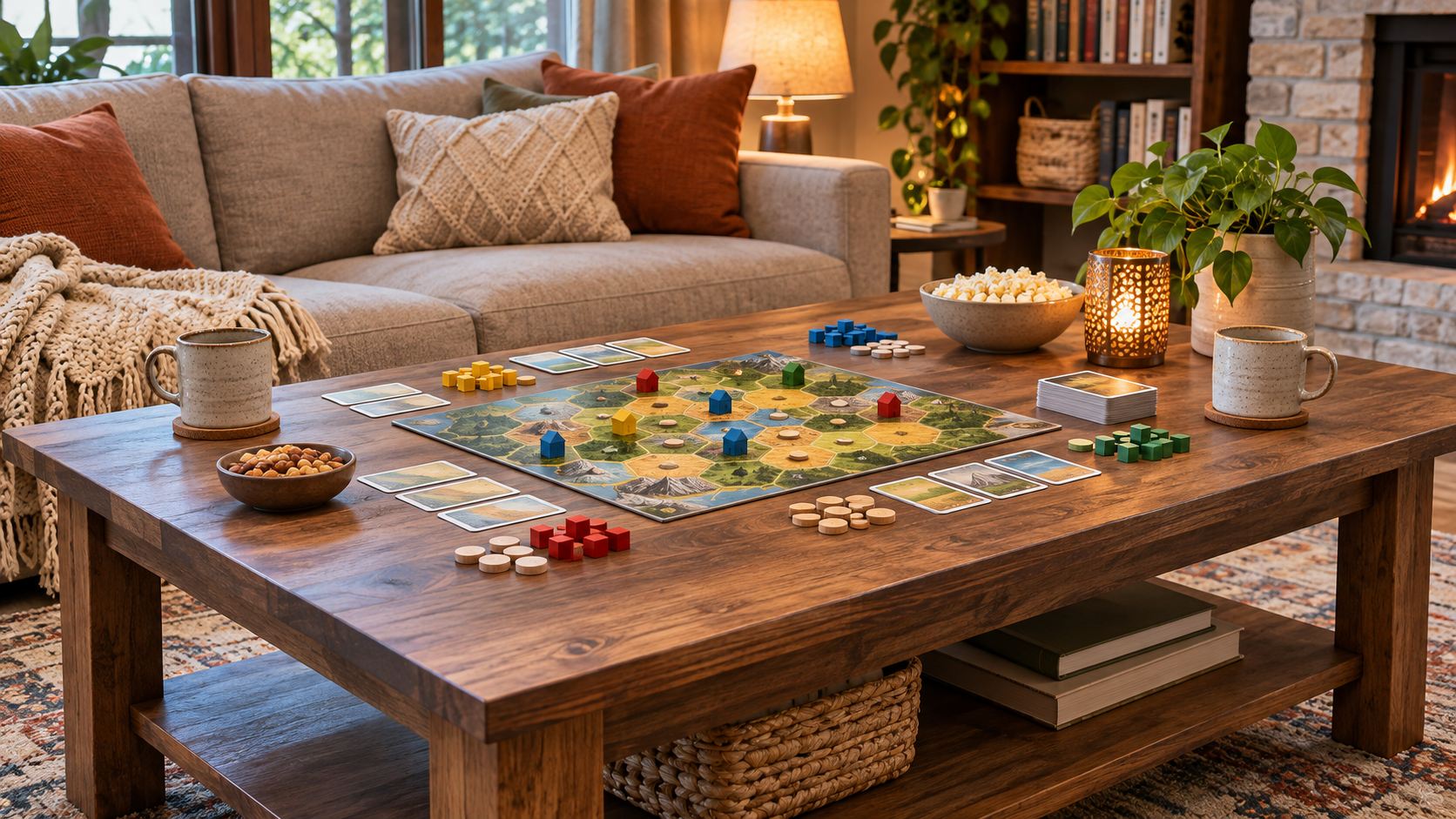
Start with the games you play
Board games vary in size and setup. A compact card game may need only a small clear area, while a large board, player mats, tokens, cards, and snacks can quickly fill a coffee table. Measure the largest game setup you expect to use and compare it with the table’s usable top dimensions. Include room for player boards and discard piles, not only the central board.
Think about player count. Two people can often sit across a smaller table, while a group of four or more may need a wider rectangular surface or a table with extra leaves. Some games require players to reach the center, so an oversized tabletop can be awkward from a low sofa. The right size is not simply the largest table that fits the room.
Consider how long a game stays set up. If you play over several evenings, a lift-top, nesting tables, or a dining table may be more comfortable than repeatedly clearing the coffee table. If play is occasional, a standard table with a storage shelf or nearby cabinet may be enough. Choose furniture that works for everyday living as well as game night.
Measure usable tabletop area
Product listings show overall length and width, but the usable area may be smaller if the table has a raised rim, decorative frame, built-in tray, or central divider. Check the top dimensions and any lip or inset. A board game should sit flat and stable, with enough space for hands to move pieces without knocking objects off the edge.
Measure the game board and the supporting player areas. Add space for cards, resource tokens, dice, notebooks, and drinks if those will be on the table. A simple paper template can help you test the layout before buying. Leave extra room around the board because players need to reach in and move components.
If the table includes a glass top or an inset panel, check whether it can safely support the game setup and how its edges are finished. Do not place heavy components beyond the manufacturer’s stated capacity. If a game uses miniatures or delicate pieces, consider a table surface that will not cause them to slide easily.
Choose a shape that suits the game and room
Rectangular tables
A rectangular tabletop can suit long boards and give players places along each side. It often works well in front of a straight sofa. The corners may make it easier to define player positions, but they require clearance in a busy room. Check that people can pass around the table without bumping into the corners.
Round tables
A round table can make it easier for players to reach the center and can soften a room with many rectangular shapes. Its usable area may be smaller than a rectangular table of similar width because the corners are absent. Compare the table diameter with the board and player zones rather than relying on the overall footprint alone.
Oval and organic shapes
An oval table combines a long surface with rounded ends. It may fit a long sofa while reducing sharp corners in the walking route. Organic or irregular shapes can be attractive, but their usable area may be harder to estimate. Check the surface dimensions carefully and confirm that the game board can sit flat without hanging over an edge.
Three Amazon coffee table examples
The API-returned examples below show storage, a larger conversation-style top, and a compact glass table. Product listing features are not independent test results. Verify dimensions, finish, capacity, included pieces, and the selected option on the live page.

This listing describes a 31.5-inch round coffee table with hidden storage. Storage can help keep cards, dice, and smaller accessories together between sessions, but check the interior dimensions and access opening. Confirm the tabletop’s usable diameter and compare it with the games you play. A small round table may work well for compact games but feel crowded with a larger board.

This example is described as a round coffee table with a faux-marble top. Check the exact surface material, diameter, table height, and weight capacity. A smooth top may be easy to wipe, but confirm how the seller recommends caring for it and whether the finish can be damaged by heat, liquids, or abrasive pieces.
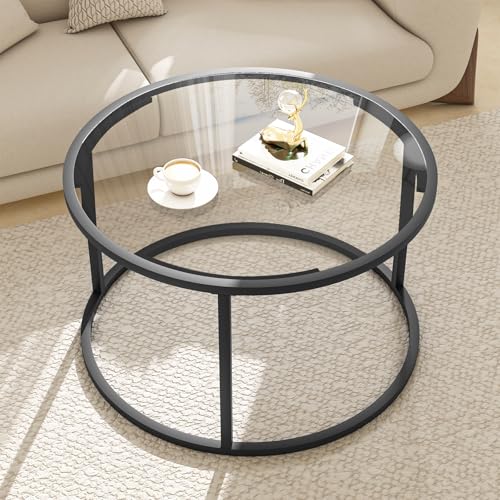
This listing describes a 27-inch round glass-top table. Its smaller surface may suit a compact room or a game setup with a separate side table, but measure the board and player area first. Confirm the glass type, frame construction, and maker’s weight guidance. Follow assembly instructions and do not use a table with a chipped or unstable top.
Match table height to the sofa
A coffee table should be comfortable to reach from the sofa without forcing players to lean too far. Compare the table height with the seat height and cushion compression. If the surface is too low, players may hunch over; if it is too high, it can obstruct the view and make reaching difficult. Try the table alongside the sofa if possible.
For long sessions, think about posture. A coffee table is lower than a dining table, so some players may prefer trays, lap desks, or a lift-top design. A lift-top can bring the game closer, but verify its raised dimensions, stability, and operating instructions. Keep fingers away from moving hardware and do not let children operate a mechanism unsupervised.
Make sure there is enough knee and leg room around the table. A low shelf or crossbar can limit where players sit or place their feet. A storage table may be convenient, but check that the storage section does not reduce the available seating space around it.
Storage for games and accessories
Built-in drawers, shelves, or hidden compartments can keep small game pieces nearby. Measure the storage opening and interior before assuming a box will fit. Some tabletop games are wider than their boxes, and larger boxes may not fit in shallow drawers. Use dividers or small containers so components do not mix together.
Keep games that need a flat playing surface away from spills and direct heat. If the table has a lift top or storage lid, ensure that the contents do not obstruct the mechanism. Store heavy game boxes on a stable shelf rather than stacking them where they could slide out.
If the coffee table itself has limited storage, use a nearby cabinet or basket. A tray can gather cards and dice during play and be moved off the table afterward. Choose storage that is easy to reach without bending over the game or blocking a walkway.
Plan seating and reach from every side
Players should be able to see and reach the board without climbing over a sofa or stretching across another person. Measure the gap between the sofa and table and make sure chairs can move around it. If the coffee table is centered in front of a sectional, check whether every seat has a reasonable view and access to the game area.
For larger groups, a coffee table may not be the best surface for every game. A dining table or folding game table could provide a better height and more space. Keep the living room table for casual play and use a different surface for games with large boards or many components. The best setup depends on the game and the available room.
Consider lighting and glare. Overhead lights can reflect on glass or glossy tops and make cards harder to read. A floor or table lamp can improve visibility, but keep cords outside the route. Position lighting so players can see pieces without casting shadows across the board.
Protect the surface during play
Game boards, dice, and accessories can scratch some finishes. Use a playmat or thin protective layer if the table maker allows it. Confirm the material is compatible and does not slip. A mat can also make it easier to gather small pieces after the game.
Keep drinks on coasters or a side table. Avoid placing cold or wet glasses directly on wood or veneer, and clean spills promptly. If the table has a faux-stone or glass finish, follow the seller’s care instructions rather than assuming it is stainproof. Do not use abrasive pads unless the maker permits them.
Some game pieces can slide on polished surfaces. Test the board and mat before a long session. If pieces move too easily, choose a nonslip underlay that will not leave residue. Store the mat flat and dry after use.
Clearance around the coffee table
Leave enough room to walk around the table and reach seats. A table that fills the entire gap may make the living room feel cramped, even if its top fits the board. Measure the route between the table, sofa, and nearby furniture. Consider where people will sit or stand during the game.
Rounded corners may reduce the chance of bumping into an edge while moving around the room, but no table shape replaces supervision or good layout. If children use the space, choose a stable table and keep small game pieces out of reach when unsupervised. Secure furniture according to the maker’s instructions.
For recliners, check the footrest path and table clearance. A table can obstruct a seat when it opens. Our guides to coffee tables for reclining sofas, tables for dark charcoal sofas, and tables for slightly curved sofas cover other layout needs.
Materials and maintenance
Wood, veneer, glass, metal, faux stone, and composite tops have different care needs. Check the material and cleaning instructions. A board game table should be easy to clear and wipe, but the surface should also suit the room’s style. If you choose glass, inspect edges and support points; if you choose wood, protect it from moisture and heat.
Check the frame and legs for stability. Read assembly instructions and verify all fasteners are included. Do not use a table that rocks or has a loose top. Tighten hardware only as directed. If a table arrives damaged, photograph it and contact the seller before putting it into regular use.
Dust storage compartments and remove game debris after play. Avoid leaving food or liquid in hidden storage. If the table has a sliding door or lift mechanism, keep the track clear and follow maintenance instructions. Regular cleaning keeps pieces and accessories from accumulating in the table.
Common mistakes when choosing a board-game coffee table
- Measuring only the board and not the player areas or accessories.
- Choosing a tabletop that is too small for the games played most often.
- Ignoring the table height and sofa seat height.
- Buying storage without checking interior dimensions and access openings.
- Blocking a recliner footrest or a main walking path.
- Assuming glass, wood, or faux stone is scratchproof or spillproof.
- Leaving drinks on the playing surface without protection.
- Using a coffee table for a game whose surface and height call for a dining table.
These issues are easier to prevent with a game-board template and a room measurement. Compare the table’s usable top area, height, storage, surface care, and route clearance before checkout.
Final checklist
Measure your largest game setup, choose a table shape that lets players reach the center, compare height with the sofa, and confirm storage dimensions. Check the material, weight guidance, assembly, delivery, and return terms. Leave room for people to move around the table and keep drinks away from the board.
The best coffee table for board games balances a useful play surface with everyday living-room function. A round storage table, rectangular top, or compact glass table can each work for the right setup. Use the games you actually play to guide the size, and verify the exact product details before ordering.
When a lift-top table makes sense
A lift-top coffee table can raise part of the surface toward the player, reducing the need to lean over a low tabletop. It may be useful for card games, writing scores, or reading instructions while seated. Check the raised height and top dimensions, and confirm the mechanism locks securely in the position described by the maker. Not every lift top is stable enough for active play or heavy game components.
Make sure the lifted section does not tilt the game board or reduce the available play area. A split top may create separate levels that do not suit a large board. Check the weight limit and do not rest elbows or body weight on a moving panel. Store small items away from hinges and keep hands clear while lowering the top.
Compare how the table looks and works when closed. A lift-top can be deeper or bulkier than a standard coffee table and may reduce knee room. Measure both the closed and raised positions in the living room. If you will lift the top for every game, consider whether the mechanism is simple enough for the household to operate comfortably.
Board games, tabletop role-playing, and craft nights
Different activities use space in different ways. A board game may need a central board and player cards, while a tabletop role-playing session can spread character sheets, maps, dice, and books across the surface. A craft activity may need even more room and a surface that is easy to protect. List the actual materials used for your favorite activities and size the table accordingly.
If a game needs a large map, consider using a folding dining table or a dedicated topper that can be stored between sessions. A coffee table is convenient for casual play but can make a long session uncomfortable if players lean forward. A separate table may be easier for games that take several hours.
For games with small pieces, choose a layout with a clear place to store components between rounds. A tray or organizer can prevent pieces from sliding off the sofa or under the table. Keep the playing surface uncluttered and move snacks to a side table.
Think about tables for different group sizes
Two-player games often work on a compact round or square table because both players can reach the center. A larger group may benefit from a longer surface with seats distributed along the sides. Check that every player can see the board and that the table does not force one person to reach over another.
If the household alternates between small and large groups, nesting tables or a movable side table can supplement the main coffee table. A nesting arrangement expands the usable area when needed and returns to a smaller footprint afterward. Check how the tables lock or stack and whether they remain stable on your floor.
Do not count on sitting on the coffee table as an extra seat unless the maker explicitly designs it for that use. A low center table is not a substitute for a chair or bench. Keep enough proper seating for the people who join the game.
Store the game near the playing area
Storage is helpful when it matches the size of the games. A drawer may hold cards and dice but not a board-game box. A hidden cavity may fit small boxes or accessories, but verify the interior measurements and opening. Keep heavier boxes on a stable shelf and avoid overloading a lift-top compartment.
Use labeled dividers or small containers for tokens and dice. This makes setup and cleanup faster and helps prevent pieces from mixing. Keep the original rulebooks dry and flat. If you store games under the table, make sure boxes do not protrude into a walkway.
For a table without built-in storage, place a basket or cabinet close by. A rolling cart can hold games during play, but it should be stable and parked out of the route after the session. Keep liquids away from cardboard boxes and game boards.
Keep the room comfortable through a full session
Board games can last longer than a movie, so provide enough light and a comfortable place to sit. A sofa seat may be too low for a player trying to read small text on the table. Use a floor lamp or adjustable task light and position it to reduce glare. Avoid cords across the path between seats.
Consider back support and foot placement. A low table can encourage leaning forward; a nearby ottoman may help some players change posture, but it should not block movement. Take breaks during long sessions and rearrange seating if one person cannot see the board.
Keep the room at a comfortable temperature and leave a route to water or snacks that does not pass across the game. A side table can separate drinks from the board. Small details like lighting, seats, and reach can matter as much as the coffee table top.
Choosing a finish for regular play
Frequent game nights can create wear from boxes, pieces, and repeated cleaning. A durable-feeling finish is useful, but verify care and scratch guidance from the maker. Use a playmat if the table surface is delicate. Avoid adhesive pads or protective coatings that may leave residue unless the manufacturer approves them.
Choose a finish that suits the rest of the room and is easy to maintain. Glossy surfaces can show fingerprints; dark finishes may show dust; glass can show smudges. These are practical tradeoffs rather than universal rules. Ask for a sample or view the finish in person if possible.
Follow the assembly guide and inspect the table after setup. Check that legs are even and that storage doors slide smoothly. Recheck fasteners after moving the table if the instructions recommend it. A stable surface makes game setup more enjoyable.