Affiliate disclosure: Daily Home Decorating may earn a commission from qualifying Amazon purchases through links in this article, at no additional cost to you. These product cards use item details and images returned by Amazon Creators API. We have not hands-on tested these products; seller descriptions are not independent safety findings.
“Best sofas for children” can describe several different products: a miniature framed loveseat, a fold-out chair, or a modular foam set made for play. The right choice depends on the child’s age and size, the activity, room dimensions, care needs, and the quality of the maker’s instructions. This guide compares five examples by format, explains what to verify, and points to current Consumer Product Safety Commission (CPSC) resources. Product details, images, variants, prices, and availability can change. Read the current listing and manufacturer instructions before buying.
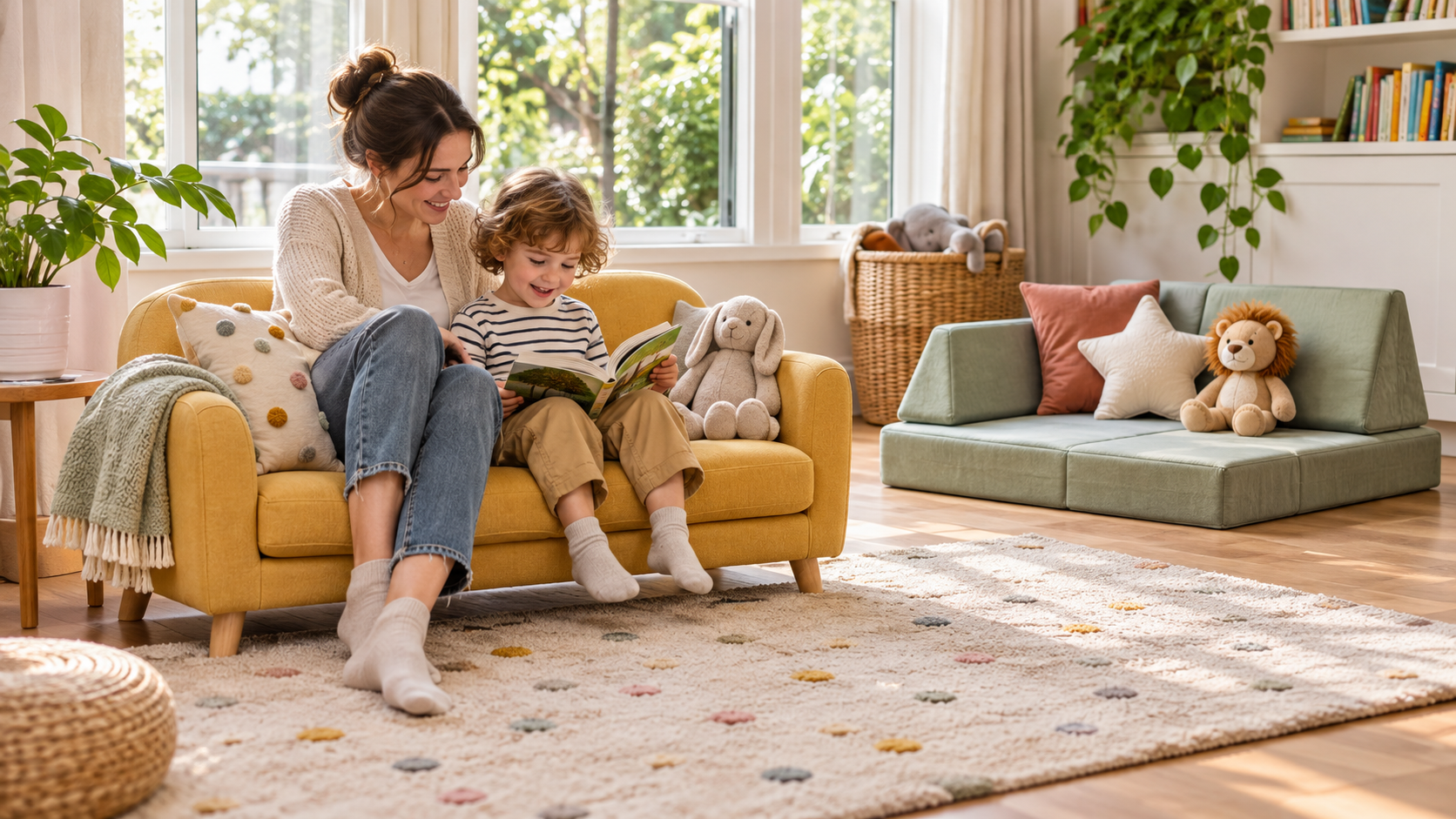
Quick comparison by format
- Modular play sofa: Elftopia, ASIN B0CH2ZZJN9.
- Multi-piece foam building set: Lunix, ASIN B0BLVNTBB7.
- Framed two-seat loveseat: HONEY JOY, ASIN B07K9S4CWF.
- Fold-out lounge chair: little dove, ASIN B0DD728JQZ.
- Character-themed flip-out seat: MallBest, ASIN B06XCLNXKT.
These are examples surfaced by Amazon Creators API, not ranked test winners. Their selected image URLs returned HTTP 200 when checked, which confirms the URL was reachable at that moment, not that the product is certified or suitable for every child. Confirm that the product page still matches the model and variant.
Elftopia modular kids sofa

The listing describes a convertible foam play set that can be rearranged into different shapes. It also says the item ships compressed and needs time to expand. Verify the current page for dimensions, piece count, age guidance, and cover-care instructions. Follow the expansion directions, and do not apply heat or use a steamer unless the maker explicitly allows it. This type may fit a playroom where the child alternates between sitting and imaginative play, but it requires floor space and storage for loose pieces.
Measure more than the couch shape. Modular pieces spread out when children build a fort or rearrange cushions. Keep the play area away from stairs, windows, hard furniture corners, heaters, and walkways. Foam is soft, but a stack can shift and a fall can still cause injury. Supervise active play, keep arrangements low and stable, and follow the product’s age directions rather than assuming every shape is safe for every child.
Lunix modular play couch

The API listing describes a set of fourteen pieces made from seven shapes and reports an assembled couch footprint around 55 by 27.5 inches. Recheck dimensions and age information on the live listing. Multiple pieces offer varied arrangements but require storage and a clear floor. Think about whether your family can put them away after play and how quickly the child may alter an arrangement. Establish rules: do not stack on tables, do not build close to windows or stairs, and do not jump from raised pieces.
Check covers, seams, and foam condition regularly. Review the maker’s instructions for expansion, cleaning, and the intended use of each module. A foam play couch is not the same as adult living-room furniture; it sits low and is designed around child play. If the main goal is quiet reading rather than building, a fixed seat may be easier to manage. Compare the full play footprint to the room before ordering.
HONEY JOY framed loveseat

The listing describes a framed two-seat mini sofa with faux leather upholstery and a separate ottoman. It provides approximate dimensions; confirm which numbers refer to the sofa and which to the footrest. A fixed seat can make a defined reading or bedroom corner, but verify the age range, maximum load if supplied, frame details, assembly steps, and warranty. Check that the finished seat is stable on a level floor and that all fasteners are installed as directed.
Do not assume the ottoman is a step stool. Use each component only as the manufacturer describes and position it so it does not create a trip hazard. If the seat rocks, a fastener loosens, or a frame part cracks, stop use and contact the maker. Faux leather may permit wiping with a damp cloth, but use only the approved care method; strong cleaners can damage a surface coating.
little dove fold-out couch

The listing describes a soft chair that folds open to a low lounging surface and refers to a removable cover. Confirm the open footprint, age guidance, and exact washing directions. A fold-out seat can be useful in a bedroom or playroom, but do not treat it as an infant sleep product or assume it is suitable for overnight sleep. Use it only for purposes and ages that the manufacturer expressly allows.
Inspect the fold line, seams, and cover closure after delivery. Show children how to open and close it without placing fingers in a pinch area. Keep it away from stairs and hard-edged furniture. A removable cover is not necessarily machine washable; check the prescribed cycle, temperature, drying method, and whether the foam insert may be washed. Textured fabric may collect crumbs and lint, so plan for regular cleaning.
MallBest flip-out children’s sofa

The API listing describes a small upholstered chair with a flip-out lower section and a fire-truck print. Check current materials, dimensions in both positions, age recommendation, cleaning instructions, and warnings. A themed picture does not establish that the item is a toy or that it meets a particular standard. The open mode needs extra floor area, so measure the room and leave clearance for an adult to walk around it.
Follow the maker’s directions when testing the fold-out mechanism. Check for gaps, loose seams, or pinching points and show the child how to use it. If the cover is not removable, ask how spills should be cleaned. Keep accessories and loose small objects away from children under three, particularly in rooms shared with younger siblings.
How to choose a children’s sofa
Choose the function first. A framed loveseat gives a defined place to sit; a fold-out chair adds a low lounge position; modular foam pieces support more varied play. If the child mainly reads, choose a comfortable seat that is stable and easy to clean. If flexible play is the goal, decide whether you have the floor and closet space for multiple pieces. Do not choose a fold-out model for sleep unless the manufacturer expressly permits that use and names the appropriate age.
Compare actual dimensions. “Toddler” and “kids size” are not standardized measurements. Check seat height, depth, width, back height, and arm height. A deep seat may not support a small child’s back, while a low seat may be difficult for some children to stand from. Compare measurements with the child’s size now and consider how soon the product may be outgrown. If no usable dimensions appear on the listing, ask the seller before ordering.
Measure the complete footprint. Include the open position, ottoman, loose modules, and walking space. Make sure the chair does not block a bedroom door, closet, heater, window, or exit. Keep it away from furniture a child might climb. If it sits on a rug, verify that the rug does not slide. Decide where cushions will be stored after play; a product that is easy to use but difficult to put away may become clutter.
Check the materials and assembly. Ask for frame material, foam details, upholstery composition, seams, closures, fasteners, and warranty terms. Assemble exactly as directed. Check legs and joints after setup and periodically thereafter. For foam pieces, inspect covers and seams. Words such as “sturdy,” “high density,” or “easy clean” are marketing language unless supported by clear specifications or documentation.
Pick care instructions you can follow. Food, drinks, craft supplies, and pet hair affect children’s furniture. Confirm whether covers are removable and what washing method is permitted. “Removable” does not mean machine washable. Smooth upholstery may be simpler to wipe, while plush or textured fabric can need more vacuuming. Avoid bleach, solvents, and abrasive cleaners unless the manufacturer approves them.
CPSC safety points: what is known and what is not
The CPSC explains that products designed or intended primarily for children age 12 or younger can be children’s products, including some children’s furniture. Which requirements apply depends on the product category and features. CPSC guidance also explains restrictions on small parts in products intended for children under three. A product badge, marketplace description, or generic certificate claim does not prove that a specific model meets every applicable rule.
Ask the manufacturer for the exact model’s age grading, warnings, instructions, and compliance documents. For upholstered furniture, requirements can vary by product and intended use. Do not claim that any product in this guide is certified or compliant unless documentation for the exact model supports that statement. Check the manufacturer or importer name, model number, contact information, and labels. If the seller mentions a certificate, request the document and confirm that it names the same item.
Keep small detachable objects away from children under three. Inspect buttons, zipper pulls, decorative items, packaging, and included accessories. Small-parts rules address choking, aspiration, and ingestion hazards. An item intended for an older child can still be in a home with a younger sibling, so storage and supervision matter. If a component detaches or breaks, stop using it until the manufacturer explains whether a safe repair is possible.
Follow setup instructions exactly. Let compressed foam expand for the time specified and do not use heat unless expressly allowed. Put the sofa on a stable, level floor. Supervise active play and set simple rules for stacking, climbing, and jumping. The CPSC Anchor It! campaign advises securing tall storage furniture and televisions as directed; a child-size couch does not remove other tip-over hazards in the room. Stop use if a frame cracks, seam opens, zipper fails, or foam is damaged.
Questions to ask before buying
- What is the exact model and intended age range?
- What are the dimensions in every configuration?
- Is a maximum weight limit given, and where is it documented?
- What are the frame, foam, cover, and finish materials?
- How should the cover be cleaned and dried?
- Are there detachable parts or accessories?
- What warnings and supervision directions are provided?
- Can the manufacturer provide documentation for this exact model?
- What is the warranty and repair process?
- How are returns handled for bulky items?
Save answers with the order information. For online orders, inspect the product before discarding packaging, photograph damage or missing pieces, and contact the seller promptly. Follow the expansion period and assembly steps before letting a child use it. Keep the instructions accessible to other caregivers.
Final recommendation
Choose by matching the product format to the activity and room. A framed loveseat is a defined seat; a fold-out chair adds a low lounge mode; modular foam pieces offer more varied play but require more space and supervision. The Amazon cards above are listing examples, not independent test results. Confirm dimensions, age instructions, materials, cleaning, warnings, and any compliance claims on the current manufacturer page. If the maker’s documentation is unclear, choose a product with clearer instructions and a reliable support contact.
For general layout, see our small-space sofa guide. For upholstery care, see our fabric protection guide. These articles discuss adult furniture and do not replace child-product instructions.
Frequently asked questions
What age is a kids sofa for?
There is no single age range. Check the maker’s current age grading and warnings for the exact model, and consider the child’s size and activity. Appearance alone does not establish suitability.
Are foam play couches safe for toddlers?
Safety depends on design and use. Follow manufacturer directions, supervise active play, inspect seams and closures, and keep pieces away from stairs and hard edges. Soft foam does not make every stacked arrangement safe.
Can a fold-out kids sofa be used as a bed?
Only for purposes and ages the manufacturer expressly allows. Do not assume that a fold-out chair is an infant sleep product or a substitute for a purpose-designed sleep surface.
Are these product cards independent reviews?
No. They use ASIN and image data returned by Amazon Creators API. We did not conduct hands-on testing. Check current listing information and maker instructions before buying.
What should I check for a child under three?
Review age grading, warnings, and detachable components. CPSC small-parts guidance covers products intended for children under three. Ask the manufacturer about the exact item and keep small objects out of reach.
Safety references: CPSC children’s-product guidance, CPSC small-parts guidance, CPSC upholstered-furniture guidance, and CPSC Anchor It! campaign.
Room-by-room placement and supervision
A child’s bedroom, family room, and playroom place different demands on a small sofa. In a bedroom, leave access to the bed, closet, and door, and ensure the seat does not narrow a nighttime path. In a family room, position it where an adult can see the child without making the child’s chair a climbing step to reach a TV stand or shelf. In a playroom, keep modules away from storage furniture that could tip and leave a clear zone around energetic play. The safest layout is one that matches the actual room and adult supervision, not the staged product photo.
Consider who else uses the room. A home with toddlers and older siblings may need a different setup from a single-child playroom. Store detachable parts out of reach when they are not intended for the youngest child. Separate small toys from the seating area after play. If pets share the room, inspect the fabric and foam for chewing or scratching and keep damaged pieces away from children. Place the sofa where adults can notice wear quickly and where cleaning does not require moving heavy furniture.
How to inspect the sofa after delivery
Before assembly, compare the package label and model number with the order confirmation. Check that all pieces and fasteners are present and that no packaging parts remain in seams or pockets. For a framed loveseat, assemble on a level surface, tighten only as instructed, and verify that legs sit evenly. Do not improvise with different screws or add accessories that the maker has not approved. For compressed foam, give it the full recommended time to expand and check whether every component returns to shape.
Inspect stitching, zipper tracks, corners, and the underside. Look for exposed staples, sharp edges, broken parts, or a strong persistent odor. If you find a concern, keep children away from the product and contact the seller or manufacturer with photographs and the model identifier. Do not attempt a repair that changes a restraint, closure, or support. Record the response. If the item is defective, use the seller’s return or warranty process while keeping the packaging and paperwork that the policy requires.
Fabric and cover decisions in a busy home
A cover that can be removed may be useful, but the real question is whether cleaning it is practical. Check if the manufacturer permits machine washing, hand washing, or spot cleaning, and whether the insert can be exposed to water. A cover that shrinks or loses shape can become difficult to reinstall. If a replacement cover is available, verify its exact model compatibility and color. For fabrics with nap or pile, brushing direction may affect appearance; follow the maker’s instructions rather than testing an unapproved cleaner on the visible seat.
Children’s furniture can collect crumbs in seams and beneath cushions. A smooth surface may make routine wiping easier, while plush surfaces may feel softer but need a vacuum with a suitable attachment. Choose based on the cleanup routine your household can sustain. Avoid spraying fragrances or disinfectants onto a child’s seat unless the product label and furniture care directions permit it. Let cleaned components dry fully before use. Keep cleaning liquids and tools stored safely away from children.
When a small adult loveseat may work better
Some families search for children’s sofas because they want a compact seat, not necessarily furniture labeled for children. A small adult loveseat may last longer as a child grows and may have clearer upholstery and frame specifications. However, adult sofas are heavier, larger, and may create different fit or tipping issues in a child’s room. Measure carefully and avoid placing any sofa where a child could climb from it onto unstable furniture. Compare the actual seat height and depth to the child rather than assuming that a child-branded product is the better choice.
Adult furniture does not automatically solve safety questions. Check the intended use, assembly, stability, and room setup. Secure tall dressers and televisions according to manufacturer directions and CPSC advice. Do not position a TV on a sofa arm or on a unit not designed to support it. If the main goal is a reading nook that will remain useful for years, compare a child-size chair, a compact adult chair, and a loveseat in person if possible. A suitable fit depends on the child and household habits.
How to compare listing claims
Marketplace descriptions often compress many details into short feature bullets. Separate measurable information from general adjectives. Dimensions, piece counts, materials, and stated age limits can be checked against product documentation. Words such as “premium,” “safe,” “ergonomic,” and “non-toxic” need explanation and evidence. Look for the manufacturer’s name and model, instructions, warning labels, and a way to ask questions. If the listing does not clearly identify who made or imported the product, consider whether you can get support if a part breaks.
Reviews can surface repeated practical problems, but they are not a substitute for product documentation. A review may describe a different size, color, or seller. Pay attention to date and variant, and distinguish an opinion about softness from a factual claim about safety or certification. If a reviewer mentions a structural failure or detached part, see whether the manufacturer has responded and check for current notices. Always base your decision on the exact model, current information, and the child’s use case.
Caregiver checklist
Before use, make sure the furniture is fully assembled or expanded, positioned on a stable surface, and free of broken or missing parts. Review instructions with anyone who supervises the child. Agree on simple rules for jumping, climbing, stacking, and folding. Keep the space around the sofa clear and make sure loose modules are stored safely. After initial use, check whether fasteners or covers have shifted. Repeat inspections when the sofa is moved, cleaned, or rearranged.
When the child outgrows the seat, do not pass it to another family without its instructions, age information, model identification, and safety notices. Check current recall information and disclose any repair or damage. Dispose of products with structural damage rather than offering a DIY fix that might hide a hazard. If the item remains in a shared room, consider whether it is still appropriate for younger children who may encounter it. Clear labels and accurate handoff information help the next caregiver evaluate it.