Disclosure: As an Amazon Associate, dailyhomedecorating.com earns from qualifying purchases. Links to Amazon on this page are affiliate links; they cost you nothing extra. Prices and availability change often, so check the current Amazon listing before you buy.
Searching for the best mattresses for bad backs and hips usually starts at about 5 a.m., when you wake up stiff in the lower back and sore at the hip you slept on, and spend the first hour of the day slowly unbending. Two different discomforts share that morning, and they pull a mattress in opposite directions. A back that aches overnight wants support: a surface that holds the spine in a neutral line and refuses to let the hips sink into a hammock. A hip that aches wants the opposite: cushioning that lets the bony point of the hip settle in instead of being pressed against a firm slab all night. Most mattresses serve one of those needs and betray the other, which is why this particular keyword frustrates so many shoppers.
The good news is that modern mattress design has a real answer, and it is not a magic material — it is zoning and layering. A well-built mattress can be firmer under the lumbar and hips’ support zone while softer at the pressure surface, or it can contour deeply enough to spread hip pressure over a wider area while a dense support core holds the back’s line. The six picks below approach the back-and-hip problem from those different directions, and this guide is honest about what a mattress can and cannot do: it can remove a nightly source of strain and pressure, and it cannot treat a medical condition. Persistent, worsening, or radiating pain belongs in a clinician’s office, not a product page. If your discomfort is specifically one-sided, our companion guides to Best Mattresses For Back And Shoulder Pain and Best Mattresses For Bad Lower Backs narrow the focus further.
Where to Buy
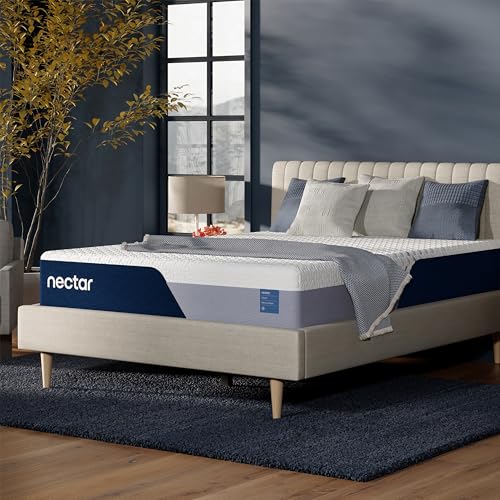
Every pick in this guide is sold on Amazon, where you can check the current price, size availability, trial terms, and delivery options on the listing itself. Start with our top pick, the Nectar 12” Memory Foam Mattress — Check on Amazon. The other five picks are the Casper Sleep Original — Check on Amazon; the Sweetnight CoolNest — Check on Amazon; the Sealy Dreamlife 12” Hybrid — Check on Amazon; the Leesa Original — Check on Amazon; and the Signature Design by Ashley Chime 12 Inch Hybrid — Check on Amazon. Prices move with size and promotions, so treat the listing, not any roundup, as the final word.
In this guide
Quick Picks
| Pick | Badge | Why it earns its place |
|---|---|---|
| Nectar 12” Memory Foam Mattress | Best Overall | Firm-leaning contouring: memory foam fills the lumbar curve while the support layer holds the hips up. |
| Casper Sleep Original 11″ Memory Foam Queen Mattress – Medium Firm Feel | Breathable Mem | Best Zoned Support | Zoned Support keeps firmer foam under hips, waist, and lower back while the surface stays cushioning. |
| Sweetnight CoolNest Queen Mattress | Best for Side Sleepers | A 5-zone ergo design in a tall 14-inch cooling build, aimed at pressure relief from head to toe. |
| Sealy Dreamlife 12” Hybrid Mattress-in-a-Box | Best Hybrid Support | Encased coils supply local support under a gel foam surface — structure foam alone cannot give. |
| Leesa Original 10″ Memory Foam Mattress | Best Gentle Contour | Premium all-foam pressure relief with a softer first impression, for hips that bruise easily. |
| Signature Design by Ashley Chime 12 Inch Hybrid Full Size Mattress in a Box | Medium Firm | Best for Lumbar Focus | A dedicated gel lumbar layer over pocketed coils, in a verified full size. |
Key Takeaways
- Backs want support and hips want cushion — the picks here resolve the tension with zoning, layering, or deep contour over a firm core.
- Medium-firm is the most reliable starting feel for combined back-and-hip discomfort; extremes in either direction usually serve only one of the two.
- Side sleepers should weight hip cushioning more heavily; back sleepers should weight lumbar support more heavily.
- A mattress can remove a nightly source of strain; it cannot treat a condition. Persistent or radiating pain needs a clinician.
- Use the home trial as a diagnostic: judge the bed by your first hour of the morning after three weeks, not by the first night.
- Your pillow and your frame are part of the system — a sagging base or a wrong-height pillow can undo a good mattress.
How These Picks Were Chosen
The selection started from the two-sided nature of the keyword. Every pick had to plausibly serve both ends of the problem: a support story for the back — a firm-leaning core, zoned firmness under the hips and lumbar, or a coil skeleton — and a pressure story for the hips — contouring foam, zoned cushioning, or a genuinely cushioned surface. Mattresses that were merely soft failed the back test; mattresses that were merely firm failed the hip test. The six survivors split into three design philosophies: contour-and-hold foam (Nectar, Leesa), engineered zoning (Casper, Sweetnight), and coil-supported hybrids (Sealy, Ashley), so the guide covers the real ways the industry answers this question.
What was filtered out: ultra-plush models that let the hips sink deepest — comfortable for an evening, a hammock by morning; extra-firm models that treat pressure points as an afterthought; and thin light-duty mattresses without the material to support an adult spine nightly. On language: this guide uses comfort and wellness framing throughout. Where a maker’s listing uses relief language, we describe the design and the comfort experience it aims at; we make no medical claims, and no mattress here is presented as a treatment. Every specification below comes from the verified pool entry for that model, and prices are never printed — check the listing for the current number.
The 6 Best Mattresses for Bad Backs and Hips — Reviewed

Nectar 12” Memory Foam Mattress
Our badge: Best Overall
The Nectar 12” Memory Foam Mattress leads this guide because its firm-with-a-touch-of-comfort tuning is the single most reliable answer to the back-and-hip dilemma: the contouring memory foam fills the lumbar curve and spreads pressure around the hip, while the dynamic support foam underneath refuses to let the pelvis sink into the hammock position that leaves backs stiff by morning. Its maker describes the combination — cooling fabric, contouring foam, support foam — as a system, and for this keyword, system is the right word.
Strengths
- Contouring foam relieves pressure at the hips and back while the support layer promotes spinal alignment
- Firm-leaning feel keeps the pelvis level — the posture back sleepers and stomach sleepers need
- A cooling top layer addresses the warmth that deep contouring can trap
Trade-offs
- Very light side sleepers may not sink far enough to get full hip cushioning from a firm build
- The foam response is slow; combination sleepers will notice it when rolling over
- At 78 pounds in queen, setup is a two-person job
| Color | White |
| Size | Queen |
| Dimensions | 80 x 60 x 12 inches |
| Weight | 78 pounds |
The Nectar’s back story is about what does not happen: the hips do not drop below the shoulders’ line, the lumbar does not spend the night unsupported and then complain at dawn, and the surface does not soften into a valley by the third month. Its hip story is about distribution: memory foam’s whole talent is spreading a point load across a wider area, so the hip that would press into a firm slab instead rests in a shaped cradle. Side sleepers get the most from that cradle; back sleepers get the most from the support layer; and the large group who migrate between the two get a bit of both, which is exactly this keyword’s readership.
The listing’s long trial positioning matters here more than in most categories, because back-and-hip comfort is a three-week verdict, not a first-night impression — your body needs time to stop guarding against the old bed. Give it that time on a flat, supportive frame. For shoppers whose discomfort leans even harder into the lower back, the Ashley Chime’s lumbar-targeted hybrid later in this guide is the alternative argument; for the majority, the Nectar’s balance is the place to start.
Best for: Back and combination sleepers whose hips also need pressure relief / Not suited for: Very light side sleepers who need a distinctly soft surface
Choose it as the balanced default for this keyword. Skip it if you know you need plush. Check on Amazon

Casper Sleep Original 11″ Memory Foam Queen Mattress – Medium Firm Feel | Breathable Mem
Our badge: Best Zoned Support
The Casper Sleep Original answers the back-and-hip problem with the most literal engineering in this guide: Zoned Support, with firmer foam placed under the hips, waist, and lower back and a more giving feel elsewhere. That is precisely the geometry the problem calls for — support where the body’s heaviest section wants to sink, cushion where the shoulder and hip points press — delivered in a medium-firm, breathable all-foam build.
Strengths
- Zoned firmness under hips, waist, and lower back targets the exact span this keyword cares about
- Breathable open-cell foam keeps air moving, unlike traditional dense memory foam
- Advanced motion isolation keeps a partner’s night separate from your back’s night
Trade-offs
- Zoning is fixed: sleepers who rest far from the mattress’s center zones get less of its benefit
- Medium-firm foam feel is less enveloping than classic memory foam devotees expect
- At 11 inches it is an inch shy of the tallest picks for heavier sleepers
| Color | Light Gray |
| Size | Queen |
| Dimensions | 80 x 60 x 11 inches |
Zoning earns its keep most clearly for side sleepers, whose body presents the mattress with a contradiction: the shoulder needs to sink, the hip needs to sink less, and the waist between them needs to be held up so the spine stays straight instead of sagging into a curve. A uniform mattress must average those demands; the Casper’s zones address them separately. Back sleepers feel the same design as a firmer platform under the pelvis with a surface that still fills the lumbar curve — the two sensations this keyword’s readers describe wanting in the same sentence.
The Casper’s foams are CertiPUR-US certified, its listing includes a 100-night trial and a 10-year limited warranty, and its maker emphasizes foams that resist sinking and sagging over years — the durability claim that matters most to back sufferers, because a zoned mattress whose zones soften unevenly stops being zoned. If your discomfort pattern is the classic side-sleeper’s sore hip plus a stiff back, this is the most precisely aimed pick in the guide.
Best for: Side and back sleepers who want engineered zoning rather than uniform foam / Not suited for: Sleepers who shift far from the bed’s center zones nightly
Choose it for the smartest foam geometry here. Skip it if you want a classic deep-foam feel. Check on Amazon
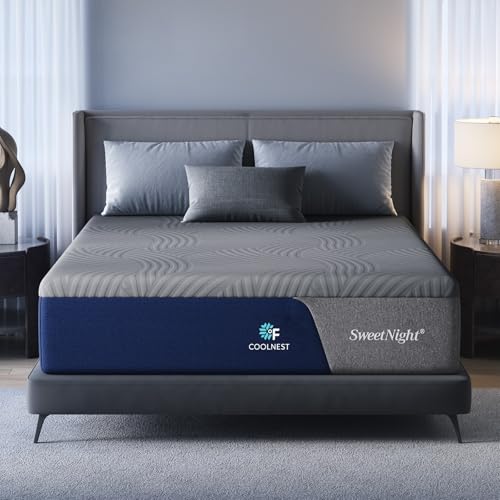
Sweetnight CoolNest Queen Mattress
Our badge: Best for Side Sleepers
The Sweetnight CoolNest attacks the same problem with five zones instead of three, in a tall 14-inch cooling build: PCM high-resilience foam and gel-infused memory foam over a 5-zone support design that cushions pressure areas from head to toe. For the side sleeper whose hip takes the night’s full weight on a few square inches, that combination — maximum zoning, maximum thickness, and a cooling system for good measure — is a compelling argument.
Strengths
- 5-zone ergo support redistributes pressure while keeping the spine’s line stable
- The CoolNest system layers PCM foam and gel memory foam for a cooler surface through the night
- At 14 inches, it has the deepest comfort stack in this guide for pressure points to sink into safely
Trade-offs
- The tall profile needs deep-pocket sheets and suits a higher bed setup
- Medium feel may be too giving for stomach sleepers, who need hip-level firmness
- Full expansion is listed at up to 72 hours
| Color | Grey & Blue |
| Size | Queen (U.S. Standard) |
| Dimensions | 80 x 60 x 14 inches |
| Weight | 68.67 pounds |
Thickness is a pressure-relief feature in disguise: the deeper the comfort stack, the more gradually the hip’s load transfers to the support layers, and the wider the area over which it spreads. The CoolNest’s five zones refine that further, firming the support under the torso’s heavy middle while letting the shoulder and hip zones give. Its maker notes recognition by the American Chiropractic Association for the design; we cite that as the maker’s claim about its product positioning, and the comfort logic stands on its own — zones plus depth equals pressure spread over area, which is what a sore hip is asking for.
The cooling system is not a garnish for this audience: sleepers in discomfort shift position more often, generate more friction heat, and wake more easily when warm, so a surface that dissipates heat protects the unbroken sleep that makes mornings better. Motion isolation across the foam layers does the same for couples. If you sleep on your side, run warm, and wake with a hip that has opinions, the CoolNest is the pick built around your night.
Best for: Side sleepers with hip pressure who also sleep hot / Not suited for: Stomach sleepers and low-profile bed setups
Choose it for maximum zoned cushioning. Skip it if you need a firm, low bed. Check on Amazon

Sealy Dreamlife 12” Hybrid Mattress-in-a-Box
Our badge: Best Hybrid Support
The Sealy Dreamlife 12” Hybrid makes the structural argument: 7 inches of individually encased coils provide local, spring-based support that cannot soften the way foam does, while 2 inches of gel memory foam and a 2.25-inch transition layer handle the surface pressure story. For backs that have watched foam mattresses age into valleys, a coil skeleton is not nostalgia — it is the fix.
Strengths
- Encased coils support each body zone independently and hold that support for years
- Gel memory foam surface contours the hip and lumbar instead of pressing back at them
- Reduced motion transfer keeps a partner’s movements out of your back’s night
Trade-offs
- At just over 80 pounds in queen, it is the heaviest pick here
- The surface contour is shallower than the all-foam picks — deep-hug seekers should look above
- Coils need a flat, rigid base to perform and stay quiet
| Color | Dreamlife |
| Size | Queen |
| Dimensions | 80 x 60 x 12 inches |
| Weight | 80.604164 pounds |
The Dreamlife’s relevance to hips is subtler than the foam picks’: a coil under the hip compresses in proportion to the load on it, so the hip gets support that yields exactly as much as its weight demands, while the neighboring coils under the waist stay taller and fill the curve. That proportional response is what zoned foam imitates; here it is mechanical and durable. Back sleepers feel it as an even, unsagging platform with a forgiving surface; side sleepers feel it as give without bottoming out, thanks to the transition layer keeping coil tops unfelt.
Sealy’s Surface-Guard antimicrobial technology and CertiPUR-US foams round out a listing aimed at long service. Put the Dreamlife on the best flat base in your budget — its coils deserve it — and it is the pick most likely to feel the same in year five as in month five, which for a back that notices every change is a genuine comfort feature. Shoppers comparing hybrid logic across budgets will find the fuller treatment in Best Hybrid Mattresses Under $1000.
Best for: Sleepers who want durable, mechanical support with a foam surface / Not suited for: Anyone who needs to move the mattress often
Choose it for support that does not soften. Skip it for the deepest foam contour. Check on Amazon
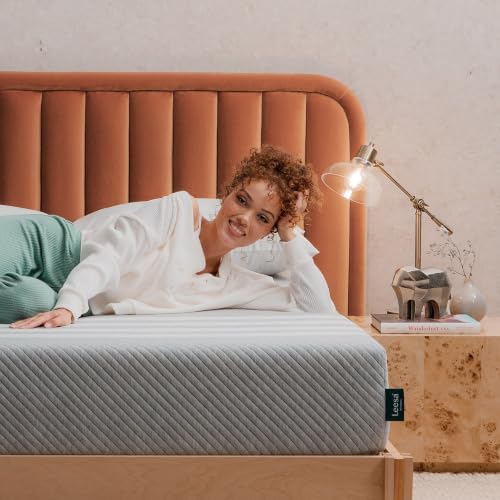
Leesa Original 10″ Memory Foam Mattress
Our badge: Best Gentle Contour
The Leesa Original is the gentlest argument in this guide: a premium all-foam mattress designed for cooling, contouring, and pressure relief across all sleep positions, with targeted relief its maker explicitly aims at lower-back comfort. Where the Nectar leads with firmness, the Leesa leads with kindness — a surface that meets a tender hip softly while the foam stack underneath keeps the back from paying for that softness.
Strengths
- Pressure relief is the design brief: contouring foam spreads hip load over a wide area
- Designed for back, stomach, and side positions rather than tuned to one
- A breathable twill cover and cooling foam positioning suit sensitive, warm sleepers
Trade-offs
- At 10 inches it has less support margin for heavier sleepers than the 12-inch picks
- The gentle feel may under-support stomach sleepers, whose hips need to stay level
- No zoning — the contour is uniform, so the back relies on overall foam quality
| Color | Grey |
| Size | Queen |
| Dimensions | 80 x 60 x 10 inches |
| Weight | 71 pounds |
The Leesa suits the reader whose hip complains louder than their back: the bruised, tender feeling of a pressure point that spent the night on too little cushion. Its contouring spreads that load the way memory foam promises at its best, and its all-position design means the relief does not vanish when you roll from side to back at 3 a.m. The mattress is assembled in the USA with CertiPUR-US certified foam, and its maker donates a mattress to nonprofits for every ten sold — not a comfort feature, but a sign of a company confident in its product’s reception.
Set expectations correctly: this is the softest landing in the guide, and backs that need assertive support should start with the Nectar or the hybrids. But for the combination sleeper whose primary report is hip tenderness with a side of morning stiffness, the Leesa’s order of priorities may match your body better than the firmer picks. Pair it with a pillow that keeps your neck’s line as carefully as the mattress keeps your spine’s — the system view in Best Mattresses For Sleeper Sofas makes the same point for folding beds.
Best for: Tender hips, sensitive sleepers, and all-position sleepers who prioritize cushion / Not suited for: Heavier sleepers and stomach sleepers needing maximum support margin
Choose it when the hip outranks the back. Skip it when the back outranks the hip by a lot. Check on Amazon

Signature Design by Ashley Chime 12 Inch Hybrid Full Size Mattress in a Box | Medium Firm
Our badge: Best for Lumbar Focus
The Signature Design by Ashley Chime 12 Inch Hybrid closes the guide with the most targeted back feature in the pool: a high-density gel memory foam layer aimed at the lower back, over 9-inch 13-gauge pocketed coils with reinforced perimeter rows. It is verified in full size, adjustable-base compatible, and tuned medium-firm — the specification a lumbar-focused shopper would write for themselves.
Strengths
- A dedicated gel lumbar layer concentrates support in the lower-back zone
- Pocketed coils support locally while perimeter rows keep the edges honest for sitting and dressing
- CertiPUR-US foams and a 10-year warranty in the listing, at an accessible tier position
Trade-offs
- Medium-firm support-first feel offers the least hip plushness in this guide
- Verified size is full; queen and king shoppers confirm their size on the listing
- Side sleepers with sharp hip pain may need the softer picks above
| Color | White |
| Size | Full |
| Dimensions | 74.4 x 53.3 x 12 inches |
| Weight | 62 pounds |
The Chime’s lumbar layer matters because the lower back is where support goes to die in aging mattresses: the pelvis is the body’s heaviest section, it rests in the bed’s center third, and foam there softens first. A densified gel layer in exactly that zone, backed by sturdy-gauge coils that do not soften at all, is a durability argument disguised as a comfort feature. Back sleepers feel a platform that holds; the hips get coil-proportioned give rather than foam plushness, which is why this pick ranks last for hip tenderness but first for lumbar focus.
For the shopper whose story is “my back is the problem, my hips are fine,” the ordering of this guide inverts: start here. The full-size verification also makes it the surest fit for smaller bedrooms and guest rooms where a back-care bed is being installed for a parent or a recovering housemate. On an adjustable base — raising the knees slightly is a classic back-comfort position — the Chime flexes as designed, a versatility the foam picks match but the pillow-tops cannot.
Best for: Lower-back-focused sleepers, full-size beds, and adjustable-base owners / Not suited for: Side sleepers whose hip pain is the primary complaint
Choose it when the lumbar zone is the whole story. Skip it when hip cushion is. Check on Amazon
Comparison Table
| Pick | Back strategy | Hip strategy | Profile | Check price on Amazon |
|---|---|---|---|---|
| Nectar 12” Memory Foam Mattress | Firm support layer holds alignment | Contouring foam spreads pressure | 12 inches | Check price on Amazon |
| Casper Sleep Original | Zoned firmness under lumbar and hips | Giving zones at pressure points | 11 inches | Check price on Amazon |
| Sweetnight CoolNest | 5-zone ergo support | Deep 14-inch cushioning stack | 14 inches | Check price on Amazon |
| Sealy Dreamlife 12” Hybrid | Encased coils, durable local support | Gel foam surface over transition layer | 12 inches | Check price on Amazon |
| Leesa Original | Uniform supportive foam stack | Gentle, wide-area contour | 10 inches | Check price on Amazon |
| Signature Design by Ashley Chime | Dedicated gel lumbar layer + coils | Coil-proportioned give | 12 inches | Check price on Amazon |
How to Choose the Best Mattress When Your Back and Hips Both Complain
Decide Which End of the Problem Is Louder
Keep a week’s mental log: is the first morning sensation spinal stiffness or a tender, bruised hip? Stiffness-first sleepers should start at the supportive end of this guide (Nectar, Chime, Sealy); tenderness-first sleepers should start at the cushioning end (Leesa, Sweetnight), with the Casper’s zoning as the designed compromise. This single self-observation predicts satisfaction better than any firmness number, because it tells you which failure you are actually shopping against.
Start at Medium-Firm and Adjust by Position
As general guidance, medium-firm is the most reliable center of gravity for combined back-and-hip comfort. Side sleepers should lean one step softer or toward zoned designs, because the hip’s pressure is mechanical and real; back sleepers should lean toward support-forward builds; stomach sleepers should protect the lumbar by keeping the surface firm enough that the pelvis cannot sink below the ribcage. Combination sleepers need response as well as firmness — a point developed fully in Best Mattresses For Combination Sleepers.
Treat Zoning as a Feature, Not a Buzzword
Real zoning means measurably different support in different sections of the mattress — firmer under the torso’s heavy middle, gentler at the shoulder. Ask what the zones are and where they sit. A sleeper whose body lands far from the designed zones — the very tall, or those who sleep at the bed’s edge — gets less benefit, which is why uniform-but-excellent foam (Leesa, Nectar) remains a rational choice for many bodies.
Audit the Whole Sleep System
Before replacing the mattress, audit its partners: a frame that flexes in the middle manufactures back pain no mattress can fix; a pillow of the wrong height bends the neck’s line while the mattress straightens the spine’s; a topper added in desperation may be the actual problem layer. Change one variable at a time where you can, and let the mattress trial be the experiment it is designed to be. Readers refreshing the whole bed can time bedding purchases around Black Friday Bedding Deals 2026.
Use the Trial Like a Diagnostic
Three weeks is the honest evaluation window: long enough for your body to stop compensating for the old bed, short enough to act inside most trial terms. Judge by mornings, keep brief notes, and change the pillow before you blame the mattress. If mornings improve steadily, you have your answer; if pain persists, worsens, or travels, that is clinical information — take it to a professional rather than to another product page.
How Should You Sleep on a New Mattress for the First Month?
Give the mattress its full expansion window — the listings here range from about a day to 72 hours — and then sleep in your natural positions without trying to train yourself into a textbook posture overnight. Bodies adjust gradually; a back that has spent years on a sagging bed has movement habits built around that sag, and a supportive surface can feel strange before it feels right. Rotate the mattress head-to-foot after the first month, keep it on its flat base, and resist adding a topper during the trial: you are evaluating the mattress, and a topper changes the experiment. If you use an adjustable base, small knee elevation is a comfortable experiment for back sleepers — make changes one at a time and notice mornings.
Problem: The new mattress feels too firm at the hip in week one — Foam breaks in with use and warmth; give it two to three weeks, and confirm your pillow is not pushing your alignment off from the top.
Problem: Your back felt better in week one than week three — Check the frame’s center support and whether the mattress has been rotated; also consider that activity, not the bed, changed — track mornings before concluding.
Problem: You wake when your partner moves — A rigid base and properly fitted bedding matter; if motion still transfers, the foam picks in this guide isolate better than the hybrids.
Problem: The hip is fine but the shoulder now aches — Your pillow height likely no longer matches the mattress’s sink depth; a slightly lower pillow restores the neck-and-shoulder line for side sleepers.
Problem: Nothing has improved after a month — Use the trial return while you can, and take persistent discomfort to a clinician; a mattress can remove strain, but it cannot diagnose.
Side Sleeping With a Bad Hip: The Mechanics
Side sleeping concentrates the body’s weight onto the shoulder and hip — the two points farthest from the body’s center of mass — which is why hip complaints and side sleeping arrive together so often. The mattress’s job is threefold: let the hip sink far enough that pressure spreads beyond the bony point, support the waist so the spine runs straight rather than sagging toward the bed, and keep the pelvis from rotating forward during the night. Zoned designs attack all three directly; deep contouring attacks the first and trusts foam quality for the second; coils attack the second and third with proportional support. A pillow between the knees — a bedding fix, not a mattress feature — keeps the top leg from dragging the pelvis into rotation, and it is the cheapest experiment in this entire guide. If you try one thing before buying anything, try that.
Back Sleeping and the Lumbar Gap
On your back, the body’s weight distributes kindly — except at one address: the lumbar curve, where the spine arcs away from the mattress and an unsupportive surface leaves the lower back’s muscles to hold the position all night. That overnight muscular work is a common source of the morning stiffness this keyword’s readers describe. The mattress answers are the ones this guide keeps returning to: contouring foam that fills the gap passively (Nectar, Leesa), zoned firmness that holds the pelvis so the curve keeps its shape (Casper, Sweetnight), or a dedicated lumbar layer backed by coils (Ashley). A small pillow under the knees flattens the lumbar curve slightly and reduces the gap further — another zero-cost experiment that tells you, before you spend anything, whether lumbar support is your body’s actual request. Our focused guide to Best Mattresses For Lumbar Support develops this single idea into a full shopping method.
Couples: When Only One Partner Has the Bad Back
Half the shoppers for this keyword are buying for two bodies, only one of which is complaining. That changes the optimization: the mattress must solve the back-and-hip problem without creating a comfort problem for the partner who was sleeping fine. The safest designs for this scenario are the ones whose support is local rather than global. Zoned foam holds the complaining partner’s pelvis without firming the whole surface; encased coils compress under each sleeper separately; deep motion isolation keeps the uncomfortable partner’s restless nights — and discomfort does make for restless nights — from becoming the other partner’s problem too. This is why the Casper, Sealy, and Novilla-style builds recur in couple scenarios throughout this program’s guides.
What couples should avoid is the compromise-by-averaging trap: a medium-everything mattress chosen so neither partner hates it, which often means the back sufferer’s support need — the actual reason for the purchase — gets negotiated away. Weight the decision toward the partner with the problem; a comfortable sleeper adapts to a wider range of beds than a sleeper in discomfort does. Then use bedding to rebalance: the comfortable partner can add softness on their side far more easily than the suffering partner can add support on theirs. If your schedules differ as well as your backs, motion isolation graduates from a feature to the feature, and the all-foam picks in this guide should lead your shortlist.
When the Mattress Is Not the Problem
Honesty requires a section most product guides skip. Sometimes the bed is innocent. A week of mornings logged honestly sometimes points elsewhere: the chair you sit in for nine hours, the workout you started, the old injury that flares with weather, the medication, the stress that turns into muscle tension by night. The mattress trial is still worth running — a sagging bed is a real and fixable strain — but if a new, well-chosen mattress changes nothing after a fair month, that is information, and the next step is a professional’s examination rather than a second mattress. Similarly, sudden back pain after an accident, pain with fever, pain that travels below the knee, or any numbness or weakness is not a shopping problem at all; it is a same-week medical appointment.
For the much larger group whose discomfort is the ordinary, mechanical kind — stiff mornings that loosen by midday, a hip that complains after long side-sleeping, a back that prefers some beds to others — the mattress is a legitimate and often decisive variable. That is the audience this guide is written for, and the picks above are ordered for it: balanced first, specialists after, with trials long enough to let your own mornings cast the deciding vote.
Backs and Hips Through the Seasons: Temperature, Foam, and the Changing Bed
A back-and-hip mattress is auditioned in one season and lived with in four, and foam’s relationship with temperature means the bed literally changes character across the year. In a cold bedroom, memory foam firms up — the contour arrives slower and shallower, which back sleepers may read as extra support and hip-focused side sleepers may read as new pressure. In a warm room the same foam softens and deepens, sinking the pelvis a fraction lower by August than it did in January. Neither shift is a defect; both are physics, and knowing them prevents the seasonal misdiagnosis in which a perfectly good mattress is blamed for a January hip or a July back.
The countermeasures are household-scale. Keep the bedroom’s temperature as steady as your system allows during the trial weeks, so the verdict is about the mattress rather than the weather. In winter, a room warmed before bed restores the foam’s intended response; in summer, the cooling picks in this guide — gel-infused and grid designs — narrow the seasonal swing. Bedding plays its part: a thick winter duvet adds top-side weight that deepens sink slightly, while summer’s single sheet lightens it. Judge your mattress across at least one temperature change before final conclusions, and rotate it with the seasons so wear and weather distribute together. The back and hip that learn their bed’s seasonal personality stop being surprised by it — and surprise, in this category, is usually what gets mistaken for failure.
A Note on Mattress Toppers for Backs and Hips
The topper is this category’s most tempting shortcut and deserves a precise verdict. On a mattress whose support core is still sound but whose surface has firmed with age, a two-inch quality topper can restore hip kindness for a season or two — a legitimate bridge. On a mattress whose core has dipped, a topper is decoration on a structural failure: it follows the dip down and takes the pelvis with it. And on a new mattress bought from this guide, a topper in week one is an admission that the wrong pick was made inside its trial — return and re-choose instead. Use toppers as bridges, never as foundations, and the back and hip will be able to tell the difference even when the wallet prefers not to.
Common Buying Mistakes
Buying the Firmest Mattress Because Your Back Hurts
Firm is not the same as supportive. A board-hard surface supports the back’s line while grinding the hip’s pressure point all night — trading one morning complaint for another. Medium-firm with real contour is the evidence-based starting point for most bodies.
Buying the Softest Mattress Because Your Hip Hurts
Deep plush lets the pelvis sink below the spine’s line, and the back pays for the hip’s comfort by morning. Cushion belongs at the surface; support belongs underneath; refuse any mattress that offers only one.
Ignoring the Frame and Pillow
A flexing frame manufactures sag; a wrong pillow bends the system from the top. Audit both before concluding a mattress failed — and before buying its replacement.
Judging by the First Three Nights
Your body is recalibrating from the old bed while the mattress is breaking in. Three nights measure the transition, not the destination; three weeks is the honest trial.
Expecting a Mattress to Treat a Condition
Mattresses remove strain and pressure; they do not diagnose or treat. Pain that persists, worsens, radiates, or follows an injury deserves professional evaluation, full stop.
Final Recommendation
Start with the Nectar 12” Memory Foam Mattress: its firm-leaning contour is the most balanced answer here to a back that wants support and hips that want relief, and its long trial positioning suits a decision your mornings should make slowly. The runner-up is the Casper Sleep Original — Check on Amazon — whose zoning is the most precisely engineered version of the same compromise. Side sleepers with tender hips should audition the Sweetnight or Leesa; backs that outrank hips should audition the Ashley Chime. Whichever you choose, audit the frame, fix the pillow, and give the bed three honest weeks.
Frequently Asked Questions
What firmness is best for back and hip discomfort?
Medium-firm is the most reliable starting point for most sleepers with combined complaints: supportive enough to hold the spine’s line, cushioned enough to spare the hip. Side sleepers lean slightly softer or zoned; back sleepers lean slightly firmer. Let the trial, and your mornings, make the final call.
Is memory foam or hybrid better for backs and hips?
Both can work. Memory foam contours deeply and spreads hip pressure; hybrids add durable, proportional coil support under a foam surface. Foam suits pressure-first sleepers; hybrids suit support-first sleepers and those whose foam mattresses have softened early.
Can a mattress fix my back pain?
A mattress can remove a nightly source of strain — sagging, misalignment, pressure — and many sleepers feel meaningfully better for it. It cannot treat a medical condition. Persistent, worsening, radiating, or injury-related pain should be evaluated by a clinician.
Why does my hip hurt more on a firm mattress?
On your side, the hip is a primary load point. A firm surface concentrates that load on a small area instead of letting the hip settle and spread it. Zoned or contouring designs let the hip sink in a controlled way while the waist stays supported.
How long should I trial a mattress for back comfort?
About three weeks of normal sleeping is a fair evaluation: enough for break-in and for your body to stop compensating for the old bed. Judge by how your first hour of the morning feels, and keep the trial deadline calendared.
Does a pillow really affect back and hip comfort?
Yes — the pillow sets the top of the spine’s line, and a knee pillow changes pelvic rotation for side sleepers. It is the cheapest variable in the whole system, so experiment with it before and alongside any mattress change.


