Disclosure: As an Amazon Associate, dailyhomedecorating.com earns from qualifying purchases. Links to Amazon on this page are affiliate links; they cost you nothing extra. Prices and availability change often, so check the current Amazon listing before you buy.
Searching for the best office chairs for 200 dollars or less puts you in the most crowded, most uneven corner of the seating market. At this tier you will find genuinely good ergonomic chairs sitting one listing away from flimsy task chairs with foam that pancakes in a month. The trick is knowing which features survive at this price band — adjustable lumbar support, a mesh or high-density foam seat, a certified gas lift — and which are decoration. Prices in this band move constantly with sales and coupons, so treat the tier as a framing guide and always check the current listing before you buy.
We narrowed the field to five verified chairs that regularly compete in this bracket, plus one prose-only budget archetype worth knowing about. Each linked pick below was checked against its manufacturer’s listing data for support features, capacity and dimensions. If your budget can stretch, our guides to Best Office Chairs For Computer Work and Best Office Chairs For Long Term Sitting cover the next tier up; if it cannot, the chairs here are the honest best of this band. Readers setting up a full room on a budget may also like Best Sofas And Chairs For Small Room.
Where to Buy
Every linked pick in this guide is sold on Amazon, where you can check the current price and availability — essential at this tier, where discounts decide which chair actually lands in the band. Start with the SIHOO M18 Ergonomic Office Chair — Check on Amazon. The other linked picks: Ticova Ergonomic Office Chair — Check on Amazon; Hbada P5 Ergonomic Office Chair — Check on Amazon; Homall Gaming Chair — Check on Amazon; Respawn 110 Pro — Check on Amazon. The sixth pick is prose-only and has no link, for reasons explained in its review.
In this guide
Quick Picks
| Pick | Badge | Why it earns its place |
|---|---|---|
| SIHOO M18 Ergonomic Office Chair | Best Overall | Four support points, breathable mesh and a wide cushion with a stated 330 lb capacity — the most complete ergonomic package in the band. |
| Ticova Ergonomic Office Chair | Best for Back Support | Height- and depth-adjustable lumbar, 3D armrests and a thick W-shaped seat cushion for posture-focused buyers. |
| Hbada P5 Ergonomic Office Chair | Best with Footrest | S-curve back, adjustable headrest and a pull-out footrest for work-break lounging in one chair. |
| Homall Gaming Chair | Best for Gaming Style | PU leather racer styling, slide-out footrest and a massage lumbar pillow for desk-and-play setups. |
| Respawn 110 Pro | Best Recline | 155-degree recline with an infinite angle lock and a reinforced retractable footrest in gray fabric. |
| Basic Mesh Task Chair (prose-only) | Best Rock-Bottom Budget | The no-frills mesh archetype that fills this tier’s floor — fine for light use, described honestly below. |
Key Takeaways
- In this band, adjustable lumbar support matters more than any other feature; the SIHOO M18 and Ticova both offer it, which is rare at the price.
- Mesh backs are the safer buy for warm rooms and long days; PU leather looks sharp but sleeps hotter and needs gentler care.
- Check the stated weight capacity on the listing — the verified chairs here range from 275 to 330 lb, and that number decides long-term durability.
- A footrest model (Hbada P5, Respawn 110 Pro, Homall) doubles as a break chair, which can matter more than one extra adjustment.
- Because prices in this tier swing with promotions, the “best” chair on any given week is often the verified pick that happens to be discounted — check each listing.
How These Picks Were Chosen
We treated the price band in the keyword as tier framing, not a promise: listings move in and out of it weekly. So the first filter was value density — how much verified ergonomic hardware a chair delivers for a budget-tier position. Every linked pick had to show, in its own listing data, at least three of the following: adjustable lumbar support, an adjustable headrest, multi-direction armrests, a recline with lock, and a stated weight capacity of 275 lb or more. We also required a named manufacturer with a real warranty or support channel, which eliminated the anonymous clones that dominate the bottom of this market.
What got filtered out: chairs with fixed, non-adjustable lumbar bumps marketed as “ergonomic,” chairs with no stated capacity, and premium chairs that only touch this band during rare events — recommending them here would be dishonest framing. One honest archetype, the basic mesh task chair sold under many labels, is covered prose-only because no single verified listing in our pool represents it; we describe what to look for instead of linking a guess. Comfort is discussed in comfort terms only throughout. For a deeper posture-first shortlist, see Best Office Chairs For Comfort And Posture, and for smaller frames, Best Office Chairs For Large People covers the opposite fit problem with equal honesty.
The 6 Best Office Chairs for 200 — Reviewed

SIHOO M18 Ergonomic Office Chair
Our badge: Best Overall
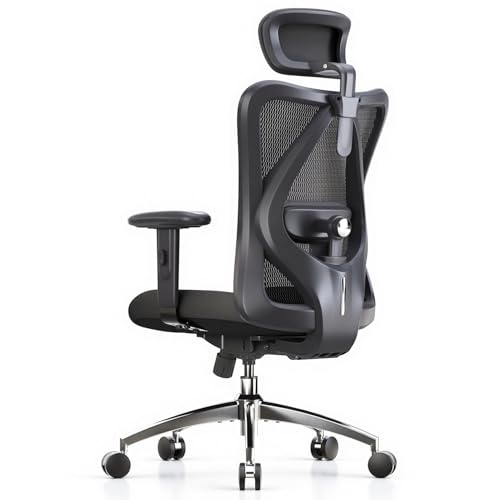
The SIHOO M18 Ergonomic Office Chair is the chair this price band wishes every chair was. It is built around four support points — head, back, hips and hands — with an adjustable lumbar support, a breathable mesh back, 2D armrests and a wide seat cushion. SIHOO states a 330 lb capacity and BIFMA testing, numbers that give it a durability story most rivals in the tier cannot match.
Strengths
- Adjustable lumbar support plus headrest and seat-height adjustment — a full ergonomic kit at a budget-tier position.
- Premium mesh backrest keeps air moving during long sessions in warm rooms.
- Stated 330 lb capacity and BIFMA test pass give it a stronger durability claim than most of the band.
Trade-offs
- Sized for users roughly 5’6″ to 6’2″; shorter users may find the seat depth generous.
- Armrests adjust in two directions only — no forward/back sliding.
- Mesh seat variants vary by listing configuration; confirm which seat the current listing describes before ordering.
| Color | Charcoal |
| Dimensions | 27.5 x 21 x 11 inches (packaged) |
| Weight | 31.53 pounds |
In daily use the M18 behaves like a chair from the tier above. The lumbar support actually moves — up, down and in pressure — so you can place it in the curve of your back instead of accepting a fixed bump. The wide cushion suits long homework, office and gaming sessions, and the tilt lock lets you park a slight recline for calls. Assembly is an eight-step job with clear instructions, and SIHOO backs the chair with a three-year parts promise in its listing. For a first serious home-office chair bought on a strict budget, this is the one to beat; readers comparing it against desk-first alternatives should also scan Best Office Chairs For Back And Neck Support over in our home-office coverage.
Best for: Budget buyers who want real adjustability and a strong capacity rating / Not suited for: Petite users under about 5’5″ who need a shallower seat
Choose it if you can only buy once in this band; skip it if you are petite or insist on 3D armrests — the Ticova below covers that. Check on Amazon

Ticova Ergonomic Office Chair
Our badge: Best for Back Support
The Ticova Ergonomic Office Chair leans hardest into adjustability: lumbar support that moves in both height and depth, a headrest that adjusts in height and angle, 3D armrests with thick PU padding, and a seat of 3.4-inch high-density foam cut in a W shape with a waterfall front edge. For buyers whose main complaint is an aching lower back at 4 p.m., that lumbar depth control is the feature that matters, and it is uncommon in this tier.
Strengths
- Lumbar support adjusts in height and depth — the most complete back tuning in this guide.
- 3D armrests with generous padding fit more desk heights and postures than fixed arms.
- Thick W-shaped foam seat with waterfall edge spreads pressure across hips and thighs.
Trade-offs
- The foam seat sleeps warmer than the M18’s mesh on hot days.
- More adjustment points mean more knobs to dial in during the first week.
- The curved foam headrest is fixed in shape; very tall users should check headrest reach on the listing.
| Color | Black |
| Dimensions | 27.17 x 9.84 x 20.87 inches (packaged) |
| Weight | 17.5 kilograms |
The Ticova rewards a patient first setup. Spend ten minutes placing the lumbar pad, setting armrest height so your shoulders stay down, and tilting to the 110–120 degree zone most people find sustainable, and the chair disappears under you — which is the whole point. The mesh back keeps the upper body cool while the foam seat does the cushioning work, a hybrid approach that suits people who dislike full-mesh seats. It rocks to 130 degrees for thinking breaks. Ticova lists BIFMA testing and a static pressure test in its data, plus a 30-day return policy, which softens the risk of buying seating online.
Best for: Anyone whose buying decision starts and ends with lumbar adjustability / Not suited for: Buyers who want a set-it-once chair with minimal knobs
Choose it if back support is your top criterion; skip it if you prefer the airier all-mesh feel of the M18. Check on Amazon

Hbada P5 Ergonomic Office Chair
Our badge: Best with Footrest
The Hbada P5 Ergonomic Office Chair packs an unusual amount of hardware into this tier: an S-shaped backrest that follows the spine’s curve, adjustable lumbar support, a 2D headrest with 3.94 inches of height range and 40 degrees of swivel, adjustable armrests, a seat height range of 3.35 inches, recline to 135 degrees — and a footrest, so the chair converts into a break lounger without leaving your desk.
Strengths
- The footrest plus 135-degree recline makes it the best work-and-rest hybrid in the band.
- S-curve backrest with adjustable lumbar and a genuinely adjustable headrest.
- SGS certification and BIFMA testing are stated in its listing data.
Trade-offs
- Sized for users roughly 5′ to 5’10”; taller users should check the Ticova or M18 fit notes.
- The footrest is a break feature, not a workstation posture — feet belong on the floor while typing.
- Mesh-and-foam construction varies by configuration; confirm the current listing’s description.
| Color | Black |
| Weight | 44 pounds |
The P5’s personality is versatility. During work hours it is a supportive mesh chair with the lumbar placed where you want it; during a break it reclines, the footrest slides out, and it becomes the nap chair a small apartment has no other room for. Students and hybrid workers in compact spaces get the most from that double life. Hbada’s listing also promises installation guidance and repair support, which is more after-sale structure than most of this tier offers. If your workday includes reading or calls away from the keyboard, this is the pick that follows you through all of it.
Best for: Small-space workers who want one chair for desk work and real breaks / Not suited for: Tall users or purists who dislike multi-function mechanisms
Choose it for the footrest and headrest range; skip it if you are tall — the M18 fits longer legs better. Check on Amazon

Homall Gaming Chair
Our badge: Best for Gaming Style
The Homall Gaming Chair brings racer-bucket styling to the budget band: PU leather over high-density foam, a headrest pillow, a massage lumbar pillow, a slide-out footrest, 135-degree recline and 360-degree swivel on a BIFMA-certified metal base with a class-3 gas lift. Homall states a 300 lb capacity, which is a solid number for this tier.
Strengths
- Stated 300 lb capacity with a metal base and class-3 lift — real hardware for the band.
- Massage lumbar pillow and headrest pillow included rather than sold as add-ons.
- Footrest and 135-degree recline suit desk-to-game transitions.
Trade-offs
- PU leather sleeps warmer than mesh and needs wipe-down care to age well.
- The bucket styling and white colorway will not blend into a formal office.
- Seat width is 19.7 inches — broader users should look at the M18’s wide cushion instead.
| Color | White |
| Dimensions | 18.5 x 20.9 x 50.4 inches |
| Weight | 39.7 pounds |
| Weight Capacity | 300 pounds |
For a desk that doubles as a gaming station, the Homall’s formula is proven: supportive bolsters for focus, a footrest for cutscenes, and a lumbar pillow whose massage function takes the edge off the last hour of a session. Assembly is a lettered-parts job the listing says will not take long, and Homall maintains an after-sale service team. It is the least “office” looking chair here, which for its audience is precisely the point. Households furnishing a teen’s room or a first apartment will find it covers work, study and play in one purchase.
Best for: Gamers and students who want racer style plus a footrest in the budget band / Not suited for: Formal offices or anyone who runs hot in leather-style seats
Choose it for style and the included pillows; skip it if your room is warm and un-air-conditioned — mesh wins there. Check on Amazon

Respawn 110 Pro Ergonomic Gaming Chair
Our badge: Best Recline
The Respawn 110 Pro splits the difference between office and gaming chairs: gray fabric instead of PU leather, dual-density foam, lumbar support and a cushioned headrest, tilt control, and a 155-degree reclining backrest with an infinite angle lock and a reinforced retractable footrest. Respawn states support up to 275 lb.
Strengths
- 155-degree recline with infinite lock — the deepest, most controllable recline in this guide.
- Fabric upholstery breathes better than the PU leather typical of gaming chairs.
- Reinforced footrest with multi-point brackets feels sturdier than single-rail designs.
Trade-offs
- Stated capacity is 275 lb, the lowest among this guide’s linked picks.
- Fabric needs more care than wipe-clean PU leather if you snack at your desk.
- The racing silhouette still reads “gaming” in a corporate video call background.
| Color | Gray Fabric |
| Dimensions | 28 x 26.4 x 51.2 inches |
| Weight | 46.3 pounds |
| Weight Capacity | 275 pounds |
The 110 Pro is built for people whose chair time mixes deep focus and deep recline — remote professionals who take a proper break in the same seat they work in. The infinite lock means the backrest stays at your angle rather than a preset notch, and the dual-density foam keeps the seat supportive without the board-like feel of cheap gaming chairs. It is the heaviest chair in this guide, which reads as substance rather than inconvenience once it is in place. If your household also needs a dedicated posture chair, compare it with the picks in Best Office Chairs For Back And Neck Support before deciding.
Best for: Hybrid workers who recline seriously between tasks / Not suited for: Users over 275 lb or anyone needing a formal office appearance
Choose it for the recline system; skip it if capacity headroom matters — the M18’s 330 lb rating is the safer margin. Check on Amazon
Basic Mesh Task Chair (Prose-Only)
Our badge: Best Rock-Bottom Budget
Every office-chair search at this tier surfaces the same archetype: a simple mesh-back task chair with a foam seat, fixed or height-only armrests, and a basic tilt, sold under dozens of labels. We cover it prose-only because no single verified listing in our pool represents it, and linking a random label would be a guess. Described honestly, it is a legitimate choice for light duty — a spare-room desk, a teen’s homework corner, a few hours a week — and a poor one for full-time work.
Strengths
- The lowest entry cost in the category, and often the only option when the budget is truly fixed.
- Mesh back keeps it cooler than padded budget chairs.
- Light weight makes it easy to move between rooms.
Trade-offs
- Lumbar support is usually a fixed curve or a thin pad — no real adjustment.
- Foam seats in this archetype compress within a year of daily use.
- Capacities are often unstated or modest; verify the number on any specific listing.
How to buy this archetype well: insist on a stated weight capacity, a metal or reinforced nylon base rather than all-plastic, and a seat depth your thighs can live with (your fist should fit between the seat edge and the back of your knee). Expect to replace or supplement it within a couple of years of heavy use, and consider it a stepping stone to the M18 class of chair. For a guest or homework seat, though, it does the job without drama.
Best for: Light, occasional desk use and spare rooms / Not suited for: Full-time remote work or anyone with existing back discomfort
Choose this archetype only when the budget truly stops here; the moment it stretches, the linked picks above are better value per year of service.
Comparison Table
| Pick | Back / Seat | Stated Capacity | Standout Feature | Check price on Amazon |
|---|---|---|---|---|
| SIHOO M18 | Mesh back, wide cushion | 330 lb | Full ergonomic kit | Check price on Amazon |
| Ticova Ergonomic | Mesh back, foam W-seat | See listing | Lumbar height + depth | Check price on Amazon |
| Hbada P5 | Mesh, S-curve back | See listing | Footrest + 2D headrest | Check price on Amazon |
| Homall Gaming | PU leather, foam | 300 lb | Massage lumbar pillow | Check price on Amazon |
| Respawn 110 Pro | Fabric, dual-density foam | 275 lb | 155° infinite-lock recline | Check price on Amazon |
| Basic Mesh Task (prose-only) | Mesh back, foam seat | Varies — verify | Lowest cost | Check price on Amazon |
How to Choose the Best Office Chair in This Price Band
Prioritize lumbar adjustment over everything
In this tier, one real adjustment beats five decorative ones. A lumbar support that moves in height (Ticova, SIHOO) or depth (Ticova) lets the chair fit your back’s curve; a fixed bump fits whoever the factory imagined. If a listing cannot describe how its lumbar support adjusts, assume it does not.
Pick your seat material for your climate
Mesh breathes and suits warm rooms and long days. Foam seats feel plusher in the first month and warmer by hour six. PU leather wipes clean and looks sharp on camera but needs gentle care to avoid cracking. Choose for the room the chair will actually live in, not the room in the photograph.
Read the capacity as a durability forecast
A stated capacity of 300–330 lb on a budget chair signals a stronger base, lift and frame than an unstated or 220 lb rating — even if you weigh far less, the chair is built with more margin and will feel it in year two. Treat missing capacity data as a red flag, a rule that applies with even more force in Best Office Chairs For 400 Lbs territory.
Match the chair to your desk height
Measure from the floor to the underside of your desk, then check the chair’s armrest height range and seat height range against it. Your feet should rest flat, your elbows should sit at desk height with shoulders relaxed, and the arms should slide under the desk when you pull in. Five minutes with a tape measure prevents the most common return in this category.
Decide whether you need a break chair too
If the same chair must serve for calls, reading and rest, a footrest model (Hbada P5, Respawn 110 Pro, Homall) replaces a second piece of furniture. If the chair is purely a workstation, spend the same money on lumbar and armrest quality instead. Small rooms benefit most from the hybrid route — the same logic behind the compact picks in Best Sofas And Chairs For Small Room.
How Should You Set Up a Budget Office Chair?
Assemble on a soft surface, tighten bolts in a cross pattern, and re-tighten them after the first week — budget chairs settle. Set seat height so your feet are flat and your knees sit at roughly 90–100 degrees. Place the lumbar support into the small of your back, not at belt level. Set armrests so your forearms rest with shoulders down. Then sit for a full work session before judging: most discomfort in the first days is an unset knob, not a bad chair. Keep the box and packaging until you have worked in the chair for at least a week, in case an exchange is the right call.
Problem: The chair sinks slowly during the day — the gas lift is faulty or under-rated for the load; contact the seller under warranty rather than living with it.
Problem: Casters scratch or resist on your floor — match caster type to flooring (soft casters for hard floors), or add a chair mat; see Best Office Chairs For Carpet Floors for the flooring-first view.
Problem: The lumbar pad feels like a fist — lower its height and reduce depth if adjustable; a pad pressing at belt level instead of the back’s curve is the usual cause.
Problem: Squeaks after a month — re-torque the base and mechanism bolts; most budget-chair squeaks are loose fasteners, not failures.
Mesh vs Foam vs PU Leather at This Price
Mesh is the durability play: it cannot pancake, it breathes, and its failure mode (slow tension loss over years) is gentler than foam’s. Foam is the comfort play for shorter sessions and cooler rooms, with density mattering more than thickness — a firm 3-inch cushion outlasts a soft 5-inch one. PU leather is the presentation play: it looks executive, photographs well for video calls and wipes clean after spills, but it is the most sensitive to heat, sunlight and harsh cleaners. In this band, hybrid designs — mesh back, foam seat, like the Ticova — are often the sweet spot for full-time workers.
Getting the Most from a Budget Chair Over Years
Budget chairs reward small habits. Rotate your sitting position and use the recline lock at different angles through the week so the foam and mechanism wear evenly. Keep PU leather out of direct sun and condition it occasionally; keep mesh dust-free with a vacuum brush so airflow stays honest. Stand and move for a few minutes each hour — no chair at any price substitutes for that, and the best budget setup pairs the chair with a timer rather than with more accessories. When the seat foam eventually tires, a quality seat cushion can extend the chair’s life by a year or more for far less than a replacement chair.
Where the Money Goes in a Budget Chair
Understanding a budget chair’s anatomy explains both its price and its lifespan. The gas lift and base are the safety-critical parts: a class-3 or class-4 lift and a metal or reinforced base cost real money, which is why their presence in a listing — the Homall’s BIFMA-certified metal base, for instance — is the strongest signal that a manufacturer spent in the right places. The mechanism (tilt, lock, tension) comes next; a steel mechanism plate outlasts a stamped one and keeps the recline smooth instead of notchy.
Foam is where budgets quietly shrink. High-density foam costs more per seat than low-density foam and keeps its shape for years instead of months, which is why listings that publish foam thickness and density — the Ticova’s 3.4-inch high-density seat — deserve more trust than listings that say only “thick cushion.” Mesh has the opposite economics: decent tensioned mesh costs more up front but cannot pancake, so a mesh chair’s comfort in year three resembles its comfort in week three far more closely than a foam chair’s does.
Armrests and headrests are the visible extras, and they are where marketing spends first because they photograph well. A 3D armrest is genuinely useful — it is also cheaper to add than a better lift. The shopping lesson is to read a budget listing from the bottom up: base, lift, mechanism, seat, back, then arms and pillows. Chairs that lead with their pillows and hide their base are telling you where their money went, too.
Assembly quality is the last hidden variable, and it is partly in your hands. Budget chairs ship as a box of parts, and the difference between a solid chair and a wobbly one is often the order and patience of the build: start every bolt by hand before tightening any of them, tighten in a cross pattern so the mechanism plate seats evenly, and do not use a power driver, which strips the soft threads these chairs rely on. Two people make the backrest attachment dramatically easier. And keep the hex key — tape it under the seat — because the first-month re-tightening described later in this guide is a two-minute job with the key and an archaeological dig without it.
Building the Rest of the Desk Around the Chair
A chair is half an ergonomic system; the desk is the other half, and in this price band the smartest extra purchases are small ones. A monitor riser or a stack of books that brings the screen’s top third to eye level removes the forward head tilt that no lumbar support can compensate for. A simple external keyboard tray, or even a lowered desk section, lets your elbows rest at the height the chair’s armrests were designed around. If your feet dangle once the chair is set for the desk, a basic footrest — even a firm box — completes the circuit and takes pressure off the backs of your thighs.
Lighting is the other quiet factor: a desk lamp placed to the side of the screen, rather than overhead glare, reduces the lean-in squint that ruins posture by mid-afternoon. Cable clutter matters too, in an unglamorous way — a chair that cannot roll freely because of a cable nest trains you to twist instead of turning, and the swivel in every chair in this guide exists precisely so you do not have to. Spend an hour on the desk’s geometry and a budget chair will feel like it cost a tier more; neglect it and a premium chair cannot save the setup. Readers furnishing a whole small room around the desk will find the same plan-first approach in Best Sofas For Homes With Kids, where family-proofing drives every choice.
The First Month With a Budget Chair: What to Expect
Week one with any chair in this band is an adjustment period in both senses. The knobs need finding: most owners set the lumbar once, roughly, and then discover over several days that a half-inch higher or a touch less depth is the difference between a chair that nags and a chair that disappears. Give each setting a full workday before judging it, and change one thing at a time, or you will chase your own tail. Foam seats also break in — a firm cushion that feels unyielding on day one usually settles into its working shape by the end of the second week, which is why the return-window advice elsewhere in this guide insists on a real trial rather than a showroom sit.
By week two, the honest weaknesses announce themselves. Armrests that felt fine in an afternoon reveal whether their height range truly matches your desk across a full week of meetings, typing and calls. Mesh backs prove their worth on the first warm afternoon. The footrest models show whether you actually use the feature or merely liked the idea of it — both answers are useful, and both should feed the decision if you are still inside a return window.
Weeks three and four are when build quality starts its long testimony. Bolts that were torqued at assembly either hold silently or begin the creak-and-wobble conversation that a single re-tightening usually ends. Gas lifts either hold height through a full day or begin the slow sink that means a warranty claim, not a personality quirk. Casters either roll true or start to chatter on hard floors. None of these is a catastrophe in a chair with a real support channel behind it — SIHOO, Ticova, Hbada, Homall and Respawn all publish service routes — but all of them are reasons to buy from listings with named manufacturers rather than anonymous labels, which is the quiet thesis of this entire guide.
The owners who end up happiest in this tier share one habit: they treat the first month as a fitting, not a verdict. They adjust patiently, fix the small things early, and use the return window honestly when a chair’s fit range simply is not their body’s range. A budget chair chosen and fitted that way routinely out-serves a careless premium purchase — and leaves money in the budget for the desk, the light and the monitor riser that complete the system.
Students, Remote Workers and Gamers: Same Budget, Different Chairs
Three audiences dominate this price band, and their ideal chairs genuinely differ. Students sit in bursts — two hours of homework, a lecture, an essay sprint — often in small rooms where the chair also serves guests and holds laundry. For them, compact footprint and easy movement matter most, and the Hbada P5’s double life as a footrest lounger fits a dorm or first apartment better than a chair that only works at a desk. Durability demands are real but session lengths are shorter, so foam seats that would tire a full-time worker serve a student well for years.
Remote workers sit the longest and should spend their budget accordingly: lumbar adjustment first, mesh or hybrid construction second, armrest range third. That priority order points straight at the SIHOO M18 and the Ticova, and it explains why this guide ranks them above flashier chairs. A remote worker should also weigh the warranty and parts story more heavily — a chair used forty hours a week accumulates in a year what a student’s chair sees in three — and should use the return window ruthlessly, because a full-time fit problem compounds daily.
Gamers split the difference: sessions are long like a worker’s but posture varies more, with leaning, reclining and controller-in-lap positions that task chairs handle poorly. The Homall and Respawn chairs exist for this pattern — high backs, headrest pillows, deep reclines and footrests — and their trade-offs (warmer upholstery, bolder styling) matter less in a bedroom setup than in a corporate office. The hybrid worker-gamer, now the most common buyer of all, is best served by deciding which activity owns more hours and buying for that one, rather than averaging into a chair that serves neither. That discipline — naming the primary job before comparing features — is the thread running through every section of this guide, and it is worth more than any single specification.
Common Buying Mistakes
Believing the word “ergonomic” on the box
The term is unregulated. Judge by the adjustment list — lumbar movement, armrest movement, headrest movement, tilt lock — and ignore the label. Two of this guide’s picks earn the word; the prose-only archetype shows what its absence looks like.
Buying for the photograph, not the fit range
Chairs list a suitable height range for a reason. A chair built for 5’6″–6’2″ will swallow a 5’1″ user and leave a 6’4″ user’s headrest at shoulder height. Check the stated range against everyone who will use the chair.
Ignoring the return window
You cannot judge a chair in five minutes. Buy where the return policy lets you work in it for at least a week or two, assemble carefully, and keep the packaging until the verdict is in.
Spending the whole budget on the chair
A chair mat, a footrest for shorter users, or a monitor riser can matter as much as the chair itself. Hold back a little of the budget for the setup around the chair.
Assuming a sale price means a better chair
This tier’s prices swing weekly. A discounted verified pick beats a full-price unknown every time; compare features and stated capacities, not strikethrough prices.
Final Recommendation
Buy the SIHOO M18 Ergonomic Office Chair if you want the most complete ergonomic package this band offers, with a 330 lb stated capacity as a durability bonus. If your back is the whole decision, the runner-up deserves the click instead: Check on Amazon for the Ticova and its height-and-depth lumbar control. Small-space and break-heavy workers should look hard at the Hbada P5’s footrest, and gamers at the Homall. Whichever you choose, verify the current price on the listing — in this tier, timing is a feature. And remember the fitting rule that runs through this whole guide: give the chair you choose a genuine first month — patient adjustment, one change at a time, bolts re-checked after the first week — before you decide what it really is. Most budget chairs are judged in the first ten minutes and lived with for years; reversing that ratio is the cheapest upgrade available at any price, and it is the difference between a chair that almost fits and one that truly does.
Frequently Asked Questions
Can a chair in this price band really be ergonomic?
Yes, if ergonomic means adjustable where it counts. The SIHOO M18 and Ticova offer moving lumbar support, headrests and armrest adjustment — the hardware that makes a chair fit a body rather than the other way around.
How long should a budget office chair last?
With daily full-time use, expect two to four years of best service from a verified pick in this band, longer for lighter use. Stated capacity headroom, metal bases and mesh backs all extend that span.
Is mesh or foam better for eight-hour days?
For most people in normal room temperatures, mesh — it breathes and does not compress. Foam fans in cool rooms may prefer a hybrid like the Ticova’s mesh back and foam seat.
What if I am between the stated height ranges?
Prioritize seat depth and lumbar placement over the headline range: your feet must rest flat and the lumbar pad must reach the small of your back. When in doubt, choose the chair with the wider adjustment ranges.
Do I need a footrest model?
Only if the chair doubles as your break and reading seat. For pure desk work, feet flat on the floor (or on a simple footrest if you are shorter) is the sustainable posture, and the money is better spent on lumbar quality.
Should I wait for a sale before buying in this tier?
If your current chair is tolerable, waiting for one of the frequent promotional cycles in this category is a legitimate strategy — the verified picks here cycle through discounts regularly, and the same chair at a promotional price is simply better value. What you should not do is let a countdown timer rush you into an unverified chair: the discount is common, but a stated capacity, an adjustable lumbar support and a named manufacturer are not. Set a short list from this guide, watch the listings for a few weeks if you can, and buy the first verified pick whose price dips into comfortable territory. If your current chair is actively failing — a sinking lift, a cracked base — buy now and buy verified; a month of bad sitting costs more than the discount saves.
Why does this guide include a prose-only pick with no link?
Because the basic mesh task chair is a real and common choice in this tier, but no single verified listing in our pool represents it. We would rather describe it honestly than link a guess. That policy costs this guide a few easy links, but it is the same policy that makes the five linked picks worth trusting: every chair above earned its place from its own published data — adjustments, capacities, materials and testing — and not from a headline. When you shop beyond this guide, hold every listing to that standard and the budget tier becomes much less of a lottery: look for the number, the adjustment list and the manufacturer’s name, and let everything else be a bonus rather than the basis of the decision.


