Affiliate disclosure: DailyHomeDecorating.com may earn from qualifying purchases through links in this article. As an Amazon Associate, this site earns from qualifying purchases. Product examples and images below were retrieved through Amazon Creators API; we have not physically tested them or measured them in your room. Verify the selected dimensions, configuration, seller, delivery, and return terms on the live listing.
The best sofas and chairs for a small room provide enough seating while preserving clear routes through the space. A compact sofa and separate chair can be more flexible than a sectional, but only if the combination fits the full floor plan. Measure each piece, consider how people will use the room, and tape the complete layout before buying.
This guide compares sofa and chair proportions, seat comfort, conversation angles, color, tables, delivery access, and small-space layouts. Amazon Creator API examples are included as starting points, not tested recommendations or a guarantee of room fit.
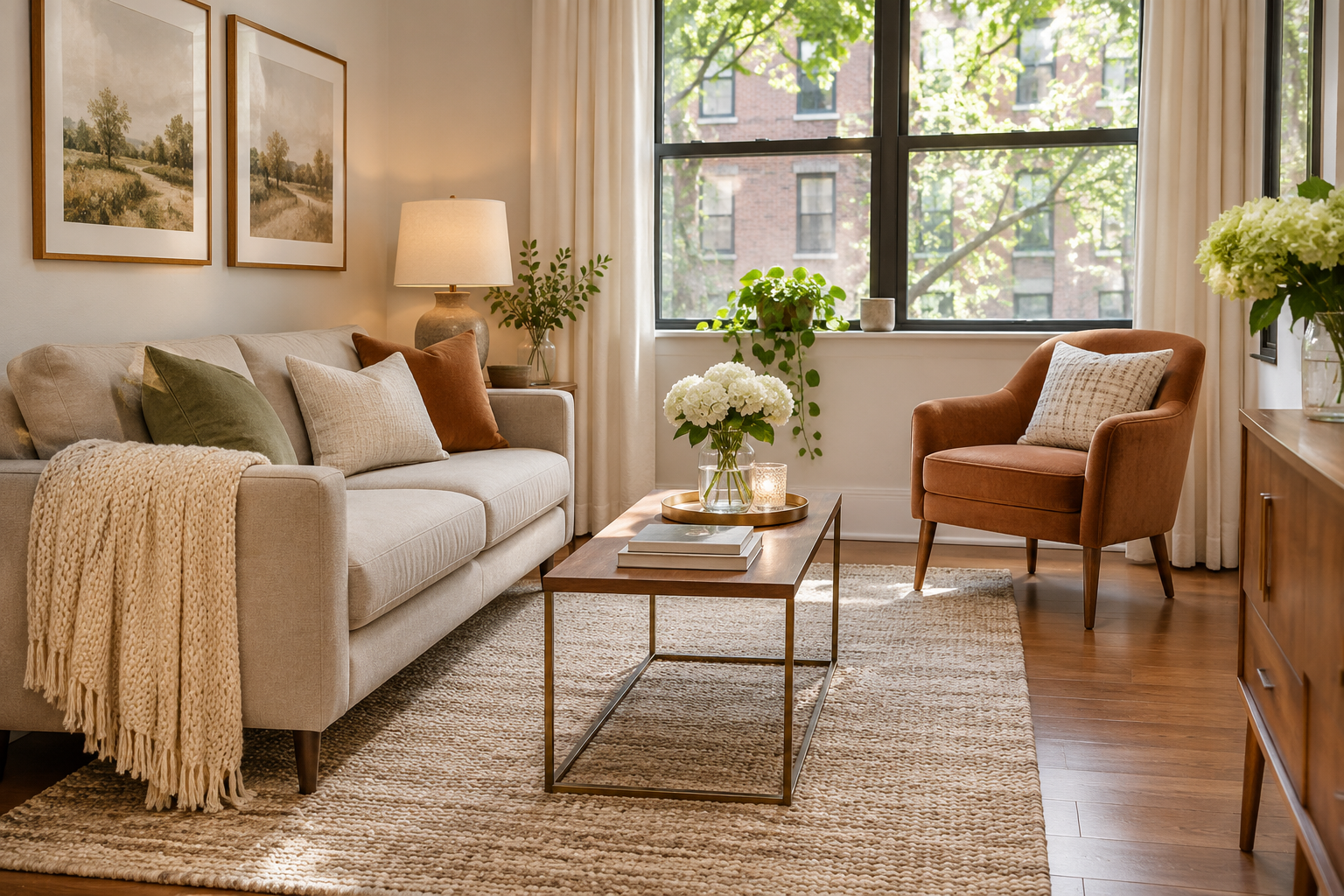
Start with how the room is used
The best sofas and chairs for a small room create enough everyday seating without blocking circulation. Before choosing pieces, decide how the room works: television, conversation, reading, occasional guests, or a mix. One compact sofa and one chair can be more flexible than a large sectional, but only if the chair does not obstruct doors or walkways.
Count the people who usually sit there and identify which seats they prefer. A single apartment sofa may serve daily needs, while a movable accent chair adds a place for a guest. If the room is narrow, consider a loveseat and a slim chair rather than a three-seater with broad arms.
Measure the full floor plan
Measure the room’s width and length, doors, windows, radiators, closets, and main walking paths. Record the maximum footprint for both the sofa and chair. Include arm width and clearance behind each piece. Use painter’s tape to mark the arrangement on the floor and test door swings, access to windows, and the path between furniture.
A floor plan should include the pieces as a group, not just one item at a time. A sofa may fit against a wall, but adding a chair can narrow the route through the room. Leave clear space for people to sit down, stand up, and move between the entrance and other furniture.
Choose a sofa size that leaves room for a chair
A loveseat or apartment sofa may preserve floor space for a separate chair. Compare usable seat width and seat depth, not only outside dimensions. Slim arms can increase seating without enlarging the footprint. A sofa with a chaise may provide more lounging but make it harder to place another seat.
Decide whether a chair is essential before selecting the sofa. If the room has only one long wall, a compact sofa plus a swivel or lightweight chair may work better than a sectional. If several people watch television together, ensure every seat has a usable sightline.
Pick a chair with the right footprint
Accent chairs vary from narrow slipper chairs to broad barrel chairs and recliners. Measure the outside width and depth, then check the seat width and arm height. A compact chair can add a useful seat, but very small proportions may be uncomfortable for larger users. Try the model if possible and test how easy it is to sit and rise.
Consider whether the chair should move. A lightweight chair can be pulled toward the sofa for conversation and moved aside when the room needs open floor. A recliner or swivel chair needs additional operating clearance. Include its full extension and turning area in the taped layout.
Plan conversation and viewing angles
Arrange the sofa and chair so people can speak without twisting awkwardly. A slight angle can make conversation easier, while a chair facing the television may need a clear view. Avoid placing a seat so close to the screen that viewing is uncomfortable. If the room is long and narrow, align the furniture along the walls and keep a direct route through the space.
A small round table or nesting tables can connect the seats without creating hard corners in a tight path. Check reach from every seat and leave enough room to open drawers. A rug can define the seating zone, but its edges should not catch chair legs or create a trip point.
Compare seat height and depth
Seat height and depth affect whether a sofa or chair feels comfortable for the people using it. Deep seats suit lounging but may be awkward for shorter users; shallow seats encourage upright sitting but can feel cramped to taller users. Try both pieces together if possible, since a chair with a much different height can feel disconnected.
Check dimensions with cushions in their normal position. Loose back pillows change usable depth, while thick seat cushions compress. Ask for the exact measurements and sit for several minutes. Comfort is personal, so a product title or staged photo cannot confirm that a seat will suit your body.
Use visual balance to open the room
Furniture with visible legs can keep more floor in view, while skirted or low-base designs may look heavier. A smaller sofa and an open-arm chair can reduce visual bulk. This is not a strict rule; a low-profile chair may work well in a room with tall windows. Compare the silhouette from the doorway and the main seating position.
Keep large shapes simple and use smaller accessories for color. Matching sofa-and-chair sets can simplify coordination, but identical pieces may make a small room feel crowded. A contrasting chair in a related color can provide visual interest without adding another large upholstery pattern.
Coordinate colors and upholstery
Choose a shared color family, wood tone, or leg finish to connect separate pieces. The sofa and chair do not need to match exactly. A neutral sofa with a colorful chair can create a focal point, while similar upholstery colors make a mixed set feel calm. Request swatches and view them in the room’s actual light.
Consider fabric care and daily use. Velvet, chenille, leather, and woven upholstery have different textures and cleaning requirements. Check fiber content and cleaning codes for both pieces. If pets or children use the room, compare snagging, lint, and spill care before choosing a delicate fabric.
Select useful table and lamp placement
A small room can still use a table between the sofa and chair, but it should not block knees or movement. Nesting tables or a narrow side table may offer a surface without taking up the center. Place lamps where seated people can reach switches and keep cords outside the main walkway.
Measure the coffee table and sofa gap together. A table that is too wide can make it difficult to pass between the chair and sofa. If the room needs an open center, use a small side table and leave the middle clear. Functional surfaces matter more than buying a full matching set.
Consider a swivel or armless chair
A swivel chair can face the sofa for conversation and turn toward a television or window. It needs a clear rotation area, so mark the chair’s full turning circle. Armless chairs can be narrower and easier to place, although they may offer less support when sitting down or standing up.
Check how stable the chair is during turning and whether it fits the intended user. A swivel base can scratch some floors; ask about floor protection. A compact upholstered chair with a narrow frame may be a better choice if the room cannot spare the area required for a swivel.
Think about guest sleeping and flexibility
If the room occasionally hosts guests, a small sleeper sofa can replace a separate chair or bed, but it needs floor space when extended. Another option is a regular sofa and a lightweight chair that can move to another room. Compare the extended footprint, setup effort, sleeping surface, and storage for bedding.
Do not buy a sleeper unless you can open it without blocking the room’s exit. Measure the bed mode and consider where cushions go during conversion. For frequent overnight use, test the sleeping surface and evaluate the frame and mattress rather than relying on “sleeper” in a listing title.
Check frame and cushion quality
Ask about the frame, suspension, cushion fill, weight guidance, and warranty for each piece. A sofa and chair sold as a set may use different construction or cushioning. Compare seat feel and stability in person, and check whether replacement cushions, covers, or legs are available.
Do not infer durability from style labels or price alone. Look at seams, cushion alignment, and how the frame feels during ordinary sitting. Ask how the warranty covers frame, cushions, fabric, and delivery damage. Keep the model numbers and written answers so the pieces can be compared accurately.
Measure delivery access
Measure the doorway, hall, stairs, elevator, landing, and tightest turn for both the sofa and chair. Ask for package dimensions and whether legs or backs detach. A small sofa can still be hard to maneuver if it arrives as one large frame. Delivery access is a separate constraint from the room footprint.
Confirm delivery level, assembly, stairs, and old-furniture removal costs. If the sofa and chair are delivered separately, check that both arrive within the expected window. Keep packaging until you inspect the upholstery, hardware, and included pieces.
Compare product listings fairly
Product listings may combine multiple sizes and colors under one page. Verify the selected dimensions, material, leg finish, and seller for both sofa and chair. The same brand may offer several models with similar names. Read the specification sheet and inspect the chosen variation rather than relying on the main photo.
Reviews can combine variants and personal comfort preferences. Look for recent comments about assembly, cushion firmness, and delivery, then compare them with the exact model’s details. Save product links and a room plan so you can compare options without confusing dimensions.
Amazon examples for compact seating
The cards below were returned by Amazon Creators API searches for compact sofas, loveseats, and accent chairs. We have not physically tested them or measured them in your room. A set listing may include multiple pieces, so verify the selected configuration, dimensions, and included items before ordering.
Use the cards as examples of shapes and combinations, not as a ranking. Compare the sofa’s footprint with the chair’s width and the room’s walkway. Check current price, availability, seller, delivery, assembly, and return terms on the live listing.

Homall 72" L Shaped Sofa Couches for Small Spaces , Apartment Drak Gray | Wood Frame Chenille Fabric Sectional Couches with Reversible Ottoman Couches for Small Living Room Bedroom Office
Compare dimensions with your room plan and verify what the selected option includes.

Yaheetech Small 25.5in Wide Sherpa Barrel Accent Chair for Bedroom, Ivory | Compact Cozy Barrel Chairs with a Curved Silhouette, Upholstered Furry Armchair for Small Spaces, Living Room Bedroom Corner
Compare dimensions with your room plan and verify what the selected option includes.

Accent Chairs for Living Room, Comfy Upholstered Armchair, Light Gray | Mid Century Modern Reading Chair for Bedroom, Armchair with Side Storage Pocket, Solid Wood Legs for Apartment Waiting room
Compare dimensions with your room plan and verify what the selected option includes.

Dark Grey 62'' 3-Piece Sofa Set with Loveseat and Chairs for Living Room | TYBOATLE, Small Couch Set, Upholstered Sofa, Loveseat and Chair Set, Compact Furniture, Apartment, Bedroom, Small Spaces
Compare dimensions with your room plan and verify what the selected option includes.
Common small-room furniture mistakes
Buying two large pieces before measuring is the most common mistake. Others include choosing a broad chair that blocks a doorway, adding a chaise without enough depth, and placing a table where people need to walk. Buyers can also overlook how loose cushions change seat depth or how much clearance a recliner needs.
Tape the full arrangement, including tables and lamps, before ordering. Measure delivery access and confirm each selected variation. If you cannot preserve a clear route, choose a smaller chair, movable ottoman, or alternative layout rather than trying to squeeze in every piece.
Frequently asked questions
Is a sofa and chair better than a sectional in a small room? It depends on layout; separate pieces can move, while sectionals use corners efficiently. What chair works best? Choose by footprint, seat fit, and how the room is used. Do matching sets save space? Not necessarily; dimensions matter more than matching upholstery.
How much walkway space should I leave? Keep a comfortable, unobstructed route for the people using the room and account for doors and drawers. Can a small room fit a recliner? Only if the full open footprint and circulation still work. Should sofa and chair fabrics match? No, but coordinate color, texture, or finish.
Final thoughts
The best sofa-and-chair combination for a small room balances usable seats with clear walking paths, comfortable dimensions, and a visual scale that suits the space. Measure the complete arrangement, tape it on the floor, and check delivery access before comparing upholstery. A flexible chair can add useful seating without locking the room into one layout.
For more planning, see our L-shaped sofa guide, two-sofa layout guide, and affiliate disclosure.
Create a clear entry path
The path from the room entrance to the window, closet, or next room should remain easy to use. A sofa and chair can create a conversation area, but a chair placed directly across from the sofa may narrow the route. Try shifting the chair diagonally or closer to a corner, then tape the route on the floor.
Think about everyday objects that open or move: doors, drawers, windows, and sleeper mechanisms. Measure those arcs as part of the layout. If people need to walk behind the chair, make sure there is enough clearance for the users and not just an empty line on a floor plan.
Choose a sofa profile that feels lighter
A sofa with narrow arms, visible legs, and a simple back can leave more of the floor in view. This can help the room feel less crowded, though a lower back may not suit everyone. Compare a compact sofa with a small loveseat, checking seat width and seat height before choosing by appearance.
If the sofa will float in the room, check that its back is finished and attractive from behind. A wall-hugging design may work better in a narrow room, but do not push furniture against heaters or vents without checking clearance guidance. The best profile is the one that fits daily use and the room shape.
Use a chair with the right visual weight
An open-arm or armless chair can occupy less visual space than a large padded recliner. A barrel chair may add a soft curve but can have a wide footprint. Compare the chair’s width at its broadest point, including arms and legs, and tape out the turning area if it swivels.
Choose a chair with a seat height and back angle that work alongside the sofa. It need not match exactly, but a very low chair beside a tall sofa can feel disconnected. A similar leg finish or fabric color can connect different styles without buying a matching set.
Arrange the seating around a focal point
A small room’s focal point might be a television, fireplace, window, or conversation area. Place the sofa first, then angle the chair toward the focal point while preserving access. If a television is the focus, check both seats’ viewing angles and avoid forcing the chair into a narrow corner.
If the room has several focal points, a movable chair can turn toward the window during the day and the sofa at night. Use a floor lamp or a small side table to make the chair feel intentional. Keep cords and table corners out of walking paths.
Use a rug without crowding the floor
A rug can visually connect a sofa and chair, but a rug that is too small can make the furniture look scattered. Measure the seating group and choose a rug that reaches under the front legs of both pieces when possible. Ensure rug edges do not catch on chair legs or block a door.
In a very small room, a smaller rug can still define the area if it is centered under the table or seating. Test the arrangement with tape before purchase. Avoid layering too many rugs or accessories if the goal is to keep the room simple and easy to move through.
Plan for storage and surfaces
Small rooms benefit from tables that serve more than one purpose, such as nesting tables or a compact storage ottoman. Check whether the top is stable for drinks and whether the storage opens without hitting the sofa or chair. A side table may be more useful than a large central coffee table if walking space is limited.
Before buying storage furniture, list what needs to be stored and how often you use it. Avoid filling every empty corner; open floor can make a room more flexible. A small sofa and chair should remain easy to reach and clean around.
Choose easy-to-move pieces for flexible rooms
If the room doubles as a home office, guest area, or play space, consider a lightweight chair and a movable ottoman. These can be repositioned when the room changes function. Check that the furniture has stable legs and that moving it will not damage the floor.
A compact sofa on legs may be easier to vacuum under than a fully upholstered base. A chair with casters is not always appropriate for a living room and can slide unexpectedly. Choose movement features that suit the floor and the users.
Certain content on this site comes from Amazon and may change. Product names, images, features, and availability are supplied through Amazon Creators API or the live listing. Confirm current details before purchase.
Measure the entire seating group and keep a clear path to the room entrance. Recheck before ordering.