Disclosure: As an Amazon Associate, dailyhomedecorating.com earns from qualifying purchases. Links on this page are affiliate links; they cost you nothing extra. Prices and availability change often, so check the current Amazon listing before you buy.
This northbox 6xl review begins with a disclosure most review pages would bury: when we checked Amazon’s catalogue through the retailer’s own product data system, twice, no Northbox-branded air purifier came back at all. Not the 6XL, not any other model from the brand — the searches returned generic large-room purifiers from other manufacturers and nothing wearing the Northbox name. That does not prove the 6XL does not exist somewhere in the world. It does mean that, at the time of checking, there was no verifiable Amazon listing whose specifications, filtration claims, or coverage figures we could confirm and stand behind, and a review that invents those numbers for you would be fiction wearing a lab coat.
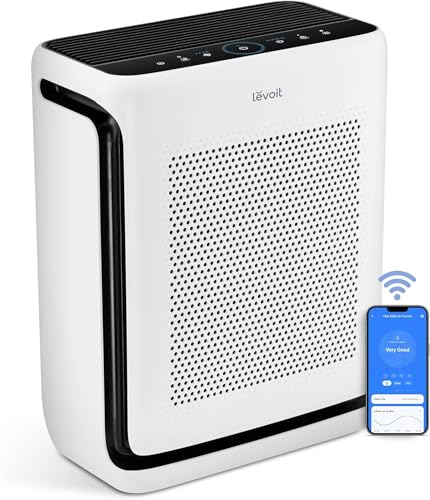
So this article does the honest version of the job. It explains what a buyer searching for this model is almost certainly trying to solve — serious air cleaning for a genuinely large room — and how to judge any large-room purifier’s claims, including the 6XL’s if you encounter it through another channel. Then it puts two large-room machines whose listings, titles, and images we could verify in front of you as working alternatives: the Honeywell HPA5300B, a long-running heavy-duty design for extra-large rooms, and the Levoit Core 600S, a smart-enabled purifier rated by its maker for rooms approaching three thousand square feet. If your heart is set on the Northbox specifically, the evaluation framework in the middle of this page is the tool to carry with you. If your heart is set on cleaner air in a big space, the two verified machines are where the evidence lives.
Northbox 6xl Review: What Can and Cannot Be Verified
Start with what the name itself tells us, carefully labelled as inference rather than fact. The 6XL badge follows the naming grammar of large-room purifiers, where the number usually gestures at capacity class and the XL at extra-large coverage. Brands in this category compete on three figures above all: the room area they claim to cover, the speed at which they claim to exchange that room’s air, and the filtration stages they pack into the cabinet. A model calling itself 6XL is positioning itself at the serious end of that contest, aimed at open-plan living spaces, large bedrooms, basements, and light commercial rooms rather than at a bedside table. That is the extent of what the name alone can honestly support, and any page that quotes you a precise CADR, decibel figure, or filter life for this machine without a verifiable listing behind it is guessing in a confident font.
What cannot be verified matters just as much. We cannot confirm the 6XL’s filter architecture — whether it uses a true HEPA element, how much activated carbon it carries, or whether its pre-filter is washable. We cannot confirm its controls, its noise at any speed, its energy draw, its dimensions, or its replacement filter availability, and that last item deserves emphasis: a purifier is a long-term relationship with its consumables, and a machine whose replacement filters are hard to source becomes an expensive sculpture within a year or two. We also cannot confirm who stands behind the brand for warranty purposes. None of this is an accusation. It is a description of an evidence gap, and the correct response to an evidence gap in a purchase of this size is either to close it through a channel that can answer those questions in writing, or to buy a machine whose answers are already on the record. The rest of this article helps you do both.
In this guide
Key Takeaways
- No Northbox-branded purifier was returned by Amazon’s product data when checked twice for this review, so the 6XL’s specifications remain unverified here.
- The 6XL’s name positions it as an extra-large-room machine; treat any precise performance figure for it as unconfirmed until a verifiable listing backs it.
- Replacement-filter availability is the hidden make-or-break question for any obscure purifier brand.
- Two verified large-room alternatives, from Honeywell and Levoit, are reviewed in full below with confirmed listings and images.
- The buying framework in this article lets you audit the 6XL fairly if you find it sold through another retailer.
The Verified Alternatives at a Glance
| Machine | Positioning | Coverage claim in its listing title | Character |
|---|---|---|---|
| Honeywell HPA5300B | Extra-large room workhorse | Cleans rooms of 2,423 square feet in one hour | Auto mode, established design, allergen focus |
| Levoit Core 600S | Smart large-room flagship | Rooms up to 2,933 square feet | App and voice control, sleep mode, three-in-one filter |
Both machines come from manufacturers with long, checkable track records in home air treatment, and both listings were live with official imagery when this article was assembled. They approach the large-room problem with different temperaments — the Honeywell as a set-and-forget appliance with an automatic mode watching the air for you, the Levoit as a connected device that reports to your phone and answers to voice assistants — and the detailed reviews below treat them as the two honest answers currently available to the need that brought you to a 6XL search in the first place.
How the Alternatives Earned Their Places
An alternative only belongs in this article if it clears bars the 6XL currently cannot be measured against. It needed a live Amazon listing under its exact model name, retrieved through the retailer’s own data, with an official product image attached. It needed to be a genuine large-room machine rather than a bedroom unit with ambitious marketing, judged by the coverage figures in its own listing title. And it needed a manufacturer with a visible history of supporting its purifiers with replacement filters, because a large-room machine consumes filters at a rate that makes consumable support a core feature rather than an afterthought. Two machines cleared every bar. Several other large-room models were checked and set aside for this article because their listings or imagery could not be confirmed in the same pass, and they may well be fine machines; the standard here is evidence, not suspicion.
Honeywell HPA5300B: The Extra-Large Room Workhorse
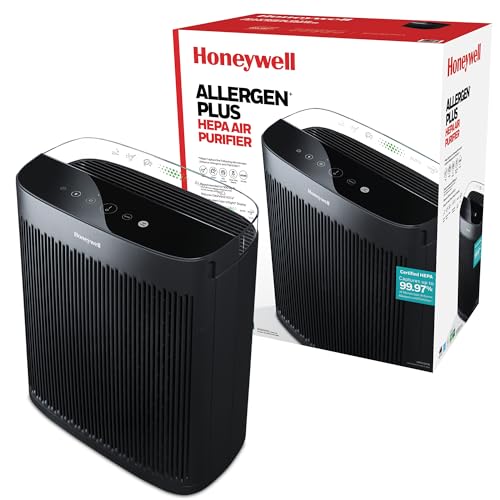
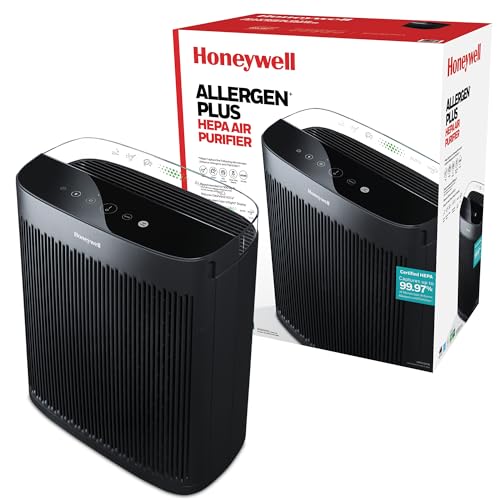
Badge: the verified alternative for big, busy rooms. Honeywell’s HPA5300B belongs to a family of purifiers that has been cleaning large rooms for years, and its listing states the mission plainly: HEPA filtration for extra-large spaces, with the capacity to cycle the air in a room of more than two thousand square feet within an hour, and an automatic mode that adjusts the fan to what the air actually needs. The design is unapologetically appliance-like — a substantial cabinet in black, built to sit in a corner of a great room or basement and get on with its work rather than to pose for photographs.
Filtration: HEPA filter with pre-filter stage per the listing. Coverage claim: rooms of 2,423 square feet cleaned in one hour. Controls: automatic mode featured in the listing title. Colour: black. Positioning: allergens, dust, pollen, pet dander, odours, and smoke.
Strengths
- Capacity is genuinely large-room grade, sized for open-plan spaces rather than optimistic bedroom maths.
- Automatic mode removes the daily decision-making, sensing conditions and adjusting the fan without your involvement.
- Honeywell’s long presence in this category means replacement filters are a routine purchase rather than a treasure hunt.
Trade-offs
- The cabinet is large and visually plain, which matters in a carefully styled living room.
- It is a single-purpose appliance without the app reporting and voice control the Levoit offers.
- At its higher fan speeds, as with any machine moving this much air, conversation-level noise becomes part of the room.
Live with this machine mentally for a moment. It suits the household whose large room is also its busiest: the open-plan space where cooking, pets, a wood stove, or a parade of children keep the air loaded, and where nobody wants to manage a purifier as a hobby. Auto mode is the feature that matters most in that life, because a purifier only cleans the air when it is running at an appropriate speed, and a machine that decides for itself runs correctly on the days you forget it exists. The trade you accept is aesthetic and digital: no dashboard, no air-quality graphs on your phone, and a cabinet that looks like equipment. For the room that needs results more than theatre, that trade is usually correct.
Best for: large open-plan homes, pet-heavy households, and buyers who want automatic, unmanaged cleaning. Not suited for: style-led rooms or app enthusiasts. Check price on Amazon

Levoit Core 600S: The Smart Large-Room Flagship
Badge: the verified alternative for connected homes. The Core 600S is Levoit’s statement piece for big spaces, listed for rooms up to 2,933 square feet, with a three-in-one filter, a dedicated HEPA sleep mode, and control by app, remote, and voice assistant. Where the Honeywell asks to be left alone, the Levoit asks to be involved: it reports air quality, it runs schedules, and it lets you turn the machine up from the sofa when the dog comes in from the rain smelling like the rain.
Filtration: three-in-one filter with HEPA sleep mode per the listing. Coverage claim: rooms up to 2,933 square feet. Controls: app, remote, and Alexa voice control per the listing. Colour: white. Positioning: smoke, pet odour, and dust in large rooms.
Strengths
- The largest coverage claim of any machine in this article, aimed at genuinely big single spaces.
- Smart controls and scheduling make correct usage effortless to maintain across a busy week.
- A proper sleep mode lets a large machine share a bedroom without sharing its noise all night.
Trade-offs
- The smart features only earn their keep if you actually use an app or a voice assistant.
- Its white, modern styling is conspicuous in traditional rooms in a way the black Honeywell is not.
- Three-in-one filters are a recurring consumable cost that should be priced into the decision from the start.
The household that thrives with the 600S runs its home from a phone already and finds manual appliances faintly annoying. Scheduling alone justifies the machine in that household: the purifier can work hard while the family is out, idle down before everyone returns, and drop to its sleep setting at bedtime without a single button being touched after setup day. Its coverage claim also makes it the natural candidate for the single huge space — the converted barn, the loft, the sprawling family room — where the Honeywell’s claim, while large, is the smaller of the two. What you give up is the Honeywell’s absolute simplicity and its decades-deep familiarity in the category.
Best for: very large single rooms, smart-home households, and schedulers. Not suited for: buyers who avoid apps or prefer the plainest possible appliance. Check price on Amazon
How to Audit Any Large-Room Purifier, Including the 6XL
Suppose you find the Northbox 6XL offered by another retailer, or it appears on Amazon after this article’s checks. Here is the audit to run before money moves, in the order that experienced buyers run it. First, find the coverage claim and interrogate its basis: responsible listings tie the area figure to a number of air changes per hour, and a claim of a huge room cleaned once an hour is a weaker promise than a smaller room cleaned several times an hour, because air cleaning is a rate rather than an event. Second, identify the filtration stack in writing — a washable or vacuumable pre-filter for hair and lint, a true HEPA element for fine particles, and enough activated carbon to matter if odours or smoke are part of your problem. A listing that cannot name its own filter stages is asking you to trust a black box. Third, price the consumables before pricing the machine: find the replacement filter, confirm it is actually sold by someone, and multiply its cost by the replacements a year of large-room service will consume. Fourth, ask who honours the warranty and through what process, and prefer any answer that exists in writing on the listing itself. Fifth, check the noise figures at the speed you will actually use, which for most households is not the turbo setting that produces the headline coverage claim. A machine that only achieves its numbers at a volume you cannot live with achieves them, in practice, never.
Apply that audit to the two verified alternatives and watch how it behaves. The Honeywell answers the coverage question with an hourly figure for a stated area, names its HEPA filtration in its title, and sits inside a brand ecosystem where filters are ordinary retail stock. The Levoit answers with the largest area claim here, a named three-in-one filter architecture, and a manufacturer whose replacement filters are a standard part of its catalogue. Neither answer is perfect, and the audit is not designed to produce perfection. It is designed to produce evidence, and evidence is precisely the thing the 6XL currently lacks in the channels we could check. If a future listing supplies it, the machine deserves re-evaluation on the same terms as everything else in this article, neither punished for today’s gap nor forgiven it.
The Large-Room Problem Itself
It is worth pausing on why large rooms defeat ordinary purifiers, because the physics explains both the 6XL’s positioning and the alternatives’ designs. A purifier cleans only the air that passes through it, so its real performance is the volume it processes per hour set against the volume of the room. A big room holds a lot of air, and it usually holds more pollution sources too: more floor shedding dust, more soft furnishings harbouring allergens, more doorways admitting pollen, and often a kitchen at one end contributing cooking particles to the whole. Doubling a room’s floor area roughly doubles the air a purifier must cycle to achieve the same cleanliness, which is why large-room machines are physically bigger, louder at full effort, and hungrier for filters than their bedroom cousins. Placement becomes a performance feature at this scale. A machine wedged behind a sofa cleans the back of the sofa with great dedication, while the same machine given breathing room on the room’s natural air path serves the whole space. Corners are acceptable; coffins of furniture are not. And in a truly sprawling or oddly shaped space, two mid-sized machines at opposite ends frequently outperform one giant, because they shorten the distance any parcel of air must travel to reach a filter. The verified pair in this article can be deployed either way, which is a flexibility worth having if your room turns out to be two problems wearing one name.
Setting Up and Living With a Large Purifier
Whichever large machine you buy, its first week sets its reputation in your household, so set it up deliberately. Choose the position before unboxing: a spot along the room’s main air movement, at least a small distance from walls on the intake side, near the dominant pollution source if there is one — the dog’s favourite chair, the door to the garden, the end nearest the kitchen. Remove every film and bag from the filters before the first run, because large machines ship with their filters wrapped and will happily blow unfiltered air around the wrapping while reporting for duty. Run the machine continuously for the first several days rather than in occasional bursts; air cleaning is cumulative, and a room’s particle load falls over days of steady cycling in a way a single heroic afternoon cannot match. Then settle into the rhythm the machine asks for: pre-filter cleaned on the schedule its manual sets, main filter replaced by its indicator or its calendar rather than by guesswork, and the exterior vents wiped when you dust the room. Households that treat those small tasks as part of ordinary housekeeping get the performance they paid for. Households that seal the machine in a corner and forget it own a fan with a biography.
Mistakes Specific to This Corner of the Market
The first mistake is buying a badge instead of a paper trail, and it is the mistake this article exists to prevent: a striking name and an XL suffix are not specifications. The second is comparing coverage claims as if they were measured on one scale, when each maker chooses its own air-change assumption; convert claims to a common basis, or compare machines at the same stated basis, before declaring a winner. The third is forgetting the second year: the purchase price of a large purifier is merely the first instalment, and filters, electricity at high duty, and eventual replacement parts write the rest of the bill. The fourth is placing the machine for the photograph instead of for the airflow, then concluding that purifiers do not work. The fifth is expecting any purifier to solve problems that are not airborne particles — a purifier will not dry a damp basement, silence a noisy neighbour, or remove the source of a smell that is still actively producing it. Ventilation, source control, and cleaning remain the foundations; the machine is the finishing layer, and it performs best in a home that has not asked it to be the whole strategy.
Final Recommendation
On the evidence available today, the recommendation writes itself in two parts. For the Northbox 6XL itself, the verdict is unproven rather than negative: no verifiable listing could be found through Amazon’s product data despite repeated checks, so its specifications, support, and consumables are questions any seller of the machine should be made to answer in writing before a purchase. For the need underneath the search — serious, verified air cleaning for a large room — the Honeywell HPA5300B is the recommendation for households that want automatic, unmanaged performance from an established name, and the Levoit Core 600S is the recommendation for households that want the largest stated coverage plus scheduling and voice control. Either machine can be bought, filtered, and warranted through channels that put their claims on the record, and in a category where the product is invisible air, the record is the product.
Why Obscure Purifier Brands Appear, Disappear, and Reappear
The air purifier market has a long tail that few other appliance categories can match, and understanding it will make you a calmer shopper. The core technology is mature: a fan, a filter stack, a cabinet, and controls. That maturity means a competent machine can be assembled by many manufacturers, and it means new brands can enter quickly, sell through online channels for a season or two, and then rename, merge, or vanish without anything fraudulent having occurred. The hardware a vanished brand leaves behind is often perfectly functional; what vanishes is the support tail — the replacement filters, the warranty desk, the spare parts. This is why experienced buyers in this category weight the support tail so heavily, and why this article treats a missing filter listing as a louder signal than a missing review score. An established name like Honeywell or Levoit is, in part, a promise that the tail will still exist in three years. An unverifiable name is not necessarily a bad machine; it is a machine whose tail you cannot yet see, and the price should reflect that uncertainty if you choose to accept it.
There is a second, quieter phenomenon worth naming: model names that sound like a category rather than a product tend to attract search traffic from buyers who encountered them in a single listing, a social post, or a marketplace storefront that has since changed. If you arrived here from such an encounter, screenshot the listing that introduced you to the 6XL before it changes, because that page may contain the only specification record you will ever have for the machine. With that record in hand, the audit framework earlier in this article can be run line by line, and the machine can be judged on evidence you captured rather than on memory.
Filter Science in Plain Language
Every claim in this category rests on the filter stack, so here is the stack translated. The pre-filter is a coarse screen that catches hair, lint, and the largest dust, protecting the expensive elements behind it; on machines serving pet households it does heavy work and needs regular cleaning to avoid choking the airflow. The HEPA element is the fine filter, a dense mat of fibres that captures the small particles — pollen, mould spores, fine dust, dander fragments — that define most people’s allergy-season misery. Genuine HEPA media is a standard, not a compliment, and listings that hide behind phrases like HEPA-style or HEPA-type are telling you the element did not meet it. The carbon stage handles gases and odours, which particle filters cannot touch, and its usefulness scales with the sheer weight of carbon present; a token carbon sheet perfumes the specification list while doing little for cooking smells or wildfire smoke. Some machines add features beyond the stack, such as ionisers or ultraviolet lamps, and the balanced view is that the stack does the overwhelming majority of the measurable work, so buy the stack and treat extras as extras. Applied to the verified pair: the Honeywell’s identity is its HEPA element working at large-room scale, while the Levoit’s three-in-one cartridge packages the stages into a single replaceable unit, trading some service flexibility for simplicity. Applied to the 6XL, the stack is currently a question mark, and it is the first question any seller should be asked.
Room by Room: Where a Machine of This Class Earns Its Keep
The open-plan kitchen and living space. This is the hardest-working placement in the modern home, because cooking generates fine particles at a rate few people appreciate until a purifier’s sensor shows them. A large machine on the living side of the space, running automatically or on a schedule that covers cooking hours, takes the edge off both the particles and, if its carbon stage is substantial, the lingering smells. The Honeywell’s automatic temperament suits this room particularly well.
The finished basement. Basements concentrate dust, mustiness, and still air, and they are large enough to defeat small machines. A big purifier here should run continuously at a modest speed rather than heroically in bursts, and its owner should remember that a purifier treats airborne particles, not the damp that generates musty conditions; pair it with humidity control for the full answer.
The pet household’s main room. Dander and hair are a pre-filter story as much as a HEPA story. Choose the placement near where the animals actually live rather than where the machine looks best, clean the pre-filter on a short cycle, and expect the main filter to age faster than the manufacturer’s gentlest estimate. Both verified machines are positioned by their makers for pet homes, which is not a coincidence; it is where this class of purifier sells.
The large primary bedroom. Sleep changes the priorities: the machine must be quiet at the speed it runs all night, which means its sleep or low setting becomes the specification that matters and its headline coverage becomes nearly irrelevant. The Levoit’s dedicated sleep mode speaks directly to this room. If a bedroom is where your large purifier will live, judge every candidate by its night behaviour first and its daytime power second.
Energy, Noise, and the Arithmetic of Running Costs
A large purifier is one of the few appliances invited to run around the clock, so its running costs deserve arithmetic rather than vibes. Electricity first: a machine of this class draws modest power at low and medium speeds and considerably more at full effort, and the difference between running it continuously on medium and continuously on turbo can be the difference between a negligible line on the bill and a noticeable one. The efficient pattern for most homes is continuous low-to-medium operation with automatic or scheduled bursts for events like cooking, vacuuming, or the dog’s return, which is exactly the pattern the Honeywell’s auto mode and the Levoit’s scheduling both automate. Noise follows the same curve and obeys a harsher law: a machine you can hear is a machine you will turn down or off, and a purifier that is off cleans nothing at all. When comparing candidates, weight the noise at the speed you will genuinely live with over every other acoustic figure, and be suspicious of any comparison, including your own first impressions in a shop, that judges these machines only at their loudest or their quietest. Filters complete the arithmetic. Add the yearly filter cost to the yearly electricity estimate and divide your total cost of ownership across the machine’s expected life; in this category it is common for the cheapest machine to buy to become the most expensive machine to own, which is one more reason the verified pair’s transparent consumables count in their favour.
Frequently Asked Questions
Does the Northbox 6XL actually exist?
It may, but existence could not be confirmed through the channel this review is able to verify. Two searches of Amazon’s product data returned no Northbox-branded purifier of any model, only large-room machines from other manufacturers. A product can exist in regional catalogues, direct-to-consumer stores, or newer listings that postdate a check, so treat this as an evidence status rather than a verdict on the brand’s reality, and ask any seller for the specification sheet and replacement-filter listing before buying.
Why publish a review of a machine you could not verify?
Because the search itself is real and growing, and a buyer typing this model name deserves either evidence or an honest account of its absence. A page that fabricated specifications would rank just as well and help nobody. This article gives you the two things that remain useful without a verified listing: a framework for auditing the machine if you find it elsewhere, and a pair of alternatives whose claims could be confirmed through the retailer’s own data.
What size room actually needs a machine of this class?
Once a single space passes the size of an ordinary bedroom — open-plan living areas, large primary suites, finished basements, studio flats where one room does everything — a standard bedroom purifier starts losing its race against the room’s air volume. The verified alternatives here state hourly cleaning for rooms above two thousand square feet and coverage approaching three thousand, which is the territory the 6XL’s name also claims. Measure your room’s floor area, then compare machines at the same air-changes basis rather than by the biggest number on the box.
How much do replacement filters change the real cost?
Enough that they belong in the purchase decision rather than in a later surprise. A large-room machine moving serious air volumes loads its filters faster than a bedside unit, and the annual filter bill for this class of machine can rival a noticeable fraction of its purchase price. Before buying any purifier in this category, find its replacement filter in a live listing, note its price and stated service life, and write the yearly figure next to the machine’s price. If a brand’s replacement filter cannot be found at all, that absence is itself the most important specification on the page.
Is one large purifier better than two smaller ones?
It depends on the room’s shape more than its size. A single open space with good air movement suits one large machine placed on the main air path. An L-shaped room, a space divided by a wide archway, or a floor with rooms at opposite ends usually cleans more evenly with two mid-sized machines, each working a shorter air circuit. The two verified models in this article can anchor either strategy, and starting with one machine, then measuring your satisfaction before adding a second, is the financially calm way to find out which room you actually have.
What should I ask a seller before buying an unverified model like the 6XL?
Ask for five things in writing: the full specification sheet with CADR or an air-changes-per-hour basis for its coverage claim, the exact filter architecture and the replacement filter’s own listing, the noise level at medium speed rather than only at its quietest, the warranty terms and the name of the company honouring them, and the machine’s power consumption. A seller who answers all five promptly has earned a hearing. A seller who answers none has given you the answer.
How This Article Will Be Updated
Reviews of unverifiable products carry an obligation that reviews of established products do not: they should say what would change their conclusions. Three developments would reopen this one. If a Northbox 6XL listing appears on Amazon with a specification sheet behind it, the machine can be audited against the framework here and either promoted into the detailed review sections or set aside on stated grounds. If the brand establishes a visible retail presence with replacement filters sold alongside the machine, the support-tail objection weakens considerably, because that objection was always about consumables rather than about the cabinet. And if an owner community forms around the model, with the accumulated maintenance experience that communities produce, that body of evidence deserves the same respect as a listing. Until one of those things happens, the honest summary remains the one this article opened with: the need the 6XL promises to serve is real, the two alternatives reviewed above serve it verifiably today, and the 6XL itself awaits its evidence.
A Short Field Guide to Checking a Listing Yourself
You do not need this site’s tools to run a first-pass verification of any purifier listing, including a future 6XL listing, and the habit will serve you across the whole category. Open the listing and read the title as a contract: the claims a maker puts in its title are the claims it is most confident defending, and a large-room machine whose title avoids coverage figures entirely is telling you something. Scroll to the specifications rather than the marketing panels, and look for the filter stages named individually, a CADR or air-changes basis, and noise stated at more than one speed. Search the same store for the replacement filter by model number; a healthy product has a boring, purchasable filter page with its own history. Check that the seller and the brand are identifiable entities with a presence beyond a single listing. Finally, read the critical reviews for patterns rather than for scores: repeated mentions of unavailable filters, unresponsive support, or a machine that changed specification mid-listing are the patterns that predict regret in this category, while isolated complaints about fan noise at turbo describe physics rather than failure. Ten minutes of that reading is worth more than an afternoon of star-counting, and it works on every purifier you will ever consider.
Honeywell Versus Levoit: Settling the Verified Contest
With the unverifiable subject handled honestly, the real contest in this article is between the two machines you can actually buy with confidence, and it resolves along a single axis: temperament. The Honeywell is the appliance philosophy made solid. It asks almost nothing of its owner beyond filter changes, it watches the air itself in automatic mode, and it belongs to a product family with the kind of longevity that makes parts and filters a non-event. Choose it when the large room is a working room, when the household’s patience for apps is thin, and when the purifier’s job is to be forgotten for weeks at a time while still being done. The Levoit is the instrument philosophy: it informs, it schedules, it obeys your voice, and it rewards an owner who enjoys knowing what the air is doing. Choose it when the room is the largest in the home, when the household already runs on connected devices, and when the machine will share a bedroom and needs a sleep mode with manners. Notice that neither answer depends on a dramatic performance gap; at this level of the market, the verified machines are all competent, and the differences that survive a year of ownership are the differences of daily interaction. That is also the standard the 6XL would eventually be judged by if its evidence arrives: not whether it can move air, which any competent cabinet can, but whether its daily temperament and its support tail fit the household asked to live with it.
The Year in Air: Seasonal Patterns for Large Rooms
A large purifier’s workload is not flat across the year, and owners who anticipate the seasons get more from whichever machine they choose. Spring loads the air with pollen, and the winning pattern is continuous operation with windows treated as events: open them for the pleasure of it, then let the machine work the room back down afterwards rather than expecting it to fight an open window indefinitely. Summer brings cooking smoke in homes that grill near open doors, wildfire smoke in affected regions, and the dust of renovation season; carbon capacity earns its keep in these months, and a machine’s higher speeds stop being theoretical. Autumn is the quiet season for particles but the loud one for viruses circulating through households, and while no purifier should be sold as a health shield, steady filtration of shared-room air is a reasonable layer in a sensible household routine alongside ventilation. Winter seals the house, which concentrates everything the household itself produces — cooking particles, candle soot, pet dander with nowhere to go — and a large machine running steadily in the main living space becomes the home’s lungs in a literal sense. The practical conclusion is that filter life estimates written for an average year will be consumed unevenly by yours, so keep a spare filter ahead of the indicator rather than behind it, and let the machine’s own sensor or your nose, whichever complains first, arbitrate the change.
What Good Looks Like After Six Months
Because this article cannot show you a 6XL in long-term service, it is worth describing what success looks like for the verified machines, since that description becomes your benchmark for any large purifier, this one included. After six months, a well-matched machine has disappeared into the household’s background: its pre-filter gets a vacuum when the room gets one, its presence is noticed mainly on the days the air outside turns orange or the pollen count makes the news, and the dust film on shelves near its air path is visibly thinner than the household remembers. The owner can state, without looking anything up, where the replacement filter comes from and roughly what it costs. Nobody in the house argues about the machine, which in appliance terms is a standing ovation. Failure after six months looks equally specific and has little to do with cleaning power: a filter that cannot be sourced, a control scheme the household never learned, a noise profile that exiled the machine to a closet, or a support question that went unanswered until the warranty felt fictional. Every one of those failure modes is a paper-trail failure rather than an engineering failure, which returns this article to its opening argument one final time. In the large-room purifier category, buy the evidence first and the machine second, and you will very rarely buy twice.
A closing word for the reader who came here hoping for a simple yes or no on the 6XL and feels underserved by an article that answers a different question. That frustration is understandable, and it is also the market working as it should at its best: a product earns a verdict by presenting evidence, and a review’s first loyalty is to the reader’s money rather than to the completeness of its own coverage. If the 6XL’s makers bring their machine into the verifiable retail light — a listing with specifications, filters sold beside it, a warranty with a name attached — it will find reviewers, this one included, ready to judge it beside the Honeywell and the Levoit on equal terms. Large rooms need good machines, and there is always room in this category for another honest one.
A Worked Example: Sizing a Machine to a Real Room
Abstract claims become clearer with one concrete room, so take a typical open-plan space of twenty feet by thirty feet with an eight-foot ceiling. Its floor area is six hundred square feet and its air volume is forty-eight hundred cubic feet. A purifier’s job in that room is to push a meaningful fraction of those forty-eight hundred cubic feet through its filters every hour, repeatedly, all day. When the Honeywell’s listing speaks of cleaning a room of more than two thousand square feet within an hour, it is describing a machine whose hourly throughput dwarfs this example room’s volume, which is why a unit of that class can hold a six-hundred-square-foot space at several air changes an hour without running at its loudest. When the Levoit’s listing claims coverage approaching three thousand square feet, the same arithmetic applies with even more headroom. Now run the example in the other direction and the category’s marketing fog becomes visible: a compact bedroom purifier placed in this room might cycle its full volume once in several hours, by which time cooking, breathing, pets, and doorways have replaced much of what it cleaned. The lesson generalises beyond these two machines. For any purifier, including a future verified 6XL, divide the claim by the room: ask how many times per hour the machine can exchange your room’s air at a speed you can tolerate, and let that single number, rather than the largest area figure on the packaging, arbitrate between candidates. Rooms with high ceilings deserve the volume version of this calculation rather than the floor-area version, because a loft with fourteen-foot ceilings holds nearly twice the air of the same footprint at eight feet, and purifiers clean air by the cubic foot whether the box mentions it or not.
One more consideration belongs to households shopping for someone else — a parent in a large flat, an adult child in a first home, a relative whose breathing makes air quality a family topic. A gift or assisted purchase in this category should weight simplicity and support even more heavily than a purchase for oneself, because the recipient did not choose the machine and will not troubleshoot it with a buyer’s patience. The Honeywell’s automatic temperament is the safer present of the two verified machines, and whichever model is chosen, include the first replacement filter in the gift and write the filter’s model number inside the card. That small act converts an appliance into a maintained system, and it models exactly the evidence-first thinking this article has argued for throughout.
Finally, a note on expectations for readers whose interest in this machine began with a breathing concern. Cleaner air in a large room is a worthwhile household goal, and the verified machines in this article pursue it competently, but a purifier is environmental housekeeping rather than medicine. Anyone whose symptoms are significant, worsening, or frightening should be speaking with a clinician, with the purifier decision following that conversation rather than substituting for it.
If You Already Own a 6XL
Some readers will arrive here not as shoppers but as owners, having bought the machine through a channel this review could not check, and they deserve direct advice rather than a shrug. Your priorities are practical. Photograph the rating plate and the filter compartment today, and transcribe the exact model and filter part numbers into a note you will still have in two years. Order one spare filter now, while your purchase channel still lists it, because the single most common way owners of obscure purifiers lose their machines is discovering the filter shortage after the installed one is exhausted. Register the warranty through whatever route the packaging offers, keep the receipt with the filter note, and run the machine continuously at a moderate speed rather than in occasional bursts, since steady cycling is what the category’s physics rewards. If the machine serves you well, your experience becomes part of the evidence this article noted was missing, and owner reports with specifics — room size, speeds used, filter life observed — are exactly the material future buyers of this model will need.
Owners can also protect themselves against the other long-tail risk, specification drift, by saving the listing page or packaging insert that describes their unit as purchased. Marketplace listings for minor brands are edited more freely than flagship listings, and the document you saved at purchase is the only reliable witness to what your machine claimed to be. Keep it with the filter note and the receipt, and the three together form the complete paper trail this article has been recommending in every section.
What to Do While a Brand Cannot Be Verified
There is a general lesson in this article’s odd shape that outlives the NorthBox question, and it is worth stating for every reader who meets an unfamiliar appliance brand at an attractive price. Verification is a sequence, not a feeling: a maker’s own storefront, a consumables trail that a stranger could follow to a filter that fits, a support channel that answers, and listings whose titles and specifications remain stable across sellers and seasons. A brand that passes that sequence can be bought with ordinary caution. A brand that fails it — as NorthBox failed it here, completely, at the first step — should be priced as though it will vanish, because the household’s downside is not the purchase price but the second purchase, made in a hurry, when the first machine’s filter cannot be replaced. Until NorthBox’s maker builds the trail every established brand maintains without thinking, the verified alternatives in this article are not the cautious option. They are the only option this series can put its name to.
Related Guides
purifiers built for large rooms what HEPA grading really means quiet machines for bedrooms whole-home air cleaning strategies the Levoit range compared another large-room review in this series the smart alternative from Oransi