Disclosure: As an Amazon Associate, dailyhomedecorating.com earns from qualifying purchases. Links on this page are affiliate links; they cost you nothing extra. Prices and availability change often, so check the current Amazon listing before you buy.
Open this medify ma 112 review with the number that defines the machine: the listing claims coverage of 5,948 square feet in one hour, a figure aimed not at bedrooms but at whole floors — open-plan homes, finished basements, workshops with a dust problem, and the kind of great room where a kitchen, a dining table, and a sofa all breathe the same air. The MA-112 is Medify’s answer to the question of how much house one cabinet can serve, and this review tests that ambition against the realities of filter size, placement, noise at working speeds, and the three smaller alternatives that flank it.
Medify built its name on medical-adjacent seriousness: big HEPA filters, coverage figures stated in hourly terms, and cabinets that look like equipment rather than décor. The 112 sits at the top of that philosophy for domestic spaces. Buyers considering it are usually past the bedroom-purifier stage; something — wildfire seasons, a renovation’s dust, a household member whose breathing makes air a daily topic — has promoted air cleaning from a gadget to infrastructure.
In this guide
Quick picks around the Medify Ma 112 Review
| Model | Coverage claimed on listing | Where it belongs | Link |
|---|---|---|---|
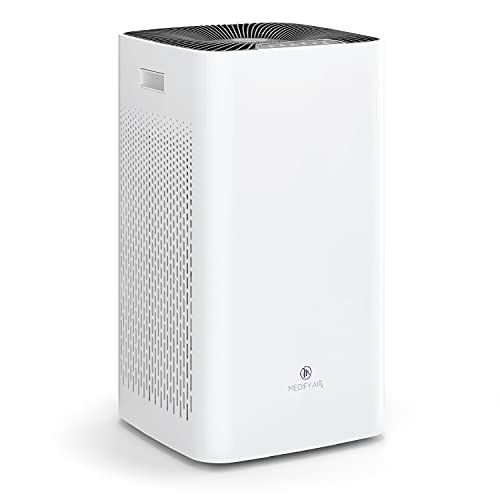
| Medify MA-112 V3.0 | 5,948 sq. ft. in 1 hour | Whole floor, great room, basement | Check price on Amazon |
| Medify MA-50 V3.0 | 2,640 sq. ft. in 1 hour | Large living room or primary suite | Check price on Amazon |
| Medify MA-40 | 1,793 sq. ft. in 1 hour | Bedroom or office of generous size | Check price on Amazon |
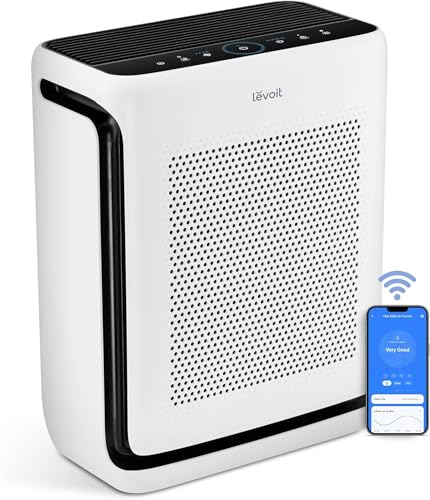
| Levoit Vital 200S-P | Up to 1,875 sq. ft. | Smart, quiet bedroom alternative | Check price on Amazon |
Hourly coverage figures deserve a translator. A claim phrased as a large area in one hour describes a single full air change across that space in sixty minutes; smaller rooms get more changes per hour from the same machine, which is what occupants actually feel. Halve the room and the MA-112 is effectively refreshing it twice hourly; quarter it, and the machine becomes a rapid-response unit for smoke events and renovation dust. That arithmetic, not the headline, is how big purifiers should be shopped.
How the comparison was assembled
All four machines were verified through this site’s Creators API records before drafting — exact titles, official images, live listings. The Medify trio was chosen to show the brand’s own ladder, since most MA-112 shoppers are really asking where on that ladder their home sits. The Levoit stands as the smart-feature counterpoint: a machine that trades the Medify scale for sensors, app control, and a specified quiet sleep setting. Criteria throughout are domestic and practical — hourly coverage, filtration to 0.3 microns as the listings state, filter economics at scale, noise behaviour in occupied rooms, and the physical reality of housing a large cabinet.
Detailed reviews

Medify MA-112 V3.0 — the whole-floor machine
Badge: Best for open-plan homes and smoke-season readiness
- Coverage stated: 5,948 square feet in one hour
- HEPA filtration with removal to 0.3 microns per listing
- Positioned for smoke, wildfires, odours, pollen, pets
- White, single-pack cabinet
- Third-generation V3.0 version on this listing
Scale changes what a purifier is for. A bedroom unit defends a sleeper; the MA-112 defends a floor plan. In an open home where cooking, homework, a dog’s bed, and a wood stove share one volume of air, a machine that can turn that volume over hourly stops being a luxury and becomes the only honest specification. During smoke events — the scenario its listing names first — that capacity lets a household designate the main living floor as the clean zone and actually hold it, doors opening and closing notwithstanding.
The filtration claim is the brand’s standard promise, removal down to 0.3 microns through its HEPA stage, which covers the particle sizes that dominate pollen, dust, dander, and smoke. Large cabinets carry large filters, and large filters carry a virtue small ones cannot fake: surface area. More media means slower loading, steadier performance between changes, and a machine whose tenth month resembles its first. The corresponding bill arrives at replacement time, and it is proportionate — budget for it the way one budgets for a furnace filter programme, not a gadget accessory.
Noise must be discussed in working terms. Any machine moving this much air makes sound at full speed; the MA-112’s domestic trick is that a large room rarely needs full speed except during events. At the moderate settings that maintain an already-clean floor, it recedes into the household’s background. Owners who expect library silence at turbo settings are shopping for physics that does not exist, in this brand or any other.
Placement is the final discipline. A whole-floor machine belongs centrally, with its intakes unobstructed and its cleaned air able to circulate along the floor’s natural paths — not exiled to a far corner behind the one sofa nobody moves. Central placement in a great room often means negotiating with furniture aesthetics, and the households that win clean air are the ones that let the machine win that negotiation.
Strengths
- Hourly coverage beyond any bedroom-class rival here
- Large filter media loads slowly and performs steadily
- Built for smoke events and whole-floor duty
Trade-offs
- Cabinet size demands a deliberate, central home
- Replacement filters are a significant recurring cost
- No smart-sensor finesse of the Levoit alternative
Best for: open-plan houses, basements, and smoke-prone regions needing one powerful zone. / Not suited for: single bedrooms, small flats, or décor-first living rooms.

Medify MA-50 V3.0 — the same idea, one floor smaller
Badge: Best for a large living room without open-plan sprawl
- Coverage stated: 2,640 square feet in one hour
- HEPA filtration with removal to 0.3 microns per listing
- Positioned for smoke, wildfires, odours, pollen, pets
- V3.0 generation, white cabinet
Most homes that dream of the 112 actually live at the 50’s scale. A generous living room, a primary suite with a seating corner, a finished basement used as one room — these are twenty-six-hundred-square-foot-in-an-hour problems, and the MA-50 answers them with the brand’s same filtration promise in a cabinet that asks less of the floor plan. Choosing it over its flagship is not settling; it is sizing, and sizing is the whole craft of purification.
Filter economics soften at this rung as well. The media is still substantial, still slow to load, but replacements stop feeling like a appliance purchase in themselves. Households furnishing one serious room rather than defending a whole floor will find the 50 the Medify that respects both their air and their storage cupboard.
Strengths
- Serious coverage for the largest single rooms
- Same filtration standard as the flagship
- Gentler filter and footprint costs than the 112
Trade-offs
- Cannot hold a true open-plan floor alone
- Still a large cabinet beside bedroom units
- Manual character beside smart rivals
Best for: big living rooms, suites, and single-room basements. / Not suited for: whole-floor coverage or tiny bedrooms.

Medify MA-40 — the bedroom-sized Medify
Badge: Best Medify for one important room
- Coverage stated: 1,793 square feet in one hour
- HEPA filtration with removal to 0.3 microns per listing
- Positioned for smoke, odours, pollen, pets
- White, single-pack cabinet
The MA-40 is where the Medify philosophy meets the ordinary bedroom. Its hourly figure still dwarfs the room it will usually serve, which translates into multiple air changes per hour at moderate speeds — headroom that lets it run gently while cleaning thoroughly, the combination bedrooms actually need. For a household whose concern concentrates in one room — the sleeper with the dust sensitivity, the nursery, the home office where a person spends ten hours daily — the 40 delivers the brand’s seriousness without annexing the floor.
It is also the natural second Medify. Homes that defend the living floor with a 112 frequently discover the bedroom wants its own machine behind a closed door at night, and the 40’s familiarity — same brand logic, same filter family thinking — simplifies ownership. One brand’s reminders, one retailer’s listings, one maintenance rhythm across the house.
Strengths
- Generous headroom for quiet bedroom running
- Brand consistency for multi-room Medify homes
- Coverage suits offices and nurseries equally
Trade-offs
- Lacks the sensor-and-app layer of smart rivals
- Oversized for a small box room’s needs
- Design language is clinical, not decorative
Best for: the one room whose air matters most. / Not suited for: open floors or buyers wanting app control.

Levoit Vital 200S-P — the smart counterpoint
Badge: Best for buyers who want sensing and quiet by the bed
- Coverage stated: up to 1,875 square feet
- Sleep mode described at 27 dB on the listing
- Air quality monitor and smart control
- AHAM Verifide wording on the listing
Every Medify review needs its control group, and the Vital 200S is it: similar room ambitions to the MA-40, opposite temperament. Where Medify sells capacity and filter mass, Levoit sells awareness — a sensor that watches the room, a display that reports it, automation that responds while the household does other things. Its specified sleep quietness makes it the finer bedside instrument of this group, full stop.
Why include it in a Medify flagship’s review? Because the MA-112 decision is often really two decisions: a whole-floor machine for the shared spaces, and something civilised for the bedroom. Households that grasp that split buy the 112 without asking it to be quiet at a pillow, and buy this Levoit without asking it to hold a great room during a smoke week. Each machine stops disappointing the moment it is hired for its own job.
Strengths
- Sensor-led running suits changing bedroom conditions
- Specified quiet sleep setting for light sleepers
- AHAM-verified positioning among smart rivals
Trade-offs
- Different universe of coverage from the MA-112
- App and account upkeep for full value
- Smaller filters load faster under heavy dust
Best for: the bedroom partner to a whole-floor Medify. / Not suited for: defending open-plan space during smoke events.
Buying guide: when a house needs a machine this size
The trigger is usually volume. Add the connected spaces honestly — the kitchen that opens to the dining area that opens to the sofa — and most open homes discover their main floor is a two-to-four-thousand-square-foot conversation. Bedroom purifiers placed in such volume do not fail dramatically; they simply never arrive, running at full voice to clean the corner they occupy while the rest of the floor minds its own dust. The MA-112’s class exists for that arithmetic.
The second trigger is events. Wildfire smoke, a renovation, a new puppy’s dander bloom, a pollen season that closes windows for a month — events reward machines with headroom, because headroom is response speed. A purifier that can turn a floor’s air over hourly can recover a room after doors have opened to a smoky street; a marginal machine can only maintain a room that never gets disturbed, and real houses disturb their air hourly.
The third consideration is filtration mass. In big spaces, small filters are a false economy measured in replacements and declining performance. The Medify ladder’s shared virtue is media sized to the claim, and the honest way to compare the 112 with cheaper large-room rivals is to ask what their filters weigh, how often they retire, and what a year of ownership consumes. Capacity you can afford to maintain beats capacity that photographs well.
Finally, interrogate the floor plan’s doors. A whole-floor machine serves connected space; it does not serve the bedroom behind a closed door at the far end of a hall, however heroic its hourly figure. Homes are zones. Buy for the zone the machine can actually reach, then decide separately — as the Levoit section above suggests — what the closed-door zones deserve.
For category context beyond one brand, browse whole-home purifiers compared and large-room machines for open layouts.
Running the MA-112: placement, routine, and filter discipline
Step 1: Claim the central ground
Walk the floor and find where its air naturally travels — the junction between kitchen and living space, the foot of an open stair, the wide doorway a floor plan funnels through. That junction is the machine’s post. Keep the clearance its intakes require, keep it off deep carpet if the manual advises a firm stance, and accept the cabinet’s presence as furniture with a job.
Step 2: Establish the event protocol before the event
Decide in a calm week what the household does when smoke, dust, or guests arrive: windows shut, machine to its higher settings, doors to bedrooms opened or closed according to the zone plan, and the smaller machines in other zones raised to match. Protocols written during a smoke week are written by anxious people at midnight; protocols written before it are simply followed.
Step 3: Maintain at the scale the machine works
Vacuum the room’s soft furnishings on a rhythm that respects the machine’s limits — it captures airborne particles, not the reservoir in a rug. Wipe intakes when dust films them, inspect the filter’s loading at the maker’s intervals, and keep the replacement’s purchase ahead of the indicator’s demand, because large filters are exactly the ones that go out of stock during regional smoke events when every owner needs one at once.
Mistakes owners of large purifiers make
Corner exile leads the list: the biggest machine in the house hidden where its air cannot circulate, then judged by the room it was never allowed to serve. Second is bedroom envy — buying whole-floor capacity and then complaining it is audible at full speed beside a pillow it was never hired to guard. Third is filter brinkmanship, stretching a loaded HEPA stage through a smoke season because the replacement felt expensive, while the machine’s performance quietly halves.
Fourth is ignoring the sources. A large purifier downstream of a litter tray, an unvented hobby bench, or a renovation in progress is a treatment applied to a wound still being made; seal, vent, or remove the source first and let the machine maintain the victory. Fifth is forgetting the other zones — the closed nursery, the study — and declaring the house’s air handled because its largest room is.
Final recommendation in this Medify Ma 112 Review
The MA-112 earns its flagship place for a specific and growing kind of home: open, occupied, and periodically besieged by its region’s air. Its hourly coverage, filter mass, and event readiness are the real article, provided the cabinet gets central placement and its filters get budgeted like the consumable infrastructure they are. Smaller Medify rungs serve smaller truths — the 50 for the grand single room, the 40 for the room that matters most — and the Levoit reminds every buyer that the bedroom is a separate country with its own quiet laws. Buy the 112 for the floor, not the photograph, and it will hold that floor for years.
The smoke-season playbook this machine was built for
Wildfire smoke has changed purifier buying across whole regions, converting a wellness gadget into seasonal safety equipment, and the MA-112’s listing leads with that scenario for a reason. When the sky turns the colour of old brass, the household’s defence is a sealed envelope plus internal cleaning capacity. Windows shut, gaps around the worst doors noted, cooking that would add its own particles postponed or vented, and the big machine running continuously at a working speed in the floor’s centre. Under that regime, capacity is not a luxury; it is the rate at which the home forgives every necessary door opening.
Preparation separates the households that cope from the households that shop in a panic. A spare filter bought in spring, before regional demand empties the shelves. A decision made in advance about which rooms constitute the clean zone, so furniture and sleeping arrangements are not improvised at midnight. A portable particle monitor, or even the household’s own noses and eyes, assigned to verify that the zone is holding. And an honest conversation about limits: a purifier reduces particle exposure substantially, it does not repeal a smoke event, and anyone whose health is fragile should follow local guidance about leaving rather than trusting any cabinet with a fan.
Between events, the same machine earns its floor space on the unglamorous calendar of ordinary pollution — pollen weeks, inversion days in valley towns, the neighbour’s wood stove, the highway’s fine dust that films windowsills in city homes. Owners in such places stop thinking of the 112 as an emergency purchase within a year. It becomes the house’s lungs, noticed only when it is off.
Basements, workshops, and the machine’s second careers
Finished basements are the MA-112’s natural second posting: large, single-volume, prone to musty stillness, and often hosting the home’s television, gym corner, or guest suite. A whole-floor machine downstairs handles the volume without negotiation and keeps the air moving in a space whose windows rarely open. Two cautions apply. Damp is a building problem before it is an air problem, and no purifier should be asked to perfume over a moisture fault that needs a dehumidifier or a contractor. And below-grade dust includes the laundry’s lint and the workshop’s output, so filter inspection intervals should shorten to match the local reality.
Workshops themselves are a harder case, and honesty matters. A purifier can reduce the airborne fraction of woodworking or hobby dust meaningfully between sessions, yet it is not respiratory protection during the cutting, sanding, or spraying itself — that remains the job of masks, extraction at the tool, and ventilation. Households that understand the division of labour use a machine like the 112 as the cleanup and background layer, and are satisfied. Households that ask it to be a dust collector will be disappointed at a price.
Reading hourly coverage against other rating languages
Shoppers comparing Medify’s hourly figures with rivals’ room-size claims or clean-air delivery rates are translating between dialects, and mistranslation causes real purchases to go wrong. The safe method is to convert everything into air changes per hour for your actual room: how many times will this machine, at a speed you can live beside, process the volume of the space it must serve? Two to three changes hourly is a respectable maintenance regime for ordinary dust and pollen; more is better during events; less explains why a technically excellent small machine can leave a big room unimproved. The MA-112’s entire proposition is that in a large connected space it keeps that arithmetic comfortable at civilised speeds, where lesser machines must shout to achieve the same turnover.
Ceiling height is the silent variable in every such calculation. Listings assume ordinary ceilings; a double-height great room contains half again the air its floor area suggests, and a lofted basement lounge nearly doubles it. Measure volume, not area, when the architecture gets grand — the machine cleans air by the cubic foot, whatever the brochure’s flat figures imply.
The filter, considered as a long-term relationship
Large HEPA installations reward owners who think in years. The filter in a machine of this class is a substantial engineered object, and its loading curve is the machine’s biography: a slow, even decline in headroom as media captures the home’s airborne history. Owners can read that biography at change time — the grey gradient of a year of pollen, smoke days, pet seasons, and renovation weekends — and adjust the next interval to the life actually lived rather than the life the manual imagined.
Practical disciplines follow. Buy replacements from listings that match the model exactly, since a filter a few millimetres off in any dimension leaks unfiltered air around its seal and silently converts a serious machine into a fan with décor. Store the spare flat, sealed, and dry. Write the installation date on the frame. And resist the internet’s folk remedies — washing, vacuuming, or baking a HEPA stage does not restore it, and a damaged medium can perform worse than an honestly exhausted one. The filter is the product; the cabinet is its housing and its fan. Owners who internalise that sentence maintain large purifiers correctly almost by instinct.
Renovation dust and the honest limits of cleanup
Home renovation generates the dust event most households actually meet, and a large purifier is a genuine ally in it — with boundaries. During active demolition or sanding, the work zone should be sealed with plastic and negative pressure if the household is serious, because no living-room appliance outruns a sander. Where the MA-112 class earns its praise is in the aftermath and the margins: capturing the fine fraction that escapes containment, that rises from floors for days whenever a footstep lands, and that otherwise migrates to bedding and bookshelves across the home. Run it continuously in the adjacent living zone through the project, clean its intakes often, and expect the filter to age faster during those weeks — that accelerated ageing is the receipt proving the dust went into the machine instead of the household.
After the project, a deliberate deep-clean sequence multiplies the machine’s work: damp-wipe hard surfaces from high to low, vacuum soft furnishings with a well-filtered machine, launder the textiles that can be laundered, and only then let the purifier settle into maintenance. Owners who skip the physical cleaning ask the air to carry away a reservoir that mostly travels by contact, and then blame a good machine for a housekeeping omission.
Two floors, one machine? The staircase question
Split-level and two-storey open plans tempt owners to ask whether one flagship can serve both levels through the stairwell. Air does travel stairs — warm air rises, cool air pools — and a centrally placed machine at the stair’s foot will influence the landing and the rooms that open directly onto it. It will not serve a closed bedroom at the corridor’s end, and it will serve the upper floor unevenly, best near the stair opening and weakest behind doors. Households in such plans should treat the 112 as the anchor of a system: whole-floor duty downstairs, a bedroom-class partner upstairs, and the stairwell as the friendly border between their jurisdictions. That architecture, bought once and understood clearly, outperforms every attempt to make a single cabinet be in two places.
What a year of ownership actually looks like
Month one is placement experiments and a household learning the machine’s voice at each speed. Month three brings the first intake wipe and a new respect for how much material the room sheds. The first event — smoke, pollen, a renovation next door — converts sceptics in the household, because capacity under pressure is the argument no brochure can make. Somewhere in the second half of the year comes the filter decision, made early by the organised and late by everyone else, followed by the small ceremony of the change itself and a machine that sounds, subtly, like it can breathe again.
By the second year the purifier has usually migrated in the household’s mind from appliance to infrastructure, in the company of the water heater and the router: unglamorous, expected, complained about only in absence. That migration is the true product Medify sells at this size, and it is why the review’s criticisms are aimed at fit and upkeep rather than at the concept. A whole-floor machine, correctly placed and honestly maintained, disappears into the life of a house — and the air, quietly, is better for its disappearing.
Comparing the 112 with the idea of two smaller machines
The alternative architecture deserves its hearing: two mid-sized purifiers, one at each end of a long floor, can distribute cleaning more evenly than a single flagship and provide redundancy when one is being serviced. Their combined filters, however, usually total less media than the 112’s estate, their combined noise at working speeds is two voices instead of one, and their combined replacement schedule is a pair of smaller bills arriving more often. Long, divided floors with distinct ends often genuinely suit the pair. Single great volumes with one natural centre suit the flagship. The floor plan, as ever, casts the deciding vote — which is why this review keeps returning the reader to a tape measure rather than to a checkout button.
Energy, heat, and the physics nobody markets
A large purifier is a fan moving air through dense media, and its electricity draw at working speeds resembles a modest household appliance rather than a night-light. In winter that energy ends as heat inside the home, trivially offsetting a whisper of heating; in summer it adds a whisper of warmth the cooling must remove, though the amounts are small beside the comfort at stake. The practical lever is speed discipline: continuous moderate running, which suits how particles actually accumulate, costs less than heroic daily blasts at maximum — and cleans better, because the room never gets the chance to reload between performances. Owners with smart plugs often discover their flagship’s real appetite is gentler than its specification’s worst case, precisely because a big machine in a big room spends its life at part load.
Guests, gatherings, and the machine at a party
A floor full of visitors is an air event in miniature: doors opening, coats shedding fibres, cooking running for hours, candles multiplying. The large-purifier household has a quiet advantage here, raising the machine a setting before guests arrive and letting it shoulder the evening’s load invisibly. Hosts should resist demonstrating the appliance — nobody attends a dinner to discuss filtration — and simply enjoy the morning-after difference, when the house smells like a house rather than like last night’s menu. Machines of this class also earn gratitude during winter virus season in a modest, honest way: well-ventilated, well-filtered gathering spaces are more comfortable places to share air, even though no domestic purifier should ever be sold as a guarantee about illness, and this review makes no such claim.
Accessibility and the human factors of a big cabinet
Large appliances ask physical questions that reviews rarely print. Can the person who will change the filter lift the loaded old one and seat the new one without wrestling the cabinet? Are the controls reachable and legible for the household’s least technical member, in ordinary light, without a phone? Does the machine roll or must it be carried between its summer post and winter storage, and by whom? The MA-112 class answers these questions better in homes with ground-floor storage and a confident owner, and worse in homes where every appliance interaction is a negotiation with stairs or eyesight. Asking them before purchase is not pessimism; it is how a machine stays in service for a decade instead of retiring to a garage after its first filter change.
How the MA-112 sits in Medify’s own history
Medify grew by selling filtration seriousness to people who had stopped believing the décor-first end of the market, and the 112 is that pitch at maximum domestic scale. The V3.0 suffix on the current listing signals the line’s iterative maturity — a design revised rather than reinvented, which in appliances is usually good news: the failure modes have been found by earlier owners, and the parts pipeline has had time to become boring and reliable. Buyers should still verify the exact version and filter pairing on the listing at purchase time, because long-lived model names accumulate generations, and a filter bought for the wrong generation is a heavy, expensive paperweight.
The decision, reduced to four questions
Is the space it must serve genuinely one connected volume, measured in cubic terms rather than brochure terms? Is there an event in the household’s calendar — smoke season, renovation, a new animal, a new baby in a dusty street — that rewards response capacity rather than mere maintenance? Can the cabinet stand centrally without starting a domestic war over furniture? And will somebody in the house own the filter schedule the way somebody owns the car’s servicing? Four yeses describe the MA-112’s ideal household with unusual precision. Two or fewer suggest the smaller rungs of the ladder, or the two-machine architecture, will serve the same air more happily.
There is no fifth question about whether clean air is worth having. Households reading a review of a machine this size settled that question somewhere between the first smoke day and the first renovation. What remains is engineering and honesty, and on both counts the flagship, correctly homed, delivers what its considerable specification promises.
Troubleshooting a big machine that seems to underperform
When a whole-floor purifier disappoints, work the system before blaming the cabinet. First, the seal: run a hand around the filter door and panel while the machine works, feeling for the tell-tale leak of unfiltered air escaping — or entering — where media should have intercepted it. Second, the intake audit: dust-filmed grilles, a curtain drifting into the intake’s reach, a Christmas tree or a new bookcase annexing the clearance the machine was promised. Third, the source hunt: a dryer venting imperfectly indoors, a litter station relocated nearer the living zone, a candle habit that grew over winter. Fourth, the expectation check: measure the room’s volume again, including the stairwell it also serves, and compare honestly with the machine’s hourly claim.
Most underperformance dissolves somewhere in those four checks, which is why support conversations about large purifiers sound so domestic. The machine is rarely broken; the system around it has drifted, as systems in lived-in houses do. A twice-yearly walk through the same checklist — seal, intakes, sources, volume — keeps the flagship’s performance from quietly retiring while its fan still turns.
Buying the MA-112 second-hand or for a second home
Large purifiers circulate on resale markets when households move, downsize, or upgrade, and a used 112 can be a rational purchase under three conditions. The filter’s age must be priced as near zero — assume a replacement is owed immediately and let the arithmetic judge the deal. The cabinet should be run at every speed in the seller’s presence, listening for bearing complaints that no specification can excuse. And the exact generation must be confirmed against the filter it will need, in writing, before money moves. Second homes invert the logic: a cabin or a relative’s flat in a smoke-prone valley may justify a new machine precisely because nobody will be present to nurse a doubtful one, and a fresh filter plus a simple instruction card left for guests turns the purchase into quiet insurance.
One more placement subtlety rewards attention in homes with fireplaces or wood stoves: a purifier’s cleaned-air output should never be aimed so that it disturbs a flue’s draw or blows directly across a hearth, and the machine itself should stand well clear of radiant heat. Positioned with ordinary respect for the fire’s physics, the flagship becomes the stove’s partner — capturing the fine fraction that escapes every loading of the door — rather than its rival. Households that heat with wood and filter with intent report the pairing as the difference between a cosy room and a cosy room that leaves eyes watering by February.
And a word for the household’s sceptic, because every large purchase has one. The fair trial is a season, not a weekend: let the machine hold the floor through a pollen month or a smoky fortnight, keep its filter honest, and judge by the dusting cloth, the morning air, and the guests who stop remarking on the dog. Capacity appliances prove themselves in aggregates and averages, and the 112’s aggregates are where its case has always lived.
Households with a home office inside the open floor should notice one more dividend of central capacity: the working day happens inside the machine’s best-served zone, so the person at the desk breathes the floor’s cleanest air for the longest stretch of anyone in the house. In an era when a living room is also a workplace, a classroom, and occasionally a clinic waiting room of video calls, the argument for treating its air as infrastructure rather than ambience has quietly become the argument of the decade. The MA-112 simply arrived early to it, sized for the floor plans people actually built.
Keep the manual, the purchase record, and the filter’s part number together in one envelope taped inside a kitchen drawer. Large appliances outlive the memory of their own specifications, and the household that can name its filter in ten seconds, three years from now, is the household whose machine will still be running in ten years. Infrastructure is a habit before it is a product.
Finally, let the record show the review’s one aesthetic concession: the big white cabinet will not disappear into a styled room, and owners should stop asking it to. What it can do is look intentional — placed squarely, kept clean, its cord managed, its top surface not used as a shelf for the household’s drifting objects. Appliances that look deliberate are forgiven their size; appliances that look apologetic are resented for it. Give the flagship the dignity of a chosen position and it repays the courtesy by vanishing from attention, which is the only vanishing a machine of its dimensions can honestly offer.
There is a temptation, with machines of this scale, to run them only when the air feels bad — and it should be resisted, because felt badness is a lagging indicator measured by irritated eyes and a dusty taste that arrive after exposure. Continuous running at a modest setting keeps the floor’s baseline low enough that events begin from clean rather than from ordinary, and the difference during a smoke week is the difference between a machine coping and a machine recovering. Set the baseline habit in a kind month, and the cruel months will find the household already organised.
Owners who entertain the machine’s data-free simplicity should also know its compensating virtue: there is nothing to update, pair, or re-authenticate after a router change, and a power cut returns it to duty without a negotiation. In a house filling with appliances that need the internet’s permission to work, a flagship that simply filters is a small declaration of independence — and for many of the households this machine suits, that plainness is not the absence of a feature. It is the feature.
And when the day comes to replace the flagship — years out, if the household has done its part — the decision will likely be made in a single afternoon, because the experiment has already been run at full scale in the family’s own home. They will know their floor’s volume, their region’s seasons, their filter discipline, and their tolerance for cabinet furniture. Few purchases educate their own replacement so thoroughly. Buy the first one carefully, by the four questions above, and the second purchase — like the air in a well-kept open-plan home — will take care of itself.
One sentence for the reader who has scrolled to the end still undecided: measure the floor, picture the cabinet standing in its centre through all four seasons, price a year of filters, and then trust the arithmetic more than the anxiety — because in this corner of the appliance world, arithmetic has the better record.
It is worth adding, for households comparing this flagship against commercial-looking units from unfamiliar brands, that domestic ownership is a service relationship as much as a specification: filters must remain findable in year four, manuals must survive the maker’s website redesigns, and a brand with a settled product ladder — like the three-rung Medify range compared here — offers a continuity that a spectacular one-season listing cannot. The 112’s siblings are not merely alternatives in a table; they are evidence that the flagship belongs to a family the maker intends to keep feeding with parts.
Delivery day for a machine this size deserves one practical paragraph of its own. Clear the cabinet’s route from door to post before the courier arrives, because a flagship discovered to be two centimetres wider than a stair turn becomes a hallway resident by default. Unpack where it will stand, keep the packaging until the first event-week has proved the fit, register whatever the maker asks for, and photograph the filter’s part number before the cabinet is pushed into its final position. None of this is difficult; all of it is the difference between an installation and an improvisation.
And spare a thought, before ordering, for the room’s other machines: a humidifier adding moisture the purifier’s household may or may not want, a heater stirring the very dust the flagship settles, a robot vacuum redistributing the floor’s particles into the air column every morning. The floor is an ecosystem of appliances, and the largest of them sets the terms for the rest. Coordinate their schedules — vacuum while the purifier runs high, humidify with the water quality the manuals demand — and the ecosystem cooperates instead of competing.
That coordination extends to the calendar: spring’s pollen, summer’s smoke risk, autumn’s renovation season, and winter’s closed-window months each ask something different of the same cabinet, and a household that reviews its air plan when the clocks change will never be caught with a tired filter at the start of the season that needed a fresh one. Four short reviews a year — the same rhythm this site recommends for every serious purifier, scaled here to the largest — is the entire maintenance philosophy of the flagship in one habit.
Readers who have followed the argument this far will notice it never once asked them to believe a miracle — only to size honestly, place centrally, maintain on schedule, and let a large filter do large work for a long time. That restraint is the review’s final compliment to the machine: the MA-112 does not need miracles claimed for it, because its case survives arithmetic.
So the recommendation stands with its conditions printed in full view, the way the machine itself would want them: a big, plain, capable cabinet for a big, connected, honestly measured floor — and a smaller sibling, without shame, for every household whose floor tells a smaller story.
Measure once more, then decide — the floor has been waiting patiently for its answer, and unlike most appliance questions, this one rewards the household that takes an extra evening over the one that takes the first promotion it sees.
The tape measure, in the end, is the most underrated air-quality instrument in the house — and the cheapest one the household will ever buy for the purpose.
Use it tonight, while the question is still open, and let the room itself cast the final vote in this review.
Then order with a clear conscience, whichever rung of the ladder the measurement names.
That is the whole method: measure, match, maintain.
Frequently asked questions
What does coverage of 5,948 square feet in one hour actually mean?
It describes one complete air change across a space of that size within sixty minutes, under the maker’s stated conditions. In a room half that size the same machine achieves roughly two changes hourly, which is why large purifiers feel so responsive in ordinary living rooms. Treat the figure as a capacity ceiling for planning zones, not as a promise about any particular smoky afternoon.
Can the MA-112 replace several smaller purifiers?
Across connected, open space, largely yes — that is its design brief. Across closed doors, no purifier reaches, regardless of size. Most large homes land on a hybrid: one whole-floor machine for the shared volume, plus a quiet bedroom unit behind the door that closes at night. The comparison above is built around exactly that settlement.
How expensive is the MA-112 to keep running?
The honest answer is proportional: a large filter estate, replaced on the maker’s rhythm, plus electricity that rises with the speeds events demand. It costs more to keep than a bedroom unit and less than running three bedroom units at full voice across the same floor. Check the current listing for filter availability before buying, since a machine is only as good as its next cartridge.
Is the MA-112 too loud for a living room with a television?
At the moderate speeds that maintain clean air, owners generally find it sits beneath conversation and programme sound. At maximum during a smoke event it will make its presence known — as will every machine in its class, because moving that much air is audible work. Judge it by its maintenance voice, not its emergency voice, and place it away from the main seating’s immediate earshot.
How does the MA-112 handle pet hair at its scale?
Its listing names pets among its targets, and the large intake and filter area suit homes where hair is a volume problem rather than an occasional one. It still cannot vacuum a sofa: pair it with regular grooming and soft-furnishing care, and read purification for pet households for the animal-specific layer of the strategy.
Where should an MA-112 never be placed?
Never boxed into a corner behind furniture, never in a damp bathroom environment it was not designed for, and never in a small closed bedroom where its capacity becomes noise without benefit. It also should not stand where its intake can drink directly from a litter tray or a workbench’s dust stream — proximity to a pollution source overwhelms any filter eventually.
Related guides
the compact MA-14 for desks and dorms