Disclosure: As an Amazon Associate, dailyhomedecorating.com earns from qualifying purchases. Links on this page are affiliate links; they cost you nothing extra. Prices and availability change often, so check the current Amazon listing before you buy.
Anyone searching for a taotronics ap005 review today is usually in one of two situations. Either you already own this compact desktop air purifier and want to know whether it is still worth feeding with replacement filters, or you found one second-hand, in a clearance bin, or mentioned in an older roundup and want to know whether it makes sense to buy now. Both questions deserve a straight answer, and the straight answer has an awkward wrinkle: the AP005 itself is no longer sold as a new unit through the channels we could verify, and its maker has largely stepped away from the marketplace where it once sold briskly. What remains widely available is the filter supply for owners, plus a crowd of newer small-room purifiers that do the same job with better support behind them.
So this review does two things honestly. First, it assesses the AP005 on its own terms — what kind of machine it was, where it worked well, where its limits showed, and what ownership looks like now that filters matter more than the purchase itself. Second, it lines up three currently available alternatives, each verified against a live listing at the time of writing, for readers whose real question is not archaeology but “what should sit on my desk or nightstand instead.” Nothing in the AP005 sections pretends the unit is linked or buyable; where a product is linked, it is clearly labelled an alternative.
Key Takeaways
- The AP005 was a small, simple desktop purifier aimed at single small rooms, desks and nightstands rather than open-plan living spaces.
- The unit itself could not be verified as a current new listing; replacement filters are the part of the AP005 ecosystem that still circulates.
- If you own one and it runs quietly, keeping it fed with genuine-fit filters is reasonable; if you are buying fresh, a supported alternative is the safer spend.
- The three alternatives below cover three different priorities: straightforward true-HEPA cleaning, smart control in a small footprint, and larger-room coverage with an air-quality readout.
- With any small purifier, placement and door discipline matter as much as the badge on the box; a modest unit in a closed small room outperforms a bigger one fighting an open floor plan.
In this guide
What Was the TaoTronics TT-AP005, in Plain Terms?
TaoTronics built its name on affordable home electronics, and the AP005 belonged to its push into small air treatment: a compact tower-style desktop purifier intended for personal spaces. The formula was familiar for its class and era. Air entered through intakes around the body, passed through a multi-stage filter stack built around a HEPA-grade element for particles and an odour-reducing layer for everyday smells, and left through the top. Controls were deliberately simple, speeds were few, and the whole proposition rested on being small, quiet enough for a bedside, and cheap to run in a single room.
That positioning is worth understanding because it explains both the affection and the frustration in older owner comments. As a personal-space machine — a study desk, a nursery corner, a small bedroom with the door shut — the AP005 was sensibly matched to its job. The trouble came when marketing language about coverage met real rooms: owners who placed it in a large living area, left doors open, or expected it to erase cooking smells from a whole flat were asking a desktop appliance to do a whole-home job, and no purifier of its size could honour that promise.
The other defining fact is the brand’s retreat. TaoTronics’ parent restructured its marketplace presence, the brand’s storefront presence thinned out, and models like the AP005 stopped being replenished as new stock. That does not make an existing unit stop working — a purifier is a fan and a filter, and it runs until it doesn’t — but it changes the ownership maths. Support, warranty routes and genuine filter supply become the weak links, and those are exactly the things a buyer should weigh heaviest in a category where the consumable is the product.
How Does the AP005 Hold Up as a Machine?
Cleaning approach and filter stack
The AP005 followed the standard small-purifier recipe: a pre-filter layer to catch hair and lint before they burden the finer media, a HEPA-grade element for the fine particle fraction — dust, pollen, dander and the like — and a carbon element intended to take the edge off household odours. This layering is sound engineering for the class. The pre-filter is the unsung hero: washable or vacuumable in many small machines, it extends the life of the expensive element behind it, and owners who neglected it tended to report performance falling off a cliff rather than gliding down gently.
What the stack could never do, whatever the listing copy of its era implied, is scrub gases comprehensively or sterilise a room. Carbon in a thin desktop cartridge adsorbs some odour molecules and then saturates; HEPA media traps particles but does nothing to smells at all. Readers weighing an old AP005 against a newcomer should compare like with like: every machine in this size class shares those boundaries.
Noise, speeds and night use
Small purifiers live or die by their lowest speed, because that is the speed they actually run at for most of their lives. The AP005’s appeal at a nightstand was a low setting gentle enough to sleep beside and a simple control scheme you could operate half-awake. The trade-off, again typical of the class, is that the quietest setting moves the least air. Owners who ran it on low all night in a closed bedroom were using it as intended; owners who expected the same low setting to clear a smoky or dusty room quickly were disappointed, because the higher speeds that move real air also make real noise.
Size, placement and everyday handling
The desktop footprint was the point. The AP005 asked for no floor space, sat happily on a dresser or desk, and could be moved one-handed when a room changed use. The constraints that came with that convenience were clearance and intake access: pushed flush against a wall or buried among books, a small tower breathes its own exhaust and cleans a shrinking bubble of air. The owners who got the most from it treated placement as part of the appliance — a hand’s width of clearance, nothing draped over the top outlet, and a spot near where the person actually sits or sleeps rather than in the far corner.
Should You Keep an AP005, or Replace It?
If your AP005 still runs, the fan is quiet, and you can source filters that genuinely fit, keeping it is defensible. The honest checklist is short. Does the motor sound strained or rattly? Does the filter bay seal properly, or does dust streaking inside the housing suggest air is bypassing the media? Can you actually buy the correct replacement cartridge today, from a seller you trust, at a cost that does not approach the price of a new supported machine? Three comfortable yeses and the machine earns its keep. A no on the filter question is the decisive one: a purifier you cannot re-filter is a fan with a countdown.
If you are shopping second-hand, apply the same checklist before money changes hands, and discount heavily for unknown filter age — a used purifier with an exhausted cartridge is worth little more than its housing. And if you are buying new, the AP005 is simply not the route anymore; the alternatives below exist precisely because the market moved on to supported models with current filter supply, app control in some cases, and third-party verification of room-size claims in others.
One more ownership note: filters removed from an AP005 after long service should be bagged before they go in household waste, especially after smoky seasons, so the dust they captured stays captured. Wash your hands after a change, vacuum the filter bay while it is empty, and wipe the intake grilles — five unglamorous minutes that decide whether a fresh cartridge starts life in a clean machine or a dirty one.
Where to Buy, and What Is Actually Buyable
To be completely clear about the shape of this page: there is no purchase link for the AP005 itself, because we could not verify a current new listing for the unit, and linking you to a filter, a lookalike, or a stale page dressed as the machine would be a disservice. Replacement filters for the AP005 do circulate through third-party sellers; if you buy them, match the model designation exactly and treat listings that promise compatibility with a dozen unrelated models with suspicion. The linked products that follow are alternatives — complete, current purifiers — and each is labelled as such.
The Alternatives at a Glance
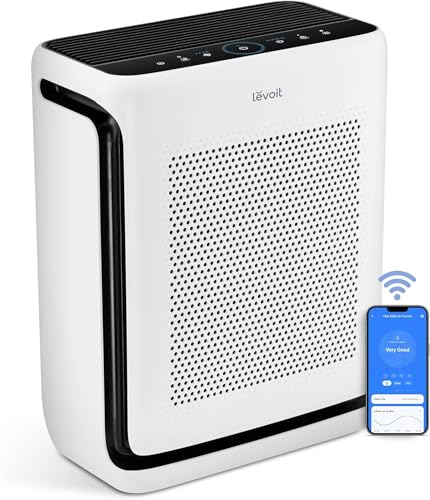
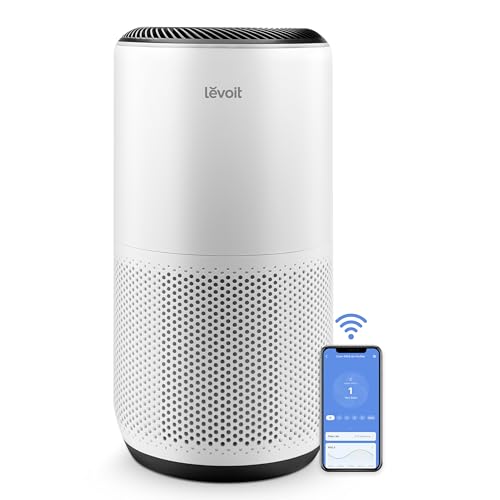
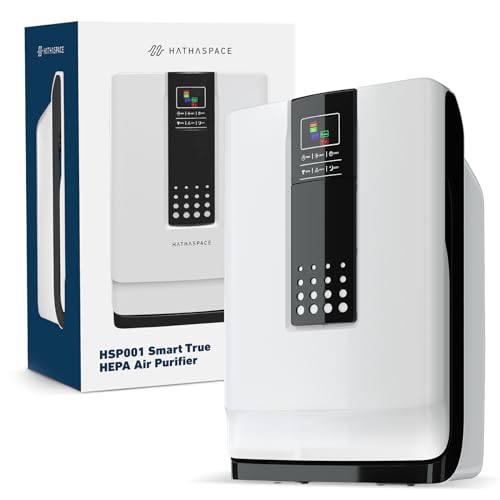
Three machines cover the realistic AP005 succession paths. The HATHASPACE HSP001 is the purist’s option: a true-HEPA small-room purifier whose listing leads with particle removal for dust, smoke, dander and odours across rooms up to a stated mid-size footprint. The Levoit Core 200S-P is the connected option, adding smart and voice control and a sleep mode to a compact pet-and-bedroom brief. The Levoit Vital 200S-P is the step-up: larger-room coverage, an air-quality monitor, and a quiet bedroom mode for people whose “small room” turned out to be a primary bedroom or a studio. All three are discussed in the same depth, with strengths and trade-offs, after this summary.
Detailed Alternative Reviews

HATHASPACE HSP001 — the straightforward true-HEPA successor
Badge: Best for buyers who want the AP005 idea, minus the orphan-brand risk.
- Type: true HEPA air purifier for home use
- Listing focus: dust, smoke, pet dander and odours
- Stated coverage: up to 700 square feet in the listing title
- Role in this guide: direct alternative, not the AP005
The HSP001 makes its pitch in its name and listing title: true HEPA filtration, aimed squarely at the particle problems that send people shopping — visible dust that resettles by afternoon, pet dander in a home with animals, smoke drift, and the stale background odour of a closed-up room. For an AP005 owner, this is the closest philosophical match: no app to babysit, no light show, just a filter stack doing the one job. Treat the headline coverage figure the way you should treat every such figure — as a best-case under favourable assumptions — and size it instead to a bedroom, study or nursery with the door mostly closed, where it will cycle the room’s air repeatedly rather than heroically once.
In daily use, machines of this pattern reward routine. Keep the intake side unobstructed, let it run rather than switching it off between uses, and stay ahead of the filter calendar instead of waiting for a smell to remind you. The HSP001 suits a reader who found the AP005’s simplicity attractive and mainly wants that simplicity to come with a living brand and a buyable filter behind it.
Strengths
- True HEPA positioning aimed at the core particle list: dust, smoke, dander and everyday odours.
- A single-room brief that matches how the AP005 was actually used well — bedrooms, studies, nurseries.
- No account, app or voice ecosystem required to get the basic job done.
Trade-offs
- Headline coverage numbers flatter it; large open spaces remain beyond any unit of this class.
- Odour handling depends on a carbon stage that saturates and needs timely replacement.
- Readers wanting air-quality readouts or scheduling smarts should look at the Levoit options instead.
Best for: AP005 owners replacing like with like, only supported. / Not suited for: open-plan flats or anyone wanting app control and live air-quality feedback.

Levoit Core 200S-P — the small, smart, pet-aware option
Badge: Best for bedrooms and dorms where control from the sofa matters.
- Type: compact smart air purifier with voice control
- Filter: 3-in-1 filter with HEPA sleep mode, per the listing
- Verification note: AHAM VERIFIDE appears in the listing title
- Aimed at: pollen, pollutants, smoke, dander, dust and pet hair
The Core 200S-P answers a complaint AP005 owners voiced often: a purifier you have to get up and prod is a purifier that spends its life on one speed. Smart and voice control sound like garnish until the machine lives in a dorm room, a child’s bedroom, or a pet owner’s flat where you want it working harder before you get home and settling to its sleep mode when the lights go out. The listing’s target list — pollen, pollutants, smoke, dander, dust, pet hair — reads like the AP005’s intended workload with pets explicitly invited, and the AHAM VERIFIDE note in the title is the kind of third-party room-rating signal worth preferring over bare marketing square-footage.
The sleep mode matters more than the app. A small purifier beside a bed earns its place at night, when windows are shut and the room’s air is entirely the machine’s responsibility. Set it up once, put it on a routine, and it behaves like the AP005 was supposed to: present, quiet, and forgotten. Readers who dislike accounts and apps can still treat it as a simple machine; the smarts are an option layered on top, not a toll gate.
Strengths
- Smart and voice control make speed changes and schedules effortless in bedrooms and dorm rooms.
- HEPA sleep mode is pitched exactly at the overnight use case small purifiers live on.
- Listing explicitly targets pet hair and dander alongside pollen, dust and smoke.
Trade-offs
- Compact size means compact airflow; it will not rescue a large living room.
- Getting full value from the smart features means engaging with an app some readers actively avoid.
- Three-in-one cartridges are convenient but tie you to that exact replacement format.
Best for: pet-owning bedroom and dorm users who will actually use scheduling. / Not suited for: buyers wanting the largest possible coverage from a single unit.

Levoit Vital 200S-P — the step-up for bigger rooms
Badge: Best for readers whose “small room” is really a studio or main bedroom.
- Type: smart purifier for large rooms, per the listing
- Stated coverage: up to 1,875 square feet in the listing title
- Features named in the listing: air quality monitor, HEPA sleep mode, quiet operation for bedrooms
- Aimed at: pet hair and dander, dust, pollen and smoke in lived-in rooms
Every AP005 retrospective includes owners who liked the idea and outgrew the machine. The Vital 200S-P is the honest answer to that story: a larger unit with an air-quality monitor, so the machine can show its working and react to a room that suddenly fills with cooking drift, dust from a project, or a dog shaking off a walk. The listing quotes a large-room coverage figure and a low bedroom noise figure in the same breath, which captures the design bargain of bigger purifiers — more airflow on tap, paired with a genuinely quiet low end for the hours when noise is the whole question.
Choose this one when the room is a primary bedroom, a studio flat’s main space, or a living room where a pet actually lives. It is more machine than a desk needs, and its filter cartridges are correspondingly more substantial, but it removes the AP005’s defining frustration: asking a desktop unit to hold a whole home’s air to account. The monitor also teaches good habits; watching readings respond when you open a door, vacuum a rug, or light a candle tells you more about your room than any brochure.
Strengths
- Air-quality monitor gives visible feedback and justifies automatic behaviour.
- Larger-room brief suits studios, main bedrooms and pet-centred living rooms.
- Quiet bedroom positioning keeps the overnight use case intact despite the bigger cabinet.
Trade-offs
- Oversized for a desk or a tiny box room, where its extra airflow buys little.
- Larger cartridges mean replacement day costs more than a desktop unit’s does.
- Smart features add setup steps that the HSP001 deliberately skips.
Best for: one-purifier households and pet owners in medium-to-large rooms. / Not suited for: a nightstand in a very small bedroom, where the Core-sized option fits the life better.
How We Assessed the AP005 and Its Alternatives
Because the AP005 cannot be bought new through a verified listing, this page does not pretend to a fresh laboratory comparison. The assessment rests on three legs. First, the AP005’s documented design pattern for its class — filter stack, size, control simplicity — judged against what that pattern reliably delivers and where it reliably disappoints. Second, the ownership reality in the present tense: brand support, filter availability, and the second-hand risks that now dominate any AP005 decision. Third, for the alternatives, only listings we could verify were admitted, and their claims are reported as listing claims — coverage figures and feature names are attributed to the listings rather than asserted as our measurements. Where a claim could not be supported, it was left out rather than rounded up.
That method produces a deliberately unglamorous page. There are no invented test scores for a discontinued machine, no star-charts, and no prices that would be stale by the weekend. What remains is the part of a review that ages well: what the machine was for, who it suited, and what to do next depending on whether you own one, found one, or simply landed here from an old link.
How to Choose Between Keeping, Filtering and Replacing?
Start with the filter question, because it gates everything else. Search for the exact AP005 replacement cartridge by its full model designation. If genuine-fit filters are available from sellers with a track record, note their cost and how many changes a year your usage implies. Then compare that annual figure, honestly, against the running cost of a new supported machine whose filters are stocked by the brand itself. Owners are often surprised in both directions: sometimes the orphan machine is cheap to keep alive; sometimes a single scarce cartridge costs a startling fraction of a new purifier.
Next, audit the room rather than the machine. Measure the space the purifier actually serves with doors in their usual position. A closed twelve-by-fourteen bedroom is a small-purifier room; the same room with its door open to a hallway and a living area is a much larger air volume wearing a bedroom’s clothes. Many “weak purifier” stories are room stories. If your AP005 disappointed you in an open layout, a same-size replacement will disappoint you identically — that is the Vital-sized lesson. If it disappointed you in a closed small room on its highest speed, the machine or its filter was likely tired, and any of the three alternatives restores the experience.
Finally, decide which modern feature would actually change your behaviour. Scheduling matters if you forget to switch machines on. A monitor matters if you are trying to learn what worsens your room — a particular candle, a rug, a pet’s favourite chair. Neither matters if the machine lives beside your bed on one speed forever, in which case the simplest supported unit wins. Buying features you will not use is how a sensible replacement turns into an expensive one.
How to Get the Most From a Small Purifier, Step by Step
Whether you keep the AP005 or adopt one of its successors, the following routine is the difference between a purifier that decorates a room and one that conditions it. It assumes nothing but the machine, its manual, and ten minutes.
Step one: place it where people breathe
Put the unit near the bed, desk or chair where the room’s occupants actually spend their hours, with clear space around its intakes and nothing sitting on its outlet. Air cleaning is local before it is general: the bubble around a small purifier improves first, and the far corner improves last. A machine exiled behind a curtain is cleaning the curtain’s air with great dedication.
Step two: run it before you need it
Switch the purifier on at a higher speed for the first stretch in a stuffy or dusty room, then let it settle to its quiet setting for maintenance. Purifiers are far better at keeping clean air clean than at rescuing neglected air quickly, so the habit that pays is continuous running at a tolerable speed rather than heroic bursts after the room already feels stale.
Step three: keep the pre-filter honest
Every few weeks, check the pre-filter or intake surfaces and remove the lint, hair and fluff they have gathered, following the manual’s method for your model. This is the cheapest performance available in the whole category. A choked pre-filter starves the fine media behind it, raises noise as the fan works harder, and shortens the expensive cartridge’s useful life.
Step four: respect the filter calendar
Note the date each new cartridge goes in — on the cartridge, in a phone reminder, anywhere you will actually see it. Replace on schedule or when the machine’s indicator calls for it, whichever your model’s guidance puts first, and sooner after smoke-heavy periods. A saturated carbon stage does not merely stop helping with odours; a loaded HEPA stage makes the fan labour for diminishing returns.
Step five: close the loop on the room
Doors shut while the machine works a small room, windows shut during high-pollen or smoky outdoor periods, and soft furnishings vacuumed often enough that the purifier is not asked to refilter the same dust daily. Purifiers polish air; they do not repeal housekeeping. The rooms where owners report the clearest difference are almost always the rooms where the machine has allies.
Common Mistakes AP005 Owners and Shoppers Make
The first mistake is buying a used unit without pricing its next filter. The machine is the cheap part of purification; the cartridge is the recurring commitment, and for a discontinued model it is also the fragile part of the supply chain. The second mistake is treating coverage claims — anyone’s, including the alternatives listed here — as promises rather than test-condition figures, then blaming the machine for an open-plan room it was never sized for. The third is running a purifier only when the room already bothers you, which guarantees it spends its life chasing a problem at its loudest speed instead of preventing one at its quietest.
Two quieter mistakes deserve mention. One is sealing a small purifier into furniture — inside a cabinet, under a shelf lip, behind a door that usually stands open against it — and then judging its output. The other is mixing filter sources carelessly: a cartridge that almost fits can bypass air around its edges, and bypassed air is unfiltered air no matter how good the media inside the cartridge is. For an orphan model especially, fit is not a detail; it is the whole product.
Final Recommendation
The AP005 was a reasonable small-room purifier whose era ended for commercial reasons rather than engineering ones. If yours still runs sweetly and genuine-fit filters remain buyable at sane cost, keep it, maintain it with the routine above, and spend nothing. If any part of that sentence has stopped being true, replace rather than mourn: the HATHASPACE HSP001 for the same simple brief with a living brand behind it, the Levoit Core 200S-P when scheduling and sleep-mode smarts fit a bedroom or dorm, and the Levoit Vital 200S-P when the room has honestly outgrown desktop purification. What we would not do, in any scenario, is pay a premium for a second-hand AP005 or a “new old stock” unit whose filter future you have not verified first.
Related reading on this site: what a HEPA filter actually does · H13 filters explained · purifiers chosen for odour problems · bedroom purifier picks · purifier or humidifier, which problem do you have · a modern successor line reviewed
AP005 Compared With the Alternatives, Criterion by Criterion
Side-by-side thinking clarifies what actually changes when an AP005 owner moves on. On support, there is no contest: the discontinued machine depends on whatever third-party filter stock remains, while each alternative sits inside a current product line whose maker still sells the machine and, crucially, its cartridge. On control, the AP005’s simple panel asked nothing of its owner and offered nothing beyond its speeds; the Core 200S-P adds scheduling and voice operation, the Vital 200S-P adds an air-quality monitor that closes the loop between the room and the fan, and the HSP001 keeps the AP005’s honest simplicity with a living brand behind it.
On room fit, the AP005 and the HSP001 address the same territory — one modest room, door shut, machine near the occupant — while the Core 200S-P trades a little airflow for bedroom manners and the Vital concedes the desktop entirely in exchange for holding a genuinely larger space. On running costs, the discontinued machine is the wildcard: its filters can be bargains when a seller is clearing stock and startling when only one seller remains. The alternatives’ cartridges follow the steadier pattern of current products, priced by brands that expect to sell them for years. None of this makes the AP005 a bad machine. It makes it a machine whose remaining value lives entirely in the unit already sitting in your home, not in one you would go out and acquire today.
The Filter Question in Depth: Keeping an Orphan Machine Alive
Because the whole keep-or-replace decision hinges on filters, it deserves more than a paragraph. A purifier cartridge dies two deaths. The particle media loads gradually — dust and dander accumulate in the fibre mat, airflow falls, the fan works harder for less — while the carbon stage can exhaust itself with little visible sign, announcing the fact only by odours returning to a room that had been fresher. An owner judging an AP005 by eye alone will therefore underestimate a tired filter: the HEPA element can look merely dusty while the carbon behind it has long since given up.
Practical filter husbandry for an orphan model starts with stock awareness. If you intend to keep the machine, know how many cartridges you have in reserve and how long each lasts under your conditions; a household with a shedding dog in a dusty street will consume media faster than a quiet flat with hard floors. Buying one spare ahead is prudence, not hoarding, for a model whose supply could thin without notice. Store spares sealed, flat and dry, away from garage fumes that carbon will happily adsorb in storage — a cartridge that has spent a year breathing solvent vapour arrives pre-tired.
Third-party cartridges deserve a measured verdict rather than a reflexive one. Some are perfectly serviceable; the category is mature and the shapes are not exotic. The risks are fit and media quality, in that order. A cartridge a few millimetres shy of its bay lets air slip around the frame, and slipped air skips filtration entirely. Media of unknown grade may look identical while capturing a smaller share of the fine fraction. The sensible protocol for an AP005 owner trying an unfamiliar cartridge is to fit it carefully, check the bay seals evenly on all sides, and judge the first weeks by dust behaviour on nearby surfaces rather than by hope.
Finally, keep the economics in a notebook, literally or figuratively. Write down what each cartridge cost and when it went in. Two or three entries give you the machine’s true annual running cost, and that number — not nostalgia, not the sunk cost of the original purchase — is what a replacement decision should be weighed against. Owners who do this arithmetic are rarely the ones still feeding a machine whose filters cost more per year than a new purifier’s would.
Room by Room: Where the AP005 Worked and Where It Never Stood a Chance
The small bedroom
This was the machine’s home ground. A modest bedroom, door closed overnight, purifier on its quiet setting near the bed: the air volume is small, the machine can cycle it repeatedly, and the benefit — a room that feels fresher at waking, with less dust settling on the nightstand — matches what the design could honestly deliver. Most satisfied AP005 owners lived exactly this story.
The study or home office
A desk worker spends long, still hours in one chair, which makes local air cleaning unusually effective: the machine only has to win the few cubic metres around the desk to change the occupant’s experience. Paper dust, a printer in the corner, a dog asleep under the desk — all are small-room loads a compact purifier handles gracefully through a working day.
The nursery
Small, closed, and occupied by someone whose carers care intensely about dust: the nursery suited the AP005’s size and simplicity, with the caveat that any purifier in a child’s room must sit stably, out of reach, with its cord managed — placement discipline that matters more than any specification.
The open-plan living space
Here the story sours, and it would sour identically for the HSP001 or the Core 200S-P. Open layouts multiply the air volume, add cooking and traffic through the space, and usually involve doors that never close. A desktop machine in this setting is not failing; it is being misassigned. This is Vital 200S-P territory at minimum, and often a two-machine strategy — one for the living space, one for the bedroom — beats any single unit.
The pet room
Where a litter tray, a crate or a favourite animal chair concentrates hair and odour, a small purifier helps at the margins and earns gratitude, provided its pre-filter is cleaned far more often than the manual’s calm schedule suggests. Hair is the load that breaks small purifiers’ routines first, and pet owners should read every filter-life estimate through that lens.
Troubleshooting an Ageing AP005
When an older unit’s performance fades, work through the cheap explanations before concluding the machine is done. A musty smell on start-up usually means a saturated carbon stage or a filter that got damp; either way the cartridge, not the fan, is the culprit. Rising noise with falling airflow points to loaded media or a clogged intake — clean the exterior surfaces, inspect the pre-filter, and check nothing has been stacked against the body. A machine that smells of warm dust for the first minutes after a filter change is burning off dust that settled inside the housing, which is why vacuuming the empty bay matters.
Electrical complaints deserve more caution. A fan that hesitates, a control panel that forgets its setting, or any smell of hot wiring moves the machine out of the “keep feeding it filters” category entirely; small appliances earn retirement when their electrics start improvising. Likewise a cracked housing or a filter bay that no longer latches — bypass gaps undo filtration as surely as a worn cartridge. The honest end of an AP005’s life is usually announced by one of these small failures rather than by the motor stopping outright, and recognising the announcement early is what separates a planned upgrade to one of the alternatives from a annoyed emergency purchase.
One diagnostic worth knowing: after a thorough clean and a fresh cartridge, run the machine in the closed bedroom overnight and judge the morning. If the room feels no different and dust behaviour on hard surfaces is unchanged, the machine — not your expectations — is the problem, and replacement stops being a question of loyalty and becomes a question of arithmetic.
What About the AP005’s Resale and “New Old Stock” Listings?
Discontinued small appliances develop a strange aftermarket. Sellers unearth sealed units, list them with the confidence of current products, and price them against today’s machines rather than against their own orphan status. A sealed box solves none of the model’s real problems: the filter inside has aged on a shelf, the warranty route is a dead end, and the cartridge supply question waits for you at the first change. If a listing like this tempts you because the price looks low, compare it not with the alternatives’ prices but with their total first-year cost including a fresh filter — and remember that each alternative arrives with a maker who still answers for it.
The same caution applies in miniature to marketplace listings using the AP005 name loosely for filters, adapters or lookalike machines. In a discontinued model’s ecosystem, the model name becomes a keyword rather than a promise. Read what the listing actually sells, match designations character by character, and let any vagueness resolve in favour of walking away.
Running Costs, Energy and the Environmental Ledger
Small purifiers are among the cheapest appliances in a home to run electrically — a compact fan motor sipping power through the night costs a fraction of what heating or cooling the same room costs — but electricity was never the AP005’s real running cost. The cartridge is. Owners who want the true figure should think in cost per month of clean air: cartridge price divided by months of service, plus a sliver of electricity, compared across machines. By that measure a discontinued model is a moving target, because its cartridge price depends on a thinning market, while a current model’s cartridge price is set by a brand competing for repeat business.
There is an environmental side to the same ledger, and it cuts in favour of keeping a working machine. A purifier is mostly a plastic housing, a motor and electronics; discarding a functioning one to buy a marginally better successor manufactures waste out of a solvable filter problem. The counterweight is efficiency of outcome: a machine so tired that it moves little air consumes power and cartridges while delivering neither clean air nor quiet. The balanced rule this review has followed throughout — keep it while it works and its filters are fairly priced, replace it without guilt when either condition fails — is also the environmentally literate one. When a unit does retire, check local e-waste routes rather than sending electronics to landfill, and remove the spent cartridge to household waste first, bagged, as described earlier.
Filter disposal raises one more practical point for allergy-minded households: change cartridges outdoors or beside an open window when you can, and never shake a loaded filter indoors to “get more life out of it.” The dust a HEPA element holds is exactly the dust the household bought the machine to escape; knocking it loose in the bedroom returns the whole inventory to circulation in one grey puff.
Three Owner Profiles, Three Different Right Answers
Abstract advice lands better with faces on it. Consider the renter whose AP005 has served a studio bedroom for years and whose landlord controls the windows: her machine runs, filters remain findable, and the correct purchase is a spare cartridge, not a new appliance. Consider the new parent furnishing a nursery this month, reading an old AP005 roundup with a shopping list in hand: for him the correct purchase is a current machine — the Core 200S-P’s sleep mode and scheduling fit broken nights — because a nursery is the worst room in which to discover a filter has become unobtainable. Consider the dog owner whose AP005 “stopped working” in an open-plan lounge: her machine likely never stood a chance in that volume, and the correct purchase is not a like-for-like swap but the Vital 200S-P’s larger airflow, paired with a pre-filter cleaning rhythm measured in weeks rather than seasons.
Notice what these profiles share. In none of them does the decision turn on the AP005 being good or bad in the abstract. It turns on supply, room volume and life stage — which is why this review has spent more words on filters, doors and placement than on the machine’s control panel. Small purifiers are simple; the situations they serve are not, and matching the two is the entire skill of buying well in this category.
If you take one sentence from this page to your shopping, take this one: buy the machine whose filters you will still be able to buy in three years, sized for the room with its doors as you actually leave them, and quiet enough at its working speed that you will leave it running. The AP005 met the second and third tests in its day. The first test is the one time has failed it on — and the three alternatives above were chosen because, today, they pass all three.
A Short History of Why Machines Like the AP005 Disappeared
Readers sometimes ask whether the AP005 vanished because something was wrong with it. The likelier story is duller and more instructive. The small-purifier market of its era was crowded with near-identical desktop machines sold under brands whose main business lay elsewhere — audio, cables, small electronics — and when those brands consolidated their catalogues or restructured their marketplace operations, the purifier lines were early casualties. Filtration is a consumables business wearing an appliance’s clothes; it rewards makers who commit to a filter ecosystem for a decade and punishes tourists. The brands that remain prominent in the category today are, not coincidentally, the ones that treated cartridges, verification and replacement supply as the product itself.
That history carries the practical moral for anyone shopping the alternatives listed here. Ask of any purifier not only whether the machine is good, but whether the maker behaves like a filtration company: filters findable by model number, ratings verified by outside bodies where claimed, and a product line that persists across years rather than refreshing into incompatibility each season. Judged by that standard at the time of writing, the three alternatives earn their places for organisational reasons as much as engineering ones — and it is exactly the standard the AP005, through no fault of the unit on your desk, can no longer be judged against.
The AP005 in Winter, Summer and Smoke Season
A small purifier’s year has seasons, and owners who run theirs by the calendar get more from it than owners who run it by mood. Winter is the closed-window season: heating dries the air, dust accumulates in sealed rooms, and the machine’s quiet overnight work in the bedroom is its most valuable shift of the year. Spring loads the filter with pollen in households where that matters, and a cartridge that was “fine until May” often simply met May. Summer adds open windows, which defeat purification while they delight the occupants — run the machine when the room is closed, and do not judge it by the hours it was fighting the entire outdoors. Autumn’s smoke, where it comes, is the stress test: speeds up, doors shut, filter life consumed at a gallop, and a cartridge changed after a smoke season even if its calendar says otherwise. The AP005, like its three successors on this page, rewards the owner who thinks in seasons — and its orphan status makes the seasonal habit more valuable, not less, because the household that plans its filter purchases ahead of the hard seasons is never caught shopping a thinning market in a smoky week.
A Closing Note on Discontinued Machines Generally
The AP005’s arc — a capable machine outliving its maker’s interest in it — is now the normal biography of home electronics, and the habits this review has taught travel well beyond one purifier: buy the consumable’s future, not just the machine; keep the arithmetic of running costs in writing; and let a working appliance serve until its ecosystem, not its novelty, says otherwise. Readers who run their households on those three rules will rarely be stranded by a fading favourite again.
Related guides
Frequently Asked Questions
Is the TaoTronics AP005 still worth buying?
As a new purchase, no — not because the machine was poor, but because we could not verify a current new listing for it and its filter supply is the fragile part of ownership. As a machine you already own, it can absolutely still be worth running if it works quietly and you can source filters that genuinely fit it.
Can I still get replacement filters for the AP005?
Filters described for this model do circulate through third-party sellers, which is why this review treats the AP005 as maintainable rather than dead. Match the full model designation exactly, be wary of cartridges claiming to fit long lists of unrelated machines, and confirm the listing is for the filter that matches your unit before ordering.
What size room was the AP005 really for?
Realistically, one small closed room: a bedroom, study, nursery or dorm room where the door spends most of its time shut. Like every compact desktop purifier, it was never a whole-flat appliance, and most disappointed owners were asking it to serve an open layout on a quiet speed.
Which alternative is closest to the AP005 experience?
The HATHASPACE HSP001 is the closest in spirit — a straightforward true-HEPA machine for home rooms, without an app layer. Readers who want scheduling and a dedicated sleep mode in a compact body should look at the Levoit Core 200S-P instead.
Why is there no purchase link for the AP005 itself?
Because honesty beats convenience here: with no verified current listing for the unit, any link would have pointed at a filter, a different model, or a stale page. The links on this page go only to the labelled alternatives, each verified as a live listing when this review was prepared.
How long should I run a small purifier each day?
For most small rooms, continuous running at a tolerable speed beats scheduled bursts. Air does not stay clean after the machine stops; dust, dander and outdoor particles keep arriving. Run it whenever the room is occupied, and around the clock in bedrooms during pollen-heavy or smoky periods if the quiet setting lets you sleep.