Disclosure: As an Amazon Associate, dailyhomedecorating.com earns from qualifying purchases. Links on this page are affiliate links; they cost you nothing extra. Prices and availability change often, so check the current Amazon listing before you buy.
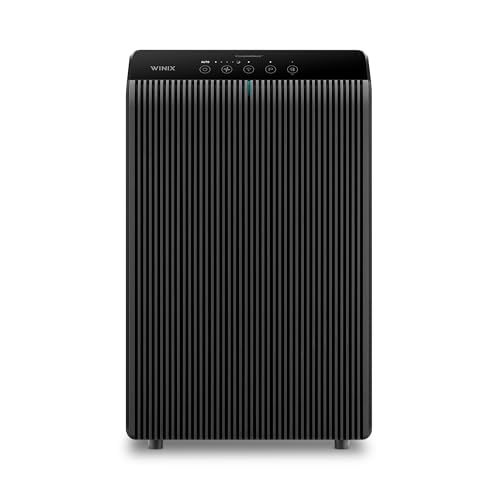
Readers who type winix 5510 review into a search box are usually standing at a specific crossroads: they have heard that Winix is the value-smart way into serious air purification, and the 5510 is the model the current line puts in front of them. The pitch, in the manufacturer’s own listing language, is a large-room purifier — coverage up to 1,881 square feet in one hour — with true HEPA filtration, a high deodorization carbon filter, auto mode, and app support, carrying the lineage in its title: new generation of the 5500-2. This review unpacks what each of those claims means in a real family living room, where the 5510 earns its keep against dust, cooking, pets, and pollen, how its app support changes daily ownership compared with the button-era Winixes, and where its two siblings — the monitor-carrying 5520 and the app-control-led 5530 — might serve a household better. The 5510 is the balanced Winix of its generation, and balance, properly examined, is not a boring verdict.
Key Takeaways
- The WINIX 5510 is a verified current model: large-room coverage up to 1,881 sq ft in one hour, true HEPA, high deodorization carbon filter, auto mode, and app support.
- It is Winix’s titled new generation of the 5500-2, inheriting that model’s odor-weighted filtration brief and adding sensors and connectivity.
- Auto mode is the daily headline: the machine senses the room and modulates itself, which suits family living rooms whose air changes by the hour.
- Choose the 5510 for the balanced feature set; choose the 5520 if an on-device air quality monitor matters more, or the 5530 if app control is the priority.
- Budget the matched replacement filter pack as the machine’s fuel — the three-year cost story matters more than day-one differences among the siblings.

In this guide
Winix 5510 Review: The Balanced Winix, Taken Seriously
Start with the filtration, because Winix does. Air enters through a pre-filter that intercepts the coarse load — hair, lint, the visible dust — before the working stages: a high deodorization carbon filter, specified beyond the token carbon sheets that pad out lesser spec lists, and a true HEPA element for the fine particles that dominate health-adjacent complaints: pollen, pet dander, dust mite debris, smoke particles. PlasmaWave, the brand’s bipolar ionization stage, completes the stack and can be switched off by households that prefer filtration only — a small control with an outsized role in this review’s confidence, since a supplement you can decline is a supplement behaving properly. The listing’s targets — pet allergies and smoke named outright — describe the machine’s intended battlefield accurately: the ordinary large room of an ordinary house, with its ordinary mixture of everything.
The 5510’s coverage figure deserves the translation this series applies to all such claims. “Up to 1,881 square feet in one hour” describes the room volume the machine can cycle in that hour at full work — a fast air-change basis, useful for comparing the Winix siblings against each other and against brands quoting on the same basis, and not a promise that a room of that size behind a closed door becomes a cleanroom. In practice the 5510 belongs in the large bedroom, the living room, the open-plan zone of a modest home, run continuously at the speed the moment requires. Which brings the review to the feature that defines its daily life: auto mode. A sensor watches the room’s air and the machine answers — idling down in the calm hours, stepping up when the door opens on a smoky street or the kitchen goes to work — and the household’s job shrinks to placement, filters, and the occasional glance. Purifiers fail in the real world mostly by being switched off; a machine that manages itself stays on, and a machine that stays on is the only kind that works.
Mini spec box — WINIX 5510
- Coverage: large rooms up to 1,881 sq ft in 1 hour (manufacturer figure)
- Filtration: pre-filter; high deodorization carbon filter; true HEPA; PlasmaWave stage, switchable
- Controls: auto mode, onboard panel, and app support (scheduling, filter awareness)
- Listed targets: pet allergies, smoke, household odors
- Lineage: titled the new generation of the 5500-2
Strengths
- A complete, honestly specified filter stack — the deodorizing carbon and true HEPA pairing that made the family name, in current form.
- Auto mode that genuinely manages the machine, keeping it working through the day’s changing air without household supervision.
- App support that adds scheduling and filter-life awareness while leaving full onboard control intact for everyone else in the house.
Trade-offs
- No on-device air quality display of the 5520’s kind; feedback lives in the app and the machine’s indicator language.
- The app relationship, however light, is one more account and pairing ritual on setup day.
- A large-room tower is oversized — physically and financially — for a small bedroom, where the line’s compact models belong.
Best for: family living rooms and large bedrooms in pet-keeping, cooking, or pollen country — the household that wants the current Winix formula without a specialization. Not suited for: tiny rooms, or buyers whose first priority is a visible air quality readout or the deepest app control, served by its siblings below.
The alternatives in the same line
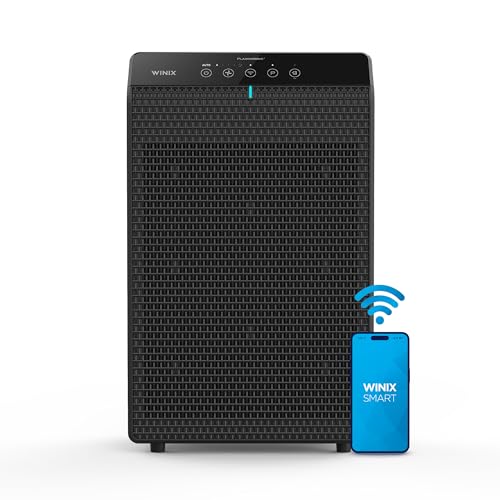
WINIX 5520 — when you want the machine to show its work
Badge: Best for feedback-first households
The 5520 matches the 5510’s territory — up to 1,882 square feet in one hour, true HEPA, high deodorization carbon, auto mode — and changes the interface philosophy: an air quality monitor on the device reports the room’s condition where everyone can see it. The difference sounds cosmetic until a household lives with both ideas. The 5510’s auto mode asks for trust; the 5520’s display earns it, event by event, and teaches the household its own air — which cooking registers, how long recovery takes, when the filter’s age starts showing in the numbers. Allergy-season managers and the data-curious should cross-shop it seriously in Winix 5520 review.
Mini spec box — WINIX 5520
- Room rating, per the manufacturer: 1,882 sq ft of air in a single hour
- Air path: true HEPA behind a carbon filter of the high-deodorization type; PlasmaWave family
- What makes it itself: an air quality monitor built into the machine
- Operation: auto mode, worked from the onboard panel
Strengths
- Visible feedback turns purification from faith into evidence.
- The same verified filtration substance as the 5510.
- Auto mode anchored to a displayed reading feels accountable.
Trade-offs
- The display is a light and an attention claim in a dark room.
- Readings describe air at the machine, not the far corners.
- App depth is not its headline; connected households should compare the 5530.
Best for: allergy households and anyone who manages by measurement. Not suited for: buyers who want the purifier to disappear entirely.

WINIX 5530 — when the app is the remote for your life
Badge: Best for connected households
The 5530 shares the family’s filtration and coverage — up to 1,882 square feet in one hour, true HEPA, high deodorization carbon, auto mode — and, like the 5510, carries the new-generation-of-the-5500-2 lineage, but leads with app control where the 5510 offers app support. In practice the distinction is emphasis that becomes experience: the 5530 is pitched at the owner who will genuinely run the purifier from the phone — schedules against the household’s routines, remote starts during smoke events, checks from the office — and its review at Winix 5530 review takes that use case as its center. If the 5510 is the balanced Winix, the 5530 is the committed one, and households know which they are.
Mini spec box — WINIX 5530
- Room rating, per the manufacturer: 1,882 sq ft of air in a single hour
- Air path: true HEPA behind a carbon filter of the high-deodorization type; PlasmaWave family
- Operation: app control layered over auto mode, panel fitted on the body
- Family note: Winix presents it as a new generation of the 5500-2
Strengths
- The deepest remote operation in the trio — schedules, remote starts, away-from-home checks.
- Identical filtration core to the 5510; no cleaning compromise for the connectivity.
- Suits routine-driven homes whose air events arrive on a calendar.
Trade-offs
- Its premium virtues are worthless to a household that will not open the app.
- Depends on home Wi-Fi for its headline features.
- Overlaps the 5510 so closely that the choice must be made on habits, not specs.
Best for: smart-home households and anyone away during the day who still manages the air. Not suited for: the app-averse, for whom the 5510’s lighter touch — or its onboard panel alone — suffices.
Setting up the 5510: the first day done properly
Unbox like an owner, not an audience
Remove the filter pack’s protective wrapping — the step whose omission has generated more one-star confusion than any defect in purifier history — seat the pack as the manual directs, and place the machine where the room’s air circulates: clearance at the intakes, the outlet unobstructed, away from the corner burial that starves any tower. In a family living room, that usually means a wall position with a few inches of breathing room, near the seating the machine serves rather than beside the television it would compete with.
Pair the app while the room is calm
Do the app setup on day one, on the home’s main Wi-Fi, and walk the household through the two things they will actually use: the schedule and the filter indicator. Set an initial routine that matches the family’s real day — a stronger shift across cooking and evening hours, a gentle one overnight if the machine serves a bedroom — and let auto mode arbitrate the rest. The PlasmaWave decision belongs to this first day too: leave it on as designed, or switch it off if your household’s clinician-guided preference says so, knowing the filtration is unaffected; the technology’s full story is told in what is PlasmaWave technology.
The first week’s observations
Watch three things in week one. Dust behavior on the darkest furniture tells you the particle story is working. The front-door test after a day out tells you the odor story. And the household’s own behavior — whether anyone has switched the machine off and forgotten it — tells you the placement story, the one that decides everything by month two. Adjust placement before adjusting settings; towers fail by geography far more often than by specification.
Filter economics: owning the 5510 across three years
The 5510’s running cost is its matched replacement pack, changed on the indicator’s call and the household load’s evidence — roughly an annual rhythm in a typical home, sooner where smoke seasons or serious pet traffic spend the carbon early. Two disciplines keep that cost honest. The pre-filter, cleaned regularly, protects the pack from the coarse load that would otherwise shorten its life, and is the cheapest performance available to any owner. And the pack change itself should be genuine and model-matched: the HEPA promise lives in the media and its seal, and a loose substitute leaks the particles it advertises. Shoppers comparing the 5510 against cheaper towers should run the three-year sum — machine plus two or three packs — because that is the number the household actually pays, and it is the comparison Winix’s value reputation was built on. The lineage helps here too: the 5500-2’s owners learned the same arithmetic a decade ago, in Winix 5500-2 review, and the lesson has not changed — budget the fuel, and the machine is inexpensive; ignore it, and every purifier is.
How does the 5510 handle the four horsemen of living-room air?
Pets
Dander is a HEPA problem and odor is a carbon problem, and the 5510 carries both stages at full size. The household disciplines — pre-filter attention during shedding season, placement in the room the animals own — decide how close the machine gets to its spec-sheet promise, and pet-focused sizing context lives in best air purifiers for homes with pets.
Cooking
An open-plan kitchen makes the purifier a kitchen appliance whether it applied for the job or not. Auto mode earns its place here, answering the dinner event without being summoned, and the carbon stage’s freshness writes the morning-after verdict. Keep the machine out of the grease plume’s direct line and let the range hood be the first responder.
Pollen season
Pollen is where run-time discipline pays: the machine on before the windows open, the bedroom door closed at night if the 5510 serves sleeping quarters, speeds honest rather than whispered. Filtration cannot help air that never reaches it, so the season is won by circulation habits as much as by media.
Smoke events
Wildfire days invert the household: windows sealed, doors managed, the purifier at high work in the occupied room. The 5510’s app support earns a specific credit here — the machine can be run hard from wherever the family is, and its state checked before the drive home. After the event, inspect the filters early; a smoke week can spend a carbon stage like a season.
Common mistakes 5510 buyers make
First, buying the big tower for a small room and then running it on its lowest whisper forever, having paid for capacity that never gets used — the compact end of the line exists for those rooms. Second, judging auto mode in the first hour: sensors and rooms need a day to learn each other, and a machine second-guessed hourly never settles into the rhythm that is its whole point. Third, forgetting that app support is a layer, not the appliance — the household member without the phone still needs the onboard panel explained, once, kindly. Fourth, stretching the filter pack because the air “still seems fine,” when the carbon half of the pack fails silently and the nose at the front door is the only honest auditor. Fifth, placing the tower where it looks best rather than where air moves, and then reviewing its performance instead of its geography. The 5510 forgives most mistakes except neglect, which is the correct temperament for a family appliance.
A day in the life of auto mode
Because auto mode is the 5510’s daily headline, it deserves a narrative rather than a bullet. At six in the morning the house is still, the room’s air is as clean as the night shift left it, and the machine idles at its gentlest — present the way a refrigerator is present. Breakfast changes the air first: toast, a pan, the front door opening on the street’s morning, and the sensor notices what the household is too busy to, stepping the fan up before the cooking smell has finished its commute to the sofa. Midday, with the house empty or quiet, the machine settles again, spending its electricity and its filter life at the rate the air actually demands — the quiet economic argument for sensor operation that a fixed-speed machine cannot make. The evening is the examination: cooking in earnest, bodies home, a dog shaking off the day, perhaps a window opened against advice, and the 5510 works at its honest middle and upper ranges, then unwinds through the night as the room clears. Nothing in that day required the household to think about air once. Multiply the day by a year and the auto mode’s value stops being a feature and becomes the product: purification that survives human forgetfulness, which is the only kind of purification most homes ever actually receive.
Noise, honestly: the 5510 in a living room and a bedroom
A large-room tower makes sound in proportion to its work, and the 5510 follows the physics of its class: a purposeful rush at full speed that no one mistakes for silence, a working middle that coexists with conversation and television, and a low end quiet enough for a bedroom’s night shift in most households’ judgment. Auto mode flatters the acoustic picture because it spends so much of the day at the gentle end, reserving its voice for events — and a machine that gets louder when the air gets dirtier is, in practice, a machine whose noise reads as information rather than intrusion. Placement writes the rest of the acoustic story: a tower on hard flooring in a bare corner will sound like its worst self, while the same machine on a rug, clear of resonant cabinetry, settles into the room’s background. Light sleepers planning to run any large tower in the bedroom should still audition the household’s tolerance honestly — and should know that the purifier’s quietest useful work is done at speeds whose benefit depends on the door being closed and the hours being long, which is the bedroom pattern anyway.
Placement masterclass for a large-room tower
Where a 5510 stands decides what it is, so this review gives placement its own section rather than a sentence. The governing principle is circulation: the machine must breathe the room’s air, not a corner’s, so intakes get clearance on every side the manual asks for, and the outlet’s path crosses the room’s living zone rather than a wall’s face. In a living room, the winning positions are usually along the wall the seating faces or beside the room’s main traffic path, where air naturally exchanges; the losing positions are behind sofas, inside alcoves, and beside the kitchen’s grease plume, where the intake becomes a range-hood accessory. In a large bedroom, distance from the bed buys quiet, and the door’s swing and the room’s return-air path matter more than aesthetics. Two-machine households should resist clustering both towers in the living room for symmetry’s sake: one in the living zone and one where the household sleeps will outperform a matched pair admiring each other across a rug. And renters should note the tower’s administrative virtues — no installation, no trace at move-out, a footprint that negotiates most floor plans — which make it the rare serious appliance that asks nothing of the building.
The 5510 against the wider market: what the Winix formula still gets right
Step outside the family and the 5510’s virtues come into focus against the category’s habits. Against prestige brands, Winix’s standing argument is filtration parity at a friendlier total cost — the same media classes, the same room classes, a filter stream priced for households rather than for brand theater. Against the budget towers, the difference is specification honesty: a carbon stage described as a deodorizing filter rather than a scented sheet, a HEPA claim that says true, a coverage figure stated with its basis. Against the design-object purifiers, the Winix is unapologetically an appliance — it will not win a beauty contest against a fabric-wrapped cylinder, and it will out-filter several of them while costing less to feed. None of this makes the 5510 the right purifier for every home; a household in love with a rival’s ecosystem, or one needing a specialist machine for a measured gas problem, should follow its evidence. But for the broad middle of buyers — the family living room, the pet, the pollen, the cooking — the 5510 represents the category’s sensible center, and sensible centers are where most good purchases live.
Who should skip the 5510?
A balanced review names its machine’s wrong buyers as clearly as its right ones. Skip it if your room is small: a compact purifier will serve a nursery-sized bedroom better and cheaper, and the line’s own small models — the A230 family discussed in Winix A231 review — exist precisely for that geography. Skip it if you are outfitting a whole house at once and want a single interface philosophy across five rooms from a different ecosystem; consistency has value this review respects. Skip it if your air problem is a specific, identified gas or a remediation situation, where the correct purchase is a specialist machine or a contractor, not a generalist tower however good. And skip it, finally, if you know you will resent the filter pack’s annual appointment — every purifier in this class has one, but a household that will not keep it should buy the machine whose consumables it will actually buy, because a purifier’s worst specification is the filter change that never happens.
Understanding the coverage claim: air changes, translated
The 1,881-square-foot figure rewards a slower reading, because it teaches how to shop the whole category. A purifier’s real job is air changes: how often the room’s entire volume passes through the filters. Winix’s basis — the area whose air the machine can cycle in one hour at full work — describes a vigorous rate, appropriate for events and for the first hour in a dirty room. For continuous duty, what matters is the rate at the speed you will actually live with, which is lower; a machine sized so that its comfortable middle speed still turns a bedroom’s air over several times a night is a machine correctly bought, while one that must scream to keep up will be turned down, then off, then reviewed unfairly. This is why the old advice — buy the size class above your room if the budget allows, and run it gently — survives every technology generation: capacity held in reserve is quiet, and quiet is what keeps a purifier employed. The 5510’s large-room rating gives most family spaces exactly that reserve, which is a less glamorous and more useful reading of its headline number than the number itself.
Allergy season with the 5510: a working protocol
Because so many 5510s will be bought in a pollen panic, here is the season run properly. Two weeks before your household’s historical season, fit a fresh pack if the current one is anywhere near its call — a season is no time to discover the carbon’s age — and clean the pre-filter. Move the machine to the bedroom if it is not there already; the eight-hour room outranks the living room for sufferers, and the living room can borrow it back in the off-season. Run the season on auto with the door closed at night, shower and change after heavy outdoor exposure so the room’s load stays low, and resist opening the bedroom window on the beautiful high-count morning that causes half the season’s misery. On the worst days, give the machine a head start: an hour at high speed before bedtime, then auto for the night. None of this is medical advice — sufferers belong in conversation with their clinicians about management — but as appliance operation it is the difference between owning a purifier and benefiting from one, and the 5510’s sensor-driven temperament suits the protocol unusually well because the machine, unlike the household, never forgets what season it is.
Year two with the 5510: what changes and what does not
Most purifier reviews are written in the honeymoon, so this one checks in later. In year two, the 5510’s story is written by its first filter change: households that made it on schedule describe a machine indistinguishable from its first season, which is the entire design intent — performance warehoused in replaceable media rather than in aging parts. The app relationship matures in one of two directions: either it has become the household’s quiet utility, checked when the indicator stirs and during smoke weeks, or it has been politely abandoned in favor of the panel and auto mode, and the healthy sign is that the machine serves both households identically. The sensor wants an occasional gentle cleaning per the manual if readings ever seem lazy, and the pre-filter wants its rhythm kept. What does not change is the acoustic and visual footprint: the tower becomes furniture, in the way of successful appliances, noticed mainly on the days the air outside goes orange or the pollen count makes the news — the days it was bought for. A reviewer can ask little more of a mid-priced purifier than that its second year reads like its first, and the 5510’s architecture — honest media, matched packs, a fan with an undemanding job — is built to deliver exactly that boring, valuable result.
The 5510 as a gift, a rental upgrade, and a second machine
Three purchasing situations recur in this model’s life and deserve direct answers. As a gift — for new parents, for a parent with allergies, for a housewarming — the 5510 is well chosen precisely because it is the balanced model: no specialization to guess wrong, an app layer the recipient may adopt or ignore, and a filter schedule simple enough to note in the card. In a rental, its virtues compound: no installation, no landlord conversation, serious filtration that moves when the lease does, and an auto mode that forgives a tenant’s unfamiliar house. As a second machine beside an existing purifier — including an older Winix — it slots into the bedroom-first strategy this series recommends, and its app support makes it the natural supervisor of the pair, the one whose filter status and schedule the household actually tracks. In all three situations the same caution applies: include the first replacement pack in the budget conversation early, because a purifier’s welcome should never curdle at its first consumable.
What the 5510’s listing does not tell you
Every listing is an argument, and a review should supply the cross-examination. The 5510’s page will not dwell on the fact that its coverage figure assumes full speed, that its carbon stage is a consumable whose performance is a declining curve rather than a permanent property, or that its sensor judges the air at the machine’s location and can be fooled by a placement that isolates it from the room’s real circulation. It will not emphasize that PlasmaWave, for all its lineage, is the stack’s supplement rather than its engine, or that the app support — genuinely useful — is the feature most likely to be redesigned by forces outside the owner’s control over a long ownership. None of these is a scandal; all are the normal silences of product pages, and they are listed here so the purchase is made with the whole picture. The 5510 survives its cross-examination better than most, because its core claims — media, coverage basis, lineage — are the checkable kind, and a machine whose marketing can be verified is a machine whose ownership tends to match its brochure.
A note on this review’s evidence
The 5510’s section rests on its verified current listing — exact title, stated coverage, filtration as specified, official image — and on the documented design of the line it succeeds. Where this review describes daily behavior, seasons, and second years, it describes the patterns that the machine’s architecture and its family’s ownership record support, offered as guidance and not dressed as laboratory measurement; no test-chamber figures have been invented for it, and none of its scores come from a spreadsheet the reader cannot inspect. That restraint is deliberate and consistent across this series: a purifier review earns its keep by reasoning correctly from verifiable facts, and the 5510 provides enough of those to reason with confidence.
Decision day: a five-minute framework for the undecided
If the siblings have blurred together, decide in this order. First, the room: measure it, and confirm a large-room tower is the right class at all — if not, leave this trio for the compact line and save the difference. Second, the interface: picture a Tuesday evening six months from now and ask, honestly, whether anyone in the house will open an app for the purifier, glance at a display on the machine, or neither. “Neither” and “a little app” both point to the 5510; “show me the air” points to the 5520; “I run my house from my phone” points to the 5530. Third, the filter budget: confirm the household accepts the matched-pack rhythm, because that acceptance, more than any feature, predicts satisfaction in year two. Fourth, the placement: walk the room and find the tower’s home before ordering, since a machine with nowhere sensible to stand is a return waiting to happen. Fifth, the PlasmaWave preference: on as designed, or off by household choice — a decision the machine happily leaves to you. Run those five and the 5510 either emerges as the obvious purchase or yields gracefully to the sibling that fits, which is what a balanced model is for: it is the answer when the household’s honest answer is “we just want the good one.”
The household meeting: getting everyone else to live with it
A family purifier is a small piece of domestic policy, and the 5510’s ownership goes better when the policy is agreed rather than imposed. The conversations are brief and worth having. The machine stays on — that is the whole agreement — and anyone may raise its speed during an event but no one switches it off and forgets it, because a purifier’s off hours are the ones the room remembers. The filter calendar lives somewhere visible, so the pack’s arrival is a household event rather than one person’s nagging. The app, if used, is on the phones of the adults who want it, and the panel is explained to everyone else, including the guest who will inevitably press something. Children old enough to be curious are told what the tower is and why its intake is not a toy shelf; pets, who cannot be told, are managed by placement. None of this is onerous, and all of it is the difference between an appliance that serves a household for years and one that becomes a contested sculpture by March. The 5510, with its self-managing auto mode and its forgiving controls, is unusually well suited to being agreed about — one more sense in which balance is its defining feature.
Day ninety: what success with the 5510 actually looks like
Reviews end at delivery; ownership is graded at day ninety, so here is the standard to hold this machine to. The dust film on the dark furniture should be arriving on a slower schedule than it did in the old world. The front-door test — the house smelled after a day away — should return “house” rather than a menu of the week’s dinners and the dog’s biography. The household should have forgotten the machine’s controls in the specific way that means auto mode is trusted, and the app, if it is opened at all, should be opened for the filter’s sake rather than the fan’s. The pre-filter should have been cleaned twice without drama, and the pack’s change date should exist somewhere more durable than memory. If those things are true, the 5510 has done everything its listing promised in the only tense that matters. If they are not, the diagnosis order in this review — placement, pre-filter, pack age, room fit — will find the reason faster than any complaint about the model, because in ninety days a well-specified tower has told the truth about its household, and the truth is usually geography or maintenance wearing the machine’s name.
The 5510 in the home office and the multigenerational house
Two households deserve their own paragraph because the 5510 fits them in specific ways. The work-from-home household concentrates its hours in one or two rooms and cooks lunch in the middle of them; its purifier is infrastructure, and the 5510’s pattern — auto through the workday, a sensor-led answer to the lunch hour, a machine that does not need to be remembered between calls — matches the brief precisely, with the app earning its keep on the days the office is a bedroom and the schedule is the difference between a pre-cleared room and a groggy one. The multigenerational house, with grandparents whose comfort with apps varies and grandchildren whose curiosity doesn’t, benefits from the model’s dual citizenship: full function at the panel for the household’s analog members, connected depth for its digital ones, and a PlasmaWave switch that lets a cautious family run filtration only without buying a different machine. Appliances that serve three generations without a training session are rarer than they should be; the Winix line’s insistence on keeping the panel complete, even in its connected generation, is a design value this review is happy to reward with attention.
One more comparison: the 5510 versus its own ancestors, honestly
Owners of the button-era Winixes — the machines reviewed elsewhere in this series — sometimes ask whether the new generation is an upgrade or merely a restyle, and the 5510 is the right place to answer. The filtration is a continuation, not a revolution: the same stage order, the same media classes, the same consumable discipline, which means an owner whose old machine still filters well gains no cleaning miracle by switching. What the new generation adds is information and delegation — a sensor that watches so the household doesn’t have to, an auto mode that spends fan speed like a budget, an app that moves the filter calendar and the schedule into the phone the household already checks. Whether that is worth a working machine’s retirement is a household decision, and this review’s advice is conservative: replace on failure, on outgrown rooms, or on a genuine appetite for the feedback — not on novelty. The 5510 will be there, being the balanced Winix, when the honest trigger arrives; and when it does arrive, the transition will feel less like switching brands than like the same machine finally learning to report for duty.
Troubleshooting the 5510’s few complaints
The complaint list for a machine of this design is short and mostly confessional. “It doesn’t seem to do anything” resolves, on inspection, into a pack still wearing its shipping wrap, a pre-filter matted with a season’s hair, or a tower exiled behind furniture — the three classics, in that order. “The app won’t stay connected” is a router conversation, not a purifier one, and the panel’s completeness means the household loses garnish rather than function while it is resolved. “It got louder” is usually the auto mode meeting a dirtier week, a filter at the end of its patience, or a new hard floor where carpet used to be — each diagnosable in minutes with this review’s checklists. “The room still smells on Saturday” is the carbon’s calendar announcing itself, and the cure is the pack, not the brand. Owners who work the list in order — wrap, pre-filter, placement, pack, network — will find that the 5510’s failures are almost never the machine’s, which is the practical meaning of buying a mature design: its problems have all been had before, by other owners, and they all have names.
The shortest version of this review
For the reader who has reached the questions with a decision to make and a bus to catch: the Winix 5510 is the current generation’s balanced large-room purifier — true HEPA and deodorizing carbon under a sensor-driven auto mode, with app support for the households that want it and a complete panel for those that don’t, heir to the 5500-2’s odor brief and priced like a Winix, which is to say for the decade rather than the season. Its siblings specialize — the 5520 shows you the air, the 5530 lives in your phone — and it generalizes, which in a family living room is usually the specialization that matters. Buy it for the room it fits, feed it genuine packs, place it where air moves, and it will repay the household in the only currency purifiers honestly trade in: days when nobody thought about the air at all.
What to do while you wait for delivery
The days between ordering and arrival are usefully spent, and a short preparation list closes this review’s practical business. Choose the tower’s corner and clear it, measuring the footprint against the real furniture rather than the imagined room. Decide the household’s PlasmaWave preference in advance, so setup day is an execution rather than a debate. Put the filter calendar’s first entry — the pack’s expected change season, penciled honestly — wherever the household keeps such things. If the machine replaces an older purifier, plan the veteran’s next post rather than its exile: a workshop, a rental, a relative’s first apartment are all honorable second careers for a working tower. And read the manual when the box arrives — all of it, once — because the 5510, like every machine in this series, keeps its few important secrets (the wrap on the pack, the sensor’s care, the indicator’s reset) in exactly the pages owners skip. Preparation of this modest kind is the difference between a purifier that is installed and one that is merely present, and the 5510 rewards the installed kind immediately.
A closing observation about “balanced” appliances
Product culture rewards extremes — the most connected, the most beautiful, the most powerful — and balanced machines are reviewed the way balanced people are described at dinner parties: approvingly, briefly, and on the way to someone louder. The 5510’s review has tried to correct that injustice with length, because the household truth runs the other way: the appliance that serves a family for a decade is almost never the extreme one, but the one whose filtration is honest, whose controls everyone can use, whose consumables are priced for real budgets, and whose maker is still selling its filters when the fashion has moved on. By those measures the balanced Winix is not the compromise choice in its line. It is the line’s center of gravity, the model the specialists orbit — and centers of gravity, in appliances as in households, are what everything else quietly depends on.
Frequently Asked Questions About the Winix 5510
Is the Winix 5510 the same as the 5500-2?
No — it is the successor, and Winix says so in the product’s own title: the 5510 is presented as the new generation of the 5500-2, with app support. The filtration brief carries over — true HEPA with a deodorizing carbon emphasis for large rooms — while sensors, auto mode, and connectivity are the new generation’s additions. Owners of the older machine will find the transition addressed in the 5500-2 review linked earlier.
What size room is the 5510 really for?
Its listing claims coverage up to 1,881 square feet in one hour, which is a fast-cycling basis; in lived terms it is a large-room machine — living rooms, open-plan zones, and big bedrooms — rather than a whole-house answer. A single tower cleans the room it occupies, and multi-room homes should plan a machine per key room, starting with the bedroom where the hours are longest.
Does the 5510 need Wi-Fi to work?
No. The app support is a layer over a complete appliance: the onboard panel and auto mode run the purifier fully without any connection. Wi-Fi adds scheduling convenience, remote checks, and filter awareness. Households that never pair the app lose the garnish, not the meal — though buyers certain they will never connect should still compare the siblings on the features they will use.
How often does the 5510’s filter need changing?
Plan around the indicator and roughly an annual rhythm in a typical home, shortened by heavy pet load, serious cooking, or smoke events that spend the carbon stage early. Replace with the genuine model-matched pack, clean the pre-filter regularly between changes, and write the date on the pack’s frame — the three habits that keep any Winix performing as reviewed.
5510 or 5520 or 5530 — which should I actually buy?
By household temperament. The 5510 is the balanced choice — auto mode and app support without a specialization — and the right default for most living rooms. The 5520 suits households that want the air quality shown on the device itself. The 5530 suits connected homes that will genuinely run the purifier from the phone. Filtration is shared across the three, so the decision is about interface, and it cannot really be lost.
Can I turn PlasmaWave off on the 5510?
Yes — the ionization stage is switchable, and the fan, filters, and auto mode continue without it. Households with respiratory sensitivities often run filtration-only after taking their clinician’s advice, and the machine loses nothing measurable by it. The explainer linked in the setup section covers how the technology works and what its evidence supports.
The verdict on the Winix 5510
The 5510 is what a mature product line looks like: a famous filtration recipe — pre-filter, deodorizing carbon, true HEPA, optional PlasmaWave — carried into the sensor-and-app era without being redesigned into a gadget. It will not show you the air like its 5520 sibling or live in your phone like the 5530, and it does not need to: it senses, responds, filters, and asks for a filter pack on a civilized schedule, which is the complete job description of a family living room’s purifier. Buyers who want the current Winix without a thesis statement attached will find the 5510 is the thesis — balance, executed properly.
A last word for the reader still hovering between this machine and a cheaper tower with a louder listing. The premium the 5510 asks over the no-name end of the category buys three unglamorous things: media specified honestly enough to be checked, a sensor-and-auto system that keeps the machine working when the household forgets it, and a filter supply line from a brand that has kept faith with its previous generations’ owners — the surest available predictor that this generation’s packs will be there in year four. Purifiers are bought in an hour and owned for a decade; the 5510 is priced and built for the decade, and that, more than any single feature in its title, is the recommendation.