Disclosure: As an Amazon Associate, dailyhomedecorating.com earns from qualifying purchases. Links on this page are affiliate links; they cost you nothing extra. Prices and availability change often, so check the current Amazon listing before you buy.
Not every purifier decision is about a living room, and the winix a231 review belongs to the other geography entirely: the bedroom, the dorm, the nursery-adjacent spare room, the desk corner where one person breathes for eight hours at a time. The A231 is Winix’s compact entry in its PlasmaWave line — the small-room sibling of the towers that fill the rest of this series — and it raises a situation this review will handle with complete candor: in current catalog verification, the A231 unit itself was not returned; the listing that surfaces for this corner of the Winix range is its close sibling, the A230, verified below with its official image, alongside a compact alternative from Levoit for cross-brand shoppers. So this article does two honest jobs. It reviews the A231’s compact concept — what the small Winix is for, how it is built, and who it suits — in prose, and it links the purchasable machines that serve the same small rooms today, labeled exactly as what they are.
Key Takeaways
- The Winix A231 is the compact member of the PlasmaWave family, designed for bedrooms and small rooms rather than open-plan living spaces.
- The A231 unit was not returned in current catalog verification; it is reviewed here in prose, and no link in this article pretends to be it.
- The verified WINIX A230 — a different model in the same compact line, covering bedrooms up to 1,110 sq ft in one hour with an air quality monitor, true HEPA, carbon filter, and auto mode — is the purchasable Winix sibling, labeled as such.
- The Levoit Core300-P is the verified cross-brand compact alternative, a quiet bedroom purifier in the same room class.
- Compact purifiers are won and lost on placement, noise at sleep speeds, and filter discipline — not on headline coverage.
In this guide
Winix A231 Review: The Small Winix, On Its Own Terms
Understand the A231 by its assignment. The big Winix towers exist to cycle a living room’s volume; the compact line exists to stand close to one sleeper, one student, one desk — near enough that its gentle speeds still turn the room’s air over through the night, small enough that a bedroom already furnished with a life can absorb it. The design language follows the family: air drawn through a pre-filter into a carbon stage and a true HEPA element, with the line’s PlasmaWave ionization as the finishing stage — the same four-layer recipe as the towers, scaled to a bedside rather than a ballroom. Controls in this class are kept close and simple, because a bedroom appliance is operated half-asleep, in the dark, by someone who wants exactly one thing from it: to be told, by its quiet, that it is working.
The honest consequence of the assignment is that the A231’s virtues are domestic rather than dramatic. It will not rescue a smoky open-plan; it was never aimed at one. What it does — in the pattern compact Winixes are bought for — is hold a small closed room at a cleaner equilibrium across the night: the pollen that entered on clothing filtered out by morning, the dust that used to film the nightstand arriving more slowly, the room’s smell neutral in the way of a space whose air is being quietly turned over. Owners of small purifiers consistently report that the benefit is felt as sleep quality and morning clarity of nose, which are bedroom currencies; and they report, with equal consistency, that the machine’s success was decided by where it stood and whether its filter was changed on time, which are the themes this review will keep returning to.
Mini spec box — Winix A231 (subject, prose-only)
- Format: compact purifier for bedrooms and small rooms, PlasmaWave line
- Filtration: pre-filter, carbon stage, true HEPA element, PlasmaWave stage (family architecture)
- Role: bedside and desk duty — one room, closed-door, continuous running
- Availability note: this site’s most recent catalog check did not return the A231; the A230 sibling below is the verified purchasable Winix in this class
Strengths
- The Winix filtration recipe at bedside scale — no token media, no novelty mechanism, from the line that built its name on towers.
- A footprint and temperament made for small rooms, where a large tower would be furniture with ambitions.
- Family continuity: households running a big Winix in the living room keep one filter philosophy across the home.
Trade-offs
- Compact coverage is a hard boundary — this class cannot be stretched into living-room duty by optimism.
- The A231 itself is not the currently verifiable purchase, so today’s buyer is really choosing between its sibling and its rivals.
- Small machines live or die by filter changes; a neglected compact is a nightstand ornament.
Best for: understanding the small-Winix concept and for owners of the model seeking its context and care. Not suited for: a one-click purchase today — that decision belongs to the verified machines below.
The verified machines for the A231’s rooms
WINIX A230 — the sibling, labeled as a sibling
Badge: The purchasable Winix in this class
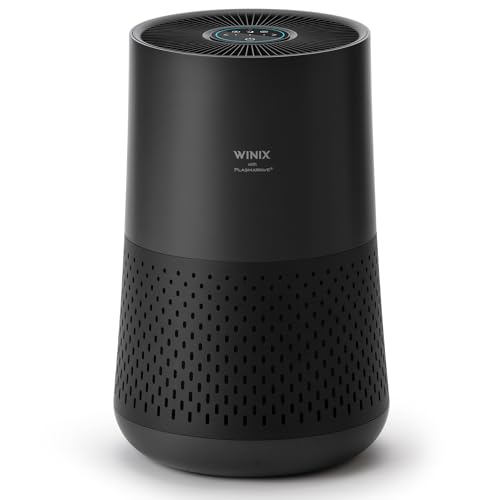
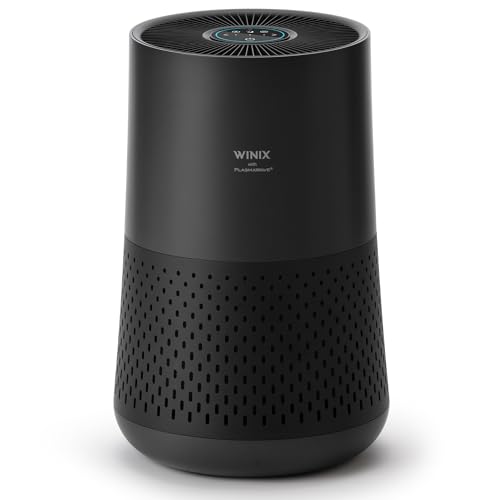
Precision first: the A230 is not the A231, and this review will not blur the distinction for a click. It is the neighboring model in Winix’s compact line, and it is the listing current verification returns for this corner of the range — specified for bedrooms up to 1,110 square feet in one hour, with an air quality monitor, true HEPA filtration, a carbon filter, and auto mode. Read that specification against the A231’s brief and the family resemblance is the story: the same small-room mission, executed with the sensor-and-auto equipment of the current generation. For a shopper who came for the small Winix and finds the A231 elusive, the A230 is the honest continuation of the same idea — bought as itself, with its own name on the box and its own review-worthy virtues.
Mini spec box — WINIX A230
- Coverage: bedrooms up to 1,110 sq ft in 1 hour (manufacturer figure)
- Filtration: true HEPA plus carbon filter; PlasmaWave line
- Features: air quality monitor and auto mode
- Listed targets: pet allergens, smoke, dust
Strengths
- The monitor-and-auto pairing brings the big line’s feedback discipline to the bedside.
- True HEPA and carbon in a genuinely compact footprint.
- The verified, currently purchasable Winix for this room class.
Trade-offs
- It is a different model from the A231 — shoppers set on the exact unit should know they are choosing a sibling.
- Its coverage class is bedrooms; it inherits the compact boundary honestly.
- Sensor feedback at the bedside is a light-and-information presence some sleepers will manage by placement.
Best for: bedrooms, dorms, and nurseries-adjacent rooms in Winix households and new buyers alike. Not suited for: open-plan living spaces, where the line’s large towers take over.

Levoit Core300-P — the cross-brand compact benchmark
Badge: Best alternative outside the Winix line
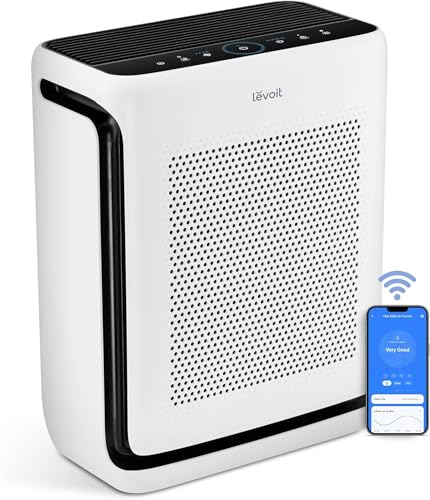
No compact review is complete without the machine that defined the category’s popular end. The Levoit Core300-P — verified in this site’s catalog work — is a quiet bedroom purifier with a HEPA sleep mode, AHAM-verified credentials in its listing, and coverage up to 1,073 square feet, aimed at the same bedside geography as the Winix compacts. Its design philosophy differs in flavor: a cylindrical desktop-friendly form, a famously gentle night mode, and a filter ecosystem of its own. Shoppers cross-shopping the A231’s room class should treat the Core300-P as the benchmark the Winix sibling must answer — on noise at sleep speed, on filter cost, and on the nightstand test of whether the machine’s presence soothes or nags.
Mini spec box — Levoit Core300-P
- Coverage: up to 1,073 sq ft class (manufacturer figure)
- Filtration: HEPA filtration with sleep mode, per listing
- Positioning: compact bedroom purifier, quiet-first design
- Listed targets: dust, pollen, smoke, pet odor
Strengths
- A sleep-mode reputation earned in the category’s most competitive class.
- Compact, furniture-friendly form that suits desks and nightstands.
- A mature filter ecosystem with predictable availability.
Trade-offs
- A different brand’s ecosystem — no PlasmaWave, no Winix filter commonality for existing Winix homes.
- Its cylindrical intake wants clearance on all sides, a placement rule small rooms must honor.
- Feature set is bedroom-focused; no monitor-driven feedback of the A230’s kind.
Best for: brand-agnostic bedroom shoppers who prioritize quiet and simplicity. Not suited for: Winix households standardizing on one line, or buyers wanting sensor feedback at the bedside.
How do you run a compact purifier so it actually works?
Placement in a small room is a precision exercise
Small rooms forgive nothing: a compact tower wedged between the bed and the wall breathes a private pocket of air and reports victory over a room it never met. Give the machine the room’s circulation — a position along the wall the door’s air path crosses, intakes clear of curtains and bedding, the outlet aimed across the sleeping zone rather than into a wardrobe’s face. On a nightstand, honor the intake’s clearance as the manual states; on the floor, keep it out of the dust-thick traffic shadow under the bed. In a dorm, the desk corner nearest the door usually beats the picturesque window spot, because dorm air enters at the door and the machine should meet it there.
The night protocol
Run the machine before the room is occupied: an hour of purposeful speed in the early evening, then the quiet setting for the night itself, with the door in its sleeping position. This pattern — clear the room, then hold it gently — is the compact class’s whole doctrine, and it works because a small closed volume is the easiest air in the house to keep clean once it has been cleaned. Travelers and light sleepers should note that consistency beats intensity: a compact on its gentle setting every night outperforms the same machine blasted on weekends, in the only metric that matters, which is the air of the nights themselves.
Filter discipline at small scale
Compact filters are small filters, and their lives are correspondingly honest: a bedroom’s dust and a pet’s dander fill them on a schedule the indicator will announce, and the change — genuine, model-matched — is the machine’s renewal. Mark the date, keep the pre-filter or intake path clean per the manual, and treat a compact that has “stopped helping” as a filter announcement rather than a product failure. The economics are the family’s usual ones, miniaturized: the machine is the down payment, the filters are the service, and the service is cheap exactly as long as it is kept.
The A231’s rooms, one by one
The primary bedroom
The canonical post. A compact Winix on the night protocol gives the sleeper the cleanest eight hours in the house, and pairs naturally with a big sibling working the living room by day — the two-machine pattern this series recommends, at its most affordable scale. Households furnishing a bedroom from scratch should start from best air purifiers for a bedroom and let this review’s Winix-specific counsel narrow the choice.
The dorm room
Dorms concentrate every compact-purifier variable: one room for sleeping, studying, and storing a life; a door opening on a corridor’s weather; a roommate whose habits are a diplomatic matter. A small, quiet machine with simple controls is the roommate-proof choice — nothing to pair, nothing to argue with — and its benefit registers in the room’s smell by parents’ weekend, the dormitory’s most honest inspection.
The home office corner
A desk worker spends the day in one chair’s worth of air, and a compact at the office corner serves that microclimate directly: dust from paper and electronics, the afternoon’s stuffiness in a closed room, the pollen that rides in on the morning’s clothing. The machine’s quiet speeds are its office credential — it must be able to share a room with a video call — and its footprint must negotiate a desk’s real estate, both of which are this class’s design brief exactly.
The nursery-adjacent room
Cautious households place compact purifiers near, not in, the center of a baby’s world — the parents’ bedroom, the hallway room where the baby naps — valuing clean-feeling air and low dust while keeping appliances sensibly arranged and cords managed. This review repeats the series’ boundary for that reader: the machine is a comfort appliance and not a medical device; run the Winix filtration with PlasmaWave on or off as your clinician-guided preference dictates, and let the machine’s job stay the modest, useful one of keeping a small room’s air turned over and its dust down.
Mistakes compact-purifier buyers make
Stretching the class is the first: a bedroom machine asked to hold an open-plan living room will run bravely and lose daily, and its owner will blame the brand for a geography error. The second is nightstand burial — the machine entombed between books and a lamp, breathing its own exhaust’s neighborhood. The third is judging by the first night: small rooms equilibrate over days, and the compact’s benefit is a trend, not an event. The fourth is the forgotten filter, the compact class’s universal epitaph. And the fifth is buying the exact model name as a talisman — the A231 lesson itself — when the honest purchase is the verified sibling or rival that serves the same room today. Avoid the five and a compact purifier, Winix or otherwise, becomes what its owners praise: the smallest appliance in the house with the longest nightly shift.
Compact vs tower: the physics of small rooms, honestly
Skeptics ask whether a small purifier can possibly matter, and the physics answers in its favor — with conditions. Air cleaning is a ratio game: the machine’s clean-air output against the room’s volume and its insult rate. A bedroom is a small volume with a modest insult rate once its door is closed — one or two sleepers, no cooking, limited traffic — so a compact machine’s output, modest in absolute terms, is large relative to its assignment, and it can hold the room at a cleaner equilibrium all night. The same machine in a living room is a rowboat on a lake: same honest effort, hopeless ratio. This is why the compact class exists and why its reviews read differently from the towers’: the specification that matters is not the headline coverage but the match — machine to room, speed to night, filter to season. The A231’s design brief is that match, made by the brand whose towers define the other end of the same ratio, and a buyer who respects the ratio will find the small Winix entirely sufficient. A buyer who ignores it will write the class’s most familiar review, in which a bedroom appliance is scolded for failing at a living room.
A semester with a compact Winix: the dorm diary
September: the machine arrives in a box smaller than the textbooks, takes the desk corner by the door, and passes its first examination — move-in dust, a corridor’s worth of other people’s air — without comment from the roommate. October: the room’s smell, that specific dormitory perfume of laundry deferred and snacks archived, stops compounding; the front-door test, administered by a visiting parent, returns a verdict of “actually fine,” which in the dialect of dormitories is a rave. November: the first cold closes the windows for the year, the room’s air becomes a closed system shared by two metabolisms and a mini-fridge, and the compact’s nightly shift is the difference between a room that sleeps like a cave and one that sleeps like a closet — the cave wins. December: finals, when the machine’s quiet becomes a study aid and its filter, inspected in a procrastinating hour, tells the semester’s story in grey. January: a fresh filter, a wiped intake, and the second semester begins with the machine as established as the desk lamp. No single night of that diary is dramatic. The diary itself is the review: a compact purifier’s work is cumulative, domestic, and exactly as large as the small room it was bought for.
The renter’s purifier: why compacts rule the leased world
Rental housing imposes a discipline on appliances — nothing installed, nothing permanent, nothing the landlord must approve — and the compact purifier is the discipline’s perfect citizen. It asks for an outlet and a square foot, improves the one environmental variable a tenant fully controls, and leaves with the tenant at the lease’s end, taking its filter calendar with it. For the renter whose building is old, whose windows are painted into their frames, whose neighbor’s cooking arrives through the shared wall’s seams, a bedside Winix is not a compromise purchase; it is frequently the only air intervention available at any price, which reframes its modest coverage as a kind of completeness. Landlords reading along should note the corollary: a tenant with a purifier is a tenant whose complaints about the building’s air arrive with data and good faith, and more than a few small landlords have learned to welcome the little towers in the hallway. The A231’s class, in short, is where air purification meets housing reality — and housing reality, for a third of the country, is a lease.
Desktop truth: the office-corner deployment in detail
The desk deployment deserves its own scrutiny because it is the compact’s most misjudged post. A machine on the desk itself competes with the monitor, the lamp, and the elbows, and its intake breathes the desk’s private dust — paper, skin, the archaeology of a work surface — which is honest work but narrow. The stronger positions are the floor beside the desk, where the room’s circulation passes, or the shelf at the room’s air-path, each with the clearance the manual asks. The benefit the desk worker actually reports is not a measurable halo at the keyboard — purifiers clean rooms, not bubbles — but the closed office’s afternoon: the stuffiness that used to arrive at three o’clock in a sealed, sunlit small room arrives later and lighter when the air has been turned over all day. Video calls set the acoustic budget, and this class’s quiet speeds were designed inside it. Judge a compact’s office worth by the afternoon, not by the first impressed morning, and the A231’s brief — small room, long occupancy, quiet work — is precisely the office’s own; shoppers furnishing a desk from scratch can cross-check the wider field in best desktop air purifiers.
Buying the concept secondhand, and other A231 archaeology
Because compact Winixes circulate — outgrown dorms, upgraded bedrooms, the general churn of small appliances — a note on meeting the A231 in the wild serves its searchers. A used unit’s value lives entirely in its filter’s remaining life and its fan’s voice: assume the installed filter is spent, price the genuine replacement into any bargain, wash what is washable, and run the machine at full speed in a ventilated space while you listen for the grinding or wobble that no filter change redeems. A smooth-voiced unit with a fresh filter is, functionally, the machine this review describes, because the compact’s performance is warehoused in its media rather than in aging electronics. And if the hunt for the exact model frustrates — as this review’s own verification experience suggests it may — take the hint the market is offering: the concept is purchasable today as the A230, wearing its own name honestly, and a buyer who chooses it is not settling but simply reading the catalog as it is.
The evidence note, compact edition
This review’s structure follows the discipline of its series: the subject is judged on its documented design and family architecture; the linked machines stand on the listings verified for this page, titles quoted exactly and images official; and the sibling relationship between the A231 and A230 is stated wherever the two names meet, never smoothed over. No laboratory numbers have been fabricated for any machine in this review, and the A231’s prose-only treatment is itself the evidence standard working as intended — the same standard that links confidently where verification is solid, and explains plainly where it is not.
A230 or Core300-P: the decision in one table
| Question | WINIX A230 | Levoit Core300-P |
|---|---|---|
| Whose sibling is it? | The A231’s own line — the Winix compact | No relation; the category’s popular benchmark |
| Feedback | Air quality monitor with auto mode | Minimalist; sleep mode is the headline |
| Filtration story | True HEPA plus carbon filter, PlasmaWave line | HEPA filtration with quiet-first design |
| Coverage class | Bedrooms up to 1,110 sq ft in 1 hr | Up to 1,073 sq ft class |
| Household it flatters | Winix homes and feedback fans | Quiet absolutists and brand newcomers |
The table’s honest summary is that the room will not know the difference and the owner will: both machines filter a bedroom properly, and the choice is between the Winix’s monitored, family-integrated personality and the Levoit’s serene minimalism. Buy the personality you will still enjoy in month nine, because the filters underneath are both doing the same quiet work.
What a compact purifier cannot do: the boundary list
A review that loves its class should fence it clearly. A compact cannot deodorize a smoking household, remediate a mold problem, substitute for ventilation in a room with a combustion appliance, or protect anyone from a hazard that belongs to alarms and professionals. It cannot clean the next room, the hallway, or the house, however the door is angled. It cannot compensate for a filter two seasons past its life, a placement inside furniture, or a window opened to a wildfire. What it can do — hold one small room’s air at a cleaner, calmer equilibrium, night after night, for the price of a filter a few times a year — is a modest promise, and the A231’s class keeps it more reliably than most appliances keep grander ones. Buy within the fence and the little Winix is a satisfaction; buy across it and no brand in the class can save the purchase.
The compact through the seasons
Spring gives the little machine its examination: pollen rides in on every return home, and the bedroom protocol — machine on before bed, door closed, clothing changed out of the room’s air where possible — is the season’s whole art, with the compact as its tireless night watchman. Summer in smoke country seals the small room and runs the machine at its purposeful speeds, and the filter afterward tells the summer’s story in grey; in humid country the season’s lesson is moisture discipline, since a compact in a damp room is fighting the building and should be paired with the household’s drying habits rather than blamed for them. Autumn is the filter’s likely anniversary and the right moment for the genuine change, made before the windows close and the heating season’s dust begins its long indoor circulation. Winter is the compact’s quietest triumph: a sealed, heated, occupied small room is precisely the closed system its ratio was built for, and the machine’s work shows in the dust that does not film the shelves at the old rate. Four seasons, one small room, one machine sized to it — the A231’s year is unglamorous and complete, which is the compact class’s entire aesthetic.
The gift and the guest room: two more posts for a compact
Two deployments round out the class’s résumé. As a gift, the compact purifier is the rare appliance that fits the recipient’s life without a consultation: new parents furnishing a nursery-adjacent bedroom, a graduate’s first dorm, an older parent whose spare room has become a bedroom again — in each case the machine’s virtues are its smallness, its simplicity, and its consumable honesty, and the giver’s one obligation is to include the filter calendar in the card, so the gift’s second year is as considered as its first. In the guest room, the compact performs hospitality’s quietest trick: a room that stands closed all month is aired, turned over, and made neutral in the day before guests arrive, and the machine that does it asks for no installation and leaves no trace — a landlord’s and a host’s appliance in equal measure. Both posts exploit the same property the whole review has circled: a compact purifier is the only serious filtration that can be deployed by one person, in one hour, in one small room, with no one’s permission. That deployability is the A231’s class-defining feature, and it is why the little machines outsell their specifications.
Decision framework for the small-room shopper
Five questions, in the order they should be asked. Is the room truly small and truly closed — a bedroom, a dorm, an office with a door? If it is an open plan wearing a bedroom’s name, stop and shop the towers. Will the machine run every night? A compact’s value is cumulative and nightly; an occasional user should spend less or nothing. Does the household already speak Winix — a tower in the living room, a filter shelf with the family’s packs? Then the A230’s commonality is a real convenience, and its monitor is a genuine addition. Is the sleeper a quiet absolutist, for whom the gentlest possible night voice outranks feedback and family? Then the Levoit’s minimalism earns its benchmark status. And is the exact badge — A231 — the point, or is the point a small Winix doing its work tonight? The honest answer to the last question is the one this entire review was written to make easy: the work is purchasable, verified, and labeled above, under its own true names.
The nightstand test: living within arm’s reach of a purifier
A compact purifier is the only appliance in the house that works within arm’s reach of a sleeping person, and that intimacy imposes tests no tower ever faces. The light test: any indicator on the machine will be audited by a dark-adapted eye at 3 a.m., and the class’s better designs keep their faces dim and their glows downward or minimal — a detail worth more than a feature tier. The sound test is subtler than a decibel figure: what wakes sleepers is change — a fan that steps, a relay that clicks — more than a steady low voice, which the brain files as weather within the week; this is why the night protocol in this review favors a constant gentle speed over an ambitious auto performance in the smallest rooms, whatever the sibling models’ talents. The reach test: controls must be operable by touch, half-asleep, without a phone’s glare undoing the night’s work — the compact class’s physical simplicity is a sleep feature, not a cost saving. And the air test: the outlet’s stream should cross the room, not the pillow; a purifier drafting directly onto a sleeper’s face will be switched off by its beneficiary, and a switched-off purifier has the worst specifications in the world. Pass those four tests and a compact becomes what its owners describe — not an appliance in the bedroom, but part of the bedroom, like the good mattress and the blackout curtain, noticed only in its absence.
Troubleshooting the compact’s short complaint list
The complaints that follow small purifiers are few and repetitive, which is good news disguised as monotony. “It stopped making a difference” is the filter’s biography — check its age before its brand. “It’s louder than it was” is usually the intake’s dust mat, a placement that has drifted into a resonant corner as furniture migrated, or a filter loaded enough to make the fan work against it; clean, reposition, and renew, in that order. “The room still smells of the corridor” is a door and a ratio talking: a compact cannot outrun a door left open to a dormitory hallway’s full weather, and the fix is the door’s discipline plus the machine stationed to meet the incoming air. “My roommate hates it” is a nightstand-test failure — light, draft, or a stepping fan — solved by the protocol’s constant gentle speed and a placement negotiated like the shared resource it is. Work the list and the little machine returns to its anonymity, which is the compact class’s definition of perfect health: a purifier no one in the room has thought about in a month.
The compact and the conscience: energy, waste, and right-sizing
A last consideration suits the smallest machine in the series: proportion. A compact purifier run nightly in the room it fits is one of the household’s most defensible electrical citizens — a small fan doing a matched job — while the same comfort chased by an oversized tower idling in a small room, or by a compact screaming uselessly in a large one, wastes both energy and money on a mismatch. Right-sizing is the greenest specification in the category, and it is the A231 class’s quiet argument: buy the machine the room’s volume asks for, keep its filter fresh so its fan never labors against neglect, and retire its media on schedule rather than its whole body on a whim. Households that think this way discover that the compact is not the budget version of the purifier idea. It is the idea at its most exact — no capacity wasted, no room unserved, nothing in the corner larger than the job. The A231’s designers plainly thought so, and the rooms it serves have been agreeing ever since.
Before you buy anything small: the five-minute room audit
Close the review’s practical business with the audit that decides every compact purchase. Measure the room and note its ceiling, because volume, not floor area, is the machine’s assignment. Stand in the doorway at the day’s worst hour and name the room’s insults honestly — street dust, a pet’s residence, a corridor’s cooking, a closet’s mustiness — since the insult list, not the catalog, chooses between a compact’s carbon emphasis and its HEPA emphasis. Find the machine’s station before it arrives: the spot with clearance, circulation, and a socket, negotiated with the roommate, partner, or cat who shares the territory. Set the household’s filter intention in writing, a date in a calendar rather than a feeling. And decide the badge question last, with this review’s evidence in hand: the A231 as a concept to honor, the A230 as the Winix to buy, the Core300-P as the rival to beat. Five minutes of audit, and the smallest purifier in the house becomes the most correctly bought appliance in it.
The shortest version of this review
Compressed for the reader at the register: the Winix A231 is the PlasmaWave family’s compact — honest Winix filtration scaled to a bedroom, a dorm, a desk — and it is a concept this review recommends without reservation. The unit itself is not what current catalogs verifiably offer, so the purchase it points to is its sibling the A230, a monitored, auto-running compact Winix in the same class, or the Levoit Core300-P for shoppers outside the Winix fold. Buy either with a placement that breathes, a filter calendar that is kept, and a room that is honestly small, and you will own exactly what the A231’s searchers came looking for — under a name that was on the box all along.
One more room: the teenager’s
The teenager’s bedroom is the compact’s most contested deployment and deserves the review’s last scenario. The room is a small nation — closed door, independent climate, a laundry ecosystem in open revolt — and its air is a diplomatic issue between the resident and the household. A compact purifier enters that nation as neutral infrastructure: it asks nothing of the resident’s habits, reports to no app the parents monitor in the sibling models’ more connected forms unless the household chooses the monitored A230, and simply lowers the room’s background of dust and biography to a level where opening the door stops being an event. Parents should sell it as what it is — a comfort appliance for the room’s owner, whose filter calendar is a small shared ritual rather than an inspection — and teenagers, who are connoisseurs of being left alone, generally accept a machine whose entire personality is leaving the air alone. In the diplomacy of the closed door, the little Winix is that rarest of ambassadors: one both sides claim as their own idea.
Envoi: in praise of the right-sized machine
The product world is arranged to upsell — the bigger room rating, the taller tower, the longer feature list — and the compact purifier is the standing rebuke to that arrangement, because its entire value proposition is sufficiency. The A231 asks its buyer a question the flagship reviews cannot: not how much machine can you justify, but how little does the room actually need, honestly served? Households that learn to ask it here tend to ask it everywhere — of air conditioners, of televisions, of the second car — and usually find their homes calmer for the asking. That is a large legacy for the smallest machine in this series to carry, and it carries it the way it does everything else: quietly, at the bedside, all night.
Postscript for owners of the A231 itself
If you arrived here already owning the subject of this review, the article’s counsel compresses to a paragraph of maintenance and reassurance. Your machine’s design is sound and its class is correctly matched to the rooms it was sold for; keep its filter genuine and current, its intake clean, its placement breathing, and its nights constant, and it will continue to do the work described in these pages regardless of what the catalogs currently list. Should its fan ever falter or its room outgrow it, the succession is written above in the household’s own terms — the A230 if the Winix compact idea is to continue, a tower from the same family if the room’s ambitions have grown. Machines are replaced; the judgment that chose a right-sized purifier in the first place is the asset, and it transfers to every purchase after this one.
And the traveler’s footnote
One last constituency finds the compact class by accident and keeps it on purpose: the traveler with a home base problem — the consultant whose apartment stands empty five days a week, the snowbird with two small bedrooms in two climates. A compact purifier is the only filtration that travels like luggage and deploys like a lamp, and a machine that can be carried to the room where the season is being lived answers a question no installed system can. The A231’s scale was designed for the bedside, but its portability is a second career hiding in the specification, and more than a few of these little Winixes have logged more miles than the towers that share their brand. Right-sized, it turns out, is also well-traveled.
A closing calibration: what “good” means at this scale
It is worth stating, at the end of the Winix family’s longest series of reviews, how the smallest member should be graded — because the compact’s report card has different subjects from the towers’. Not coverage, which is a boundary rather than a boast. Not features, which at this scale are mostly temptations. The compact is graded on fidelity: to the room it was matched to, to the night it was run through, to the filter calendar it was promised. A compact that is faithful on those three counts is a perfect appliance of its kind, and the A231’s design — and its verified sibling’s, and its great rival’s — all aim at exactly that fidelity. The reader who buys on fidelity, in this class, will not be disappointed by anything the little machine does afterward, because everything it does afterward is the fidelity, compounding nightly.
The final word, at bedside volume
Reviews of large machines end with verdicts delivered at full volume, and this one will honor its subject by ending more quietly. Somewhere tonight a small Winix — an A231 that found its room years ago, an A230 standing its first watch, a rival doing the same work under another badge — will run through the night at its gentle speed, asking for nothing, filtering the air of one sleeping person with complete indifference to whether anyone writes about it. That indifference is the compact class’s dignity, and it is why this review, for all its length, finally recommends something simple: match the machine to the room, keep its filter, and let it work. The rest — the lineages, the monitors, the great towers in the living room — is commentary. The night shift is the text.
Appendix: the compact owner’s one-page calendar
Everything this review advises, compressed for the refrigerator door. Nightly: the gentle speed, the door in its sleeping position, the machine unbothered. Weekly: a glance at the intake for the dust mat that precedes every complaint. Monthly: the intake path cleaned as the manual directs, the placement audited against the furniture’s migrations. Seasonally: the filter question asked honestly — indicator, calendar, and the room’s morning evidence consulted together — and the genuine change made when two of the three agree. Annually: the room itself re-audited, because rooms change their insults as lives change, and the machine’s match to its room is the whole purchase, renewed. Keep that calendar and the little Winix — A231, A230, or the rival across the aisle — will keep the only promise its class ever made: one small room, honestly served, for as long as its owner keeps faith with its filter.
Frequently Asked Questions About the Winix A231
Is the Winix A231 the same as the A230?
No. They are neighboring models in Winix’s compact line, and this review keeps them distinct: the A231 is the subject, treated in prose because current catalog verification did not return the unit; the A230 is a different, verified model — with an air quality monitor, true HEPA, carbon filter, and auto mode for bedrooms up to its stated coverage — linked above and labeled as the sibling it is. A buyer choosing the A230 is buying the A230, on its own considerable merits.
What size room is the A231 class really for?
Bedrooms and small rooms — the closed-door, single-occupant geography of sleep, study, and desk work. The verified sibling’s listing speaks of bedrooms up to 1,110 square feet in one hour, a fast-cycling basis; in lived terms this class serves ordinary bedrooms completely and open-plan spaces not at all. Buyers with a living room to serve should move up to the line’s large towers, compared across Winix 5510 review and its siblings.
How loud is a compact Winix at night?
This class is designed around a quiet sleep setting, and its night voice is the gentlest in the Winix family — a low fan sound most sleepers file under white noise within a few nights. Placement writes the fine print: a machine on a resonant nightstand sounds larger than the same machine on carpet, and the intake’s clearance affects both noise and honesty of work. The category’s quiet-first comparisons live in best quiet air purifiers.
Does the A231 have PlasmaWave?
The A231 belongs to Winix’s PlasmaWave line, and the technology’s role in the compact class is the same as in the towers: a supplementary ionization stage behind the filters that do the measurable work, explained in full in what is PlasmaWave technology. Households that prefer filtration only should confirm the specific model’s controls — and can choose the verified sibling’s auto-and-monitor feature set with the same question in hand.
A230 or Levoit Core300-P for a bedroom?
Choose by ecosystem and feedback. The A230 keeps a Winix household on one line and adds an air quality monitor and auto mode at the bedside; the Core300-P is the quiet-first cross-brand benchmark with its own mature filter ecosystem. Both are verified compacts in the same room class, and the decision is about which machine’s daily personality — monitored or minimalist — suits the sleeper.
How often do compact Winix filters need changing?
On the indicator’s call and the household’s load — a bedroom in pollen country with a pet will spend a compact filter faster than a quiet spare room. Replace with the genuine model-matched filter, keep the intake path clean, and record the date; compact machines announce a spent filter by quietly becoming furniture, and the change is the renewal that returns them to work.
The verdict on the Winix A231
The A231 is the Winix idea at bedside scale: honest filtration, a footprint that respects small rooms, and a temperament built for the night shift. Its review carries an asterisk no other model in this series needs — the unit itself is not the verified purchase of the moment — and this article has worn that asterisk openly rather than papering over it, because the readers of a small-purifier review deserve the same honesty as the readers of a flagship’s. The concept earns its recommendation; the purchase, today, belongs to its verified sibling the A230 for Winix loyalists and to the Levoit Core300-P for the brand-agnostic — two machines that will do, in your bedroom tonight, exactly what the A231 was designed to do.
There is a fitting symmetry in ending the Winix family’s reviews with its smallest member. The towers get the headlines — the coverage figures, the lineages, the apps and monitors — but the compact is where the line’s philosophy is tested in its purest form, stripped of every feature that could substitute for the fundamentals: a filter that is honest, a fan that is quiet, a room that is matched, an owner who keeps the calendar. A brand whose smallest machine honors those fundamentals has earned the trust its largest ones ask for. The A231, in prose, and its siblings, in the catalog, make that argument together — quietly, at bedside volume, all night long.