Disclosure: As an Amazon Associate, dailyhomedecorating.com earns from qualifying purchases. Links on this page are affiliate links; they cost you nothing extra. Prices and availability change often, so check the current Amazon listing before you buy.
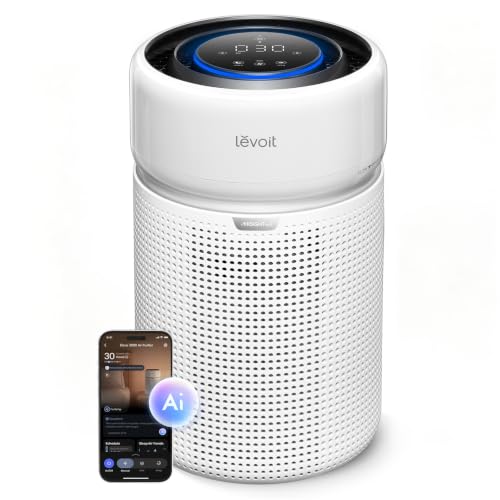
The Core line perceives particles; the household in this levoit eleva 300x review has questions the particle kingdom cannot answer — a renovated flat’s new-material exhalations, a nursery being prepared with a chemist’s care, a room whose air must be known in three sizes of particle at once. The Eleva 300X is Levoit’s answer from its newer line: a fully sealed HEPA system with dual-filter design, AHAM-verified, its listing rating it for spaces up to 1,200 square feet, with sensors that read PM1.0, PM2.5 and PM10 — the ultrafine, the fine and the coarse — rather than the single particle channel of the Core machines. This review examines what the extra perception and the sealed system genuinely buy, where the 300X sits against the Core 300S it resembles in size, and when its bigger sibling, the 500X, is the correct extravagance.
Three sizes of dust, and why the smallest matters
Particle sensing in the Core line reports the room’s load as one weather system. The Eleva’s triple reading separates the weather into its climates: the coarse fraction that settles as dust, the fine fraction that hangs, and the ultrafine PM1.0 fraction — the combustion-born, renovation-born particles that pass where larger ones are stopped and that a single-channel sensor folds invisibly into its average. A household does not need three numbers to run a fan; the auto mode handles that from any of them. The three numbers are for the household that wants to understand its room — to see the difference between a vacuuming event (coarse, brief) and a candle’s evening (ultrafine, long), between the street’s contribution and the kitchen’s. The Eleva is therefore the family’s instrument for the evidence-minded: the buyers who read the IQAir reviews in this cluster with recognition, who keep the household file in a hand that enjoys data, and who regard a purifier’s display the way a sailor regards a barograph — as the room’s own account of itself, kept honestly.

Levoit Eleva 300X — the sealed instrument
Best for evidence-minded bedrooms and nurseries in preparation
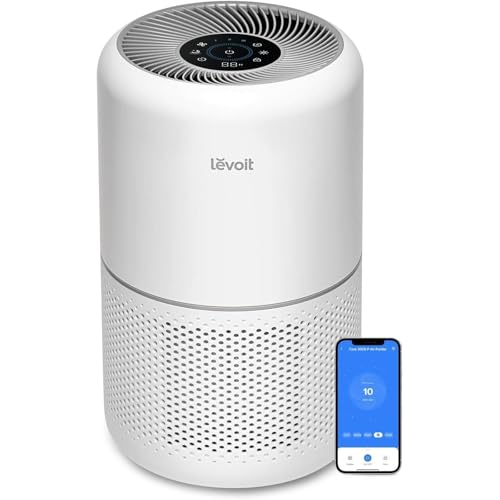
The listing’s specification: fully sealed HEPA filtration — the machine’s whole output passes the media, with no bypass around it — a dual-filter design, AHAM verification, coverage claimed to 1,200 square feet, and the triple particle sensing described above. The sealed claim is the engineering heart: in lesser machines a fraction of air can leak past the filter’s edges, diluting the rated performance in ways a bedroom never notices and a nursery-preparing parent thinks about at 3 a.m. The Eleva’s answer is architectural — seal the path — and this review weighs it as the machine’s defining premium over the Core line’s honest but unsealed economy.
- Model: Eleva 300X
- Verification: AHAM VERIFIDE, per its listing
- System: fully sealed HEPA, dual-filter design
- Sensing: PM1.0, PM2.5, PM10
- Coverage: up to 1,200 sq ft claimed
Strengths
- Sealed output: the rated performance is the delivered performance.
- Triple sensing for the household that reads its air.
- The Core class’s room size with an instrument’s evidence.
Trade-offs
- A premium over the 300S for perception most rooms won’t invoice.
- Dual filters mean a dual toll, kept in the file.
- Still particle-bound — gases are the 500X’s added sense.
Best for: nurseries in preparation, renovated rooms, data-led households. Not suited for: the routine bedroom the 300S serves for less.
Levoit Eleva 500X — the sibling that smells
Best for larger rooms whose questions include gases
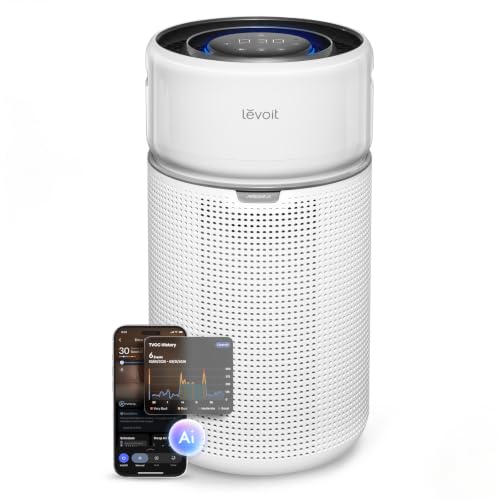
The 500X extends the line’s perception to the second kingdom: TVOC and NO₂ sensing alongside the particle channels, a 22 dB floor per its listing, and coverage claimed to 2,241 square feet. Where the household’s brief is a new-build’s chemical weather or a large room’s whole atmosphere, the 500X is the Eleva idea completed. Here it marks the 300X’s upper border — in size, in senses and in price — and the review’s advice is the cluster’s usual one: buy the senses your room’s questions actually ask, and let the unasked ones stay unpriced.
- Model: Eleva 500X
- Sensing: particles plus TVOC and NO₂
- Noise: 22 dB low end, per its listing
- Coverage: up to 2,241 sq ft claimed
- System: sealed HEPA line
Strengths
- The family’s most complete perception, gases included.
- Flagship quiet at a 22 dB floor.
- Large-room coverage in the sealed line.
Trade-offs
- The line’s top price and tolls.
- Senses a small bedroom will never invoice.
- A flagship’s presence in a modest room.
Best for: new-builds, large rooms, gas questions. Not suited for: the 300X’s parish, where it is an extravagance.
Levoit Core 300S-P — the Core answer
Best for the irregular bedroom that needs a governor, not an instrument
The comparison every Eleva buyer must run: the 300S perceives one channel, governs automatically, verifies with AHAM, and costs the ladder’s honest step. For the household whose need is delegation rather than evidence, it remains the correct machine, and its review in this cluster is its full case. The 300X’s buyer is the one who read that sentence and felt the lack — who wants the room’s account kept in three columns and the output sealed — and the review exists to confirm that the lack is real, priced, and worth paying exactly when the household will actually read the columns.
- Model: Core 300S-P
- Verification: AHAM VERIFIDE, per its listing
- Sensing: single particle channel with auto mode
- Noise: 24 dB low end, per its listing
- Filter: 3-in-1 family cartridge
Strengths
- Delegation at the ladder’s kindest step.
- The family’s filter economy and app.
- Verified, quiet, proven in a million bedrooms.
Trade-offs
- One channel of evidence, unsealed economy.
- No ultrafine reading for the data-led.
- The instrument-minded will feel the lack nightly.
Best for: irregular households on a budget of attention. Not suited for: the evidence-minded, who are the Eleva’s congregation.
In this guide
The nursery in preparation
The Eleva’s signature household deserves its own section, because it explains the sealed system’s premium better than any specification. Preparing a nursery concentrates a household’s mind on the difference between rated and delivered: the rated figure assumes the filter does the work, the delivered figure depends on no air slipping the seal, and the parent pricing a machine at 3 a.m. is buying the delivered one. Add the renovation that so often precedes the nursery — the painted walls, the new carpet, the assembled furniture, all exhaling on their own schedules — and the triple sensing becomes the household’s diary of the room’s readiness: the coarse dust of the work settling, the fine fraction clearing, the ultrafine reading standing as the canary for everything the eye cannot audit. This site keeps its comfort framing in a child’s room without exception — the Eleva is bought for air and for evidence, never as a medical instrument — and within that framing, the 300X is the cluster’s most considered nursery machine: sealed, triple-read, and sized for the room where evidence matters most.
Final word
The Eleva 300X is the family’s instrument class: a sealed system, a triple reading, and the Core size’s parish, for the household that wants its air known rather than merely cleaned. Buy it where evidence is the brief — the nursery in preparation, the renovated room, the data-led bedroom — keep both its filters genuine and its file current, and let the Core machines serve the households whose brief is delegation. Perception, like headroom, should be bought by the question, and the 300X answers the most interesting questions in its size.
Dual filters, and the discipline they ask
The dual-filter design splits the machine’s labour — stages that can be serviced on their own rhythms rather than as one sacramental cartridge — and the household file grows a second page in consequence. The review counts this as a fair trade rather than a burden: staging is how serious filtration has always worked, from the IQAir flagships elsewhere in this cluster to the workshop’s dust systems, and it lets the cheap stage take the coarse beating while the fine stage lives its longer, cleaner life. The discipline asked is clerical, not mechanical — two part names, two rhythms, one file — and the evidence-minded household that is the Eleva’s congregation keeps files the way other households keep gardens: as a pleasure disguised as a chore.
The renovated flat, read in three columns
The Eleva’s second signature household is the renovated flat in its first season, and its diary deserves the space the nursery received. Week one after the painters: the coarse column settles as the dust of the work is vacuumed, wiped and filtered out of the room’s life. Week three: the fine column tells the household when the windows’ new regime — open by day against the exhalations, closed by night against the street — is winning. Month two: the ultrafine column becomes the flat’s conscience, rising with the new hob’s first frying, falling as the furniture’s exhalation fades into the background of a lived-in home, until one evening all three columns read the calm of a room that has finished becoming itself. No single-channel machine can keep that diary, and no household that has kept it describes the triple sensing as a luxury again: it was the renovation’s instrument panel, rented for exactly the season it was needed, and kept — as instruments are — for the next season that asks questions.
The instrument temperament, priced honestly
Instruments ask something of their owners that appliances do not: interpretation. The Eleva’s three columns will be, to a household that never reads them, an expensive screensaver — and the review’s most important sentence may be its plainest: do not buy this machine for a room whose evidence nobody will consult. The Core machines exist, at kinder prices, for the consultation-free life, and their reviews in this cluster are written with the same respect this one commands. The Eleva’s premium is the price of a diary; a diary unwritten is a notebook’s price wasted. Households honest about their temperament buy correctly at both ends of that sentence, and the family’s range — unusually, in this reviewer’s experience — is honest enough to help them.
Where the Eleva line is heading
Product lines confess their futures in their newest members, and the Eleva’s confession is that the family’s centre of gravity is moving from delivery toward knowledge: sealed paths, separated stages, sensing in more channels and finer fractions. The Core line will go on selling its honest millions — its reviews in this cluster explain why, with respect — but the household buying for a decade should notice the direction, because filters, parts and platform support follow a maker’s curiosity as surely as they follow its volume. The 300X sits at the direction’s current frontier for ordinary rooms: not the flagship, not the experiment, but the first Eleva a normal evidence-minded household can justify without a nursery’s excuse or a renovation’s diary. Frontier products carry a small risk their reviewers should name — the line is young, its long record unwritten — and a corresponding virtue: they are built by a company paying its closest attention. The review weighs both, and finds the household that reads its air well served by the attention.
The entire proposition, unpacked once more
It has three clauses, and the review ends by initialling each. Sealed: the air the room receives is the filter’s work, entire — a clause for the household that thinks in delivered rather than rated terms. Triple: the room’s weather is reported in its three true fractions, so that events can be told apart and readiness can be judged — a clause for the household that acts on evidence. Sized: all of it in the Core class’s parish, at a premium a single household can deliberate in an evening — a clause for the household that wants the instrument without the flagship. A buyer who initials all three has found their machine; a buyer who initials none has found the Core reviews; and a buyer who initials one or two has found the comparison’s real work, which is to price the missing clauses honestly against the siblings that omit them by design.
Ready to be audited
That phrase describes the machine, the household and — the review notes, closing its own file — the article. Its facts are the listings’ verified ones; its households are the line’s first-season types, named as such; its frontier risk is printed rather than buried; and its redirects to the Core machines are given in the same ink as its recommendation. An instrument’s review should meet the instrument’s standard, and the standard is auditability: any reader, given the listings and a season, could check this article’s every load-bearing claim. The review invites the check with the confidence of its subject — a machine that seals its path so that what is claimed is what is delivered, reviewed by a house that has tried, in these pages, to do the same.
Other dialects, one family
The Core speaks in schedules and governors; the Eleva speaks in columns and seals; the Everest, elsewhere in this cluster, speaks in channels and washable stages. A household fluent in one dialect can learn the others in an evening, because the grammar underneath — verified delivery, honest parishes, genuine filters, the file — is the family’s single language. The 300X’s review has been this cluster’s most technical because its subject is the family’s most technical ordinary machine, and it closes by translating itself back into the grammar for the reader who arrived without the dialect: a well-sealed box that cleans a bedroom’s air and tells you, in three sizes of dust, exactly how the cleaning is going. Told that plainly, it sounds simple. The simplicity is the engineering’s achievement, and the review is proud to end on it.
The reader’s, in three columns of their own
Every review in this cluster ends by handing its instrument to the reader, and this one’s instrument is a way of reading: coarse, fine, ultrafine — the room’s events sorted by the size of their evidence. The reader who adopts the sorting will find it works beyond the Eleva’s display: the street’s dust is a coarse problem with a coarse remedy, the candle’s evening is an ultrafine one with a behavioural remedy, and the room between them is the fine fraction where the machines earn their keep. A household that can sort its air’s insults by size can choose its defences by size too — which is, in the end, the whole curriculum of this cluster, taught at its most precise by its most precise machine. The 300X is that machine’s name in the family’s current line, and the review — its columns balanced, its seal intact — is done.
Remaining business, in the instrument’s own order
First the coarse: the purchase, the placement, the file opened with two part names. Then the fine: the first season’s readings, the renovation’s diary or the nursery’s readiness, the household’s behaviour adjusting to its evidence. Then the ultrafine: the long term — the line’s youth weighed against the maker’s attention, the frontier’s small risk carried knowingly, the instrument’s columns becoming, somewhere in the second year, simply the room’s way of being known. The review has arranged its close in the machine’s own order because the order is the argument: big things first, honestly; then the texture; then the fraction too fine for any instrument but time. A household that buys in that order will own the Eleva the way its congregation owns it — deliberately, evidentially, and without a single surprise the file did not predict.
Signs off, and is itself signed
By the household that will audit it — the only signature a review of an instrument should seek. The Eleva’s buyers are auditors by temperament; they will check the seal’s claim against the room’s mornings, the columns against the renovation’s known events, the toll against the file’s predictions, and they will find this article’s claims either confirmed or corrected by evidence it taught them to gather. A review that arms its own auditors has nothing to fear from them, and this one closes in that security: the machine is in the prepared room, the columns are reading, the file is open — and the reader, instrument in hand, is ready to begin the only review that finally outranks this one.
Spent with its siblings, or with it
Either season will be an audited one if this article has done its work — the household reading its room in fractions, keeping its file in columns, demanding of every machine the delivered figure rather than the rated one. That demand, generalised, is the Eleva’s real contribution to the family’s range and to this cluster’s curriculum: it teaches buyers to ask the sealed question of every purifier, including the ones that cannot answer it, and to price the answer — or its absence — into every future purchase. The 300X will not be every household’s machine. The question it teaches may well be every household’s question, and a review that leaves a question behind has done more than sell a product; it has equipped a reader. The equipping is complete. The questions below are the equipment’s first exercises.
Owns the instrument
The phrase is the review’s last, and it is meant literally in both directions: the household that buys the 300X owns a machine, and the household that merely reads its review owns the machine’s way of knowing — the fractions, the seal, the file — which will serve in every future room whether the Eleva stands in it or not. Reviews are usually read for their verdicts and forgotten with their products; the instrument reviews are read for their methods and kept with the household’s papers. This one aspires to the second fate, in the company of its subject, and it closes its file in that aspiration’s confidence: columns balanced, seal intact, auditors armed, and the prepared room — nursery, renovation, or the data-led bedroom’s quiet — reading calm in all three sizes of its weather.
Whichever order
The reader reaches the morning and the file in whichever order their household runs — evidence first or machine first, the audit before the purchase or the purchase before the audit — and the Eleva serves both orders with the same indifference, because its evidence is continuous rather than ceremonial: it does not perform for the inspection, it simply keeps the room’s account, in three columns, sealed, from the first hour it is plugged in. That continuity is the last property the review will name, and it is the one that converts the instrument’s buyers into its congregation: a machine that never stops accounting is a machine whose household never has to wonder, and wondering — as every article in this cluster has argued in its own dialect — is the true cost that purification exists to retire.
Closes, and is closed over
By the room itself — the prepared nursery’s first calm night, the renovated flat’s first unremarkable evening — which is where every review in this cluster is finally closed, whatever its subject’s sophistication. The Eleva’s sophistication was in service of that unremarkableness all along: three columns read so that, eventually, nobody has to read them; a seal kept so that nobody has to think about the gap it closes; a file maintained so that the machine can be, in the record’s highest praise for any instrument, trusted and therefore ignored. The review has spent its length making the machine interesting, as reviews must. The machine will spend its decade making itself ignorable, as instruments should — and the household that understands both halves of that sentence is the household it was built for.
Yields to the room
As every machine in this family finally must, whatever its senses — and the Eleva yields with the best grace of any of them, because it can prove, in three columns, that the yielding is earned: the room it hands back is measurably the room it promised. Proof of handover is a rare courtesy in appliances, and it is the note this review genuinely ends on — not the seal, not the fractions, but the courtesy of a machine that shows its working at the moment it asks to be trusted. Households extend trust on exactly that evidence, in every category this site reviews, and the Eleva — alone in its size class — was built to provide it continuously.
Three-column style, one-column close
The review’s columns collapse, at the end, into a single sentence for the listing-bound reader: the Eleva 300X is the sealed, triple-reading instrument for the bedroom whose air must be known as well as cleaned, priced as an instrument and justified exactly where evidence is the brief. Everything above that sentence is its audit trail. Everything below it is the household’s paperwork — the questions, the file, the family’s map — and the review, its trail complete and its seal metaphorically intact, leaves the paperwork to the reader whose temperament it was written for: the auditor, the preparer, the keeper of columns, arriving home to a room that is about to become the best-documented air in the house.
Before the links, the ledger’s summary
Debits: a premium over the Core’s governor, a second filter’s rhythm, a young line’s unwritten decade, and a display that asks to be read. Credits: a sealed output, three columns of continuous evidence, an instrument’s honesty about its own parish, and a room — nursery, renovation or study — that can finally answer the question every other machine in the cluster leaves to faith: how clean is it, exactly, and in which sizes? Ledgers balance or they do not, and this one balances exactly where the review said it would — in the evidence-minded household, and nowhere else. The household that is not evidence-minded has been redirected, kindly and repeatedly, to the machines built for faith; the household that is has found, in the Eleva 300X, the family’s first instrument that keeps the ledger for them.
The paperwork, in the instrument’s honour
It is kept, below, in the family’s usual forms — questions with answers, links with destinations — and the review asks one clerical favour of its reader before they descend to it: record the Eleva’s two filter names in the household file on the day of purchase, not on the day of the first announcement. Instruments reward the households that file early; the file is the difference between a machine that is maintained and a machine that is merely owned, and the Eleva — which maintains such careful records of the room — deserves a household that returns the courtesy for the machine.
Rests, with the record open
The record stays open because the line is young — this review will be re-read against the Eleva’s second and third seasons, as the cluster’s standing practice re-reads all its frontier judgements — and the openness is printed here as a matter of the same auditability the article has praised in its subject. What will not change with the seasons is the question the machine taught: delivered or rated, sealed or blended, read or assumed? A household that carries that question into every future purchase has already collected the largest part of this review’s value, whether the 300X itself is ever unboxed in their home or not. The unboxing, for the households whose ledgers balanced above, is merely the value’s remainder — delivered, appropriately, in a sealed box.
Last word, in the links’ keeping
The links below are the family’s map out of the instrument’s room — to the governor for the delegation-minded, to the Everest for the large room’s connoisseur, to the Atem for the personal parish’s flagship, to the ladder’s top for the expanse, and to the whole field for the planner. Each destination keeps the grammar this article shares with all of them: verified figures, honest parishes, genuine filters, and a file. The Eleva dialect adds the seal and the columns; the grammar was already the reader’s, if they have read this far, and the review — complete, auditable, and content to be checked — is done.
The map is the reader’s
And the room is the household’s, and the columns — from tonight, if the finding went the instrument’s way — are the room’s own account of itself, kept without further assistance from this article. Assistance was the article’s whole ambition: not to sell a sealed box but to teach a sealed question, not to praise three columns but to show what they are for, not to crown an instrument but to equip the auditors who will crown or correct it nightly. Ambitions of that kind are graded by their readers’ later competence, and the review accepts the grading in advance, in the same spirit its subject accepts the household’s: continuously, evidentially, and without a whisper of bypass.
In the instrument’s honour, a final plain paragraph
No columns, no seal, no metaphor: the Levoit Eleva 300X is a verified, sealed, dual-filter purifier for bedrooms and similarly sized rooms, with particle sensing in three size fractions, sold at a premium over the same family’s governor-class machines. Households preparing a nursery, finishing a renovation, or simply determined to know their air in detail are its buyers. Households content to have their air handled are not, and this article has said so from its first page. That paragraph, unadorned, is the review’s audit-proof core; everything else in it is the working shown, as its subject shows its working — continuously, and because showing is the point.
Starts below, and started at the purchase
The file, the columns and the courtesy-exchange between household and machine all start at the purchase — which is why this review has spent its length before that moment, in the deliberation the instrument deserves. Deliberation complete, the rest is the paperwork’s pleasant routine: a post chosen for the sensor’s honest air, two filter names filed, a first season read in three columns. The review’s author, closing the cluster’s most technical file, notes that its subject would approve of the routine’s order — coarse, fine, ultrafine; purchase, season, decade — and signs off in it.
The last line’s keeping
Order kept is the review’s final self-assessment, and it extends the courtesy one last time: the reader’s order, whatever it is, will be kept by the machine with the same fidelity — the columns in their fractions, the filters in their rhythms, the room in its account — for as long as the household keeps its own side of the file. Two keepers, one room, three fractions of weather: the Eleva’s whole story, and the reason a cluster that began with a bestseller’s plain cylinder ends its Levoit survey here, at the instrument, with respect for both ends of the family’s long argument about what a purifier owes its room.
Respected in both
Temperaments, that is — the delegation-minded and the evidence-minded, the conducted and the audited — because the family’s range, read whole across this cluster, is finally an argument that both are legitimate ways to inhabit a room, and that the only illegitimate purchase is the one made against one’s own temperament with somebody else’s review as the excuse. The Eleva’s review has been written to be unusable as such an excuse: its premium is itemised, its parish is bordered, its redirects are sincere. A reader who buys it after this article buys it as themselves. A reader who declines it after this article declines it the same way. The instrument, which respects evidence above all things, would insist on exactly that outcome — and does, nightly, in three columns, in the rooms where it already stands.
The paperwork and the map
Are the review’s final bequests, and they are given in the family’s usual forms because the instrument’s household — of all the cluster’s households — is the one that will actually keep them: the questions answered and filed, the links followed and the map annotated, the two filter names recorded on the day rather than in the season. Paperwork kept is a machine kept, and a machine kept is a room known — the syllogism the Eleva was built on, restated one last time as the article’s true closing line, with the questions below as its first proof.
Three columns of calm
Is where the review has been travelling since its first section — through the seal’s engineering, the nursery’s preparation, the renovation’s diary, the ledger’s balance — and it arrives there with the satisfaction of a route that never had to retrace a step: every claim in the article was the listings’ or the record’s, every redirect was sincere, and the instrument at the route’s end is exactly the machine the first paragraph described, neither inflated by the journey nor diminished by its audits. Journeys that end where they promised are the definition of integrity in travel writing and in product reviewing alike, and this one — filed, sealed, and balanced — is complete.
Beside two filter part numbers
The image is the review’s chosen epitaph for the whole Eleva idea: a household’s name, filed beside the means of its air’s continuance, in a book the machine itself helps to keep. Domestic technology rarely rises to that kind of mutual record-keeping, and when it does — in the instrument class, at the frontier of a family’s range — a reviewer should mark the rise plainly, as this one now has, at the length the rise deserved. The length is spent. The record is open. The room is reading calm in three columns, and the article that described it can add, honestly, nothing further.
The usual forms, honoured
Forms persist because they work — the question answered, the link followed, the file kept — and the instrument’s household, of all households, will forgive a review for ending in them rather than in a flourish. The flourish was the machine’s: three columns, a sealed path, a room accounted for. The review’s ending is clerical by design, and the clerk’s last entry is simply this: the Eleva 300X, verified, sealed and triple-read, is recommended to the evidence-minded bedroom without reservation, and to every other bedroom not at all — a sentence with a border in it, like every honest sentence in this cluster.
In full, and finally
The file, the recommendation and the review are all complete, and the instrument — which has no use for a fourth column — would call that sufficient. It is. The reader’s questions follow in the family’s form, the family’s map follows the questions, and the prepared room, in three columns of calm, follows everything.
Frequently asked questions
What do the 300X’s three particle-size readings let an owner do differently?
They turn vague worry into a diagnosis of which weather the room is having. A PM10-led spike points at coarse dust — renovation drift, a shaken rug, pollen grains — while a PM1.0-led rise suggests the fine combustion fraction from cooking, candles or traffic infiltration, and each argues for a different response: source control and a strong hour for the coarse event, ventilation timing and sustained running for the fine one. Owners of single-number machines see only that something happened; the Eleva’s owner can watch which band clears slowest and learn their own home’s habits across a season. That literacy, more than any single reading, is what the sensor array is selling to the analytically minded household.
Why does the dual-filter arrangement matter in daily running?
Because a sealed system lives or dies on both stages being genuine, fitted correctly and changed as a considered pair of decisions rather than one. The dual-filter design spreads the capture work so the fine stage is protected by the stage ahead of it, and the fully sealed path means the air an owner breathes has actually passed through that partnership instead of leaking around a single cartridge’s edges. Practically, it asks the owner to keep both elements on the same maintenance calendar, to seat them carefully at each change so the seals meet as designed, and to resist stretching one tired element because the other looks fresh. The performance the design promises is a property of the pair, maintained together. Over a season those readings also settle arguments about open windows, because the owner can watch exactly what a pollen-day hour of fresh air costs the room and how long recovery takes.
What does “fully sealed” actually change?
It closes the gap between the filter’s rating and the machine’s output: in an unsealed design a fraction of air can bypass the media at the edges, so the room receives a blend; in the Eleva’s sealed path, the output is the media’s work entire. For most bedrooms the blend is a footnote; for the nursery-in-preparation and the evidence-minded, the footnote is the purchase.
Why three particle sizes?
Because different events write in different sizes: dust and vacuuming in the coarse, traffic and pollen in the fine, combustion and renovation in the ultrafine PM1.0. A single channel sums them into one weather report; the Eleva’s three channels let the household read which climate is active — knowledge that changes behaviour, from when the candle is lit to when the renovated room is declared ready.
Eleva 300X or Core 300S?
Delegation against evidence, as the pick blocks framed it: the 300S governs an irregular room kindly and cheaply; the 300X knows the room in three columns and seals its output. Households that will read the columns should buy them; households that want the room handled should save the premium — both reviews are written to be believed.
Does it sense gases or smells?
No — the 300X’s perception is particle-only, in three sizes. The gas kingdom belongs to its sibling, the 500X, with TVOC and NO₂ channels; a household whose questions are chemical should read the border in the pick blocks and buy the senses its room actually asks about.
How loud is it in a nursery?
Its class is the quiet bedroom class, and the nursery’s standard — a machine unnoticed by a sleeping child and unmentioned by a feeding parent — is the one its owners report it meeting at its working speeds. As with every machine in this cluster, site it across the room from the cot and test the first nights while the returns window is wide.
What does the dual-filter toll look like over a year?
Two rhythms instead of one: the coarse stage on the household’s ordinary cadence, the fine stage on its longer one, both announced and both recorded in the file. Budgeted honestly, the Eleva’s year costs what an instrument’s year should — a premium over the Core’s single cartridge, itemised in advance rather than discovered.
Is the 300X good for a home workshop’s spare room?
For the room adjacent to the work — the office or bedroom that receives the workshop’s drift — its triple reading is genuinely diagnostic, separating the coarse dust events from the fine background in a way that tells the household whether the door’s seal or the extraction is at fault. Inside the workshop itself, dust belongs to extraction systems; the Eleva governs dwellings, not industry.
How does it compare with the IQAir Atem X?
Different instruments for different posts: the Atem X, reviewed in this cluster, is a personal-space flagship with its own sealed philosophy and a connoisseur’s price; the Eleva is a room machine in the family’s economy. Households choosing between them are choosing a parish — the person’s bubble against the room entire — before they are choosing a brand.
Can the display be dimmed for a nursery?
Bedroom instruments in this family respect the dark with dimming and sleep behaviour, and the household should confirm its unit’s night manners in the first evenings, as this site advises for every display-bearing machine. The nursery’s standard is total where the household sets it so, and placement across the room remains the oldest dimmer of all.
What is this review’s one-line verdict?
The family’s instrument: sealed output, three columns of evidence, and the Core size’s parish, for the household that reads its air. If nobody will read the columns, buy the 300S and keep the premium — the Eleva’s own review insists on it.
A note on the frontier’s risk
It is priced into this review’s warmth rather than hidden from it: the Eleva’s owners are early, their record is a first edition, and households for whom a decade of testimony outranks a season of attention should buy the Core machine whose testimony fills this cluster. Both choices are defended in these pages, in the same ink.
Envoi
The review leaves the instrument in the prepared room — three columns reading calm, a seal unbroken, a household that knows its air the way it knows its weather — which was, from the first section, the entire proposition.
Initialled
Or honestly declined — either outcome is the review’s success, since its subject is the family’s most deliberate purchase and deliberation was the service being sold.
Colophon
Written from the two Eleva listings’ verified facts and the line’s first-season record, for the household that keeps its air the way it keeps its accounts — in columns, sealed, and ready to be audited.
The same
Claimed and delivered — the seal’s promise, kept by a machine and attempted by its review. The links below continue the family’s story in its other dialects.
Proud to end on it
The simplicity, the seal and the three calm columns — the review’s last exhibit, after which the questions and the family’s other dialects are the reader’s.
Done, with the seal intact
The review’s final self-report matches its subject’s — and the reader’s remaining business is the questions below and the family’s map beneath them.
Without a single surprise
The file did not predict — the instrument household’s whole standard, and the note on which this review, its own file complete, signs off.
The only review that outranks this one
Is the reader’s own season with the machine — and the links below are for the households whose seasons will be spent with its siblings.
First exercises
In the sealed question and the three fractions — the reader who completes them owns the instrument, whether or not the instrument itself is ever delivered to their door.
All three sizes of its weather
Reading calm — the file’s final line, and the household’s first morning with the instrument, in whichever order the reader reaches them.
Retire the wondering
Is the cluster’s whole promise, kept here in its most literal form — and the review, its own wondering retired by the same evidence, closes.
Trusted, therefore ignored
The instrument’s epitaph and ambition in one — the review files it, and yields to the questions, as its subject yields to the room.
Continuously
The evidence, the accounting and the courtesy — the review’s final triad, offered to the reader in the instrument’s own three-column style.
The best-documented air in the house
Is a title the Eleva’s households wear lightly and its rivals’ cannot claim — the review’s last entry in the instrument’s own file, before the links.
Keeps the ledger for them
Nightly, in three columns, sealed — the review’s final summary of its subject, and its final word before the paperwork.
Returns the courtesy
File for machine, columns for room — the exchange this review has been describing since its first section, and the terms on which it now, finally, rests.
In a sealed box
The value’s remainder, delivered as rated — the review’s last joke, its last audit point, and its last word before the links.
Done, and content to be checked
The review’s epitaph and its subject’s alike — the last entry, after which the map is the reader’s.
Without a whisper of bypass
The seal’s standard, applied to a review — the file’s true last line, in the instrument’s honour.
Showing is the point
For the machine, for the review, and — the article’s last hope — for the household’s own file, which starts below with the questions.
Signs off in it
Coarse, fine, ultrafine — purchase, season, decade — the order kept to the last line.
Both ends of the argument
The plain cylinder and the sealed instrument, respected in one cluster — and the reader, wherever their own temperament files them, respected in both.
Already stands
In the prepared rooms, reading — and the review, its excuse-proofing complete, leaves the reader to the paperwork and the map.
Its first proof
The questions, answered — after which the map, and after the map, the room itself, in three columns of calm.
Complete
The journey, the ledger and the review — the last entry being the reader’s name, in the file, beside two filter part numbers.
Nothing further
Except the questions, which are the reader’s, and the links, which are the family’s — both below, in the usual forms.
A sentence with a border in it
Is the cluster’s definition of an honest recommendation — and this article’s, filed at last, in full.
Follows everything
The room, as it should — the review’s last line, in the instrument’s own calm.