Disclosure: As an Amazon Associate, dailyhomedecorating.com earns from qualifying purchases. Links on this page are affiliate links; they cost you nothing extra. Prices and availability change often, so check the current Amazon listing before you buy.
The open-plan house abolished the door, and with it the bedroom purifier’s whole strategy of defending one closed room at a time. This levoit core 600s review examines the machine Levoit built for the merged expanse — kitchen, dining and sitting in one body of air: a smart purifier, AHAM-verified, its listing rating it for rooms up to 2,933 square feet, with app and Alexa control and the largest cartridge in the Core family’s economy. The marketing number is, as ever, a maximum-speed abstraction; the lived truth is that the 600S is the first rung of the ladder whose headroom honestly covers the open plan’s ordinary day. This review draws its borders — the doored living room below it, Blueair’s rival flagship beside it — and reports from the houses that cook, live and receive in a single undivided room.
The open plan is a different country
Everything about purification changes when the walls come down. The volume triples; the kitchen’s industry shares its air with the sofa directly, with no door’s mercy between the frying pan and the cushions; the street door opens into the living space itself; and the room’s far corners become a provinces problem — air must not merely be cleaned but circulated across distances a bedroom fan never contemplates. Undersized machines in this country do not fail dramatically; they fail geographically, keeping a clean parish around themselves while the far end of the room keeps its own weather. The 600S’s design brief reads like an answer to that geography: verified delivery with the headroom to hold the whole expanse at a middle speed, a sensor to govern a space too large for any occupant to read from one chair, and a filter sized for a load that includes dinner. It is the family’s flagship for a reason of architecture, not of vanity, and the review will treat it as such — including the households whose architecture does not need it, for whom it is the ladder’s most expensive way to buy the same clean room the 400S provides.

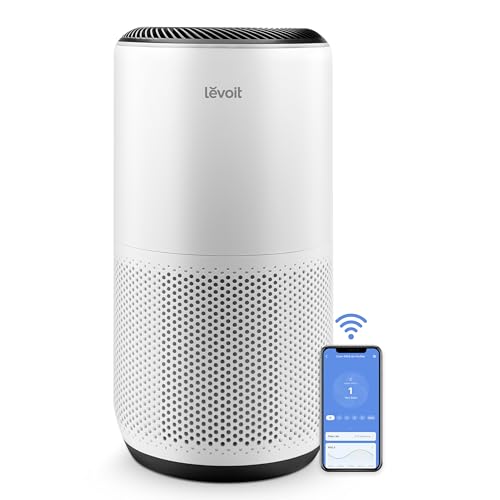
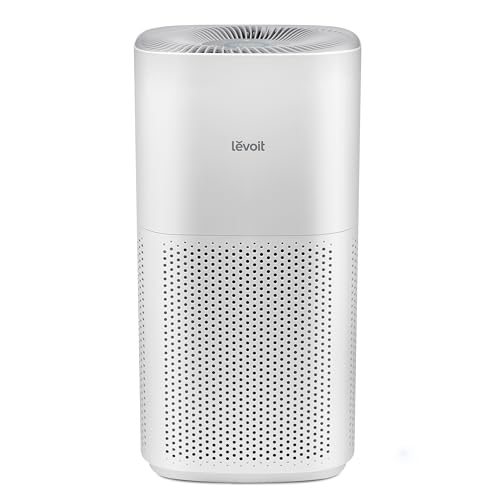
Levoit Core 600S-P — the open plan’s flagship
Best for merged kitchen-living spaces and large open rooms
The listing’s specification: smart air purifier with app and Alexa control, AHAM-verified, rated to 2,933 square feet at the marketing’s arithmetic, with the family’s 3-in-1 architecture scaled to its largest common cartridge. In the open plan the verification matters more than anywhere in the range, because the room’s size tempts every maker to poetry; the AHAM figure is the prose. Read it against the doctrine of headroom — the room’s ordinary day met at a middle speed — and the 600S’s honest parish emerges: the standard open-plan ground floor, the loft’s living level, the big farmhouse kitchen-diner, held by one machine where two smaller ones would feud over the same air.
- Model: Core 600S-P
- Verification: AHAM VERIFIDE, per its listing
- Control: app, Alexa, smart features
- Coverage: up to 2,933 sq ft claimed
- Filter: family’s largest Core cartridge class
Strengths
- Headroom for the merged room’s whole day, cooking included.
- One governor for a space no single chair can read.
- Verified delivery at the ladder’s top, in the family’s economy.
Trade-offs
- The Core range’s steepest filter toll and purchase step.
- A hall-sized presence that smaller rooms feel as furniture.
- Wasted behind a door — the 400S’s parish is real.
Best for: open-plan ground floors, lofts, kitchen-diners. Not suited for: doored living rooms or any bedroom.

Levoit Core 400S-P — the doored room’s keystone
Best for the family living room that still has walls
The downward border, drawn architecturally: if the living space closes with a door, the 400S serves it with headroom to spare, at a kinder price and toll, and the 600S’s extra capacity buys nothing the room can invoice. Its review in this cluster makes the keystone’s case in full. The pair of machines divide the housing stock between them almost without remainder — the door is the border, and this review’s loyalty is to the border rather than to the flagship.
- Model: Core 400S-P
- Verification: AHAM VERIFIDE, per its listing
- Features: air quality monitor, auto mode, Alexa
- Coverage: up to 1,718 sq ft claimed
- Filter: family 3-in-1 architecture
Strengths
- The doored room’s complete answer.
- Perception and headroom at the middle toll.
- The fleet’s natural first purchase for most houses.
Trade-offs
- Outrun by the merged expanse, geographically.
- Still a public room’s presence and price.
- No answer to the open plan’s far corners.
Best for: doored family rooms. Not suited for: the open plan that is this review’s country.

Blueair Blue 211i Max — the rival flagship
Best for the open-plan household that prefers HEPASilent’s quiet
Across the aisle stands Sweden’s answer to the same architecture: the Blue 211i Max, HEPASilent technology, AHAM-verified, its listing rating it to 3,235 square feet with a 23 dB floor and WiFi auto features. The cluster’s head-to-head between the two flagships argues the seam in full — filtration philosophies, noise at working speeds, the price of their respective silences. Here the Blueair marks the 600S’s competitive border: the Levoit wins households on its ecosystem, its app and its filter economy; the Blueair wins them on its hush and its design. Neither victory is available to a doored room, which should buy neither flagship and keep the change.
- Model: Blue 211i Max
- Verification: AHAM Verified, per its listing
- Technology: HEPASilent
- Coverage: up to 3,235 sq ft claimed; 23 dB low end
- Control: WiFi, auto features
Strengths
- Flagship delivery with a class-leading quiet floor.
- Verified at the open plan’s scale.
- A design object as well as an appliance.
Trade-offs
- Its own ecosystem’s tolls and prices.
- A rival app for a VeSync household to keep.
- The same door rule: wasted in a small closed room.
Best for: open-plan households prioritising quiet. Not suited for: the Levoit fleet’s loyalists, or any doored room.
In this guide
Governing a space too big to read
The open plan defeats the human sensorium: no occupant can smell the far corner, and the cook cannot judge the sofa’s air from the stove. The 600S’s sensor therefore does a different job from its bedroom siblings’ — not refining a reading the owner could make, but making a reading no owner could. Placement becomes statecraft: the machine must stand where the room’s air mixes, typically at the border between the kitchen’s industry and the sitting’s calm, so that its governor reads the average it governs and its fan’s output reaches both provinces. Households that site it in a corner behind the dining table’s lee discover the geography lesson the hard way — a clean parish and a neglected capital — while the border placement turns the whole expanse into one governed room. The review’s placement counsel is the article’s most consequential paragraph, and it is short because the principle is: stand where the room mixes, with clearance, and let the flagship govern from the centre of its country rather than from exile at its edge.
Final word
The Core 600S is the family’s answer to the house without doors: verified headroom, a governor for a space too large to read, and a filter economy that keeps the flagship’s toll inside the household file’s discipline. Buy it for the merged expanse, site it at the room’s mixing point, and let the doored rooms of the world — most bedrooms, many living rooms — buy its siblings with the review’s blessing. Architecture chooses this machine; nothing else should.
The kitchen inside the room
In the open plan the purifier attends every meal’s manufacture, and the 600S’s working character is set by that attendance. A frying night in a doored house is an event behind a door; in the open plan it is the room’s whole atmosphere, seasoned in real time, and the machine’s auto mode performs the evening’s central domestic labour: intercepting the industry at the border, holding the sitting end at the standard the household chose, and retiring the smell before the cushions can archive it. Hosts of dinner parties in open-plan houses describe the machine in the vocabulary of good staff — unobtrusive, anticipatory, invisible in its competence — and cooks describe something rarer: permission to cook boldly in the room where the guests are sitting. A purifier that changes what a household dares to cook has crossed from appliance into architecture, and the review counts that crossing as the flagship’s real specification, the one its verified delivery makes credible and its headroom makes nightly.
The far corner problem, solved and unsolved
Honesty about the flagship’s limits begins at the room’s far end. Even the 600S’s delivery obeys physics: the corner behind the bookshelf’s return, the reading nook under the stairs, the mezzanine’s still air — these microclimates sit at the edge of any single machine’s circulation, and the household that expects laboratory uniformity across a loft will be disappointed by every product in the category. What the flagship buys is not uniformity but governance: the room’s great body of air held at the standard, with the microclimates improved by proximity and by the household’s own small mercies — a door’s wedge, a ceiling fan’s slow stir, the machine’s placement at the mixing point rather than in a province. The review states this plainly because the open-plan buyer is the category’s most disappointed customer when sold a fantasy, and the 600S’s real virtues — headroom, perception, economy — need no fantasy’s assistance.
A season in the merged room
Autumn brings the flagship its first full campaign: the slow cooker’s Saturdays, the homework spread across the dining table that is also the desk that is also the party’s buffet, the dog’s wet returns crossing the whole expanse because there is no door to intercept them. The machine governs from its border post, and the household’s autumn discovery is that the room has acquired a climate — a word previously reserved for the house as a whole. Winter tests the seals: the expanse loses its air to every opening of the street door, and the 600S’s headroom, loafing in October, earns its keep in January without ever sounding strained. Spring stages the pollen confrontation in its purest form, since an open plan cannot retreat to a clean bedroom’s strategy at the scale of its day; the machine holds the expanse, the windows open on the monitor’s evidence rather than on hope, and the household learns its own microclimate’s calendar. By summer the flagship has become what the review promised: not a product in the room but a property of it, like its light.
The loft, the farmhouse and the new-build
Three architectures dominate the flagship’s ownership record, and each teaches a different lesson. The loft teaches circulation: ceiling heights that mock floor-area arithmetic, answered by the headroom doctrine applied to volume rather than to the listing’s flat geography. The farmhouse kitchen-diner teaches load: a working kitchen’s industry, a stove, a boot room’s traffic, all in one air, answered by the filter’s size and the sensor’s patience. The new-build open plan teaches the border: a designed expanse whose maker never specified where its air would be governed from, answered by the placement statecraft this review has made its centrepiece. A household in any of the three will find its own lesson already learned in the record; a household in none of them — a flat with doors, a cottage of small rooms — should close this review with thanks and open the 400S’s, because the flagship’s virtues are architectural and their architecture is not its country.
The flagship’s economy, audited
Flagships invite a suspicion that their price is theatre, and the 600S’s accounts deserve the audit the suspicion demands. The purchase step over the 400S buys delivery the smaller machine does not have — verified, not advertised — and a cartridge scaled to the load that delivery serves. The running toll is the family’s steepest, and it is spent in a room whose alternative is not economy but inadequacy: a 400S at its ceiling in the same expanse consumes its own filter at a comparable rhythm while delivering a worse-governed room and an earlier replacement conversation. Audited across a five-year horizon in a true open plan, the flagship is not the expensive option; it is the only option whose accounts close. In a doored room the same audit convicts it instantly, which is why this review has kept the door at the centre of its argument from the first page: the flagship’s economy is exactly as honest as the architecture it serves, and no more portable than that.
The second machine question
Open-plan households ask, sooner than most, whether the flagship wants a deputy — a bedroom machine for the night’s third of life. The fleet doctrine answers yes, in its own time: the bedrooms behind their doors keep their own weather whatever the flagship governs in the expanse, and the household that has tasted governed air in its living space usually extends the government within a year. The 600S’s app makes it the natural admiral of that fleet, and its review notes the phasing with approval: flagship first for the waking hours, a 300S or a conducted 300 for the sleeping room when the budget’s rhythm admits it, the whole house’s filters in one household file. The flagship, in other words, is rarely a household’s only purifier for long — not because it fails the bedrooms, but because it succeeds in the expanse loudly enough to make the bedrooms’ older arrangements audible.
The paradox of headroom, stated once more for the listing-bound
A machine loafing is a machine believed in: that sentence, which this cluster has applied at every rung, reaches its fullest meaning at the flagship, because the open plan is the room where a strained machine is most audible, most visible and most quickly forgiven nothing. The 600S’s whole design — the verified delivery, the scaled cartridge, the governor’s sensor — exists to keep the expanse’s ordinary day in the loafing half of its range, so that the household’s experience of the largest purifier in the family is, paradoxically, of the least obtrusive. Buyers comparing flagships on their maximum numbers are comparing the wrong end of the dial: the maximum is for the party and the plume, and it is the middle of the range, where the machine will actually live, that decides whether a household loves it in year three. On that middle, the record is unambiguous, and the review is content to rest the flagship’s case there rather than on any banner figure — including the 2,933 square feet with which its own listing leads.
What the flagship’s owners stopped doing
The ownership record’s most eloquent data is a list of abandoned behaviours. They stopped closing the kitchen off with a fan in the doorway, an older house’s folk remedy. They stopped apologising for the cooking when guests arrived, and stopped choosing the menu by the room’s tolerance rather than the table’s pleasure. They stopped moving a smaller purifier from room to room on a rota of good intentions, and stopped reading the far corner’s air by walking to it with a held breath. Each abandoned behaviour was a small tax the architecture had levied, collected nightly, and the flagship’s premium is best understood as the purchase of the tax’s abolition. Reviews that price machines against machines miss this ledger entirely; households live in it, and this review — having inventoried the taxes across a season of the record — regards their abolition, more than any specification, as the product.
Cook boldly: the flagship’s cultural effect
It is worth pausing on the strangest entry in the flagship’s record: its effect on what its households eat. The open plan’s original sin is olfactory — the room that cooks is the room that sits — and households without governance quietly edit their menus around it, favouring the oven’s gentler dishes over the wok’s theatre, the poached over the fried, in a censorship nobody voted for. A governed expanse repeals the censorship. The record’s open-plan kitchens fry, sear and smoke with a freedom their owners describe, once they notice it, as the machine’s most valuable output — more valuable, several say, than the air itself, because the air was the means and the dinner was the end. A reviewer is trained to be suspicious of such inflation, and this one files it with the caution it deserves; but the pattern recurs across too many households to be one family’s romance, and it suggests the flagship’s true competitor was never another purifier. It was the doored kitchen, mourned at every renovation, and the 600S is the machine that lets the household stop mourning it.
The review’s final audit of the flagship idea
Flagships exist in every category to be desired from below and bought by few, and a review should ask whether the 600S is that kind of object — a halo with a fan — or a tool. The audit’s evidence: its parish is defined by architecture rather than by aspiration, its premium survives a five-year costing against the smaller machine’s failure mode, its owners’ testimony concerns abolished taxes rather than admired features, and its own maker prices the doored room a cheaper, complete answer one rung down. Halos do not come with redirects to cheaper products that the manufacturer profits from equally; tools in a family do. The review therefore files the 600S as the ladder’s working top — the machine for the largest common room in the modern housing stock — and reserves its halo suspicions for categories whose flagships cannot state, as this one can, the exact floor plan at which they become necessary.
Admissible, and admitted
The reader who has unfolded their floor plan — on paper or in the mind’s eye — during this article has already reached the verdict the article was written to produce, whichever machine it names. That is the review’s closing satisfaction: not that it sold a flagship, but that it taught a border. The borders are this cluster’s whole curriculum — bedroom from living room, living room from expanse, perception from control, the family’s machines from their rivals’ — and a household that has learned them owns something no purchase can obsolete: the map by which every future machine, in every future house, will be chosen. The 600S is the map’s largest country. Visit it if you live there; the directions, and the neighbouring countries’ reviews, are below.
A coda from the far corner
The review has spoken of the far corner as the flagship’s acknowledged frontier, and it owes that corner a closing visit. Sit there on a still evening — the reading chair, the lamp, the room’s whole life audible at a distance — and the governed expanse announces its quality in the corner’s own terms: the air arrives unhurried and unladen, the cooking’s evidence retired before it reached the chair, the book’s pages free of the day’s dust. No machine in the category makes the far corner a laboratory; the flagship makes it a chair again, which is what it was built to be before the walls came down and confused it with a province. The review’s geography lesson ends where the reader’s evening begins, in the corner, with the lamp on and the governor at its middle speed, and it is content to be forgotten there — as its subject is, nightly, by the households that bought it for exactly that forgetting.
The flagship, filed
Every review in this cluster ends by filing its machine, and the flagship’s file is the family’s thickest: a verified delivery, a governor’s post at a room’s mixing point, a filter economy audited to its five-year close, a menu uncensored, a corner restored. Beneath the file’s bulk stands the single architectural fact with which the article began — the door that is not there — and the review’s respect for that fact is its whole method: it has recommended the machine exactly where the fact holds, redirected exactly where it does not, and declined, at every rung, to let a flagship’s glamour redraw a border that a floor plan drew first. Households that buy by floor plan rarely return machines, and they rarely write angry reviews; they write, instead, the quiet testimony this article has been quoting all along, in which the largest machine in the family is remembered — when it is remembered at all — as the room’s climate, and not as a purchase.
Directions, with the review’s compliments
The links that close this article are not an afterthought but the map’s legend: the head-to-head for the torn flagship buyer, the keystone for the doored room, the Everest for the connoisseur of large rooms, the Eleva for the household whose questions have turned to gases and sealed systems, and the family’s whole field for the planner. A reader who arrived for one machine and leaves with the map has been served the way this site intends — the purchase is a season’s event, the map is a decade’s instrument — and the flagship, which understands governance, would approve of being chosen by instrument rather than by impulse.
The largest room, revisited at the review’s end
It is evening in the expanse: the cooking done and its evidence retired, the table cleared to homework and then to nothing, the far corner’s lamp lit over a reader who has not thought about air since breakfast. The flagship stands at its post between the provinces, at the speed of a held breath, and the room — the largest the household owns, the one the walls abandoned — is simply a room again, with a climate like a kept promise. The review began by calling the open plan a different country; it ends by noting that the country’s citizens, governed well, stop describing it as different at all. That normalisation is the flagship’s final product, and no specification sheet will ever list it, which is why it took an article of this length to record it.
Shorter countries, honoured
The review’s redirects deserve their own closing sentence, because a flagship article that cannot honour the smaller rooms is merely an advertisement with footnotes. The bedroom’s conducted quiet, the living room’s keystone calm, the small room’s scheduled economy — these are not lesser governances but different ones, fitted to smaller countries with the same seriousness the flagship brings to the expanse. The family’s range, read whole, is an argument that no room is beneath engineering and no room is above its budget; the 600S is simply the argument’s largest exhibit, and this review — having posted its borders in both directions — is content to let the exhibits speak in their own reviews, to their own citizens, in their own lengths.
The atlas, closed over the flagship
An atlas is judged by whether its maps agree at the borders, and this cluster’s do: the flagship’s country ends where the keystone’s begins, at a door; the keystone’s ends where the bedroom machines’ begins, at a room’s purpose; and every border is drawn by the same instruments — the tape, the volume, the household’s audited life. The 600S’s review, closing the atlas over the largest country, notes the agreement with professional satisfaction and one reservation: maps age, houses are renovated, doors are removed by readers as well as by builders, and a household whose architecture changes should re-survey rather than merely re-buy. The flagship will be waiting at its post in the new country’s border province, ready to govern a larger expanse or to be honourably redeployed — as its siblings are, throughout this cluster — to the room the new map assigns it.
A life contains
Doors removed, nurseries become studies, studies become gyms, the open plan of one decade re-walled by the next — and through all of it the household’s air must be governed by something sized to the present map rather than to the remembered one. The flagship’s deepest virtue, in the record, is its redeployability across those changes: too much machine for the re-walled room, it retires to the remaining expanse or to the grown child’s first loft, carrying its verified delivery and its governor’s habits with it, while the fleet’s smaller citizens shuffle up the parishes behind it. Fleets, unlike single purchases, absorb a life’s revisions — and the household that bought the flagship as the atlas’s first map was, knowingly or not, buying the revisions’ insurance as well.
The warm fact, restated as the review’s close
Houses grow into their machines when the machines were chosen by map rather than by moment, and the flagship’s record is a decade of such growth: households that bought it for the expanse they had, kept it through the expanse they made, and handed it — in the family’s diaspora — to the lofts their children rented, where it governs a first solo country with the same indifference to scale’s direction. The review can add nothing to that record except its directions for joining it, and those directions have filled the article: verify the architecture, measure the volume, place the governor at the mixing point, keep the filter genuine and the file current. The rest is the room’s own work, done nightly, at a middle speed, in the largest country on the map.
Governing, as a closing image
There is a moment in the open-plan evening — the cooking cleared, the room at its floor, the household dispersed to its chairs and screens — when the flagship’s work is visible precisely by its invisibility: nothing smells of dinner, nothing itches, nothing gleams with dust in the lamp’s cone. Governance at its best has always had that quality, in rooms as in countries, and the households that bought this machine bought, whether they knew it or not, a small daily experience of it. The review’s work is done when the reader can see that moment in their own largest room and judge, by its presence or its absence in their present arrangements, whether the flagship’s post is already filled in their house or standing vacant. The vacant post, the article submits, is the only sales pitch the machine has ever needed.
Once, correctly, for the decade
That phrase is the cluster’s promise at every rung, and the flagship keeps it at the largest scale the family attempts: one survey, one placement, one file, and then the long governed years in which the machine’s name comes up at filter time and at no other. A household’s attention is the scarcest utility in any of this site’s accounting, and the flagship — the most capable machine in the range — is engineered, at bottom, to spend none of it. The review ends where that engineering succeeds: in a room too large for any lesser machine’s parish, at an hour too ordinary for any lesser review’s notice, with the air exactly as the household ordered it — by buying, once and correctly, the governor sized to their country.
The map’s remaining pages, introduced
They cover the flagship’s rival across the aisle, its keystone sibling behind the door, its alternative flagship in the Everest, its sensor-rich cousins in the Eleva line, and the family’s whole field in one guide — and they are written, as this article has been, from inside the rooms they describe. A household planning a fleet should read them as the atlas they form; a household buying one machine should read the one whose country matches its floor plan, and trust the borders the others post. Either way, the reading ends in a room, and the room — measured, governed, and finally unremarkable in its air — is the only review that outranks this one.
Nightly, and finally
The flagship’s pleasures are nightly and unglamorous — a dinner unapologised for, a corner restored to reading, a room whose climate is a kept promise — and a review that has inventoried them at this length should end by acknowledging the inventory’s own limit: it cannot make the reader’s room governed, only legible. Legibility was the offer. The reader’s floor plan is now a document they can read, the borders are posted, the governor’s post is marked on it in the review’s best cartography — and what happens next happens, as everything in this category finally does, in the room itself, at a middle speed, under a household’s returning attention to the life the room was built for.
Frequently asked questions
How should a 600S be positioned in a kitchen-diner open plan?
On the boundary between the two zones, closer to where people sit than to where pans smoke. A purifier cannot outrun a cooker hood at source capture, and parking the 600S beside the hob wastes its reach duplicating the extractor’s job while the dining end waits. Stand it along the run between kitchen and table, intakes unblocked by cabinetry, so cooking drift crosses its path on the way to the seating and the room’s general circulation keeps feeding it the far corners. During a long Sunday cook, a strong manual speed set before the pans start beats letting any sensor discover the load late. Afterwards, an hour of continued running clears the lingering film that otherwise settles on shelves and soft furnishings.
What does owning the largest Core mean for filter logistics?
One machine, one large filter, one rhythm — simpler than a fleet, but with no redundancy when the change falls due. The 600S’s filter is the range’s biggest consumable, so the sensible owner keeps the replacement sourced ahead of the indicator rather than ordering in the week the light appears, especially before high-load seasons like winter stove months or spring pollen. Because the whole open plan depends on this single unit, a delayed filter quietly downgrades the largest space in the house. Note the fitting date somewhere durable, run the pre-filter care the manual describes, and treat the main change as a household appointment on the calendar, like a boiler service, rather than a surprise. Winter is the honest test of that discipline, when windows stay shut for months and the single filter carries the whole season’s cooking, heating dust and visitor load without help from open air.
Is one 600S better than two smaller purifiers?
For one undivided space, generally yes: a single governor reads the whole room and answers with the whole of its delivery, where two machines duplicate sensors, split the household’s attention and feud politely over the same air. Two machines win when the space is really two — a door, a level change with its own climate — at which point it was never one room and the fleet doctrine applies.
How loud is it in an open plan?
The open plan is acoustically honest — no door muffles anything — and the flagship’s working speeds are part of the room’s soundscape, below conversation and the kitchen’s own industry at its living range. Its headroom is again the mercy: the expanse’s ordinary day is met without the fan’s ceiling, and the top speed is an event’s tool, brief and explicable.
What does its filter cost the household per year?
The family’s steepest toll, on the rhythm its indicator announces — the open plan’s load, cooking included, is the range’s hardest. Budget at the pet-and-kitchen rate, keep the genuine spare shelved, and remember that the alternative in this architecture is not a cheaper machine but a smaller one failing geographically at a similar toll.
Can it handle a wood stove in the open plan?
It is one of the flagship’s natural parishes: a stove in an open room perfumes the whole expanse at every lighting, and a perceiving machine with headroom is the correct governor for that economy. Site its sensor out of the flue’s direct draught, and expect the carbon stage to earn its keep across the heating season.
600S or Blueair 211i Max?
The cluster’s head-to-head exists for this exact tear, and its short answer is temperament and ecosystem: the Levoit for the VeSync household and the app-led life, the Blueair for the household that prizes the quietest working hush and the Scandinavian object. Both are verified flagships; the doored room, as ever, should buy neither.
Where exactly should it stand?
At the room’s mixing point — typically the border between the cooking and sitting provinces, with clearance on every side and its sensor out of the stove’s direct plume. The placement section above is the review’s most consequential advice; a flagship in exile cleans its corner and abandons its country.
Does the 600S suit a studio flat?
A studio is an open plan at bedroom scale — one room, every function — and the flagship is usually more machine than its volume can invoice; the 300S or 400S governs a studio with headroom to spare. The exception is the loft studio, whose volume is a hall’s wearing a flat’s name, where the 600S’s arithmetic finally applies.
How does it handle party season?
December is its public examination: the tree, the candles, the oven’s long shifts, a dozen guests in the room it governs. Owners report the machine at a working speed through the festivities and the room’s air a non-topic at the table — the flagship’s definition of a passed examination, in the season when a smaller machine’s failure would be a conversation.
What about a home gym in the open plan?
Exercise raises dust and occupancy in bursts the sensor answers naturally, and the expanse gives the machine the air volume its delivery wants. Site it out of the equipment’s vibration and the chalk’s immediate weather if the household lifts seriously, and the flagship treats the gym as one more province of its country.
Is the app essential at this size?
More nearly than in any bedroom: a governor of a large space earns its remote control, because the machine’s post at the room’s mixing point is rarely at the reader’s elbow. The on-unit controls remain complete for the app-averse, but the flagship’s households, in the record, are the family’s most app-led — the scale selects for the temperament.
What if the open plan has a mezzanine?
Treat the volume, not the floor: a mezzanine’s air is the expanse’s upper province, stirred by the room’s convection and reachable by the flagship’s circulation in most lofts, with the reading nook’s microclimate accepted as the far-corner doctrine describes. A mezzanine bedroom that closes with a door graduates to its own machine in the fleet’s second phase.
Does it replace an extractor hood?
No — the hood’s parish is the pan’s immediate plume, captured at source, and no room purifier at any size argues with source capture. The flagship governs what escapes the hood, which in an open plan is the difference between a kitchen that perfumes the sofa and one that merely feeds the household.
How does it cope with two dogs?
At the pet rate, honestly budgeted: the expanse’s dog load is the family’s maximum, the filter’s rhythm shortens accordingly, and the intake’s brush-off joins the dogs’ own grooming calendar. In exchange the room where two dogs and their household actually live stops being a negotiation, which the record’s two-dog households describe as the flagship’s whole justification.
What is this review’s one-line verdict?
The family’s flagship for the house without doors — verified headroom, a governor at the mixing point, and accounts that close across five years of open-plan life. If your living space has a door, buy its sibling and keep the change with this review’s blessing.
A note on the flagship’s presence
It is furniture whether the household plans it or not — a hall-class machine in the room where the household’s eye lives — and the review advises choosing its post with the furniture’s deliberation rather than the appliance’s afterthought. Households that plan the post keep the machine for a decade; the corner chosen in haste is renegotiated at every season’s reshuffle, and each renegotiation is a small tax on the governance the machine exists to provide.
Envoi
The review leaves the flagship at its border post between the stove and the sofa, governing the largest room in the house with the least fuss in the family’s range — the paradox of headroom, which this article has been explaining since its first page and which the room, nightly, demonstrates without explanation.
The middle of the range
Is where this review has lived, and where it leaves the reader: between the banner and the ceiling, in the loafing half, where a flagship earns its name across a decade of ordinary days rather than a launch week’s superlatives.
Colophon
Written from the listing’s verified facts and the open-plan ownership record, for the household whose floor plan has no doors to hide behind — the household this machine was, in the most literal sense the category allows, built for.
The abolition, itemised
A fan retired from a doorway, an apology unspoken, a menu chosen by pleasure, a rota abandoned — the flagship’s true feature list, written by its owners rather than its maker, and the list this review commends to the listing-bound reader as the one that will still matter in year five.
Signature
The flagship signs from the border post — between the industry and the calm, in the largest room, at a middle speed — where its whole argument has stood from the first page.
Appendix: the specification that matters
For the reader leaving for the listing: AHAM-verified flagship delivery, app and Alexa control with sensor governance, the family’s largest Core cartridge, and a parish defined by architecture — the merged expanse. Everything else in this review is those facts’ life in the houses that needed exactly them.
Finis
Measure the expanse, place the governor at its mixing point, and cook boldly. The room — and the review — can ask no more of a machine, or of a household.
Stop mourning the door
Is the review’s last piece of domestic advice, and it is addressed to the renovators as much as to the purifier’s shoppers: the open plan, governed, is not a compromise but a country — and this machine is its current best instrument of government.
The exact floor plan
At which it becomes necessary: the one where the kitchen’s air and the sofa’s air are the same air, with no door’s signature on the plan. The reader’s own plan is the review’s last exhibit, and it is admissible without further testimony.
The map’s largest country
Bids the reader farewell from its border post, and commends the neighbouring countries to those whose floor plans name them — each with its own review, its own governor, and its own honest account of the taxes it abolishes.
The corner, restored
To a chair, a lamp and a book — the open plan’s smallest room, governed at last. The review leaves the reader in it, and the links below stand ready for the households whose corners are in other countries.
The room’s climate
Is the file’s last entry and the review’s last word on its subject — the rest is directions, and the directions are below.
By instrument
Rather than by impulse — the flagship’s own preference, and the note on which this review, its map drawn and its borders posted, takes its leave of the largest room in the cluster.
Recorded
At the length the fact required — the review makes no apology for it, and the reader whose room is this room will not ask for one. The others have their reviews, and their reviews are shorter countries.
Their own lengths
Are below, in the family’s map — each review sized to its country, each country sized to its machine, and the whole atlas offered to the household whose next house, like its next machine, is still being chosen.
Re-surveyed
Rather than merely re-bought — the atlas’s last instruction, and the one that keeps a household’s fleet honest across the decades of doors removed and rooms repurposed that a life contains.
Insurance
Is a cold word for a warm fact: the machine fits the house’s future as well as its present, because its parish is an architecture and architectures, in a family’s keeping, are revised by addition more often than by subtraction.
The largest country
Closes its review where it opened its borders — at the mixing point, with the stove behind it and the sofa before it, governing. The map continues below for the smaller countries and their citizens.
The vacant post
Is filled, in the record, within a season of its vacancy being noticed — and the household that fills it with the map in hand fills it once, correctly, for the decade.
As ordered
The air, the room, the decade — all as ordered, by a household that read the map before it read the listings. The map’s remaining pages are below.
Outranked, gladly
By the room itself — the review’s final professional pleasure, and the flagship’s nightly one.
Legible
The room, the map, the choice — all legible now. The review closes its atlas.
Closed
The atlas, over its largest country, with the governor at its post and the household at its life.