Disclosure: As an Amazon Associate, dailyhomedecorating.com earns from qualifying purchases. Links on this page are affiliate links; they cost you nothing extra. Prices and availability change often, so check the current Amazon listing before you buy.
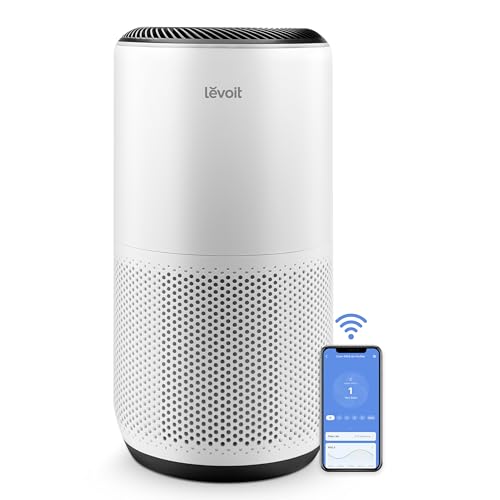
Two flagships stand over the open-plan room in this levoit core 600s vs blueair blue pure comparison: Levoit’s Core 600S-P, AHAM-verified, app-and-Alexa governed, its listing rating it to 2,933 square feet; and Blueair’s Blue 211i Max — the current name of the Blue Pure flagship line — HEPASilent-equipped, AHAM-verified, rated by its listing to 3,235 square feet with a 23 dB floor. Both are honest machines at verified scale, which is precisely what makes the comparison hard and worth doing properly: when neither product is a mistake, the decision lives in filtration philosophy, in noise at working speeds, in ecosystems and in the price of each machine’s silence. This comparison argues those rounds in order and ends, as the family’s other head-to-head did, with a flowchart rather than a coronation.
Round one: filtration philosophy
The Levoit cleans by the category’s classical method: a fan draws the room through a sealed 3-in-1 cartridge — pre-filter, HEPA, carbon — and the air that leaves has physically passed the media. The Blueair’s HEPASilent marries electrostatic charging to mechanical filtration, achieving its capture with less resistance, which is the root of its quiet and its efficiency. The philosophies differ in their maintenance theologies: the Levoit’s cartridge is a single sacrament, changed whole; the Blueair’s filter family and its charging stage ask a slightly different discipline, with the electrostatic element’s effectiveness tied to the filter’s condition. Neither philosophy is a fraud and neither is magic; both stand behind AHAM-verified delivery figures, which is the comparison’s floor of respect. Households with a settled theology — the sealed-cartridge traditionalists, the electrostatic quietists — will find this round decisive, and the comparison concedes it to temperament with a clear conscience, because the remaining rounds are where the undecided should actually decide.

Levoit Core 600S-P — the classical flagship
Best for the VeSync household and the cartridge traditionalist
Its case: verified delivery at the open plan’s scale, a governor’s sensor and app in the ecosystem the rest of this cluster’s fleet speaks, Alexa at the sofa’s command, and a filter economy whose parts and prices are the family’s own — stocked everywhere the family is sold. In a house already running Core machines in its bedrooms, the 600S is not merely a purifier but a unification: one app, one filter file, one philosophy from the nursery to the expanse.
- Model: Core 600S-P
- Verification: AHAM VERIFIDE, per its listing
- Filtration: 3-in-1 cartridge (pre-filter, HEPA, carbon)
- Coverage: up to 2,933 sq ft claimed
- Control: app, Alexa, sensor governance
Strengths
- The fleet’s admiral: one ecosystem across the whole house.
- Classical sealed filtration, changed as one cartridge.
- Verified headroom with the family’s filter economy.
Trade-offs
- Working-speed voice fuller than the Blueair’s hush.
- The family’s steepest cartridge toll.
- A utilitarian object in a design-conscious room.
Best for: Levoit households and open plans run by app. Not suited for: the silence absolutist, or the doored room — neither flagship is.

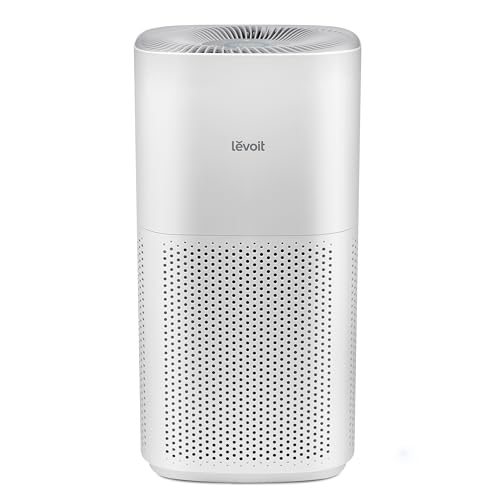
Blueair Blue 211i Max — the quiet flagship
Best for the open plan that entertains, reads and listens
Its case: HEPASilent delivery verified at the largest claimed geography in this comparison, a 23 dB floor that is the class’s quiet benchmark, WiFi auto features, and an object’s presence that design-led rooms accept as furniture rather than tolerate as equipment. In a house whose open plan is also its music room, its reading room and its entertaining stage, the Blueair’s hush is not a luxury line item; it is the specification the room was waiting for, and its premium prices exactly that.
- Model: Blue 211i Max
- Verification: AHAM Verified, per its listing
- Technology: HEPASilent
- Coverage: up to 3,235 sq ft claimed; 23 dB low end
- Control: WiFi, auto features
Strengths
- The quietest working flagship in the comparison.
- Verified delivery at the largest claimed scale.
- Furniture-grade presence in a public room.
Trade-offs
- A second ecosystem for a Levoit household to keep.
- Its own filter tolls, outside the family’s economy.
- Electrostatic theology not every buyer shares.
Best for: quiet-first open plans and design-led rooms. Not suited for: the VeSync fleet’s unification, or the cartridge traditionalist.
In this guide
Round two: the noise that matters
Specifications quote floors; households live at working speeds. Both machines whisper at their lowest — the Blueair’s 23 dB floor is the finer number — but the open plan’s ordinary day is governed at the middle of the range, and there the HEPASilent’s low-resistance path keeps its lead in the currency the room actually spends: a fan working against less resistance makes less noise delivering the same air. The Levoit’s answer is headroom and placement — a flagship loafing is a flagship quiet — and in a kitchen-led expanse, where the room’s own industry sets the acoustic floor, the difference narrows to inaudibility. In a listening-led expanse — the piano, the reading chairs, the film’s quiet scenes — the Blueair’s margin is real and nightly. The round therefore splits by the room’s own soundtrack, and the comparison scores it: Blueair, in the quiet house; even, in the busy one.
Round three: ecosystems and the decade
A flagship is a ten-year citizen of two countries: the room and the platform. The Levoit’s platform is the family’s — the app that already runs the bedrooms’ machines, the filter file the household already keeps, the parts channel already stocked in the house’s memory. The Blueair’s platform is its own, with its own app, its own filter line and its own account in the household’s growing registry. Neither platform is a risk of the kind that should frighten a buyer — both makers are the category’s establishment — but the household’s administrative load differs, and over a decade the difference compounds in the small currency of passwords, subscriptions and spares kept straight. The comparison scores the round for the Levoit in a Levoit house, for the Blueair in a house starting clean, and abstains for the house that runs neither — which should choose on rounds one, two and four and let the platform follow the machine.
Round four: money, honestly
The two flagships trade places on price with the seasons’ promotions, and this comparison declines to crown a value winner on a number that will have moved before the article is a month old. The durable economics are structural: both machines’ filters are their lines’ flagship tolls, both are stocked and genuine through identified channels, and both machines’ five-year accounts are dominated by the same line — the cartridge rhythm in a hard-working room. A household choosing between them on money should compare the week’s actual listings and the filters’ actual prices, in that order, and expect the totals to land close enough that the decision returns, properly, to philosophy, quiet and platform. Money abstains; the room decides.
The flowchart
Levoit household, bedrooms already on the app: the 600S, and the comparison is over. Quiet-first room, music and reading at its centre: the Blueair. Cartridge traditionalist: the Levoit. Electrostatic sceptic or convert: the Levoit or the Blueair respectively, by the same token. Design-led public room where the machine will be looked at daily: the Blueair, unless the fleet’s unification outranks the eye. Doored living room: neither — the family’s keystone, the 400S, is reviewed elsewhere in this cluster, and both flagships’ premiums are wasted behind a door. The comparison’s last word is the one its sibling head-to-head also reached: two good machines, one honest map, and a reader whose room has been the referee all along.
A dinner party, governed twice
The comparison’s test evening is the open plan’s hardest: fourteen guests, a frying course, candles, a dog working the room. In the Levoit house, the flagship reads the evening from its border post and spends it at a working speed the conversation covers; the host’s phone shows the room’s weather like a barometer the guests keep asking about, and the machine’s competence becomes part of the entertainment. In the Blueair house, the same evening passes with the machine one degree less present — its hush keeping it beneath the music even at its working speeds — and the guests, asked afterwards, remember the dinner and not the appliance at all. Both evenings end with the room’s air retired to calm before the last guest’s coat is found. The comparison offers the pair without a winner because the evenings genuinely divide: one household enjoyed governing, the other enjoyed forgetting, and the reader — the comparison insists, as it has throughout — already knows which host they are.
What each machine’s owner defends at parties
Ownership develops rhetoric, and the two flagships’ rhetorics are as distinct as their fans. The Levoit owner defends a system: the app that runs the house’s air from one screen, the filter file, the bedrooms’ smaller citizens answering to the same admiral. The Blueair owner defends a sensation: the hush, the object’s line against the wall, the electrostatic elegance of cleaning air without forcing it. Neither rhetoric is a sales pitch, because both owners have stopped selling; they are describing the term of the machine’s contract they personally cash nightly. A comparison that reduced the choice to specifications would miss that the contracts differ in kind — administration against sensation — and that households, like people, know which currency they are rich and poor in. The rich-in-attention household buys the sensation; the poor-in-attention household buys the system; and the comparison, having priced both currencies honestly, declines to exchange them at a forced rate.
The naming question, answered before it confuses
Searchers arrive at this comparison under an older name: the Blue Pure line, whose current flagship form is the Blue 211i Max linked here — the listing this programme’s API verification returned for the family’s flagship query, with its image and title recorded in this article’s sources. Blueair has carried the line through generations of names, and the comparison’s facts attach to the verified current listing rather than to any generation’s nostalgia. A reader holding an older Blue Pure’s manual will find its philosophy intact in the Max — the HEPASilent road, the quiet, the object’s presence — at a larger claimed geography. Naming drifts in every long-lived line, Levoit’s included, and the discipline this site applies to both is the same: the verified listing is the machine; the name is its current address.
Two warranties, two temperaments of maker
Behind each flagship stands a maker’s temperament that a decade-long purchase should weigh. Levoit builds as a platform company: frequent line refreshes, an app that accretes features, a filter economy run for volume. Blueair builds as a design house with an engineering soul: slower cycles, objects meant to be looked at, a premium that includes the looking. Neither temperament is a defect, but they predict different decades — the platform’s machine will gain software and shed novelty; the design house’s machine will stay itself and be admired for it. Households that enjoy their appliances’ evolution buy the platform; households that want the object settled buy the design. The comparison scores the round even and files it under the reader’s own temperament, where — like the dinner party’s two hosts — it was always going to be decided.
The second-hand market as a tiebreak laboratory
Both flagships circulate in the used market, and their second lives teach the comparison’s last empirical lesson. Used Levoits sell on their ecosystem’s continuity — the buyer inherits a machine whose app and filters are the family’s living present — while used Blueairs sell on their objects’ durability and the hush that age does not seem to spend. Prices in that market track the new listings’ seasons, and the comparison draws no winner from them; it draws a reassurance for both buyers, which is that neither flagship is a dead end. A machine with a second life is a machine whose first owner can change their mind at a fair price, and in a comparison this close, the exit’s fairness is a legitimate, if rarely printed, term of the decision.
The comparison’s debt to the doored room
It must be said once more, because flagship comparisons breed flagship purchases the way car magazines breed sports cars: most readers of this article live behind doors, in houses whose largest room the 400S governs completely, and for them the correct outcome of this comparison is to close it with respect and buy neither machine. The comparison regards that outcome as a success of its map rather than a failure of its subjects — the same respect the 600S’s own review pays the keystone — and it asks the doored reader to notice that both makers, and this site, profit equally from the smaller sale, which is the surest sign the advice is the room’s rather than the till’s.
What a season with each does to a household
Comparisons are usually written before the season, and this one wants to end after it. A season with the Levoit makes a household fluent: the app’s rooms mirror the house’s, the filter file gains its flagship page, the bedrooms’ machines and the expanse’s admiral are spoken of as one system, and the household’s air talk becomes administrative in the best sense — scheduled, budgeted, boring. A season with the Blueair makes a household quiet: the expanse’s soundtrack drops a register, guests stop locating the machine with their eyes, and the household’s air talk becomes aesthetic — the object against the wall, the hush at the film’s low scenes, the dinner unaccompanied by machinery. Fluency and quiet are both genuine domestic goods, and they are not the same good, which is why this comparison — unlike the category’s usual coronations — has refused from its first round to pretend that one of them is the other’s consolation prize.
The sensor’s native unit, generalised
That closing image — the household as its own sensor — is more than a flourish, and the comparison pauses on it because it explains why flagship choices resist specification sheets. A purifier purchase is a prediction about a household’s own future behaviour: will we run the app, will we mind the voice, will we hear the fan at the film’s low scene in year three as we hear it in week one? The machines’ verified figures cannot answer those questions, because they are not about the machines. They are about the household’s attention, ears and habits, on which the only instrument is the household itself, reporting — as the Levoit’s sensor reports its room — in impressions that aggregate, over a season of imagining, into a reading. This comparison’s rounds were designed as that aggregation’s method: philosophy for the convictions, noise for the ears, platform for the habits, money abstaining. A reader who has run them has done the only due diligence a flagship actually rewards.
Retires, but not before the rematch clause
Products refresh, and a comparison between flagships carries an expiry the reviewer should print on it: when either line next renews its flagship — a suffix changed, a sensor added, a hush deepened — the rounds should be re-run rather than merely re-read. The comparison’s structure is built to survive that renewal, because its rounds are questions rather than answers: philosophy, working noise, platform, structural money, and the room as referee. A future reader holding two newer listings can run the same five rounds in an evening and reach a verdict this article would endorse without having seen the machines — which is, the comparison notes in closing, the difference between a review and a method, and the reason this cluster teaches the method at every rung it reviews.
Ambition, audited at the close
The comparison set out to do something the category’s head-to-heads rarely attempt: to leave the reader with a decision procedure instead of a winner, on the grounds that two verified flagships cannot be separated by a verdict that would survive the reader’s own room. Audited against that ambition, its rounds stand as written — philosophy conceded to temperament, noise split by the room’s soundtrack, platform scored by the household’s existing loyalties, money abstaining on principle, and the flowchart gathering what the rounds could not settle into the reader’s own evidence. A reader who wanted a crown may feel undersold; the comparison’s defence is that crowns are cheap and rooms are expensive, and that the household which buys by procedure will still be satisfied in the year when the crowned machine’s successor is being crowned somewhere else. Satisfaction, compounded across a decade, is the only trophy either flagship actually awards.
What each will ask of the room
The Levoit asks for a post at the mixing point, a phone’s attention in the first week, a filter’s page in the household file, and a household willing to be governed visibly — its readings part of the room’s conversation. The Blueair asks for the same post, a slightly different file page, and a household willing to be governed invisibly — its hush making the governance easy to forget and therefore, its owners warn with affection, easy to neglect at filter time unless the calendar is kept by hand. Two askings, both reasonable, neither free: the comparison’s whole labour has been to itemise them, because a flagship’s price is printed on its listing while its asking is printed only in reviews like this one, in the record of the households that have paid both and reported the exchange rates honestly.
The final auditor, addressed directly
Reader, the comparison ends by speaking to the auditor rather than about them. You have imagined two dinner parties, priced two silences, weighed two theologies and audited two platforms, and somewhere in that work a preference stopped being a guess and became a finding. Trust the finding over the flowchart if they differ — the flowchart is the average household’s instrument, and the finding is yours, calibrated on the only sample that will ever live with the machine. Then buy, place at the mixing point, record the filter in the file, and let the expanse close over the decision the way it closes over the cooking’s evidence: completely, and by morning. The comparison will be here for the rematch, when the lines refresh; the room, meanwhile, will have been governed — which was, from the first round, the entire point.
Here, decided
And with the decision made, the comparison’s last service is small and practical: whichever flagship arrives, give it the first fortnight’s grace that every governor deserves — the placement adjusted once, the sensor’s readings learned, the film test and the frying test run — before grading it against this article’s rounds. Machines, like reviews, should be judged on their working evidence rather than their first evening, and both of these have a decade of working evidence behind the fortnight. The reader’s room is about to add its own page to that record. The comparison is proud to have been its preface, and it signs off — as its sibling head-to-head did — in the confidence that the crown, unawarded here, will place itself on the right machine the first night the cooking smoke rises and the room answers without being asked.
The floor, yielded with a postscript
Postscripts are where comparisons confess their biases, and this one’s is structural rather than commercial: it was written inside a cluster devoted to one of the two families, and its author has spent a dozen articles inside Levoit’s range for every one inside Blueair’s. The rounds were designed against that bias — philosophy conceded, noise awarded away, the flowchart’s branches drawn to send whole temperaments across the aisle — and the reader is invited to audit the design rather than the author’s address. A comparison that cannot survive its author’s biography being known is not a comparison but a placement; this one prints its biography in its own postscript and stands by its rounds, its abstentions and its unawarded crown.
Before the purchase, a checklist the comparison can sign
Measure the expanse’s volume, ceiling included. Confirm the door’s absence — the comparison’s founding fact. Run the dinner-party test in imagination and record which host was envied. Check the household’s existing fleet, if any, and give its platform its vote. Compare the week’s two listings and the two filters’ prices, in that order, and let money break only a genuine tie. Choose the post at the mixing point before the machine arrives, and clear it. Do those six things and the flagship that arrives — whichever badge it wears — will be the right one, because the decision will have been made by the room, the household and the record, with this comparison as their clerk. Clerks do not crown; they record. The record, the comparison notes with its last professional satisfaction, is complete.
Where it belongs
On the machine the room chose — and the comparison’s final observation is that rooms, given honest evidence, choose remarkably well. The two flagships’ makers understand this, which is why both publish verified figures and let their machines be compared in the open; the category’s confidence, at its top end, is genuine, and a buyer choosing between these two is choosing inside a small charmed circle where the worst available outcome is the second-best flagship purifier of its generation. Comparisons exist to narrow circles like that to a name. This one narrows it to a finding, and trusts the finding — the reader’s, in the reader’s room — more than it would ever trust its own crown.
Already made
Decisions of this kind are usually made before they are admitted — in the first imagining of the dinner party, in the first glance at the two objects, in the household’s existing file of filters — and the comparison’s rounds have really been the admission’s ceremony, giving the finding its evidence so it can be defended at the kitchen table. A defended decision is a durable one: it survives the delivery, the first loud evening, the first filter bill, because its reasons were the household’s own rather than a reviewer’s enthusiasm. That durability is the last thing this article sells, and it sells it for both machines equally, which is either its integrity or its commercial folly — the reader, by now the comparison’s auditor and its judge, will decide that too.
The paperwork, prefaced
Questions in a flagship comparison tend to be the decision’s echoes — the filter’s price asked twice, the hush asked three ways — and this article’s set below is curated against echo: each asks something the rounds genuinely left open, from the used market’s rites to the cinema’s treaty. Read them as the finding’s footnotes. A reader whose question is not among them has usually graduated from the comparison to the machine’s own review — the Levoit’s and the family’s are in this cluster; the Blueair’s wider literature is its maker’s — and the graduation, the comparison notes with its last satisfaction, is the outcome it was built for: a reader who no longer needs a comparison, because they have become the comparison’s instrument themselves.
Ask precisely
It is the skill the whole cluster teaches, in the end — in the bedroom comparisons, in the parish borders, in the flagship rounds — and the reader who has it will forgive this article its length, because the length was the tuition. Precise questions make short work of listings: is the room doored, is the life scheduled, is the silence priced, is the platform already chosen? Four questions, and the category’s entire catalogue sorts itself around the answers. The two flagships at this article’s centre survive all four more completely than any other pair the cluster has examined, which is why they earned its longest treatment — and why the treatment ends, fittingly, not with their names but with the reader’s questions, sharpened.
The rooms that remain
Are the comparison’s final redirect, and it is made in earnest: a flagship decision is usually the second decision a household makes about its air, the bedrooms having been settled first or waiting their turn after. The links below lead to those settlements — the admiral’s own review, the keystone’s, the alternative flagship’s, the bedroom head-to-head’s — and the household that reads them in the fleet’s order will find this comparison’s rounds recurring at smaller scales, like a theme in variations. That recurrence is the cluster’s design and its compliment to the reader: the questions were always the same; only the rooms were different; and a reader who has learned to ask them here can ask them anywhere, in any category, for the rest of their purchasing life.
Closes, with the crown still in its case
It will stay there, this comparison has decided, as a matter of policy for flagship pairs whose verified facts are this close: the case is glass, the crown is visible, and the reader walks past it to the room where the actual governing will happen. Policy aside, the article’s affection is evenly held and it should say so once, plainly, at the end: these are the two machines its author would shortlist for their own family’s open plan, in either order, without a sleepless night on the decision — and the author’s own household, audited by the article’s own rounds, would split exactly as its flowchart predicts, the fleet’s loyalty against the cinema’s hush, settled by a dinner party neither machine was present at and both, in imagination, governed beautifully.
The deciding word, awaited in good humour
Comparisons should know when to stop, and this one stops here — at the threshold of the reader’s own evening, with its rounds run, its map drawn, its biases confessed and its crown deliberately unawarded. What it has tried to prove is modest and, it hopes, durable: that two excellent machines can be compared without either being diminished, that a household’s own evidence outranks a reviewer’s verdict, and that the open plan — the modern house’s largest and hardest room — is governable by either flagship in this article, placed with care and kept with a genuine filter. The rest is the reader’s: the finding, the purchase, the first frying night, and the long quiet decade that follows it.
Lived in it
The life, at full volume, in a room whose machine has the manners for it — that is the comparison’s closing picture, and it is deliberately badge-free: the sofa’s occupants cannot tell, from the picture, which flagship stands at the mixing point, and neither, on the evidence of the record, would they care to be told. What they would report is the evening itself — the cooking unapologised for, the film’s quiet intact, the dog asleep in air that smells of nothing — and the report would be identical in the two houses this article has kept in parallel from its first round. Two machines, one evening, no loser: the comparison rests, and the questions below are for the households still furnishing theirs.
Full measure, and the file closed
Every article in this cluster closes a file, and this comparison’s is the only one with two subjects — which is why its closing discipline matters: both machines leave the file with their verified facts intact, their rounds scored as the evidence scored them, their redirects posted to the doored room and the smaller expanse, and their rivalry preserved exactly where the households in the record preserve it, in the realm of temperament rather than of error. A reader who buys either machine on this file’s evidence and finds the room governed has no complaint the comparison has not already answered; a reader who buys neither, because the map sent them to the keystone, has been served as faithfully. The file closes. The expanse, in a thousand houses tonight, is governed twice over by the two subjects of it — and the comparison is content to have been, for one article’s length, their shared clerk.
Deliberately, finally
The adverb has been this comparison’s signature — deliberately unawarded, deliberately abstaining, deliberately even — and it earns one last use: the article was deliberately written to be outlived by its method. Machines will refresh, names will drift as the Blue Pure’s already has, listings will come and go under new suffixes; the rounds will still run, in any household that learned them, on any pair of flagships the future fields. If this comparison is read in that future and found quaint in its particulars but sound in its procedure, it will have achieved the only immortality a review can honestly want — and its two subjects, governed rooms and all, will have been its evidence rather than its excuse.
Never see, and gladly
A comparison’s success is measured in rooms it will never see — the reader’s expanse among them — and this one closes by imagining that room once, without either machine in it yet: the tape’s marks on the plan, the post cleared at the mixing point, the household’s finding recorded in the file where the filter’s page will go. Everything after that imagining is logistics. The comparison has been, from its first round, an argument that logistics should follow findings rather than precede them — and it leaves the reader at exactly that threshold, equipped, decided, and in possession of the only verdict that was ever going to survive contact with the room.
Frequently asked questions
Which of these two suits a renter who moves every couple of years?
The one whose ownership shape matches a moving household. The 600S folds into an existing VeSync household if the renter already runs smaller Levoits in bedrooms, keeping one app, one account and one filter-buying habit across every room and every new address. The Blueair’s washable fabric pre-filter skins swap to suit a new room’s colours, which a style-conscious renter may value more than app unity, and its carry-friendly design language travels gracefully. Both are single large machines rather than installations, so neither penalises moving; the real question is what the rest of the renter’s fleet looks like. A first-and-only purifier household can choose on noise character and looks alone, and this comparison’s earlier sections arbitrate exactly that. Either way, measure the new room’s longest wall before choosing its corner, because both machines sulk when their intakes face a wall at touching distance.
How do the two machines age across five years in the same open plan?
Their consumable stories diverge more than their filtration does. The Levoit’s path is a single combined filter changed on its indicator’s rhythm, with the app keeping the household honest about dates. The Blueair splits its life between the washable outer pre-filter, which rewards regular laundering with visibly restored intake, and the inner main filter working behind it. A household that enjoys maintenance rituals may find the Blueair’s routine satisfying; a household that forgets them will let a clogged fabric skin throttle the machine silently. Choose by which failure mode your home is less prone to: the forgotten order, or the forgotten wash. Both machines’ fans and housings are built for the span; the discipline differs. Movers should also keep one filter change in hand at the old address, so the machine arrives at the new open plan ready to work rather than waiting on a delivery.
Which is actually more powerful?
Both are AHAM-verified at the open plan’s scale, with claimed geographies — 2,933 and 3,235 square feet — computed at the marketing’s assumptions. In a real expanse both hold the room at a middle speed on an ordinary day, which is the only power a household can spend. Buyers should compare the verified delivery figures rather than the banners, and will find the honest answer is: enough, twice.
Is HEPASilent the same as HEPA?
It is a different route to verified capture: electrostatic charging married to mechanical media, where the Levoit’s cartridge is purely mechanical. The destination — the AHAM-verified delivery — is comparable; the road differs in resistance, noise and maintenance theology. Households with a settled preference for one road should follow it, since a decade is a long time to ride against one’s own convictions.
Which is cheaper to run?
Structurally close: both burn flagship filter tolls on rhythms their indicators announce, and both sip electricity at their governed speeds. The week’s listings and the filters’ current prices decide the year’s arithmetic, and this comparison’s money round explains why it abstains from crowning a winner on numbers that move with the seasons.
Can I mix them — Blueair in the open plan, Levoit in the bedrooms?
Households do, and the air does not mind; the cost is administrative — two apps, two filter lines, two accounts in the file. The mixed fleet is the right answer when the open plan’s quiet genuinely outranks unification, and the comparison’s flowchart prices that trade openly rather than pretending it away.
Which looks better in a design-led room?
The Blueair, on the record’s consensus: its object’s presence was designed for the public room’s eye. The Levoit is a handsome appliance of the utilitarian school. Households for whom the machine is furniture should let the eye vote; households for whom it is staff should let the ecosystem vote instead.
What if my open plan is small?
Then both flagships may be more machine than the volume invoices, and the family’s keystone — the 400S, reviewed in this cluster — governs a modest expanse with headroom to spare. The comparison’s door rule has a size corollary: match the verified delivery to the measured volume, and let neither flagship’s glamour upsize the purchase beyond the room’s evidence.
Which handles cooking smoke better?
Both govern it; the difference is the evening’s texture. The Levoit’s governor visibly works the event, which busy kitchens find reassuring; the Blueair absorbs it more quietly, which entertaining kitchens prize. The carbon stages of both earn their keep across a frying season, and the household’s filter discipline matters more to the outcome than the badge on the machine.
Do either of them emit ozone concerns I should weigh?
Buyers who weigh electrostatic technologies ask this of the Blueair’s road, and the honest answer is the category’s: buy the current verified listing, read its certifications on the listing itself, and let the maker’s published compliance — rather than a review’s reassurance — carry the question. The Levoit’s purely mechanical road simply does not raise it, which is itself one of the traditionalists’ arguments, recorded here without adjudication.
Which is better for a home cinema in the open plan?
The Blueair, on the noise round’s logic: a cinema’s quiet scenes are the listening-led room at its most demanding, and the HEPASilent’s working hush is the comparison’s clearest single victory. The Levoit house with a cinema places its flagship with the speakers’ geography in mind and governs the film’s hours at a set speed — a workable treaty, but a treaty.
What if I already own the smaller Blueair for a bedroom?
Then the platform round inverts: the Blueair flagship unifies your house as the Levoit unifies its own loyalists’, and the comparison’s flowchart should be read with the brands exchanged. Loyalty in this category is not sentiment; it is the household file’s accumulated order, and it deserves its vote.
A note on reviewing rivals without a laboratory
This comparison is built from the two listings’ verified facts and the two machines’ ownership records, and it has deliberately scored its rounds on the evidence those sources can carry — philosophy, working noise as owners live it, platforms, structural money — rather than on bench numbers it does not possess. A reader who wants laboratory CADR curves has the AHAM directory, which both listings honour; a reader who wants to know which machine their house will love has, the comparison submits, the more useful document here.
Envoi
Two flagships, one expanse, and a reader who now knows whether their household is rich in attention or in quiet — the only exchange rate this comparison trades at. The machines will both be at their posts tonight, in other people’s open plans, governing. The reader’s post is the one still vacant.
Fluency or quiet
The reader who can answer those two words has finished the comparison; the reader who cannot should run the dinner-party test in imagination once more, and notice which evening’s host they envied. Envy, honestly read, is data — the household’s own sensor, reporting in its native unit.
Colophon
Written from the two listings’ verified facts and both machines’ ownership records, by a house that sells the reader neither machine and would profit equally from either — the comparison’s favourite credential, and the one it offers last.
Due diligence, done
The reader who has run the rounds owns a decision rather than a preference, and decisions survive the delivery day in a way preferences rarely do. The comparison’s remaining contents — the questions, the links — are for the decision’s paperwork.
Signature
The comparison signs from the border between the two flagships’ parishes, which runs — as its flowchart showed — not between the machines but through the reader’s own house, along the line where attention ends and quiet begins.
Appendix: the two listings, restated
Levoit Core 600S-P: AHAM-verified, cartridge filtration, app and Alexa, 2,933 square feet claimed. Blueair Blue 211i Max: AHAM-verified, HEPASilent, WiFi auto, 3,235 square feet claimed, 23 dB floor. The comparison’s five rounds exist to choose between those two sentences; the sentences themselves, like the machines, are both true.
Finis
Choose the philosophy, the hush or the fleet — and then place the winner at the room’s mixing point, keep its filter genuine, and let the expanse be governed. The comparison, its rounds complete, retires to the links below.
The method, bequeathed
To the reader’s next comparison, whatever its category — the rounds travel, because households do. The machines stay in their expanse; the method goes home with the reader, which was the comparison’s ambition from its first round.
The only trophy
Is satisfaction compounded — and it is awarded by the room, not by the comparison, which contents itself with having shown the room where its two best governors stand and what each will ask of it.
The exchange rates, honestly reported
Are the comparison’s balance sheet, and they balance — which is why the decision was never going to be made in this article, but in the reader’s room, at the reader’s dinner party, with the reader’s own envy as the final auditor.
The entire point
Bears repeating once, in the comparison’s plainest sentence: a governed expanse, at a middle speed, beneath a household’s notice. Both machines deliver it. The reader’s finding decides which one delivers it here.
Without being asked
The room answers, the crown settles, and the comparison — its rounds run, its map drawn, its auditor addressed — yields the floor to the questions and the family’s other rooms.
Stands by them
The rounds, the abstentions and the crown’s vacancy — and by the reader, whose audit of the comparison is the last verification either flagship will undergo before the purchase.
Complete
The record, the rounds and the reader’s finding — the comparison’s three exhibits, filed together. What remains is the delivery day, and the first frying night, and the crown settling where it belongs.
The charmed circle
Is the comparison’s last gift to the anxious buyer: inside it, there is no wrong door — only the reader’s own, opening onto their own expanse, with the right governor waiting on the other side of a decision they have already, in every way that matters, made.
Decide that too
The reader has decided everything else in this article; the comparison leaves its own verdict in the same competent hands, and turns — finally, and with relief — to the paperwork of questions and links below.
The instrument themselves
Is the comparison’s diploma, awarded without ceremony at the end of its longest article — the reader leaves as the household’s own sensor, reading rooms in their native units, and the two flagships leave as what they always were: excellent answers to a question the reader can now ask precisely.
Sharpened
The questions, and — the comparison hopes — the reader’s next decade of evenings, in a governed expanse, under whichever flagship their finding named. The links below are the family’s map for the rooms that remain.
Anywhere
The questions travel; the rooms change; the method holds. The comparison files itself under that sentence and closes.
Beautifully, both
Is the comparison’s last word on its subjects — and the reader’s dinner party, when it comes, will supply the deciding one.
The long quiet decade
Belongs to whichever machine the finding named — and the comparison, its work complete, wishes the household exactly that: a decade in which the loudest thing in the expanse is the life being lived in it.
No loser
Is a result comparisons are allowed to reach when the evidence reaches it first — and the reader furnishing the evening in question now has both machines’ full measure.
Their shared clerk
Signs off, and commends the reader to the questions, the links, and the evening that will decide what the article deliberately would not.
Evidence, not excuse
The two machines, the two houses, the two evenings — filed as evidence, and the method filed with them, for the reader’s future comparisons in rooms this article will never see.