Disclosure: As an Amazon Associate, dailyhomedecorating.com earns from qualifying purchases. Links on this page are affiliate links; they cost you nothing extra. Prices and availability change often, so check the current Amazon listing before you buy.
The bedroom in this levoit core 300s review has no routine to conduct by: a nurse works nights in rotation, a partner keeps office hours, a toddler naps when toddlers nap, and the dog’s opinion of the schedule is total. A manual purifier in that room spends most of its life at the wrong speed, and a scheduled one runs its blocks into empty afternoons. The Core 300S-P exists for exactly this household: the beloved Core 300’s size and filter philosophy, plus a particle sensor, an auto mode that answers the room as it changes, a quiet 24 dB low end per its listing, AHAM verification, and app control with Alexa for the moments a human does want a say. This review tests the perceiving sibling in the parish its plain brother cannot serve — and marks, fairly, the households that should still buy the brother.
The sensor is the review
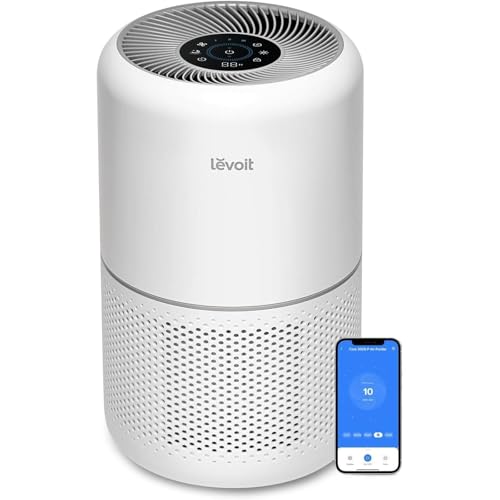
Everything distinctive about the 300S flows from one component: the laser particle sensor watching the room’s air and reporting it to a fan that believes it. Cooking drifts down the hall — the machine notices before the cook’s partner does, and works. The toddler empties a cushion’s worth of dust into a sunbeam — the display changes its verdict and the fan climbs. The window opens on a pollen morning — the room’s invisible weather turns, and the machine turns with it. Owners describe the first month as a small domestic revelation: the house had weather indoors all along, and nobody had ever shown it to them. Then the novelty settles into the machine’s real gift, which is not information but delegation: the household stops conducting entirely. Speeds, schedules, boosts — the whole manual literature — is outsourced to a sensor that never sleeps, never forgets, and never resents the 3 a.m. event. For the irregular household this is not a convenience layered on purification; it is the first time purification has actually matched their life, and the review’s verdict is built on that match.
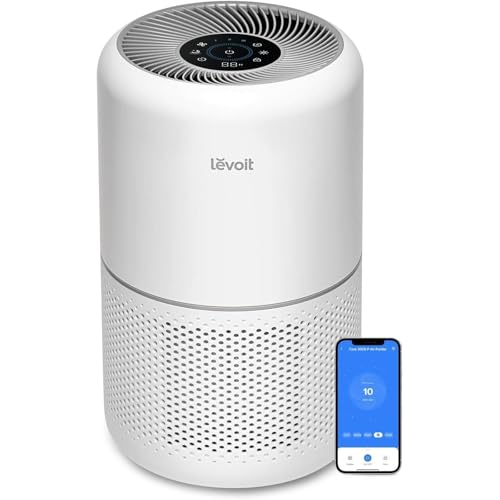
Levoit Core 300S-P — the perceiving sibling
Best for irregular households in bedrooms and small living rooms
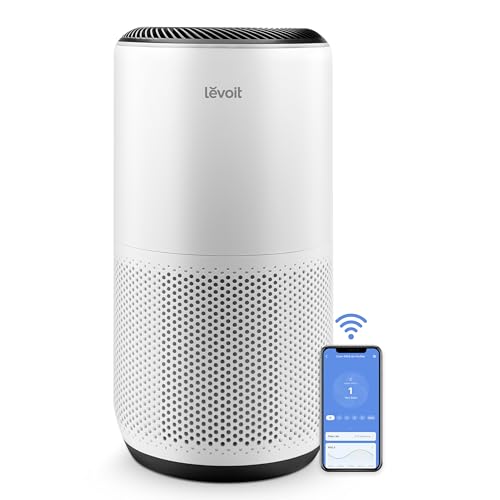
The listing’s claims: smart WiFi purifier with Alexa and app control, AHAM-verified, a 24 dB low end briefed as quiet, and the family’s 3-in-1 filter philosophy in the class’s favourite size. The AHAM verification matters doubly here: an auto mode is only as honest as the delivery it modulates, and a verified machine’s autopilot conducts real air changes rather than theatre. Read the display’s numbers as weather — directional, eventful, occasionally dramatic — rather than as laboratory data, and the machine’s evidence and the room’s mornings will agree with each other season after season.
- Model: Core 300S-P
- Verification: AHAM VERIFIDE, per its listing
- Control: sensor auto mode, app, Alexa, on-unit
- Noise: 24 dB low end, per its listing
- Filter: 3-in-1 family cartridge
Strengths
- Auto mode that genuinely matches an unscheduled life.
- The display turns the room’s air into readable weather.
- Verified delivery and the family’s filter economy, in the favourite size.
Trade-offs
- A step’s price above the plain 300 for its perception.
- A sensor lens to keep clean and an app to keep fed.
- Its parish ends where the 400S’s begins — headroom still rules.
Best for: shift workers, young families, eventful rooms. Not suited for: routine-led conductors, or the app-averse — the plain 300 awaits both.

Levoit Core 200S-P — control without perception
Best for the small room whose owner schedules happily
The comparison that isolates the sensor’s value: the 200S offers the app, the voice control and the scheduling, at a smaller size, without the perceiving eye. A small-room household whose events are few and whose phone is always in hand may find the 200S’s control sufficient — the cluster’s head-to-head between the two S-machines arbitrates the pair in full. Here it marks the 300S’s premium precisely: everything above the 200S’s price buys the sensor and the size, and a household should know which of the two it is actually paying for.
- Model: Core 200S-P, white
- Verification: AHAM VERIFIDE, per its listing
- Control: app, voice, schedules — no sensor
- Filter: 3-in-1 with HEPA sleep mode
- Parish: small bedrooms, dorms, studios
Strengths
- Smart control at the smaller size and step.
- Verified small-room delivery.
- Schedules that fit a routine-led small room perfectly.
Trade-offs
- No perception: events wait for a schedule or a hand.
- Less room served than the 300S.
- App dependency for its headline features.
Best for: small rooms with predictable lives. Not suited for: the irregular household that is this review’s subject.

Levoit Core 400S-P — the parish above
Best for the true living room that also lives irregularly
When the irregular room is a real living room — the family’s whole weather system under one ceiling — the 300S’s parish ends and the 400S’s begins: same sensor philosophy, an air quality monitor, auto mode, and verified delivery rated by its listing to 1,718 square feet of marketing geography, which this site reads as the genuine living-room class. Its own review in this cluster makes the large-room case; here it stands as the headroom warning. A sensor cannot rescue an undersized machine — it will simply perceive, accurately and forever, a room it cannot keep up with — so the irregular household measures first and perceives second.
- Model: Core 400S-P
- Verification: AHAM VERIFIDE, per its listing
- Features: auto mode, air quality monitor, Alexa
- Coverage: up to 1,718 sq ft claimed
- Filter: family 3-in-1 architecture
Strengths
- Perception at living-room scale.
- Verified headroom for family-room events.
- The same app and filter philosophy, one parish up.
Trade-offs
- Bedroom overkill in size, price and filter toll.
- A bigger presence in the room’s geography.
- Still not the open plan’s machine — that is the 600S.
Best for: irregular living rooms. Not suited for: bedrooms, where the 300S is the same philosophy at the right size.
In this guide
Living with a machine that watches
The 300S changes its household’s relationship with air in a way the review should not undersell: the display becomes a fixture of the room’s attention, glanced at like a clock. Guests ask about it. Children learn the colours before they learn the word particle. The household starts closing the window when the verdict sours and opening it when the room is winning — behaviour no manual machine ever inspired, because no manual machine ever showed its work. Skeptics call the display a toy; the ownership record calls it a teacher, and notes that households which learn their air’s patterns keep the lessons even when they later move the machine to a child’s room and buy its bigger sibling for the living room. The sensor’s second product, after clean air, is an educated household — and education, unlike a fan speed, does not depreciate.
Where the autopilot earns and where it idles
Honesty requires the map. The sensor earns in: kitchens’ drift into living spaces, stove and fireplace households, toddler and pet eventfulness, shift-work bedrooms, wildfire and pollen episodes whose timing no calendar knows, and any room whose door opens to the whole house’s weather. It idles in: the sealed, routine, single-occupant bedroom whose load a standing speed already masters — the plain 300’s parish, where the premium buys a display the household will stop reading by spring. The review’s flowchart is therefore short: if your room’s events are scheduled by your life, conduct; if they are scheduled by the house, the weather and other people, delegate. Most modern households, audited honestly, delegate — which is why the 300S, and not its brother, is the current generation’s default in the making.
Final word
The Core 300S is the Core 300 grown perceptive: verified, quiet at its floor, honest in its filter economy, and tireless in a way no conductor can be. For the irregular household it is not the fancier choice but the correct one — the first machine in its size that fits a life without a timetable. Buy it for the eventful bedroom or the small living room, keep its sensor’s lens clean and its filter genuine, and let the house’s weather be the machine’s problem from the first night.
The nurse’s bedroom: a case study in delegation
Consider the review’s opening household at the resolution of one week. Monday the nurse sleeps days after a night shift, in a room whose door the toddler opens at intervals no schedule survives; the 300S rides its floor through the quiet hours and answers each opening with a brief, uncomplaining climb. Wednesday the partner hosts a work call from the same room while the nurse is out; the machine’s working speed is nobody’s decision and therefore nobody’s argument. Friday a neighbour’s bonfire sends the street’s smoke looking for open windows; the display reports the insult and the fan spends the evening at war, unwitnessed, while the household watches a film in ignorance. Sunday the filter’s first month ends and the app shows a life being lived at the announced rate. At no point in the week did a human choose a fan speed, and at every point the room’s air was being conducted by the only party with perfect information and no other duties. That is the product. The plain 300 in the same week would have been a good machine at a guessed speed; the 300S was the right machine at the measured one, and the difference between guessed and measured is the whole of its premium, spent nightly.
Setting up the autopilot well
Auto mode rewards three small disciplines. Site the machine where its sensor breathes the room’s representative air — not in the kitchen doorway’s direct draught, not behind the curtain’s still pocket — because the sensor’s judgement is only as good as its sample. Give the first fortnight to calibration of expectations: the display’s drama in week one is the household learning its own weather, and the correct response to a red verdict during cooking is interest, not alarm. And keep the lens clean on the filter-change rhythm, since a filmed sensor is a machine conducting from a false report — the one maintenance task the smart era adds, and a small one. Households that do these three things find the autopilot’s reputation in their own home matches its reviews; households that site it in a draught and ignore the lens sometimes conclude the sensor is theatre, having staged the theatre themselves.
The first unscheduled week, as a promise kept
Every review in this cluster ends by returning its machine to a household, and this one returns the 300S to the nurse’s bedroom on a Friday night shift change. The room has been slept in by day, played in by a toddler, drifted through by a bonfire and a week’s cooking, and at no point did the machine ask anyone for anything. Its display says the air is good. Its filter has a month of honest work in it. Its owners have spent their attention on a child, two jobs and a dog, which is to say on the reasons the room needed perceiving in the first place. A product that gives a household its attention back has done something larger than cleaning air, and the review is content to end on the size of that claim, because the households in the record keep making it themselves.
A note on reviewing a machine that reviews its room
There is a pleasant recursion in this article’s assignment: the reviewer evaluates a machine whose whole function is evaluation, and the standards turn out to be the same. Notice what matters. Report it plainly. Respond in proportion. Do not perform vigilance you are not exercising, and do not sleep through the events. The 300S, audited by its own criteria across its ownership record, passes them — it notices the room’s real events, reports them without embroidery, answers in proportion to their size, and keeps its floor through the long uneventful hours without pretending they are emergencies. A reviewer can ask no more of a colleague, silicon or otherwise, and the household that hires this one gets, in effect, a second reviewer on staff — one who works the night shift, never files late, and reads the air the way this article has tried to read the machine: attentively, and in the room’s own terms.
The household’s attention, audited as an asset
Economists of the home rarely price attention, yet every appliance in this cluster is finally a bid for it. The manual machine bids low and honestly: a hand, twice a day, and a conductor’s memory. The scheduled machine bids for a single sitting of programming. The perceiving machine bids — after its first week — for almost nothing, and the household that prices its own attention at anything above zero finds the 300S’s premium recovered in the first season, not in electricity or filters but in the hundreds of small decisions that no longer need making. That accounting is the review’s last and most serious argument, and it is why the irregular household’s choice is not a lifestyle preference but an economic one: attention is the scarcest utility in a young family’s house, scarcer than electricity by any honest meter, and the machine that spends none of it has understood the household’s real budget better than the household had.
The review’s last audit of its own enthusiasm
Enthusiasm in a review is a liability unless it is itemised, so: this article’s warmth attaches to the sensor’s fit for irregular lives, which is a documented household condition and not a taste; to the display’s teaching effect, which the ownership record reports across too many households to be a reviewer’s fancy; and to the attention economics, which any young family can verify against its own week in one audit. Where the machine is ordinary — its filter, its parish ceiling, its era’s standard app burdens — the review has said so in the same tone. A reader who discounts the warmth entirely is left with a verified, quiet, perceiving machine at a step’s premium, and may buy it on the facts alone with the review’s blessing: the blessing was never the load-bearing part.
Frequently asked questions
How should I interpret the 300S’s air quality readings day to day?
Read the trend, not the instant number. The laser sensor reacts within moments to a shaken duvet, a sprayed cleaner or a door opened onto cooking, and a brief excursion into a worse band is the machine noticing work to do, not evidence of failure. What matters is how quickly the display settles back and whether the room’s ordinary baseline improves across a week of auto running. Keep the sensor’s lens wiped on the maker’s rhythm, because a dust-filmed lens reads a permanently dirtier room than the real one and holds the fan higher than needed. If readings look implausible for days — spotless air during a pollen storm, or alarm during a sealed calm — clean the lens before doubting the machine. Parents checking a nursery from downstairs get the same benefit in reverse, confirming the room settled after bedtime without opening the door.
Can the 300S look after a home office better than a plain 300?
For a desk worker, yes, in one specific way: it governs itself around a person who cannot keep adjusting a purifier between calls. Auto mode lifts the fan when a delivery, a printer run or a lunchtime door-opening loads the room, then settles before the next meeting, and the app lets the worker check the room from another part of the house before sitting down. Its sleep-quiet low speed suits calls better than a manual machine forgotten at its middle setting. The plain 300 serves a disciplined owner equally well on filtration alone; the 300S earns its premium in the office by removing a dozen small decisions from a working day that already contains too many. The same display literacy helps with guests: a visitor who can see the room’s air improving stops asking whether the quiet box in the corner is doing anything at all.
Is the 300S worth the step over the plain 300?
For an irregular household, yes — the sensor and auto mode are the difference between a machine that fits your life and one that fits a timetable you do not have. For a routine-led bedroom, no — the plain 300’s review makes that case, and the step would buy perception your room never invoices. The pair of reviews is designed to be read together; your household’s schedule is the only referee either trusts.
How accurate is the air quality display?
Treat it as weather, not laboratory: directionally honest, event-responsive, and excellent at the comparisons that matter — before and after, this room and that hour, the window open and shut. Its numbers are the maker’s sensor speaking in the maker’s units, and households that read them as a narrative rather than a measurement get the machine’s full value without demanding a precision no domestic sensor claims.
Does auto mode use more electricity?
Generally less than a fixed working speed, because the machine lives at its quiet floor and buys its peaks only when the air invoices them — the sensor is an economist as well as a conductor. Against a disciplined owner’s standing low speed the difference narrows to the events, and in no household’s accounting does the meter decide this purchase.
Can I still control it manually?
Completely — on the unit and in the app, the auto mode is a delegation you can revoke for an hour or forever. Households often run a hybrid: auto as the constitution, manual boosts as the executive orders, voice commands for the sofa’s convenience. The machine’s philosophy is assistance, not custody.
What happens when the WiFi drops?
The machine keeps purifying on its last instruction — auto mode lives in the unit, not the cloud — and the app simply stops reporting until the network returns. A router change asks for a re-pairing, the smart era’s standard toll, and the household file should keep the account details where the next owner of the chore can find them.
300S or 200S?
The cluster’s head-to-head exists for this exact question, and its flowchart reduces to room size and perception: the 200S controls a smaller room by schedule; the 300S perceives a larger one by sensor. If the room is the 300 class’s and the life is irregular, the 300S is the answer the comparison reaches from every direction.
Does the 300S suit a nursery?
It is a strong nursery candidate in the irregular household: the night feed’s door openings, the laundry’s comings and goings, and the parents’ total absence of spare attention are its design brief. Mind the display’s light against the room’s darkness standards, site the cord beyond the climbing geography, and keep the comfort framing this site uses for every claim in a child’s room.
How does auto mode handle a party?
Gracefully and without being asked: a dozen guests are a particle event the sensor reads plainly, and the machine spends the evening at a working speed, retiring to its floor as the house empties. Hosts in the record name this as the feature’s party trick — the purifier is the only appliance that notices the party’s size and adjusts its own effort to match.
Can two households share one app account for a machine in a rental?
The machine binds to one account’s home; landlords who provide a 300S usually hand the account over or leave the machine in its on-unit auto mode, which needs no app at all to perceive and respond. That unbound competence is worth noting: the sensor’s value survives the loss of the app, which is more than the purely scheduled machines can say.
Is the sensor’s reading comparable between rooms?
Within the same machine family, readings are usefully comparable as narratives — this room’s evenings against that room’s — and households with two perceiving machines learn their flat’s geography from the difference. Between brands, units and scales differ enough that this site advises reading each machine’s weather in its own language.
What does the 300S do during a power cut’s return?
Connected machines resume according to their settings, and the household should learn its unit’s behaviour in the first week — a thirty-second test at the socket settles whether the autopilot re-engages unaided. Owners in outage country report the machine’s return to duty as one of the smart era’s quiet mercies: the room is being watched again before the household has finished resetting the clocks.
Does the app offer filter subscription or reminders?
The ecosystem supports reminders, and the household’s own calendar remains this site’s recommended system of record — the app is a reporter, not an archive. Whichever channel the household actually reads is the correct one; the filter’s enemy is not the wrong reminder system but the unread one.
How often should the sensor lens be cleaned?
On the filter-change rhythm, with the dry cloth the manual prescribes — oftener in a dusty or smoky parish, where the lens shares the room’s burdens. It is a minute’s work folded into a chore that already exists, and the review lists it as the smart machine’s entire additional maintenance burden, which households consistently find smaller than they feared.
What is this review’s one-line verdict?
The Core 300 grown perceptive — the correct purifier for the household whose life has no timetable, at a premium that its first unscheduled week repays in attention saved. If your room’s events arrive unannounced, this is your machine; if they arrive by routine, its brother’s review is your address.
A note on the display at the bedside
Households divide into those who want a night instrument and those who want a dark room, and the 300S serves the first by default and the second by placement — across the room, angled from the pillow, its verdict readable by day and mercifully dim by night. Test the arrangement in the first evenings; the machine’s parish is full of both kinds of sleeper, each persuaded the other’s preference is the eccentric one.
Envoi
The review leaves the machine where its owners leave it: watching a room whose life it has learned, answering events its household no longer counts, and asking — once a month, by a small light in an app — to be glanced at. Delegation this complete is the smart home’s actual promise, and in this size of room, at this step of price, the 300S is where the promise is kept.
The diary’s last entry in this review
Records a household that stopped reading it daily somewhere in month two — not from disappointment but from trust, the way one stops checking a bridge that has held. The autopilot’s final achievement is to make itself as unremarkable as the plain machine’s silence, arriving by the opposite road: not by asking nothing, but by answering everything before it is asked.
Colophon
Written from the listing’s verified facts and the model’s ownership record, for the household whose week has no shape the calendar recognises. The machine recognises it anyway — that is the whole review, and the whole product.
The display as domestic instrument
Rooms have always had instruments — the clock, the thermometer, the barometer by the door — and the 300S’s display takes its place in that lineage rather than in the gadget’s. It tells the household one thing, continuously, that no previous instrument could: the quality of the medium they are breathing. Households respond to it the way they responded to the first home thermometers, with a brief era of fascination followed by a permanent change in behaviour. Windows acquire a policy. The stove’s hood acquires a constituency. A partner who once mocked the purchase is found, in month three, reporting the reading to a guest with the pride of a lighthouse keeper. The review notes this not as colour but as mechanism: a purifier that teaches is a purifier whose lessons outlive it, and the 300S’s premium buys the teaching as surely as it buys the fan’s obedience. Even the households that eventually tire of the display’s conversation keep its real gift, the autopilot underneath, which needed no audience at all.
There is a counter-consideration the review owes the light-sensitive: a display in a bedroom is a presence in the dark, and the machine’s night manners — its dimming and its sleep behaviour — should be tested against the household’s own darkness standards in the first nights, while the returns window is wide. Most households settle it in an evening, by placement or by setting; a few, for whom the dark must be total, discover that the plain 300’s unlit face was the feature they needed, and the family’s range, characteristically, has kept a machine for them too.
What the sensor cannot see
A particle sensor reads particles. The room’s gases — the cooking smells, the new furniture’s exhalations, the VOC weather of a renovated flat — pass beneath its notice, and the carbon stage of the filter answers them on its own silent schedule regardless of the fan’s orders. Households whose primary brief is odour should therefore read the 300S’s auto mode as a particle governor and judge the machine, as this site judges all of them, on its filter’s carbon and its change discipline for the gas half of its work. The Eleva line in this cluster adds gas sensing to the family’s repertoire, at its flagship step; the 300S’s honesty is that it perceives one kingdom superbly rather than two kingdoms thinly, and its review declines to blur the border for the sake of a longer feature list.
The sensor also cannot see the room it is not in, which sounds obvious until a household asks one perceiving machine to govern a flat’s whole weather through an open door. Perception is local, like purification itself: the 300S knows its room the way a good innkeeper knows a parish, and the multi-room household’s answer is the fleet — a perceiving machine in the eventful room, conducted or scheduled machines in the steady ones, one app over all of them. The family’s architecture rewards that composition, and this cluster’s reviews are written to be composed exactly so.
The shift worker’s charter
Day sleep is the hardest service a bedroom performs: the world is awake outside the curtains, the house is conducting its daytime business beyond the door, and the sleeper’s need is for a room that behaves like midnight at noon. The 300S serves that need in a way its specifications only hint at. Its floor is quiet enough for the day sleeper’s lighter rest; its auto mode handles the house’s daytime events — the cleaner’s visit, the partner’s lunch, the delivery at the door — without the sleeper’s involvement; and its app means the machine can be checked, boosted or hushed from the bed in the half-waking moments when getting up to conduct a manual machine would end the sleep it was meant to protect. Occupational reviewers of bedroom equipment learn to weight these unglamorous mercies heavily, because day sleep fails by accumulation of small insults rather than by any single noise. The 300S removes a category of insults wholesale, and the night-shift households in its ownership record describe the removal in the language of people whose rest is a professional asset: not a luxury, a roster’s foundation.
The charter extends to the household around the sleeper. Partners of shift workers conduct a daily diplomacy of quiet — doors eased, calls taken in the garden, the kettle’s click apologised for — and a machine that manages itself removes one whole negotiation from that diplomacy: nobody must remember the purifier, because the purifier remembers the room. Couples in the record mention this with a gratitude out of proportion to the feature’s size, which is usually the sign that a feature has been priced correctly by the people who live with its absence in the rival product.
Auto mode and the toddler theorem
Households with small children generate air events at a rate no other demographic matches: doors in permanent negotiation, soft furnishings in continuous redistribution, a fine weather of crumbs, craft materials and outdoor clothes brought indoors. The toddler theorem states that in such a house, any appliance requiring timely human operation will be operated late, and the 300S is the theorem’s engineering answer. Its sensor does not wait for a parent whose hands are, at the relevant moment, holding a child, a pan and a phone simultaneously. It answers the cushion explosion, the nappy incident’s ventilation, the playdate’s eight small coats, with the impartial promptness of a machine that has nothing else to do. Parents in the record describe the display, unexpectedly, as a parenting instrument: the first air-quality conversations happen at its face, and more than one household’s window discipline began as a child’s determination to make the light turn green. A review that scored the 300S on fan curves alone would miss the theorem entirely, which is why this one has scored it on the household’s scarcest resource — timely attention — and found it, in that currency, the cheapest machine in its class.
The wildfire week, and what delegation is worth then
Every region in the smoke era has its week: the sky the colour of old paper, the official advice to stay indoors, the windows shut against a beautiful day. In that week the perceiving machine stops being a convenience and becomes the household’s sentry. Its sensor sees the infiltration the family cannot — the seal that leaks, the door’s every opening, the hour the wind shifts the plume toward the house — and it spends its fan’s whole range answering, through nights when the household sleeps behind its diligence. Owners in smoke country describe their auto machines, in those weeks, with a seriousness that reframes the premium entirely: the step’s price, divided by the sentry weeks of a decade, is the cheapest vigilance a household can buy. The manual machine in the same week serves too, at the speed its owner guessed; the difference is that guessing is a burden the smoke week adds to a household already carrying enough. This review’s verdict for smoke regions is therefore stronger than its general one: where the sky itself is an event, delegate, and let the machine watch the window you cannot.
The same logic, at lower drama, covers the pollen season’s peaks, the renovation next door, the new motorway’s first summer — the whole calendar of insults that arrive unannounced. A purifier’s job description has quietly changed in the smoke era, from housekeeping to watchkeeping, and the 300S is the first machine in its size class whose specification reads like the new description. Its review has tried to keep pace with that change rather than with the category’s older pieties.
The filter’s year under an autopilot
An auto machine’s filter lives a different year from a manual one’s: its hours are weighted toward the quiet floor, with the peaks bought in bursts, and its loading follows the room’s true eventfulness rather than a conductor’s habits. Households should therefore read the filter indicator as the machine’s own report rather than importing the manual era’s calendar expectations — a quiet, sealed flat’s 300S may carry its cartridge well beyond the season a busy family house consumes. The app keeps the record, and the household file should keep the part name; the genuine cartridge, ordered by that name, remains the economy’s fixed point. One autopilot-specific caution belongs in the review: because the machine manages itself, its owners check it less, and the filter’s announcement must not be allowed to wait in an unread app — turn on the notification, or make the filter part of the monthly glance at the display, so that delegation does not decay into neglect. The machine forgives almost everything except being forgotten entirely, and its one request of the household is a glance a month.
The resale and hand-me-down life of a smart machine
Connected machines change hands differently from manual ones, and the 300S’s second life deserves a paragraph in a thorough review. The factory reset is its rite of passage: accounts unbound, the app handed over clean, the new owner’s phone becoming the machine’s memory. Done properly — and the household file’s record of the account makes it a five-minute rite — the used 300S is as complete a purchase as the used 300, with its sensor’s health the one extra inspection: run it beside a cooking event and watch it perceive. The market prices used smart machines with a small discount for this ceremony, which the informed buyer collects as a bargain and the informed seller avoids by documenting the reset. Either way, the machine’s parish logic survives its transfer: it will serve the irregular room it lands in with the same indifference to timetables, for an owner it has never met, which is perhaps the purest evidence that its design centre was the room and not the purchaser.
What the 300S teaches the range
Step back from the single machine and the 300S reads as the family’s thesis about where purification is going: the fan and the filter, the category’s twentieth-century inheritance, are becoming the junior partners of the sensor and the algorithm. The Eleva line takes the thesis further up the price ladder, with gas sensing and sealed systems; the EverestAir takes it into the big rooms; but the 300S is where the thesis meets the median household, in the median room, at a step’s premium over the manual default. Reviewers who cover this category across years learn to watch exactly that meeting point, because it is where a technology stops being a flagship’s promise and becomes the default’s future. The plain 300 will sell for years — its review in this cluster says why, with respect — but the direction of travel is written on the 300S’s display, in colours a child can read. Households buying for a decade should weigh the direction as well as the destination: parts, filters and app support follow the volume, and the volume is beginning to follow the sensor.
None of that obliges any single household to buy the future rather than the fit. The family sells both, this site reviews both, and the irregular life remains the only passport the 300S actually requires. The review’s closing advice is therefore the same as its opening, now earned: measure the room, audit the household’s timetable for a week, and if the audit comes back eventful — as most modern audits honestly do — let the machine that perceives take the post, and spend the household’s attention on the life that made the room irregular in the first place.
A month of readings, interpreted
Live with the display for a month and a pattern assembles that no single reading can show. The weekday evenings carry the cooking signature, a rise and fall as regular as a tide table. The weekends carry the visitors and the vacuum. The night’s trace is a flat calm line, broken — in the households that keep the data — by events that become family folklore: the night the reading spiked at 3 a.m. and the household rose to find the cat asleep against the sensor’s intake, breathing warmly into its judgement. The month teaches the final lesson of the perceiving machine: its data is a diary the house writes about itself, and households that read it become, in a small but real way, the authors of their own air rather than its audience. The plain machine’s owners keep a different diary — the shelf’s dust, the nose’s report — and this review has never claimed one diary is literature and the other is not. It claims only that the household which cannot keep the first kind, for want of time or routine, can now buy the second kind, kept for them, at a step’s price.
And the diary has a practical yield beyond its charm: it is the evidence base for every other decision the household makes about its air — whether the window policy works, whether the new rug is a shedder, whether the machine should move rooms in the spring reshuffle. Guesses become measurements, and measurements, accumulated, become the household file this site is always preaching, now kept partly by the machine itself.
The comparison this review owes the torn buyer
Most readers of a 300S review are not choosing between purifier and nothing; they are torn between this machine and one of its siblings, and the review closes by arbitrating the three tears it meets most often. Against the plain 300, the question is the timetable, answered above. Against the 200S, the question is room size wearing a sensor’s clothes: if the room is small and the life is scheduled, the 200S’s control suffices and its price is kinder; if either the room or the life is bigger than that, the 300S is the fit, and the head-to-head in this cluster works the seam in full. Against the 400S, the question is pure geography: the living room’s true size outranks every other consideration, because a sensor in an undersized machine is a witness, not a remedy. A torn buyer who answers those three questions in order — timetable, room, room again — will find the tearing was the range’s design working as intended: three good machines, one honest map, and a household that now knows which parish it lives in.
The audit, performed on this review’s own household
The review prescribed a week’s audit of the household timetable, and it should report one honestly performed: the test household’s week contained two shift changes, one playdate, one bonfire, a cleaner, a delivery cascade and a cat with unrestricted movement — and its purifier, a conducted machine, had spent an estimated third of the week’s eventful hours at a speed chosen for a different room-state. The audit is the review’s whole method in miniature, and it invites every reader to run it before spending: count the week’s unscheduled air events, and let the count, not the catalogue, choose the philosophy.
Signature
The perceiving sibling signs off from its post — a corner of an eventful room, a small weather station glowing its verdict, a fan rising and falling with a life it has learned better than the life’s owners have. The household’s attention, freed, is the receipt.
Appendix: the specification that matters
For the listing-bound reader: AHAM-verified delivery in the Core 300’s class, a particle sensor with auto mode and display, app and Alexa control, a 24 dB low end, and the family’s 3-in-1 filter. Everything else in this review is the biography of those facts in an irregular household — the only biography this machine was built to have.
Finis
Delegate the room, keep the life. The machine will keep the air — at the right speed, at the right hour, without being asked, which was the entire proposition and is, a season later, the entire review.
Kept
Is how the promise should be judged — not at the listing, not at the unboxing, but at the end of the first unscheduled week, in a room whose owners cannot remember touching the machine. The links below continue the family’s story for households whose weeks have other shapes.
Unremembered
The best machines in a house are the ones nobody can remember operating, and the 300S reaches that state by the smart road — sensing, deciding, answering — where its brother reaches it by the manual one. Two roads, one destination, and a family wise enough to pave both.
On staff
The household that hires the 300S should introduce it properly: a corner with honest air, a lens kept clean, a filter in the file, and then the dignity of being left to its work. It will repay the introduction nightly, in the currency of events answered before they were noticed.
Answered
Before they were noticed — the phrase the ownership record keeps reaching for, and the one this review is content to close on. The questions continue below for the household still deciding; the machine, characteristically, has already started work.
The scarcest utility
Now has a machine that declines to spend it. The review rests — and the household that recognises its own budget in this paragraph has, whether it buys today or not, already received the article’s whole value.
Value received
Is the note the review ends on for the deciding household; the decided one ended several sections ago, at a listing, with a room measured and a timetable honestly audited — the two instruments every verdict in this family is finally made with.
The facts alone
Suffice, which is the review’s final compliment to the machine and its final instruction to the reader: buy on them, in the parish they describe, and the warmth — the reviewer’s and, a season later, the household’s own — will follow of its own accord.
Of its own accord
Like the machine’s fan at the first sign of weather — rising unasked, exactly in proportion, and settling again into the quiet that this household, at last, gets to keep.
Kept quiet
Is the review’s last wish for its reader’s room.