Disclosure: As an Amazon Associate, dailyhomedecorating.com earns from qualifying purchases. Links on this page are affiliate links; they cost you nothing extra. Prices and availability change often, so check the current Amazon listing before you buy.
The honest answer to how to smoke in your room without smelling it begins with a confession this article will not walk back: no method makes indoor smoking odourless, because smoke is a load of particles and gases that settles into every soft surface in the room and re-announces itself for days. What good method can do — and it is a great deal — is reduce that load by an order of magnitude: capture the smoke at its source before it tours the room, exhaust what escapes out of the window rather than into the house, filter the room’s air continuously, and clean the reservoirs before they become permanent. This guide is written for adults in places where smoking is legal for them, and it is written harm-reduction style: the least-smelly room is the one where smoking happens at an open window with an outward fan, a personal filter on every exhale, and a small air purifier — two products are linked below, a desktop purifier and charcoal bags — doing the long cleanup. The towel under the door and the spray afterward are the smallest part of the story, and this article will treat them that way.
Where the smell actually goes
Smoke leaves the cigarette or the bowl in two streams: the exhaled breath, which you control, and the sidestream — the smoke rising from the burning end between draws — which you do not, and which is the larger share of the room’s load. Both streams are aerosols of fine particles carrying the odorant compounds, and they behave like all smoke: they rise on their own heat, spread to the room’s whole volume within minutes, and deposit on the coolest and most porous surfaces — curtains, bedding, upholstery, carpet, the clothes in an open wardrobe. The gases in the load adsorb into those same materials and re-emit for days, which is why a room smoked in on Friday still testifies on Tuesday. Every tactic that works attacks one of three points: the streams before they spread (capture and exhaust), the room’s air while the load is airborne (filtration), or the reservoirs before the load becomes permanent (cleaning and adsorption). Tactics that merely add a stronger smell — sprays, candles, incense — attack none of them, and the layered result is detectable to any nose as exactly what it is.
In this guide
The setup that does most of the work
Position: the window is the workstation
Smoke at the window, seated or standing so that both streams are within the exhaust’s reach, and never in the room’s centre by the bed — the difference between the two positions is most of the difference between a room that clears by morning and a room that keeps the secret badly for a week. If the room has one window, that window is the smoking place; if it has none, the honest options are another room or outside, because a windowless room offers the smoke nowhere to go but the furnishings.
Exhaust: a fan blowing out, sealed around
A window fan or a box fan fitted into the window frame blowing outward is the single most effective tool in this article. It turns the window into an exhaust duct: room air — carrying both smoke streams — is drawn past the smoker and expelled outside before it can circulate. Seal the gaps around the fan with towels or foam so the window’s opening is the fan’s blade area and nothing else, and close the room’s door so the fan draws its makeup air from under the door rather than pulling smoke through the house. Exhale directly into the fan’s intake side. A fan blowing inward, or a ceiling fan stirring the room, does the opposite work — distribution — and belongs to the mistakes section.
Capture at the mouth: the personal filter
A personal smoke filter — the sploof category, in its commercial form a small cartridge of activated carbon and fibre that you exhale through — strips a large share of the exhaled stream’s particles and odour. The homemade versions (a tube, dryer sheets) are the folk ancestor: they perfume the exhale more than they filter it, and their scent is itself a tell. The commercial cartridges genuinely filter, and their honest limits are two: they do nothing for the sidestream, which is why the window fan outranks them, and their cartridges saturate and must be replaced on the maker’s rhythm rather than the owner’s hope. Used together — exhale through the filter, into the exhaust’s pull — the two captures compound.
The room’s air: filtration during and after
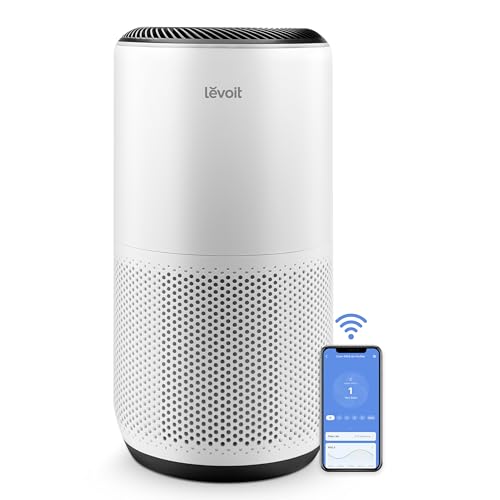
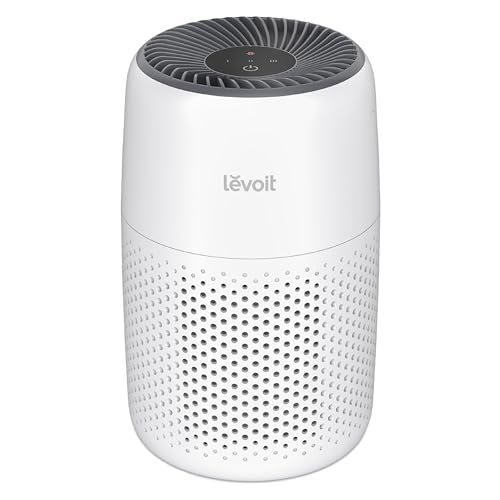
While the exhaust handles the bulk, a small air purifier running in the room handles the remainder: the fraction that escaped the window’s pull and the gases the fabrics would otherwise drink. The machine wants a true HEPA element for the particles and activated carbon for the gases — this site’s filter guides explain why both halves matter — sized honestly for a single room, which is the one case where the smallest machines are correctly matched to their job. Run it through the session and for hours afterward, ideally overnight, positioned between the smoking place and the bed rather than in a far corner. Two linked examples follow: Levoit’s Core Mini in its two colours, the desktop machine this site reviews in depth elsewhere in this cluster, and the charcoal bags that serve as the room’s passive second line.

Levoit Core Mini-P, White — the desktop cleanup crew
Best for a bedroom or dorm desk, running through the night
The Core Mini’s listing pitches it at bedrooms, dorms and desks, against smoke, allergens, pet dander, odour and dust — the correct brief for this article’s use. It is small enough to live on the desk beside the window seat this method establishes, quiet enough in its class to run overnight, and its filter includes the carbon stage the gas load requires; the listing also notes a fragrance sponge, which this article advises leaving empty — the goal is a room that smells of nothing, and a scented purifier works against the verdict the nose is trying to reach. Its full review, with the ownership detail, sits elsewhere in this cluster; here its role is the room’s patient second shift.
- Brand line: Levoit Core Mini-P
- Brief per its listing: smoke, allergens, pet dander, odour, dust
- Placement class: desktop, bedroom, dorm
- Filter: HEPA-type with carbon stage; fragrance sponge (leave empty)
Strengths
- Sized and priced for exactly one room — this method’s unit of work.
- Small enough to sit at the workstation window rather than across the room.
- Carbon stage addresses the gases, not just the visible smoke.
Trade-offs
- It cleans the room’s air over hours; it cannot intercept a smoke stream like the window fan can.
- Filters are consumables, and a smoking room spends them faster than a dusty one.
- One room is its world — it will not defend a whole flat.
Best for: the bedroom or dorm room where the method is practised regularly. Not suited for: being the only measure — without the window exhaust, it is mopping during a flood.

Bamboo Charcoal Air Purifying Bags, 12 Pack — the passive garrison
Best for wardrobes, drawers and the room’s soft corners
The twelve-pack of bamboo charcoal bags earns its place in this method at the reservoirs: one in the wardrobe among the clothes, one in the bedding’s drawer, two at the room’s corners and the rest rotated, adsorbing the gases the fabrics give back over the following days. They are fragrance-free — adsorption, not masking — and their patience matches the load’s re-emission curve. This site’s car-odour guide uses the same bags for the same physics in a smaller box. They are the cheapest layer in the article and the one most often skipped, usually by households who then wonder why the room’s soft furnishings keep a diary.
- Material: bamboo activated charcoal
- Pack: 12 bags, mixed sizes per its listing
- Role: passive adsorption at the reservoirs
- Fragrance: none
Strengths
- They guard the exact places the smell retires to — clothes, bedding, drawers.
- No power, no noise, no scent of their own.
- The pack’s count allows genuine distribution rather than a token bag.
Trade-offs
- Passive and slow — they finish a managed room; they cannot rescue an unmanaged one.
- Finite capacity, spent faster in a smoking room than in a shoe cupboard.
- They do nothing during the session itself; their shift is the days after.
Best for: the standing defence of a room where the method is a routine. Not suited for: a one-night emergency before an inspection, where only ventilation and time tell the truth.
The session protocol, in order
Prepare the room before anything is lit: door closed, towel along the door’s bottom gap — its job is to keep the exhaust’s draw local and the corridor out of the circuit — window open, fan fitted and running outward, purifier on, personal filter in hand, and anything precious and porous that can leave the room (the good coat, the open laundry basket) already out of it. Smoke seated at the window, exhaling through the filter toward the fan, keeping the burning end within the exhaust’s reach between draws — an ashtray on the sill inside the airflow, never on the bedside table across the room. When finished, let the fan run a full half hour and the purifier run for hours; dispose of ash and ends immediately, sealed, out of the room entirely — a butt in a bin is a reservoir with a lid problem — and wash hands and face, because the smoker carries the smell on skin and clothes into every other room they enter, which is how a well-managed room still gets its owner reported by the hallway.
Afterward: the reservoirs’ housekeeping
The room’s soft surfaces are the smell’s pension fund, and regular small withdrawals keep it from maturing. Bedding washed on the household’s normal rhythm rather than a crisis rhythm; curtains — the room’s largest smoke-facing textile — washed or aired far more often than a non-smoking room’s; clothes kept behind a closed wardrobe door during sessions and the wardrobe’s charcoal renewed. Hard surfaces get a wipe in the weekly clean, since the film that forms on them is dilute but real. A room where smoking is a routine should also expect its purifier filters and its personal-filter cartridges to live on the fast end of their replacement schedules, and its soft furnishings to age aromatically faster than a smoke-free room’s — the method reduces the load enormously, and honesty requires the residue be admitted: a room smoked in weekly, however well managed, will not pass a non-smoker’s close inspection forever. Method buys discretion and time; it does not buy innocence.
Shared houses, dorms and landlords: the social physics
In a shared house, the smoke that matters is the smoke that leaves the room — through the door’s gaps when it opens, on the smoker’s clothes, down a shared ventilation path. The door towel, the closed-door exhaust and the corridor discipline (not wandering the house mid-session in smoking clothes) are the respects owed to housemates, and they are also simply the method working as designed. Dormitories and rentals add a contractual layer this article will state plainly: most leases and dorm rules prohibit indoor smoking outright, and no odour method changes a rule — it only changes detection, which is a gamble with a deposit on one side and a fine on the other. The reader’s circumstances are their own; the article’s duty is to note that the surest way for a room not to smell of smoke, in a building where smoking is banned, is the way the rule imagines. Where smoking is permitted, the method above is how a considerate smoker keeps the permission from becoming the household’s grievance.
Health and safety notes that belong in this article
Secondhand smoke is a real exposure for anyone sharing the air, and the exhaust method exists partly for them: a room ventilated as described exposes housemates and pets to a fraction of the unventilated load, which is a harm reduced, not a harm erased — children and anyone with respiratory conditions deserve the smoke-free arrangement outright, not the managed one. Fire is the other resident risk: smoking in bed is struck from any version of this method, ash is drowned or sealed in metal, and nothing smoulders unattended in a room full of the textiles this article has been discussing. And the smoker’s own exposure is unchanged by any of it — the window defends the room, not the lungs, and this article’s honesty about reservoirs applies to the body’s as well.
Common mistakes that give the game away
Smoking in the room’s centre is the founding error. The second is the inward fan or the ceiling fan, distributing the load to every surface with mechanical fairness. Third is trusting a scented spray or candle to finish the job — the layering is a signature, not a disguise. Fourth is leaving ash, ends and the ashtray in the room, a reservoir kept warm by neglect. Fifth is opening the door mid-session for a corridor wander in smoking clothes. Sixth is forgetting the sidestream — holding the cigarette away from the window between draws while exhaling carefully toward it, a choreography that filters the smaller stream and frees the larger. Each mistake is a stream unmanaged, and the method is nothing but the streams, managed in order.
Final word
A room’s smell is a physical inventory, and it can be kept small: capture at the mouth, exhaust at the window, filter the air, guard the reservoirs, and clear the evidence out of the room entirely. Practised whole, the method leaves a room that airs clean by morning and keeps its counsel for days rather than weeks. Practised in pieces — the spray without the fan, the purifier without the window — it leaves the usual story. The physics does not grade on effort; it grades on streams.
Variations: the bathroom fan, the balcony door and the winter problem
The bathroom session
A bathroom with a genuine extractor fan is the window method wearing tiles: the fan exhausts at ceiling height where smoke rises, the room is small so its air turns over quickly, and the surfaces are hard and wipeable rather than upholstered. Its disciplines are the same — door closed, exhale toward the fan’s draw, time allowed after — plus one of its own: the extractor must actually move air, and a fan that merely makes noise while its duct is blocked is a rumour of ventilation. Steam from a shower run simultaneously is folklore’s favourite addition; the moisture does weigh some particles down, onto the bathroom’s surfaces, which in a tiled room is a tolerable trade and in a bedroom would be madness.
The balcony door and the half-outside compromise
Standing in an open doorway with the smoke outside the threshold and the smoker inside is the method’s border territory: it works when the air movement is outward — a warm room in winter breathes out through an open door’s top while drawing in at its bottom, so position and the smoke’s height matter — and fails silently when a breeze reverses the flow and delivers the session to the living room. A small fan in the doorway settles the argument in the right direction, and the arrangement’s honesty is that it is three-quarters of the way to simply stepping outside, which remains the only zero-load option and deserves its sentence in every version of this guide.
Winter, and windows that cannot open wide
Cold weather shrinks windows to a crack and makes the exhaust fan’s job harder and more valuable: a fan fitted to a small opening moves the same air through a smaller hole with more authority, and the makeup air under the door keeps the corridor’s warmth largely out of the transaction. Storm windows and secondary glazing complicate the fit; the fan goes in the room’s other opening or the session moves to the bathroom’s extractor. What winter does not permit is the abandonment of exhaust altogether on grounds of temperature — a room smoked in with the windows sealed in January is the reservoir problem at its annual maximum.
The morning-after audit, and what it teaches
Judge the method the next morning, with a nose that has been out of the room — ideally the whole house’s air — for some hours: enter, close the door, and take the room’s first breath at face height and again at the bedding and curtains, where the reservoirs report. A room that passes at the curtains has a working method; a room that passes in the air but not at the textiles has an exhaust success and a reservoir problem, answered by the laundry and charcoal stages; a room that fails in the air has an exhaust problem, and no amount of fabric washing will substitute for the fan’s discipline. Keeping the audit honest — and not conducting it with a smoker’s adapted nose straight from another session — is what turns folklore into a protocol that improves.
Setting up the room once, so every session is easy
The method succeeds as furniture, not as improvisation. A chair that lives at the window, the fan that stays fitted through the season rather than being fetched from a cupboard, the ashtray that belongs on the sill and nowhere else, the smoking layer on its hook, the purifier stationed rather than stored — a room arranged this way makes the protocol the path of least resistance, which is what any repeated behaviour needs to survive contact with tired evenings. Households that must assemble the method nightly abandon it by the third week and return to the centre of the room and the spray; households that build it into the room’s geography are still running it, unremarked, a year later. If this article has a single piece of advice beyond the physics, it is that: make the right way the easy way, in the room’s arrangement, once.
Frequently asked questions
Does a sploof or personal filter actually work?
The commercial carbon cartridges genuinely filter the exhaled stream and cut its odour substantially. The homemade dryer-sheet versions mostly perfume it. Neither touches the sidestream smoke rising from the burning end, which is the larger share of the room’s load — which is why this article ranks the outward window fan first and the personal filter as its partner, not its replacement.
Will an air purifier alone keep a room from smelling?
No. A purifier cleans the room’s air over hours, while smoke deposits on surfaces within minutes. Without window exhaust capturing the streams at source, the purifier is reducing a load that has already moved into the curtains and bedding. Used with the exhaust, it is excellent at the remainder; used alone, it is the most expensive way to lose slowly.
How long does smoke smell last in a room?
Unmanaged, days to weeks, because the gases adsorb into soft furnishings and re-emit slowly. Managed by this article’s method — exhaust during, purifier after, reservoirs guarded — the room’s air clears within hours and the residual surface load is a small fraction, fading over days. A room smoked in once, well managed, is usually neutral by the next day; a room smoked in daily carries a standing background no method fully erases.
Does the towel under the door work?
It does one narrow job: it keeps the room’s air circuit local, so the exhaust fan draws from the window side and the corridor neither feeds the room nor receives its air while the door is closed. It does nothing for the room’s own smell and nothing at all once the door opens — which is why it is a supporting detail in this method and not, as folklore has it, the method itself.
What about vaping instead — does it smell?
Vapour carries far less of the combustion load and its smell fades in a fraction of the time, which is a physical fact rather than a recommendation. It is not odourless — the flavour compounds are detectable in the room during and shortly after — and it deposits its own film on glass and surfaces over time. The same exhaust discipline makes a vaping room effectively neutral quickly; the reservoirs’ long story, however, belongs to smoke.
How do I get the smell out of a room that already has it?
By the reservoir method this site’s car guide uses at room scale: soft furnishings washed or aired, hard surfaces wiped, the room ventilated hard for a day, charcoal bags placed at the reservoirs and the purifier run continuously for days. Old loads in curtains and bedding are the work of a laundry cycle, not a spray. This article’s protocol, run without the smoking, is the cure as well as the prevention.
Do scented candles or incense help?
They add a second smell, and the combination is legible to any visitor as smoke-plus-candle rather than as candle. Incense is itself a smoke load with its own reservoirs. If a scent is wanted for the room’s ordinary life, use it on a day with no session, in a room already neutral — fragrance as decoration, never as camouflage, because camouflage is the one use at which it reliably fails.
How do I keep the smell off my clothes?
Smoke in a designated layer — a robe or overshirt that lives by the window and is washed often — with hair tied back or covered if it is long, and the wardrobe door closed throughout. Hands and face washed after, since skin carries the smell into every handshake and pillow. The clothes question matters beyond vanity: most “the room smelled fine but you didn’t” reports are the smoker’s own wardrobe giving evidence the room never did.
Is it better to smoke in the morning or at night?
For the room, whichever time allows the full protocol afterward — the fan’s half hour, the purifier’s long run, the evidence removed — and a night session has the advantage of the purifier’s whole overnight shift and the disadvantage of bedding metres away absorbing through the small hours if the exhaust was skimped. For the household, the considerate hour is the one housemates are out or awake; smoke management is partly acoustics and courtesy, and the method includes them.
What is the one purchase that matters most?
The window fan, fitted and sealed properly. It is the only tool that removes the load from the room rather than processing it in place, and every other measure in this article is its supporting cast. A household that buys one thing buys the fan; a household that buys two adds the personal filter; the purifier and the charcoal govern the days after, and they rank accordingly.
Can I use this method in a hotel room?
The physics travels; the contract does not. Most hotels prohibit smoking in non-smoking rooms with cleaning fees set by people who know exactly what a room’s reservoirs cost to cure, and this article’s method reduces odour without changing the rule or the ash evidence. The honest counsel is the designated smoking room or the hotel’s outdoor area — the one setting where the surest method is also the available one.
Why does the smell linger in my hair and skin?
Because hair and skin are reservoirs with excellent surface area, worn into every room the smoker enters. The protocol’s answer is unglamorous: a smoking layer over the clothes, hair covered or tied, hands and face washed, and a shower before bed if the bedding is to stay innocent. Smokers underestimate this route because their own noses adapt fastest of all — the household’s reports about the smoker personally are data, not persecution.
Does opening two windows help?
Only if the airflow’s direction is managed: two open windows in a cross-draught can carry the smoke across the room — through the reservoirs — on its way out, which is worse than one window with a fan. A second opening on the room’s far side, low, as the fan’s dedicated intake, can help the exhaust work; a second opening left to chance is a coin toss with the curtains as the stake.
How often should the purifier filter be changed in a smoking room?
Faster than the maker’s ordinary schedule, and by evidence rather than calendar: when the machine’s output air starts carrying a stale note, or the morning-after audit worsens despite the same protocol, the carbon stage is spent. Carbon saturates invisibly — this site’s carbon guides make the point at length — and a smoking room is the high-load case every replacement schedule quietly assumes you are not. Budget for it as a running cost of the method, like the personal filter’s cartridges.
What if there is no window fan — just an open window?
Then the session’s quality rides on the weather: a breeze blowing outward at the window makes an open window a fair exhaust, and a still day or an inward breeze makes it a decoration. Smoke seated at the window regardless, exhale outward through the personal filter, keep the session short, and let the purifier’s long shift carry more of the load. The fan’s entire value is that it removes the weather from the equation.
Does chewing gum or mouthwash matter?
For the smoker’s breath in the corridor afterward, yes, marginally — and breath is the one reservoir that leaves the room with its owner, so the courtesy is real. It has no effect on the room itself. This article mentions it only because households consistently rank the smoker’s personal evidence — breath, hands, clothes — as the giveaway, ahead of the room the protocol worked so hard on.
Can a roommate who does not smoke share this room later?
That is the audit’s real form, and the honest answer is: a room under this method, given a day’s airing and the laundry stage, satisfies most people for ordinary purposes — and a sensitive non-smoker moving in permanently deserves the full reservoir cure from this site’s odour guides, plus time, rather than a protocol designed for discretion between sessions. Match the standard to the stakes: a visitor’s evening and a new tenancy are different examinations.
What is the fastest possible turnaround before a visitor arrives?
Stop early — the protocol needs its hours, and no purchase compresses them honestly. Fan at full exhaust with the door closed for an hour, purifier on its highest tolerable setting, every trace of ash and ends out of the building, soft furnishings’ worst offenders (the throw, the cushion covers) swapped or aired, and the smoker showered and changed. What remains is the reservoirs’ low background, which a short visit rarely interrogates at curtain level. What cannot be done is the same turnaround for a visitor who will sleep in the room — the bedding’s testimony runs all night.
Do houseplants help?
Plants process air at a rate that matters to a sealed terrarium, not to a room with a smoker in it; their real contribution is psychological, and their soil is one more reservoir to keep away from ash. Keep plants for the pleasure of them, and let the fan do the ventilation — the division of labour is not close.
How do I handle the smell in a rented room before an inspection?
Stop sessions with the longest lead time available — days, not hours — then run the cure rather than the session protocol: laundry for every washable textile, hard surfaces wiped, hard ventilation for a day, charcoal at the reservoirs and the purifier continuous. Inspections are conducted by noses that do this professionally; the room that passes is the room that was actually cured, and the landlord conversation this article cannot have for you is eased by nothing in a spray can.
Is smoking by an open window with no fan disrespectful to neighbours?
It can be — the exhaust has a destination, and a window fan aimed at a neighbour’s open window across a light-well merely relocates the household’s grievance. Consider the plume’s path as part of the method: sessions timed away from the neighbour’s own window hours, and the personal filter doing more work when the air outside is shared closely. Urban smoking is a negotiation among windows, and the considerate protocol includes the ones that are not yours.
What should I do about a smoke detector?
Nothing whatsoever to the detector — it stays fitted, powered and unobstructed, because its job outranks every session. The method’s answer to detectors is the same as its answer to smell: exhaust at the window keeps the ceiling’s air clean enough that a normally sited detector is not troubled by a disciplined session. A room where smoking routinely reaches the detector is a room whose exhaust has failed, and the correct response is to fix the ventilation or move the smoking outside — never to silence the alarm.
Does the type of tobacco or herb change the method?
The loads differ in intensity and persistence — cannabis’s re-emission story is told in this site’s car guide, pipe smoke carries its own room-filling ambitions, and a cigarette’s sidestream is the classic case — but the three points of attack do not change: capture, exhaust, reservoirs. Stronger loads argue for longer exhaust after the session and faster consumable replacement, not for different physics.
How small a room is too small?
A box room concentrates everything: the load per cubic metre is the highest, the reservoirs are all within a metre of the source, and the audit is correspondingly unforgiving. The method still applies — window, fan, filter — but small rooms argue for shorter sessions, longer exhaust, and a purifier sized at the generous end of the room’s class. The smallest rooms are also where the case for simply stepping outside is strongest, and the article’s honesty requires saying so without flinching.
What do I do if the room has carpet?
Carpet is the floor’s reservoir, and it takes the protocol’s respect: sessions never over the carpet’s centre when the window’s hard floor or a washable mat can host the chair, ash discipline doubled because a dropped ember is a burn and a smell in one, and the carpet added to the seasonal deep-clean list with the enzyme treatment this site’s carpet guide describes. A rug that can be taken up and aired is the smoking room’s best floor arrangement.
Can I smoke in a room with a baby or a pet bird?
No — and this is the article’s one absolute. Small lungs and, in birds, an extraordinarily sensitive respiratory system are not a harm-reduction case; they are an exclusion. The method exists for rooms shared by consenting adults and robust pets at a distance, and any room that hosts a child or a bird is a room where the smoking happens elsewhere, entirely, without a protocol. Some questions have a short answer, and the article is better for giving it plainly.
What is the realistic best case, stated plainly?
A room that airs neutral within hours, whose textiles carry only a faint background that a fresh nose finds at close range for a day or two, and whose owner is rarely reported by the corridor. That is the method at full discipline, and it is a large, real improvement over the unmanaged room’s weeks of testimony. Anything promised beyond it — by a product, a spray or a folk trick — is marketing, and the reader now owns the physics to grade it.
How do I dispose of ash and ends without the bin smelling?
Seal them out of the room’s life entirely: ash drowned or emptied into a small metal container with a lid, ends extinguished fully and bagged before they meet the household bin, and the whole package out to the external bin the same day. A smoking room’s bin is the most commonly forgotten reservoir in this entire article — the session can be perfect and the bin will testify for a week. Treat the waste stream as part of the smoke stream, because to the nose there is no difference.
Does a shower or bath running in an en-suite help?
The en-suite’s extractor is a second exhaust and the steam a minor particle weight, so an en-suite bathroom genuinely assists a bedroom’s protocol when its fan draws well — with the caveat that the bathroom’s own textiles join the reservoir list. It is the same physics through another door, and households with the layout use it as the winter variation when the bedroom window is storm-sealed.
What if my window opens onto a fire escape or shared balcony?
Then the exhaust’s destination is a shared space with its own users and often its own rules, and the session’s timing and the filter’s share of the work both increase. The method does not change, but the courtesy calculation does — and a fire escape is an egress route first and a smoking place never, since obstructing or lingering on it has safety and legal dimensions no odour question should be allowed to blur.
How long should the fan run after the session?
A full half hour is this article’s floor, and an hour is better in still weather — the room’s air needs several complete changes to carry the airborne remainder out, and the clock, not the nose, should call the end, because the nose adapts within the session and will declare the room clear while it is still loaded. Set a timer; the protocol’s discipline is largely the discipline of letting machines finish.
Why do hotels and landlords always know?
Because they audit the reservoirs professionally — curtains sniffed, bedding at close range, the bathroom’s extractor filter, the bin — and because they audit with fresh noses on a schedule. The lesson travels home: the amateur’s audit in this article copies theirs deliberately, and a room that would pass a housekeeper’s pass is the only honest definition of “without smelling it” this guide is willing to print.
Is an open window in winter wasting heating?
A half hour’s exhaust costs a room’s air its warmth, which the heating replaces in minutes once the window closes; the walls and furniture keep theirs. Weighed against the alternative — the load in the textiles for a week — the fan’s half hour is the cheap option in energy as in odour, and the comparison is not close enough to argue with.
What is the difference between this and just smoking outside?
About an order of magnitude of reservoir load, honestly stated. Outside remains the only method with no indoor residue, and this article’s protocol is for the times and places that is genuinely not chosen — weather, mobility, the hour, the building. The guide’s respect for its readers is to give them the real physics for the indoor case without pretending it equals the doorstep; the doorstep wins, and everyone in this conversation knows it.
Can I run the purifier only during the session?
You can, and you will get the least valuable third of its work: the hours after are when the room’s airborne remainder is still deciding between the filter and the curtains, and the purifier’s overnight shift is where its purchase is justified. Run it long, on the quiet setting, and let the audit judge — households that economise on the purifier’s hours spend the savings on laundry.
How do I talk to housemates about it?
Before the first session, not after the first complaint — and with the method on the table: the window station, the fan, the closed door, the laundry rhythm, and the audit they are invited to conduct. Housemates who are consulted and given a working grievance standard (“tell me when the corridor smells, and I will change the setup”) rarely become adversaries; the smoke that poisons shared houses is usually the smoke that was never discussed. Consideration, like ventilation, works best when it is installed in advance.
What single habit separates success from failure?
Removing the evidence from the room entirely, every time — ash, ends, the smoking layer into its wash cycle, the bin out. Sessions are events; reservoirs are accumulations, and the households whose rooms stay neutral are the ones religious about the unglamorous five minutes after, when the session’s pleasure is over and its housekeeping is not.
Do I need to wash the walls eventually?
In a room smoked in for years, yes — walls and ceilings hold a film that washing with a degreasing solution visibly removes, and paint eventually carries a tint that only a fresh coat seals. The method’s households postpone that day by years rather than months, which is the honest scale of the claim. A room being returned to a landlord after a smoking tenancy should budget the wash, and possibly the paint, as part of the deposit’s arithmetic.
What about the smell in the hallway outside my door?
Hallway evidence is usually the smoker’s own traffic — clothes, hair, the door opened mid-session — rather than the room’s air escaping, because a closed door with a towel and an exhausting fan runs the room at negative pressure: air flows in under the door, not out. If the corridor smells, audit the traffic first and the door’s seal second; the physics of the setup is already on your side.
Is a window fan noisy enough to be its own problem?
A box fan at exhaust speed is audible, and in a quiet house at midnight it announces that something is being ventilated — though fans announce laundry, heat and insomnia as readily as smoke, and the sound carries no information beyond airflow. Run it at the lowest speed that still pulls the smoke stream visibly outward; a ribbon or tissue at the window tells you the truth about the draw, and the right speed is the one that bends it, not the one that roars.
Final check: what does the perfect session look like, start to finish?
Chair at the window, fan fitted and humming outward, door closed and towel down, purifier on, filter in hand, ashtray on the sill. Twenty minutes of smoke that mostly never enters the room’s volume. Fan on for the hour after, evidence sealed and out, layer in the wash basket, hands washed. Morning audit passed at the curtains. Nothing about it is magic, which is precisely why it works — and why the spray-and-hope method it replaces never did.
One more reservoir: books, papers and soft toys
Paper is a quiet reservoir — a bookshelf in a smoking room holds the smell in its pages long after the textiles are cured, and soft toys and cushions do the same. Keep the irreplaceable paper out of the smoking room if the collection matters, and give the cushions the same laundry rhythm as the curtains. Audits that fail mysteriously often end at the bookshelf.
And the mattress?
The bed is the reservoir closest to the audit’s nose for the longest hours, which is why the protocol seats the session at the far window and why a washable mattress protector — laundered on the bedding’s rhythm — is the cheapest insurance in the room. A protector costs one wash cycle; an unprotected mattress keeps its evidence for a season.
Does smoke stay inside a closed room, or does it affect the rest of the home?
It does not stay politely behind a closed door. Smoke particles and gases move with the air currents every building has, through gaps around doors, shared ventilation, and the simple act of opening the door to leave, and they settle on soft surfaces in hallways and neighbouring rooms as well as in the room itself. Other people in the home, particularly children, older relatives, and anyone with asthma or another breathing condition, can be exposed without ever entering the room, and the smell that settles into shared furnishings is not theirs to consent to. That wider effect is the part most often underestimated: containing odour where you are is not the same as containing exposure for everyone under the same roof, and no filter or towel changes that basic fact.
What fire risks come with smoking in a bedroom?
A bedroom is one of the most hazardous places in a home to smoke, because it combines a drowsy smoker with the most flammable furnishings in the house: bedding, mattresses, upholstered chairs, curtains and piles of clothing. Falling asleep while smoking is a well-documented cause of fatal house fires, and a cigarette that slips into bedding can smoulder unnoticed for a long time before it flames. Emptied ashtrays belong in a metal container outside, never in a bedroom bin lined with tissues and paper, and smoking in bed should be avoided outright rather than managed. A smoke alarm in the room and the hallway outside it, tested regularly, is essential in any home where anyone smokes, and it is protection for the whole household, not a formality.
Related reading on this site
how to get weed smell out of your car
how activated carbon filters work