Disclosure: As an Amazon Associate, dailyhomedecorating.com earns from qualifying purchases. Links on this page are affiliate links; they cost you nothing extra. Prices and availability change often, so check the current Amazon listing before you buy.
The honest answer to how to clean an activated carbon air filter begins with a correction that will save you money and disappointment: the carbon itself cannot be cleaned back to life. Activated carbon works by storing gas molecules on an enormous internal surface, and when that storage is full, no washing, vacuuming, baking or afternoon of sunshine restores it — reactivation is a furnace process, not a kitchen one. What can be cleaned, and cleaned usefully, is everything around the carbon: the dust caked on its face, the washable pre-filter that stands in front of it, and the machine’s intakes and housing. This article teaches that cleaning properly — which stages to wash, which to vacuum, which to leave alone, and how to tell the difference between a filter that is dirty and a filter that is done — because confusing the two is how households end up running a handsome, dust-free, completely exhausted carbon filter for a year while the kitchen smells return.
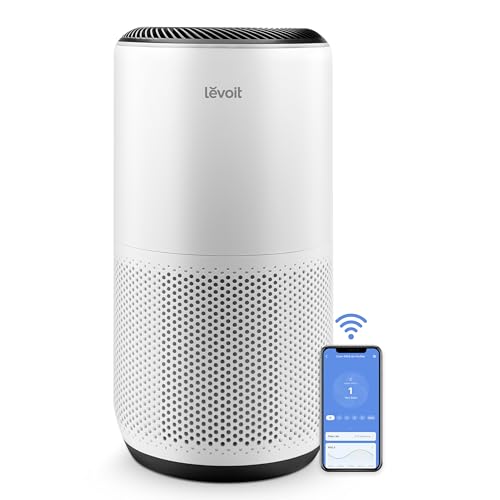
Two verified products anchor the guidance, both confirmed through this site’s own Amazon Creators API check: a genuine Levoit Core 300 replacement cartridge, whose combined stages let the article show exactly which layers respond to cleaning, and the Levoit Core 300S purifier whose cartridge it is. The principles generalise to every brand’s carbon stage, from cut-to-fit pre-filter sheets to deep canister beds.
First, identify what you are holding: the three kinds of carbon stage
Carbon reaches a home purifier in three forms, and the cleaning rules differ by form. The first is the combined cartridge — pre-filter, HEPA and a carbon layer bonded into one cylinder or panel, as in the Core 300 family below. Nothing in a combined cartridge is washed; the whole unit is vacuumed gently at its outer surface if the maker allows, and replaced as a unit when any stage is spent. The second is the separate carbon stage: a foam or fabric pre-filter impregnated with carbon, or a tray of loose granules, sitting ahead of the HEPA filter. The impregnated foam can often be rinsed — for dust, not for capacity — while loose granules are never washed at all, only replaced or, in industrial settings, reactivated. The third is the washable pre-filter that contains no carbon at all, standing in front of a carbon stage and doing the dust work; this is the component whose washing actually restores performance, and confusing it with the carbon it protects is the category’s most common maintenance error. Read your manual’s filter diagram before any water runs: the diagram, not the colour of the media, decides what may be washed.
In this guide
What cleaning can do, stated as a balance sheet
Cleaning restores airflow. A pre-filter grey with dust is a resistor in the machine’s circuit — the fan works harder, moves less air, and the purifier’s real cleaning rate falls even though every stage downstream is healthy. Washing or vacuuming that layer returns the machine’s breathing, and with it the performance the household paid for. Cleaning also removes the dust that would otherwise coat the carbon bed’s outer surface and block the doorways to its pores, so a maintained pre-filter genuinely extends the carbon’s useful life — not by renewing the carbon, but by spending its capacity only on the gases it exists to catch. What cleaning cannot do is empty the carbon’s storage. The molecules adsorbed inside the pores stay there through any household process, which is why the odour test in the next section, not the filter’s appearance, is the verdict on a carbon stage’s life.
The saturation test: is it dirty, or is it done?
Judge a carbon stage by the job it was hired for. Run the purifier in the room it serves after a known odour event — a fried dinner, a painted door left ajar, the dog after rain — and give it its usual working interval. A living carbon stage takes the smell down on the schedule the household remembers from the filter’s youth. A saturated one leaves the smell standing at the end of the evening while the machine hums innocently, because the particle stages are still working and only the gas stage has retired. Confirm with the filter itself: remove the stage, and smell it in clean outdoor air. A carbon bed that smells of the household’s cooking and pets has begun returning what it stored; on a warm day it may do so noticeably, which is the displacement behaviour explained in this site’s explainer on how activated carbon filters work. Either verdict — the room test or the filter’s own smell — is sufficient. Replace a stage that fails them, however clean it looks, and record the date: the interval it achieved, in your house, with your loads, is the most honest replacement schedule you will ever be given.
How to clean each component, step by step
The washable pre-filter
Remove it outside or over a bin — a loaded pre-filter sheds its dust at the first handling — and vacuum the worst of the load before any water, because a soaked dust cake is harder to shift than a dry one. Rinse under a gentle tap or in a basin of plain water; the makers of washable stages are consistent that detergents are unnecessary and often unwelcome, since residues become the next thing the air must pass. Work the water through from the clean side so the trapped dust exits the way it entered. Then dry it completely — a full day in moving air is the household standard — because a damp pre-filter returned to the machine is a mildew invitation and a musty smell with a fan behind it. Only when it is dry to the core does it go back.
The combined cartridge
Do not wash it. The HEPA stage’s media is not a washable material — water mats the fibres, can damage the media’s structure, and leaves a cartridge that looks clean and filters badly — and the carbon layer gains nothing from the bath. What a combined cartridge accepts is a gentle vacuum of its outer pre-filter surface with a soft brush attachment, if the maker permits it, to lift the surface dust between replacements. Keep the vacuum’s suction modest and never press a bare nozzle into the pleats. Then put it back and let the calendar and the saturation test, not the cartridge’s colour, govern its retirement.
Loose granular carbon
Never wash it, never vacuum it in place, and handle a spent bed as what it is: a container of everything it adsorbed. Granular stages are replaced by pouring out the old media — outdoors, downwind, into a bag — and refilling with fresh carbon of the specified type and quantity, or by exchanging the canister whole where the design prefers it. If a granular bed has been spilled, vacuum the spill rather than sweeping it into the room’s air, and wipe the area with a damp cloth.
The machine around the filters
While the stages are out, vacuum the intake grilles and the filter bay, wipe the housing with a barely damp cloth, and check the seals the filters sit against — a gasket with dust caked on its face is a bypass waiting to happen. This is also the moment to look at the fan’s accessible surfaces and the air-quality sensor’s little window, which a film of dust can blind. None of this is glamorous and all of it is the difference between a purifier that performs at its rating and one that performs at its age.

Levoit Core 300-RF Genuine Replacement Filter — when cleaning ends and replacing begins
Best example of a combined cartridge’s end-of-life decision
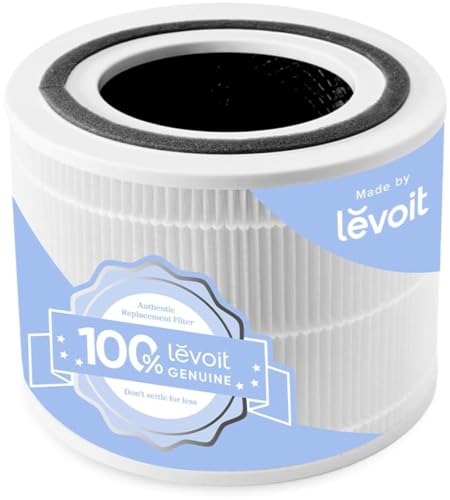
The genuine Core 300 cartridge is the article’s worked example of a combined stage: its own listing names the activated carbon layer and the smoke-odour work it performs, and the cartridge is replaced as a unit precisely because its stages age on different clocks that the design has chosen to synchronise. When the saturation test fails this cartridge, the correct maintenance is this product — a fresh unit whose carbon, HEPA and pre-filter all begin their lives together — and the genuine article guarantees the carbon quantity and the seal fit that the machine’s ratings assume.
- Type: genuine replacement cartridge, Core 300-RF
- Stages: pre-filter, HEPA and activated carbon, combined
- Cleaning rule: vacuum the outer surface only if permitted; never wash
- Retirement test: odour breakthrough, not appearance
Strengths
- One part renews every stage, so no stage is stretched to match another’s life.
- Genuine specification — the carbon content the machine was rated with.
- The replacement resets the maintenance calendar cleanly.
Trade-offs
- A spent carbon layer retires a HEPA stage that may still look serviceable — the combined design’s known cost.
- Compatible cartridges undercut it, with carbon content that varies invisibly.
- Its life in your home is set by your odour loads, not by the interval on any box.
Best for: Core 300 owners whose saturation test has failed and who want as-new odour performance restored. Not suited for: owners hoping to wash the cartridge back to life — the physics in this article says otherwise.
Levoit Core 300S-P — the machine whose stages you are maintaining
Best reference for a modern cartridge purifier’s maintenance shape
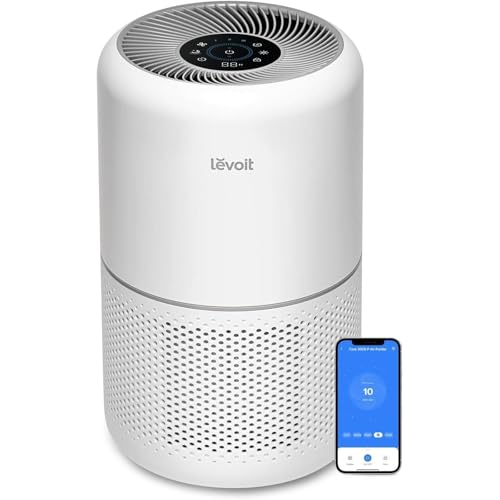
The Core 300S is verified here through the API — smart Wi-Fi control, AHAM-verified performance claims, a quiet sleep mode — and it represents the maintenance reality of the modern mainstream: one cartridge, a filter-life indicator that counts time, and a household whose real schedule should be set by the saturation test rather than the indicator. Its auto mode deserves a maintenance mention of its own: by resting the fan when the air is clean, it spends the carbon’s capacity only when the room asks, which is the gentlest life a cartridge can live.
- Filtration: combined cartridge with carbon stage
- Controls: smart Wi-Fi, app and voice, auto and sleep modes
- Maintenance: cartridge replacement; surface care per manual
- Brief: bedrooms and living spaces
Strengths
- Auto operation spends filter life where the air needs it.
- The single-cartridge design makes the maintenance decision binary and honest.
- Quiet low speeds suit the bedrooms where these machines mostly live.
Trade-offs
- The indicator counts hours, not saturation — heavy-odour homes must test for themselves.
- Cartridge carbon is sized for everyday loads, not smoke-heavy rooms.
- Smart features are wasted on households that prefer a dial, who should buy accordingly.
Best for: households that want modern purifier performance with a one-part maintenance story. Not suited for: heavy smoke or chemical loads, which want deep separate carbon beds.
A maintenance calendar a household can actually keep
Monthly, in a pet or dusty home, and quarterly in a quiet one: remove and vacuum or wash the pre-filter as its type allows, wipe the intakes, and glance at the seals. At the same visit, run the nose test on the room after a cooking evening and file the result mentally against last month’s. Every season, do the fuller service — filter bay vacuumed, housing wiped, sensor window cleaned, the carbon stage removed and smelled in outdoor air. Replace the carbon-bearing stage when the saturation test fails, whenever in that calendar the failure arrives, and write the installation date on the new stage’s frame in marker so the next judgement has a denominator. Keep one sealed spare if your household’s loads are heavy or your retailer’s delivery is slow, stored indoors and dry as the carbon explainer advises, because a stage stored open in the utility room is spending itself on the utility room. That is the whole system: airflow maintained monthly, honesty tested seasonally, replacement on evidence.
How to choose a purifier whose carbon you can live with: the buying guide
Shop the maintenance before the machine. Ask whether the carbon is a separate stage or married to the HEPA in a cartridge, because that decides whether you will retire healthy HEPA media when the carbon dies, or healthy carbon when the HEPA does. Ask how much carbon there is, by weight, and treat silence on the point as an answer. Ask what the washable parts actually are — a genuinely washable pre-filter is a real economy over years, while a “washable filter” claim that dissolves, on reading the manual, into a vacuum-only cartridge is a marketing fog worth seeing through before purchase. And price the replacement stage across a five-year horizon at your household’s realistic interval, which the saturation test will teach you in the first year and which no listing can know. The cheapest purifier to own is often the one whose carbon is humble, separate and changed often; the most expensive is the premium cartridge stretched in denial.
Common mistakes in carbon filter care
Washing a combined cartridge stands first, for the damage it does to HEPA media while restoring nothing. Second is sun-baking a carbon stage in the belief that an afternoon outdoors reactivates it — the furnace temperatures that activation requires are not a weather event, and the stage returns to service exactly as full as it left, plus a day older. Third is judging by whiteness: a HEPA stage’s clean face says nothing about the carbon behind it. Fourth is stretching a saturated stage because the indicator has not lit — the indicator counts hours, and your frying pan does not care about its arithmetic. Fifth is storing the spare unsealed beside the solvents in the garage, pre-spending it. Sixth is neglecting the humble pre-filter until the carbon is blamed for an airflow problem that a five-minute rinse would have solved in spring.
Final word
Clean what cleaning helps — the pre-filter, the intakes, the seals, the sensor’s eye — and replace what cleaning cannot touch, on the evidence of the saturation test rather than the calendar or the colour. A household that keeps that distinction owns a purifier whose odour performance in year three matches year one, at the price of a stage changed when it is genuinely spent and not a month before or a season after. The carbon’s rule is simple enough to write on the filter frame next to the date: it stores, it fills, it is finished. Everything else is housekeeping, and housekeeping, done on the rhythm above, is easy.
Cleaning the neighbours: range hoods, HVAC filters and charcoal bags
The same doctrine governs every carbon stage in the house, and applying it across them saves the same mistakes in four rooms. The ductless range hood’s carbon cassette is a saturation item wearing a cleanable costume: its grease screen washes beautifully in the sink, and the carbon behind it does not wash at all, and households routinely restore the screen, admire it, and wonder why the hood’s odour work stays retired. Replace the cassette on the saturation evidence — last night’s fish surviving breakfast — and wash the screen monthly, because grease is the pre-filter problem of the kitchen and it strangles the hood exactly as dust strangles a purifier. HVAC carbon-impregnated furnace filters are pure consumables: thin beds, whole-house airflow, a life measured in weeks-to-months, and no cleaning of any kind restores them; their rhythm should be set by the household’s odour loads and the filter’s own smell at change time, which tells you whether the interval you chose was honest. The charcoal bags sold for cars, closets and shoes are the smallest carbon stages of all: their “recharging” in sunlight is the myth this article has already retired, and their real maintenance is replacement when the space they serve stops improving — a date the nose reports reliably if the household is listening.
The workshop and smoking-room exception: when to clean more and expect less
Heavy-load spaces invert the domestic arithmetic. In a workshop where solvents, finishes and sawdust share the air, or a room where smoking actually happens, a carbon stage’s life collapses from months to weeks, and the maintenance rhythm must collapse with it: pre-filters vacuumed weekly, the saturation test run fortnightly, and spares kept sealed on the shelf as a matter of course. Households in this position should also hear the category’s honest limit, which the buying guide above implies: cartridge carbon was not built for these loads, and the deep granular canister — pounds of media, changed by the pour — is the form that serves them, at a scale of cost and effort that matches the problem. Cleaning cannot rescue an undersized stage from an oversized job; it can only keep a correctly sized one honest.
What to do with a spent carbon filter
Bag it and bin it with ordinary household waste in most jurisdictions — a domestic carbon stage holds its captured load bound in the matrix and is not a hazardous item at household scale — and do not burn it, compost it, or add it to the garden, each of which returns or spreads what it collected. Granular media from a canister goes the same way, poured downwind outdoors into the bag rather than tipped in the kitchen. If your purifier’s maker runs a recycling or take-back scheme, it is worth using for the plastic housing’s sake; the carbon itself has no second life below industrial reactivation. The households that handle spent stages best treat the change as they treat a vacuum bag’s: a sealed, unceremonious disposal, a fresh stage dated in marker, and the calendar reset without nostalgia for the old one’s appearance.
Troubleshooting: the smells that are not the carbon’s fault
A purifier that smells musty on startup is usually reporting a damp pre-filter returned to service too soon, or a machine stored wet — dry the stage fully, run the fan in a ventilated room, and the smell clears with the moisture. A sweet or chemical smell from a new cartridge is the manufacturing signature described in the carbon explainer, gone within the first day of running. A smell that arrives only on high speed is often the room’s own reservoirs — the purifier moving enough air to strip odour from curtains and carpet faster than its carbon can adsorb the load — which is a sizing conversation, not a cleaning one. And a smell localised at the machine’s exhaust, sharp and electrical, is none of this article’s business at all: switch off, unplug, and let a technician or the maker’s support line own it. Maintenance has a border, and anything that smells of hot electrics lives on the other side of it.
Sunlight, ovens and the regeneration myths, taken one at a time
Three home regeneration rituals circulate in forums wherever this guide’s question is asked, and each deserves a direct answer rather than a general dismissal. Sunlight first: ultraviolet and warmth will drive some loosely held surface moisture and the most volatile compounds out of a carbon bed left on a driveway for an afternoon, which is why the ritual has survivors’ testimony behind it — but the deep sites where the filter did its real work are unaffected at those temperatures, and any improvement is a surface effect measured in days. The oven version, an hour at a moderate temperature, reaches further and risks more: binders, frames and the foam seals of a composite cartridge were never specified for it, and a warped seal costs more filtration than the heat recovers. The freezer version has no mechanism at all behind it. The pattern across all three is the one this guide has maintained throughout — carbon’s capacity is spent molecule by molecule at temperatures and energies a kitchen cannot safely reproduce, and the honest rituals are the surface ones: vacuuming the pre-filter, wiping the housing, and replacing the bed when the smell test says its work is done.
Keeping a filter log that actually predicts replacement
The households that replace carbon on time share one habit: they write the installation date on the cartridge frame itself, in marker, where the next person to open the machine will see it. That single inscription converts every later judgement from archaeology into arithmetic. Beside it, a note of the household’s load — a smoker, a gas hob used nightly, a litter tray in the same room — explains why this cartridge’s life ran shorter or longer than the maker’s estimate, and turns the second replacement into a prediction instead of another guess. The log need not be grander than those two lines. What it must be is attached to the machine rather than to a phone note or a memory, because the moment the information is needed is the moment the housing is open, and the person standing there should not have to go and find it.
The smell test, performed properly
This guide has relied on the returning-smell test as the practical end-of-life signal, and it is worth stating the test’s own protocol so it is not failed by its staging. Test at the source the filter was bought for: cook the fish, run the litter room’s ordinary day, use the room as it is used — then judge the air an hour later, not a day later, and judge it on entering from outside air rather than after sitting in the room, because a nose adapts to a slowly returning smell and will acquit a filter that a fresh arrival would convict. Two convictions on two ordinary days is the verdict. One ambiguous afternoon is not — humidity and an unusually heavy cooking day can overwhelm a bed that still has honest weeks in it, and replacing on suspicion alone is how households drift into changing filters at twice the necessary rate.
Frequently asked questions
Can you wash an activated carbon air filter?
You can wash a washable pre-filter that stands in front of the carbon, and you can rinse certain carbon-impregnated foam stages for dust if the maker allows — but no washing restores the carbon’s adsorption capacity. Combined cartridges and granular beds are never washed. Cleaning restores airflow; only replacement restores odour control.
Does vacuuming a carbon filter help?
It helps the airflow, by lifting surface dust from the stage’s face and the pre-filter ahead of it, and it is the correct maintenance for combined cartridges whose makers permit it. It does nothing for saturation. Vacuum gently, with a soft brush, and never press a bare nozzle into pleated media.
How do I know when my carbon filter is finished?
By breakthrough: odours the purifier used to clear begin lingering through its working cycle, and the removed stage, smelled in clean outdoor air, smells of the household it served. Either sign is decisive regardless of the stage’s appearance or the machine’s hour-counting indicator.
Can sunlight or baking reactivate activated carbon at home?
No. Reactivation requires sustained furnace temperatures far beyond an oven’s or a summer afternoon’s reach. Sunlight may dry a rinsed pre-filter — a legitimate step in washing that component — but it does not empty a carbon bed’s stored molecules, and treating it as reactivation leaves a full filter in service under a fresh illusion.
How often should the pre-filter be cleaned?
Monthly in homes with pets, heavy cooking or dusty conditions; quarterly in quiet homes. The pre-filter’s condition governs the whole machine’s airflow, so its rhythm should be set by inspection — a visible grey film is already overdue — rather than by a fixed date alone.
What happens if I keep using a saturated carbon filter?
The purifier continues to clean particles while its odour control quietly retires, and on hot or humid days the full bed can release a ghost of what it captured, perfuming the room it was bought to freshen. No damage is done to the machine, but the household is paying electricity for half a purifier and blaming the wrong stage.
Can I wash the HEPA filter in the same cartridge?
No. HEPA media is a delicate fibre structure that water mats and damages; a washed HEPA cartridge may look refreshed while its filtration and its airflow have both been compromised, which is worse than an honestly dirty one because the damage is invisible. The cartridge’s cleaning limit is the gentle surface vacuum described in this article, and its renewal is replacement as a unit.
Why does my purifier smell worse right after I cleaned the filters?
Usually because a washed pre-filter went back damp — the mustiness is the moisture’s, and it clears as the stage dries in service, though the correct fix is to remove and dry it fully rather than run it wet. A second possibility is disturbance: handling a loaded pre-filter knocks its dust into the machine’s bay, and the first hours of running redistribute it. Clean the bay at the same visit, dry everything completely, and the paradox disappears.
How should I clean a cut-to-fit carbon pre-filter sheet?
Mostly, you should not: the thin carbon sheets used as pre-filters in larger consoles are consumables whose value is their cheapness, and their correct maintenance is frequent replacement. A light vacuum can stretch one through a dusty week, and rinsing dissolves some binders and spreads the captured load without restoring capacity. Households that love this format — this article among them — love it because the replacement is inexpensive enough to be a rhythm rather than a decision.
Does cleaning the pre-filter really extend the carbon’s life?
Yes, by division of labour. Every gram of dust the pre-filter holds back is a gram that never coats the carbon bed’s pore entrances, and every point of airflow the clean pre-filter preserves is air the carbon stage processes at its designed contact time. The carbon still fills on the same schedule of gases; it simply spends its whole life on gases, which is the longest life available to it.
Should I clean the filter or replace it when the indicator lights up?
Read the indicator as a reminder to test, not as a verdict. At its signal, clean what is cleanable — pre-filter, intakes, bay — and then run the saturation test on the room. If the odours clear on the old schedule, the stage has life and the indicator was counting conservatively; reset it and continue. If breakthrough has arrived, no cleaning will answer the light, and the stage is replaced. Households that follow the test rather than the lamp spend less on cartridges across a decade and never run a dead one.
Can I use soap or vinegar on a washable pre-filter?
Plain water is the default and is sufficient for dust. A drop of mild detergent is tolerated by some makers for a greasy load — the kitchen-adjacent purifier’s pre-filter earns it — and must be rinsed until the water runs entirely clean, because residue becomes airborne perfume with a fan behind it. Vinegar has no role here; it adds an acid smell the carbon stage must then spend itself removing, which is maintenance eating its own tail.
How do I clean the air purifier itself, not just its filters?
Unplugged, always. Vacuum the intake and exhaust grilles with a soft brush, vacuum the empty filter bay, wipe hard surfaces with a barely damp cloth, and clean the air-quality sensor’s lens or window with a dry cotton bud as the manual directs. Never spray liquid into the machine, never run it with a stage removed “to air it out”, and let any wiped surface dry before the filters go back. The machine’s own cleanliness is the frame the filters’ cleanliness hangs in.
Is it worth buying a purifier with a washable filter to avoid all this?
It is worth understanding what the washable promise covers. Washable-filter machines — the electrostatic towers covered elsewhere on this site — genuinely retire the cartridge bill for their particle stage, and their washing routine is real maintenance that restores real performance. What they do not offer is HEPA-grade particle capture or a deep carbon bed’s gas capacity; their odour layer, where fitted, is usually a thin carbon pre-filter on the same replacement logic as everyone else’s. Buy the washable machine for its own merits and its own category, not as an escape from carbon’s physics, which follows the household into every design.
How long can I stretch a carbon filter if money is tight?
Stretch the particle side, not the gas side: a vacuumed pre-filter and a clean machine will keep a purifier’s dust work honest well past its indicator, and no harm follows. The carbon stage past saturation simply stops contributing — the household loses odour control, not safety — so a tight month can defer its replacement with open eyes, provided nobody mistakes the deferral for a renewal. When the money returns, the stage is replaced and the date is written on the frame; the sin this article prosecutes is not stretching, it is believing the stretch was a cleaning.
What is the white or grey dust on my carbon filter?
On the outer face, it is the household’s own dust that the pre-filter let through or that settled while the machine stood open — vacuum it away gently. Within a granular bed, a pale dust can be carbon’s own fines, the small particles generated as granules rub in transit and service; a new bed often sheds a little, which is why makers advise running a new stage in a ventilated room for its first hours. Dust that returns immediately after cleaning, in quantity, is the room reporting a source — construction nearby, a deteriorating carpet pad, a pet’s new favourite spot against the intake — and the filter is the messenger, not the problem.
Can cleaning a carbon filter make it work better than replacement?
No — cleaning’s ceiling is the performance the stage had when its surface was last clean and its bed still had capacity, and replacement’s floor is the performance of a new stage, which is higher whenever the old bed was partly spent. The two operations answer different questions: cleaning asks whether the machine can breathe, replacement asks whether the carbon can still store. A household that keeps both questions separate will never waste money on either operation performed in the other’s name.
Should I rotate two carbon filters to make them last longer?
Rotation rests each stage from service but does not restore it — a rested carbon bed is exactly as full as it was when it came out, because nothing in a cupboard empties its pores. What rotation can do is complicate your records until neither stage’s true age is known, which is worse than useless. The honest economy is the opposite arrangement: one stage in service, dated, tested on schedule, and one sealed spare waiting for the day the test fails. Simplicity is a maintenance feature.
Why does the manual forbid washing a filter that looks washable?
Because appearance is not construction. A pleated cartridge that resembles a washable panel may be HEPA media whose fibres water destroys invisibly, or a carbon sheet whose binder dissolves, or a stage whose seal depends on a dry gasket. The manual’s prohibition is the maker telling you which of those you are holding. When the manual and the eye disagree, the manual is the one that has seen the warranty returns.
How do I clean the filter of a purifier that has been in storage?
Assume the storage, not the service, is what needs cleaning off. Vacuum every stage’s surfaces, wash the washable pre-filter and dry it fully, wipe the bay and housing, and then run the machine in a ventilated room for an hour before judging anything by smell — stored machines exhale their cupboard for a while. Judge the carbon by the saturation test afterward, in a real room with a real odour event; a stage that was young when stored and was stored sealed may have most of its life, while one stored open in a damp garage has been spending it on the garage.
What tools do I need for purifier filter maintenance?
A vacuum with a soft brush attachment, a basin and a tap, a microfibre cloth, a cotton bud for the sensor window, a marker for dating stages, and the manual — kept with the machine rather than in the household’s general paper drift. Nothing on the list costs anything a home does not already own, which is the quiet argument for the whole routine: carbon-stage maintenance is a discipline, not a purchase, and its only consumable is the stage itself when the evidence says so.
Does a dirty pre-filter damage the carbon filter?
It taxes it rather than damaging it outright: dust that passes a neglected pre-filter coats the carbon’s outer surface and blocks pore entrances, and the airflow the machine loses to the clogged layer is air the carbon never gets to treat. Left for a season, the neglect shows up as a carbon stage that tests older than its months. The relationship is why this article orders its maintenance the way it does — the cheapest stage, cleaned on time, is the bodyguard of the expensive one.
Can I tell a filter’s remaining life from its weight?
Surprisingly, sometimes: a carbon bed gains mass as it adsorbs, and a stage weighed new and weighed at intervals on a kitchen scale tells a rough story of its loading, in the way a gas bottle’s weight tells its story. It is an enthusiast’s method rather than a household one — the saturation test by smell is faster and closer to the point — but it demonstrates the article’s central fact in a form you can hold: the filter is a store, the store fills, and the filling is physical.
What should I do if I washed a cartridge by mistake?
Dry it completely — days, in moving air, not hours — and then judge it by performance rather than hope: run the machine and test both its airflow and its odour work against your memory of it. Some cartridges survive a single gentle rinse with modest losses; others emerge with matted media and a permanent limp, and there is no inspection that settles which yours is except the working test. If the airflow is weak or the saturation test fails immediately, replace the stage and chalk the lesson to the cheapest tuition this subject offers: the manual’s diagram, read first, next time.
How does humidity affect cleaning and storage of filters?
Humidity is the enemy at every step: it slows a washed pre-filter’s drying into the mildew window, it spends a stored carbon stage’s capacity on water vapour, and it makes a running machine’s carbon work against the room’s moisture before it reaches the room’s odours. Dry stages in the driest moving air the house offers, store spares in the conditioned part of the home rather than the basement, and in a genuinely humid climate shorten every interval in this article — the calendar the manufacturer printed assumed a drier house than yours.
Is there any filter in a purifier that never needs attention?
No — and a maker who implies otherwise is selling the first month rather than the fifth year. Even the washable electrostatic systems need their washing, even the largest HEPA beds eventually load, and every carbon stage ever made is filling from its first hour. The differences between designs are in the rhythm and the bill, not in exemption from entropy. Choose the rhythm your household will actually keep; a modest machine maintained on schedule outperforms a flagship neglected, in every category this site reviews.
How do I keep track of which stage was changed when?
Write the installation date on each stage’s frame in marker at the moment it goes in — the single most effective maintenance habit in this article, costing four seconds — and keep the household’s one-line log where the machine lives: dates of pre-filter washes, dates of stage changes, and the saturation verdict that prompted each change. Six months later, that log is the difference between a household that knows its filters’ ages and one that is guessing at them while holding a cartridge up to the light.
Why does my purifier’s filter light come on at different intervals after each change?
Because most indicators are timers wearing a sensor’s clothes: they count the machine’s running hours from the last reset, and if the reset step was missed or done late at one change, every subsequent interval inherits the error. A minority of machines genuinely estimate load. Either way, the household’s own dated frames and saturation tests outrank the lamp — reset it conscientiously at each change so it stays a useful reminder, and never let it be the only record the household keeps.
Can a really dirty pre-filter make the room dustier?
At the point of neglect, yes: a pre-filter loaded past its capacity sheds under the fan’s vibration, and the machine begins redistributing a share of what it catches while its airflow — and therefore its capture — declines. It is the maintenance version of a full vacuum bag, and it is why the monthly rhythm matters more in dusty homes than in clean ones. The fix is the rinse or vacuum the stage was asking for, plus a wipe of the bay it shed into.
What is the correct order of cleaning tasks at a full service?
Work from the dirtiest to the cleanest and from the outside in: vacuum the room-side grilles first, remove the stages over a bin or outdoors, vacuum or wash the pre-filter and set it drying, vacuum the empty bay and wipe the seals, clean the sensor window, and only then handle the HEPA and carbon stages with clean hands for their inspection and smell test. Reassemble in reverse with everything dry. The order matters because each step’s debris is the next step’s contamination, and a service done backwards leaves the machine dirtier than a shorter one done in sequence.
Should I clean the filters before guests or a house sale?
Clean the cleanable, certainly — a freshly washed pre-filter and a wiped machine present and perform better — but do not let the occasion talk you into washing a cartridge or baking a carbon stage in a panic. If the saturation test says the carbon is spent, the honest preparation is a new stage, run for the days before the event so the house’s soft furnishings give up their stored odours into fresh capacity. Guests smell the house’s history, and the only way to edit history is fresh carbon with time to work.
How do I dispose of the dust and wash water from filter cleaning?
As the household waste it is: vacuumings go in the bin, ideally bagged straight from the vacuum’s canister outdoors if the load is heavy, and the pre-filter’s rinse water goes down a drain without ceremony — it is dusty water, not a chemical event. Households with severe dust allergies should wear a simple mask for the dry stages of the job and do the shaking-out upwind of themselves, since the pre-filter’s whole purpose was to concentrate what the room contained, and cleaning day is when the concentration is handled.
Does running the purifier on turbo clean its own filters?
No — turbo moves more air through the same loaded stages, which can shake loose dust off a neglected pre-filter into the room and which certainly does not empty a carbon pore. The idea survives because a machine at full speed sounds like it is doing something vigorous to itself; it is doing it to the room, at best. Filters are cleaned by hands, on the schedule above, with the machine off — there is no setting that substitutes.
What if my purifier’s manual contradicts this article?
Obey the manual. This article teaches the category’s physics and its usual rules; the manual knows your machine’s specific materials, seals and prohibitions, and where the two differ — a stage the maker certifies as washable that this article treats cautiously, or a vacuum prohibition this article permits generally — the specific instruction outranks the general one. The one point on which no manual should talk you out of the physics is reactivation: if any document promises that a household process restores a carbon bed’s adsorption, it is describing drying, not reactivation, whatever word it uses.
How should I dispose of a spent carbon filter?
Bag it before you carry it through the house. A saturated filter holds a concentrated load of the dust and household vapours it collected, and shaking it out at an outdoor bin simply relocates that dust into the air you are standing in. Slide it straight into a bin liner at the machine, seal the liner, and place it with ordinary household waste unless your local authority or the manufacturer directs a specific route for that model. Wash your hands afterwards, vacuum any crumbs of carbon or debris left in the housing with the new filter still in its packaging, and only then unpack and fit the replacement, so the clean filter does not start life loaded with the old one’s leavings.
Does running the purifier on its highest setting clean the carbon faster?
No, because the carbon is not being cleaned by airflow at all. Higher fan speeds move more room air through the filter each hour, which is useful when a smell first appears, but they do not restore adsorption sites that are already occupied, and a saturated bed stays saturated however hard the fan works. In fact, very fast airflow gives each parcel of air a shorter contact time with the carbon, which can slightly reduce how much is captured in a single pass. Use the higher setting to deal with a cooking episode or a newly painted room, then return to a steady lower speed for maintenance, and judge the filter by its age, its load, and any returning smells rather than by how long it has spent on turbo.
Related reading on this site
how activated carbon filters work
how to remove pet urine smells from a carpet