Disclosure: As an Amazon Associate, dailyhomedecorating.com earns from qualifying purchases. Links to Amazon on this page are affiliate links; they cost you nothing extra. Prices and availability change often, so check the current Amazon listing before you buy.
Families searching for the best chairs for stroke patients are usually solving a practical, everyday problem: finding a seat at home that feels stable, is easy to get in and out of, supports the body evenly, and does not shift, roll or tip during the small movements of daily life. This guide covers comfort and practicality only — chair selection after a stroke should always be discussed with the treating care team, who know the individual’s mobility, strength and any equipment already prescribed. Within that boundary, this guide ranks six chairs from a verified product pool on the features families actually ask about: firm armrests to push against, sensible seat heights, stable bases, supportive backs and details like storage pockets that reduce reaching. Readers also furnishing a desk corner for a recovering family member may compare Best Office Chairs For Support alongside this guide.
Every specification below comes from verified listing data — dimensions, weights, stated capacities and materials, with nothing estimated or invented. Where a chair’s features cut both ways — a glider’s motion, a swivel base, a very soft seat — the review says so plainly, because the right choice depends on the person, and only the family and their clinicians can judge that. Read the Quick Picks for the short answer, the reviews for the reasoning, and the arrangement sections for the room-setup details that make any chair safer and easier to live with.
Where to Buy
All six picks are sold on Amazon. Check the current listing for the latest price, colour options, delivery timing and availability before you buy, because all of these change often.
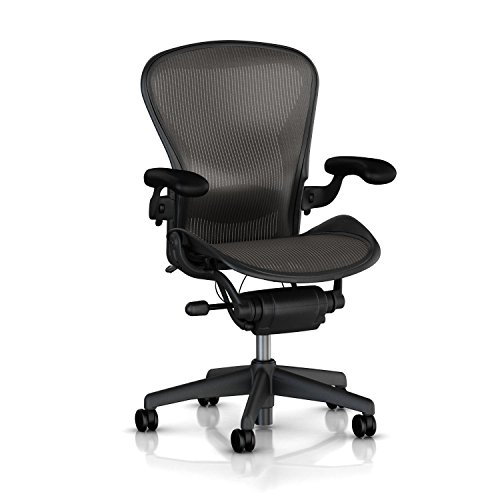
- Herman Miller Classic Aeron Chair-Aluminum — our first choice for stable, adjustable everyday sitting. Check on Amazon
- Hbada P5 Ergonomic Office Chair — Check on Amazon
- Costzon Nursery Glider with Ottoman — Check on Amazon
- DaVinci Atlas Upholstered Recliner & Swivel Glider — Check on Amazon
- VINGLI Mid-Century Modern Accent Chair — Check on Amazon
- LSSPAID Modern Accent Chairs — Check on Amazon
In this guide
Quick Picks
| Pick | Badge | Why it earns its place |
|---|---|---|
| Herman Miller Classic Aeron Chair-Aluminum | Best Overall | Precise support and controlled movement in a substantial, planted chair. |
| Hbada P5 Ergonomic Office Chair | Best Adjustable | Travelling lumbar support, adjustable arms and headrest adapt the chair to the person. |
| Costzon Nursery Glider with Ottoman | Best for Gentle Rocking | Smooth glide, matching ottoman and reach-friendly storage pockets. |
| DaVinci Atlas Upholstered Recliner & Swivel Glider | Best for Resting | Recline, high pillowback and armrest pillows for long, supported rest. |
| VINGLI Mid-Century Modern Accent Chair | Best High-Back | A fixed, stable accent chair whose back actually reaches the shoulders. |
| LSSPAID Modern Accent Chairs | Best with Lumbar Pillow | Deep soft seat with an included lumbar pillow and anti-slip foot pads. |
Key Takeaways
- Discuss any chair choice with the treating care team first — this guide covers comfort and practicality, not medical advice.
- Stability comes first: a planted chair with firm armrests beats a light chair that can shift during transfers.
- Seat height should let feet rest flat with room to push up using both arms and legs.
- Motion features — glide, rock, swivel — suit some people and not others; judge them with the care team’s input.
- Every pick is specified from verified data only; check the Amazon listing for current price and availability.
- For desk-based recovery routines, compare Best Home Office Chairs For Back Support for a support-weighted ranking.
How These Picks Were Chosen
The pool for this guide was fixed before writing began: chairs with Amazon listings whose titles, brands and specifications could be verified. Shortlisting for this search applied practical filters families raise again and again. The chair must feel planted — substantial weight or a wide, stable base. It must have armrests firm and positioned well enough to push against when standing. Its seat should be supportive rather than sink-in soft, because very soft seats make rising harder. And its back should support the full torso, ideally to the shoulders. Chairs that failed those tests — low lounge chairs, vast soft bean bags, light dining chairs — were excluded however comfortable they might be for other readers.
Two honest boundaries govern everything that follows. First, this guide is written from verified manufacturer and listing data assessed against general seating principles; it is not a clinical assessment, and no chair here is presented as medical equipment or as a treatment for any condition. Second, individual situations after a stroke vary enormously — in strength, balance, sensation and prescribed support — so the rankings are a starting point for a conversation with the care team and the person themselves, not a prescription. You will find no prices here because they change, and no popularity figures because they would be meaningless for a decision this personal.
Badges were assigned after ranking: Best Overall for the most adaptable everyday chair, then badges naming each runner-up’s specific strength — adjustability, gentle motion, rest, back height, included lumbar support. Motion deserves a special note: gliding and rocking soothe some people and unsettle others, and a swivel that helps one person reach a side table can surprise another during a transfer. The reviews flag each motion honestly so the family can decide with full information. Households also arranging supportive seating for general family use may find Best Sofas For Older Adults a relevant neighbouring read.
The 6 Best Chairs for Stroke Patients — Reviewed
Herman Miller Classic Aeron Chair-Aluminum
Our badge: Best Overall
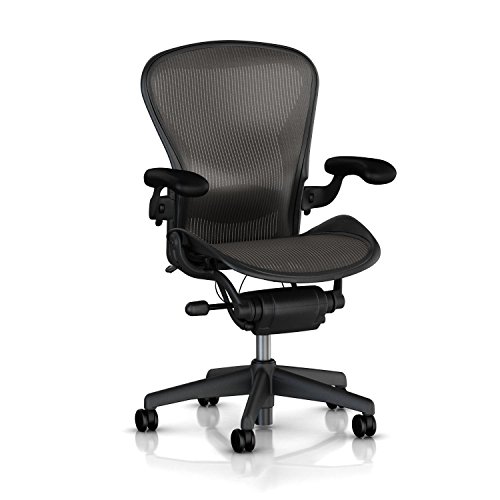
The Herman Miller Classic Aeron Chair-Aluminum leads this guide because controlled support is its entire design brief. Tension control, a rear tilt lock, forward tilt and lumbar support let the chair be set to a stable, supportive configuration and left there; the suspended seat distributes weight evenly rather than letting the sitter sink into foam; and at 50 pounds with an aluminum build, the chair feels planted. This listing is Size B, the medium, with hardwood-floor casters.
Strengths
- Tension control, tilt lock and forward tilt give precise movement control
- Lumbar support and breathable suspension keep long days comfortable
- Hardwood-floor casters are specified for finished floors
Trade-offs
- Size B medium will not fit very tall or very small users correctly
- Controls take a weekend to learn and set properly
- Casters mean the chair can roll — it must be positioned and used with that in mind
| Color | Black |
| Size | Size B (Medium) |
| Dimensions | 16 x 27 x 41 inches |
| Weight | 50 pounds |
| Product Group | Furniture |
| Binding | Kitchen |
The tilt lock matters more here than in any other guide in this series: it lets a carer or the user fix the chair’s movement range so the seat does not tip unexpectedly during sitting down or standing up, while forward tilt can ease the transition toward standing for some users — a setting to explore with the care team’s guidance. The suspended mesh-style support also avoids the deep sink of soft foam, so the effort of rising is predictable every time, and predictability is a comfort feature in itself after a stroke.
The casters require an honest conversation. On hard floors they make repositioning the chair easy for carers, but a chair that can roll must be placed so it cannot roll at the wrong moment — against a desk, on a suitable mat, or with the user’s routine built around it. Size is the other check: Size B suits the middle of the population, and a correct size is not a luxury here, because the support geometry depends on it. Confirm the exact configuration on the Amazon listing before ordering, as the pool data for this listing is brief.
Best for: A dedicated everyday seat where controlled, lockable support is the priority / Not suited for: Anyone for whom a rolling chair is inappropriate, or builds far from the Size B medium
Choose it if the care team is comfortable with a tuned, lockable chair; skip it if a completely fixed, non-rolling seat is required — the accent picks below stay where they are put. Check on Amazon

Hbada P5 Ergonomic Office Chair
Our badge: Best Adjustable
The Hbada P5 Ergonomic Office Chair adapts to the person rather than asking the person to adapt to it: adjustable lumbar support that moves up and down, armrests that raise and lower, an adjustable seat height with a 3.35-inch range, a 2D headrest, and a backrest that reclines to 135 degrees. Its S-shaped mesh back follows the spine’s curve, and the listing notes SGS certification and BIFMA testing.
Strengths
- Adjustable lumbar support moves up and down to meet your back
- 2D headrest adjusts in height and angle for neck support
- Mesh back breathes through long, warm sitting sessions
Trade-offs
- Mesh feel is firmer and less plush than foam chairs
- Sized best for users roughly five feet to five-nine in height
- Swivel and caster base means the chair moves — position it deliberately
| Color | Black |
| Size | 27.56 x 27.56 x 49.41 inches |
| Dimensions | 10.85039368972 x 10.85039368972 x 19.45275588567 inches |
| Weight | 44 pounds |
| Product Group | Furniture |
Adjustability has a specific value in recovery households: needs change. A chair that can be re-tuned as strength and sitting tolerance improve — armrests lowered as pushing up gets easier, lumbar repositioned, recline opened for rest periods — keeps serving across months rather than suiting only the first week home. The adjustable armrests also address a quiet problem: arms that dangle unsupported grow tired and pull on the shoulders, while rests set at the right height let the arms rest fully. The listing frames the armrest design as preventing exactly that dangling and the shoulder stiffness that follows.
As with the Aeron, the swivel-caster base is a decision, not a default: place the chair on a stable surface, consider a mat that limits rolling on hard floors, and build the sitting-down routine around a chair that is where hands expect it to be. The height guidance in the listing — suited to people from about five feet to five-nine — should be checked against the user before ordering. Within those checks, the P5 is the most adaptable chair in the pool at a fair price.
Best for: Households whose needs are changing and who want one chair that re-tunes over time / Not suited for: Very tall users, or situations requiring a completely fixed seat
Choose it for adaptability; skip it if the care team specifies a non-mobile chair. Check on Amazon

Costzon Nursery Glider with Ottoman
Our badge: Best for Gentle Rocking
The Costzon Nursery Glider with Ottoman is sold as a nursery chair, and its feature set translates directly to calm everyday sitting: a thick padded cushion with ergonomic backrest and armrests, a solid wood base, a smooth and quiet gliding motion, a matching ottoman for resting the feet, and side storage pockets. Its stated capacities are substantial — 396 pounds for the chair and 375 pounds for the ottoman.
Strengths
- Glider plus matching ottoman supports feet-up resting
- Thick padded cushion with ergonomic backrest and armrests
- Side storage pockets keep cloths, drinks and remotes within reach
Trade-offs
- Gliding motion suits some people and unsettles others — judge with the care team
- Glider footprint plus ottoman needs more floor than a compact chair
- Polyester upholstery is spot-clean rather than machine washable
| Color | Brown |
| Size | 2 Piece Set |
| Dimensions | 28.5 x 29.5 x 39.5 inches |
| Weight | 40.22 pounds |
| Product Group | Furniture |
| Binding | Kitchen |
The pockets deserve more attention than they usually get. Reaching and twisting are effortful and sometimes unwise movements; a pocket at the side of the seat that holds a phone, a remote, tissues, a drink bottle or reading glasses removes several reaches a day. The ottoman likewise removes a strain: feet resting supported, at a comfortable height, rather than pressed into the floor or dangling. The glider’s motion is gentle and rhythmic, which many people find restful for long sitting and for easing into sleep in the chair.
The cautions are placement and motion. A glider needs clearance front and back, and the ottoman is one more object in the walking path — position both so the route to the chair is completely clear, ideally against a wall with the ottoman placed deliberately rather than wherever it drifted. The seat cushion cover removes by zipper for cleaning, and the upholstery spot-cleans, which suits the realities of daily use. Discuss the rocking motion with the care team before buying; if it gets the nod, this set is the calmest seat in the guide.
Best for: Long, calm sitting with feet supported and essentials within reach / Not suited for: Anyone unsettled by rocking motion, or very small rooms
Choose it for restful hours; skip it if motion is contraindicated for your household. Check on Amazon

DaVinci Atlas Upholstered Recliner & Swivel Glider
Our badge: Best for Resting
The DaVinci Atlas Upholstered Recliner & Swivel Glider is the fullest resting chair in the pool: it reclines with a plush leg rest, glides, swivels a full 360 degrees, and offers a high pillowback headrest and integrated armrest pillows. It is GREENGUARD Gold certified for low chemical emissions, and its wide seat gives room to settle with a cushion or blanket arranged as needed.
Strengths
- Recliner, swivel and glider combined in one chair
- High pillowback headrest lets a tired sitter actually rest their head
- GREENGUARD Gold certified for low chemical emissions
Trade-offs
- At over 91 pounds it is a two-person move, every time
- Swivel and recline mechanisms need clearance and a clear routine
- Boucle fabric is beautiful but slower to clean than flat weaves
| Color | Cozy Olive Boucle |
| Size | 37″L x 39.5″W x 40″H |
| Dimensions | 38.5 x 39.5 x 40 inches |
| Weight | 91.29 pounds |
| Product Group | Furniture |
| Binding | Baby Product |
The armrest pillows are a quietly excellent detail for this search: elbows and forearms carry real weight during long sitting, and a soft, raised surface at exactly that point is more comfortable than a hard flat arm. The high back supports the head for genuine rest — the kind of in-chair nap that structures a recovering person’s day — and the recline opens and closes, per the listing, without a struggle, which matters when the user operates it with limited strength. The swivel can help a sitter turn toward a side table or a visitor without twisting the trunk.
Those same mechanisms define its limits. A chair that swivels and reclines must be positioned with clearance on every side, and the household routine for standing up from it should be agreed and practised — ideally with the care team’s input on whether its motion profile suits the person at all. It is also, at over 91 pounds and nearly 40 inches tall, a piece of furniture that chooses its room and stays there. For a main resting chair in a settled living room, that permanence is a feature; for a small or changing space, choose a smaller pick.
Best for: A main resting chair for long, supported rest in a settled room / Not suited for: Small rooms, upstairs moves, or anyone who should avoid swivel and recline motion
Choose it for rest; skip it if space or motion cautions rule it out. Check on Amazon

VINGLI Mid-Century Modern Accent Chair
Our badge: Best High-Back
The VINGLI Mid-Century Modern Accent Chair is the fixed-chair option: no wheels, no swivel, no recline — a sturdy wooden frame, metal back support, pocket coils with high-density foam, and a high back that supports the torso to the shoulders. For households that want a chair which is simply, reliably where it was left, that simplicity is the entire case.
Strengths
- High back supports shoulders and upper back better than low accent chairs
- Pocket coils plus high-density foam give structured, lasting comfort
- Breathable linen suits long sitting in warm rooms
Trade-offs
- Fixed geometry cannot be adjusted to the individual
- At over 49 pounds it is heavy to reposition
- Green colourway is a strong style commitment
| Color | Green |
| Size | Medium (M) |
| Dimensions | 31 x 31.1 x 35.8 inches |
| Weight | 49.27 pounds |
| Product Group | Furniture |
The structured seat is the point: pocket coils over a firm base give a seat that supports rather than swallows, so sitting down lands predictably and standing up starts from a consistent height. The curved arms sit at a usable height for resting forearms and for pushing against. Linen upholstery keeps the surface cool, and the mid-century styling means the chair looks like a chosen piece of living-room furniture — a dignity detail that matters when a home is being rearranged around recovery.
Because nothing adjusts, the pre-purchase check is a sitting test in spirit: compare the chair’s dimensions with the person’s seated measurements — lower-leg length against seat height, torso length against the back — using the verified figures above, and be honest about the match. Check all parts carefully before assembly, as the listing advises. If the geometry fits, this is the lowest-maintenance, most predictable chair in the guide.
Best for: A fixed, predictable living-room seat with full back support / Not suited for: Anyone whose needs are changing and require adjustment
Choose it for stability and simplicity; skip it if adjustability is the priority. Check on Amazon

LSSPAID Modern Accent Chairs
Our badge: Best with Lumbar Pillow
The LSSPAID Modern Accent Chairs pair a deep chenille seat — a seven-inch cushion over a spring base — with a matching lumbar pillow included in the box, on a solid wood frame rated to 350 pounds with anti-slip foot pads. The seating angle is 115 degrees, a considered middle ground between upright and reclined, and the seat depth of 24.8 inches gives room to arrange cushions as needed.
Strengths
- Matching lumbar pillow included for lower-back support
- Seven-inch cushion with spring base balances softness and structure
- Chenille upholstery is breathable, skin-friendly and dust-resistant
Trade-offs
- Deep, soft seat may make rising harder for some users
- 115-degree fixed angle cannot be adjusted to the user
- Charcoal colourway only in this listing configuration
| Color | Charcoal |
| Size | Set of 1 |
| Dimensions | 30.5 x 29.5 x 31.5 inches |
| Weight | 33 pounds |
| Product Group | Furniture |
The included lumbar pillow is more than a styling extra here: positioned behind the lower back, it fills the gap that a deep seat otherwise leaves, supporting an upright, restful posture; removed, it lets the sitter settle deeper for a nap. That two-mode flexibility, plus the anti-slip pads that keep the chair from creeping across hard floors, makes the LSSPAID a thoughtful secondary seat — the chair by the window, in the bedroom, or in a quiet corner for reading and resting. Its raised hollow base even lets a robot vacuum clean underneath, one less household chore to arrange around a chair.
The honest caution is the seat itself: deep and soft is comfortable for long sitting but asks more of the legs and arms when standing. Households should weigh that against the person’s current strength, with the care team’s view, and consider pairing it with a firm side table positioned for a steadying hand. As a second chair in a home that also has a firmer primary seat, it earns its place.
Best for: Reading, resting and quiet corners where soft support is welcome / Not suited for: Anyone who finds deep, soft seats hard to rise from
Choose it as a comfortable secondary seat; skip it as the only chair if rising is already difficult. Check on Amazon
Comparison Table
| Pick | Dimensions | Weight | Colour | Check price on Amazon |
|---|---|---|---|---|
| Herman Miller Classic Aeron Chair-Aluminum | 16 x 27 x 41 inches | 50 pounds | Black | Check price on Amazon |
| Hbada P5 Ergonomic Office Chair | 10.85039368972 x 10.85039368972 x 19.45275588567 inches | 44 pounds | Black | Check price on Amazon |
| Costzon Nursery Glider with Ottoman | 28.5 x 29.5 x 39.5 inches | 40.22 pounds | Brown | Check price on Amazon |
| DaVinci Atlas Upholstered Recliner & Swivel Glider | 38.5 x 39.5 x 40 inches | 91.29 pounds | Cozy Olive Boucle | Check price on Amazon |
| VINGLI Mid-Century Modern Accent Chair | 31 x 31.1 x 35.8 inches | 49.27 pounds | Green | Check price on Amazon |
| LSSPAID Modern Accent Chairs | 30.5 x 29.5 x 31.5 inches | 33 pounds | Charcoal | Check price on Amazon |
Read the table as a filter: weight signals how planted each chair feels and how hard it is to move; dimensions decide the room. Prices are deliberately not printed — check the current Amazon listing for each finalist, and discuss the shortlist with the care team before ordering.
How to Choose the Best Chairs for Stroke Patients
Start With the Care Team, Then With Stability
The first step is a conversation, not a purchase: the treating team can say whether motion features, chair heights or particular support styles suit the person’s current stage. With that guidance in hand, prioritise stability. A chair should not roll, slide or tip during the small, forceful movements of sitting down and standing up. Substantial weight, a wide base, anti-slip feet and — on caster chairs — a lockable or deliberately limited setup all serve that single goal. Everything else in this section is secondary to a chair that stays exactly where it is expected to be.
Seat Height and the Sit-to-Stand
Seat height decides how hard standing up is. The working benchmark: seated, the feet should rest flat on the floor with knees near a right angle, and the seat should be high enough that rising is a push, not a climb, yet not so high that the feet dangle. Very low, deep, soft chairs fail this test twice — they are hard to land in and harder to leave. Measure the person’s lower leg and compare it with the seat heights implied by each pick’s verified dimensions, and remember that a firm cushion compresses far less than a soft one, keeping the effective height consistent.
Armrests Are Equipment, Not Decoration
For this search, armrests do double duty: they support the arms during sitting — preventing the dangle that tires shoulders, a theme this site explores in Best Chairs For Shoulder Pain — and they serve as push points during standing. Judge them on firmness, height and position: they should be solidly mounted, high enough to push through the full rise, and far enough forward that a hand can grip near the front during the hardest part of standing. Padded or pillow-topped arms, like the DaVinci’s, add comfort for long rests; the underlying structure is what you are really buying.
Judge Motion Features Honestly
Glide, rock, recline and swivel each help some households and complicate life for others. A gentle glide can make long sitting restful and can ease the small rocking that soothes; a swivel can remove trunk-twisting when reaching a side table; a recline enables real rest. But every motion is also a movement the sitter must control, and a chair that moves when leaned on during a transfer can startle or destabilise. There is no universal answer — only the care team’s knowledge of the person. When in doubt, choose the fixed chair; motion can be added later in recovery, stability is needed from day one.
Plan the Room Around the Chair
A chair is a system with its room: a clear, uncluttered path to it; a firm side table within easy reach at a height that does not demand twisting; good lighting for reading and for seeing the chair’s edges; and enough clearance for any glide or recline travel plus space for a helper to stand alongside. Keep daily essentials at the chair — in pockets like the Costzon’s, or on that side table — so the chair reduces journeys rather than creating them. Households arranging several seats for family life may also consult Best Sofas For Homes With Kids if grandchildren visit often and the room must serve everyone safely.
How Should a Chair Be Positioned for Safe, Comfortable Sitting at Home?
Position the chair on a level, stable surface, ideally with its back near a wall if it glides or reclines, leaving the manufacturer’s motion clearance but no more — excess space behind a glider invites it to travel. Keep the approach completely clear: no rugs with curling edges, no trailing cables, no ottoman or footstool parked in the walking line unless it is a deliberate, fixed part of the setup like the Costzon’s matching ottoman placed consistently in the same spot. Routines thrive on sameness; the chair, table and essentials should be in the same place every day, so hands find what they expect without looking.
Then tune the sitting itself. Feet supported — flat on the floor or on an ottoman — back fully against the backrest, arms resting on the armrests rather than dangling, and essentials within the easy-reach arc. Build in position changes across the day: a chair used for breakfast, rest, visitors and television will be sat in four slightly different ways, and that variety is healthy for comfort. Review the setup after the first week and after any change in the person’s strength or routine, because the right arrangement in week one is a draft, not a decree.
Problem: The chair creeps across a hard floor — Add or replace anti-slip pads, place the chair on a low-pile, firmly anchored rug or mat, and check that glide or rocker clearances are not letting it walk itself across the room.
Problem: Standing up is harder than expected — Check seat height and cushion firmness first; a firmer, slightly higher seat usually helps more than any accessory. Raise the issue with the care team before adding risers or cushions, which change the geometry they may have specified.
Problem: Essentials keep ending up out of reach — Move the system, not the person: a side table at elbow height, chair pockets for small items, and a rule that everything returns to its place after use.
Problem: The sitter slides forward in the seat — Reduce seat depth effect with a firm cushion behind the back, check that feet are supported so they can brace gently, and discuss with the care team whether the chair’s angle suits the person.
How Do You Keep an Upholstered Chair Clean Day to Day?
Daily-use chairs in a recovery household need a gentle, frequent routine rather than occasional heroics. Shake or brush cushions down, deal with spills immediately by blotting — never rubbing — and keep a washable throw over the seat and back contact areas so the layer that takes the wear is the layer that goes in the laundry. Spot-clean upholstery as its care label directs; the Costzon’s cushion cover removes by zipper, which makes a proper wash simple. Keep cleaning products mild and test any new one on a hidden area first. A clean chair is not a vanity matter here: it is part of a room that feels calm, dignified and under control.
Seasonal and situational reviews keep the setup honest over time. In summer, a mesh or linen chair may replace a boucle one as the daily seat because heat changes sitting tolerance; in winter, a throw and a firmer cushion routine may return. After any hospital stay, illness or change in medication that affects alertness or strength, treat the chair setup as new again: re-check heights, clearances and the transfer routine with the care team rather than assuming last month’s arrangement still fits. Keep a simple note — chair position, any cushions used, what works, what does not — somewhere the whole household and any visiting carers can see it. That note prevents well-meaning helpers from helpfully rearranging the room back into a configuration that was already tried and rejected, and it gives professionals a clear picture of the home setup when you describe it at appointments. Small documentation, like consistent placement, is an unglamorous safety feature that costs nothing and compounds daily.
Armrests and Transfers
Transfers — the movements between chair and standing, chair and bed, chair and wheelchair — are where chair design meets daily life most consequentially, and they are also where this guide must be most careful: transfer technique is taught by professionals who know the person, and nothing here replaces that teaching. What a buyer can control is the furniture’s side of the bargain. Armrests should be rigid, with no wobble when pushed down hard. Their height should let the hands push through the strongest part of the rise. The chair itself must not move during the manoeuvre — which is why this guide favours planted chairs, flags every caster and swivel explicitly, and treats motion as an opt-in decided with professional input.
Practically, once a chair is chosen, the household can make transfers more predictable by keeping the setup identical: same chair position, same side table placement, same clear floor. Predictability lets a practised, professionally taught routine run the same way every time, and routine is a safety feature no product can sell you. If transfers become harder over time, that is information for the care team, not a prompt to improvise with furniture — tell them, and let any equipment changes be their call.
One-Handed Living: Pockets, Swivels and Reach
Many people live one-handed for a while, and chair-side design can quietly respect that. Storage pockets on the Costzon hold the phone, remote and tissues on the person’s stronger side if the chair is oriented thoughtfully. A side table placed on that same side, at elbow height, keeps drinks and books in the easy arc. The DaVinci’s swivel, where the care team approves it, lets the sitter turn toward a table or a visitor using the chair’s motion rather than a trunk twist. Even the LSSPAID’s included lumbar pillow plays a part: it can be repositioned one-handed, unlike a built-in mechanism that needs two hands and a reach under the seat.
The general principle is to audit the chair’s surroundings from the seated position, one-handed, before declaring the setup finished. Whatever cannot be reached, opened or adjusted from that position will generate either a risky stretch or a call for help — both worth designing out where furniture choices allow. Readers setting up a nursery-style compact corner for a small room will find the measurement discipline in Best Nursery Chairs For Small Spaces surprisingly transferable: clearance, reach and one-handed operation are the same problems in a different room.
One more consideration belongs in this guide because families raise it at every stage: visitors. The chair that serves recovery will also be sat in — and moved — by grandchildren, neighbours and home-care staff. Agree a household rule early: the main chair’s position and setup do not change without the primary carer knowing, and anyone who moves it for cleaning returns it to its marked spot. A strip of subtle tape on the floor at the chair’s feet, or a photograph of the correct arrangement kept on a phone, makes the rule easy to follow kindly. Dignity runs through all of this: the best setups in this guide look like furniture in a home, not equipment in a ward, and the picks were chosen partly on that basis — a supportive chair that also looks chosen, in a room that still looks like the family’s living room, supports the person in ways no specification can measure.
Common Buying Mistakes
Choosing the Softest, Deepest Chair
Sink-in comfort photographs well and rises badly. Deep soft seats demand the most strength at the exact moment of standing; firmer, supportive seats are kinder across the whole day.
Ignoring Whether the Chair Can Move
Casters, swivels and glides are features with two faces. Buying them by default, without considering transfers and the care team’s view, is the most consequential mistake in this category.
Skipping the Seat-Height Check
Feet dangling or knees jack-knifed are both avoidable with a tape measure. Check lower-leg length against the chair before ordering, not after delivery.
Treating the Chair as Medical Equipment
These are household chairs chosen for comfort and practicality. Prescribed seating and positioning equipment comes through the care team; do not let a product listing substitute for that process.
Rearranging the Room Constantly
Familiarity is a safety feature. Once a setup works, keep the chair, table and essentials in fixed places so routines stay automatic.
Final Recommendation
For most households searching for the best chairs for stroke patients, the starting point is the Herman Miller Classic Aeron Chair-Aluminum: controlled, lockable support in a planted chair, sized correctly and set up deliberately — after discussion with the care team. For long, calm rest, the runner-up is the Costzon Nursery Glider with Ottoman — Check on Amazon — whose glide, ottoman and pockets suit a restful corner where motion is welcome. Everyone should confirm the current price, colour and availability on the Amazon listing, since those details change often and are deliberately not printed here, and should treat the first week as a trial: watch how the chair is actually used, adjust the room around it, and raise anything that is not working with the professionals guiding recovery.
Finally, involve the person in every decision the situation allows. A chair chosen for someone, however carefully, lands differently from a chair chosen with them — in colour, in style, in the small preferences of firmness and fabric that make a seat feel like theirs. Where trying chairs in a shop is possible, it is worth the outing; where it is not, the measurement checks in this guide plus an honest conversation about what home should feel like will carry the decision most of the way.
Related guides
Frequently Asked Questions
What seat height makes standing up easier?
Generally, a height that lets the feet rest flat on the floor with the knees near a right angle, from a firm cushion that does not sink. Too low and rising becomes a climb; too high and the feet lose their purchase. Measure the person’s lower leg, compare it with the chair’s dimensions, and confirm the choice with the care team, who may have a specific height in mind.
Is a rocking or gliding motion a good idea?
It depends entirely on the person. Many people find a gentle glide restful for long sitting, while others find any motion unsettling or difficult during transfers. This is a decision for the care team and the individual together — the guide includes both gliding and completely fixed chairs for exactly that reason.
Should the chair have wheels or stay fixed?
A fixed chair is the simpler, more predictable default, and this guide favours planted chairs for that reason. Caster chairs can suit a desk setup where repositioning help is available and the chair’s movement is controlled by placement or a mat, but that arrangement should be a deliberate, discussed choice — never an accident of buying a standard office chair.
How firm should the seat cushion be?
Firm enough that the sitter does not sink and the effective seat height stays consistent, soft enough to sit on comfortably for long periods. Suspended seats and coil-or-dense-foam seats hold their height best; very soft foam loses height as it compresses, which quietly makes standing harder across the day.
Where should the chair sit in the room?
On a level surface with a completely clear approach, a firm side table within easy reach on the person’s stronger side, good light, and clearance for any motion the chair makes — plus space for a helper alongside. Keep the position consistent once set, so the routine of using it stays automatic.
What is the best first choice for best chairs for stroke patients?
The Herman Miller Classic Aeron Chair-Aluminum is the first choice in this guide for its controlled, lockable support — with the standing caveat that any choice should be discussed with the treating care team first. Check its full review above for the strengths and trade-offs behind that ranking, and confirm current price and availability on Amazon before buying.


