Disclosure: As an Amazon Associate, dailyhomedecorating.com earns from qualifying purchases. Links to Amazon on this page are affiliate links; they cost you nothing extra. Prices and availability change often, so check the current Amazon listing before you buy.
The best blankets for chemo patients are chosen for comfort in the most practical sense: softness against sensitive-feeling skin, warmth that is easy to adjust minute by minute, light weight that never feels like a burden, and washing that keeps the blanket fresh through long weeks of appointments and rest. This guide ranks six verified blankets for the places treatment life actually happens — the infusion-chair hours, the couch afternoons, the bed on good nights and hard ones — with a sherpa throw whose maker specifically notes it as a gift for people recovering from surgery leading the list. Everything here is comfort framing, not medical advice; when in doubt about any product against your own care plan, your treatment team is the authority, and our fabric background lives in Best Material For Blankets.
What changes during treatment, from a shopper’s point of view, is sensitivity and stamina. Textures that once felt fine can feel scratchy; rooms that once felt neutral can feel cold; and a blanket that is even slightly heavy or complicated becomes a blanket that stays folded. So the criteria below are deliberately humble: gentle surfaces, easy on-off layering, compact size for a treatment bag, home-washable care, and warmth without weight. Weighted blankets are excluded entirely — heaviness is the opposite of the brief — and heated blankets are left out of the picks because warmth against sensitive skin is a question for your own care team, not a shopping guide.
Where to Buy
All picks are sold on Amazon; check listings for current price and colors. Lead pick: the Bedsure GentleSoft Sherpa Fleece Throw Blanket — Check on Amazon. The others are the Bedsure Fleece Bed Blanket — Check on Amazon; the Bedsure Faux Fur Sherpa Blanket — Check on Amazon; the Bedsure Waffle Blanket — Check on Amazon; the Exclusivo Mezcla Throw — Check on Amazon; and the Tache Cotton Patchwork Quilt — Check on Amazon. Gentle bedroom setups continue in Best Throw Pillows Under $100.
In this guide
Quick Picks
| Pick | Badge | Why it earns its place |
|---|---|---|
| Bedsure GentleSoft Sherpa Fleece Throw Blanket for Couch | Best Overall | Gentle sherpa warmth in a light throw; maker notes recovery gifting. |
| Bedsure Fleece Bed Blankets Queen Size Grey – Soft Cozy Warm Winter Blanket Christmas Than | Best for the Bed | Full-bed softness that layers without weight or fuss. |
| Bedsure Faux Fur Fluffy Fleece Sherpa Blanket Couch Throw Grey 50″x60″ | Christmas Fuzzy P | Best for Couch Comfort | Plush embrace for long rest afternoons and visiting hours. |
| Bedsure Cooling Cotton Waffle Blanket for Hot Sleepers | Best Breathable | Light cotton layer for warm rooms and warm moments. |
| Exclusivo Mezcla Fleece Throw Blanket for Couch | Best for Appointments | Featherweight throw that folds into a treatment bag. |
| Tache Cotton Patchwork Quilt Blanket Country Farm Cottage Vintage Antique Ditsy Floral Pai | Best Gift | Handmade-look cotton quilt that feels personal, not clinical. |
Key Takeaways
- Gentleness first: smooth, plush, tag-free-feeling surfaces against skin that feels sensitive.
- Light warmth beats heavy warmth — layering two light blankets adjusts better than one thick one.
- A dedicated appointment throw (clean, compact, familiar) turns a clinical chair into your own space.
- Washability is comfort: fresh blankets, washed gently and often, are part of feeling cared for.
- Ask your care team before using heated or weighted products; this guide’s picks are neither.
How These Picks Were Chosen
Selection required verified machine washability, gentle surface character from pool data, and warmth-per-weight efficiency — sherpa and flannel constructions lead because they warm without heaviness. The GentleSoft leads because its maker explicitly frames it as a comfort gift suited to surgery recovery, the closest verified analog to this keyword’s intent. Weighted blankets were excluded (burden, not comfort), heated blankets were excluded pending individual care-team guidance, and scratchy or high-maintenance textiles (raw wool textures) were left out. Sizes favor throws for portability plus one full-bed option for home nights. Restful sleep setups are in Best Blankets For Sleeping.
The 6 Best Best Blankets for Chemo Patients — Reviewed

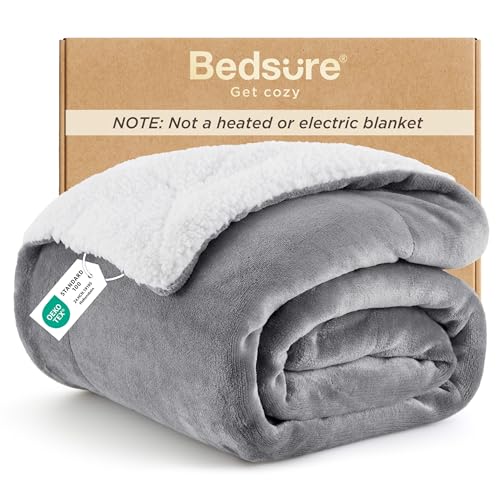
Bedsure GentleSoft Sherpa Fleece Throw Blanket for Couch
Our badge: Best Overall
The Bedsure GentleSoft Sherpa Fleece Throw Blanket for Couch leads because it unites every criterion in one light throw: a velvety flannel face (maker-stated 220 GSM) against the skin, sherpa warmth (260 GSM) behind it, durable stitching for constant washing, and a maker’s note that it serves as a comfort gift for people recovering from surgery. At just over two pounds it warms without pressing, folds into a bag, and moves from infusion chair to couch to bed without ceremony.
Strengths
- Gentle two-sided softness with real warmth per ounce.
- Maker-noted suitability as a recovery comfort gift.
- Rotation-friendly price logic for wash cycles (check the listing).
Trade-offs
- Sherpa warmth can be too much in warm rooms; layer down to flannel side.
- Throw size covers one resting person, not a bed.
- Synthetic feel; cotton devotees should see the waffle and Tache picks.
| Color | 01 – Grey |
| Size | Throw (50″ X 60″) |
| Weight | 2.03 pounds |
Buy two if you can: one stays home, one lives in the treatment bag, and neither is ever missed on laundry day. The grey reads calm in clinical rooms and disappears into home decor afterward. Choose GentleSoft as the default comfort blanket of a treatment season. Skip it only if plush textures themselves feel like too much — then start with the smooth Mezcla below.
Best for: all-round treatment-season comfort / Not suited for: shoppers wanting cotton only
Choose GentleSoft for gentle warmth everywhere it is needed. Check on Amazon

Bedsure Fleece Bed Blankets Queen Size Grey – Soft Cozy Warm Winter Blanket Christmas Than
Our badge: Best for the Bed
The Bedsure Fleece Bed Blankets Queen Size Grey – Soft Cozy Warm Winter Blanket Christmas Than makes the home bed the softest place in the treatment world: queen-wide flannel fleece, light for its coverage, smooth against skin, and simple to layer up or down as the night’s comfort shifts. Rest is a full-time project during treatment, and the bed should ask nothing — no cords, no weight, no complicated care — which is exactly this blanket’s character.
Strengths
- Whole-bed gentle coverage without heaviness.
- Layers smoothly under or over existing bedding.
- Washes easily and often without special handling.
Trade-offs
- Too warm alone for hot rooms; pair with the waffle seasonally.
- Plain styling; add a quilt or throw for visual warmth.
- Not portable — it is the home base, not the travel pick.
| Color | Grey |
| Size | Queen (90″ X 90″) |
| Weight | 3.19 pounds |
Keep it as the bed’s permanent middle layer and adjust comfort with throws above it — the system means the bed is re-made in seconds, not re-thought nightly. Its winter layering role is detailed in Best Warm Blankets For Winter. Choose the fleece bed blanket for home rest. Skip it for appointment portability.
Best for: home bed comfort through treatment / Not suited for: travel and appointments
Choose the fleece bed blanket for the gentlest home base. Check on Amazon

Bedsure Faux Fur Fluffy Fleece Sherpa Blanket Couch Throw Grey 50″x60″ | Christmas Fuzzy P
Our badge: Best for Couch Comfort
The Bedsure Faux Fur Fluffy Fleece Sherpa Blanket Couch Throw Grey 50″x60″ | Christmas Fuzzy P is the emotional-comfort pick: deep faux fur and sherpa that feel like being hugged by the furniture. For the long couch afternoons — visitors, films, naps between appointments — its plushness communicates care in a way thinner blankets cannot, and as a gift it lands with unmistakable warmth of intention.
Strengths
- Maximum plush comfort for rest and visiting hours.
- Warmth that arrives instantly without any setup.
- Gift-grade presentation for friends who want to help tangibly.
Trade-offs
- Warmest throw here; too much for warm rooms or warm moments.
- Pile wants gentle cold washing to stay plush.
- Heavier drape than the Mezcla for very low-energy days.
| Color | 01- Tie Dye Grey |
| Size | Throw (50″ X 60″) |
| Weight | 2.73 pounds |
Station it on the couch as the household’s designated comfort spot, flannel-side or fur-side out by preference. When energy is lowest, this is the blanket that gets chosen — which is the only review that matters. Choose faux fur for couch-centered comfort and gifting. Skip it as the appointment throw; its bulk belongs at home.
Best for: couch rest, visitors, and heartfelt gifts / Not suited for: treatment-bag portability
Choose the faux fur throw for plush home comfort. Check on Amazon

Bedsure Cooling Cotton Waffle Blanket for Hot Sleepers
Our badge: Best Breathable
The Bedsure Cooling Cotton Waffle Blanket for Hot Sleepers covers the other half of comfort: the warm moments. Its cotton-bamboo waffle breathes openly, absorbs lightly, and layers over a sherpa throw without sealing in heat — so temperature can be tuned by adding or peeling a single airy layer instead of abandoning blankets altogether. On the bed it serves as the summer-weight option for anyone whose comfort now runs warmer than it used to.
Strengths
- Breathable cotton comfort for warm rooms and warm spells.
- Softens with washing; gentle against skin.
- Full-bed size for home, foldable for a guest layer.
Trade-offs
- Minimal warmth alone in cold rooms.
- Texture is present — ultra-sensitive days may prefer smooth flannel.
- Ivory shows stains; wash promptly.
| Color | 01 – Ivory |
| Size | Queen (90″ X 90″) |
| Weight | 3.8 Pounds |
Pair it with the GentleSoft as a two-blanket comfort system: waffle for warm, sherpa for cold, both together for in-between. Few purchases cover more of a treatment season’s weather — internal and external — than that pair. Choose the waffle for breathable gentleness. Skip it as a sole winter layer.
Best for: warm moments and layered systems / Not suited for: sole cold-room warmth
Choose the waffle blanket for breathable comfort. Check on Amazon

Exclusivo Mezcla Fleece Throw Blanket for Couch
Our badge: Best for Appointments
The Exclusivo Mezcla Fleece Throw Blanket for Couch is the treatment-bag specialist: 1.55 pounds, extra-large when open, compact when folded, smooth on both sides so nothing catches on chair arms, ports of clothing, or bag zippers (keep all textiles clear of medical equipment and follow your care team’s setup, always). Familiarity is its real feature — your own clean blanket, smelling like home, in a room that smells like a clinic.
Strengths
- Lightest, most packable comfort in the guide.
- Smooth faces slide on and off without snagging.
- Washes and dries fast between appointments.
Trade-offs
- Thin warmth; cold treatment rooms may need it doubled or layered.
- Less plush than sherpa picks for home rest.
- Forest green is its verified color here; check listings for options.
| Color | Forest Green |
| Size | Throw XL (50″ X 70″) |
| Weight | 1.55 pounds |
Designate it permanently to the bag — washed after each use, folded back in — and appointment mornings lose one decision forever. Its smoothness also makes it the pick for anyone who finds sherpa texture overwhelming on sensitive days. Choose Mezcla for portable, personal comfort. Skip it as the home bed’s main blanket.
Best for: infusion days and travel / Not suited for: primary home bedding
Choose Mezcla for the treatment-bag blanket. Check on Amazon

Tache Cotton Patchwork Quilt Blanket Country Farm Cottage Vintage Antique Ditsy Floral Pai
Our badge: Best Gift
The Tache Cotton Patchwork Quilt Blanket Country Farm Cottage Vintage Antique Ditsy Floral Pai is the blanket that says someone thought about you specifically: cotton patchwork in florals and plaids, vermicelli quilting, a handmade character no clinical product attempts. Functionally it is a light cotton layer for laps and shoulders — breathable, gentle, and easy to fold away — and emotionally it is the anti-hospital object, which during treatment is a function too.
Strengths
- Personal, handmade-look gifting with real cotton comfort.
- Light layer for laps, shoulders, and porch air.
- Natural fiber for cotton-preferring households.
Trade-offs
- Lightest warmth in the guide.
- Delicate washing; not the heavy-duty rotation pick.
- Throw size only.
| Color | Burgundy |
| Size | 50×60 |
Gift-givers: pair it with a handwritten note and it outperforms baskets of things that gather dust. Patients buying for themselves: it is the blanket for the good chair, the window light, and the hours that feel most like life. Choose Tache for heartfelt, gentle layering. Skip it as the primary warmth plan.
Best for: gifts and gentle lap comfort / Not suited for: main warmth or heavy washing rotation
Choose Tache for comfort with a personal touch. Check on Amazon
Fabrics Against Sensitive Skin: Softness Without Complication
Treatment can make skin feel more sensitive, drier, or simply less tolerant of texture, so fabric choice in this category is a kindness decision before it is a performance one. Favor smooth, soft surfaces without scratchy seams, raised decorations, or shedding fibers: a blanket that leaves lint on clothing will leave it on skin and on clinic chairs, and a blanket whose texture irritates at home will irritate more during a long session. Fleece and sherpa-style softness, represented among this guide’s picks, earns its popularity honestly — immediate softness, real warmth at low weight, and laundry tolerance — while smooth cotton and cotton-blend options serve patients who find synthetic plush too warm or who prefer a cooler hand against the skin. Wash any new blanket before its first treatment day, both to soften it and to remove mill finishes, and thereafter keep the laundry routine simple and thoroughly rinsed, since detergent residue is a common and invisible irritant that masquerades as fabric sensitivity. If a patient develops skin changes, rashes, or new sensitivities during treatment, that information goes to the care team, who may have specific guidance; the blanket household’s job is to keep textiles clean, soft, and simple in the meantime, and to retire any blanket whose surface has roughened, pilled harshly, or begun to shed, because a treatment-season blanket should be held to a higher condition standard than a camping blanket ever is.
Comparison Table
| Pick | Size | Weight | Comfort role | Check price on Amazon |
|---|---|---|---|---|
| Bedsure Sherpa Throw | Throw 50″ X 60″ | 2.03 pounds | All-round gentle warmth | Check price on Amazon |
| Bedsure Fleece Bed | Queen 90″ X 90″ | 3.19 pounds | Home bed base | Check price on Amazon |
| Bedsure Faux Fur | Throw 50″ X 60″ | 2.73 pounds | Plush couch comfort | Check price on Amazon |
| Bedsure Waffle | Queen 90″ X 90″ | 3.8 Pounds | Breathable layer | Check price on Amazon |
| Exclusivo Mezcla | Throw XL 50″ X 70″ | 1.55 pounds | Appointment portable | Check price on Amazon |
| Tache Quilt | 50×60 | — | Gift and lap layer | Check price on Amazon |
How to Choose the Best Blankets for Chemo Patients
Put surface gentleness above every other spec
Run the candidate across the inside of your wrist — the most honest test available. Smooth flannel, soft sherpa, and washed cotton pass; anything scratchy, stiff, or heavily textured should be skipped no matter its other virtues. During treatment, the blanket touches skin for hours; surface is not a detail, it is the product.
Choose adjustable warmth, not maximum warmth
Comfort during treatment swings — warm room, cold room, warm moment, cold moment. Two light layers (waffle plus sherpa) tune across all of it; one heavy blanket serves only the cold end. Build the pair before buying anything thicker.
Dedicate an appointment blanket
One clean, compact, familiar throw that lives in the treatment bag removes friction from hard days and keeps clinic exposure on one washable item. Light and smooth wins here — the Mezcla profile — and it should be washed after each use and returned to the bag.
Ask before heat or weight
Heated and weighted products interact with individual treatment situations in ways a shopping guide cannot assess. If either appeals, ask your care team first. This guide’s picks deliberately stay in the universally gentle zone: soft, light, washable, and simple. More comfort context for supporters is in Best Throw Pillows For Bedrooms Under $40.
When Friends and Colleagues Give Together
Group gifts during treatment succeed when they are coordinated by one person who asks the patient or the household what is actually wanted — a discipline identical to the one this site’s giving guides recommend for shelters, and for the same reason: uncoordinated generosity produces five blankets, three scented candles, and none of the unglamorous items the household needs. A group that pools toward one excellent blanket from this guide’s picks, plus the practical kit the household names, gives better than a group that surprises. Timing deserves the same coordination: gifts that arrive across the treatment arc, rather than all in the first overwhelmed week, sustain their usefulness and their message. Keep the group’s blanket choice inside this guide’s boundaries — soft, layerable, washable, ordinary in the best sense — and resist the specialized products that marketing aims at worried friends: weighted and heated items, however well meant, are excluded from these recommendations, and a group unsure about any product should route the question through the household to the care team. The card matters more than the wrapping: names, a short message, and an explicit no-reply-needed release, because gratitude is work and the patient has none to spare. Give like people who understand that, and the blanket becomes what it should be — warmth without obligations attached.
How to Build a Comfort Kit Around the Blanket
The blanket anchors a small system: a dedicated tote, the appointment throw folded inside, a spare pillowcase or soft cushion cover for chair armrests, and the home rotation washed and ready. Keep textures consistent — if sherpa is the comfort, do not rotate in scratchy substitutes on laundry day. Wash the kit’s textiles gently after appointments, dry fully, and repack immediately so the kit is never a morning project. At home, claim one chair as the rest station with the plush throw resident, so comfort has an address.
Problem: Everything feels scratchy right now. — Switch to the smoothest surfaces (flannel faces out), wash new textiles before first use to remove factory finishes, and layer a soft cotton sheet between skin and any textured blanket.
Problem: Cold in the treatment room, warm at home. — That is the two-layer system’s home turf: appointment throw plus a home sherpa, tuned independently per location.
Problem: The blanket feels heavy on low-energy days. — Drop to the Mezcla class (about a pound and a half) and add warmth via room layers and socks rather than blanket mass.
Problem: Laundry is falling behind during treatment weeks. — Double the rotation of the lead pick so a clean blanket always exists; delegate the wash as a standing task — it is one of the most useful helps a supporter can own.
At Home Between Sessions: Rest, Couch, and Bed
Between infusions, the blanket’s work moves home, where rest is the day’s main occupation and comfort is measured in small, repeatable arrangements. Set up one primary rest station — couch or bed, chosen by the patient — with the blanket folded within reach, a second layer available for colder hours, and the station’s textiles washed on a rhythm the household can sustain without heroics. Layering at home follows the infusion room’s lesson: light, adjustable layers the patient can manage alone beat one heavy covering, and the excluded categories stay excluded at home for the same reasons — weighted and heated products are not this guide’s recommendation for people in treatment, and any household wondering about them should ask the care team rather than the internet, this article included. Sleep at home deserves its own gentleness: breathable bedding, a room temperature the patient sets, and the familiar blanket as the top layer if that is their preference, with persistent sleep problems raised at appointments rather than solved by purchases. Rest is part of how people get through treatment; the blanket’s contribution is to make the rest station soft, warm, clean, and entirely under the patient’s control, and then to be washed and ready to do it again tomorrow.
For Gift-Givers: How to Choose Well
Give soft, light, washable, and unscented — and give it without instructions or expectations attached. The GentleSoft and Tache picks lead for gifting because one promises practical comfort and the other personal warmth; both survive the wash and neither looks medical. Avoid heavy, weighted, heated, or strongly fragranced anything. Include a note that asks for nothing back. The best treatment gifts quietly reduce decisions, and a blanket that is simply there, clean and soft, every day, is near the top of that list.
Colors, Patterns, and the Psychology of an Ordinary Blanket
It is not frivolous to consider how a treatment blanket looks. Patients spend long hours looking at their own laps, and a blanket in a color they love, a pattern that feels like their taste rather than like a hospital, quietly returns a piece of identity that treatment keeps borrowing. Gift-givers should choose the patient’s colors, not the giver’s symbolism, unless the patient has expressed a love of the symbolic kind — many people in treatment are saturated with ribbons and slogans and would rather receive a beautiful, ordinary blanket that says nothing but warmth. Practical color wisdom still applies: mid-tones and gentle patterns carry the season’s spills and frequent washing with grace, and a blanket that looks clean reads as comfort to everyone who sees it, including the patient at their lowest-energy moments. Keep one more consideration in view: photographs and video calls. Patients who connect with family from the infusion chair or the couch often appreciate a blanket that presents them as themselves — rested colors, no clinical signals — and that small dignity is a legitimate selection criterion, not vanity. Ordinary, beautiful, theirs: those three adjectives, applied honestly, choose better treatment blankets than any amount of specialized marketing.
Keeping Blankets Fresh Through a Treatment Season
Wash comfort blankets gently and often — after appointments for the travel throw, weekly for home pieces — with mild, unscented detergent if scents bother you, and dry completely before use. Store the rotation in the open air of a linen shelf rather than sealed plastic, so textiles smell like home instead of storage. Retire anything that pills into scratchiness; comfort standards rise during treatment, and the laundry should enforce them without debate.
What Comfort Means During Treatment: Warmth, Softness, and Control
People in chemotherapy describe comfort in practical terms, and this guide’s picks were chosen against those terms rather than against generic coziness. Warmth matters because treatment rooms run cold and because many patients feel chilled during and after infusions — but the warmth must be adjustable minute by minute, because the same person can swing from chilled to overheated within a single session. That adjustability is why this guide favors ordinary, layerable blankets and excludes weighted and heated products from its recommendations: a weighted blanket cannot be shed quickly by a tired person, and a heated blanket adds an appliance’s settings, cords, and cautions to a setting already full of equipment. Any question about whether a specific warming product is appropriate for a specific patient belongs to that patient’s care team, whose knowledge of the individual’s treatment, circulation, skin, and ports outranks any product guide — including this one — without exception. What a blanket can honestly offer is simpler: softness against skin that may feel more sensitive than usual, warmth that can be added or removed in seconds, and a familiar textile that belongs to the patient in rooms where almost nothing else does.
Control is the third term, and it is the one gift-givers most often miss. Treatment removes control from a person’s schedule, diet, energy, and body; a blanket restores a small, real piece of it — this layer, this softness, this much warmth, now. Choose blankets the patient can arrange, fold, and shed without help and without standing, in sizes that cover a lap and legs in a recliner without dragging on floors or tangling with chair mechanisms and tubing. Light-to-moderate weight in the ordinary sense — a blanket that is easy to lift and reposition — serves independence better than any specialized feature. The picks in this guide were weighed against exactly that standard, and the sections that follow on kits, gifting, and laundry all return to it: comfort during treatment is warmth plus softness plus the patient’s own control, delivered by the simplest textile that can provide all three.
Infusion Days: A Blanket’s Working Day, Hour by Hour
An infusion day asks more of a blanket than any other day in its life, so plan for the day explicitly. At home in the morning, the blanket rides folded in the treatment bag, chosen for softness and for a size that works in a recliner without excess. In the treatment room, it becomes the patient’s own layer over clinic clothing — arranged to leave arms and any lines accessible exactly as the nursing team needs, because a blanket that fights the clinical setup will be removed by kindly hands and its comfort lost; the skilled move is to ask the nurse how they prefer blankets arranged around access points, once, and then repeat that arrangement every visit. During the session, the blanket’s adjustability does its work across the temperature swings described above, and its familiarity does quieter work: the same textile, the same softness, in a room where everything else changes by the week. Afterward, at home, the blanket graduates to the couch or bed for the rest that follows treatment, which is why washability matters so much in this category — a blanket that works this hard, this close, should be easy to launder between cycles of treatment without special handling that an exhausted household cannot sustain. Choose the blanket that can live this whole day, every cycle, and wash without ceremony, and you have chosen the one patients actually keep using.
Common Buying Mistakes
Buying weighted for comfort
Weight is a burden dressed as a feature for this keyword. Pressure products are excluded here deliberately; gentle, adjustable, removable warmth is the correct brief.
Buying heated without asking
Electric warmth against treatment-sensitive skin is an individual medical-context question. Ask the care team; do not let a gift-giver guess.
Choosing beautiful over washable
Delicate, dry-clean, or high-maintenance blankets become unused blankets. During treatment, the wash cycle is part of the product.
Gifting strong scents and scratchy textures
Fragrance and roughness are the two fastest ways to make a comfort gift unusable. Unscented, smooth, and soft — in that order.
For Caregivers: The Blanket Jobs Nobody Mentions
Caregivers carry the blanket system, literally and otherwise, and this section is written for them. Keep the treatment blanket’s life simple: one primary blanket that travels to every session, one home blanket in the same spirit for the couch and bed, and a laundry rhythm that guarantees a clean one is always ready without a midnight wash. Learn the patient’s preferences in their own terms — which blanket, folded how, over legs only or over shoulders too — and write them down if other family members rotate into the caregiver role, because consistency from visit to visit is itself a comfort and because a tired patient’s preferences should not have to be re-explained to each helper. Watch the blanket for the household’s sake as well: treatment-season textiles absorb spills, medications’ odors, and hard use, and a blanket that has become stained or worn should be replaced without ceremony or commentary, since the patient notices condition even when they say nothing. And let the care team guide anything beyond textiles: questions about temperature regulation, skin care, sleep disturbance, or whether any special product — weighted, heated, cooling, or otherwise — is appropriate belong to the clinicians who know the patient, a boundary this guide observes in its own recommendations and recommends to every household it serves. The caregiver’s blanket expertise is real but specific: softness, cleanliness, readiness, and respect for the patient’s control. Master those four and the textile side of caregiving is handled.
A Note on Words: What to Say When You Give the Blanket
Because so many of these blankets arrive as gifts, the words around them deserve the same care as the fabric. Say what the blanket is for in the plainest terms — for the chair, for the couch, for cold rooms and long afternoons — and release the patient from every obligation the gift could imply: no thanks required, no report on its use expected, no hurt taken if a different blanket wins. Avoid framing the blanket as a weapon in a fight or a symbol of a journey the patient did not choose to narrate; many people in treatment prefer their textiles, like their conversations, ordinary and warm rather than inspirational. If you are the patient choosing for yourself, grant yourself the same plainness: you are buying softness, warmth, and control over both, in a season when all three are scarce, and that is reason enough without further justification. The households that handle these small speeches well find that the blanket integrates into life instead of commemorating a crisis, which is, in the end, the deepest comfort a blanket can offer: it becomes part of the furniture of an ordinary day, in a life that is still, stubbornly and entirely, the patient’s own.
One practical closing note for the households reading this guide at the start of a treatment season: set the blanket system up before the first session, not after it. Wash the chosen blanket, fold it into the treatment bag alongside the other comforts the household is assembling, confirm the home rest station with its layers in reach, and put the spare into the laundry rotation so the rhythm is running before it is needed. Preparation of this small, concrete kind is one of the few useful things anyone can do in the waiting days, and patients consistently report that the familiar blanket, present from the very first session rather than introduced mid-course, becomes part of how the place is bearable. That is the whole ambition of every pick and every section in this guide: a soft, clean, patient-controlled layer of ordinariness, ready on day one, asking nothing, and quietly doing its work for as long as it is needed.
If you are reading on behalf of someone else — a partner, a parent, a friend whose treatment begins soon — the most useful thing you can carry from this guide is its order of operations: ask the household what would help, choose inside the boundaries above, prepare the system before the first session, keep it washed and ready without being asked, and route every question beyond textiles to the care team without debating it at the kitchen table. That order of operations, faithfully kept, is worth more than any single product in the table, because it tells the patient, in actions rather than in speeches, that their comfort has been thought about carefully and in advance. Thoughtfulness of that operational kind is the real gift; the blanket is simply where it becomes visible, soft, and warm.
And if you are the patient, reading for yourself in a quiet moment: choose the blanket that pleases you, for your reasons, in your colors, without auditing whether the choice is practical enough to justify. It is. A season of long chairs and longer afternoons is reason enough for the softest, warmest, most entirely yours layer this guide can help you find — and finding it, arranging it, and being warm inside it are small sovereignties that no treatment schedule gets to vote on. Keep the blanket where you can reach it without asking anyone for anything, washed and folded and entirely yours, for every session, every afternoon, and every ordinary evening of the season — that readiness, more than any feature printed on a label, is what this guide has been recommending all along.
Final Recommendation
Choose the Bedsure GentleSoft Sherpa Throw as the season’s central comfort blanket, pair it with the waffle layer for warm moments — Check on Amazon — and keep the Mezcla in the treatment bag. Gentle, adjustable, always clean: that is the whole brief, honored.
After Treatment Ends: The Blanket’s Next Chapter
Blankets outlast treatment seasons, and households handle their afterlife in ways worth planning kindly. Some patients keep the treatment blanket in service for years — it becomes the couch blanket, the reading blanket, the layer associated with rest generally and with having come through something specifically — and its continued use should be entirely the patient’s choice, honored without commentary. Others prefer fresh textiles for a fresh chapter, retiring the treatment blanket to a guest bed, donating it laundered and in good condition where organizations accept such gifts, or storing it with the household’s keepsakes. Either instinct is correct, because both are the patient’s control reasserting itself, which was this guide’s definition of comfort from its first section. For sleep specifically, the return to ordinary bedding follows the same gentle logic as the guides in Best Blankets For Sleeping: breathable, adjustable layers, washed kindly and often, chosen by the sleeper’s present preferences rather than by the treatment season’s requirements. If sleep or temperature difficulties persist beyond treatment, they join the list of things to raise with the care team at follow-up — a blanket guide’s role ends, as it began, at comfort honestly provided and medicine respectfully left to medicine.
Sizing for Recliners, Wheelchairs, and Hospital Beds
Treatment happens in furniture with dimensions, and blanket size should be chosen against them rather than against a bed at home. For an infusion recliner, the ideal blanket covers from chest to feet with a modest margin at the sides — enough to tuck lightly for warmth, not so much that fabric pools on the floor, trails into the chair’s mechanism, or complicates the nursing team’s access. For wheelchair users, length discipline matters even more: a blanket arranged over the lap and legs must stay clear of wheels and footrests, and the patient or caregiver should confirm the arrangement before moving, every time, because a caught blanket is a hazard that size and attention together prevent. For hospital beds during inpatient stretches, follow the unit’s own guidance about personal textiles — many welcome a home blanket on top of hospital bedding, some restrict them, and the unit’s word governs — and choose the washable, replaceable member of the household’s stock rather than an irreplaceable keepsake. Across all three settings, the principle is constant: the blanket serves inside a clinical environment’s rules, sized to the furniture, arranged with the team’s knowledge, and valued precisely because it is the one soft, personal, patient-controlled thing in the room.
Frequently Asked Questions
What makes a blanket good for someone in chemotherapy?
Comfort practicalities: a gentle surface, light adjustable warmth, easy washing, and portability for appointments. This guide deliberately avoids medical claims — it optimizes the blanket as a comfort object, and individual questions belong to the care team.
Are weighted blankets a good idea during treatment?
They are excluded from this guide: heaviness works against the low-burden comfort most people want during treatment, and suitability is individual. Ask your care team if you are considering one.
What about heated blankets?
Also excluded from the picks. Warmth against sensitive skin during treatment is a care-team question, not a shopping decision. The layered passive system in this guide covers cold rooms safely and simply.
What is the best blanket to bring to appointments?
A light, smooth, dedicated throw like the Mezcla: compact in the bag, generous when open, quick to wash afterward. Keep it solely for appointments so it is always ready.
How often should comfort blankets be washed during treatment?
Appointment textiles after each use; home blankets weekly or as needed. Mild detergent, complete drying, and a two-blanket rotation keep the system effortless.
I want to send a blanket as a gift — which one?
The GentleSoft for practical comfort or the Tache quilt for a personal touch. Both are soft, washable, and unscented, and neither looks clinical. Add a note, skip the advice.


