Disclosure: As an Amazon Associate, dailyhomedecorating.com earns from qualifying purchases. Links to Amazon on this page are affiliate links; they cost you nothing extra. Prices and availability change often, so check the current Amazon listing before you buy.
The best nursery chairs for small spaces solve a three-way puzzle: a chair comfortable enough for the hundredth feeding, gentle enough in motion to settle a baby, and small enough to leave the nursery still a room. Square footage is the binding constraint — most nurseries are the home’s smallest bedroom, already committed to a crib, a dresser and a changing surface — so every chair in this guide was judged first on footprint and only then on everything else. Three picks are linked, verified chairs from our pool: a compact glider-and-ottoman set that leads, a premium swivel recliner-glider whose size trade-off we state in the open, and a slim wooden rocker that serves small rooms and small budgets. Three more are prose-only archetypes — the compact swivel glider, the small-scale rocking chair and the mini recliner — described with the measurements that matter, because the small-nursery category is bigger than any one pool.
Everything here is comfort and practicality guidance for parents and caregivers; nothing is medical advice, and feeding questions belong with your own professionals. If the nursery is part of a wider small-home furnishing project, Best Sofas And Chairs For Small Room covers the rest of the rooms with the same discipline, and the glider’s second life as a living-room chair connects naturally to Best Leather Chairs For Living Room when the nursery years end. For the rocking-chair tradition in full-size rooms, our deck and porch coverage in Best Lounge Chairs For Deck includes the wooden rocker’s outdoor cousins.
Where to Buy
The three linked picks in this guide are sold on Amazon, where you can check the current price, color and availability. Start with the Costzon Nursery Glider with Ottoman — Check on Amazon. The other linked picks: DaVinci Atlas Upholstered Recliner and Swivel Glider — Check on Amazon; Giantex Wood Rocking Chair — Check on Amazon. The remaining three picks are prose-only archetypes with no link, described with the dimensions and checks that define them.
In this guide
Quick Picks
| Pick | Badge | Why it earns its place |
|---|---|---|
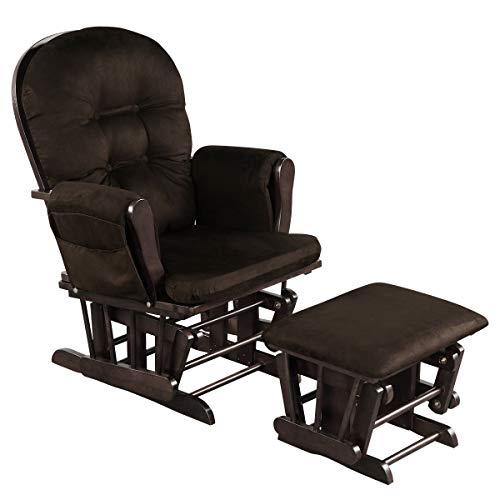
| Costzon Nursery Glider with Ottoman | Best Overall | A 28.5-inch-wide glider with a matching ottoman, storage pockets and a smooth, quiet glide — the complete small-nursery system. |
| DaVinci Atlas Recliner and Swivel Glider | Best Premium | GREENGUARD Gold certified, 360-degree swivel, a plush recline and pillow arms — the luxury pick, with its larger footprint stated. |
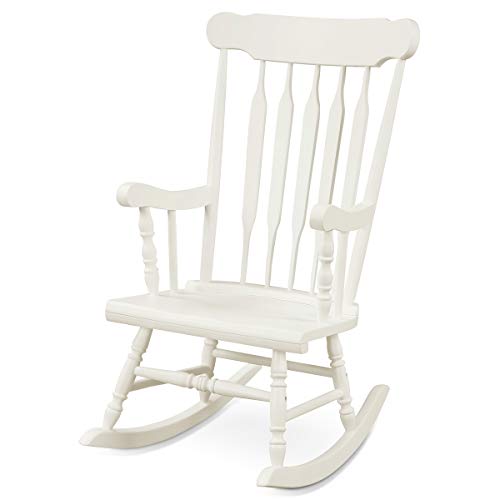
| Giantex Wood Rocking Chair | Best Budget Rocker | A slim solid-wood rocker (25.5 inches wide) that fits corners gliders cannot, and emigrates to the porch later. |
| Compact Swivel Glider (prose-only) | Best for Corners | The sub-30-inch swivel-glider archetype that turns to the crib and the door without a footprint penalty. |
| Small-Scale Rocking Chair (prose-only) | Best Minimalist | The traditional rocker, scaled down — what to measure in runners, back height and seat depth. |
| Mini Recliner-Glider (prose-only) | Best for Night Feedings | The compact reclining archetype for parents who feed, doze and recover in the same chair. |
Key Takeaways
- Measure the corner, not the room: the winning footprints here run from 25.5 inches wide (Giantex) to 28.5 (Costzon) — the DaVinci’s 38.5-inch width is a deliberate, disclosed exception for larger nurseries.
- Glide beats rock in small spaces: a glider’s motion stays inside its footprint, while a rocker’s runners claim floor in front and behind.
- The ottoman is part of the system — the Costzon includes one sized to the chair, which beats hunting a match later.
- Swivel is the small-room superpower: turning to the crib, the dresser and the door without standing up, baby in arms.
- Buy the second life: every linked pick here serves the household after the nursery — living room, reading corner, porch — which is how a small-space purchase justifies itself.
How These Picks Were Chosen
The first filter was dimensional honesty: a pick needed published dimensions that let us judge its footprint, and a motion — glide, swivel or rock — suited to settling a baby. The Costzon leads because its whole system (glider plus ottoman) fits a genuinely small footprint while covering feeding comfort completely: padded cushion, ergonomic backrest and armrests, side storage pockets, spot-cleanable upholstery with a removable cushion cover. The DaVinci is included as the premium pole with its size stated as a trade-off rather than hidden — in a larger nursery, or as the room’s one big piece, its certification and comfort are the point. The Giantex covers the rocker tradition at the slimmest width in the guide.
The prose-only archetypes exist because small-nursery seating is a deep category and our pool is not; each archetype entry gives the measurements and features that define a good example, so any listing can be audited against them. What was excluded: full-size recliners with nursery styling but living-room footprints, chairs with no stated dimensions, and any product whose motion or materials we could not verify. Comfort claims are comfort claims only. For the wider small-space context — the apartment the nursery sits in — Best Sofas For Homes With Kids applies the same plan-for-real-life discipline at family scale.
The 6 Best Nursery Chairs for Small Spaces — Reviewed

Costzon Nursery Glider with Ottoman
Our badge: Best Overall
The Costzon Nursery Glider with Ottoman is the small nursery’s complete answer in one purchase. The glider itself is 28.5 inches wide — genuinely compact — with a thick padded cushion, an ergonomic backrest and armrests, and a smooth, gentle gliding motion on a solid wood base. The matching ottoman shares the footprint discipline, giving feeding parents the feet-up posture that long sessions ask for. Costzon states capacities of 396 lb for the chair and 375 lb for the ottoman, and the details are nursery-literate: side storage pockets for cloths, bottles and the phone; polyester upholstery that spot-cleans; a seat cushion cover that zips off for washing.
Strengths
- The footprint is the headline: a full glider-and-ottoman system that fits the small rooms this keyword is about.
- Storage pockets solve the nursery’s smallest daily problem — everything needed, within reach, at 3 a.m.
- Removable, washable cushion cover and spot-clean upholstery meet the feeding years honestly.
Trade-offs
- The glide is smooth but the chair does not swivel — position it facing the room’s traffic pattern.
- Brown is the listed colorway; light, bright nurseries should check the listing’s options.
- The ottoman is a second footprint to place — small, but the room plan must include it.
| Color | Brown |
| Size | 2 Piece Set |
| Dimensions | 28.5 x 29.5 x 39.5 inches |
| Weight | 40.22 pounds |
The lived experience of this chair is the night feeding done right: glide in near-silence, feet up on the ottoman, everything you need in the side pockets, and a motion gentle enough that the transfer back to the crib starts from calm. The padded armrests carry forearms through long holds, and the high, supportive back suits the parent’s posture as much as the baby’s settling. In daylight it reads as a tidy, tailored chair that does not announce the room’s purpose to every visitor.
Costzon positions the set beyond the nursery too — reading, TV, living-room relaxing — and that second life is real: the glider’s scale suits any small room in the house, and the ottoman will serve a decade of feet. For a purchase that must justify itself in a small home, that continuity matters.
Assembly is a hardware-and-manual job the maker describes as straightforward; do it before the baby arrives, position the chair with its glide path clear, and the nursery’s hardest hours get noticeably easier.
Best for: Small nurseries wanting the complete, compact glider system / Not suited for: Anyone who needs swivel motion or a pale color palette
Choose it for the system and the footprint; skip it if swivel is essential — the prose-only compact swivel archetype below describes your chair. Check on Amazon

DaVinci Atlas Upholstered Recliner and Swivel Glider
Our badge: Best Premium
The DaVinci Atlas is this guide’s premium pole, included with its trade-off in the open: at 38.5 inches wide and 91 pounds, it is not the smallest chair here — it is the most complete. It reclines with a plush leg rest, swivels 360 degrees, and carries a high pillowback headrest and integrated armrest pillows shaped for feeding comfort. Its upholstery is a cozy olive bouclé, and the chair is GREENGUARD Gold Certified — tested for over 10,000 chemical emissions and VOCs, a credential that matters in the room where a newborn breathes.
Strengths
- GREENGUARD Gold certification — the strongest indoor-air credential in this guide, in the room where it counts most.
- Swivel plus recline plus glide covers every nursery motion in one chair.
- Armrest pillows and a high pillowback are designed around the feeding posture specifically.
Trade-offs
- Footprint: 38.5 inches wide is a larger nursery’s chair — measure honestly before falling for it.
- At 91 pounds, place it once, correctly; it will not be casually moved.
- Premium tier — check the current listing price against the nursery’s budget.
| Color | Cozy Olive Bouclé |
| Dimensions | 38.5 x 39.5 x 40 inches |
| Weight | 91.29 pounds |
The Atlas earns its size in the nurseries that can hold it. The swivel turns the chair into the room’s command seat — crib, dresser, door, all reachable without standing — and the recline converts it, at 2 a.m., into something close to a bed for the parent who will inevitably doze mid-feed. The wide seat accommodates the feeding pillow, the blanket and the occasional toddler sibling who insists on joining.
DaVinci is a nursery specialist, and it shows in the priorities: certification first, feeding ergonomics second, a fabric that photographs like a design choice rather than baby equipment. In a larger nursery — or a primary bedroom corner doing nursery duty — the Atlas is not too big; it is the room’s anchor, and the piece that will graduate to the living room with the most dignity.
Measure twice, as its trade-offs insist. If the room takes it, this is the most comfortable and most credentialed chair in the guide, and the one whose second life is longest.
Best for: Larger nurseries and primary-bedroom corners wanting premium comfort and certification / Not suited for: Truly small nurseries — the Costzon above is your chair
Choose it when the room and budget both say yes; skip it, without regret, when the tape measure says no. Check on Amazon
Giantex Wood Rocking Chair
Our badge: Best Budget Rocker
The Giantex Wood Rocking Chair is the traditional answer, scaled for the small nursery: a solid rubber wood rocker just 25.5 inches wide — the slimmest footprint in this guide — with a high slatted back, curved armrests and a rocking arc calculated to keep the sitter’s center of gravity inside the frame. Giantex states a capacity up to 300 lb, the slats shed heat during long contact, and the smooth finish wipes clean with a damp cloth.
Strengths
- The narrowest chair here — it fits the corners and gaps that gliders cannot.
- Solid wood construction with a 300 lb stated capacity, at the guide’s friendliest tier.
- A second life is built in: porch, living room or deck, the rocker emigrates when the nursery ends.
Trade-offs
- Rockers claim floor: the runners need clear space front and back, unlike a glider’s contained motion.
- No cushion included — most parents will add a seat pad for feeding-length sits.
- Wood asks for the occasional finish check, unlike the upholstered picks’ wipe-and-forget care.
| Color | White |
| Dimensions | 32.5 x 25.5 x 46.5 inches |
| Weight | 32 pounds |
The rocker’s case in a nursery is rhythm and honesty. Generations settled babies with exactly this motion, and the slatted back’s airflow is a genuine comfort feature during the long, warm contact of a feeding. In a small room, its slim width lets it live in the gap beside the crib that furniture plans usually waste, and its white finish brightens the low-light room where it will spend its nights.
The runner footprint is the one planning item: measure the clear floor in front of and behind the intended spot, and keep the path free of the nursery’s floor clutter. Do that, and the Giantex delivers the category’s oldest comfort at its newest scale — with a porch career waiting when the baby outgrows it.
Assembly is a coded-parts job with clear instructions, and at 32 pounds the chair is movable by one person when the room’s layout inevitably changes.
Best for: Very small nurseries, traditionalists and budget-first buyers / Not suited for: Anyone wanting a cushioned, contained glide
Choose it for width and value; skip it if you want upholstery and ottoman comfort — the Costzon above. Check on Amazon
Compact Swivel Glider (Prose-Only)
Our badge: Best for Corners
The compact swivel glider is the archetype small nurseries ask for by name: a glider’s contained, quiet motion on a 360-degree swivel base, in a frame under roughly 30 inches wide. It is prose-only here because our pool’s swivel glider is the larger DaVinci; the true compacts belong to other makers’ nursery lines, and we describe the archetype by its defining measurements rather than linking a chair we have not verified.
Strengths
- Swivel plus glide in a sub-30-inch footprint — the complete motion set for a corner chair.
- The swivel replaces standing: crib, dresser and door all come to you.
- Upholstered compacts read as real furniture, softening the nursery’s equipment feel.
Trade-offs
- Compact seats are narrower — broader parents should sit-test via the return window.
- Swivel mechanisms add a moving part to keep clear of dropped cloths and toys.
- The category’s quality varies widely; the checks below are the filter.
What to verify on any listing: overall width at or under about 30 inches with the number published, not implied; a metal swivel base with a smooth, quiet glide (bearing quality is the whole product); arm height that supports a feeding forearm; and upholstery that spot-cleans or removes. Measure your corner diagonally — a swivel chair’s working footprint is its diagonal, not its width — and leave the glide path clear of the crib’s legs. Audited that way, the archetype is the small nursery’s most capable single chair.
Best for: Corner nurseries where swivel is the missing motion / Not suited for: Buyers who need a verified pick today — the Costzon and DaVinci above are those
Choose the archetype when a listing publishes its dimensions and base; skip any that hide either.
Small-Scale Rocking Chair (Prose-Only)
Our badge: Best Minimalist
Distinct from the linked Giantex, the small-scale rocking chair archetype covers the wider family of downsized traditional rockers — ladderbacks, Windsor-styles and modern slim rockers — built at apartment scale. It is prose-only because the family’s quality is decided by joinery and runner geometry that vary enormously between makers, and a category description serves the buyer better than a borrowed link.
Strengths
- The simplest mechanism in the guide: no bearings, no tracks, nothing to squeak loose.
- Wood and woven-seat versions suit minimalist and traditional nurseries alike.
- Light enough to move between nursery and living room daily if the household shares it.
Trade-offs
- Runner geometry decides everything — a badly curved runner tips or thumps, and listings rarely describe it.
- Most small rockers ship unpadded; budget a cushion from the start.
- Rocking claims floor space in both directions, as with the Giantex.
What to verify: runner length and a photograph of the rocker’s profile (the arc should look gentle and continuous); joinery described as mortise-and-tenon or similarly honest construction; seat depth around 16–18 inches for feeding posture; and a stated capacity. In the room, test the rock on your actual floor — runners tuned for hardwood can feel abrupt on carpet and vice versa. The archetype rewards buyers who shop it as furniture, not as décor.
Best for: Minimalists and traditionalists furnishing at apartment scale / Not suited for: Anyone wanting a set-and-forget verified pick
Choose it by its profile and joinery; skip listings that show neither.
Mini Recliner-Glider (Prose-Only)
Our badge: Best for Night Feedings
The mini recliner-glider is the night shift’s archetype: a compact chair that glides for settling, reclines for feeding and near-sleeping, and fits footprints the full-size recliners cannot. It is prose-only because our pool’s recliner-glider is the full-size DaVinci Atlas; the genuinely compact recliners are a distinct subcategory with their own dimensions, described here by the numbers that define a good one.
Strengths
- Recline converts the feeding chair into the parent’s recovery chair — the 3 a.m. feature.
- Compact versions keep the footprint near 30–33 inches wide, inside small-nursery range.
- Enclosed mechanisms and arms suit the nursery’s safety-conscious environment.
Trade-offs
- Recline needs rear clearance — measure the wall gap at full recline before ordering (wall-hugger designs minimize it).
- Mechanisms add weight; minis are lighter than full recliners, not light.
- The category’s budget end skimps on glide quality; the motion should be silent, or the nursery will know.
What to verify: the width and the fully reclined length, both published; the wall clearance required; a glide that operates independently of the recline; and upholstery that survives the feeding years’ cleaning. Position it where the recline opens into the room’s emptiest arc. For the parent who will feed, doze and recover in one chair through the first year, this archetype — bought by its numbers — is the nursery’s hardest-working furniture.
Best for: Night-feeding parents wanting recline in a compact footprint / Not suited for: Rooms with no rear clearance at all
Choose it by its published dimensions; skip any listing that will not state its reclined length.
Comparison Table
| Pick | Width | Motion | Standout | Check price on Amazon |
|---|---|---|---|---|
| Costzon Glider + Ottoman | 28.5 in | Glide | Complete system, storage pockets | Check price on Amazon |
| DaVinci Atlas | 38.5 in | Glide + swivel + recline | GREENGUARD Gold certified | Check price on Amazon |
| Giantex Rocker | 25.5 in | Rock | Slimmest footprint | Check price on Amazon |
| Compact Swivel Glider (prose-only) | ~30 in — verify | Glide + swivel | Corner command seat | Check price on Amazon |
| Small-Scale Rocker (prose-only) | Varies — verify | Rock | Simplest mechanism | Check price on Amazon |
| Mini Recliner-Glider (prose-only) | ~30–33 in — verify | Glide + recline | Night-feeding recovery | Check price on Amazon |
How to Choose a Nursery Chair for a Small Space
Measure the corner three ways
Measure the intended spot’s width, its depth, and — for anything that rocks, glides or reclines — its working envelope: the rocker’s runner run, the recliner’s open length, the swivel chair’s diagonal. Compare all three against the listing’s published dimensions, and leave two inches of grace in every direction. Small rooms forgive many things, but not arithmetic.
Choose the motion for the room, not the showroom
Glide for contained, quiet motion inside a footprint. Swivel for turning without standing. Rock for tradition and simplicity where floor run exists. Recline for the night shift where wall clearance allows. The room’s geometry picks the motion; your preference only breaks ties.
Insist on the feeding details
Arm height that supports a forearm holding a baby for twenty minutes. A back high enough for a tired head. Upholstery that spot-cleans or removes for washing. Storage within reach — the Costzon’s pockets are the standard. These details, unglamorous in a listing, are the chair’s whole job at 3 a.m.
Check the credentials that matter in this room
Indoor-air certification — the DaVinci’s GREENGUARD Gold is the benchmark — matters more in a nursery than in any other room. Stated capacities matter for the adults. Smooth, enclosed mechanisms matter around small fingers later. Read the listing for those three before the color chart.
Buy the second life
The nursery phase is intense and short; the chair’s life is long. Every pick in this guide was chosen partly for its afterlife — glider to reading corner, rocker to porch, recliner to living room. A chair with a second life is a purchase; a chair without one is a rental you paid full price for.
How Do You Arrange a Small Nursery Around the Chair?
Place the chair first — it is the room’s second-largest commitment after the crib — in the corner that gives it a view of the door and the crib in one glance. Keep its motion envelope clear: no dresser edge in the glide path, no crib leg in the rocker’s run, wall clearance honest for the recliner. Put the side table or the chair’s own pockets on the parent’s dominant-hand side, with the lamp behind the chair’s shoulder rather than in the baby’s eyeline. Leave a walking lane from door to crib that does not cross the chair’s territory; night navigation should be a straight line walked half-asleep. Finally, live in the arrangement for a week before fixing anything else in place — nurseries, like chairs, reward a fitting period.
Problem: The chair fits but the room feels crammed — it is probably facing the wrong way; angle it into the corner’s diagonal and let the room’s lines lengthen around it.
Problem: The rocker’s runners hit the wall — pull the chair forward by the runner’s arc, or accept a glider’s contained motion instead; geometry is not negotiable.
Problem: Everything needed is on the wrong side — swap the side table to the dominant hand, or choose a chair with pockets on both sides; at 3 a.m., reach is everything.
Problem: The chair squeaks during night feedings — check and tighten the base hardware first; most nursery squeaks are a loose bolt announcing itself at the worst hour.
The Night-Feeding Chair: What 3 A.M. Actually Requires
Daytime showrooms cannot test the qualities the night demands, so this guide names them plainly. Silence: the motion — glide, rock or recline — must operate without clicks, squeaks or thumps, because the baby you just settled is the audience. One-handed everything: the recline lever, the ottoman’s position, the pocket’s reach must all work with one arm occupied by a baby. A back that receives a sleeping parent’s head without a negotiation. Arms at the height where a feeding forearm can rest for twenty minutes without going numb. And a fabric that forgives the inevitable spill in the dark and cleans in the morning without a trace. Grade every candidate — including this guide’s picks — against that 3 a.m. list during your return window, ideally during an actual night feed, and the chair that passes will be a member of the family by the end of the first month.
After the Nursery: The Chair’s Second Life
Plan the graduation at purchase time and the chair’s cost spreads across a decade. The glider moves to a reading corner or a bedroom, where its motion and pockets serve books and tea as faithfully as bottles. The rocker’s destination is written in its design: porch, deck or living room, as our Best Lounge Chairs For Deck coverage shows for its outdoor life. The premium recliner-glider becomes the living room’s most contested seat, its nursery years invisible in its bouclé. Even the ottoman persists, serving feet in whichever room adopts it. The households that buy with the second life in mind furnish their homes in chapters rather than in replacements — and the small nursery, planned this way, turns out to have been the first chapter of the whole house’s story.
Feeding Positions and the Chair: Bottle, Breast and the Long Hold
However a baby is fed, the chair’s job is the same: carry the adult so the adult can carry the baby, for twenty minutes at a time, many times a day, without the adult’s arms and back paying retail for every session. The details that decide it are unglamorous and specific. Armrests at a height where the feeding forearm can rest fully — not hover, not perch on an edge — turn a hold from a lift into a rest. A seat depth that lets the adult sit back fully, so the chair’s back shares the load, matters more than any cushion’s softness. The glide or rock then does the settling, and a footrest or ottoman completes the chain by giving the legs a geometry that does not slide the sitter forward. Feeding pillows change the equation by raising the baby to the arms rather than the arms down to the baby, and a chair with room for the pillow — the DaVinci’s wide seat is the extreme case — suits pillow households best, while narrower chairs like the Costzon suit the pillow-free hold. None of this is feeding advice; it is furniture arithmetic, and it is why this guide grades arm height, seat depth and motion as headline features rather than fine print. The households that get the nursery chair right are the ones who shopped for the hold, not for the photograph.
Twins, Siblings and the Shared Nursery Chair
Small nurseries often serve more than one child, and the chair’s specification quietly changes. With twins, the seat width and the stated capacity stop being abstractions: a wider chair (or a glider with room for a feeding pillow spanning both arms) becomes the difference between tandem feeding in the chair and tandem feeding on the floor. The DaVinci’s spacious seat and 360-degree swivel — turning from one crib to the other without standing — is the premium answer to exactly this household, provided the room takes its footprint. With an older sibling in the picture, the chair becomes shared territory: a toddler will climb it, rock it and claim it, which argues for the sturdier, simpler mechanisms — the Giantex’s honest wood joinery, the Costzon’s solid base — and for upholstery that treats a juice incident as a cleaning event. It also argues for placing the chair where its motion cannot surprise a small bystander: runners and glide paths marked out in the room plan, as the arrangement section above insists. The chair that serves a growing family is not a different chair from the one this guide recommends — it is the same chair, bought with the family’s next chapter already in view, which is the second-life discipline this page has preached from its first section. For the living-room end of that family’s story, Best Sofas For Homes With Kids remains the companion read.
Grandparents, Partners and the Second Sitter
The nursery chair’s hidden specification is that it will be sat in by everyone who loves the baby, and those bodies arrive with their own requirements. A grandparent needs a seat height that allows a dignified stand — too low and too soft is a trap, however cozy it photographs — plus arms that bear weight on the way up; the Giantex’s firm wooden arms and the Costzon’s structured armrests serve that exit far better than a deep, armless cushion. A taller partner needs the back height and seat depth the compact category sometimes skimps on, which is why this guide keeps the DaVinci in view for households where the second sitter is a foot taller than the first. The practical ritual is a two-person test during the return window: both regular sitters, both holding a doll-weighted bundle, both attempting the stand. A chair that passes for one body and strands the other is the wrong chair for a family, whatever its footprint — and in a small nursery, where there is exactly one chair, that verdict matters more than in any other room in the house.
Cleaning the Nursery Chair: A Realistic Schedule
The feeding year is a spill curriculum, and the chair that survives it gracefully is the one whose cleaning was designed rather than improvised. Weekly: a once-over with a damp cloth for the upholstered picks, catching the day’s residue before it becomes the month’s stain. Monthly: vacuum the seams and the glide or runner area, where the nursery’s dust and dropped cloths collect, and check the base hardware for the looseness that announces itself as a squeak at the worst possible hour. As needed, immediately: blot — never rub — the spill, use the removable cover where the chair offers one (the Costzon’s zips off for washing), and let everything dry fully before the next night shift. Seasonally: a deeper clean per the maker’s instructions, and a once-over of the motion — glide tracks clear, swivel base free, runners smooth. None of this is onerous; all of it is the difference between a chair that looks loved at the first birthday and one that looks survived. Buy the chair whose cleaning contract your household can actually keep at 3 a.m. with one hand — that, more than any fabric name, is the nursery’s real material specification.
The First Fortnight: Setting Up the Chair Before the Baby Arrives
The wisest nursery chairs are bought, assembled and broken in before the baby comes home, because the fortnight after the birth is the worst possible classroom for furniture. The pre-arrival ritual is short and worth it. Assemble the chair in the room it will live in — in a small nursery, carrying an assembled glider through a doorway is a puzzle nobody needs — and place it by the full-clearance method this guide teaches: motion swept, path to the crib clear, lamp and table within reach of the seated hand. Sit in it nightly for a week: read there, doze there, learn its motion and its sounds while the stakes are low, and tighten anything that loosens in the first days of use, because new hardware settles. Wash the removable covers once before first use where the maker allows it, and stock the chair’s pockets or the side table with the night kit — cloths, water, a spare shirt for the adult, which experience will teach you is not optional. Arrange the feeding supplies on the chair’s still side, and rehearse the dark walk from bed to chair to crib until it is muscle memory. Then, when the baby arrives, the chair is already a habit rather than a project — one calm, known place in a house that has just become beautifully unfamiliar. That head start, more than any single feature in this guide, is what the small nursery chair is for.
Sound, Light and the Chair’s Corner
The chair’s corner is an environment, and the last of this guide’s setup counsel concerns its senses. Sound first: a glider’s near-silence is a nursery feature because the room’s other occupant is asleep or nearly so — test the motion in the trial week and treat any developing squeak as a maintenance item to fix in daylight, not a soundtrack to accept at night. Light second: the corner wants a warm, dimmable source at the seated adult’s shoulder — bright enough to check a latch or a temperature, low enough to keep the room’s night intact — and the chair should be placed so that light falls from behind the sitter rather than into the baby’s face. Warmth third: nurseries run cool for sleep, and the chair corner earns a folded throw kept on the arm, because the adult’s comfort across a 3 a.m. hour is part of the room’s design too. None of these cost the footprint anything; all of them are decided once, at setup, and paid back nightly for a year. The small nursery rewards exactly this kind of completeness — the room is too small for anything in it to be only half-considered.
Common Buying Mistakes
Measuring the chair but not its motion
A rocker needs its run, a recliner its arc, a swivel its diagonal. The footprint on the listing is the chair at rest; your room must house the chair in use.
Buying the living-room recliner in nursery clothing
Full-size recliner-gliders are wonderful in rooms that fit them. In a small nursery, they consume the floor the crib, dresser and parent also need. The tape measure outranks the photograph.
Skipping the ottoman question
Feet-up feeding comfort is half the chair’s job. Either buy the system that includes the ottoman (Costzon) or plan the room for the one you will add — do not discover the omission at 3 a.m.
Choosing by the daytime test sit
The nursery’s real shift is the night. Judge silence, one-handed operation and head support — the qualities the dark grades by — during your trial.
Forgetting the second life
A chair that only works in a nursery is a short-lived purchase in a small home. Buy the chair your household will still be using when the crib is gone.
Final Recommendation
For most small nurseries, the Costzon Nursery Glider with Ottoman is the answer: a complete, compact, pocket-equipped system at 28.5 inches wide. If your room and budget both stretch, the runner-up is the premium graduation piece: Check on Amazon for the DaVinci Atlas and its GREENGUARD Gold certification. Traditionalists and the tightest corners should take the Giantex rocker; swivel hunters and night-shift recliners should shop the prose-only archetypes by their published dimensions. Measure the corner three ways, and the chair will fit the room — and the year — beautifully.
Frequently Asked Questions
What size chair fits a small nursery?
As a working range, look at chairs roughly 25–30 inches wide with a contained motion — the Giantex at 25.5 inches and the Costzon at 28.5 inches bracket the guide’s linked examples. Always compare the listing’s dimensions, and the motion’s envelope, against your measured corner.
Is a glider or a rocker better for a small nursery?
A glider, usually: its motion stays within its footprint and runs quietly, while a rocker needs clear floor along its runners. Rockers win on simplicity, price and second-life charm — the Giantex is here for exactly those households.
Do I need an ottoman in a small nursery?
For feeding comfort across long sessions, it earns its footprint — which is why the leading pick includes one sized to the chair. If space forbids it, a reclining chair (the DaVinci, or the mini recliner archetype) builds the feet-up posture into the chair itself.
What is GREENGUARD Gold, and does it matter?
It is an indoor-air certification involving testing for thousands of chemical emissions and VOCs. In the room where a newborn spends their first year, it is the most meaningful credential a chair can carry — the DaVinci Atlas in this guide holds it.
What should I do if the chair squeaks at night?
Treat it as a daylight maintenance item: identify whether the sound comes from the base, the glide track or a loose bolt, clear any debris from the motion path, re-tighten the hardware, and test the full sweep before the evening. A chair that is serviced the morning after its first squeak stays silent for the year; a chair whose squeak is tolerated becomes the nursery’s unwanted soundtrack, and small annoyances at 3 a.m. are never small.
Can a nursery chair be used after the baby grows?
It should be chosen for exactly that. Gliders become reading chairs, rockers move to porches and living rooms, and recliner-gliders become family seating. The second life is part of the purchase — every pick here was chosen with one in view.
Can one chair serve both the nursery and, later, a reading corner?
That is the plan this guide recommends from the start: choose a motion and a style the household likes beyond the nursery year — the Costzon’s living-room manners, the Giantex’s classic rocker looks — and the chair’s second act becomes a promotion rather than a storage problem. In small homes, furniture that serves only one season is a luxury of space; furniture that serves a decade is the strategy, and the compact nursery chair that graduates to the reading corner has repaid its footprint twice over.
Where should the nursery chair go in the room?
In the corner that sees the crib and the door in one glance, with its full motion envelope clear and a surface within the parent’s dominant-hand reach. Keep the door-to-crib lane straight and unobstructed for the night walks.


