Disclosure: As an Amazon Associate, dailyhomedecorating.com earns from qualifying purchases. Links to Amazon on this page are affiliate links; they cost you nothing extra. Prices and availability change often, so check the current Amazon listing before you buy.
The best memory foam mattresses under 500 succeed or fail on a single invisible variable: what the foam is made of, and how much of it there is. Memory foam is not one material with one behavior — it is a family of formulations, densities, and layer stacks, and at this budget tier the range runs from genuinely engineered beds (zoned relief, gel infusions, charcoal freshness, dense support bases, certified foams) to shapeless slabs that borrow the name and none of the science. The surface feel will not tell you which you are holding; cheap foam feels wonderful for a fortnight. The support layer will tell you, in month six, when it has either held your spine’s line or quietly resigned from the job.
So this guide shops memory foam the way a materials buyer would: layers first, with each layer assigned a job; density and thickness as the durability proxies; cooling infusions judged as mechanisms rather than adjectives; and certifications treated as the floor, not the ceiling. The budget in the keyword is a frame, not a quote — no static prices appear anywhere in this guide, because foam mattress pricing at this tier swings constantly with size and promotion, and the listing on the day you buy is the only honest number. If your foam interest is really about a body problem, Best Mattresses For Bad Backs And Hips applies foam logic to backs and hips specifically, while Best Mattresses Under $600 shows what the next tier up adds in structure.
Where to Buy
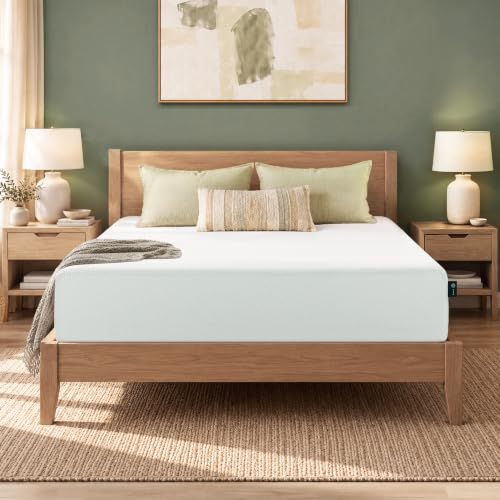
Every pick in this guide is sold on Amazon, where you can check the current price within this tier, size availability, trial terms, and delivery options on the listing itself. Start with our top pick, the Zinus 12 Inch Queen Green Tea Memory Foam Mattress — Check on Amazon. The other five picks are the Lucid 10 Inch Gel Memory Foam Mattress — Check on Amazon; the Novilla Bliss — Check on Amazon; the GhostBed Classic — Check on Amazon; the Leesa Original — Check on Amazon; and the Best Price Mattress 6 inch Bed-In-A-Box — Check on Amazon. Treat the listing, checked the day you shop, as the final word on price.
In this guide
Quick Picks
| Pick | Badge | Why it earns its place |
|---|---|---|
| Zinus 12 Inch Queen Green Tea Memory Foam Mattress | Best Overall | Zoned pressure relief over a durable base, 12 inches deep, with freshness infusions and full certifications. |
| Lucid 10 Inch Gel Memory Foam Mattress | Best Cooling | Gel foam plus bamboo charcoal — heat and humidity handled in one mid-profile build. |
| Novilla Bliss Queen Size Mattress | Best for Couples | Triple-layer NanoGel foam with reinforced edges — isolation depth this tier rarely offers. |
| GhostBed Classic 11 Inch Queen Memory Foam Mattress | Medium-Firm Feel | Best Dense Core | A high-density support core under aerated latex: the durability formula for foam at this price. |
| Leesa Original 10″ Memory Foam Mattress | Best Gentle Feel | Premium all-foam contouring with a softer first impression, assembled in the USA. |
| Best Price Mattress Full Mattress 6 inch Bed-In-A-Box | Best Budget | The honest floor in full size: layered foam for kids, guests, and whole-room budgets. |
Key Takeaways
- At this tier, buy layers and density, not surface feel: a named support base is worth more than any comfort-layer adjective.
- Twelve inches is the tier’s sweet spot for nightly adults; 10 inches serves most sleepers; 6 inches is light-duty and labeled as such here.
- Cooling infusions are real mechanisms — gel, charcoal — with real limits; they moderate foam’s warmth rather than abolishing it.
- CertiPUR-US certification appears across this guide’s picks; treat it as the minimum credential, then compare construction.
- No prices are printed: confirm your size’s current price on the listing, and let a home trial arbitrate feel.
How These Picks Were Chosen
Selection began with the layer audit. Each pick’s verified listing had to describe a stack a materials buyer could respect: a comfort layer with a defined job (zoned relief, gel cooling, NanoGel contour, aerated latex response, premium contouring), a transition or support logic, and a base that exists on purpose. Thickness sorted the roles — 12-inch builds for the lead and couples places, 10 to 11-inch builds for the cooling and gentle places, and the 6-inch full-size mattress placed deliberately as the labeled floor for light-duty jobs.
What was filtered out: foam mattresses whose listings could not describe their own layers; models positioned above this tier, because an under-budget guide recommending over-budget beds has failed its only job; and hybrids, which belong to their own guide even when their price wanders near this tier. Method notes: every claim and spec traces to the verified pool entry for that model; the tier is framing, never a quoted price; and feel is described by sleeper type so you can map the guide to your body. Health-adjacent language stays at comfort level throughout.
The 6 Best Memory Foam Mattresses Under 500 — Reviewed

Zinus 12 Inch Queen Green Tea Memory Foam Mattress
Our badge: Best Overall
The Zinus 12 Inch Green Tea Memory Foam Mattress leads because it spends this tier’s money in the right order: a patented zoned pressure-relief design in the comfort layer, a breathable knitted cover above it, and a durable base foam below — 12 inches of foam in which every inch has an assignment. The green tea extract and purified charcoal infusions handle freshness, the foams are CertiPUR-US certified, the cover meets OEKO-TEX Standard 100, and the build is fiberglass-free with a carbon rayon fire barrier.
Strengths
- Zoned relief gives shoulders, hips, and legs different support instead of one averaged slab
- A durable base layer anchors the stack — the year-three feature at this tier
- The most complete certification and materials story in the guide
Trade-offs
- Slow, classic memory foam response when changing position
- Mild off-gassing typically needs 24 to 48 hours to dissipate
- Medium-firm zoning works best when your torso rests near the designed zones
| Color | White |
| Size | Queen |
| Dimensions | 80 x 60 x 12 inches |
| Weight | 62.3 pounds |
The zoning is the Zinus’s answer to memory foam’s oldest criticism — that it treats the whole body identically. A shoulder and a hip do not want the same foam behavior, and a zoned map stops pretending they do: give at the points, lift at the spans, and a spine that runs straighter in every position. The motion absorption that makes foam famous serves couples, and the freshness infusions serve the small, closed-door bedrooms where this tier’s mattresses so often live.
Ownership is undemanding: unbox promptly, expand on a flat frame, rotate seasonally. If you are buying one memory foam mattress at this tier for a primary bed and want the safest pair of hands, this is it — the pick against which the rest of the guide’s specialties define themselves.
Best for: Most nightly sleepers — side, back, and couples — at this tier / Not suited for: Sleepers who dislike slow foam response
Choose it as the foam benchmark. Skip it for a springier or cooler specialty. Check on Amazon

Lucid 10 Inch Gel Memory Foam Mattress
Our badge: Best Cooling
The Lucid 10 Inch Gel Memory Foam Mattress is the tier’s cooling specialist, and its design assigns a material to each half of the warm-foam problem: cooling gel infused into the 3-inch comfort layer draws heat away from the body, while bamboo charcoal absorbs moisture and helps regulate temperature through the night. Below sit a 1.5-inch transition layer and a 5.5-inch high-density base — a defined stack that keeps the support honest at a 10-inch profile.
Strengths
- Gel for heat and charcoal for humidity — the complete warm-sleep problem, addressed in foam
- A substantial high-density base for its profile class
- Documented compatibility with adjustable bases, platform frames, and slatted frames
Trade-offs
- Ten inches leaves less margin for heavier sleepers than the 12-inch picks
- Gel moderates warmth; it does not make foam feel like an open grid
- Medium feel is the only feel on offer
| Color | White |
| Size | Queen |
| Dimensions | 79 x 59 x 10 inches |
| Weight | 57.9 pounds |
The Lucid suits the warm, small room — the apartment bedroom, the upstairs guest room in July — where foam’s heat reputation is not a stereotype but a nightly measurement. Its medium feel flatters back and stomach sleepers, whose broad surface contact makes them foam-warmth’s quietest victims, and its frame flexibility (including slatted frames, which ventilate the mattress’s underside) lets owners install it the airy way without guessing about compatibility.
Made in the USA with CertiPUR-US certified foam and a 10-year limited warranty per its listing, it is the cooling pick for shoppers who want the mechanisms that matter at a friendlier total cost than the tallest builds. The truly extreme hot sleeper should read Best Mattresses For Staying Cool for open-structure designs; everyone else will find gel plus charcoal entirely sufficient.
Best for: Warm sleepers, small rooms, and back or stomach sleepers / Not suited for: Heavier couples needing a 12-inch stack
Choose it for cooling value in foam form. Skip it for maximum depth. Check on Amazon

Novilla Bliss Queen Size Mattress
Our badge: Best for Couples
The Novilla Bliss builds its 12 inches in three foam layers around a couples brief: NanoGel memory foam contouring at the surface, support layers distributing weight and holding spinal alignment beneath, motion absorbed at every level, and reinforced edges keeping the full width in play. Its gel foam dissipates heat, its knitted cover breathes, and its plant-infused comfort foam helps the bed stay fresh between bedding changes.
Strengths
- Progressive triple-layer isolation — the deepest motion control at this tier
- Reinforced edges return the bed’s perimeter to the couple that paid for it
- Gel cooling sized for two bodies’ heat, not one
Trade-offs
- Full expansion can take up to 72 hours
- The contouring character will not satisfy a spring-feel loyalist
- Opposite firmness preferences remain a negotiation no single foam settles
| Color | Bliss |
| Size | Queen (U.S. Standard) |
| Dimensions | 80 x 60 x 12 inches |
| Weight | 61.5 pounds |
Memory foam’s founding promise was isolation, and the Novilla is where this tier keeps that promise most completely: a partner’s exit at 5 a.m. compresses foam in one neighborhood and is absorbed before it can cross the street. The edges matter as much — couples sleep toward their own sides, and an edge that holds converts the mattress’s paper width into slept width. For the household whose current foam bed fails on either count, the Novilla is the upgrade that stays inside the tier.
CertiPUR-US certified, bed-in-a-box convenient, and listed with a trial and 10-year protection — confirm current terms for your size — it is the couples’ default in this guide, with the Zinus as the solo sleeper’s alternative ordering of the same virtues.
Best for: Couples, especially with different schedules or a restless partner / Not suited for: Solo sleepers chasing maximum firmness
Choose it when two people’s nights are the purchase. Skip it for a solo specialty. Check on Amazon

GhostBed Classic 11 Inch Queen Memory Foam Mattress | Medium-Firm Feel
Our badge: Best Dense Core
The GhostBed Classic makes the density argument in foam’s own language: four layers — cooling gel memory foam, aerated latex, high-density support foam — in an 11-inch, medium-firm build its maker describes as soft, supportive, and springy with minimal motion transfer. The aerated latex is the tell of serious intent: it costs more than foam, responds instantly, ventilates naturally, and ages gracefully, and its presence at this tier signals a maker spending on the sleeper’s decade rather than the showroom minute.
Strengths
- A high-density core is foam’s best durability insurance at any price
- Aerated latex adds response and airflow classic memory foam lacks
- Balanced tuning for stomach, back, side, and combination sleepers per its design
Trade-offs
- Eleven inches is mid-pack depth for the heaviest sleepers
- Less deep contour than the Zinus or Novilla
- Medium-firm reads firm to light side sleepers
| Color | White |
| Size | Queen |
| Dimensions | 80 x 60 x 11 inches |
| Weight | 50 pounds |
The GhostBed is the pick for the foam shopper who has read the durability warnings and wants foam anyway — which is a defensible position when the foam is built like this. The dense core holds the alignment story; the latex keeps the surface honest and cool-ish; the gel foam gives the first impression its contour. At 50 pounds in queen it is also the easiest serious mattress in this guide to rotate and move, a practical virtue that compounds over years of ownership.
Made in the USA and Canada with CertiPUR-US certified materials, it is the connoisseur’s foam pick at this tier: less marketed, more engineered, and the one most likely to be described by its owner in year four with the same adjectives as year one.
Best for: Durability-minded foam buyers and combination sleepers / Not suited for: Deep-hug contour seekers
Choose it for the core. Skip it for maximum softness. Check on Amazon
Leesa Original 10″ Memory Foam Mattress
Our badge: Best Gentle Feel
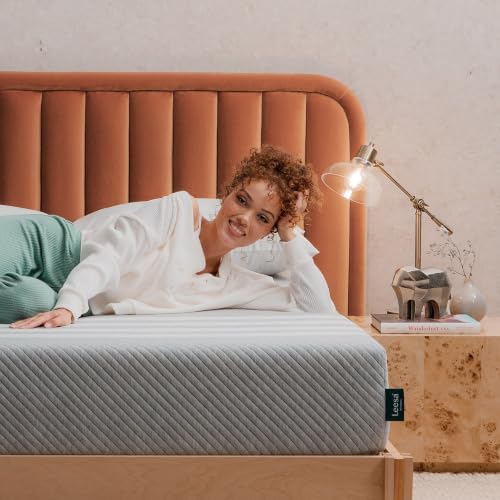
The Leesa Original is the premium-gentle entry: a 10-inch all-foam mattress designed for cooling, contouring, and pressure relief across back, stomach, and side positions, with a breathable grey twill cover in the maker’s signature four-stripe design. Its comfort argument is refinement — premium foams, careful assembly in the USA, and a surface that meets the body kindly while the stack beneath keeps the support contract.
Strengths
- Gentle, wide-area contouring for pressure-sensitive sleepers
- All-position design brief suits households that cannot agree on a style
- Assembled in the USA with CertiPUR-US certified foam
Trade-offs
- Ten inches is the slimmer margin for heavier sleepers
- The gentle feel may under-support dedicated stomach sleepers
- No zoning — the contour is uniform and relies on foam quality
| Color | Grey |
| Size | Queen |
| Dimensions | 80 x 60 x 10 inches |
| Weight | 71 pounds |
The Leesa suits the sleeper whose complaint about memory foam was never its concept but its execution elsewhere — the too-hot, too-slow, too-firm versions that populate this tier’s bottom shelf. Its contour is the classic foam experience done carefully: pressure spread widely, motion hushed, and a cover that breathes instead of sealing. Its maker also donates one mattress to nonprofits for every ten sold, a fact that belongs in a review because it signals how the company expects its product to be received.
For a guest room that hosts people you actually like, a primary bed for a lighter sleeper, or a household of mixed positions, the Leesa’s gentle universality is the point. Heavier sleepers and support-first shoppers should start at the top of this guide instead.
Best for: Pressure-sensitive and mixed-position sleepers who want foam done gently / Not suited for: Heavier sleepers needing maximum support margin
Choose it for refinement. Skip it for assertive support. Check on Amazon

Best Price Mattress Full Mattress 6 inch Bed-In-A-Box
Our badge: Best Budget
The Best Price Mattress closes the guide as its labeled floor: a 6-inch full-size memory foam mattress built in layers — memory foam, support foam, high-density base — with green tea infusion, CertiPUR-US certified foams, a cotton-based fire retardant, and a poly jacquard cover, at just over 30 pounds. It is the only true full-size verified pick in this guide, and the only one whose brief is explicitly light-duty.
Strengths
- Layered construction rather than a single slab, even at the floor
- Verified full-size dimensions for the kid’s-room and spare-room jobs it serves
- Light enough for one person to carry, unbox, and make the bed solo
Trade-offs
- Six inches bottoms out under heavier adults in nightly use
- Minimal edge support; sitting compresses quickly
- A horizon measured in light-duty years, not a decade of adult nights
| Color | White |
| Dimensions | 75 x 54 x 6 inches |
| Weight | 30.42 pounds |
Its honest jobs: the child graduating from a twin, the spare room, the first-months bed in a new city, the mattress that lets a whole room be furnished inside a hard budget. In those jobs its layered foam out-sleeps the futons and pads it actually competes with, and its 10-year warranty positioning — confirm terms on the listing — is generous for its class. The guide’s only demand is matching: light sleepers, occasional use, a solid platform underneath.
If the sleeper is an adult and the use is nightly, step up to the Zinus and let the bedding wait. Bodies audit mattresses nightly, and the floor pick’s inclusion here is a map of where the floor is — not an invitation to live on it.
Best for: Kids, teens, spare rooms, and hard whole-room budgets / Not suited for: Heavier adults’ nightly bed
Choose it when the budget is truly the boss. Skip it for a primary adult bed. Check on Amazon
Comparison Table
| Pick | Profile | Layer logic | Cooling / freshness | Check price on Amazon |
|---|---|---|---|---|
| Zinus 12 Inch Green Tea Memory Foam Mattress | 12 inches | Zoned foam over durable base | Green tea + charcoal infusions | Check price on Amazon |
| Lucid 10 Inch Gel Memory Foam Mattress | 10 inches | Gel foam / transition / dense base | Gel + bamboo charcoal | Check price on Amazon |
| Novilla Bliss | 12 inches | Triple-layer NanoGel foam | Gel foam + breathable cover | Check price on Amazon |
| GhostBed Classic | 11 inches | Gel foam + latex over dense core | Gel + aerated latex | Check price on Amazon |
| Leesa Original | 10 inches | Premium all-foam contour | Cooling foam + breathable twill | Check price on Amazon |
| Best Price Mattress 6 inch | 6 inches | Layered foam (light-duty) | Green tea infusion | Check price on Amazon |
How to Choose the Best Memory Foam Mattress at This Tier
Read the Stack From the Bottom Up
The base layer is the mattress’s pension plan: it decides how the bed feels after years of compression cycles. Look for named, substantial bases — durable foam, high-density core, a stated thickness. Then the transition logic, then the comfort layer’s mechanism. A listing that describes only its top two inches is telling you where its budget went, and it was not underneath you.
Use Thickness as a Load Rating
As general guidance: 12 inches for heavier sleepers and couples who want margin, 10 to 11 for most adults, 6 for light-duty jobs only. Thickness is not luxury; it is the distance between your hip and the bottom of the mattress, and foam needs that distance to distribute load before the base engages.
Judge Cooling as a Mechanism With Limits
Gel conducts, charcoal manages moisture, open cells ventilate a little, and none of it refrigerates. Match the mechanism to your heat pattern — surface-hot sleepers benefit most from gel; humid sleepers from charcoal and breathable covers — and fix the bedding and room in parallel, because foam cooling is a moderator, not an air conditioner. The full physics tour lives in the cooling guide; the movement side of the same foam story is covered by Best Mattresses For Combination Sleepers.
Treat Certifications as the Floor
CertiPUR-US appears across this guide because it should: it verifies foam content, emissions, and durability standards. Fiberglass-free construction — the Zinus states it outright — is the other credential worth hunting at this tier, where fire barriers are a real design fork. Credentials do not guarantee comfort; they guarantee the materials are what the listing claims, which is the precondition for every other judgment.
Let the Trial Decide the Feel
Memory foam’s feel cannot be fully specified in words — response speed, sink depth, and temperature are bodily data. Every serious pick here is sold with trial terms on its listing; use them, sleep three weeks, and judge by mornings. The mattress you keep should be the one your logbook elects.
How Should You Break In a New Memory Foam Mattress?
Unbox promptly — foam left compressed for weeks after delivery expands less willingly — and unroll it on its frame in a ventilated room. Expect a new-foam smell that the listings here put at 24 to 48 hours to dissipate; a fan and an open window are the whole remedy. Sleep on it from the first night if you wish, but know that the feel firms and then settles: foam is stiffest cold and newest, and across two to three weeks of body heat and load it reaches its working character. Rotate head-to-foot at one month, fit the protector after full expansion, and keep the room’s temperature ordinary — a cold room makes any foam feel a board and has ended more trials unfairly than any defect.
Problem: The foam feels much firmer than expected — Cold and new are foam’s firmest states. Warm the room, sleep the break-in weeks, and re-judge before concluding.
Problem: You feel stuck when rolling over — Classic slow-response foam behavior. If it persists past break-in, your next mattress is a responsive design — latex-blend or adaptive foam — not another traditional slab.
Problem: The bed sleeps warmer than your old spring mattress — Expected physics: foam stores more heat than coils. Apply the bedding fixes first (breathable protector and sheets, lighter duvet), then judge the mattress’s own infusions.
Problem: A shallow body impression appeared early — Rotate the mattress; surface settling in the first months is normal. A deepening valley with a raised center is a warranty conversation — document it with photos and a straightedge.
Problem: The smell returned when the room got warm — Residual off-gassing can re-announce itself with heat. Air the room and the bed without bedding for a day; persistent strong odor beyond the first week is a seller conversation.
Memory Foam Density, Explained Without a Chemistry Degree
Density is foam’s weight per cubic foot, and it predicts the two things buyers care about most: how the foam supports, and how long it keeps doing so. Higher-density foam has more material in every inch — more cell walls to carry load, more resistance to the micro-collapse that becomes a body valley. It also responds more slowly and can feel firmer, which is why density is a support specification rather than a comfort one. Makers at this tier do not always publish density numbers, so shoppers read the proxies: named high-density bases and cores (the GhostBed’s core, the Lucid’s base), total mattress weight relative to size, and warranty confidence. A 12-inch mattress that weighs noticeably more than a same-size rival is usually carrying its extra pounds in the support layers, which is exactly where you want them. The lightest serious pick here, the GhostBed at 50 pounds, earns its lightness honestly with latex in the stack; the floor pick’s 30 pounds announce its light-duty brief. Weight is not quality — but in foam, unexplained lightness is a question.
Who Should Not Buy Memory Foam at This Tier?
Three shoppers should route around this guide. The very hot sleeper in a warm climate will outrun foam’s moderating infusions and belongs in open structures — grids and coil hybrids. The sleeper who needs maximum edge support for mobility reasons will find foam’s perimeter wanting even in reinforced designs, and should start with hybrids. And the shopper furnishing a bed for a much heavier adult should treat this tier’s foam margins skeptically and begin with the structural picks in Best Mattresses For Big And Tall. Everyone else — the vast middle of sleepers who want contour, isolation, and quiet at an honest price — is who memory foam at this tier was engineered for, and the six builds above are its best current arguments. If a folding guest bed is the actual project, the thinner end of foam thinking continues in Best Mattresses For Sleeper Sofas.
Memory Foam and Room Temperature: The Seasonal Feel Shift
Memory foam is a material with a thermostat, and budget shoppers deserve the briefing before the first cold snap delivers it as a surprise. The viscoelastic response that defines the category is temperature-sensitive: in a cold bedroom the foam firms, sometimes dramatically — the contour arrives slowly, the surface reads a full firmness grade harder — while in a warm room it softens and deepens. A mattress auditioned in a mild autumn can feel like a different product in January, and every year some of those Januarys end in returns of beds that would have been loved in April. The mitigations are domestic: warm the bedroom before bed in deep winter, expect a week of adjustment rather than a verdict, and prefer the gel-infused and open-cell builds in this guide if your home’s temperature swings widely, since their response varies less with the weather. Judge the mattress across the conditions you actually sleep in, and the seasonal shift becomes a known personality rather than a suspected defect.
Off-Gassing and Airing Out: What to Expect
New foam has a smell, and honesty about it beats both alarm and dismissal. The odor is the mattress’s manufacturing and packaging volatiles leaving the foam — strongest in the first hours after unboxing, fading over days — and the standard handling is ventilation: an open window, a fan, bedding withheld for the first day, and patience proportional to your nose’s sensitivity. CertiPUR-US foams, which most of this guide’s picks use, are made without the worst historical offenders and tested for emissions, but “tested” does not mean “odorless on day one,” and a sensitive sleeper should plan the unboxing for a morning, not a bedtime. If a smell persists strongly beyond a week of aired use, that is a listing-level conversation with the seller, not a personal failing of your nose. The guest-room corollary: unbox a new foam mattress several days before the guests arrive, unless your hospitality style includes a chemistry demonstration.
Memory Foam for Guest Rooms and Second Homes
The guest room is memory foam’s most forgiving assignment and this tier’s natural second act. Guests sleep a night or three — long enough to appreciate contour, too briefly to judge durability — and the bed spends its life waiting, a duty foam performs without complaint. Choose the middle of this guide for guests: medium-firm, moderate profile, the Zinus or Lucid pattern, and add the hospitality details that guests actually remember — a protector, decent pillows in two firmnesses, and a bedside surface for glasses and water. Second homes invert the duty cycle: long vacancies, intense use, and temperature swings in an unheated house that firm the foam between visits; a hybrid-leaning choice or the simplest foam build both serve, and a protector is non-negotiable where a small leak could sit undiscovered for a month. The through-line is that memory foam at this tier is rarely a mistake anywhere a bed is needed — the mistakes are all in matching, which is what the rest of this guide is for.
Extending the Life of a Budget Foam Mattress
A budget foam mattress repays a small maintenance liturgy with years of extra service. Rotate it head-to-foot quarterly so the hip zone’s labor migrates; keep it on a base whose slats are close and sound, since foam draped over wide gaps ages in stripes; run a protector from night one and wash it monthly; and air the bed unmade on laundry mornings, because foam that dries fully between sleepers degrades slower than foam that stays damp. When impressions begin, measure them with a straightedge and a photograph — the pair is warranty evidence and personal data at once. Expect the contour layer to soften gradually across the years while the base holds the support line; when the morning report changes for two straight months despite rotation, the mattress is not failing you, it is finishing honestly, and the replacement conversation can start from the log rather than from a guess. Budget foam, maintained, routinely outlives the neglect of mattresses that cost twice as much.
Memory Foam Firmness, Decoded: Density, ILD, and What Listings Don’t Say
Memory foam listings communicate firmness in adjectives because the honest numbers are unflattering to somebody. Two specifications actually predict the experience. Density — pounds per cubic foot of foam — predicts durability and support character: denser memory foam contours more slowly, supports more substantially, and keeps its properties years longer than airy foam that feels plush in week one and packs out by year two. Indentation load deflection, the ILD rating, measures softness directly, but listings at this tier rarely publish it, which is why the same word “medium” covers beds that feel a full grade apart. The buyer’s workaround is triangulation: the layer stack’s thicknesses, the maker’s own firmness language compared across its range, the trial length as a confession of confidence, and the review pattern read for bodies like yours. Weight completes the translation — a foam that reads medium to a 130-pound sleeper reads soft to a 230-pound one, because firmness is not a property of the foam alone but of the foam under load. Armed with density, thickness, and your own weight, the adjectives become almost unnecessary; unarmed, they are all you have, and they know it.
Memory Foam and Pets: Claws, Warmth, and the Shared Bed
A significant constituency sleeps on these mattresses without ever reading a review: the household pets, whose preferences arrive as behavior. Dogs vote for memory foam emphatically — the contour cradles joints, the isolation means a restless owner does not launch a sleeping animal, and older dogs with stiff hips often choose the foam bed over every other surface in the house, a review written in the only language available to them. Cats vote for the warmth: foam’s heat retention, the category’s human complaint, is the feline feature, and a cat-shaped crater will form wherever the sun and the foam agree. The practical notes are protective rather than prohibitive — a washable protector is non-negotiable insurance against the accident every pet eventually has, claws kneading a bare foam-adjacent surface argue for a real sheet barrier, and a pet’s weight counts in the household’s load math for durability. The memory foam bed at this tier, protected and honestly loaded, serves the whole household — including the members who chose it first.
Back Sleepers Versus Side Sleepers at This Tier: A Firmness Map
One mattress word — medium — hides two different purchases, and this tier’s buyers deserve the map drawn plainly. The back sleeper’s foam must do its work at two shallow depths: enough contour to fill the lumbar curve and cushion the heels and shoulder blades, over a base firm enough that the pelvis never starts its slow overnight descent. Their ideal in this guide is the firmer-leaning end of medium, in a profile thick enough that the base layer, not the floor of the foam, sets the final position. The side sleeper’s foam works deeper and more locally: the shoulder and hip must excavate real craters while the waist is held, which wants a comfort layer thick enough to excavate into — the reason thin, firm builds fail side sleepers at any price — and a transition layer that arrests the descent before the base turns it into pressure. The combination sleeper, as ever, buys the middle and accepts both small taxes. Read every pick in this guide through your position’s column of this map, and the word “medium” resolves into a decision.
Setting Up a Memory Foam Mattress: The First 48 Hours
The unboxing is a small ceremony with real consequences, and foam rewards doing it deliberately. Cut the plastic on the frame, not the floor, so the expanding mattress never needs dragging; give it air and time, since the last inches of profile and the last of the new-foam smell both leave across the first day or two rather than the first hour. Keep the packaging until the trial closes, photograph the expanded bed for the records, and sleep the first nights with the log open and expectations set to “arriving” rather than “arrived” — cold foam from a warehouse truck firms the first night in winter, and more than one good mattress has been reviewed at hour six by a sleeper who never met it at week two. By the end of the second day the bed is itself; judge from there, and the trial becomes the honest instrument this guide keeps recommending.
A Last Word Before the Shortlist
Everything in this guide reduces to a single discipline: match the foam to the body and the position, verify it across a real trial, and maintain it like the equipment it is. Memory foam at this tier is not a compromise category anymore — it is a mature one, with honest products at honest prices for sleepers who know what they are buying. The six picks above were chosen to make that knowledge easy to act on, and the trial windows attached to them exist so the final decision is made by your own nights rather than by anyone’s adjectives, including ours.
Common Buying Mistakes
Buying the Surface and Ignoring the Base
Two inches of lovely foam over a weak base is a two-month mattress. Read the stack bottom-up and spend your trust on the support layer.
Assuming All Memory Foam Sleeps Hot
Uninfused, dense, traditional foam earned the reputation. Gel, charcoal, open-cell, and latex-blend designs moderate it substantially — judge the mechanism, not the category’s history.
Matching a 6-Inch Mattress to an Adult’s Nightly Bed
Thin foam is a light-duty product with honest uses. Under nightly adult load it bottoms out, and the sleeper concludes foam itself failed. Match thickness to load.
Judging in a Cold Room in Week One
Foam firms in the cold and softens as it breaks in. Trials decided in a chilly first week return mattresses that would have suited their owners by week three.
Skipping the Protector to Save the Last Few Dollars
Moisture is foam’s slow enemy and stains void warranties. A breathable protector from the first night is the cheapest longevity in the entire purchase — and seasonal bedding deals like Black Friday Bedding Deals 2026 exist to make it cheaper.
Final Recommendation
Start with the Zinus 12 Inch Green Tea Memory Foam Mattress: zoned relief, a durable base, complete certifications, and a full 12-inch stack make it the tier’s most complete memory foam argument. The runner-up is the GhostBed Classic — Check on Amazon — for shoppers whose priority is a dense core that ages slowly, with the Lucid as the cooling alternative and the Novilla as the couples’ one. Read the stack bottom-up, match thickness to the sleeper, and let three weeks of mornings confirm what the spec sheet promised.
Frequently Asked Questions
What thickness of memory foam is best at this tier?
For nightly adult use, 12 inches is the sweet spot and 10 to 11 inches serves most sleepers well. Six-inch models are light-duty — kids, guests, and tight budgets — and this guide labels its 6-inch pick accordingly.
Does memory foam at this price sleep hot?
Less than its reputation suggests. Gel infusions, charcoal, open-cell structures, and latex blends — all present in this guide — moderate foam’s warmth meaningfully. The very hottest sleepers should still consider open-grid or hybrid designs.
How long will a memory foam mattress at this tier last?
Longevity tracks the support layer: dense bases and cores hold their feel for years, thin light-duty foam softens fastest. Rotation, a protector, and a flat frame extend every pick’s life; warranties at this tier commonly run a decade — confirm terms on the listing.
Is zoned memory foam worth it?
If your shoulders and hips want different things from a mattress — most side and combination sleepers’ do — zoning is the mechanism that delivers both in one surface. The Zinus’s zoned design is this guide’s lead pick for exactly that reason.
What does CertiPUR-US actually guarantee?
It certifies that the foam meets standards for content, emissions, and durability, and is made without specified harmful substances. It does not guarantee a feel — that is what trials are for — but it verifies the materials are what the listing claims.
Can memory foam go on any frame?
Foam needs a flat, supportive base: platform, closely spaced slats, or an adjustable base where the listing allows it (the Lucid documents all three). A worn box spring undermines foam exactly as it undermines every modern mattress.


