Disclosure: As an Amazon Associate, dailyhomedecorating.com earns from qualifying purchases. Links to Amazon on this page are affiliate links; they cost you nothing extra. Prices and availability change often, so check the current Amazon listing before you buy.
Lower back pain has a particular geography: a band of stiffness across the belt line, worst in the first ten minutes of the morning, easing as you move. If you are searching for the best mattresses for lower back pain, that pattern will sound familiar, and it points at a specific mechanical problem. Overnight, your lumbar spine either rests in its natural curve, supported and relaxed, or it spends eight hours flattened, arched, or twisted by a surface that holds your shoulders and hips at the wrong relative heights. Muscles that should be recovering are instead doing low-grade work all night, and you feel their overtime as morning stiffness.
The fix is narrower than general back comfort. Your lower back wants two things at once: fill under the lumbar curve so the spine is not left hanging, and resistance under the hips so the pelvis does not sink and drag the lumbar spine into flexion. The six mattresses in this guide each deliver that pairing through a different mechanism — contouring foam, zoned support, a dedicated gel lumbar layer, encased coils, or a five-zone ergonomic build. None of them is a medical treatment, and pain that radiates, persists, or follows an injury belongs in a clinician’s office. But for the common case of a bed that has stopped supporting the lower back, these are the designs most likely to change your mornings. Readers whose discomfort is more general may prefer our broader guide to Best Mattresses For Back Pain, while those who already know firmness is their lever should see Best Firm Mattresses For Back Pain.
Where to Buy
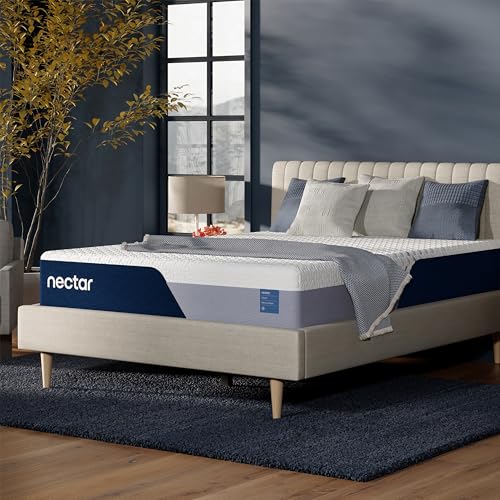
Every pick here is sold on Amazon, where the listing carries the current price, size range, trial terms, and delivery details. Start with our top pick, the Nectar 12” Memory Foam Mattress — Check on Amazon. The other five picks are the Signature Design by Ashley Chime 12 Inch Hybrid — Check on Amazon; the Casper Sleep Original — Check on Amazon; the Sealy Dreamlife 12” Hybrid — Check on Amazon; the Sweetnight CoolNest Queen Mattress — Check on Amazon; and the GhostBed Classic — Check on Amazon. Confirm current pricing on the listing itself, since mattress promotions change frequently.
In this guide
Quick Picks
| Pick | Badge | Why it earns its place |
|---|---|---|
| Nectar 12” Memory Foam Mattress | Best Overall | Firm-leaning contouring that fills the lumbar curve while holding the hips level all night |
| Signature Design by Ashley Chime 12 Inch Hybrid Full Size Mattress | Best for Targeted Lumbar Support | A dedicated gel lumbar layer aims extra support at the exact band where lower backs complain |
| Casper Sleep Original 11″ Memory Foam Queen Mattress | Best for Combination Sleepers | Zoned Support firms up under hips, waist, and lower back while staying gentler at the shoulders |
| Sealy Dreamlife 12” Hybrid Mattress-in-a-Box | Best Hybrid | Gel foam over encased coils for lifted, responsive support and better airflow |
| Sweetnight CoolNest Queen Mattress | Best Zoned Cooling Design | Five-zone ergonomic support with a layered cooling system for warm sleepers with lower back complaints |
| GhostBed Classic 11 Inch Queen Memory Foam Mattress | Best Firm-Leaning Feel | High-density core and quick-responding latex blend for sleepers who wake up feeling folded |
Key Takeaways
- Lower back comfort is a two-part job: fill the lumbar curve and stop the hips sinking. Any pick here that fails one half will fail you.
- Zoned and lumbar-targeted designs outperform uniform firmness for this specific complaint.
- Medium-firm to firm-leaning suits most back and stomach sleepers; side sleepers with lower back pain need zoned give at the shoulder.
- Hybrids make mornings easier if stiffness makes moving on foam difficult.
- Judge a new mattress at week three by morning stiffness, not by first-night feel.
- A small pillow under the knees (back sleeping) or between them (side sleeping) is a free experiment that tells you a lot about your support needs.
How These Picks Were Chosen
We filtered a verified product pool specifically for lumbar mechanics. Every pick had to name its support mechanism: contouring memory foam that fills the lumbar curve, zoned foam densities, a dedicated lumbar gel layer, individually encased coils that hold the hip zone independently, or a multi-zone ergonomic layout. We favored medium-firm and firm-leaning feels, because the classic lower-back failure is a pelvis sinking below the ribcage. We also weighed motion isolation, cooling, edge support for the sit-and-stand moment that stiff backs dread, trial length, and foam certifications.
Filtered out: ultra-plush surfaces with no support story, thin low-profile mattresses that bottom out under adult hips, and products whose verified specifications we could not confirm. Method honesty: this guide is built from manufacturer-verified specifications and documented features rather than laboratory testing, and firmness labels are relative across brands, so we describe construction and expected behavior instead of treating labels as measurements. If your pain pattern involves the neck as well as the lower back, our guide to Best Mattresses For Back And Neck Pain covers the pillow-and-mattress pairing that combination requires.
The 6 Best Best Mattresses for Lower Back Pain — Reviewed

Nectar 12” Memory Foam Mattress
Our badge: Best Overall
The Nectar 12” Memory Foam Mattress leads this guide because it performs the lower back’s two-part job in a single, simple build. Its contouring memory foam fills the lumbar curve when you lie on your back — no unsupported gap behind the belt line — while the firm-leaning feel and dynamic support foam underneath keep the pelvis from sinking into the hammock position that flattens the lumbar spine. Nectar explicitly designs this mattress to relieve pressure and reduce stress on high-tension areas like the hips and back, with an adaptive support layer promoting spinal alignment, and that is precisely the brief here.
Strengths
- Contouring foam fills the lumbar curve while firm support holds hips level
- Cooling top layer and breathable fabric temper memory foam warmth
- Long trial and warranty terms per the listing reduce purchase risk
Trade-offs
- All-foam response is slow, so position changes take effort on stiff mornings
- Lightweight side sleepers may want more shoulder give
- Seventy-eight pounds in queen makes rotation a two-person task
| Color | White |
| Size | Queen |
| Dimensions | 80 x 60 x 12 inches |
| Weight | 78 pounds |
The overnight experience is defined by stillness in the right places. On a worn bed, your hips migrate downward over the hours and you wake in a shallow valley, lumbar spine flexed, muscles braced. On the Nectar, the support foam’s resistance is progressive: you settle in during the first minutes, then the surface essentially stops moving. Back sleepers feel the lumbar fill most clearly — slide a hand under your lower back and the gap you are used to is largely gone. Stomach sleepers benefit from the firmness at the pelvis, which limits the arch that makes stomach sleeping hard on the lower back.
Temperature is handled better than legacy memory foam thanks to the cooling fabric in the top layer of the Nectar sleep system, though committed hot sleepers should still compare the coil airflow of the Sealy hybrid below. Motion isolation is a foam strength, so a partner’s schedule will not tax your back with constant micro-adjustments. Setup is the familiar routine: box to bedroom, unroll, allow a full day for expansion before judging, and ventilate the room meanwhile.
Durability prospects are strong for foam at this depth. Twelve inches with a dense support base resists the early hip-zone softening that recreates lower back pain on cheaper beds. Rotate head-to-foot every few months, protect it from day one, and sit it on a rigid, non-flexing foundation — a tired box spring will reintroduce the exact sag this mattress exists to remove. For the largest group of lower-back shoppers, this is the most complete, lowest-risk answer in the guide.
Best for: back and stomach sleepers whose lower back pain tracks with a sagging or too-soft bed / Not suited for: sleepers who want bounce and effortless position changes
Choose the Nectar if your mornings start with belt-line stiffness and your current bed has any hint of a valley. Skip it if you know coils are your preference. Check on Amazon

Signature Design by Ashley Chime 12 Inch Hybrid Full Size Mattress
Our badge: Best for Targeted Lumbar Support
The Signature Design by Ashley Chime 12 Inch Hybrid is the specialist in this guide: a high-density gel memory foam layer placed specifically for lumbar support, over wrapped coils with reinforced perimeter rows. Most mattresses support the lower back as a side effect of their general firmness; the Chime treats it as the design brief. If your discomfort is concentrated in one band and you can point to it with two fingers, a mattress that aims its best material at that band deserves a close look.
Strengths
- Dedicated gel lumbar layer targets the lower back directly
- Thirteen-gauge wrapped coils give sturdy, independent support and strong edges
- Adjustable-base compatible for knee-elevation experiments
Trade-offs
- This listing is a full size — workable for solo sleepers, snug for couples
- The assertive lumbar zone may feel like a ridge to very light sleepers at first
- Medium-firm hybrid feel will not satisfy plush seekers
| Color | White |
| Size | Full |
| Dimensions | 74.4 x 53.3 x 12 inches |
| Weight | 62 pounds |
The coil specification is reassuringly serious: nine-inch, 13-gauge wrapped coils are a firm, durable platform, and the doubled perimeter rows keep the edges honest for sitting, dressing, and sleeping near the side. Because each coil is pocketed, the hip zone can compress without dragging the shoulder zone down, and motion transfer stays low for a spring bed. The gel in the lumbar layer does double duty, supporting the curve and moderating heat where your body presses deepest.
Adjustable-base compatibility opens the most useful lower-back experiment in this guide: a slight knee elevation while back sleeping, which relaxes lumbar tension for many sleepers, or a gentle head lift for snoring households. The mattress flexes with the base instead of fighting it. It arrives compressed, carries CertiPUR-US certified foams, and lists a 180-night home trial with a 10-year warranty — generous terms for testing whether targeted support is your answer.
The full-size footprint suits smaller bedrooms, guest rooms, and solo sleepers who want a real hybrid without a queen’s floor plan. In that context the Chime is not a compromise at all: it is the most deliberately lumbar-focused design we could verify, sized for the rooms where most people actually sleep alone.
Best for: solo sleepers with a clearly localized lower back ache and smaller rooms / Not suited for: couples needing queen-plus width
Choose the Chime if your pain has a precise address and you like experimenting with base positions. Skip it if you need maximum width. Check on Amazon

Casper Sleep Original 11″ Memory Foam Queen Mattress
Our badge: Best for Combination Sleepers
The Casper Sleep Original approaches the lower back through zoning: firmer foam under the hips, waist, and lower back, softer foam at the shoulders, in a medium-firm overall build. That distribution is anatomically literate. Your pelvis is the heaviest segment of your torso and needs resistance; your waist needs fill so the lumbar spine does not sag sideways or flatten; your shoulders need give. One uniform foam cannot do all three, which is why zoned designs keep appearing in lower-back guides.
Strengths
- Zoned Support aligns the spine with firmness targeted to hips and lower back
- Breathable open-cell foam runs cooler than traditional memory foam
- Handles back and side positions, suiting restless combination sleepers
Trade-offs
- Medium-firm may under-support dedicated stomach sleepers’ hips
- Eleven-inch profile is a touch thinner than the 12-inch picks
- Foam edges yield when sitting, unlike the coil picks here
| Color | Light Gray |
| Size | Queen |
| Dimensions | 80 x 60 x 11 inches |
Lower back pain rarely travels alone; many sufferers are also side sleepers part of the night, and a bed that only works on your back is a bed that fails at 2 a.m. The Casper’s shoulder zone gives enough for side sleeping without collapsing the waist support, provided your pillow loft suits side posture. Roll back and the firmer center takes over. That positional forgiveness is its real product. Add strong motion isolation for couples, breathable foam that does not trap heat like early memory foam, and CertiPUR-US certified materials, and the package is coherent.
The listing’s durability claim — foams that resist sinking and sagging — matters disproportionately for this audience, because the hip zone is where foam fatigue first recreates the problem. The firmer foam placed exactly there is both a comfort feature and a longevity feature. A 100-night trial and 10-year limited warranty back the purchase.
Care notes: rotate 180 degrees on schedule but never flip, since the zones are orientation-specific; use a protector; and give the bed a rigid foundation so the zoning, not frame flex, determines your spinal line. For side-sleeping readers with lower back pain specifically, we go deeper in Best Mattresses For Lower Back Pain Side Sleeper elsewhere in this series.
Best for: combination sleepers whose lower back pain coexists with side-sleeping hours / Not suited for: strict stomach sleepers wanting maximum firmness
Choose the Casper if you change positions and need one bed that stays supportive in all of them. Skip it if you sleep only on your stomach. Check on Amazon

Sealy Dreamlife 12” Hybrid Mattress-in-a-Box
Our badge: Best Hybrid
The Sealy Dreamlife 12” Hybrid pairs two inches of SealyComfort gel memory foam and a transition layer with seven inches of individually encased coils. For lower back shoppers, the encased coils are the story: each coil responds independently, so the support under your pelvis does not borrow from the support under your ribs, and the lumbar region gets held at its own correct height rather than averaged with the rest of you. The gel foam on top handles pressure and surface temperature.
Strengths
- Encased coils deliver independent, targeted support with limited motion transfer
- Responsive surface makes position changes and morning exits easier on stiff backs
- Coil airflow and gel foam suit warm sleepers
Trade-offs
- Heaviest pick here at just over 80 pounds in queen
- Slightly more motion felt than on dense all-foam beds
- Bounce-forward feel is not the memory foam hug some shoppers want
| Color | Dreamlife |
| Size | Queen |
| Dimensions | 80 x 60 x 12 inches |
| Weight | 80.604164 pounds |
Morning mechanics deserve emphasis for this audience. Lower back stiffness peaks in the first minutes after waking, which is exactly when a slow, deep foam bed makes you climb out of your own body impression. The Sealy’s coils return energy, so rolling, sitting, and standing are assisted rather than resisted. Many lower-back shoppers discover that this exit experience, repeated daily, matters as much as the overnight support itself.
The transition foam layer smooths the handoff between soft gel foam and firm coils, preventing the hard-shelf sensation under the hips that cheaper hybrids can produce. Surface-Guard antimicrobial technology addresses bacteria and allergen buildup on the surface, and the foams are CertiPUR-US certified. The 12-inch profile takes standard deep-pocket sheets and works across platform and adjustable frames; verify frame weight ratings, since this is a substantial mattress.
Coils also age gracefully: support character at year five tends to resemble year one more than foam does, which for a lower-back purchase means the alignment you trial is the alignment you keep. Rotate seasonally and protect the surface, and the Dreamlife is a long-term answer rather than a two-year patch.
Best for: lower back shoppers who want lifted, responsive support and easier mornings / Not suited for: shoppers prioritizing absolute motion isolation
Choose the Sealy if foam has ever made you feel stuck. Skip it if you share with a very light, easily woken partner. Check on Amazon
Sweetnight CoolNest Queen Mattress
Our badge: Best Zoned Cooling Design
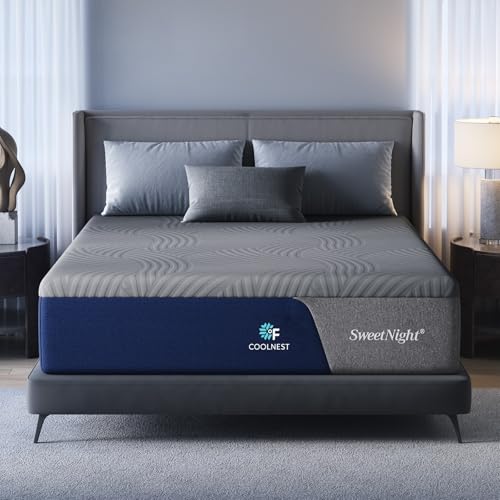
The Sweetnight CoolNest Queen Mattress is the most engineered design in this guide: a 14-inch profile with a five-zone ergonomic support system and a layered cooling stack that combines phase-change high-resilience foam with gel-infused memory foam. The five-zone layout varies support from head to toe to cushion pressure areas while maintaining stability — the same philosophy as the Casper’s zoning, extended across more of the body — and the design is recognized by the American Chiropractic Association per the listing.
Strengths
- Five-zone support redistributes pressure while keeping the lumbar region stable
- CoolNest system layers PCM foam and gel foam for sustained surface cooling
- Ventilated 3D-woven cover improves breathability over standard fabrics
Trade-offs
- Fourteen-inch profile needs deep-pocket sheets and raises bed height noticeably
- Full expansion can take up to 72 hours
- Medium feel may be too soft for strict stomach sleepers
| Color | Grey & Blue |
| Size | Queen (U.S. Standard) |
| Dimensions | 80 x 60 x 14 inches |
| Weight | 68.67 pounds |
Heat and back pain are frequent companions: warmth-seeking sore backs under heavy bedding, then restless overheating by 3 a.m. The CoolNest system attacks that cycle with materials rather than a thin cooling gel smear — the PCM foam’s hollow structure promotes airflow, the gel memory foam dissipates heat, and the ventilated cover wicks moisture. For a foam mattress, the surface stays unusually composed through the night, which means fewer position changes and fewer chances to twist a sensitive lower back into a bad angle.
Motion isolation is strong across the multi-layer foam build, and the medium feel with zoned support suits back and side sleepers best. The foams and cover are CertiPUR-US certified, and the listing includes a 10-year protection plan. Setup needs patience: a 14-inch foam mattress earns its full height over up to three days, and judging it early will mislead you about both firmness and zoning.
Bed height is a real consideration for this audience. Fourteen inches on a standard frame can make the sit-to-stand transition higher than ideal for shorter sleepers or those with very stiff mornings; measure your current total bed height and compare before ordering, and consider a lower-profile frame if needed.
Best for: warm sleepers with lower back pain who want zoned support and serious cooling / Not suited for: shoppers who need a low bed height or a firm stomach-sleeping surface
Choose the Sweetnight if heat disrupts your sleep as much as stiffness does. Skip it if your frame already sits high. Check on Amazon

GhostBed Classic 11 Inch Queen Memory Foam Mattress
Our badge: Best Firm-Leaning Feel
The GhostBed Classic closes the guide for lower back shoppers who wake up feeling folded. Its high-density foam core supports spinal alignment and eases stiffness, while cooling gel memory foam and aerated latex in the comfort stack keep the response springy rather than swampy. The medium-firm balance suits back and stomach sleepers who need the pelvis held high and the lumbar spine kept out of deep flexion.
Strengths
- High-density core holds alignment for back and stomach positions
- Aerated latex adds quick response and ventilation unusual in foam beds
- Light for a queen at 50 pounds, easing setup and rotation
Trade-offs
- Firm-leaning feel can press on petite side sleepers’ shoulders
- Light build can shift on slick platform frames without a grip pad
- Less contouring hug than the memory foam specialists here
| Color | White |
| Size | Queen |
| Dimensions | 80 x 60 x 11 inches |
| Weight | 50 pounds |
The GhostBed’s personality is best described as supportive first, cushioning second. You lie on it more than in it, and for the sleeper whose lower back protests at sink, that is the therapy-adjacent feel they are hunting: a surface that keeps the body’s line long and level. Position changes are quick because the latex blend rebounds instead of holding a mold, which helps combination sleepers and anyone who wakes stiff and needs to move carefully.
Cooling is honest mid-tier work — gel foam at the surface, aerated latex ventilating beneath — and the mattress is CertiPUR-US certified and made in the USA and Canada. Motion transfer is low for a bed this responsive, a combination foam beds rarely manage.
The light weight is a practical gift for this exact audience: rotating a mattress is a back-straining chore, and at 50 pounds the GhostBed is the one queen here a careful solo sleeper can manage with a helper’s brief assist rather than a full production. Add a non-slip pad on smooth frames and rotate on schedule to protect the hip zone.
Best for: back and stomach sleepers who want firm-leaning, quick-responding support / Not suited for: side sleepers seeking deep plush contour
Choose the GhostBed if soft beds leave you compressed and achy. Skip it if you love the slow memory foam embrace. Check on Amazon
Comparison Table
| Pick | Lumbar strategy | Feel | Size listed | Profile | Check price on Amazon |
|---|---|---|---|---|---|
| Nectar Memory Foam | Contour fill + firm support | Firm-leaning | Queen | 12 inches | Check price on Amazon |
| Ashley Chime Hybrid | Dedicated gel lumbar layer | Medium-firm | Full | 12 inches | Check price on Amazon |
| Casper Sleep Original | Zoned foam | Medium-firm | Queen | 11 inches | Check price on Amazon |
| Sealy Dreamlife Hybrid | Encased coils + gel foam | Medium-firm hybrid | Queen | 12 inches | Check price on Amazon |
| Sweetnight CoolNest | Five-zone ergonomic foam | Medium | Queen | 14 inches | Check price on Amazon |
| GhostBed Classic | High-density core + latex | Medium-firm, firm-leaning | Queen | 11 inches | Check price on Amazon |
How to Choose the Best Mattresses for Lower Back Pain
Diagnose your sink pattern first
Have a partner photograph you lying on your current bed, on your back and side. On your back, look for the hips dropping below the shoulder line or a visible gap under the lumbar curve. On your side, look for the waist sagging or the spine bowing. Deep hip sink says buy support and firmness; a lumbar gap with level hips says buy contour fill. The picks in this guide divide along exactly that line, and choosing by your photograph beats choosing by adjectives.
Prefer zoned or targeted designs for localized pain
If your ache has an address, your mattress should too. Zoned foam, five-zone layouts, and lumbar gel layers all concentrate resources at the pelvis and waist. Uniform mattresses spread their support evenly, which sounds fair and works worse, because your body does not load a bed evenly.
Match firmness to position and build
Back sleepers: medium-firm to firm-leaning. Stomach sleepers: the firmest end you can tolerate, to keep the pelvis up. Side sleepers with lower back pain: medium with zoning, so the shoulder sinks without the waist following. Heavier sleepers experience every bed as softer and should shop a step firmer than labels suggest; lighter sleepers, a step softer.
Do not neglect bed height and the morning exit
Stiff lower backs care about the sit-to-stand transition. Total bed height — frame plus mattress — should let you sit with feet flat and stand without hauling. A 14-inch mattress on a tall frame can overshoot; a low platform under a thick mattress can land perfectly. Measure before you order, and favor responsive surfaces if getting out of a foam impression is its own morning struggle. When refreshing the room around a new bed, readers often bundle bedding updates from Black Friday Bedding Deals 2026 and restful extras like Best Throw Pillows Under $500.
Bring your clinician’s advice into the brief, if you have it
Many lower back shoppers arrive with a fragment of professional advice — “sleep on something firmer,” “keep your spine neutral,” “try a pillow under your knees” — gathered from a clinician who has never seen their bedroom. That advice is a brief, not a product name, and this guide is built to execute briefs: firmer translates to the firm-leaning and hybrid picks, neutral spine translates to zoning and lumbar fill, and the knee pillow is a free experiment we recommend in the setup section. If your clinician gave you a specific position to favor or avoid, let it veto picks ruthlessly; a mattress that contradicts the person who has examined your back is wrong for you no matter how well it reviews. And if the advice was given years ago for a different body and a different back, that is worth a fresh conversation too — prescriptions age just like mattresses do.
The reverse also holds: if a new mattress dramatically changes your symptoms — better or worse — that is information worth carrying back to your clinician at the next visit. Sleep surface data is real data about how your spine behaves under eight hours of load, and the morning log we keep recommending doubles as a genuinely useful clinical artifact.
Protect the purchase with the trial
Every pick here lists a home trial. Use three weeks minimum, keep a simple morning stiffness score, and keep the protector on. If scores trend the wrong way by week three, the trial is your remedy — a mattress is a decade-long roommate, and the wrong one is expensive in sleep, not just money.
How Should You Set Up and Test a Mattress for Lower Back Pain?
Set up in the bedroom with help, unroll, and allow the full expansion window — 24 hours for most foam, up to 72 for the thickest builds — before any judgment. Ventilate during day one. Then run a structured test rather than relying on vibes: each morning for two weeks, score your lower back stiffness from one to ten before you get moving, and note your main sleep position. Add the knee-pillow experiments in week two: a thin pillow under the knees on your back, between the knees on your side. If a position aid dramatically improves your score, it tells you your alignment is close and the mattress is nearly right; if nothing helps by week three, use the trial.
Rotate the mattress 180 degrees after the first month and then seasonally to even the hip zone’s workload, and check the foundation at the same time: slats close and rigid, center rail firm, no flexing box spring. Many a “failed mattress” is a failed foundation discovered too late. For convertible guest spaces where a sore-backed relative sleeps, the same testing logic applies to thinner beds like those in Best Mattresses For Sleeper Sofas.
While the trial runs, keep everything else constant. This is not the month to also change your pillow, your exercise routine, and your desk chair, because you will never know which change your back is responding to. Keep the protector on the mattress — trials generally require a stain-free return — and sleep in your normal position rather than forcing yourself onto your back because you believe you should. A mattress that only works in a position you cannot maintain is not working. Note, too, how you feel after the longest sleeps of the week, the weekend lie-ins: extended time on the surface is the sternest test of hip support, and a bed that passes eight hours but fails at ten is telling you its support margin is thin. That detail is worth recording in your morning log alongside the stiffness score, because it predicts how the mattress will feel in year three, when its foams have softened a fraction and every night is effectively a longer test.
Problem: the new bed feels too firm and your back is worse in week one — foam breaks in over two weeks and bodies adapt; walk the surface gently in socks, add the knee pillow, and judge at week three before concluding.
Problem: you wake at 3 a.m. with an aching lumbar band — you may be sinking as the foam warms and softens overnight; check for a hip trench in the morning and consider the firmer or hybrid picks.
Problem: side sleeping hurts your lower back on the new bed — your waist is likely unsupported sideways; try a pillow between the knees and confirm the shoulder is sinking enough to keep the spine straight.
Problem: sitting on the edge to stand up is a struggle — the perimeter is too soft or the bed too high; a hybrid with reinforced edges or a lower frame changes that moment completely.
Problem: your partner’s side feels different from yours — on zoned foam, confirm the mattress is oriented correctly head-to-foot; zones installed backwards put firm foam at your shoulders.
The Lumbar Curve: Why Fill Matters as Much as Firmness
Sleep advice fixates on firmness, but the lumbar curve explains half of all mattress disappointment. Lying on your back on a perfectly flat, hard surface, the small of your back touches nothing; the muscles spanning that gap cannot fully switch off. Lying on a too-soft surface, the gap fills but the pelvis sinks, flexing the spine the other way. Comfort lives between those errors: a surface that rises gently into the curve while refusing to let the pelvis drop. That is why contouring foam, zoned layouts, and lumbar layers dominate this guide — each is a technology for filling without sinking — and why simply buying the firmest bed in the store so often disappoints lower back shoppers specifically.
Side sleeping has its own version of the same geometry. The waist is narrower than the shoulders and hips, so a level side posture needs the mattress to support the waist while yielding at both ends. Zoned designs handle this elegantly; uniform soft beds let the waist sag, and uniform firm beds bridge the waist entirely. If your lower back pain is a side-sleeping problem, shop the geometry, not the label.
Body weight quietly rewrites all of this geometry. A heavier sleeper compresses comfort layers further, reaching the support core sooner and experiencing any given mattress as effectively firmer at the surface yet more prone to deep hip sink if the base is weak. A lighter sleeper may never compress the comfort layer enough to engage the zoning beneath, floating on top of a bed designed to be sunk into. This is why two reviewers can honestly describe the same mattress as too soft and too hard, and why your own trial matters more than any testimonial. If you are substantially heavier than average, weight your choice toward the deepest profiles and strongest support mechanisms here — the 12-inch and hybrid builds. If you are lighter, the medium zoned designs will engage properly at your weight and the firmest picks may simply feel unyielding.
Temperature interacts with lumbar comfort in a way few guides mention. Memory foam softens as it warms, which means a foam bed’s support at 3 a.m. is marginally less than its support at 11 p.m. For most sleepers the difference is trivial, but for lower back shoppers hovering at the edge of adequate hip support, that overnight softening can be the difference between a level pelvis and a sinking one. It is one more reason hybrids and latex-blend designs earn their place in this guide: coil support and aerated latex do not change character with body heat, so the alignment you fall asleep with is the alignment you keep until morning.
Daytime Habits That Decide Whether the Mattress Gets Credit
A mattress works on the body you bring to it. Long sitting hours tighten hip flexors that tug on the lumbar spine overnight; a short evening walk and a few minutes of gentle movement before bed measurably change how a back feels at dawn, whatever you sleep on. Screen posture in bed matters too: propping yourself at a sharp angle on pillows to read or scroll loads the lower back in flexion for an hour before sleep even starts. If you read in bed, an adjustable base at a gentle incline or a proper wedge arrangement beats a pillow pile. None of this replaces a supportive mattress — but it decides whether a good mattress gets to show what it can do, and it is why we frame every claim in this guide as comfort and support, never treatment.
Lower back pain shoppers should also understand what a good first month looks like, because it rarely looks like instant relief. A spine that has spent years adapting to a sagging or board-hard surface has built its sleeping posture around that surface’s failures; a correctly supportive mattress asks those muscles to work differently, and the first week can feel strangely effortful even as alignment improves. Judge by trajectory: mornings that trend easier across two to three weeks, stiffness that shortens rather than lengthens, and a lumbar curve that feels filled rather than bridged when you settle. That trend — not any single night — is the signal the trial exists to capture, and every pick in this guide was chosen to give the trend its best chance to run in the right direction.
Common Buying Mistakes
Buying maximum firmness on principle
A plank leaves the lumbar curve unsupported and creates shoulder and hip pressure. Fill plus support beats hardness alone.
Ignoring your actual sleep position
The right firmness for a back sleeper can punish a side sleeper’s waist. Shop your real position mix, not your aspirational one.
Skipping the foundation inspection
Flexing slats and tired box springs recreate sag under any mattress. Inspect first, buy second.
Deciding inside the first week
Foam break-in and body adaptation take two to three weeks. Early verdicts waste good mattresses and keep bad ones past their trials.
Forgetting bed height
A wonderful mattress at the wrong total height makes every morning exit a strain. Measure the frame-plus-mattress total before ordering.
Lower back shoppers should also decide, before the box arrives, where the old mattress goes and when — a detail that sounds like logistics and behaves like psychology. A new mattress trialed beside the temptation of the old one, still leaning in the hallway, invites retreat at the first adaptation ache; a clean swap, with the old bed committed to its next life, lets the trial run its honest course. Arrange the exit in advance, give the new surface its full expansion window before the first judged night, and let the three-week trend — not the hallway — arbitrate.
Final Recommendation
For most lower back shoppers, the Nectar 12” Memory Foam Mattress is the strongest start: it fills the lumbar curve, holds the hips level, and carries the most forgiving trial terms in this guide. If your pain is sharply localized and you sleep solo, the specialist alternative is the Ashley Chime’s lumbar layer. If you are torn between foam comfort and morning mobility, take the runner-up route — Check on Amazon for the Sealy Dreamlife Hybrid and its responsive encased coils. Whichever you choose, photograph your posture on the old bed first, test the new one for three honest weeks, and let your morning scores make the final call.
Frequently Asked Questions
What firmness is best for lower back pain?
Medium-firm to firm-leaning for most back and stomach sleepers, with the caveat that the surface must still fill the lumbar curve. Side sleepers with lower back pain usually do best on a zoned medium, where the shoulder can sink without the waist sagging.
Are zoned mattresses worth it for lower back pain?
For localized lumbar complaints, yes. Zoning puts firmer support under the pelvis and waist and softer comfort at the shoulders, matching how your body actually loads a bed. The Casper and Sweetnight in this guide show two versions of the idea.
Can a hybrid help lower back pain as well as memory foam?
Yes. Encased coils support the hip zone independently and make position changes and morning exits easier, while the foam comfort layer handles pressure. The Sealy Dreamlife and Ashley Chime are the hybrid examples here.
Should I put a pillow under my knees?
It is a worthwhile experiment for back sleepers: a thin pillow under the knees relaxes lumbar tension for many people. Side sleepers get the analogous benefit from a pillow between the knees. If either dramatically improves your mornings, your mattress alignment is close to right.
How long before a new mattress helps my lower back?
Expect two to four weeks. Keep a daily morning stiffness score; a genuine improvement shows as a trend, not a single good night. If week three trends the wrong way, use the trial.
When should lower back pain be checked by a doctor?
When it radiates into the leg, comes with numbness or weakness, follows an injury, disturbs sleep for weeks despite a supportive bed, or appears with other symptoms. A mattress improves sleep mechanics; persistent or changing pain deserves evaluation.


