Disclosure: As an Amazon Associate, dailyhomedecorating.com earns from qualifying purchases. Links to Amazon on this page are affiliate links; they cost you nothing extra. Prices and availability change often, so check the current Amazon listing before you buy.
Back pain and neck pain travel together so often that sufferers stop distinguishing them: the stiff neck at dawn, the aching lower back by breakfast, the sense that the whole spine spent the night in an argument. If you are searching for the best mattresses for back and neck pain, the useful insight is that the spine is one structure with one alignment problem, and your bed addresses it at two ends — the mattress sets the line from your pelvis to your shoulders, and the pillow finishes it from your shoulders to your head. A mattress guide that ignores the pillow half will sell you half a solution.
So this guide does both jobs. The six mattresses were chosen for spinal alignment along their whole length — zoned support, lumbar fill, shoulder give, and surfaces that do not force your neck to compensate for a twisted torso. Woven through the reviews and the buying sections is the pillow logic that completes the system: loft matched to position and to the mattress’s sink, because a pillow that suited your old bed will misalign you on a level new one. None of this is medical treatment — pain that radiates into an arm, brings numbness, or follows an injury needs a clinician, not a mattress — but for the common pattern of whole-spine morning stiffness, the bed is the first variable to fix. Readers with a single-region complaint can narrow in with Best Mattresses For Lower Back Pain or the broader Best Mattresses For Back Pain.
Where to Buy
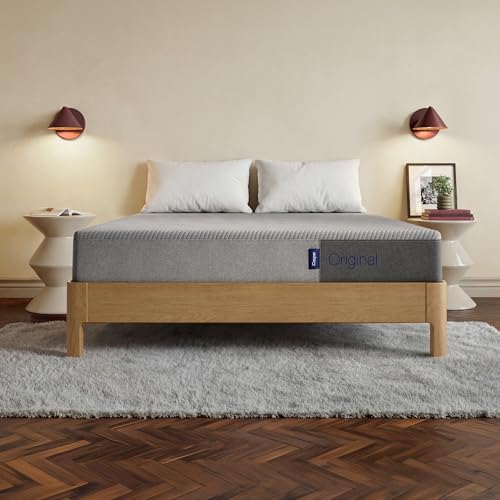
Every pick here is sold on Amazon, where the listing carries current pricing, sizes, and trial terms. Start with our top pick, the Casper Sleep Original 11″ Memory Foam Queen Mattress — Check on Amazon. The other five picks are the Nectar 12” Memory Foam Mattress — Check on Amazon; the Layla 10” Copper Infused Memory Foam Mattress — Check on Amazon; the Sealy Dreamlife 12” Hybrid — Check on Amazon; the Leesa Original 10″ Memory Foam Mattress — Check on Amazon; and the GhostBed Classic — Check on Amazon. Confirm current pricing on the listing itself.
In this guide
Quick Picks
| Pick | Badge | Why it earns its place |
|---|---|---|
| Casper Sleep Original 11″ Memory Foam Queen Mattress | Best Overall | Zoned support aligns the whole spine — firm at the waist, giving at the shoulders where the neck’s line begins |
| Nectar 12” Memory Foam Mattress | Best for Back Sleepers | Firm-leaning lumbar fill that keeps the torso’s line true so the neck has nothing to compensate for |
| Layla 10” Copper Infused Memory Foam Mattress | Best Adjustable Firmness | Flippable feel plus two memory foam pillows included — the whole spine system in one order |
| Sealy Dreamlife 12” Hybrid Mattress-in-a-Box | Best Hybrid | Encased coils and gel foam for sleepers whose necks hate foam’s slow, hot embrace |
| Leesa Original 10″ Memory Foam Mattress | Best Premium Foam Feel | Graded contouring aimed at lower back relief with a gentle shoulder zone |
| GhostBed Classic 11 Inch Queen Memory Foam Mattress | Best Firm-Leaning Feel | High-density core for back and stomach sleepers whose neck pain tracks with a twisted torso |
Key Takeaways
- Neck pain is often a mattress symptom: a torso held out of line forces the neck to compensate all night.
- Zoned support — firm waist, giving shoulders — serves both ends of the spine in one design.
- Your pillow must be re-fitted after any mattress change; loft is relative to the surface beneath it.
- Side sleepers need the tallest pillow loft, back sleepers a moderate one, stomach sleepers the least — or none.
- Judge the system, not the parts: log neck and back scores together across the trial.
- Radiating pain, numbness, or pain after injury belongs with a clinician, not in a shopping cart.
How These Picks Were Chosen
We filtered a verified product pool for whole-spine mechanics. Every pick had to support the torso’s line credibly — zoned densities, lumbar contouring, encased coils, or a dense core — while offering enough shoulder give that the neck is not asked to absorb a twisted upper body. We favored designs that serve more than one sleep position, because back-and-neck sufferers are restless sleepers by necessity, and we weighed motion isolation, cooling, and trial length. One pick, the Layla, literally includes pillows in its listing, which suited this guide’s two-part brief.
Filtered out: ultra-plush surfaces that fold the torso, extra-firm slabs that bridge the shoulders, and products whose verified specifications we could not confirm. Method honesty: this is a research guide built from manufacturer-verified specifications and documented features, not a clinical evaluation; all claims are comfort framing. If your pattern leans sciatic, our Best Mattresses For Sciatica guide takes the leg-radiation pattern as its starting point.
The 6 Best Best Mattresses for Back and Neck Pain — Reviewed

Casper Sleep Original 11″ Memory Foam Queen Mattress
Our badge: Best Overall
The Casper Sleep Original leads this guide because its Zoned Support treats the spine as one line: firmer foam under the hips, waist, and lower back holds the pelvis level, while softer foam at the shoulders lets the upper body settle into the same line — and the neck simply continues a line that is already straight. Most neck pain at dawn is compensation pain, the neck bending to reconcile a head with a torso the mattress left twisted. Remove the twist and the neck’s night gets quiet.
Strengths
- Zoned alignment serves the lumbar spine and the shoulder-neck junction in one design
- Breathable open-cell foam keeps the shoulder zone from overheating
- All-position versatility for restless, pain-driven position changers
Trade-offs
- Medium-firm may under-support strict stomach sleepers’ hips
- Foam edges compress when sitting
- Eleven-inch profile is a touch slimmer than the 12-inch picks
| Color | Light Gray |
| Size | Queen |
| Dimensions | 80 x 60 x 11 inches |
The practical pairing: on the Casper, a back sleeper needs a moderate-loft pillow that fills the neck curve without propping the chin; a side sleeper needs a taller one, because the shoulder zone’s sink widens the ear-to-mattress gap the pillow must bridge. That the same mattress demands two different pillows by position is not a flaw — it is the system working, and it is why we insist on re-fitting the pillow after the mattress settles. The foams are CertiPUR-US certified, positioned against sinking and sagging, with a 100-night trial and 10-year limited warranty listed.
Motion isolation protects the whole arrangement: a partner’s turning does not re-twist a carefully aligned spine at 3 a.m. Rotate the mattress without flipping — the zones have a correct orientation — and support it evenly so the zoning, not frame flex, draws your spine’s line.
For the household where one sleeper’s back and the other’s neck file competing complaints, the Casper is the most diplomatic surface in this guide.
Best for: whole-spine morning stiffness in back and side sleepers / Not suited for: strict stomach sleepers wanting maximum firmness
Choose the Casper if your pain refuses to stay in one region. Skip it if you sleep only on your stomach. Check on Amazon

Nectar 12” Memory Foam Mattress
Our badge: Best for Back Sleepers
The Nectar 12” Memory Foam Mattress anchors the back-sleeping end of this guide: firm-leaning contouring that fills the lumbar curve and holds the pelvis level, so the torso lies in the neutral line a healthy neck assumes without effort. Back sleepers with neck pain are often surprised to learn their pillow was compensating for a sagging mattress — the head propped to reconcile a dropped pelvis. Fix the pelvis and the pillow can go back to its real job.
Strengths
- Lumbar fill plus firm support gives back sleepers a true neutral line
- Cooling top layer tempers dense foam warmth at the shoulders
- The longest trial and warranty terms in this guide, per the listing
Trade-offs
- Slow foam response makes position changes deliberate
- Lightweight side sleepers may find the shoulder zone firm
- Seventy-eight pounds in queen needs two people to manage
| Color | White |
| Size | Queen |
| Dimensions | 80 x 60 x 12 inches |
| Weight | 78 pounds |
The trial terms suit this audience: a spine with two complaint regions needs weeks to render a joint verdict, and the listing’s one-year trial and forever warranty are the most patient terms here. Overnight, the Nectar’s stillness is the experience — you settle, the support foam’s progressive resistance stops the descent, and the geometry holds until morning, with motion isolation keeping a partner’s schedule out of your neck’s business.
Pillow pairing on the Nectar: back sleepers should start with a medium-loft pillow with a neck contour or a malleable fill they can shape into the curve; if you wake with ear-to-shoulder tension, the pillow is too tall for this firmer, higher-riding surface — the opposite adjustment from a soft old bed, which is why so many people misdiagnose a good mattress in week one.
Rotate seasonally, protect from day one, and insist on a rigid foundation; a flexing base redraws the spinal line you bought this mattress to straighten.
Best for: back sleepers whose neck pain rides along with lower back stiffness / Not suited for: bounce fans and petite side sleepers
Choose the Nectar if your whole back, neck included, wakes up negotiating. Skip it if coils are your preference. Check on Amazon

Layla 10” Copper Infused Memory Foam Mattress
Our badge: Best Adjustable Firmness
The Layla 10” Copper Infused Memory Foam Mattress is this guide’s system-in-a-box: a flippable mattress — soft on one side, medium-firm on the other — with two free memory foam pillows included in the queen listing. For back-and-neck shoppers, that bundle is strategically apt, because it lets you tune both ends of the spine in one purchase: flip the mattress to change the torso’s support, and shape the included pillows to finish the neck’s line.
Strengths
- Two firmness levels let you tune torso support without a second purchase
- Included memory foam pillows complete the neck half of the system
- Copper particles firm under load and conduct heat away from the neck and shoulders
Trade-offs
- Flipping a 69-pound queen is a planned, two-person event
- Included pillows will not suit every neck — treat them as a starting point
- Neither side is extra-firm for stomach sleepers wanting maximum lift
| Color | Natural |
| Size | Queen |
| Dimensions | 80 x 60 x 10.5 inches |
| Weight | 69 pounds |
The copper’s load response quietly serves the neck: particles condense and firm where the body presses deepest, so the shoulder zone supports more than a soft foam should, keeping the upper torso from rolling inward — the posture that bends the neck sideways by morning. Start on the medium-firm side if back support leads your complaint list, the soft side if shoulder and neck pressure lead, and give each a fair week with logged scores for both regions before flipping.
The trial runs 120 nights per the listing, and the mattress is made in the USA and made to order per the maker. Couples with different firmness needs across different pain regions will find the flip a durable household tool, since back and neck priorities drift with age and workload.
If your shopping list literally reads “mattress and pillows, for back and neck,” the Layla is the only pick here that arrives as the whole list.
Best for: shoppers who want to tune mattress and pillow together, with firmness insurance / Not suited for: shoppers with a settled single-firmness preference
Choose the Layla if your spine’s complaints change by the month. Skip it if you want one firm answer. Check on Amazon

Sealy Dreamlife 12” Hybrid Mattress-in-a-Box
Our badge: Best Hybrid
The Sealy Dreamlife 12” Hybrid serves the back-and-neck sleeper who dislikes foam’s personality: two inches of gel memory foam over a transition layer and seven inches of encased coils give a responsive, lifted surface where position changes are easy and the neck is never trapped in a slow foam mold while the torso tries to move. For restless sleepers whose neck pain worsens when they cannot reposition freely, that responsiveness is a clinical-grade comfort feature in spirit.
Strengths
- Encased coils support each spinal zone independently and respond instantly
- Gel foam surface relieves shoulder pressure where the neck’s line begins
- Coil airflow suits sleepers whose neck and shoulders run hot
Trade-offs
- Heaviest pick here at just over 80 pounds in queen
- More motion transfer than the foam picks
- Less deep contour than the memory foam specialists
| Color | Dreamlife |
| Size | Queen |
| Dimensions | 80 x 60 x 12 inches |
| Weight | 80.604164 pounds |
The transition layer grades the shoulder’s descent so the neck’s angle changes progressively rather than landing on coil support abruptly. Surface-Guard antimicrobial technology and CertiPUR-US certified foams cover hygiene, and the coil core’s support character ages slowly — a spine with two regions to protect benefits from a surface whose geometry in year three resembles its trial.
Pillow pairing on a hybrid: the surface rides higher and responds faster than foam, so side sleepers typically need a touch more loft than on a sinking foam bed, and back sleepers a moderate pillow that does not fight the coils’ lift. Morning exits are assisted by the coils’ returned energy — relevant when both your neck and back object to the climb out of a foam impression.
Rotate seasonally, protect the surface, and verify frame capacity for this substantial mattress.
Best for: restless back-and-neck sleepers who want responsive, ventilated support / Not suited for: motion-isolation absolutists
Choose the Sealy if foam has ever made your neck feel trapped. Skip it if your partner’s movement is the main disturbance. Check on Amazon
Leesa Original 10″ Memory Foam Mattress
Our badge: Best Premium Foam Feel
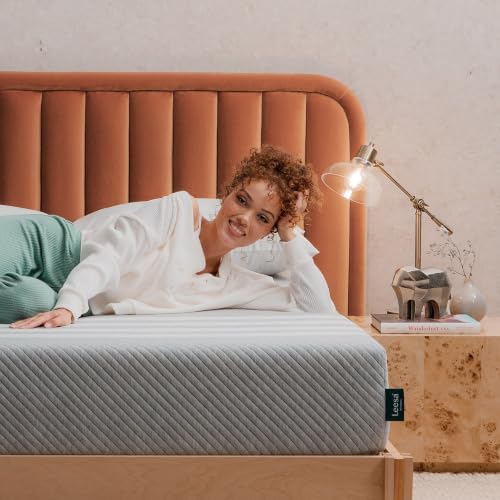
The Leesa Original 10″ Memory Foam Mattress brings a tailored gradient to the whole-spine brief: premium foam layers designed for cooling, contouring, and pressure relief, with explicit attention to lower back comfort. The gradient matters for necks — a surface that transitions smoothly from shoulder give to waist support leaves no kink in the line for the neck to absorb.
Strengths
- Smooth, graded contour from shoulders to waist — no kink for the neck to absorb
- All-position design serves mixed households and restless sleepers
- Breathable signature cover with a refined finish
Trade-offs
- Ten-inch profile is slimmer than the deepest picks
- Premium tier pricing
- Less targeted zoning than the Casper’s explicit design
| Color | Grey |
| Size | Queen |
| Dimensions | 80 x 60 x 10 inches |
| Weight | 71 pounds |
Leesa assembles in the USA, certifies foams through CertiPUR-US, and donates a mattress to nonprofits for every ten sold. In a mixed household — one partner’s neck, the other’s back, both sharing a queen — the all-position design is the diplomatic surface, and motion isolation keeps the diplomacy quiet.
Pillow pairing: the Leesa’s moderate sink suits a medium-loft pillow for back sleepers and a medium-tall one for side sleepers; its even gradient forgives small loft errors better than deep-sink or extra-firm surfaces do, which makes it the easiest pick here to fit a pillow to.
At 71 pounds, plan help for setup and rotations, and give the foam a rigid foundation worthy of its engineering.
Best for: mixed households wanting one refined surface for two spines’ worth of complaints / Not suited for: bargain hunters
Choose the Leesa if diplomacy and polish lead your brief. Skip it if explicit zoning is your priority. Check on Amazon

GhostBed Classic 11 Inch Queen Memory Foam Mattress
Our badge: Best Firm-Leaning Feel
The GhostBed Classic closes the guide for the back-and-stomach sleeper whose neck pain is really a torso-twist problem. Its high-density core supports spinal alignment and relieves stiffness, while gel memory foam and aerated latex keep the response springy. Stomach sleeping rotates the neck by necessity; a firm surface at least keeps the torso’s half of that equation level, so the neck’s rotation is the only angle to manage — with the thinnest pillow, or none.
Strengths
- High-density core holds the torso’s line for back and stomach positions
- Quick latex-blend response lets a stiff neck reposition without a fight
- Lightest queen here at 50 pounds — rotation is kind to sore bodies
Trade-offs
- Firm-leaning shoulder may press on petite side sleepers
- Light build can shift on slick frames without a grip pad
- Less contour than the Casper or Leesa for pressure relief
| Color | White |
| Size | Queen |
| Dimensions | 80 x 60 x 11 inches |
| Weight | 50 pounds |
GhostBed describes the feel as soft, supportive, and springy with minimal motion transfer, and the aerated latex explains it: yield, rebound, no mold. For the sleeper who wakes with a compressed spine and a cricked neck from fighting a soft bed all night, that stable platform is the corrective. The mattress is CertiPUR-US certified and made in the USA and Canada.
Pillow pairing is where this pick is won or lost: stomach sleepers should use the thinnest pillow available or slide it away entirely, because any loft on a firm surface cranks the neck’s rotation further. Back sleepers get a moderate pillow and the core’s alignment does the rest.
Add a non-slip pad on smooth frames, rotate on schedule — easy at this weight — and the GhostBed serves the firm end of the back-and-neck spectrum honestly.
Best for: back and stomach sleepers whose neck pain tracks with torso twist / Not suited for: side sleepers seeking deep shoulder sink
Choose the GhostBed if soft beds leave your whole spine folded. Skip it if you live on your side. Check on Amazon
Comparison Table
| Pick | Alignment strategy | Feel | Size listed | Profile | Check price on Amazon |
|---|---|---|---|---|---|
| Casper Sleep Original | Zoned foam | Medium-firm | Queen | 11 inches | Check price on Amazon |
| Nectar Memory Foam | Lumbar contour + firm support | Firm-leaning | Queen | 12 inches | Check price on Amazon |
| Layla Copper | Flippable + included pillows | Soft / Medium-firm | Queen | 10.5 inches | Check price on Amazon |
| Sealy Dreamlife Hybrid | Encased coils + gel foam | Medium-firm hybrid | Queen | 12 inches | Check price on Amazon |
| Leesa Original | Graded premium foam | Medium | Queen | 10 inches | Check price on Amazon |
| GhostBed Classic | High-density core + latex | Medium-firm, firm-leaning | Queen | 11 inches | Check price on Amazon |
How to Choose the Best Mattress When Back and Neck Both Complain
Draw the whole line before you shop
Have a partner photograph you lying in your main position on your current bed. Look for the bends: pelvis dropped, shoulders propped, head tilted. The photograph tells you whether your problem starts at the mattress (torso bends) or the pillow (only the head bends) — and therefore whether this guide or a pillow purchase is your first move. Most two-region sufferers find bends at both ends, which is why the system approach outperforms either purchase alone.
Fit the pillow to the mattress, in that order
Mattress first, settle for a week, then fit the pillow to the new surface: side sleepers fill the ear-to-shoulder gap at the depth the shoulder sinks; back sleepers fill the neck curve without chin-to-chest; stomach sleepers go thin or nothing. Adjustable-fill pillows earn their keep in this month because they let you tune loft nightly instead of buying three pillows. When refreshing the whole sleep setup, bedding events like Black Friday Bedding Deals 2026 and restful extras such as Best Throw Pillows Under $500 can be handled in the same pass.
Prefer zoning when both regions complain
Uniform surfaces make the two ends of your spine negotiate one firmness. Zoned designs — and the flippable Layla’s two chances — let the waist be firm and the shoulders kind simultaneously, which is the two-region problem stated as a specification.
Weight responsiveness if you are restless
Pain makes sleepers move; movement on slow foam is work; work wakes you and re-twists the neck. If you change positions hourly, the Sealy’s coils or the GhostBed’s latex blend will serve your neck better than the deepest foam, however good its zoning.
Log both regions, or you will fool yourself
Score neck and back separately each morning of the trial. A mattress that fixes the back and abandons the neck will show a split trend by week two — exactly the data you need while the return window is open.
How Should You Set Up a Bed for Back and Neck Comfort?
Expand the mattress fully before judging anything, fit a breathable protector, and spend the first week on the mattress alone before touching the pillow — one variable at a time, or your log is fiction. In week two, fit the pillow: for side sleeping, fold-test lofts until your head rests level with your spine; for back sleeping, choose the loft that fills the neck curve with your chin neutral. Note that a new, level mattress usually requires less pillow than a sagging one did, because your shoulders no longer sit in a valley your head had to climb out of.
Rotate the mattress seasonally, keep screens out of the bed’s posture equation — propping on a pillow pile to scroll loads both regions in flexion before sleep even starts — and if you read in bed, use an incline or a proper wedge arrangement rather than stacked pillows. Convertible guest setups follow the same system logic, as our Best Mattresses For Sleeper Sofas guide notes for occasional beds.
Problem: the back improved but the neck got worse — classic pillow mismatch on a new surface; reduce loft for back sleeping or raise it for side sleeping before blaming the mattress.
Problem: you wake with a headache that fades by midday — often a pillow that holds the head too high or a neck left unsupported; retest loft and check that the pillow reaches the neck, not just the head.
Problem: one side of the neck is always the sore one — you may be side-sleeping asymmetrically; a body pillow to balance positions, or a zoned surface that serves both sides equally, is the fix to test.
Problem: your partner’s pillow keeps migrating into your space — two correctly fitted pillows of the right size end the territory war; queen beds want standard or queen pillows, not kings.
Problem: stiffness is migrating down an arm — stop the experiment and see a clinician; radiating symptoms are not a bedding variable.
The Neck Is the Spine’s Last Five Percent — and Its Loudest
Anatomically the neck is a small share of your spine’s length and a huge share of its complaints, because it carries a heavy head on a flexible column and because its alignment is decided by two products at once. This is why two-region shoppers feel betrayed by single-product thinking: a perfect mattress under a wrong pillow yields a bent line at the top; a perfect pillow on a sagging mattress yields a bent line everywhere else. The system view is not upselling — it is geometry. The encouraging news is that the neck half is cheap to iterate: pillows cost a fraction of mattresses, adjustable fills exist, and a week of loft experiments during a mattress trial will find your setting with data rather than folklore.
Weight and build move both halves of the system at once, which is why couples so often disagree about a bed that is objectively fine. A heavier sleeper sinks deeper into the same mattress and needs less pillow on their back and more on their side; a lighter partner floats higher and needs the inverse. Split-loft pillow arrangements — two different pillows, unapologetically — are the mature solution, and several households in this guide’s audience end the pillow argument permanently by accepting that the two sides of a shared bed are two different sleep systems sharing a frame. The mattress can be common ground; the pillows rarely are.
Temperature threads through the neck story too, because the neck and shoulders are where bedding bunches and where foam pillows store heat. A sleeper who overheats at the neck wakes tense, having spent the night in micro-adjustments. Breathable mattress surfaces — the Sealy’s coils, the Casper’s open cells — and a pillow that does not insulate like a brick quietly remove that amplifier, which is one more reason the two-region verdict should be logged across warm and cool weeks alike before it is believed.
Reading in Bed, Screens, and the Hour Before Sleep
The hour before sleep is when back-and-neck households undo their own good purchases. Propped at a sharp angle on stacked pillows, neck flexed toward a phone, lower back slumped into the mattress’s least supportive posture — an hour of that pre-loads both regions before the night begins, and the mattress is then blamed for a posture it never chose. If you read or watch in bed, engineer it: an adjustable base at a gentle incline, or a wedge, with the screen raised toward eye level and the lower back supported in its curve. The picks in this guide that pair with adjustable bases — the foam builds especially — turn that hour from a liability into part of the therapy of the evening. Your spine does not distinguish between the postures you choose awake and asleep; it only totals them.
The same total includes the morning’s first minutes. A spine that has rested in a good line all night can be re-flexed carelessly by the exit — a sit-up-and-twist out of bed that loads the neck and lower back simultaneously at their stiffest moment. The unglamorous technique physical therapists teach — roll to your side, drop your legs, push up with your arms, keep the spine in one piece — pairs with the responsive and edge-supportive picks in this guide to make the first movement of the day the easiest one. It costs nothing, it takes a week to become habit, and for two-region sufferers it is routinely worth as much as a firmness step in either direction.
None of this dilutes the mattress’s importance; it locates it. The bed is the longest posture of your day and the one most completely in your control, which is why this guide exists. The readers who get the most from these six picks are the ones who treat the purchase as the centerpiece of a system — pillow fitted, reading posture engineered, exit practiced — rather than as a spell cast over an unchanged routine.
Back-and-neck shoppers should treat the pillow as part of the mattress purchase, because the two form one alignment system with a joint budget. A zoned mattress that perfectly levels the spine to the shoulders accomplishes half its mission if the head then rests at a kinked angle on a pillow chosen for its cover pattern. Match the pillow’s loft to the mattress’s shoulder behavior: a deep-sinking shoulder zone needs less pillow height than sleepers expect, since the shoulder’s descent brings the head closer to level; a firmer surface needs more. Buy the mattress first, sleep a week, then fit the pillow to the measured gap — in that order, the system converges; in the reverse order, households own three pillows and one persistent crick.
The neck also keeps the household’s strangest hours — the phone in bed, the chapter too good to close, the laptop finale — and a mattress chosen for back and neck comfort will be asked to host all of them. A surface with an honest edge for sitting, a head zone that does not swallow the reader whole, and enough support to prop without a pillow fortress all serve the waking hour that precedes the sleeping ones. Judge finalists partly in that hour; the picks in this guide were.
Common Buying Mistakes
Buying a mattress for a pillow problem
If your torso lies straight and only your head bends, the pillow is the purchase. Photograph first, spend second.
Keeping the old pillow by default
A pillow fitted to a sagging bed misaligns a level one. Re-fit loft in week two of every mattress change.
Scoring only one region during the trial
Back and neck trends can split. Log both, or you will keep a mattress that fixed the half you measured.
Propping up on pillow piles to read
An hour of flexed slouching pre-loads both regions nightly. Inclines and wedges exist for this.
Ignoring radiation and numbness
Pain traveling into an arm, or any numbness or weakness, is a medical presentation. Mattresses do comfort; clinicians do diagnosis.
Keep the health boundary in view as you finalize: a mattress can support alignment, cradle pressure points, and remove a bad surface from the list of suspects — genuinely valuable things for backs and necks that hurt. It cannot diagnose why a neck has hurt for a year, and pain that persists across a good mattress, a fitted pillow, and three honest weeks deserves a professional’s examination rather than a fourth product. The shoppers who get the most from this guide are the ones who let the mattress solve the surface problem completely — with the zoned, certified, trial-backed picks above — so that whatever remains is cleanly visible as the medical question it may be. Solve the bed first; then believe what is left.
The back-and-neck trial deserves a specific protocol, because two sites adapting at once produce noisy evidence. Log two lines each morning — one for the back, one for the neck — for three weeks. The pattern you are watching for is divergence: if the back improves while the neck stalls, the mattress has done its half and the pillow fitting owns the remainder; if both stall together past week two, the surface itself is the suspect and the trial’s exit is the remedy. Without the two-line log, households routinely return good mattresses for pillow problems and keep bad ones hoping a neck will forgive what a back already condemned. The log costs twenty seconds a day and makes the verdict legible.
Desk workers — the largest tribe within this keyword — should also audit the eighteen waking hours with the same honesty as the sleeping six. A mattress cannot out-support a chair that folds its owner into a question mark until dinner; the spine experiences the day as one long posture with a bed in the middle. The shoppers who get the most from this guide’s picks are the ones who fix the chair, the screen height, and the bed as one system, letting each stop blaming the others. The mattress is the system’s foundation — the hours when the spine is unloaded and recovering — and it earns that title only when the waking hours stop spending what the night deposits.
None of which diminishes the purchase in front of you. Of the system’s three parts, the bed is the only one where the spine is fully supported, fully unloaded, and fully still for hours at a stretch; it is where recovery is physically possible. Choose it with the seriousness that role deserves, from the zoned and certified finalists above, and give it the logged three weeks to prove itself.
One more population hides inside this keyword and deserves direct address: the stomach sleeper with back and neck complaints, whose position twists the neck by design and flattens the lumbar curve by gravity. For them, the mattress’s job is damage limitation — a surface firm and level enough to keep the pelvis from sinking the spine into extension, paired with the thinnest pillow that keeps the neck’s rotation tolerable. Several finalists here serve that brief on their firmer faces and zones; the honest counsel is that position change, practiced gradually with the new surface’s help, outperforms any purchase. Let the mattress support the transition rather than subsidize the twist.
Back-and-neck households should also resist the most common sequencing error in this category: replacing everything at once in a single frustrated weekend — mattress, pillows, even the bed frame — and then being unable to say which change helped. The trial discipline this guide prescribes is the antidote: one variable at a time, each judged on its own logged evidence. It is slower by a fortnight and faster by a year, because the household that isolates its variables converges on a working system, while the household that changes everything owns a pile of maybes and a neck that still hurts. Patience, sequenced, is the method; the finalists above are patient purchases, and they reward the method that matches them.
The back-and-neck shopper should also prepare the bedroom’s simplest ergonomic fix alongside the mattress: the reading setup. An hour of nightly reading in a slumped stack of pillows is an hour of neck flexion that the best mattress then spends half the night undoing. A wedge, a properly propped backrest angle, or simply the discipline of reading in the chair and sleeping in the bed returns that hour to the recovery column. The mattress is the system’s foundation, but the household’s habits are its daily weather — and this guide’s picks perform best, as all mattresses do, in fair weather.
Back-and-neck shoppers should also expect the two sites to improve on different clocks and not panic at the divergence: backs often report within the first week, when support replaces sag, while necks — hostage to pillow geometry and daytime posture — may need the full trial plus the pillow refit before their mornings turn. A neck still complaining at day ten, on a back that already feels rescued, is usually a pillow appointment rather than a mattress failure. Sequence the fixes, keep both log lines running, and let each site reach its verdict on its own schedule.
Above all, keep the experiment kind: three weeks is a short season in a spine’s long life, and the household that runs it without dread — logging lightly, adjusting calmly, deciding on evidence — usually finds that the process itself lowered the tension both sites were carrying. Relaxation is not the mattress’s job, but it is its best working condition.
Final Recommendation
For most back-and-neck shoppers, the Casper Sleep Original is the soundest start: zoning that aligns the torso so the neck can stop compensating, in a bed that serves every position a restless spine rotates through. If you want the whole system in one order, take the runner-up — Check on Amazon for the Layla, whose flippable firmness and included pillows let you tune both ends of the spine together. Back sleepers should look hard at the Nectar; the foam-averse, at the Sealy. Whichever you choose, photograph your posture first, fit the pillow in week two, log both regions for three weeks, and let the joint trend decide.
Frequently Asked Questions
Can a mattress really affect neck pain?
Yes, indirectly but powerfully: the mattress sets the torso’s line, and the neck must reconcile the head with that line all night. A twisted or sagging torso makes the neck compensate for hours. The pillow then finishes — or ruins — the alignment at the top.
What pillow loft do I need with a new mattress?
It depends on the mattress’s sink and your position: side sleepers need the most loft, back sleepers a moderate fill for the neck curve, stomach sleepers the least. Fit it after the mattress settles, not before — a level mattress usually needs less pillow than a sagging one did.
Is a zoned mattress better for combined back and neck pain?
Usually, yes. Zoning lets the waist stay firm while the shoulders give, which serves both ends of the spine simultaneously instead of forcing one firmness to compromise between them.
Should I change my mattress and pillow at the same time?
Stagger them by a week if you can, so your trial log can attribute changes. If both are clearly failing, change the mattress first — it is the foundation of the line — and fit the pillow to it in week two.
How long until a new setup helps back and neck stiffness?
Two to four weeks for a fair trend, scored separately for each region each morning. First-week impressions mislead in both directions, especially when a pillow is still mis-fitted.
When should back and neck pain be checked medically?
When pain radiates into an arm or leg, brings numbness or weakness, follows an accident, or persists for weeks despite a well-fitted bed. Those patterns need evaluation, not more bedding.


