Disclosure: As an Amazon Associate, dailyhomedecorating.com earns from qualifying purchases. Links to Amazon on this page are affiliate links; they cost you nothing extra. Prices and availability change often, so check the current Amazon listing before you buy.
Waking up stiff, sore, or already tired is a miserable way to start the day, and if you are searching for the best mattresses for back pain you have probably already blamed your pillow, your chair, and your posture before landing on the real culprit: a bed that no longer holds your spine in a neutral line. A mattress that sags in the middle, feels too soft under the hips, or pushes back too hard at the shoulders forces your back muscles to work all night instead of resting, and that quiet overnight strain is what many people feel as morning ache. The good news is that back comfort is one of the most solvable mattress problems, because it responds predictably to the right combination of firmness, pressure relief, and support that does not quit at 3 a.m.
This guide pulls together six mattresses that approach back comfort from different directions: contouring memory foam that fills the lumbar curve, zoned foam that stays firmer under the hips, hybrids that pair foam comfort with coil support, and a firmer classic for sleepers who feel best on a stable surface. None of these is a medical treatment, and persistent pain deserves a conversation with a clinician, but the right bed removes one very common source of nightly strain. If your discomfort sits lower, our companion guide to Best Mattresses For Lower Back Pain narrows the field further, and readers who already know they prefer a firmer feel can jump straight to Best Firm Mattresses For Back Pain.
Where to Buy
Every pick in this guide is sold on Amazon, where you can check the current price, size availability, trial terms, and delivery options on the listing itself. Start with our top pick, the Nectar 12” Memory Foam Mattress — Check on Amazon. The other five picks are the Casper Sleep Original — Check on Amazon; the Sealy Dreamlife 12” Hybrid — Check on Amazon; the Signature Design by Ashley Chime 12 Inch Hybrid — Check on Amazon; the Zinus 12 Inch Green Tea Memory Foam Mattress — Check on Amazon; and the GhostBed Classic — Check on Amazon. Mattress pricing moves with promotions and size, so treat the listing, not any roundup, as the final word.
In this guide
Quick Picks
| Pick | Badge | Why it earns its place |
|---|---|---|
| Nectar 12” Memory Foam Mattress | Best Overall | Firm-leaning contouring foam that fills the lumbar curve while a cooling top layer keeps the surface from sleeping hot |
| Casper Sleep Original 11″ Memory Foam Queen Mattress | Best for Combination Sleepers | Zoned Support keeps foam firmer under the hips, waist, and lower back while staying gentler at the shoulders |
| Sealy Dreamlife 12” Hybrid Mattress-in-a-Box | Best Hybrid | Gel memory foam over individually encased coils for sleepers who want foam comfort with a more responsive, lifted feel |
| Signature Design by Ashley Chime 12 Inch Hybrid Full Size Mattress | Best for Targeted Lumbar Support | A dedicated gel lumbar layer aims support exactly where lower backs usually complain first |
| Zinus 12 Inch Queen Green Tea Memory Foam Mattress | Best Budget | Zoned pressure relief and a full 12-inch profile at the most accessible end of this list |
| GhostBed Classic 11 Inch Queen Memory Foam Mattress | Best Firm-Leaning Feel | A high-density core and medium-firm balance for back and stomach sleepers who dislike sink |
Key Takeaways
- For back comfort, the winning formula is a level spine: hips supported so they do not sink deepest, shoulders cushioned so they do not get pushed out of line.
- Medium-firm to firm-leaning surfaces suit most back and stomach sleepers; strict side sleepers usually need a touch more shoulder give.
- Zoned designs, like the Casper and Zinus below, put firmer support under the hips and softer comfort at the shoulders, which is exactly the distribution a sore back wants.
- Hybrids add coil responsiveness and airflow, which helps if foam has always felt a little trapped or warm to you.
- Give any new mattress two to four weeks before judging it; your body adapts to a new support pattern gradually.
- A worn-out foundation can undo a good mattress, so check slats and frames before blaming the bed itself.
How These Picks Were Chosen
We built this list from a verified product pool and filtered it for the traits that matter most to back comfort. First, every pick had to offer genuine support architecture, not just soft foam: zoned support layers, high-density base foam, pocketed or encased coils, or a dedicated lumbar layer. Second, we favored medium-firm and firm-leaning feels, because very soft mattresses let the hips drop below the shoulders and pull the spine into a hammock curve. Third, we weighed pressure relief at the shoulder and hip, since a bed can be supportive and still create new aches if it pushes back too hard at bony points. We also considered motion isolation for couples, cooling features for warm sleepers, trial length, and certifications such as CertiPUR-US.
What got filtered out: ultra-plush pillow-top styles with no support story, very thin low-profile mattresses that bottom out under adult weight, and any product whose verified specifications we could not confirm. We are honest about method: this is a research-based guide built from manufacturer-verified specifications and feature documentation, not a sleep lab. Firmness labels are also relative — one brand’s medium-firm is another’s firm — so we describe how each bed is built to behave rather than treating the label as gospel. Readers comparing construction types more broadly may also enjoy our overview of the Best Type Of Mattresses For Back Pain, which explains when foam, hybrid, and innerspring designs each make sense.
The 6 Best Best Mattresses for Back Pain — Reviewed

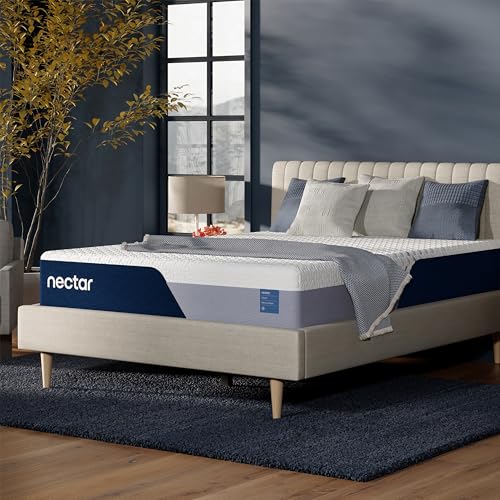
Nectar 12” Memory Foam Mattress
Our badge: Best Overall
The Nectar 12” Memory Foam Mattress earns the top spot because it does the single most important thing for back comfort unusually well: it contours into the curve of the lower back instead of leaving a gap there. When you lie on your back, that filled-in lumbar zone means your spine rests in its natural shape rather than flattening against a surface that only touches your shoulders and hips. Nectar describes the feel as firm with a touch of comfort, which is the right neighborhood for back sleepers and stomach sleepers who need the hips held up, while the contouring memory foam still relieves pressure at high-tension points like the hips and back.
Strengths
- Contouring memory foam fills the lumbar curve and relieves pressure on high-tension areas
- Firm-leaning feel keeps hips from sinking into a hammock position overnight
- Cooling top layer and breathable fabric address the classic memory foam heat complaint
Trade-offs
- All-foam build has less bounce, so changing positions takes a little more effort
- Strict side sleepers under lighter body weights may want more shoulder cushioning
- At 78 pounds in queen, it is a two-person job to rotate or move rooms
| Color | White |
| Size | Queen |
| Dimensions | 80 x 60 x 12 inches |
| Weight | 78 pounds |
In daily use, the Nectar behaves like a mattress that disappears underneath you. Back sleepers tend to notice the difference in the first week: the surface feels unremarkable in the best way, with no pressure point announcing itself at the shoulder blades and no valley forming under the hips by morning. The dynamic support foam beneath the memory foam matters more than it sounds, because it is the layer that stops the contouring from becoming sinking; you get the cradle without the slow slide into a soft spot. Combination sleepers will find position changes a touch slower than on a coil bed, since memory foam responds with a delay, but the firmness keeps that delay short.
The cooling story is worth a realistic note. The breathable cooling fabric in the top layer genuinely helps the surface feel less stuffy than old-generation memory foam, and most average-temperature sleepers will be comfortable year-round with normal bedding. Very hot sleepers, though, may still prefer the airflow of the Sealy hybrid further down this list, because no foam fully matches coils for ventilation. Setup is the standard bed-in-a-box routine: move the box to the bedroom first, unroll, and give it a full day to expand before judging the feel. Nectar backs the mattress with an unusually long trial and a forever warranty according to its listing, which lowers the risk of committing to a firm-leaning foam bed sight unseen.
Durability expectations are good for an all-foam design at this profile. Twelve inches gives the base foam enough depth to resist early softening, and rotating the mattress head-to-foot every few months evens out wear where your hips rest. Pair it with a supportive, non-flexing foundation; a worn box spring with give in the middle will recreate the sag you bought this mattress to escape.
Best for: back and stomach sleepers who want firm-leaning support with real lumbar contouring / Not suited for: sleepers who love a bouncy, on-top-of-the-bed feel
Choose the Nectar if your mornings start with a stiff lower back and your current bed feels either too soft or too flat. Skip it if you know you prefer the spring and lift of coils. Check on Amazon

Casper Sleep Original 11″ Memory Foam Queen Mattress
Our badge: Best for Combination Sleepers
The Casper Sleep Original takes a smarter approach to back comfort than uniform foam: its Zoned Support design uses firmer foam under the hips, waist, and lower back, with softer give where the shoulders rest. That distribution mirrors what a back actually needs. Your hips are the heaviest part of your torso and want resistance; your shoulders are bony and want cushion. A medium-firm overall feel makes it the most position-flexible pick here, which is why it suits combination sleepers who rotate between back and side through the night.
Strengths
- Zoned Support aligns the spine with targeted firmness under hips and lower back
- Breathable open-cell foam keeps air moving better than traditional memory foam
- Foam layers absorb motion well, so a restless partner disturbs you less
Trade-offs
- Medium-firm may feel too soft for dedicated stomach sleepers who need maximum hip lift
- Eleven-inch profile is slightly thinner than the 12-inch picks here
- Edge support is typical foam — sitting on the side compresses more than on a hybrid
| Color | Light Gray |
| Size | Queen |
| Dimensions | 80 x 60 x 11 inches |
What stands out in real use is how little you think about position. Back sleepers get the zoned lift through the waist; roll onto your side and the shoulder zone gives enough to keep the neck and spine in a reasonable line, provided your pillow loft matches. That versatility is rare in back-pain lists, which tend to recommend firm beds that punish side sleeping. If your back trouble coexists with side-sleeping habits, the Casper is the compromise that does not feel like one. Its breathable Flex Foam also addresses heat better than dense traditional memory foam, circulating air so the surface resets between position changes.
Couples should note the motion isolation. All-foam construction absorbs a partner’s turns and early alarms quietly, and the zoned center holds up well when two people’s hip zones overlap in the middle of a queen. The foams are CertiPUR-US certified, the trial runs 100 nights per the listing, and a 10-year limited warranty backs the purchase. Casper positions this mattress as durable foam that resists sinking and sagging, and the firmer hip zone is exactly where that resistance matters most for long-term back comfort.
Care is simple: a protector from day one, rotation twice a year, and a foundation that supports the full footprint evenly. Because the support is zoned head-to-foot, rotating 180 degrees keeps the zones in the right places while still evening wear — do not flip it, since the zones are built into the top orientation.
Best for: combination sleepers whose back pain comes with side-sleeping habits / Not suited for: sleepers who want a distinctly firm, flat surface
Choose the Casper if you move around at night and need one bed that handles every position competently. Skip it if you sleep exclusively on your stomach and want the firmest option available. Check on Amazon

Sealy Dreamlife 12” Hybrid Mattress-in-a-Box
Our badge: Best Hybrid
The Sealy Dreamlife 12” Hybrid is the pick for back-pain shoppers who have tried memory foam and missed the lift of a traditional bed. Its construction stacks two inches of SealyComfort gel memory foam over a transition layer and seven inches of individually encased coils, so you get contouring at the surface and push-back support underneath. Encased coils respond independently, which means the support under your hips does not drag the shoulder area down with it — a quiet advantage for spinal alignment that uniform foam and connected coils both struggle to match.
Strengths
- Encased coils deliver targeted, independent support with less motion transfer than open coils
- Gel memory foam comfort layer relieves pressure while helping the surface sleep cooler
- Coil airflow suits warm sleepers who find all-foam beds stuffy
Trade-offs
- At just over 80 pounds in queen, it is the heaviest pick in this guide
- More responsive surface means slightly more motion felt than on dense foam
- Hybrid bounce is not for sleepers who love the slow, molded memory foam hug
| Color | Dreamlife |
| Size | Queen |
| Dimensions | 80 x 60 x 12 inches |
| Weight | 80.604164 pounds |
For back sleepers, the hybrid difference shows up in the morning exit as much as the overnight feel. Coils make the bed easier to move on — rolling to your side, sitting up, and getting out all take less effort than on contouring foam, which matters when your back is stiffest in the first minutes of the day. The transition foam layer earns its keep by smoothing the handoff between soft gel foam and firm coils, so you do not feel a hard shelf beneath the comfort layer when you settle into the hip zone.
Sealy adds Surface-Guard Technology, an antimicrobial treatment intended to discourage bacteria and allergen buildup on the surface, and the foams are CertiPUR-US certified. Those are ownership comforts rather than back-pain features, but a fresher sleep surface is part of sleeping well for allergy-prone households. The 12-inch profile works on standard deep-pocket sheets and most platform or adjustable frames; check your frame’s weight capacity, since mattress plus sleepers on a coil hybrid adds up.
Longevity is the hybrid’s traditional strength. Coils fatigue more slowly than foam softens, so the support character at year five tends to resemble year one more closely than with an all-foam bed of similar tier. Rotate it seasonally, keep a protector on it, and the Dreamlife should hold its alignment-friendly feel for the long haul.
Best for: back sleepers who want foam comfort with coil lift and airflow / Not suited for: sleepers seeking maximum motion isolation above all else
Choose the Sealy if foam beds have left you feeling stuck or warm. Skip it if you share with a very restless partner and prize silence over responsiveness. Check on Amazon

Signature Design by Ashley Chime 12 Inch Hybrid Full Size Mattress
Our badge: Best for Targeted Lumbar Support
The Signature Design by Ashley Chime 12 Inch Hybrid is the most deliberately lumbar-focused design in this guide: a layer of high-density gel memory foam is placed to target the lower back, over a support system of wrapped coils with reinforced perimeter rows. If your discomfort concentrates in one band across your lower back rather than spreading everywhere, a mattress that aims extra support at exactly that band is a logical place to start. The medium-firm feel keeps the overall surface honest — supportive without the board-like quality that makes some firm beds create shoulder and hip complaints of their own.
Strengths
- Dedicated gel lumbar support layer targets the lower back directly
- Wrapped pocketed coils limit motion transfer and reinforce the edges
- Adjustable-base compatible for sleepers who elevate head or knees
Trade-offs
- This listing is a full size, which is snug for couples — check the size options on the listing
- Medium-firm with a lumbar emphasis may feel too assertive for lightweight side sleepers
- Gel lumbar layer is a support feature, not a treatment for diagnosed conditions
| Color | White |
| Size | Full |
| Dimensions | 74.4 x 53.3 x 12 inches |
| Weight | 62 pounds |
The coil system deserves a closer look. Nine-inch, 13-gauge wrapped coils are a sturdy specification, and the two perimeter rows add edge support that keeps the full sleep surface usable — helpful in a full size, where every inch counts. Sitting on the edge to dress or tie shoes feels stable rather than slidey, and partners sleeping near the edge do not get the roll-off sensation that plagues soft foam beds. Motion transfer is well controlled for a coil bed because each coil moves independently inside its pocket.
Adjustable-base compatibility is a genuine plus for back comfort. Elevating the knees slightly when back sleeping takes tension out of the lower back for many people, and raising the head helps some snorers and reflux-prone sleepers; a mattress that flexes with the base without fighting it lets you experiment with those positions. The Chime arrives compressed as a bed in a box, carries CertiPUR-US certified foams, and lists a 180-night home trial and 10-year warranty, which together make it a low-risk way to test whether targeted lumbar support is your answer.
In smaller bedrooms, guest rooms, and first apartments, the full size is a feature rather than a flaw: a 12-inch hybrid with this support story in a footprint that leaves room to walk around the bed. Solo sleepers with lower back complaints get the most from this pick.
Best for: solo sleepers and smaller rooms wanting support aimed squarely at the lower back / Not suited for: couples who need a queen or king sleep surface
Choose the Chime if your ache lives in one lumbar band and you like the idea of adjustable-base positioning. Skip it if you need maximum width for two. Check on Amazon

Zinus 12 Inch Queen Green Tea Memory Foam Mattress
Our badge: Best Budget
The Zinus 12 Inch Green Tea Memory Foam Mattress proves that a back-friendly design does not have to sit at the top of the price ladder. Its patented zoned pressure relief delivers targeted cushioning and support by sleep position, the medium-firm feel suits back sleepers well, and the full 12-inch profile gives the support layers real depth to work with. For shoppers replacing a worn-out bed on a budget — a very common back-pain scenario, since old beds cause the problem — the Zinus is the most complete answer at the accessible end of this list.
Strengths
- Zoned pressure relief targets cushioning and support where each position needs it
- Full 12-inch, medium-firm profile that behaves like pricier foam beds
- Green tea and charcoal infusion help the mattress stay fresh between cleanings
Trade-offs
- New-mattress off-gassing smell can linger 24 to 48 hours before dissipating
- Foam edges compress when sitting, like most all-foam designs
- Very hot sleepers may still prefer a coil hybrid for airflow
| Color | White |
| Size | Queen |
| Dimensions | 80 x 60 x 12 inches |
| Weight | 62.3 pounds |
The zoned design is the headline for back comfort. Rather than one uniform slab, the Zinus varies its pressure response so the hip zone holds you up while the shoulder zone lets you in, which is the same philosophy as the Casper at a friendlier tier. The breathable knitted cover helps the surface feel less sealed than basic foam covers, and the durable base foam gives the mattress its shape-holding backbone. Zinus certifies the foams through CertiPUR-US and the cover to OEKO-TEX Standard 100, and notes the mattress is fiberglass free, using a carbon rayon fire barrier instead — a detail many budget shoppers specifically look for.
Realistically, a budget foam mattress asks for a little more care to age well. A solid, evenly supportive foundation is non-negotiable, because any flex or wide slat gaps will telegraph through foam and recreate a sag. Rotate it every few months, use a protector, and expect the feel to stay consistent for years of nightly use. The green tea infusion is not a gimmick so much as housekeeping: it neutralizes odor buildup, which keeps the bed pleasant in smaller, less ventilated bedrooms.
For guest rooms that double as recovery rooms — the bed a family member with a sore back always claims when visiting — the Zinus hits a sweet spot of comfort, support, and cost that is hard to argue with.
Best for: budget-conscious back sleepers who still want zoned support and a full profile / Not suited for: shoppers who want premium edge support and bounce
Choose the Zinus if the budget is real but so is the back pain. Skip it if you want a hybrid’s responsiveness and are willing to pay for it. Check on Amazon

GhostBed Classic 11 Inch Queen Memory Foam Mattress
Our badge: Best Firm-Leaning Feel
The GhostBed Classic rounds out the list for sleepers whose backs feel best on a stable, no-nonsense surface. Its high-density foam core is built to support spinal alignment and relieve stiffness, the medium-firm feel balances contour with push-back, and a layer of aerated latex in the comfort stack keeps the response springier than pure memory foam. If soft beds leave you feeling folded and you wake up needing to stretch out a compressed spine, this firmer personality is the corrective.
Strengths
- High-density core supports alignment for back and stomach sleepers
- Cooling gel memory foam plus aerated latex manages heat and adds spring
- Minimal motion transfer for a bed with this much responsiveness
Trade-offs
- Firm-leaning feel can be too much for petite side sleepers at the shoulder
- At 50 pounds it is light for a queen, so it can shift on smooth frames without grip
- The balanced feel pleases generalists more than foam-hug devotees
| Color | White |
| Size | Queen |
| Dimensions | 80 x 60 x 11 inches |
| Weight | 50 pounds |
GhostBed describes this mattress as soft, supportive, and springy with minimal motion transfer, which sounds contradictory until you lie on a latex-blended foam bed: the surface gives a little, rebounds quickly, and never leaves you climbing out of a body-shaped hole. For combination sleepers with back pain, that quick response is valuable — you change position, the support is simply there, and your back never waits for slow foam to catch up. Stomach sleepers in particular benefit, because the firm core keeps the hips from dropping and arching the lower back, the classic stomach-sleeping strain.
The cooling stack is honest mid-tier engineering: gel-infused memory foam to draw heat from the surface and aerated latex, whose pinhole structure ventilates better than solid foam. It will not out-cool a coil hybrid, but it runs noticeably fresher than basic memory foam. The mattress is CertiPUR-US certified and made in the USA and Canada per the listing.
Because it is comparatively light, the GhostBed is also the easiest queen here to set up solo and to rotate on schedule — a small practical mercy for the very people whose backs protest at mattress wrestling. Put a non-slip pad under it on slick platform frames.
Best for: back and stomach sleepers who want firm-leaning support with a springy response / Not suited for: side sleepers seeking deep, plush shoulder sink
Choose the GhostBed if your current bed feels like a hammock and your back votes for structure. Skip it if you know you love plush contouring above all. Check on Amazon
Comparison Table
| Pick | Construction | Feel | Size listed | Profile | Check price on Amazon |
|---|---|---|---|---|---|
| Nectar 12” Memory Foam Mattress | Memory foam | Firm-leaning | Queen | 12 inches | Check price on Amazon |
| Casper Sleep Original | Zoned memory foam | Medium-firm | Queen | 11 inches | Check price on Amazon |
| Sealy Dreamlife Hybrid | Gel foam + encased coils | Medium-firm hybrid | Queen | 12 inches | Check price on Amazon |
| Ashley Chime Hybrid | Gel lumbar foam + wrapped coils | Medium-firm | Full | 12 inches | Check price on Amazon |
| Zinus Green Tea | Zoned memory foam | Medium-firm | Queen | 12 inches | Check price on Amazon |
| GhostBed Classic | Foam + aerated latex | Medium-firm, firm-leaning | Queen | 11 inches | Check price on Amazon |
How to Choose the Best Mattresses for Back Pain
Start with firmness, but define it by position
Firmness advice fails when it ignores sleep position. Back sleepers generally thrive in the medium-firm to firm range, where the lumbar curve is filled but the hips stay level with the shoulders. Stomach sleepers need the firmer end so the pelvis does not sink and arch the spine. Side sleepers need the softer end of supportive — enough shoulder give to keep the spine straight sideways. If you split the night between positions, a zoned medium-firm like the Casper or Zinus is the safest single answer. Body weight shifts the math too: heavier sleepers experience any mattress as softer, lighter sleepers as firmer.
Look for support architecture, not marketing words
Every mattress claims support. The ones that deliver it name a mechanism: zoned foam densities, a high-density base layer, pocketed coils, a lumbar insert. When a listing cannot tell you how the mattress holds your hips up, assume it does not do it well. Depth matters as well; for adults, a profile under about 10 inches rarely has room for both a real comfort layer and a real support core.
Match construction to your temperature and motion needs
All-foam beds isolate motion best and contour closest, but sleep warmer and feel slower. Hybrids trade a little isolation for airflow, bounce, and easier movement — often the better choice if you are stiff in the morning and struggle to change position on foam. Hot sleepers should weight gel infusions, breathable covers, and coil airflow heavily; the Purple-style grid and latex designs discussed in our wider guides also ventilate well.
Check the foundation before the mattress
A new mattress on a failed foundation is a wasted purchase. Slats should be close together and rigid, platform bases flat and unflexing, and adjustable bases matched to a mattress rated for them, like the Lucid and Chime designs in our pool. If your old bed sagged in the middle, inspect the frame’s center support first — many “mattress problems” are frame problems in disguise. While you are refreshing the bed, it is also a good moment to look at the sleep surface extras: our readers often pair a new mattress with finds from Black Friday Bedding Deals 2026 and a supportive pillow refresh such as Best Throw Pillows Under $500 for the lounge side of the room.
Use the trial like it matters
Every pick here lists a home trial. Sleep on the mattress for at least two to three weeks before deciding; backs often feel worse for a few nights on a correctly supportive bed simply because the support pattern changed. Keep the protector on, keep the packaging until you are sure, and judge by your mornings in week three, not night one.
How Should You Set Up a New Mattress for Back Comfort?
Unbox in the bedroom, not the hallway: even a 50-pound queen is awkward through doorways, and the 78 to 80-pound picks here deserve two people. Remove packaging promptly, let the mattress expand for the maker’s stated window — 24 hours is typical, up to 72 for some foams — and resist judging firmness until expansion finishes, because a half-expanded foam bed feels firmer and lumpier than the finished product. Ventilate the room during the first day to clear new-foam smell.
Position the mattress so any zoned support sits under your hips where it belongs, fit a protector before the first night, and then run a simple first-week routine: note your morning stiffness each day in your phone. A clear trend line beats a vague impression when you are deciding inside a trial window. Rotate the mattress 180 degrees after the first month, then every three to six months, to even out hip-zone wear. If you use an adjustable base, spend a few nights with a slight knee elevation when back sleeping and see whether mornings improve; small angles change lumbar tension more than people expect.
Problem: the new mattress feels too firm in week one — walk on it gently in socks for a few minutes a day and give it two full weeks; foam softens measurably as it breaks in.
Problem: you still wake with a stiff lower back — place a thin pillow under your knees when back sleeping, or between your knees when side sleeping, and re-check whether your pillow is pushing your head too high.
Problem: a dip is forming where you sleep — rotate the mattress and inspect the foundation slats for flex or gaps before assuming the mattress failed.
Problem: you sleep hot on foam — switch to breathable cotton or moisture-wicking sheets, drop heavy duvets, and check that the protector is a breathable style rather than a waterproof crinkle layer.
Problem: your partner’s movement wakes you — confirm the mattress sits fully supported with no frame wobble; frame movement masquerades as mattress motion transfer.
Foam, Hybrid, or Grid: Which Build Suits a Sore Back?
The honest answer is that each construction can hold a spine level, and each fails in a characteristic way. Memory foam contours most precisely and isolates motion best, which is why four of our six picks use it; its failure mode is heat and slow response. Hybrids add coil push-back, airflow, and easier movement, at the cost of a little motion transfer and weight. Newer grid and latex designs respond instantly and ventilate well, but feel unfamiliar — bouncy and less hug-like — which some back sleepers love and others never adapt to. The sleeper-sofa shoppers among our readers ask the same construction questions for occasional beds, and our guide to Best Mattresses For Sleeper Sofas covers the thin-profile end of that trade-off.
Think about your failure history. If every foam bed has felt like quicksand, go hybrid. If every spring bed has felt like a plank with pressure points, go foam. If both felt wrong in opposite ways, a zoned foam or a gel hybrid is the middle path most likely to end the search.
Weight distribution deserves its own mention, because two sleepers of the same height can load a mattress completely differently. Broad shoulders on a side sleeper need a comfort layer that yields locally without collapsing the waist support, while a heavier back sleeper needs a base that resists deep compression at the hips hour after hour. This is why profile depth and base density matter more than brand reputation: a 12-inch mattress with a genuinely dense support core will hold alignment for a heavier sleeper long after a thinner, softer bed has developed a body-shaped valley. If you are between two picks in this guide, choose the one with the stronger support story for your build rather than the one with the plusher first impression, because first impressions fade in a fortnight and support is what your back actually sleeps on.
Edge support also plays a quiet role in back comfort that showrooms never demonstrate. Many people with sore backs sit on the edge of the bed to dress, stretch, or simply gather themselves before standing. A mattress whose perimeter collapses turns that daily moment into a slide and a strain. Hybrids with reinforced perimeter coils, like the Ashley Chime, and firmer foam designs with dense base foam extending to the edges make sitting and standing measurably easier, and they also let you sleep closer to the edge without feeling rolled outward — effectively widening the usable surface for couples.
Your Sleep Position Is Half the Prescription
Back sleeping distributes weight most evenly and is the easiest position to support well: a medium-firm surface, a pillow that fills the neck curve without propping the head, and optionally a small pillow under the knees. Side sleeping concentrates weight on the shoulder and hip, so the mattress must let both sink proportionally while the waist stays supported — zoned designs shine here. Stomach sleeping is the hardest on the lower back; the firmer the surface under the pelvis, the less the spine arches. Combination sleepers should shop for response speed as much as firmness, because a bed that fights position changes fragments sleep. If your household includes a convertible guest setup, the same position logic applies to occasional sleepers on Best Mattresses For Sleeper Sofas, where thinner mattresses make position support even more important.
One last ownership note for back-pain shoppers specifically: keep a simple sleep log for the first month — morning stiffness rated in a word or two, nothing elaborate. Backs adapt to a new surface across two to three weeks, and the log separates the normal adaptation dip from a genuine mismatch while your trial window is still wide open. If the trend is improving, stay the course; if week three reads like week one, the log is your evidence and the trial is your remedy. A mattress for a painful back is a long experiment conducted nightly, and the households that run it deliberately — protector on, log kept, verdict at the evidence rather than the first impression — are the ones who end up sleeping on the right bed.
Common Buying Mistakes
Buying the firmest bed on the theory that harder means healthier
An overly firm mattress pushes the shoulders and hips up and leaves the waist unsupported, trading one ache for another. Medium-firm with real support architecture beats a plank almost every time.
Judging a mattress in the first three nights
Foam needs to finish expanding and your body needs to adapt. Decide at week three of the trial, using morning stiffness as your metric.
Ignoring the foundation
Wide slat gaps, a flexing box spring, or a missing center rail will sag any mattress. Inspect and fix the base first.
Keeping a pillow that fights the new mattress
A pillow that suited a soft, sunken old bed will misalign you on a level new one. Reassess pillow loft once the mattress settles in.
Shopping by firmness label alone
Labels are not standardized across brands. Shop by construction — zones, coils, base density, profile — and use the trial as your real test.
Final Recommendation
For most shoppers, the Nectar 12” Memory Foam Mattress is the place to start: firm-leaning contouring that fills the lumbar curve, a cooling top layer, and a generous trial make it the most complete back-comfort package in this guide. If you move between positions all night, or share with a restless partner, take the runner-up instead — Check on Amazon for the Casper Sleep Original and its zoned support. Hybrid loyalists should go straight to the Sealy Dreamlife, and budget shoppers lose very little with the Zinus. Whichever you choose, pair it with a sound foundation, give it three honest weeks, and let your mornings vote.
Frequently Asked Questions
Is a firm or medium-firm mattress better for back pain?
For most back and stomach sleepers, medium-firm to firm-leaning is the sweet spot: soft enough to fill the lumbar curve, firm enough to keep hips level. Very firm beds can create shoulder and hip pressure, and very soft beds let the pelvis sink. Your position and body weight fine-tune the answer, which is why zoned medium-firm designs suit the widest range of people.
How long does it take to know if a mattress helps your back?
Allow two to four weeks. The first nights on a properly supportive bed can feel strange or even slightly stiff as your muscles stop compensating overnight. Judge by the trend in your morning stiffness across week three, not by night one.
Can a mattress topper fix a bad mattress for back pain?
A topper can add pressure relief to a bed that is merely too firm, but it cannot fix sagging or failed support — it follows the dip underneath it. If your current mattress has a visible valley, replacement beats topping; our guide to Best Mattresses Topper For Back Pain walks through that decision in detail.
Do hybrids or memory foam mattresses help backs more?
Both can. Memory foam contours closest and isolates motion; hybrids add lift, airflow, and easier movement. Choose by your history: if foam felt trapping, go hybrid; if springs felt harsh, go foam.
What foundation should I use under a back-friendly mattress?
A rigid platform, closely spaced slats, or a compatible adjustable base that supports the full footprint without flex. Avoid worn box springs with give in the middle, and confirm center support on queen and larger frames.
When is back pain a sign to see a doctor rather than buy a mattress?
Pain that follows an injury, radiates with numbness or weakness, disrupts sleep for weeks despite a supportive bed, or comes with other symptoms deserves medical attention. A mattress improves sleep mechanics; it does not diagnose or treat conditions.


