Disclosure: As an Amazon Associate, dailyhomedecorating.com earns from qualifying purchases. Links to Amazon on this page are affiliate links; they cost you nothing extra. Prices and availability change often, so check the current Amazon listing before you buy.
Ask a room of back-pain sufferers what helped and you will hear brand names. Ask the better question — what is the best type of mattresses for back pain — and the answers organize themselves into something actually useful: not logos, but mechanisms. Foam that contours, coils that hold, grids that flex, latex that responds. Each type makes a different promise to a painful back, keeps it by different physics, and fails in a different way. This guide compares the types honestly, using the strongest verified example of each from our product pool, so you can choose a mechanism first and a mattress second.
The short answer, for readers who want it before the evidence: for most back pain, the hybrid type — pressure-relieving foam over independently responding coils — offers the best balance of contour, durable support, and airflow, with zoned foam a close second for sleepers who want motion isolation above all. But “most” is doing work in that sentence, and the right type for your back depends on your position, your weight, your temperature, and which failure mode you can least afford. The reviews below take the types one at a time. Product-level rankings for specific cases live in our companion guide, Best Mattresses For Back Pain; this guide is the taxonomy that makes those rankings make sense.
Where to Buy
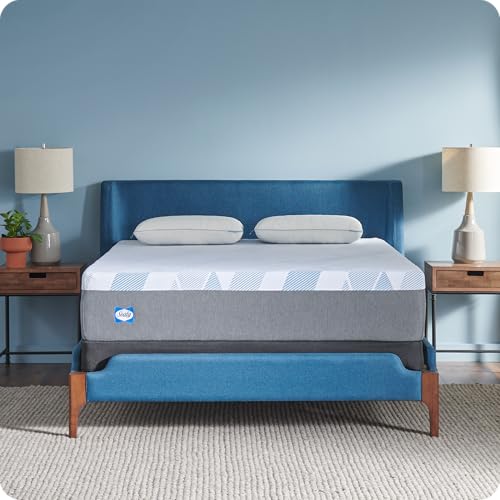
Each type’s exemplar is sold on Amazon, with current pricing and sizes on its listing. Start with the hybrid exemplar, the Sealy Dreamlife 12” Hybrid Mattress-in-a-Box, Queen — Check on Amazon. The other five type exemplars are the Casper Sleep Original 11″ Memory Foam Queen Mattress (zoned foam) — Check on Amazon; the Nectar 12” Memory Foam Mattress (memory foam) — Check on Amazon; the Purple Mattress (grid) — Check on Amazon; the GhostBed Classic 11 Inch Mattress (latex hybrid feel) — Check on Amazon; and the Serta Perfect Sleeper 14.5″ Ultimate Hybrid Pillow Top Mattress (pillow top hybrid) — Check on Amazon. Whichever type you choose, let its trial arbitrate the final verdict.
In this guide
Quick Picks
| Pick | Badge | Why it earns its place |
|---|---|---|
| Sealy Dreamlife 12” Hybrid Mattress-in-a-Box | Best Type Overall: Hybrid | Foam’s pressure relief over coils’ durable, ventilated support — the most complete back answer |
| Casper Sleep Original 11″ Memory Foam Queen Mattress | Best Zoned Foam | Firmness that varies by body region — the type that thinks in maps, not averages |
| Nectar 12” Memory Foam Mattress | Best Memory Foam | The classic contour type at its firm-leaning best, with the longest trial in the guide |
| Purple Mattress | Best Grid Type | A polymer lattice that flexes at points and supports across areas — the type for hot, pressure-sensitive backs |
| GhostBed Classic 11 Inch Mattress | Best Latex-Feel Type | Responsive buoyancy for backs that hate being held — contour without the crater |
| Serta Perfect Sleeper Ultimate 14.5″ Pillow Top Mattress | Best Pillow Top Type | Plush upholstery over zoned coil architecture — the type for backs that also have pressure points |
Key Takeaways
- Choose the mechanism before the mattress: contour, coil support, grid flex, and latex response are different medicines for different backs.
- Hybrids balance the most back-relevant virtues — pressure relief, durable support, airflow — for the widest population.
- Every type fails characteristically: foam softens, grids polarize, pillow tops compress. Buy the failure you can live with.
- Zoning upgrades any type it appears in, because backs are maps, not averages.
- Firmness is a setting, not a type: each type here can be had in the medium-firm family most backs prefer.
- The trial is the taxonomy’s referee — type loyalty should never outrank your own three weeks of mornings.
How These Picks Were Chosen
Our verified pool contains strong examples of six mattress types relevant to back pain. We selected the exemplar of each type by the same standards — verified construction, support credibility, certifications, trial terms — and then ranked the types for the general back-pain brief by how completely each mechanism serves the back’s three needs: alignment held all night, pressure relieved at the points, and support that survives years. Types not represented in the pool (traditional Bonnell innerspring, airbeds, waterbeds) are discussed in the deep-dive for completeness but carry no picks, because we do not link what we cannot verify.
Claims discipline: type-level statements describe mechanisms as documented in the exemplars’ verified listing materials. Nothing here promises pain relief; types are compared on support, pressure, temperature, and aging — the properties a mattress can verifiably have. Readers whose pain has a specific geography should cross-read Best Mattresses For Lower Back Pain after settling their type.
The 6 Best Best Type of Mattresses for Back Pain — Reviewed

Sealy Dreamlife 12″ Hybrid — the Hybrid Type
Our badge: Best Type Overall: Hybrid
The Sealy Dreamlife 12” Hybrid exemplifies the type this guide ranks first for back pain: a gel memory foam surface that relieves pressure and moderates heat, over individually encased coils that hold the pelvis level, respond point by point, and ventilate the bed’s core. The hybrid’s claim is balance — no single back-relevant virtue sacrificed to another — and the Dreamlife’s construction, with its transition layer grading the meeting of foam and steel, is the type’s argument in its most complete form in our pool.
Strengths
- Pressure relief and durable support in one construction — the back’s two needs, uncompromised
- Coil airflow keeps the foam surface honest in warm rooms
- Steel’s aging curve protects the investment a painful back cannot re-make yearly
Trade-offs
- More motion transfer than all-foam types
- Just over 80 pounds — installation is a two-person event
- The type’s balance means it wins no single specialty outright
| Color | Dreamlife |
| Size | Queen |
| Dimensions | 80 x 60 x 12 inches |
| Weight | 80.604164 pounds |
Why the hybrid wins the type argument for backs: each pure type asks the back to accept a trade — foam’s contour against foam’s heat and softening, coils’ support against coils’ pressure. The hybrid declines the trade by division of labor, assigning pressure to the material that does pressure and support to the material that does support. For a back whose complaints are mixed — stiffness plus pressure, alignment plus heat — a type that refuses to choose is the rational default.
The Dreamlife adds CertiPUR-US foams and Surface-Guard antimicrobial technology, the paperwork of a bed meant to serve for years in a warm room.
If you buy one type on this guide’s authority, buy this one, in this exemplar.
Best for: mixed-complaint backs and shoppers who want one type to do everything / Not suited for: motion-isolation absolutists
Choose the hybrid type if balance is your brief. Skip it if your back has one dominant need a specialist type serves better. Check on Amazon

Casper Sleep Original 11″ — the Zoned Foam Type
Our badge: Best Zoned Foam
The Casper Sleep Original represents the type refinement that matters most to backs: zoning. A zoned foam mattress varies its firmness by region — firmer beneath the hips and spine, softer beneath the shoulders — so the surface stops treating the body as a uniform load. For back pain, whose geography is never uniform, zoning is the difference between a mattress that supports your average and one that supports your actual shape. Casper’s perforated, breathable execution keeps the foam type’s heat weakness in check.
Strengths
- Regional firmness matches the back’s real load map
- All-foam motion isolation serves partners perfectly
- Breathable perforation answers the foam type’s standard objection
Trade-offs
- Foam’s aging curve trails coils across a decade
- Fixed zone geography fits most backs, not every back
- No spring response for bounce nostalgists
| Color | Light Gray |
| Size | Queen |
| Dimensions | 80 x 60 x 11 inches |
Zoning deserves its standing as a type-level idea rather than a feature, because it changes what the mattress is: a mapped surface instead of a slab. Back sleepers feel it as a pelvis that stays level without a board’s cruelty; side sleepers feel it as a shoulder allowed down while the waist is held. Any type can be zoned — the Serta below zones its coils — but foam zoning is the most legible, and the Casper is its clearest exemplar in the pool.
The 100-night trial and decade warranty give the map time to prove it matches your territory.
For backs that think in geographies, this is the type.
Best for: combination sleepers and map-minded backs / Not suited for: steel loyalists
Choose the zoned foam type if your back’s needs vary by region. Skip it if you want point-by-point mechanical response. Check on Amazon

Nectar 12″ Memory Foam — the Memory Foam Type
Our badge: Best Memory Foam
The Nectar 12” Memory Foam Mattress is the classic type in its best back-pain form: therapeutic memory foam that contours into the lumbar curve and holds it, over a dynamic support layer that keeps the pelvis from sinking through, in a firm-leaning calibration that corrects the type’s reputation for swallowing its sleepers. The maker’s stated one-year trial and forever warranty make it the lowest-risk way to test whether the contour type is your back’s type.
Strengths
- The deepest, most even pressure relief of any type — no point loads anywhere
- Firm-leaning support layer answers the type’s sag reputation
- Total motion isolation: the partner disappears
Trade-offs
- Slow response makes position changes deliberate — restless backs beware
- Heat retention is moderated by the cooling top, not eliminated
- The type softens with years faster than steel
| Color | White |
| Size | Queen |
| Dimensions | 80 x 60 x 12 inches |
| Weight | 78 pounds |
Memory foam’s back case is pressure mathematics: by maximizing contact area, it minimizes peak pressure everywhere, including at the sensitive points where a painful back meets the bed. For backs whose complaint is partly pressure — the ache that builds at the contact points across a night — no other type distributes the load as completely. The Nectar’s firm-leaning support layer is what makes the type viable for alignment as well as pressure; contour without it is a hammock, and this is not one.
The year-long trial is the type’s honest acknowledgment that contour is a relationship, not a specification — backs either settle into it gratefully or spend the year negotiating. Give it the season it asks for.
For pressure-first backs, this is the type’s exemplar.
Best for: pressure-sensitive backs and still sleepers / Not suited for: restless sleepers or heat-ruled rooms
Choose the memory foam type if pressure is your back’s loudest complaint. Skip it if you change position hourly. Check on Amazon

Purple Mattress — the Grid Type
Our badge: Best Grid Type
The Purple Mattress is the pool’s representative of the newest type: a hyper-elastic polymer grid that flexes under concentrated load — shoulders, hips — while holding its structure across broad areas like the back. For back pain, the grid’s promise is a paradox resolved: cradle at the points, support across the span, and an open lattice that sleeps temperature-neutral because there is mostly air where other types have material. The maker’s listing cites third-party sleep-study support for the feel, recorded as the maker’s claim.
Strengths
- Point-flexing pressure relief with span-wise support — a genuinely different back physics
- Temperature neutrality protects sleep continuity for warm backs
- Instant response: no foam lag at position changes
Trade-offs
- The feel polarizes like no other type — the trial is mandatory, not optional
- Heaviest exemplar here per pool specs, at 100 pounds in queen
- Premium positioning within the guide
| Color | White |
| Size | Queen |
| Dimensions | 80 x 60 x 11 inches |
| Weight | 100 pounds |
The grid’s back argument sharpens for two populations: hot sleepers, whose pain-fragmented sleep is further fragmented by heat, and pressure-sensitive backs that have tried foam’s hug and found it airless. The grid cradles without enclosing — contact without a blanket of material — and for backs that experience foam as a restraint, that distinction is the whole purchase.
Its durability logic is also distinct: a polymer lattice does not take a compression set the way foam does, so the type’s support story ages by different rules — worth the trial’s attention across its full length.
For backs that want a different physics, this is the type.
Best for: hot, pressure-sensitive backs and foam skeptics / Not suited for: traditionalists or the trial-averse
Choose the grid type if heat and pressure jointly rule your nights. Skip it if you want a familiar feel. Check on Amazon

GhostBed Classic 11″ — the Latex-Feel Type
Our badge: Best Latex-Feel Type
The GhostBed Classic represents the responsive type: gel memory foam over aerated latex over a dense base, giving contour that arrives and releases instantly. For back pain, the latex-feel type answers a specific grievance — the back that is injured not in stillness but in transitions, torqued by a gripping surface at every turn and heaved against at every rising. A buoyant surface makes movement cheap, and cheap movement is a safety property for sore backs.
Strengths
- Instant response protects backs during turns and exits
- Aerated latex and gel manage heat better than pure foam types
- Medium-firm balance serves the widest position mix
Trade-offs
- Shallower cradle than the memory foam type
- Livelier surface transmits more partner motion
- Less total pressure redistribution than the grid or foam at their best
| Color | White |
| Size | Queen |
| Dimensions | 80 x 60 x 11 inches |
| Weight | 50 pounds |
The type’s philosophy is that support should feel like water, not like a mold: present everywhere, resistant nowhere, gone the moment you move. Backs that associate foam with being trapped — and many do, after one 3 a.m. excavation too many — often sleep better on the responsive type even when its pressure numbers are theoretically worse, because the sleep is unbroken by struggles. Unbroken is a back property too.
Made in the USA and Canada per the listing, the GhostBed keeps the type’s execution honest with a dense base that stops buoyancy becoming bounce.
For mobile backs, this is the type.
Best for: restless sleepers and transition-sensitive backs / Not suited for: deep-contour devotees
Choose the latex-feel type if movement is your back’s pain point. Skip it if you want maximum cradle. Check on Amazon

Serta Perfect Sleeper Ultimate — the Pillow Top Type
Our badge: Best Pillow Top Type
The Serta Perfect Sleeper Ultimate represents the oldest comfort type in modern dress: a plush pillow top quilted over a zoned coil unit with a center lumbar band and gel memory foam. The type’s back case is reconciliation — sleepers whose backs need architectural support and whose pressure points refuse architectural surfaces get both, layered honestly, with the support verifiable in the specification rather than promised by the softness.
Strengths
- Plush interface over zoned steel: comfort and architecture, uncompromised by each other
- Center lumbar band spends support where backs complain
- BestEdge encasement keeps the whole surface usable
Trade-offs
- The plush top compresses over years faster than the core ages
- 14.5-inch profile demands deep-pocket bedding and moving muscle
- Too soft a first impression for firm purists, whatever the core says
| Color | Dark Blue |
| Size | Queen |
| Dimensions | 79.5 x 60 x 14.5 inches |
| Weight | 82.26 pounds |
The pillow top type is routinely dismissed by support purists, and for backs with pressure complaints that dismissal is a mistake: a surface a sleeper cannot relax into is a surface whose support never gets used, because the body guards against it all night. The Serta’s construction answers the purist’s legitimate half of the argument — the support is real, zoned, and steel — while keeping the comfort that lets a tender back actually lie down.
Its stated 100-night trial and listed adjustable-frame compatibility complete a specification aimed at households, not showrooms.
For backs that need softness with a support alibi, this is the type.
Best for: pressure-sensitive backs loyal to plush / Not suited for: firm purists or low frames
Choose the pillow top type if your back votes soft but needs steel. Skip it if firmness is the whole brief. Check on Amazon
Comparison Table
| Type (exemplar) | Back mechanism | Aging behavior | Size listed | Profile | Check price on Amazon |
|---|---|---|---|---|---|
| Hybrid (Sealy Dreamlife) | Foam relief + coil support | Slowest support loss | Queen | 12 inches | Check price on Amazon |
| Zoned foam (Casper) | Regional firmness map | Moderate foam softening | Queen | 11 inches | Check price on Amazon |
| Memory foam (Nectar) | Maximum pressure distribution | Softens with years | Queen | 12 inches | Check price on Amazon |
| Grid (Purple) | Point flex + span support | Lattice resists compression set | Queen | 11 inches (specs) | Check price on Amazon |
| Latex-feel (GhostBed) | Responsive buoyant contour | Resilient, springy aging | Queen | 11 inches | Check price on Amazon |
| Pillow top hybrid (Serta) | Plush over zoned coils | Top compresses first | Queen | 14.5 inches | Check price on Amazon |
How to Choose the Best Type of Mattress for Your Back
Diagnose your back’s loudest complaint
Pressure at the points argues for memory foam or grid. Alignment that will not hold argues for hybrid or zoned types. Heat argues for grid or hybrid airflow. Movement pain argues for latex-feel response. One sentence naming the loudest complaint eliminates four of the six types — the most efficient step in this entire guide.
Choose your acceptable failure
Every type fails characteristically across a decade: foams soften, pillow tops compress, grids ask you to love an unfamiliar feel forever, coils can grow lively. Backs live with the failure, not the brochure — pick the decline your household can maintain around (rotation, protectors, realistic horizons) rather than the perfection no type offers.
Let firmness be a setting, not a type
Within each type, firmness varies; the medium-firm family serves most backs in every type here. Do not reject a mechanism because its showroom example was too soft — check the type’s range, and let the exemplar reviews guide the calibration. Bedding and protector choices then fine-tune the system, sourced sensibly via Black Friday Bedding Deals 2026 and Best Throw Pillows Under $500 for the reading and lumbar-support roles.
Trial the type, not just the mattress
Three weeks of logged mornings on your chosen type is a verdict on the mechanism itself. If the type fails, change types, not just models — the second purchase inside a failed type is the category’s most repeated waste of money.
What About the Types Not in This Guide?
Traditional innerspring — continuous or Bonnell coils under thin padding — was the default back mattress for generations, and its modern descendants survive mostly at the budget end. Its back case is firmness and price; its weakness is pressure, since thin comfort layers over interconnected coils distribute load poorly and transmit motion generously. The hybrid type is best understood as this type, corrected. Airbeds offer adjustable firmness, which sounds like a back feature and occasionally is, but bladder creep and seam fatigue make them poor long-term support, as our Best Air Mattresses For Everyday Use guide details. Waterbeds and futons persist as niches: the futon’s firm, thin honesty suits some back sleepers on floors, and neither offers the zoned, certified, trial-backed package the types above now standardly provide.
The pattern across the missing types is instructive: the industry has spent thirty years migrating every successful idea — zoning, pressure distribution, cooling, response — into the six types ranked here. Choosing among them is not a compromise forced by our pool; it is where the technology actually lives now.
Problem: your back loved a type in a hotel but hates it at home — hotels run firmer, newer stock on rigid bases; replicate the base and the freshness before blaming the type.
Problem: two backs, two type loyalties — the hybrid is the designed compromise; failing that, split the bed into two twins of different types, as our twin guide describes.
Problem: your type is right but the mattress is wrong — firmness calibration and zoning vary within types; one failed model does not acquit or convict a mechanism. Trial a second exemplar before switching types.
Problem: every type feels wrong — suspect the foundation, the pillow, or a clinical question, in that order. Types differ enough that universal failure points elsewhere.
Problem: you cannot decide between hybrid and zoned foam — decide by motion and heat: a partner and a warm room argue hybrid; stillness and pressure argue zoned foam.
How Types Age: The Decade View
Backs outlive mattresses’ brochures, so the type decision is really an aging decision. Steel coils lose their argument slowest and most evenly. Dense support foams follow, softening at the load points across years. Memory foam comfort layers soften fastest where they work hardest — which is why the type’s best exemplars put the support in a separate, denser layer and let the contour be the consumable. Grids age by polymer rules that resist compression set but ask for even foundations. Pillow tops spend their plush first and their architecture last, which is why the type’s honest exemplars make the architecture independently excellent. Read the comparison table’s aging column as the ranking’s second dimension: the best type for your back is the one whose year-five self you would still choose.
A Word on Firmness, the Type Confusion
Shoppers routinely ask for a “firm type,” and the phrase confuses two axes: construction and calibration. Every type in this guide can be built firm or soft; what the type decides is how the mattress relieves pressure, moves heat, answers movement, and ages. Firmness decides how far you sink. Backs need both axes chosen deliberately — the right mechanism at the right sink — and the commonest buying error in this category is choosing a type for its showroom firmness and discovering the mechanism’s character at home. Reverse the order: type first, by complaint; firmness second, within the type; trial third, over both.
The type conversation also has a household dimension that solo-focused guides miss: two backs sharing one bed often need two types, and the industry’s honest answers are the hybrid — the designed compromise — or the split arrangement, two twins of different types under one headboard. Our Best Mattresses For Back Problems guide treats the shared-bed negotiation as a chronic-back problem in its own right, and its counsel applies here: trial jointly, log both backs, and let the type that serves the household’s combined mornings win, even when it is neither partner’s solo favorite. A type chosen for one spine and endured by the other is a type that will be re-shopped within the year, at twice the total cost of choosing together once.
Weight belongs in the type decision with more precision than it usually gets. Heavier backs load every mechanism harder, which shifts the type ranking itself: coils and grids gain ground because their support scales, while soft foams lose it because their failure arrives sooner. Lighter backs experience the mirror image — a coil bed calibrated for the average can feel unyielding, and foam’s contour finally gets to work as designed. State your weight honestly in the type census, alongside position and temperature; the taxonomy is only as accurate as the body it is fitted to.
Common Buying Mistakes
Shopping brands before types
A brand is a portfolio of mechanisms. Decide the mechanism your back needs, then compare the brands that build it well.
Rejecting a type over one model
Firmness and zoning vary within types. A failed model is data about a calibration; only a failed mechanism — judged across a full trial — convicts a type.
Ignoring the failure mode
You will live with your type’s decline for years. Choose the decline you can maintain around, and maintain it from week one.
Confusing firmness with support
Support is alignment held at 4 a.m. in year four; firmness is a first-touch sensation. Types deliver support by mechanism, not by hardness.
Skipping the type-level trial
Three logged weeks arbitrate mechanisms. A type judged in a showroom minute is a type chosen by its upholstery.
Types also differ in what they ask of the household around them, and the full cost of a type includes its entourage. Memory foam asks for patience — expansion windows, adaptation weeks, rotation by two people. Hybrids ask for a foundation that respects their weight and a room that can receive an eighty-pound delivery. Grids ask for an open mind and a trial honored in full. Pillow tops ask for deep-pocket bedding and a rotation religion. None of these asks is unreasonable; all of them are real, and the shopper who prices the entourage alongside the mattress chooses the type their household will actually keep. The best type, in the end, is the one whose whole life — delivery, trial, decade, decline — fits the life it is joining.
And if the taxonomy still leaves you torn between two types after the census and the entourage are counted, let the trials decide in sequence: order the higher-ranked type’s exemplar first, run its three weeks with the log this guide prescribes, and only cross to the second type if the mechanism itself — not its firmness calibration — failed your back. Sequenced that way, the type question answers itself with evidence inside two trial windows, and the mattress you keep will have won a fair tournament rather than a coin flip.
The type question also resolves differently across the lifespan of a single back, and wise shoppers buy for the chapter they are entering rather than the one they are leaving. Younger backs with a first disc complaint often thrive on contour and zoning — the foam types’ home ground — because their tissues forgive and their complaint is pressure and posture. Backs with decades of history accumulate the sag-sensitivity that pushes the ranking toward steel, and the hybrid’s decade-grade support becomes the chapter’s requirement rather than its luxury. None of this is a rule; it is a tendency the trial can verify. But a shopper who asks “which type for the back I will have in five years?” buys better than one who asks only about the back in the mirror today.
Climate writes a footnote to the taxonomy that warm-region backs ignore at their cost. In hot bedrooms, the type ranking compresses: airflow stops being a tiebreaker and becomes a first-round filter, promoting hybrids and grids past foams that would win in a cool room on pressure alone. In cold bedrooms the filter relaxes and memory foam’s warmth becomes a feature its brochures always claimed it was. State your room’s honest temperature in the type census alongside position and weight; a taxonomy fitted to a climate-controlled showroom will be re-litigated by August.
There is also the matter of what the types ask of the sleeper’s patience, priced honestly. Memory foam asks for the longest courtship — expansion, adaptation, the slow negotiation of contour — and repays it with the deepest pressure relief in the taxonomy. Latex-feel and grid types ask for almost none: their character is present on night one and merely confirmed by night twenty. Hybrids ask for a foundation investment and repay it with a decade of indifference to your habits. A household’s patience is a real budget, and spending it knowingly — choosing the courtship whose length you can actually sustain — is part of choosing the type, not a footnote to it.
And the taxonomy itself should be held loosely, as a map rather than a territory. Manufacturers blend the types yearly — foam hybrids of grids, latex over coils, zoned everything — and the exemplars in this guide will be succeeded by constructions that borrow across the lines drawn here. The durable skill is not memorizing the six types but reading any mattress the way this guide reads them: what relieves the pressure, what holds the pelvis, what moves the heat, what answers the movement, and what will each of those be doing in year five? A shopper who can ask those five questions of any bed, in any store, in any year, no longer needs the taxonomy — which is the best thing a guide like this can give them.
One more axis belongs in the type census, because it silently decides more purchases than any other: what your last mattress was, and how it died. A back that watched a memory foam hammock develop over five years will hear this taxonomy’s foam chapter with justified suspicion — and should weight the aging column accordingly. A back whose coil bed grew livelier and harder with the years will forgive foam its softness for the stillness it promises. Your history is not bias; it is longitudinal data about your own sleep, collected at full price. Bring it to the shortlist, state it in the trial log’s first line, and let the type decision argue with it honestly rather than pretend the experiment starts from zero.
And the taxonomy’s final lesson is humility about its own categories: the best manufacturers in this pool already blend the types — gel in the foam, zones in the coils, latex over foam over steel — because backs refused to read the taxonomy and insisted on being served whole. Choose by the five questions, not by the label on the chapter: pressure, pelvis, heat, movement, aging. The type that answers them for your back is the best type, whatever the industry decides to call it next year.
The type decision also has a resale and hand-me-down dimension that practical households price in: hybrids and mainstream foams pass to guest rooms, graduates, and second homes without explanation, because their feels are the population’s median; grids and exotic constructions pass only to households willing to trial a personality. If this purchase is likely to migrate within the family — and most mattresses eventually do — the type’s portability is a real term in its value, and the hybrid’s boring universality is, for once, a feature with a dollar sign on it.
And the taxonomy should be revisited, lightly, at every replacement — not because loyalty is wrong but because backs and types both drift. The back that needed contour at thirty-five may need steel at fifty; the type that was exotic at the last purchase may be the median at this one. A shopper who re-runs this guide’s census at each decade’s purchase — complaint, weight, warmth, movement, history — will find the ranking re-sorting itself around their life with almost suspicious accuracy. That is what a taxonomy is for: not to be memorized, but to be re-applied.
Hold the five questions, keep the log, and let each decade’s back choose its own type with the evidence fresh. The mattresses will keep changing; the method will not need to.
There is a final, unfashionable counsel that belongs at the end of a taxonomy: once the type is chosen and the trial has ratified it, stop researching. The type literature is endless, the forums are bottomless, and a back that has found its mechanism gains nothing from a second year of comparison shopping conducted from the mattress it already owns. The energy belongs to the maintenance, the movement, and the rest of the management system the bed supports. Taxonomies exist to end deliberation, not to extend it — and a guide that cannot say “enough, sleep now” at its conclusion has misunderstood its own purpose.
So: census taken, type chosen, exemplar trialed, log kept. The taxonomy has done its work. What remains is the oldest transaction in this entire category — a body, a surface, and eight hours of trust, renewed nightly.
Teaching the taxonomy to the household’s next mattress buyer is the guide’s final service: the partner, the grown child, the parent furnishing a smaller home. Walk them through the census once — complaint, weight, warmth, movement, history — and watch the showroom’s fog lift for them exactly as it did for you. A family that shares a method buys well across generations and addresses; a family that shares only brand loyalties re-learns the lesson at retail prices every decade.
Your back’s type is findable, testable, and — once the trial has spoken — finished business. That is the taxonomy’s whole promise, and the six exemplars above are its current best evidence.
Types will keep multiplying — new foams, new lattices, new names for old mechanisms — and the census will keep cutting through them, because it asks about your back instead of their brochure. Keep the five questions closer than any brand loyalty and every future version of this category is already sorted.
File the census answers with the mattress paperwork when the purchase closes. A decade from now, when the replacement decision arrives, past-you will hand future-you the baseline — the back, weight, warmth, and movement of the last purchase — and the new census will take ten minutes instead of a research project. Continuity of evidence is the final dividend of buying by type.
Mechanism first, brand second, evidence always — the taxonomy in nine words, and the last of them is the one that matters.
And when the trial confirms the type, close the research folder without nostalgia. The back has work to do, and so does the sleeper — the mattress’s job is to make both forgettable by morning.
The right type is the one your census names and your trial confirms — everything else in this category is commentary.
Final Recommendation
For most back pain, the answer to the type question is the hybrid: pressure relief where the body touches, coil support where the spine needs holding, airflow where the night gets warm — exemplified here by the Sealy Dreamlife 12” Hybrid, this guide’s top pick. If your back’s loudest complaint is pressure and your sleep is still, take the runner-up type instead — Check on Amazon for the Nectar and judge memory foam by its best exemplar. Map-minded backs belong to the zoned Casper, hot and pressure-sensitive backs to the Purple’s grid, mobile backs to the GhostBed’s response, and plush loyalists to the Serta’s layered reconciliation. Choose the mechanism first, calibrate the firmness second, and let three weeks of logged mornings ratify the taxonomy with your own spine as the evidence.
Frequently Asked Questions
What is the single best type of mattress for back pain?
For the general case, the hybrid — foam pressure relief over responsive coils — balances the back’s needs most completely. Individual backs with one dominant complaint may do better with a specialist type, which is why this guide ranks all six with their cases stated.
Is memory foam good or bad for backs?
Neither, categorically. Memory foam distributes pressure better than any type, which helps pressure-driven complaints; its slow response and softening can hurt alignment-driven ones. The firm-leaning, support-layered exemplars — the Nectar here — are the type’s answer to the alignment concern.
Are firm mattresses a type?
No — firmness is a calibration available within every type. Backs generally do best in the medium-firm family, but the type decision (mechanism) and the firmness decision (sink) should be made separately, in that order.
What type lasts longest for a bad back?
Coil-based types — hybrids and pillow top hybrids — hold their support longest and most evenly. Foam types remain excellent with realistic horizons and disciplined rotation; the comparison table’s aging column summarizes each type’s decade.
Should side sleepers with back pain choose a different type?
They should weight pressure relief higher within the same taxonomy: zoned foam, grid, and pillow top hybrids rise for them, as our side-sleeper guides detail. The type logic is unchanged; the ranking inside it shifts.
Can the wrong type make back pain worse?
A type whose failure mode attacks your complaint — a softening foam under an alignment-driven back, a gripping surface under a movement-sensitive one — can absolutely leave mornings worse. That is why this guide insists on matching mechanism to complaint and trialing on evidence.


