Disclosure: As an Amazon Associate, dailyhomedecorating.com earns from qualifying purchases. Links to Amazon on this page are affiliate links; they cost you nothing extra. Prices and availability change often, so check the current Amazon listing before you buy.
“Back problems” is the phrase people use when the pain has stopped being an event and become a resident — the disc that acts up every spring, the stiffness that greets every morning, the back whose biography includes a decade of chairs, lifts, and long drives. If you are shopping for the best mattresses for back problems, you are not looking for a miracle; you are looking for a bed that stops making things worse and starts, night by night, making them a little more bearable. That is a realistic goal, and it is the one this guide is organized around.
A boundary, stated early because this keyword deserves it: a mattress is a comfort and support decision, not a treatment. It can hold your spine in a neutral line, refuse to sag under your pelvis, and remove a bad surface from the list of things aggravating your back. It cannot repair a disc or substitute for the clinician who knows your history. The picks below were chosen for the support mechanisms that serve problem backs best — zoned coils, firm-leaning contour, certified materials — with comfort framing throughout. If your back story overlaps with our more specific guides, Best Mattresses For Back Pain and Best Mattresses For Bad Backs go deeper on their angles; this guide covers the general case.
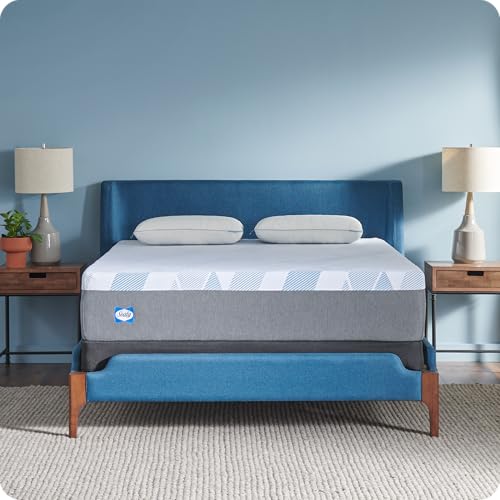
Where to Buy
All six mattresses are sold on Amazon, with current pricing and size options on each listing. Start with our top pick, the Sealy Dreamlife 12” Hybrid Mattress-in-a-Box, Queen — Check on Amazon. The other five are the Nectar 12” Memory Foam Mattress — Check on Amazon; the Casper Sleep Original 11″ Memory Foam Queen Mattress — Check on Amazon; the GhostBed Classic 11 Inch Mattress — Check on Amazon; the Serta Perfect Sleeper 14.5″ Ultimate Hybrid Pillow Top Mattress — Check on Amazon; and the Zinus 12 Inch Green Tea Memory Foam Mattress — Check on Amazon. Read the trial terms on your finalist’s listing before ordering.
In this guide
Quick Picks
| Pick | Badge | Why it earns its place |
|---|---|---|
| Sealy Dreamlife 12” Hybrid Mattress-in-a-Box | Best Overall | Encased coils hold the pelvis level for years — the aging behavior a problem back needs most |
| Nectar 12” Memory Foam Mattress | Best for Contour Support | Firm-leaning memory foam that fills the lumbar curve and holds it, with a year-long trial |
| Casper Sleep Original 11″ Memory Foam Queen Mattress | Best Zoned Foam | Firmer foam at the hips, softer at the shoulders — the differential problem backs ask for |
| GhostBed Classic 11 Inch Mattress | Best Responsive Feel | Gel foam over aerated latex: support that answers movement instead of trapping it |
| Serta Perfect Sleeper Ultimate 14.5″ Pillow Top Mattress | Best for Plush Comfort | Zoned coil support wearing a real pillow top — softness that does not surrender the spine |
| Zinus 12 Inch Queen Green Tea Memory Foam Mattress | Best Value | Patented zoned pressure relief with full certifications at a friendly position |
Key Takeaways
- A problem back needs support that ages well: coils and dense cores out-hold soft foams across years.
- Zoning — firmer at the pelvis, gentler at the shoulders — is the mechanism that matters most for mixed sleepers.
- Firm-leaning beats hard: the surface must fill the lumbar curve, not bridge over it.
- Judge by the three-week trend of mornings, not by the first night’s impression.
- Persistent, worsening, or radiating symptoms belong to a clinician; the mattress handles the surface, not the diagnosis.
- Foundation and protector discipline protect the investment a problem back cannot afford to lose early.
How These Picks Were Chosen
From our verified pool we selected for the chronic-back brief: support mechanisms with documented longevity (encased coils, zoned foam bands, firm-leaning contour), medium-firm centers of gravity that serve mixed positions, certified materials for a bed breathed over nightly for years, and trials long enough to judge a trend rather than a night. Products were ranked by how their support is built — geography and materials — not by their softness at first touch, because problem backs live with the tenth year of a mattress, not the tenth minute.
Claims discipline: every construction statement traces to the pool’s verified listing materials. Where a maker cites studies or recognitions, we record them as the maker’s claims. Nothing here promises pain relief; the guide promises support, alignment, and honest trade-offs. Shoppers whose problem localizes lower should cross-read Best Mattresses For Lower Back Pain, where the lumbar mechanics get their own treatment.
The 6 Best Best Mattresses for Back Problems — Reviewed

Sealy Dreamlife 12″ Hybrid
Our badge: Best Overall
The Sealy Dreamlife 12” Hybrid leads this guide because a problem back’s first requirement is a support system that will still be a support system in year seven, and individually encased steel coils are the pool’s most proven answer to that requirement. The coils respond independently — the pelvis is held where it loads, the shoulders are allowed their share of sink — while a transition layer grades the landing and a gel memory foam surface relieves pressure and moderates temperature. Surface-Guard antimicrobial technology and CertiPUR-US certified foams complete a specification written for long service.
Strengths
- Encased coils deliver durable, zoned-by-response support that resists the sag problem backs fear most
- Gel foam surface handles pressure and heat without surrendering the core’s lift
- Legacy maker’s warranty infrastructure behind a long-term purchase
Trade-offs
- Just over 80 pounds — installation is a two-person event
- More motion transfer than the all-foam picks
- Medium feel may read soft to sleepers whose problems demand the firmest end
| Color | Dreamlife |
| Size | Queen |
| Dimensions | 80 x 60 x 12 inches |
| Weight | 80.604164 pounds |
The chronic-back logic of coils deserves a sentence of its own: foam supports by displacement and slowly loses the argument with gravity; steel supports by spring force and keeps making the same argument for a decade. For a back whose problem is partly that every surface eventually sags beneath it, the coil core is not a preference but a strategy. The Dreamlife’s independent coil response adds the zoning a mixed sleeper needs without a single motor or dial — the mattress reads the body by load, nightly, automatically.
Temperature and hygiene serve the long game too: coils ventilate the bed’s core, gel moderates the surface, and the antimicrobial treatment addresses the reality that a problem back’s mattress serves for years in a warm room. Add a protector and a rotation calendar and the Sealy becomes the household’s most reliable piece of health-adjacent furniture — which is precisely what a problem back asks its bed to be.
For the general back-problem brief — mixed positions, chronic stiffness, a history that punishes sag — this is the guide’s answer.
Best for: chronic back stiffness and mixed-position sleepers who fear sag / Not suited for: motion-isolation purists or solo installers
Choose the Sealy if longevity of support leads your list. Skip it if you need foam’s silence above all. Check on Amazon

Nectar 12″ Memory Foam
Our badge: Best for Contour Support
The Nectar 12” Memory Foam Mattress serves the problem back that wakes with a lumbar gap: its therapeutic memory foam contours into the curve of the lower back and holds it there, while a dynamic support foam beneath keeps the pelvis from sinking through the comfort into misalignment. The feel is firm-leaning — contour with a spine — and the maker’s stated one-year trial and forever warranty give a chronic condition the longest evaluation window in this guide.
Strengths
- Contouring that fills the lumbar curve instead of bridging it
- Firm-leaning support layer keeps the pelvis honest through the night
- The longest trial in the guide — a chronic back can judge across seasons
Trade-offs
- Slow-response foam makes position changes deliberate
- At 78 pounds, rotation is a planned, two-person task
- Contour’s warmth is moderated by the cooling top, not eliminated
| Color | White |
| Size | Queen |
| Dimensions | 80 x 60 x 12 inches |
| Weight | 78 pounds |
The Nectar’s trial length is a clinical virtue in disguise: problem backs fluctuate with weather, workload, and season, and a thirty-night verdict can be a coin flip against that variance. A year of nights averages the fluctuation out — the mattress is judged by the back’s whole calendar, which is the only honest sample a chronic condition can give. Use the window as directed, log the mornings in a word or two, and let the year’s trend arbitrate.
The cooling heat-wicking top deserves mention for this population specifically: backs in discomfort sleep lightly, and light sleepers are woken by heat that deeper sleepers ignore. A surface that moderates temperature protects the fragile sleep a problem back most needs to consolidate.
For the lumbar-gap sleeper who wants foam’s answer with maximum decision time, this is the pick.
Best for: back sleepers with a lumbar gap and chronic morning stiffness / Not suited for: restless sleepers who change position constantly
Choose the Nectar if contour and patience are your priorities. Skip it if you want spring-back response. Check on Amazon

Casper Sleep Original 11″
Our badge: Best Zoned Foam
The Casper Sleep Original builds its back case on geography: Zoned Support places firmer foam under the hips and spine and softer foam under the shoulders, so the pelvis — the heaviest, most misalignment-prone load — is held level while the upper body is cradled. For the problem back that migrates between back and side sleeping across the night, that differential is the single most relevant specification in the foam category, and Casper’s perforated breathable foam keeps the contour from sleeping hot.
Strengths
- Zoned firmness matches the body’s actual load map
- Breathable perforated foam moderates contour’s warmth
- CertiPUR-US foams designed against sinking and sagging
Trade-offs
- Eleven-inch profile is slimmer than the twelve-inch rivals
- Medium-firm center may read soft to the firmest-preference backs
- No coil option for steel loyalists
| Color | Light Gray |
| Size | Queen |
| Dimensions | 80 x 60 x 11 inches |
The zoning argument compounds across a night: every position change lands the pelvis back on the firmer band, so alignment is re-established automatically each time the sleeper moves — a property a uniform mattress cannot offer at any firmness. For problem backs whose nights are restless, that self-correcting geography is worth more than a nominal firmness number. The maker’s 100-night trial and 10-year limited warranty frame the experiment properly.
Casper’s transparency also serves this population: specifications stated plainly let a shopper with a clinician’s advice — “firmer under the hips,” say — verify the match on the listing rather than trusting a label. Problem backs shop with instructions; this is a mattress that can be checked against them.
For the mixed-position problem back, this is the foam answer.
Best for: combination sleepers whose backs need hip-level support / Not suited for: coil loyalists or maximum-depth seekers
Choose the Casper if zoning is your mechanism. Skip it if you want steel beneath you. Check on Amazon

GhostBed Classic 11″
Our badge: Best Responsive Feel
The GhostBed Classic answers the problem back that hates being held: gel memory foam over aerated latex over a high-density base gives contour with a spring in its step, so position changes — the moments when a sore back is most likely to be torqued by a gripping surface — happen easily. The medium-firm balance suits back and side sleeping, the gel and aeration address heat, and the whole is made in the USA and Canada per the listing.
Strengths
- Responsive latex layer makes turning and rising easier on a sore back
- Gel plus aeration keeps a contouring surface cooler
- Balanced medium-firm feel serves the widest position mix
Trade-offs
- Less deep cradle than the pure memory foam picks
- Livelier surface transmits more partner motion than foam-only beds
- Fifty pounds is manageable but not light
| Color | White |
| Size | Queen |
| Dimensions | 80 x 60 x 11 inches |
| Weight | 50 pounds |
The GhostBed’s relevance to problem backs is kinetic: backs in trouble are often injured not in stillness but in transitions — the twist out of a foam crater at 3 a.m., the heave upright in the morning. A surface that releases the body quickly and supports the exit is a safety feature for this population, and the aerated latex layer is the pool’s most explicit engineering toward it. The high-density base keeps the responsiveness from becoming bounciness; the feel is buoyant, not trampoline.
Its medium-firm center also suits the problem back whose position loyalty is low — the sleeper who starts on their back, migrates to a side, and finishes prone-ish at dawn. Each landing gets a competent surface rather than a specialist’s compromise.
For the mobile, transition-sensitive back, this is the responsive pick.
Best for: restless sleepers and backs that struggle with foam’s grip / Not suited for: deep-contour seekers
Choose the GhostBed if easy movement is your priority. Skip it if you want maximum cradle. Check on Amazon

Serta Perfect Sleeper Ultimate 14.5″ Pillow Top
Our badge: Best for Plush Comfort
The Serta Perfect Sleeper Ultimate serves the problem back that also has pressure complaints — the sleeper whose spine needs zoned steel and whose shoulders and hips need genuine plush. Beneath the pillow top, a zoned coil unit with a center lumbar band and Cool Twist gel memory foam does the support work; above it, the quilted top forgives the points. BestEdge foam encasement keeps the perimeter usable, the listing includes adjustable-frame compatibility, and the stated 100-night trial frames the decision.
Strengths
- True pillow top comfort over a zoned coil core — softness with a support alibi
- Center lumbar band targets the zone problem backs load most
- Tallest, most substantial build in the guide
Trade-offs
- 14.5-inch profile demands deep-pocket sheets and a strong moving plan
- Plush top will read too soft for the firmest-preference backs
- At 82 pounds, rotation is a household event
| Color | Dark Blue |
| Size | Queen |
| Dimensions | 79.5 x 60 x 14.5 inches |
| Weight | 82.26 pounds |
The Serta’s argument to problem backs is that comfort and support are not a trade when the engineering is layered honestly: the pillow top is upholstery, the zoned coils are architecture, and the sleeper gets both without asking either to impersonate the other. For the back whose owner has been told “firm” but whose body votes “soft” every night, this is the reconciliation candidate — support that can be verified in the specification, softness that can be felt in the first minute.
The center-third lumbar emphasis deserves its line: problem backs concentrate their complaints in the lower spine, and a coil unit that spends extra support exactly there is designing for the complaint’s geography rather than its average.
For the plush-loving problem back, this is the supported answer.
Best for: pressure-sensitive backs that refuse to give up softness / Not suited for: firm purists or low-profile frames
Choose the Serta if you need plush and proof in one bed. Skip it if firm is non-negotiable. Check on Amazon

Zinus 12″ Green Tea Memory Foam
Our badge: Best Value
The Zinus 12 Inch Green Tea Memory Foam Mattress brings the problem-back mechanisms — patented zoned pressure relief, medium-firm support, certified materials — to the guide’s friendliest position. CertiPUR-US foams, an OEKO-TEX certified cover, fiberglass-free construction, and a green-tea freshness system make it the budget pick a careful back shopper can buy without apologizing to their spine.
Strengths
- Zoned pressure relief at a value position — the mechanism, not just the mattress, is affordable
- Full certification stack across foam and cover
- Twelve-inch depth gives the support layers room to work
Trade-offs
- Foam edges are soft for sitting
- Fresh-foam ventilation window required on arrival
- Support aging will trail the coil picks across a decade
| Color | White |
| Size | Queen |
| Dimensions | 80 x 60 x 12 inches |
| Weight | 62.3 pounds |
The Zinus matters to this category because back problems do not check bank balances. A zoned, certified mattress at this position means the support conversation is available to the shopper furnishing a first apartment with a herniated history, or replacing a failed bed on a deadline and a budget. Its medium-firm center suits the general case; its freshness system suits the small rooms where budget beds often live.
Maintain it with the discipline this guide repeats — rigid foundation, protector, rotation — and its honest construction will return years of level sleep. The value pick is not the cheap pick; it is the pick whose compromises were chosen by engineers rather than by accountants, and the certification stack is how you can tell.
For the budget-bound problem back, this is the credible door.
Best for: value shoppers who need real zoning and certifications / Not suited for: decade-horizon coil loyalists
Choose the Zinus if budget and mechanism must coexist. Skip it if you want steel’s aging curve. Check on Amazon
Comparison Table
| Pick | Support mechanism | Construction | Size listed | Profile | Check price on Amazon |
|---|---|---|---|---|---|
| Sealy Dreamlife Hybrid | Encased coils, independent response | Hybrid | Queen | 12 inches | Check price on Amazon |
| Nectar Memory Foam | Firm-leaning contour + support foam | Memory foam | Queen | 12 inches | Check price on Amazon |
| Casper Original | Zoned foam (firmer at hips) | Foam | Queen | 11 inches | Check price on Amazon |
| GhostBed Classic | Gel foam + aerated latex | Foam/latex | Queen | 11 inches | Check price on Amazon |
| Serta Perfect Sleeper | Zoned coils + lumbar band | Pillow top hybrid | Queen | 14.5 inches | Check price on Amazon |
| Zinus Green Tea | Zoned pressure relief | Memory foam | Queen | 12 inches | Check price on Amazon |
How to Choose the Best Mattress for a Problem Back
Match the mechanism to the complaint’s geography
Lumbar complaints want the pelvis held and the curve filled — zoning and lumbar bands. Whole-back stiffness wants durable, even support — coils and dense cores. Pressure-plus-support complaints want layered honesty — pillow tops over real cores. State your complaint’s geography in one sentence before shopping; the sentence eliminates half the catalogue, including some picks here.
Weight aging over first impressions
A problem back will live with this mattress’s fifth year, not its first night. Favor constructions whose support is structural — steel, dense foam, support-layer zoning — over constructions whose virtues live in a plush surface that time will flatten. The trial tells you about fit; the specification tells you about the decade.
Use the trial like a clinician uses a follow-up
Three weeks minimum, mornings logged in a line, no other sleep variables changed. Problem backs fluctuate; the trend across weeks is the only honest signal, and every pick here offers a window long enough to capture it. Bedding and protector choices belong to the same system — seasonal refreshes like Black Friday Bedding Deals 2026 and supportive extras such as Best Throw Pillows Under $500 are fine additions once the surface itself is settled.
Know the boundary of the purchase
A mattress addresses the surface’s contribution to a back problem. Pain that radiates with weakness, numbness, or any change in bladder or bowel function, pain after trauma, or pain that steadily worsens belongs to a medical workup, promptly. Buy the mattress for the comfort and support it can verifiably provide; pursue the rest with the professionals it cannot replace.
How Do You Sleep More Comfortably With a Bad Back?
Start with position economics: back sleeping with the lumbar curve filled and the knees’ angle softened; side sleeping with the waist supported and a pillow between the knees to keep the pelvis from rotating; stomach sleeping minimized, since it taxes both the lumbar curve and the neck. The mattress’s job is to make the good positions sustainable for hours, which is why this guide weighted zoning and durable support over surface novelty.
Then defend the night itself: a cool, dark room, a consistent schedule, and a wind-down that unloads the day’s posture before bed. Problem backs sleep lightly; the environment’s cooperation is worth real money and costs almost none. Convertible and guest arrangements follow the same support rules, as our Best Mattresses For Sleeper Sofas guide shows for the occasional-bed case.
Problem: mornings are worse than evenings — the surface is the prime suspect; check for sag with a straightedge across the hip zone, and let the trial of a zoned finalist arbitrate.
Problem: the new mattress feels worse in week one — adaptation is real for backs with history; hold judgment to the three-week trend unless pain sharpens, which is a stop-and-reassess signal.
Problem: your partner’s needs conflict with yours — zoned and flippable designs exist for this negotiation; trial jointly, log both sets of mornings, and let the combined evidence choose.
Problem: pain localizes differently than expected — a mattress can reveal the next suspect (pillow, chair, car seat) by eliminating the surface; treat the information as progress, not failure.
Problem: you cannot tell if it is helping — log one daytime line as well: how the back felt at dinner. The mattress’s effect often shows in the day’s baseline before it shows in the morning’s.
Why Problem Backs Punish Sag Above All
Every back dislikes a sagging mattress; a problem back files the complaint in triplicate. The mechanics are simple: a valley at the pelvis flexes the lumbar spine for eight hours, loads the structures that are already irritable, and hands the morning a stiffness that takes an hour to unwind — an hour stolen daily, compounding into the sense that the back is “just bad now.” Much of that reputation is a surface’s fault. This is why the guide’s ranking is secretly an anti-sag ranking: coil cores, dense bases, support-layer zoning, and certifications that attest the materials are what the maker claims. A problem back does not need the most advanced mattress in the world; it needs one that is the same mattress in year five as in week five, level at the pelvis and honest at the curve.
The Long Game: Living With the Back You Have
Most back problems are managed, not cured, and the mattress belongs to the management system alongside movement, strength, posture at work, and professional care when the story changes. Within that system the bed has a specific dignity: it is the one intervention that works eight hours a night without asking for willpower. Choosing it well — mechanism matched to geography, aging weighted over novelty, trial run on evidence — is therefore one of the highest-leverage decisions a problem back’s owner can make, and it is entirely within their control. The picks in this guide were assembled to reward that control with surfaces that hold their side of the bargain for years.
There is also the question of what a problem back does to the rest of the household’s sleep, because chronic backs rarely suffer alone. The partner absorbs the position changes, the careful exits, the nights cut into segments by discomfort — and a mattress chosen only for the sufferer’s specifications can quietly tax the other sleeper into their own problem. This is why several finalists here were weighted for their couple behavior: the Casper’s zoning, which gives each side a mapped surface; the Sealy’s support, which does not require the partner to share the sufferer’s firmness; the GhostBed’s responsiveness, which makes the sufferer’s necessary movements cheaper for everyone in the bed. When you trial, log the partner’s mornings too. A mattress that heals one back by breaking another’s sleep has solved nothing; the household is the patient.
Medication and management schedules interact with the mattress in ways worth one practical paragraph. Many problem backs are stiffest after the longest immobility, which is why mornings dominate this guide’s metrics — but backs managed with evening therapy, heat, or movement routines arrive at bed in a state the mattress then either preserves or squanders. A surface that holds alignment without demanding muscular guarding lets the evening’s work survive the night; a surface that sags or grips spends it. If your management routine is working everywhere except across the night, the mattress is the leak in the system, and this guide’s anti-sag ranking is the patch list.
Common Buying Mistakes
Buying the hardest mattress available
Firm-leaning support fills the lumbar curve; board-hard bridges over it and loads the points. Match support to geography, not to toughness.
Judging by the first night
Problem backs adapt across weeks and fluctuate across seasons. The three-week logged trend is the verdict; night one is a rumor.
Ignoring the foundation
A zoned mattress on a bowing base is a zoned mattress in a valley. Audit the base before blaming or buying the surface.
Expecting the mattress to be the treatment
It is the surface’s contribution, solved well. Radiating, worsening, or neurological symptoms need a clinician, not a checkout.
Skipping the protector and rotation
The support you bought degrades fastest where it is dirtiest and most loaded. Protect it and rotate it, on a calendar, from week one.
Problem-back shoppers should also think about the mattress’s second decade question at purchase time: what happens when it works? A successful pick becomes infrastructure — the bed the back trusts, the surface the household plans travel recovery around, the known quantity against which hotel beds are judged and found wanting. That success creates its own obligation: maintain the asset. Protector washed and intact, rotation on the maker’s schedule, foundation inspected whenever the room changes, and a straightedge audit twice a year so the first valley is caught as a warranty conversation rather than discovered as a relapse. The backs in this category cannot afford to have a good mattress quietly become a bad one; the audit is how they never do.
And a final calibration of hope, because this keyword deserves neither despair nor hype: the realistic best outcome is a back whose nights stop subtracting from its days. Mornings that start at baseline. A spine whose complaints are about the day’s work, not the night’s surface. Sleep that consolidates instead of fragmenting. Those are meaningful, life-sized improvements, and they are exactly what the right support — chosen by mechanism, verified by trial, maintained by habit — reliably delivers to backs whose problems live partly in their beds. For the part that does not, you have professionals; for this part, you have this guide and the six honest surfaces in it.
Travel deserves a protocol of its own for this population, because problem backs meet hotel beds with dread and often return home convinced their own mattress has failed by comparison — or relieved that it has not. Use travel as data: note which hotel surfaces helped (usually firmer, newer, on rigid bases) and which hurt, and bring the pattern home as a specification check on your own bed. If a firm hotel mattress reliably improves your mornings, your home trial should weight the firm-leaning finalists here; if you return from every trip wrecked regardless of the bed, the variable is travel itself — the driving, the luggage, the strange pillow — and the home mattress should be judged only on home evidence. Backs with history generate noisy data; the log’s job is to keep the noise labeled.
The seasons turn the same trick. Problem backs commonly report worse winters — cold muscles, less movement, heavier bedding changing the surface’s effective feel — and better summers, and a mattress bought in one season gets blamed or credited for the other’s weather. This is the deepest argument for the long trials in this guide, and for the Nectar’s year in particular: a chronic back deserves a verdict rendered across its own calendar, not across a fortunate fortnight. Where only a standard trial is available, at least buy in the season your back finds hardest; a mattress that passes your worst month has passed.
Exercise and the mattress complete each other’s work in a way worth stating for the back-problem reader specifically: the strengthening and mobility work that clinicians prescribe happens in the day, but its gains are consolidated — or spent — at night, on the surface this guide is about. A back that does its exercises and then sleeps in a valley is a back paying for the same progress twice. Conversely, the right surface makes modest exercise programs feel disproportionately effective, because the night stops refunding the day’s deposits. If you are investing in one, the other is not an optional extra; they are the same investment in two currencies.
Finally, a note on the language of this purchase, because it shapes expectations at home: call the new mattress equipment, not furniture, in the household’s conversation. Equipment gets maintained, audited, and replaced on evidence; furniture gets lived with until it collapses and then resented. Problem backs need the equipment standard — the protector schedule, the rotation calendar, the straightedge audit, the trial log — and households that adopt the vocabulary tend to adopt the practices that come with it. The six mattresses above are all capable of equipment-grade service. The household’s habits decide whether they receive it.
One population inside this keyword deserves a final, direct word: the back-problem sleeper who has stopped believing a mattress can matter, usually after two disappointing purchases. The disappointment is understandable and the conclusion is wrong — what failed was almost certainly the method, not the category. Purchases made by showroom minute, by a friend’s testimony, by a discount’s deadline, fail backs at a rate no mechanism can survive. The method in this guide — mechanism matched to geography, aging weighted over novelty, three logged weeks with no other variables changed — is unglamorous precisely because it is the part that works. Run it once, honestly, on any finalist here, and the category gets its fair hearing at last.
And the partner of that sleeper deserves the same directness: your mornings count in the log. A back problem reorganizes a household’s sleep around itself, and the mattress that ends the reorganization is the one under which two people wake up functional. Every finalist in this guide was chosen to be capable of that double verdict. Bring both sets of mornings to the trial, and let the bed that serves the household — not just the diagnosis — win.
The back-problem household’s bedroom deserves the same systems thinking as its mattress: the chair where the day is spent, the car seat where the commute happens, the couch where the evening collapses — all of them load the same spine the bed must recover, and the mattress’s measured success in your trial will partly reflect the company it keeps. You need not renovate your life around this purchase, but the shopper who fixes the worst daytime offender in the same season as the mattress gives the trial a fair wind and the back a coherent story: supported by day where it matters most, recovered by night where it matters longest. The bed is the foundation of that story because it is where the spine is unloaded, horizontal, and still for the longest continuous hours — the only hours in which recovery, rather than endurance, is the body’s assignment.
There is a financial shape to chronic-back mattress buying that deserves plain statement, because this population is sold to relentlessly: the expensive mistake is not the premium mattress, it is the sequence of cheap ones — the mattress bought in a flare, judged in pain, replaced in the next flare, three times in five years, each time with the disposal and the delivery and the adaptation month paid again. One mattress, chosen by mechanism and kept for its honest service life, costs less in money and immeasurably less in mornings than the cycle it replaces. If your history shows the cycle, this purchase is where it ends: pick from the finalists, run the method, file the paperwork, and let the bed become boring. Boring, for a problem back, is the sound of a system working.
And when the new mattress has been in place a year — protector washed, rotations kept, the straightedge audits unremarkable — take the small ceremony of reading your original trial log once more. The mornings that felt miraculous in week three will read as ordinary in month twelve, and that ordinariness is the entire achievement: a back whose nights stopped being an event. Keep the log with the warranty. It is the household’s evidence that the method works, and it will shorten every future mattress decision to a verification.
And a genuinely final practical note, because problem backs generate more mattress folklore than any other category and folklore deserves a filter: be suspicious of any advice — from a neighbor, a forum, or a showroom — that arrives as a universal. “Everyone with a bad back needs X” is a sentence that has never survived contact with a second back. Your back’s geography, history, weight, warmth, and company make it a sample of one, and the only instruments calibrated to a sample of one are the trial and the log. The six mattresses in this guide earned their places by being the surfaces most worth pointing those instruments at. Point them, honestly, for three weeks, and the folklore can keep the neighbors; you will have the evidence.
Choose by mechanism, verify by trial, maintain by calendar — and let the back that has organized so much of your life finally be organized, nightly, by a surface that holds its side of the bargain.
The last word belongs to the calendar: a back-problem household that buys by this guide’s method once will replace mattresses for decades on the same discipline — complaint classified, mechanism chosen, trial logged, maintenance kept — long after the brand names in this ranking have changed beyond recognition. That durability of method, more than any single pick, is what a problem back actually needs from the bedding industry.
Final Recommendation
For most problem backs, the Sealy Dreamlife 12” Hybrid is the soundest long-term bet in this guide: encased coils that hold the pelvis level for years, a gel surface that relieves pressure, and a legacy maker standing behind the decade. If your back prefers foam’s contour and your decision needs maximum time, take the runner-up — Check on Amazon for the Nectar and its year-long trial. Zoning purists belong with the Casper, movers with the GhostBed, plush loyalists with the Serta, and budgets with the Zinus. Whichever you choose, run the trial like a follow-up appointment: three weeks, logged mornings, no other variables changed — and let the trend, not the first night, deliver the verdict.
Frequently Asked Questions
What firmness is best for back problems?
Medium-firm to firm-leaning, for most backs: firm enough to hold the pelvis level, compliant enough to fill the lumbar curve. Zoned designs refine the answer by giving each body region its own firmness.
Can a mattress fix my back problem?
No — and be wary of any that promise to. A mattress can remove a bad surface’s contribution, support neutral alignment, and improve sleep quality, which supports everything else you are doing. Diagnosis and treatment belong to clinicians.
Hybrid or foam for a problem back?
Hybrids offer the most proven aging curve and airflow; foams offer the deepest contour and quietest motion profile. The guide’s Sealy and Nectar make the respective cases — choose by whether sag-resistance or cradle matters more to your history.
How long should I trial a mattress for a chronic back?
At least three weeks of logged mornings, and longer where the trial allows — chronic backs fluctuate, and the trend across fluctuation is the evidence. The Nectar’s year-long window is the extreme of a virtue all these picks share in some degree.
When should I see a doctor instead of buying a mattress?
Promptly, if there is weakness, numbness, saddle-area symptoms, bladder or bowel changes, pain after an injury, fever, or steadily worsening pain. Those are medical presentations, and the mattress decision can wait until they are evaluated.
Does the foundation really matter for back support?
Decisively. A mattress performs its zoning and support on the base beneath it; a sagging or gapped foundation rewrites both. Audit the base first — it is the cheapest back intervention in this entire guide.


