Disclosure: As an Amazon Associate, dailyhomedecorating.com earns from qualifying purchases. Links to Amazon on this page are affiliate links; they cost you nothing extra. Prices and availability change often, so check the current Amazon listing before you buy.
“Bad back” is not a diagnosis; it is a life sentence people pronounce on themselves after years of stiff mornings, careful lifting, and chairs chosen like defensive equipment. If you are searching for the best mattresses for bad backs, you are not looking for a miracle — you are looking for a bed that stops making things worse and gives your back eight hours of genuinely neutral rest. That is a realistic goal. A mattress cannot repair a spine, but the wrong one taxes it nightly, and the right one removes that tax.
The shoppers in this category differ from one-off pain sufferers in an important way: they need a mattress that performs for years, not months, because a bad back notices the month a bed’s support starts to fade. So this guide weights durability of support — coil systems, dense cores, zoned reinforcement — alongside the usual comfort criteria, plus the practicalities of life with a bad back: easy position changes, a trustworthy edge for sitting and standing, and a weight you can rotate without a wrestling match. Persistent or changing symptoms belong with a clinician, always. But the bed is the one piece of furniture your back spends a third of its life on, and choosing it well is legitimate self-care. Readers earlier in their back story may start with our guide to Best Mattresses For Back Pain; those whose pain has narrowed to the lumbar band should see Best Mattresses For Lower Back Pain.
Where to Buy
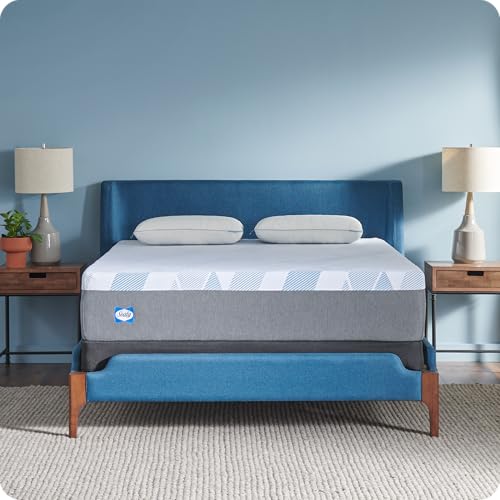
Every pick here is sold on Amazon, where the listing carries the current price, sizes, and trial terms. Start with our top pick, the Sealy Dreamlife 12” Hybrid Mattress-in-a-Box — Check on Amazon. The other five picks are the Nectar 12” Memory Foam Mattress — Check on Amazon; the Signature Design by Ashley Chime 12 Inch Hybrid — Check on Amazon; the Casper Sleep Original — Check on Amazon; the Purple Mattress — Check on Amazon; and the Zinus 12 Inch Green Tea Memory Foam Mattress — Check on Amazon. Confirm current pricing on the listing itself.
In this guide
Quick Picks
| Pick | Badge | Why it earns its place |
|---|---|---|
| Sealy Dreamlife 12” Hybrid Mattress-in-a-Box | Best Overall | Encased coils hold their support character for years, with gel foam comfort and easy movement for stiff mornings |
| Nectar 12” Memory Foam Mattress | Best Foam Support | Firm-leaning contouring that fills the lumbar curve, backed by the longest trial terms here |
| Signature Design by Ashley Chime 12 Inch Hybrid Full Size Mattress | Best for Targeted Lumbar Support | A dedicated gel lumbar layer and sturdy coils in a manageable full size |
| Casper Sleep Original 11″ Memory Foam Queen Mattress | Best for Combination Sleepers | Zoned support that stays correct as you change positions through the night |
| Purple Mattress | Best for Pressure-Sensitive Backs | The GelFlex Grid cradles pressure points while holding alignment and sleeping temperature-neutral |
| Zinus 12 Inch Queen Green Tea Memory Foam Mattress | Best Budget | Zoned pressure relief and a full profile at the friendliest tier in the guide |
Key Takeaways
- For a bad back, support durability matters as much as first-month comfort — buy the mechanism that fades slowest.
- Coils and high-density cores hold their character longest; zoned foam protects the hip zone where foam tires first.
- Easy movement is a medical-adjacent feature: responsive surfaces make stiff mornings safer and simpler.
- A trustworthy edge turns sitting and standing from a strain into a routine.
- Judge any new bed at week three with morning stiffness scores, and keep the trial paperwork.
- The mattress is one variable — pillows, foundations, and daytime habits share the credit or blame.
How These Picks Were Chosen
We filtered a verified product pool through a bad-back lens. First, support architecture with a longevity story: encased or wrapped coils, high-density foam cores, zoned reinforcement, or a grid that does not fatigue like foam. Second, the daily mechanics of a bad back — responsive surfaces for position changes, edges that hold for sitting, weights that can be rotated by real humans. Third, the standard comfort criteria: pressure relief at shoulder and hip, motion behavior for partners, cooling, and certifications. Trials mattered more than usual here, because a back with history needs weeks, not nights, to render a verdict.
Filtered out: plush surfaces with no support mechanism, thin profiles that bottom out, and anything whose verified specifications we could not confirm. Method honesty: this guide is built from manufacturer-verified specifications and documented features, not clinical testing, and nothing here treats or diagnoses any condition. If your bad back travels with neck trouble, the combined guidance in Best Mattresses For Back And Neck Pain addresses the pillow half of that pairing.
The 6 Best Best Mattresses for Bad Backs — Reviewed

Sealy Dreamlife 12” Hybrid Mattress-in-a-Box
Our badge: Best Overall
The Sealy Dreamlife 12” Hybrid leads this guide because a bad back’s worst enemy is not a bad first night — it is a good mattress quietly becoming a bad one. Its seven inches of individually encased coils provide targeted support that steel simply holds longer than foam, while two inches of SealyComfort gel memory foam and a transition layer deliver pressure relief at the surface. The coils respond independently, so the hip zone’s support does not borrow from the shoulders, and they do not soften with body heat overnight.
Strengths
- Encased coils keep their support character for years, not just seasons
- Responsive surface makes rolling, sitting, and standing easier on stiff mornings
- Coil airflow and gel foam keep the surface comfortable for warm sleepers
Trade-offs
- Heaviest pick here at just over 80 pounds in queen — plan setup help
- Some motion transfer compared with dense foam
- Not the deep-contour hug that foam devotees prefer
| Color | Dreamlife |
| Size | Queen |
| Dimensions | 80 x 60 x 12 inches |
| Weight | 80.604164 pounds |
The morning exit is where this mattress earns its keep for this audience. A bad back’s hardest movement of the day is the first one: rolling out of a foam impression, levering upright, standing. The Sealy’s coils return energy at each stage instead of swallowing it. Pair that with a transition layer that prevents any hard-shelf sensation under the hips, and the whole wake-up sequence becomes assisted rather than resisted. That daily difference, compounded over years, is the real product.
Surface-Guard antimicrobial technology helps keep the sleep surface fresher, the foams are CertiPUR-US certified, and the 12-inch profile works with standard deep-pocket sheets and most frames — check weight ratings, because mattress plus sleepers on a hybrid is a real load. Rotate seasonally; the coil core does the rest.
For the shopper whose last two mattresses “went soft” and took their back with them, the Sealy is the structural answer: buy the support that ages slowest, in a package that still cushions.
Best for: bad-back sleepers who want durable, responsive support and easier mornings / Not suited for: shoppers who prioritize motion isolation or deep foam contour
Choose the Sealy if mattress aging has burned you before. Skip it if you share with a feather-light, easily woken partner. Check on Amazon

Nectar 12” Memory Foam Mattress
Our badge: Best Foam Support
The Nectar 12” Memory Foam Mattress is the foam answer for bad backs: a firm-leaning feel with contouring memory foam that relieves pressure at the hips and back, over an adaptive support layer that promotes spinal alignment. Where soft foam lets a bad back fold, the Nectar holds the line — filling the lumbar curve on your back, keeping the pelvis level on your stomach, and staying composed through the night instead of warming into a sag.
Strengths
- Firm-leaning contour fills the lumbar curve without a hammock effect
- Cooling top layer tempers dense foam warmth
- The longest trial and warranty terms in this guide, per the listing
Trade-offs
- Slow foam response makes position changes deliberate on stiff mornings
- Seventy-eight pounds in queen is a two-person rotation
- Lightweight side sleepers may want more shoulder give
| Color | White |
| Size | Queen |
| Dimensions | 80 x 60 x 12 inches |
| Weight | 78 pounds |
The trial terms deserve emphasis for this audience specifically. A bad back has decades of adaptation to its old surface and will not render a fair verdict in a week; Nectar’s listing describes a one-year trial and a forever warranty, the most patient arrangement in this guide. That patience converts the purchase from a gamble into an experiment with a guaranteed exit, which is the correct way to buy a mattress for a chronic condition.
Overnight, the experience is stillness: you settle, the support foam’s progressive resistance stops the descent, and the surface holds that geometry until morning. Motion isolation is excellent, so a partner’s restlessness does not become your back’s problem. The cooling fabric on top keeps the surface fresher than legacy memory foam, though the hottest sleepers should compare the Sealy’s airflow or the Purple’s grid.
Durability for foam is respectable at this depth and density; rotate head-to-foot seasonally, protect the surface, and insist on a rigid foundation, because a flexing base will manufacture the sag this mattress exists to prevent.
Best for: back and stomach sleepers with chronic stiffness who want firm foam support and a long trial / Not suited for: sleepers who need bounce for easy movement
Choose the Nectar if you want foam’s stillness with a structural spine. Skip it if mornings require a responsive surface. Check on Amazon

Signature Design by Ashley Chime 12 Inch Hybrid Full Size Mattress
Our badge: Best for Targeted Lumbar Support
The Signature Design by Ashley Chime 12 Inch Hybrid aims its best material at a bad back’s usual address: a high-density gel memory foam lumbar layer over 13-gauge wrapped coils with reinforced perimeter rows. For the large group of bad-back sufferers whose trouble concentrates in the lower band, targeted support beats evenly spread support, and the Chime is the only pick here built around that concentration.
Strengths
- Dedicated lumbar gel layer supports the lower back directly
- Sturdy wrapped coils and reinforced edges make sitting and standing secure
- Adjustable-base compatible — knee elevation is a real comfort lever
Trade-offs
- Full size in this listing suits solo sleepers best
- The assertive lumbar zone takes a few nights to stop noticing
- Medium-firm, not extra-firm, for those wanting maximum hardness
| Color | White |
| Size | Full |
| Dimensions | 74.4 x 53.3 x 12 inches |
| Weight | 62 pounds |
The edges matter more than the brochure knows. Bad backs sit on the bed’s edge to dress, to stretch, to gather themselves before standing — and the Chime’s doubled perimeter coil rows hold that moment steady instead of sliding you toward the floor. The full sleep surface stays usable to the edge, which in a full size is the difference between adequate and cramped. Pocketed coils keep motion transfer low, and the gel in the lumbar layer moderates heat where your body presses deepest.
Adjustable-base compatibility is the sleeper feature: a slight knee raise while back sleeping relaxes lumbar tension for many people, and a head lift helps some snorers. A mattress that flexes with the base turns those experiments from theory into routine. The listing includes a 180-night trial and 10-year warranty, with CertiPUR-US certified foams.
For solo sleepers in smaller rooms — a demographic thick with bad backs and thin on space — the Chime delivers specialist engineering at a manageable footprint and weight.
Best for: solo sleepers whose bad back is really a lower back, in smaller rooms / Not suited for: couples needing queen width
Choose the Chime if your pain has a precise address. Skip it if you need maximum width. Check on Amazon

Casper Sleep Original 11″ Memory Foam Queen Mattress
Our badge: Best for Combination Sleepers
The Casper Sleep Original serves the bad-back sleeper who cannot stay in one position — which is most of them, because sore backs get restless. Its Zoned Support keeps firmer foam under the hips, waist, and lower back while softening at the shoulders, so back sleeping gets alignment and side sleeping gets survival. A bed that only works in one position fails a bad back at the first 2 a.m. roll; the Casper is built to stay correct through all of them.
Strengths
- Zoned support stays anatomically correct across positions
- Breathable open-cell foam avoids the sealed heat of basic memory foam
- Strong motion isolation protects light-sleeping partners
Trade-offs
- Medium-firm may under-support strict stomach sleepers
- Foam edges yield when sitting, unlike the hybrid picks
- Eleven-inch profile is slightly slimmer than the 12-inch picks
| Color | Light Gray |
| Size | Queen |
| Dimensions | 80 x 60 x 11 inches |
Durability is zoned too: the firmer foam sits exactly where fatigue would hurt most, under the hips, and Casper positions the build against sinking and sagging with a 100-night trial and 10-year limited warranty. The breathable Flex Foam keeps air moving, which matters for sleepers who run warm with pain — discomfort and heat amplify each other at 3 a.m.
For couples, the Casper is the diplomatic pick: one surface that serves a back sleeper and a side sleeper without either filing a complaint, and motion isolation that keeps two different sleep schedules from colliding. Rotate it without flipping — the zones have a correct orientation — and give it a rigid, even foundation.
If your bad back expresses itself as position restlessness, this is the guide’s most forgiving answer.
Best for: restless combination sleepers and couples with different positions / Not suited for: strict stomach sleepers wanting maximum firmness
Choose the Casper if no single position survives your whole night. Skip it if you sleep like a statue on your stomach. Check on Amazon

Purple Mattress
Our badge: Best for Pressure-Sensitive Backs
The Purple Mattress approaches a bad back from the pressure side. Its two-inch GelFlex Grid flexes deeply at bony points — hips, shoulders, the sacrum — while holding the spine aligned, and its open channels make the surface temperature-neutral all night. Some bad backs are alignment problems; others are pressure problems, where every contact point becomes a complaint by morning. For the second group, the grid’s ability to cradle without pushing back is genuinely different from anything foam does.
Strengths
- Grid cradles pressure points while maintaining spinal alignment
- Temperature-neutral surface removes heat from the pain equation
- Instant response — no waiting for foam to re-form when you move
Trade-offs
- The grid feel is unusual and polarizing; use the trial honestly
- Heaviest pick here per pool specs — a serious two-person setup
- Premium tier pricing within this guide
| Color | White |
| Size | Queen |
| Dimensions | 80 x 60 x 11 inches |
| Weight | 100 pounds |
Purple’s listing materials cite a 2025 SleepScore Labs study in which most participants felt more supported; we note it as the maker’s claim. What construction alone establishes is the mechanism: a lattice that buckles locally under sharp pressure and stays firm under broad load is, mechanically, a pressure-relief device with support built in. Edge support foam keeps the perimeter stable for the sit-and-stand routine, and the medium-firm overall feel serves back, side, stomach, and combination sleepers without specializing in any.
The grid also sidesteps foam’s aging mode: there are no cells to fatigue in the comfort layer, so the pressure behavior at year three resembles year one more closely than foam manages. For a bad back that has watched two foam mattresses soften into valleys, that is a meaningful promise.
Breathable bedding is essential to let the grid’s airflow work; a sealed protector wastes the design. If pressure sensitivity and heat both feature in your bad-back story, the Purple is the guide’s most distinctive answer.
Best for: pressure-sensitive backs and hot sleepers wanting alignment without foam / Not suited for: shoppers who love memory foam’s hug or need a light mattress
Choose the Purple if every foam bed has eventually felt like a trap. Skip it if contouring foam is your known preference. Check on Amazon

Zinus 12 Inch Queen Green Tea Memory Foam Mattress
Our badge: Best Budget
The Zinus 12 Inch Green Tea Memory Foam Mattress is proof that a bad-back purchase does not have to be a premium one. Its patented zoned pressure relief targets cushioning and support by position, the medium-firm feel suits the back-sleeping majority, and the full 12-inch profile gives the support layers real depth. Bad backs are expensive in many currencies; the mattress does not have to be one of them.
Strengths
- Zoned pressure relief at the guide’s most accessible tier
- Full 12-inch profile with a durable base foam
- Green tea and charcoal infusion keeps the surface fresher
Trade-offs
- New-foam smell can linger 24 to 48 hours
- Foam edges are soft for sitting compared with the hybrids
- Budget foam will age faster than the coil picks — rotation discipline matters
| Color | White |
| Size | Queen |
| Dimensions | 80 x 60 x 12 inches |
| Weight | 62.3 pounds |
The zoning is the story: hips held, shoulders cushioned, waist supported — the same philosophy as the Casper at a friendlier tier. The breathable knitted cover keeps the surface from feeling sealed, the foams are CertiPUR-US certified, the cover meets OEKO-TEX Standard 100, and the mattress is fiberglass free with a carbon rayon fire barrier.
Ownership discipline decides this mattress’s lifespan: a rigid, even foundation is non-negotiable, rotation every few months evens the hip zone’s work, and a protector from day one keeps the foams clean. Treated that way, the Zinus delivers years of correctly zoned sleep for the price of a few months of the premium picks’ trial periods.
For a guest room that hosts a bad-backed parent, or a first bed of one’s own after years of hand-me-downs, this is the rational spend.
Best for: budget shoppers who need zoned support now, not after saving for premium / Not suited for: shoppers wanting a decade-long coil core
Choose the Zinus if the budget is real and so is the back. Skip it if you can fund the Sealy’s longevity. Check on Amazon
Comparison Table
| Pick | Support system | Feel | Size listed | Profile | Check price on Amazon |
|---|---|---|---|---|---|
| Sealy Dreamlife Hybrid | Encased coils + gel foam | Medium-firm hybrid | Queen | 12 inches | Check price on Amazon |
| Nectar Memory Foam | Contour foam + dynamic support | Firm-leaning | Queen | 12 inches | Check price on Amazon |
| Ashley Chime Hybrid | Lumbar gel + wrapped coils | Medium-firm | Full | 12 inches | Check price on Amazon |
| Casper Sleep Original | Zoned foam | Medium-firm | Queen | 11 inches | Check price on Amazon |
| Purple Mattress | GelFlex Grid + foam base | Medium-firm | Queen | 11 inches (specs) | Check price on Amazon |
| Zinus Green Tea | Zoned foam | Medium-firm | Queen | 12 inches | Check price on Amazon |
How to Choose a Mattress When Your Back Is the Boss
Buy the aging curve, not the first month
Ask how each design will feel in year four. Coils and grids change least; dense foam changes slowly; soft foam changes fastest and usually for the worse. A bad back experiences mattress aging as symptom return, so the support mechanism’s fatigue behavior is a health-adjacent specification, not a detail.
Prioritize the morning exit
Test how a surface treats the sequence of rolling, sitting, and standing. Responsive builds and firm edges assist it; deep slow foam resists it. If your current exit involves rocking momentum or a partner’s hand, weight this criterion above almost everything else in the guide.
Match support to your pain’s geography
Localized lower band: targeted or zoned designs. Everywhere pressure sensitivity: grid or contouring foam. Position-driven restlessness: zoned medium-firm. Your pattern, honestly named, shortlists this guide faster than any firmness label. When refreshing the whole sleep setup, bedding events like Black Friday Bedding Deals 2026 and restful extras such as Best Throw Pillows Under $500 can be handled in the same pass.
Audit the foundation like it is part of the mattress
For a bad back, it is. Rigid slats, a firm center rail, no flexing box spring — and if the frame creaks or bows, replace it with the mattress, not after it. Half of “my new mattress already sags” is a foundation confession.
Think about who else sleeps in this bed
A bad back rarely owns a bed outright. Partners bring different weights, positions, and firmness opinions, and a purchase optimized for one spine can quietly tax the other — which matters, because a partner sleeping badly moves more, and their movement becomes your problem by 3 a.m. The diplomatic designs in this guide are the zoned and medium-firm ones: the Casper’s zoning serves two different position profiles on one surface, the Sealy’s coils localize each sleeper’s support, and the Purple’s grid responds to each body independently. If your partner’s needs diverge sharply from yours — a hundred pounds of weight difference, opposite firmness convictions — consider the split-king route with two twin XL mattresses, several of which exist in our wider pool’s size ranges, so each spine gets its own prescription on one shared frame. What you should not do is silently nominate one partner’s back as the household’s priority for the next decade; resentment is not a support layer.
Pets deserve a planning sentence too, because a large dog is a third sleeper with strong opinions about the middle of the bed. Motion isolation — foam’s specialty, and respectable in the encased-coil Sealy — keeps a restless animal from broadcasting every reposition to your spine, and a protector rated for real life defends the investment against the accidents that animal co-sleeping eventually produces. None of this changes which mattress your back needs; it changes which version of that mattress your household can actually live on.
Keep the trial sacred
Three weeks minimum, morning scores logged, protector on, nothing else changed. A bad back adapts slowly and judges fairly only across time. If week three trends wrong, the trial is the treatment plan for the purchase.
How Should You Set Up a Bedroom Around a Bad Back?
Setup starts before the mattress arrives: clear the path, plan two-person handling for anything over 60 pounds, and set the bed height so you can sit with feet flat and stand without hauling — for most adults that means the top of the mattress lands near knee height. Expand the mattress fully before judging it, ventilate the room, and fit the protector before the first night.
Arrange the room for the morning you actually have. A sturdy nightstand at elbow height gives you a push-off point; a chair near the bed holds clothes so dressing does not start with a floor-level bend; anything you need at 3 a.m. should be reachable without a twist. If you use an adjustable base, spend trial nights testing a slight knee elevation for back sleeping. Rotate the mattress on a schedule your back can manage — this is a legitimate reason to involve a second person permanently rather than heroically. Convertible guest setups benefit from the same thinking, as our Best Mattresses For Sleeper Sofas guide shows for occasional beds.
Problem: rotating the mattress is itself a back event — schedule it with a helper, use the lightest pick your needs allow, and slide rather than lift using the mattress handles or a fitted sheet as a sling.
Problem: the bed is too high or too low to exit comfortably — adjust the frame or foundation height before blaming the mattress; a few inches changes the sit-to-stand mechanics completely.
Problem: you wake stiffer on the new bed in week one — adaptation is real; keep scoring mornings and judge at week three before concluding.
Problem: your side of the bed feels softer than your partner’s — inspect the foundation beneath each side and rotate the mattress; uneven bases masquerade as uneven mattresses.
Problem: pain is changing character or spreading — stop shopping and see a clinician; new neurological symptoms are not a mattress problem.
Living With a Bad Back Is a Systems Problem
The mattress is the biggest single variable in a bad back’s daily life, but it is not the only one, and honest guidance should say so. The chair you sit in for eight working hours, the car seat, the sofa you collapse into — each holds your spine in a posture your bed then has to undo. Sleep is the recovery shift, and a good mattress makes recovery possible, but a punishing chair can outspend a good bed. The practical takeaway is sequencing: fix the bed first, because it is the longest single posture of your day and the one most fully in your control, then audit the chair with the same unsentimental eye.
Pillows deserve the same audit. A pillow that suited a sunken old mattress will misalign you on a level new one, and neck and upper-back complaints often trace to exactly that mismatch. After the mattress settles, re-check that your head rests in line with your spine in your main position, and adjust loft before buying anything else.
Movement during the day is the other half of the system, and it costs nothing. Backs that spend the day frozen — at a desk, in a car, on a sofa — arrive at bed pre-stiffened, and no mattress fully compensates for sixteen hours of stillness. Short walks, regular position changes, and a few minutes of gentle movement in the evening change what the night has to repair. We raise this not to dilute the mattress’s importance but to place it correctly: the bed is the recovery environment, and recovery works best on a body that has moved. Shoppers who treat the mattress purchase as one move in a larger, kinder routine — rather than a single heroic fix — consistently report the best outcomes, and they also judge their trials more fairly, because they are not asking one product to carry the whole weight of a lifestyle.
There is a psychological dimension worth acknowledging too. Years of bad sleep on a bad back teach people to dread bedtime, and dread itself fragments sleep. A bed you trust — level, quiet, easy to enter and leave — lowers that anticipatory tension, and the resulting deeper sleep does its own restorative work. This is one more reason the trial matters: trust is built across weeks of kept promises from a mattress, not from a listing’s adjectives.
What “Support” Actually Means Over a Decade
Support is not a feel; it is a geometry maintained over time. A supportive mattress keeps the spine’s line at hour eight and in year five, which is why this guide keeps returning to fatigue behavior. Foam fatigue concentrates where load concentrates — the hip zone — so zoned reinforcement and rotation are longevity technologies, not comfort garnish. Coil fatigue is slower and more uniform. Grid materials barely fatigue at all in the comfort layer. None of this is visible in a showroom or a first week at home, which is precisely why bad-back shoppers get burned by beds that test beautifully and fade by the second winter. Buy the mechanism whose tenth year you can imagine, and maintain it like you mean to reach that year.
Warranties deserve a bad-back shopper’s skepticism, because most define failure by visible sag depth measured without weight — a standard a mattress can fail functionally long before it fails contractually. A bed can lose the support your back needs while showing less unloaded dip than the warranty requires for a claim. This is not a reason to ignore warranties; it is a reason to weight construction and trial length more heavily than warranty length in your decision. A generous trial tells you the maker trusts the first impression to survive scrutiny. A dense core, a coil system, or a grid tells you the fifth year has been engineered for. Prefer both, settle for the second, and be wary of any purchase resting on the first alone.
And keep perspective on price within this category. A mattress used nightly for eight years costs, per night, a trivial sum even at this guide’s premium end — while a cheap bed replaced three times in the same span costs more in money, in disrupted sleep during each transition, and in mornings. Bad-back shoppers, of all shoppers, should buy once and buy structurally. The budget pick here earns its place by delivering real zoning at its tier, not by being cheap; that distinction is the whole guide in miniature.
Bad-back ownership has a rhythm worth adopting from the first night: rotate the mattress on the maker’s schedule, keep the protector washed and intact, and re-check the foundation every time the bed is moved or the room rearranged. Backs like these notice small degradations early — a slat that has begun to bow, a frame foot that has sunk into carpet — and the household that catches them in a monthly minute never meets the mystery flare-up that was actually a furniture failure. Support is a system, and systems are maintained, not merely purchased.
The partner dimension deserves the same practicality. A bad back rarely sleeps alone, and the couple’s negotiation — one side firmer, one side softer, motion isolated between them — is where flippable designs and zoned hybrids earn their household keep. Discuss the trial like a joint experiment: both partners log mornings, both get a vote at week three, and the mattress that wins is the one under which two backs wake up functional. The picks in this guide were chosen with that negotiation in mind, favoring mechanisms — zoning, flipping, independent coils — that let one mattress hold two different truces at once.
Common Buying Mistakes
Buying for the first-week feel
Plush showroom comfort is often support failure in slow motion. For a bad back, the aging curve outranks the first impression.
Ignoring the exit
A bed you cannot get out of gracefully will tax your back every single morning, whatever it does overnight.
Skipping the foundation audit
Flex and sag underneath will defeat any mattress. Inspect, repair, or replace the base in the same project.
Heroic solo setup
Wrestling an 80-pound mattress alone is how a mattress purchase becomes a back injury. Help is part of the budget.
Expecting the mattress to do medicine’s job
Changing, radiating, or worsening pain needs evaluation. Buy comfort and support; get symptoms diagnosed.
A final verification pass before any bad-back purchase, in the order a careful buyer would run it: confirm the size and profile against your frame and bedding; confirm the foundation is rigid and gap-free, replacing or reinforcing it now rather than after the mattress is blamed; read the trial’s terms on the listing itself, including who handles a return; and plan the delivery for a day when the old mattress’s exit and the new one’s expansion window do not collide with guests, travel, or a bad week at work. None of this is glamorous, and all of it is the difference between a purchase that gets judged fairly and one that gets judged in chaos. Backs in this category have enough chaos already; the buying process should add none.
Bad-back households should also plan the mattress’s working environment the way they plan the mattress: a bedroom cool enough that muscles are not fighting heat all night, light blocked well enough that sleep deepens into the restorative stages where tissue repair actually happens, and a wind-down routine that delivers the back to bed already relaxing rather than freshly loaded from a couch slump. None of this replaces support — the picks above remain the foundation — but a bad back sleeps in a room, not in a vacuum, and the room’s cooperation is free. Audit the room with the same honesty as the foundation, and the mattress you chose gets to show its best work.
And keep expectations in their evidence-based shape: the goal for a bad back is not a pain-free life delivered by freight. It is a bed that stops contributing to the problem, supports the positions that help, and gives whatever care you pursue — movement, strengthening, professional guidance — a nightly platform that works with it instead of against it. Measured against that goal, the right mattress is a genuine intervention, and the trial’s three weeks of mornings are how you verify you have found it.
A word, too, on the bad back’s relationship with travel, because it clarifies what to expect at home. Backs that suffer in hotel beds and flourish at home are usually reporting surface consistency: the home bed is the known quantity the body has adapted to, and adaptation is half of comfort for a chronic back. That is an argument for choosing the home mattress conservatively — proven mechanisms over novelties, the finalists’ zoning and coils over experiments — and then keeping it long enough for adaptation to compound. The bad back does not need the most advanced bed in this guide; it needs the right one, kept consistently, maintained on schedule, and defended from the household’s urge to fix what is not broken.
Finally, keep the paperwork of comfort: the listing’s terms, the delivery date that starts the trial clock, and your three weeks of morning notes, filed together. If the mattress wins, the file documents a good decision; if it goes back, the file is the return’s evidence and the next shortlist’s education. Bad backs generate enough uncertainty on their own — the buying process should generate none.
Keep the trial honest in one more way: do not change anything else about your sleep during the three weeks — not the pillow, not the routine, not the room. A bad back generates enough variables on its own; the trial’s job is to isolate the mattress’s contribution, and it can only do that in a controlled month. Whatever the verdict, you will know it was the mattress that earned it.
Final Recommendation
For most bad-back shoppers, the Sealy Dreamlife 12” Hybrid is the soundest long-term buy: coil support that ages slowly, gel foam comfort, and mornings made mechanically easier. Foam loyalists should take the Nectar and its patient trial terms, and budget shoppers the Zinus without apology. If you prefer your runner-up with targeted engineering, Check on Amazon for the Ashley Chime and its lumbar-focused build. Whichever you choose, fix the foundation in the same project, log three weeks of mornings, and let the trend — not the first night — decide.
Frequently Asked Questions
What mattress type lasts longest for a bad back?
Coil-based hybrids and high-density foam designs hold their support character longest. The mechanism matters more than the brand: steel coils and grids fatigue slower than soft foam, which is why they anchor this guide.
Is memory foam bad for a bad back?
No — soft, thin memory foam is. Firm-leaning, well-supported memory foam like the Nectar contours the lumbar curve and isolates motion beautifully. Judge the support system beneath the foam, not the foam’s reputation.
How do I know if my mattress is making my back worse?
Morning stiffness that eases as you move, pain that is better after nights away from home, and a visible or felt valley where you sleep are the classic tells. A two-week morning log on a different surface — even a firm guest bed — is a cheap diagnostic.
Should a bad back sleep on an adjustable base?
Many find a slight knee elevation while back sleeping genuinely relaxing for the lower back, and a head lift helps some snorers. If you experiment, choose a mattress rated for adjustable bases, like the Chime in this guide.
How often should a bad-back mattress be replaced?
When support fades, not on a calendar: returning morning stiffness, a developing hip trench, or new edge collapse are the signals. Quality picks here should give years of consistent support with rotation and a sound foundation.
When should I see a doctor instead of a mattress guide?
When pain radiates into a leg, brings numbness or weakness, follows an injury, changes character, or persists for weeks despite a supportive bed. Mattresses improve sleep mechanics; they do not diagnose.


