Disclosure: As an Amazon Associate, dailyhomedecorating.com earns from qualifying purchases. Links to Amazon on this page are affiliate links; they cost you nothing extra. Prices and availability change often, so check the current Amazon listing before you buy.
Choosing the best mattresses for lower back pain side sleeper support starts with why side sleeping, the most popular position, is also the most mechanically demanding one for a lower back. Lying on your side, your body’s weight funnels through two narrow contact points — the shoulder and the hip — while the waist between them is narrower than both and wants to sag toward the mattress. If you are searching for the best mattresses for lower back pain side sleeper shoppers can actually trust, that sag is your enemy: a waist that drops bows the lumbar spine sideways for eight hours, and the muscles along it spend the night bracing against the bend.
The mattress that fixes this does two opposite things at once, which is why this category rewards engineering over adjectives. It must let the shoulder and hip sink deeply enough to keep the spine’s line straight, and it must hold the waist up while they do — give at the points, support at the middle. The six picks here achieve that split with zoned foam, a five-zone layout, a flexing grid, load-responsive copper, and graded premium layers. A pillow between the knees completes the posture, and we will keep saying so. None of this is medical treatment — radiating pain or numbness belongs with a clinician — but for the side sleeper whose lower back aches in proportion to the night, the bed is the first variable. Generalists can widen the lens with Best Mattresses For Lower Back Pain; shoppers whose pain is positional in a different way may prefer Best Mattresses For Side Sleepers With Back Pain.
Where to Buy
Every pick here is sold on Amazon, where the listing carries current pricing, sizes, and trial terms. Start with our top pick, the Casper Sleep Original 11″ Memory Foam Queen Mattress — Check on Amazon. The other five picks are the Sweetnight CoolNest Queen Mattress — Check on Amazon; the Purple Mattress — Check on Amazon; the Layla 10” Copper Infused Memory Foam Mattress — Check on Amazon; the Leesa Original 10″ Memory Foam Mattress — Check on Amazon; and the Novilla Bliss Queen Size Mattress — Check on Amazon. Confirm current pricing on the listing itself.
In this guide
Quick Picks
| Pick | Badge | Why it earns its place |
|---|---|---|
| Casper Sleep Original 11″ Memory Foam Queen Mattress | Best Overall | Zoned foam built for exactly this geometry: give at shoulder and hip, firm support at the waist |
| Sweetnight CoolNest Queen Mattress | Best Cooling Zoned Design | Five-zone support with a layered cooling system for side sleepers who run hot at the contact points |
| Purple Mattress | Best for Pressure Relief | The GelFlex Grid cradles the hip point while the waist stays on the line |
| Layla 10” Copper Infused Memory Foam Mattress | Best Adjustable Firmness | Flippable softness lets you tune hip sink without surrendering waist support |
| Leesa Original 10″ Memory Foam Mattress | Best Premium Foam Feel | Graded contouring that eases the shoulder and hip while targeting lower back relief |
| Novilla Bliss Queen Size Mattress | Best Cloud-Like Cushion | Deep gel contour for side sleepers whose pain starts as pure pressure |
Key Takeaways
- The side sleeper’s lower back lives or dies at the waist: support there, give at the shoulder and hip.
- Zoned designs are the category’s answer because one uniform firmness cannot do both jobs.
- Too soft drops the waist; too firm bridges it. Both bow the lumbar spine in opposite directions.
- A pillow between the knees is half the prescription and costs almost nothing.
- Your main pillow’s loft must match the shoulder sink your mattress allows — refit it after any change.
- Log lower back scores for two weeks; side-sleeping verdicts are statistical, not nightly.
How These Picks Were Chosen
We filtered a verified product pool for the side-sleeping lumbar brief. Every pick had to demonstrate the split behavior — deep give at the contact points, real support at the waist — through a named mechanism: zoned foam densities, a five-zone layout, a pressure-flexing grid over a stable base, copper foam that firms under load, or graded layers. We favored medium and medium-soft feels with structure, weighed cooling because side sleepers generate heat exactly where they press, and checked motion isolation since this audience rolls between sides nightly. Trials mattered: waist geometry takes weeks to judge.
Filtered out: firm uniform mattresses that bridge the waist, plush uniform mattresses that drop it, thin profiles that bottom out at the hip, and products whose verified specifications we could not confirm. Method honesty: this is a research guide built from manufacturer-verified specifications and documented features, not a clinical study; all framing is comfort, not treatment. Hybrid-curious readers should cross-check Best Hybrid Mattresses For Side Sleepers, where the same geometry is executed in coils.
The 6 Best Best Mattresses for Lower Back Pain Side Sleeper — Reviewed

Casper Sleep Original 11″ Memory Foam Queen Mattress
Our badge: Best Overall
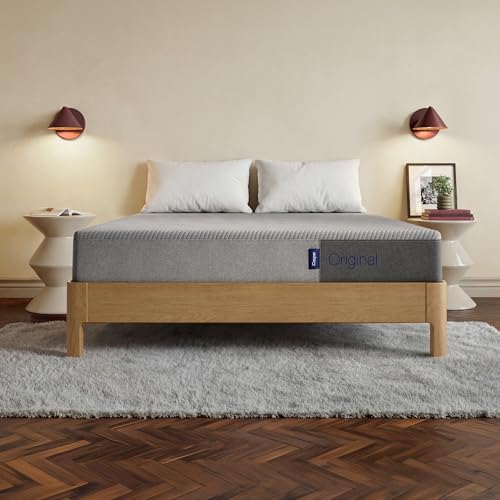
The Casper Sleep Original is the most literal answer to this keyword in the pool: its Zoned Support design places firmer foam under the hips, waist, and lower back and softer foam at the shoulders. Read that as a side sleeper and the geometry resolves — the shoulder sinks into its soft zone, the hip is held at the line by firmer foam, and the waist, the segment every uniform mattress abandons, gets dedicated support. The medium-firm overall feel keeps the system honest for the back-sleeping hours many side sleepers also log.
Strengths
- Zoning matches the side sleeper’s anatomy point for point
- Breathable open-cell foam keeps the deep contact zones cooler
- Strong motion isolation for partners of side-switching sleepers
Trade-offs
- Very light side sleepers may not sink enough to engage the soft zones fully
- Foam edges compress when sitting
- Eleven-inch profile is slightly slimmer than the deepest picks
| Color | Light Gray |
| Size | Queen |
| Dimensions | 80 x 60 x 11 inches |
The durability logic is zoned too: the firmer foam sits where fatigue would recreate the waist sag, and Casper positions the build against sinking and sagging, with a 100-night trial and 10-year limited warranty listed and CertiPUR-US certified foams throughout. In practice the Casper feels graded rather than deep — you sink enough at the points, then the support arrives and the line holds. Roll to the other side and the mirror zones do the same work; roll to your back and the lumbar zone fills the curve.
Pillow pairing is this pick’s force multiplier. On a surface that lets the shoulder sink correctly, your pillow must fill the widened ear-to-shoulder gap; too low and the neck bends down, too high and it bends up, and either bend walks down the spine by morning. Add the knee pillow and the pelvis stays unrotated — the full side posture, engineered at three points.
Rotate without flipping, support evenly, and the Casper serves the side sleeper’s lower back with the most anatomically literate design in this guide.
Best for: side sleepers whose lower back pain tracks with waist sag / Not suited for: strict stomach sleepers
Choose the Casper if your side posture needs a draftsman, not a cushion. Skip it if you sleep only on your stomach. Check on Amazon
Sweetnight CoolNest Queen Mattress
Our badge: Best Cooling Zoned Design
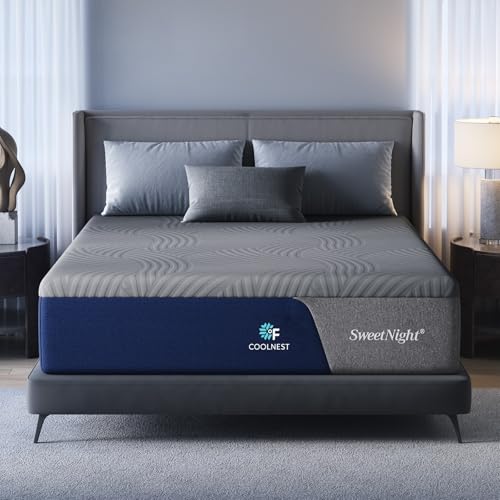
The Sweetnight CoolNest Queen Mattress extends zoning across the whole body: a five-zone ergonomic layout that redistributes pressure head to toe while maintaining stability, inside fourteen inches of foam with a serious cooling system. For the side sleeper, five zones mean the shoulder, waist, and hip each get a calibrated response rather than a compromise — and the CoolNest layers address the heat that deep side contact generates at exactly those points.
Strengths
- Five-zone support calibrates shoulder, waist, and hip independently
- PCM and gel cooling layers target the contact-point heat side sleepers generate
- Strong motion isolation across the multi-layer build
Trade-offs
- Fourteen-inch profile needs deep-pocket sheets and a height audit
- Full expansion can take up to 72 hours
- Medium feel may be soft for side-to-stomach combination sleepers
| Color | Grey & Blue |
| Size | Queen (U.S. Standard) |
| Dimensions | 80 x 60 x 14 inches |
| Weight | 68.67 pounds |
The zone design carries recognition from the American Chiropractic Association per the listing, and the cooling claims are quantified by the maker against standard fabrics — we credit the layered mechanism (ventilated cover, phase-change foam, gel foam) rather than the figures. Foams and cover are CertiPUR-US certified, with a 10-year protection plan listed. The practical side-sleeping experience is a surface that receives the shoulder deeply without letting the waist follow, and stays composed thermally through the night, so the 3 a.m. side-switch is about comfort rather than escaping a hot patch.
Bed height is the planning item: fourteen inches plus frame can make the exit — a roll-and-push through one shoulder — higher than sore bodies prefer. A low-profile frame compensates elegantly. Deep-pocket sheets are mandatory, and the expansion window is real; judge on day four.
For the side sleeper whose complaint list is “lower back, and also I am always too warm,” the CoolNest is the only pick here engineered at full strength for both.
Best for: hot side sleepers who want zoned waist support / Not suited for: low bed setups and impatient unboxers
Choose the Sweetnight if heat and waist sag share your complaint list. Skip it if your frame already sits high. Check on Amazon

Purple Mattress
Our badge: Best for Pressure Relief
The Purple Mattress solves the side sleeper’s split with geometry instead of foam densities. The two-inch GelFlex Grid flexes and buckles where a bony point presses — the hip and shoulder sink into formed cradles — while the grid’s structure and the base beneath hold the waist on the line. It is the only mechanism here that gives more the more you press it, which is precisely the behavior a hip demands and a waist forbids.
Strengths
- Grid cradles the hip and shoulder points while supporting the waist
- Temperature-neutral airflow removes heat from the contact points
- Instant response makes side-switching effortless
Trade-offs
- The grid feel is polarizing — trial honesty required
- Heaviest pick here per pool specs at 100 pounds in queen
- Premium tier within this guide
| Color | White |
| Size | Queen |
| Dimensions | 80 x 60 x 11 inches |
| Weight | 100 pounds |
Purple’s materials cite a 2025 SleepScore Labs study in which most participants felt more supported; recorded here as the maker’s claim. The construction case: medium-firm feel, edge support foam for a stable perimeter, and a grid that does not fatigue like foam cells — so the waist support you trial is close to the waist support you keep in year three, a meaningful promise for a geometry this specific. Side sleepers who run hot get the second dividend: open channels exchange air at the exact points where foam would store heat against the hip.
Pillow pairing on the Purple: the shoulder sinks moderately, so a medium-tall pillow suits most side sleepers; the grid’s instant response also means your pillow, not the mattress, becomes the slow element in a side-switch — choose one that re-lofts quickly.
Plan a two-person setup, breathable bedding to let the grid breathe, and minimal future moving. For pressure-led lower back complaints on the side, this is the guide’s most mechanical answer.
Best for: side sleepers whose lower back pain starts as hip and shoulder pressure / Not suited for: memory foam devotees and light-mattress households
Choose the Purple if pressure is the headline. Skip it if you love foam’s slow hug. Check on Amazon

Layla 10” Copper Infused Memory Foam Mattress
Our badge: Best Adjustable Firmness
The Layla 10” Copper Infused Memory Foam Mattress lets the side sleeper tune the split themselves: soft on one side for maximum shoulder and hip travel, medium-firm on the other when the waist needs a firmer vote. The copper-gel particles add the subtlety — they condense under load and firm up where you press deepest, so even the soft side supports the hip more than its first impression promises, while the waist rides on foam that has not been asked to collapse.
Strengths
- Two firmness levels to tune the give-versus-support split empirically
- Copper firms under load, protecting the waist on the soft side
- Copper conduction cools the hip contact patch; two pillows included in this listing
Trade-offs
- Flipping 69 pounds is a two-person event
- Soft side remains wrong for stomach-sleeping hours
- No explicit waist zoning — the tuning is yours to do
| Color | Natural |
| Size | Queen |
| Dimensions | 80 x 60 x 10.5 inches |
| Weight | 69 pounds |
The method: start soft, log two weeks of lower back scores and side-switch counts, flip if the waist complains, and keep the side your data elects. The 120-night trial accommodates the full experiment. Because side sleepers’ needs drift — with training load, weight, and season — the flip remains useful for years, converting what would be a new purchase into a Saturday chore.
The mattress is made in the USA and made to order per the maker. Pair either side with the knee pillow; pelvic rotation is independent of firmness and will sabotage both settings if ignored.
For the side sleeper who has bought the wrong firmness before — most of them — the Layla is insurance built into the product.
Best for: side sleepers unsure of their firmness prescription / Not suited for: shoppers with a settled, zoned preference
Choose the Layla if you want the experiment built in. Skip it if you want the zoning done for you. Check on Amazon
Leesa Original 10″ Memory Foam Mattress
Our badge: Best Premium Foam Feel
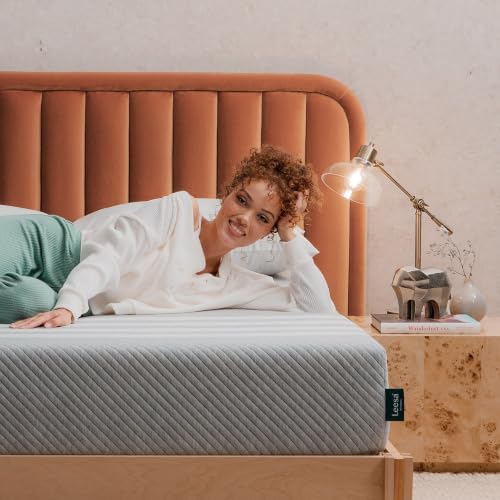
The Leesa Original 10″ Memory Foam Mattress grades the side sleeper’s transition: premium foam layers for cooling, contouring, and pressure relief, with design attention to lower back comfort. Where uniform foam makes the waist follow the hip, the Leesa’s graded stack slows the descent as you sink — the shoulder and hip travel, the waist arrives at support sooner. It is the subtle version of zoning, executed as a gradient.
Strengths
- Graded layers ease the points while catching the waist earlier
- All-position design serves side sleepers who also log back hours
- Breathable signature cover and polished finish
Trade-offs
- Ten-inch profile is slimmer than the deepest picks
- Premium tier pricing
- The gradient is gentler than the Casper’s explicit zoning
| Color | Grey |
| Size | Queen |
| Dimensions | 80 x 60 x 10 inches |
| Weight | 71 pounds |
Leesa assembles in the USA, certifies foams through CertiPUR-US, and donates a mattress to nonprofits for every ten sold. In mixed households the all-position design is diplomatic: your side-sleeping waist and a partner’s back both get a workable surface, and motion isolation keeps the night quiet. The moderate sink also makes pillow fitting forgiving — a medium-tall pillow suits most side sleepers here without the precision the deep-sink picks demand.
At 71 pounds, plan help for setup and rotation, protect the surface, and give the foam a rigid foundation so the gradient, not frame flex, shapes your posture.
For side sleepers whose lower back pain is moderate and whose taste is premium, the Leesa is the guide’s most civilized answer.
Best for: moderate side-sleeping lower back pain in mixed households / Not suited for: bargain hunters and maximum-zoning seekers
Choose the Leesa if you want the gradient rather than the zones. Skip it if your waist needs explicit engineering. Check on Amazon

Novilla Bliss Queen Size Mattress
Our badge: Best Cloud-Like Cushion
The Novilla Bliss Queen Size Mattress maximizes contact area for the side sleeper whose lower back pain begins as pressure: deep gel memory foam contouring — described by Novilla as cloud-like — spreads the hip’s load widely, while the support layers beneath hold spinal alignment and isolate motion. For the sleeper whose hip aches first and whose waist follows, this is the pressure-first prescription.
Strengths
- Deep contour spreads hip load across the widest area here
- Reinforced edges keep the surface stable for side sleepers who live near the edge
- Motion isolation absorbs the rolling this audience does nightly
Trade-offs
- Deep sink can let the waist drift on lighter frames — trial with a log
- Full expansion can take up to 72 hours
- Foam sleeps warmer than the Purple or Sweetnight
| Color | Bliss |
| Size | Queen (U.S. Standard) |
| Dimensions | 80 x 60 x 12 inches |
| Weight | 61.5 pounds |
The three-layer build distributes weight evenly and eases tension at the back and hips, with a breathable knitted cover and gel infusion moderating temperature and plant-infused foam helping freshness. Foams are CertiPUR-US certified, with a 100-day trial and 10-year protection listed. The reinforced edges are a side sleeper’s quiet luxury: this audience sleeps closer to the edge than any other, and a perimeter that holds turns that territory from a slope into a surface.
The honest caution: if your log shows the waist sagging by week two — lower back worse, hip better — the Novilla’s cushion has outvoted its support for your build, and the zoned picks above are your correction. That is what trials are for, and the Novilla’s own terms give you the window to learn it.
At 61.5 pounds it is a manageable queen with a forgiving first impression and a support story that most pressure-led sleepers will find sufficient.
Best for: pressure-led side sleepers who want maximum cushion / Not suited for: sleepers whose waist needs firm, explicit support
Choose the Novilla if your hip files the first complaint. Skip it if your waist does. Check on Amazon
Comparison Table
| Pick | Waist-support strategy | Feel | Size listed | Profile | Check price on Amazon |
|---|---|---|---|---|---|
| Casper Sleep Original | Zoned foam | Medium-firm | Queen | 11 inches | Check price on Amazon |
| Sweetnight CoolNest | 5-zone foam | Medium | Queen | 14 inches | Check price on Amazon |
| Purple Mattress | Grid flex + stable base | Medium-firm | Queen | 11 inches (specs) | Check price on Amazon |
| Layla Copper | Load-responsive foam, flippable | Soft / Medium-firm | Queen | 10.5 inches | Check price on Amazon |
| Leesa Original | Graded foam layers | Medium | Queen | 10 inches | Check price on Amazon |
| Novilla Bliss | Deep contour + support layers | Medium | Queen | 12 inches | Check price on Amazon |
How to Choose the Best Mattress as a Side Sleeper With Lower Back Pain
Photograph your side posture first
On your current bed, have someone photograph you from behind at mattress level. Waist dropped below the shoulder-hip line means buy support and zoning; hip riding high with a bridged waist means buy give. The two failure modes look opposite and shop opposite — and most side sleepers have never actually seen which one is theirs.
Insist on a split mechanism
Whatever you buy must explain how the waist stays up while the hip goes down: zones, grid flex, load-responsive foam, or a graded stack. A mattress that answers with a firmness adjective has not answered. Every pick in this guide names its mechanism; hold all other candidates to that standard.
Fit the knee pillow and the main pillow as one system
The knee pillow stops pelvic rotation; the main pillow fills the ear-to-shoulder gap at the depth your shoulder sinks. Buy or borrow both during the mattress trial, because judging a side-sleeping mattress without them is judging half a posture. Whole-room refreshes can be timed with Black Friday Bedding Deals 2026, and restful extras like Best Throw Pillows Under $500 complete the room beyond the bed.
Calibrate by build, not by reviews
Curvier builds concentrate load at the hip and need deeper give; straighter builds distribute it and thrive on medium zoning. Heavier side sleepers compress everything further and should shop a step firmer underneath the same cushion. Your skeleton is the specification sheet.
Log two weeks, both sides
Note which side you slept on, wake-ups, and morning lower back scores. Asymmetries in the log — one side always worse — point at foundations, pillows, or habits rather than the mattress, and that diagnosis is worth more than another purchase.
How Should a Side Sleeper Set Up and Sleep to Protect the Lower Back?
Expand the mattress fully before judging — foam zones need their full height to zone correctly — fit a breathable protector, and set the bed height so your feet rest flat when seated on the edge. Arrange the knee pillow where your hand finds it in the dark. During the first two weeks, keep your daytime routine ordinary and your log honest; the trial’s value is the trend, not any single morning.
Sleep mechanics matter as much as the surface: enter the side position with knees slightly bent and the knee pillow placed before you settle, rather than arranging yourself after; when you switch sides, roll as a unit — shoulders and pelvis together — instead of twisting the waist against a planted hip. Rotate the mattress seasonally to share the hip zones’ work between both ends of the bed. Guest and convertible beds follow the same posture logic, as our Best Mattresses For Sleeper Sofas guide covers for occasional sleepers.
Problem: your hip is better but your waist still sags — the surface gives without supporting; move to the zoned picks or add a firmer pillow under the waist as a diagnostic for one night.
Problem: your shoulder wakes numb — the shoulder is not sinking enough, or the pillow is too low for the sink you have; adjust loft first, firmness second.
Problem: you keep ending up on your stomach — position drift defeats side engineering; a body pillow as a barricade, or a firmer overall pick, addresses the drift itself.
Problem: only one side of your body ever hurts — check the foundation beneath that side and your pillow’s symmetry before blaming the mattress’s zones.
Problem: the bed feels perfect at midnight and soft by dawn — foam warms and yields overnight; grid and zoned designs hold geometry more consistently for sensitive waists.
The Waist: The Most Underrated Body Part in Mattress Design
Mattress marketing talks about hips and shoulders because they are easy to photograph sinking into foam. The waist — narrower, lighter, and structurally crucial — gets ignored, and side sleepers’ lower backs pay for the omission. The waist is where the lumbar spine lives, and on your side it is the only segment that needs support without offering the mattress much weight to work with. Zoning is essentially the industry’s apology for decades of ignoring it: dedicated firmer material placed where a light, narrow, critical body part needs holding. When you shop this category, shop like a waist. Ask every candidate what it does at the middle of the bed, and let the quality of that answer — a mechanism, not an adjective — rank your shortlist.
There is a simple home test that makes the waist’s role visible. Lie on your side on your current bed and have a partner slide a flat hand under your waist, between your body and the mattress. If the hand slides in easily and feels little pressure, your waist is bridging — unsupported, with the lumbar spine bowed. If the hand cannot enter at all because your waist has collapsed into the surface, the sag has already happened. On the right mattress, the hand meets gentle, even contact: the waist resting on support that rose to meet it. Run the same test on any candidate during its trial and you have a measurement no firmness label can give you — the difference between a bed that photographs well and a bed that holds a line.
The test also explains why two side sleepers can disagree violently about the same mattress. Waist width relative to hip and shoulder width varies enormously between bodies, so the surface that “holds the middle” for a straight-figured sleeper may bridge a curvier sleeper entirely. This is not a matter of taste; it is anthropometry, and it is why this guide refuses to crown a single firmness and instead crowns mechanisms that adapt — zones, grids, and load-responsive foams that calibrate themselves to the body actually lying on them.
Side Sleeping Through a Lifetime: What Changes
The side sleeper’s needs are not static. Shoulders stiffen with age and ask for more give; waists soften and ask for more support; weight shifts move both targets. The resilient purchases in this guide are the ones with adjustment built in — the flippable Layla, the zoned designs that forgive a range of bodies, the trials that let you buy for the sleeper you are this year. Pregnancy rewrites the geometry entirely for a season, and the side position becomes mandatory rather than preferred; a zoned surface plus a serious pillow system is the closest thing to a prescription the bedding aisle offers, offered here as comfort framing only. Buy for your current geometry, keep the log habit, and expect to re-tune the system — pillow first, mattress eventually — as the body it serves changes.
Partners complicate the geometry in a way worth planning for: two side sleepers facing each other, back to back, or in different positions altogether load a shared mattress asymmetrically, and the heavier partner’s hip zone becomes the bed’s hardest-working acre. Zoned and grid designs localize that work better than uniform foam, and rotation — which swaps the hard-working zones between the bed’s two ends — is the maintenance habit that keeps a shared side-sleeper mattress symmetrical across years. If one partner’s lower back is the household’s patient and the other’s is not, let the patient’s scores lead the trial verdict; the comfortable partner will sleep adequately on any finalist in this guide, while the reverse is not true.
And a final, unfashionable variable: the floor your bed stands on and the frame it stands in. A side sleeper’s waist is exquisitely sensitive to a bed that is not level — a frame with a tired center rail tilts the whole geometry by a degree or two, which the lumbar spine reads as a permanent side bend. Before any mattress in this guide is judged, put a level on the frame. More than one “failed zoned mattress” has been a failed rail, discovered only after the second purchase.
The lower-back side sleeper’s geometry has one more variable that rarely gets discussed: mattress age asymmetry. A mattress does not soften evenly — it softens where the body lies, which for a side sleeper means the shoulder and hip zones fatigue first while the lumbar zone between them keeps its youth. The result, years in, is a surface whose zoning has inverted: the points sink too far, the waist is held too high, and the spine’s lateral line bends the wrong way at both ends. Rotation delays it; zoning engineered into the support layer rather than the comfort layer resists it longest, which is why this guide weighted support-layer zoning — the Sealy’s zoned coils, the Casper’s firmer hip band — over surface softness in every ranking decision.
When you trial a finalist, test the geometry deliberately rather than waiting for mornings to accumulate: lie in your true position, have a partner photograph your spine’s line from behind, and compare it against the same photograph on your old bed. A straighter line on the new surface, with the waist’s gap visibly filled and the shoulder settled rather than perched, is the purchase confirming itself in one image. Few mattress decisions get evidence that clean; side sleepers with lower back pain are lucky enough to be able to take the picture.
Common Buying Mistakes
Buying by softness alone
The softest bed in the store drops your waist by midnight. Cushion is half the brief; the waist is the other half.
Skipping the knee pillow
Pelvic rotation will defeat a five-zone mattress by 2 a.m. The cheapest item in this guide does structural work.
Judging on your back
Side sleepers who test mattresses lying on their backs buy back-sleeper beds. Trial in your real position, logged.
Ignoring one-sided symptoms
Always-left pain is data about foundations, pillows, and habits. Diagnose before you re-buy.
Keeping a pillow fitted to the old bed
New sink depth, new loft math. Refit in week two or the neck will file the complaint the waist dropped.
Budget the whole system while you are here, because the side sleeper’s lower back is supported by a chain of purchases, not one: the mattress for the differential, the knee pillow for the pelvis, the head pillow fitted to the shoulder gap, and the protector that keeps the surface’s engineered zones clean and consistent. Bought in that order, each piece is chosen against the last piece’s measured behavior, and the chain converges within a single trial window. Bought all at once in a cart-filling mood, the pieces fight — a lofty pillow undoing a zoned mattress’s shoulder work is the classic own-goal — and the sleeper concludes wrongly that nothing works. Sequence is a strategy; let the mattress land first.
There is a weight dimension to this keyword that deserves direct address, because the shoulder-hip differential scales with the body using it. Lighter side sleepers generate less pressure at both points, so their differential must be built from surface responsiveness — a mattress too firm for their weight never lets the shoulder descend at all, and the waist problem never gets the chance to be solved. Heavier side sleepers generate the opposite risk: the hip’s load can overwhelm a comfort layer and bottom out against the support core, collapsing the differential from below. The finalists in this guide span that range deliberately — the grid’s point-flexing for lighter frames, the zoned coils’ load-bearing for heavier ones — and the reviews flag which end of the range each serves, because “side sleeper” is a position, not a body, and the mattress must fit both.
Temperature completes the side sleeper’s lower-back picture in a way few guides connect: a sleeper who overheats changes position constantly, and every position change is a small abandonment of the alignment the mattress built. Cool-running surfaces — the grid’s open channels, the gel layers, the coil beds’ airflow — protect the differential indirectly by protecting the stillness it needs. If your trial log shows good alignment on the nights you slept cool and poor alignment on the warm ones, the variable to fix may be the room or the bedding rather than the mattress. Log temperature alongside mornings for one trial and the pattern will tell you which purchase to make next.
Older side sleepers form a significant share of this keyword’s readers, and their version of the differential problem carries an extra term: getting out of bed. A surface soft enough to cradle an older shoulder can be too enveloping for the push-up exit that aging arms must perform, and a mattress that sleeps beautifully but strands its owner at the edge fails its most important daily test. Weight the edge support and response notes in the reviews accordingly — the hybrids’ spring-back and the grid’s easy movement serve the exit as faithfully as the entrance — and trial the exit deliberately, morning and midnight, before the verdict. A mattress for a lower back must also be a mattress for the life conducted around it.
The lower-back side sleeper should also prepare for the mattress’s effect on the rest of the day’s evidence, because a successful trial changes more than mornings. A spine that spends eight hours in lateral alignment stops spending its first waking hour recovering from the night, and the day’s other loads — the chair, the commute, the workout — are met by a back that starts at neutral rather than in debt. Log one daytime line alongside the morning line during the trial (how the back felt at dinner, say), and the mattress’s true effect size becomes visible: not a miracle, but a shift in the whole day’s baseline, purchased at the one hour when the body is most able to accept it. That shift, compounded across months, is the real product this category sells.
The side sleeper’s trial should also include one deliberate stress test: a night after your hardest day — the long drive, the garden weekend, the workout that found your back. A mattress that holds your alignment when the muscles arrive fatigued and uncooperative has passed the examination that matters, because easy nights forgive almost any surface. Schedule the verdict after the hard week’s evidence is in, not before; the finalists in this guide were ranked for exactly that night’s performance, and the trial that includes it will choose among them more truthfully than a fortnight of easy nights ever could.
One more variable belongs in the lower-back side sleeper’s notebook: mattress height and the geometry of getting in and out. A deep-profile pick on a tall frame changes the angle at which the pelvis loads the edge each morning, and a sleeper whose back is most vulnerable in transitions should count the sit-and-stand among the trial’s tests, not just the sleeping between them. The finalists span ten to fourteen inches of profile for a reason; choose the height your mornings can use, and let the frame make up any difference the mattress should not have to.
And remember that the side sleeper’s lower back keeps its own long memory: a month of aligned nights does not merely feel better, it retrains the muscles that guard the spine during the day’s lifts and twists. The mattress you choose here is therefore also a daytime purchase, made at night, compounding quietly. Choose the one your logged mornings endorse, and let the compounding begin.
Trust the photograph, the log, and the third week over any single night’s testimony — including the first one. Alignment is a trend, and this category’s winners are the mattresses whose trend runs straight.
The differential is the whole game for this sleeper: shoulder down, waist filled, pelvis level. Every finalist above plays it by a different mechanism, and your logged mornings — not any label — will crown the one your spine prefers.
Final Recommendation
For most side sleepers with lower back pain, the Casper Sleep Original is the most anatomically literate buy: zoning that gives at the points and holds at the waist, in a bed that also survives your back-sleeping hours. Hot sleepers should take the Sweetnight, pressure-led sleepers the Purple, and the undecided the runner-up — Check on Amazon for the flippable Layla, whose two firmness levels let your own log settle the question. Whichever you choose, photograph your posture first, add the knee pillow on night one, and give the verdict two full weeks — side sleeping is a geometry, and geometries take time to prove.
Frequently Asked Questions
What firmness is best for a side sleeper with lower back pain?
Usually a medium or zoned medium-firm: soft enough for the shoulder and hip to sink, structured enough for the waist to stay on the line. Uniform extremes in either direction bow the lumbar spine.
Do zoned mattresses really help side sleepers?
Yes — zoning is the direct answer to the side sleeper’s split need, with firmer support at the waist and pelvis and softer comfort at the shoulder. The Casper and Sweetnight in this guide show two implementations.
Why does my lower back hurt more on my side than my back?
Side sleeping concentrates load and lets the waist sag or bridge, bending the lumbar spine sideways for hours. Back sleeping distributes load more evenly. The fix is a surface that keeps the side line straight, plus a knee pillow.
Does a pillow between the knees help the lower back?
Yes. It stops the upper leg from rotating the pelvis forward, which unloads the lumbar spine’s twist all night. It is the highest-value accessory a side sleeper can add.
How long should I trial a mattress for this problem?
At least two weeks with a simple log — side slept on, wake-ups, morning score. Side-sleeping comfort is statistical, and single nights mislead.
When should side-sleeping back pain be checked medically?
When it radiates into a leg, brings numbness or weakness, follows an injury, or persists for weeks on a well-fitted bed. Those patterns deserve evaluation rather than more bedding.


