Disclosure: As an Amazon Associate, dailyhomedecorating.com earns from qualifying purchases. Links to Amazon on this page are affiliate links; they cost you nothing extra. Prices and availability change often, so check the current Amazon listing before you buy.
The best chairs for bad posture matter because bad posture rarely feels like a decision. It feels like gravity winning slowly — the shoulders rounding a degree a month, the head drifting forward toward the screen, the lower back flattening into the chair’s curve until the slump is simply where you live. And the chair is usually an accomplice: a seat too deep, a backrest shaped like a question mark, a lumbar bump in the wrong place or no lumbar at all, quietly training the slump eight hours a day. The best chairs for bad posture reverse the training. They meet your back where it should rest, make the supported position the comfortable position, and gently tax the slump until sitting well becomes the path of least resistance again.
This guide reviews five chairs chosen for slump-resistant design — adjustable lumbar systems, seat depths that keep you back in the chair, backrests shaped to the spine’s real curves — plus one massage chair pad, honestly labeled as an add-on rather than a chair, for readers upgrading a seat they already own. The framing is comfort and support: furniture can make good posture easier and more comfortable, and that is a genuine, valuable thing; it cannot diagnose or correct a postural condition, and pain, numbness, or visible changes belong in professional care. The prevention-minded companion guide is Best Chairs For Back Posture, and the desk-side half of the habit is treated in Best Work Chairs For Lower Back Pain.
Where to Buy
Every pick below is sold on Amazon, where you can check the current price, color options, and availability before you buy.
- FLEXISPOT ErgoX Premium Ergonomic Office Chair — Check on Amazon
- Ticova Ergonomic Office Chair — Check on Amazon
- SIHOO M18 Ergonomic Office Chair — Check on Amazon
- HON Ignition 2.0 Ergonomic Office Chair — Check on Amazon
- Hbada P5 Ergonomic Office Chair — Check on Amazon
- Snailax Shiatsu Neck & Back Massager Chair Pad — Check on Amazon
In this guide
Quick Picks
| Pick | Badge | Why it earns its place |
|---|---|---|
| FLEXISPOT ErgoX Premium Ergonomic Office Chair | Best Overall | Adjustable seat depth defeats the perch-and-slump cycle, with dynamic lumbar and a five-level back rebuilding support dimension by dimension. |
| Ticova Ergonomic Office Chair | Best Budget | Lumbar adjustable in height and depth, a spine-shaped backrest, and a W-shaped seat — slump resistance at an entry price. |
| Hbada P5 Ergonomic Office Chair | Best for Smaller Sitters | An S-shaped backrest, up-down lumbar, and a swiveling 2D headrest, sized for sitters from five feet — support that fits smaller frames. |
| SIHOO M18 Ergonomic Office Chair | Best Mesh Value | Adjustable lumbar and headrest in a breathable mesh chair rated to 330 lb — cool, supported sitting for long days. |
| HON Ignition 2.0 Ergonomic Office Chair | Best Professional | Alignment-encouraging lumbar, adjustable arms, and a tilt that keeps you moving — office-grade posture habits with a full warranty. |
| Snailax Shiatsu Neck & Back Massager Chair Pad | Best Add-On | Not a chair — a shiatsu pad that straps onto your existing seat to add kneading, heat, and rolling comfort while you shop for the real fix. |
Key Takeaways
- Slumps are usually engineered by the chair: too-deep seats, absent lumbar support, and backrests that curve the wrong way. Fix the geometry and the habit weakens.
- Seat depth is the secret specification — it decides whether your back ever reaches the backrest’s support.
- Adjustable lumbar (height and depth) lets the chair meet your curve instead of demanding your curve meet the chair.
- The Snailax is a comfort add-on for an existing chair, labeled as such — pleasant, useful, and not a substitute for a supportive chair.
- Furniture supports better habits; it does not correct conditions. Persistent pain or postural changes deserve professional assessment.
How These Picks Were Chosen
The audit started from the slump’s mechanics. A sitter slumps when the seat is too deep to sit back in, when the backrest’s curve flattens or reverses the lower back’s natural arch, when the arms leave the shoulders to creep upward and forward, and when the chair offers no comfortable alternative position — so the body invents one, badly. Chairs were scored on their answers: seat-depth control, lumbar adjustability, backrest shape, arm adjustability, and a tilt that permits supported variety.
Five chairs passed with distinct strengths — full adjustment, budget adjustment, small-frame fit, mesh value, and professional durability. The sixth slot went, deliberately and transparently, to the Snailax pad: many readers of this keyword own a chair they cannot yet replace, and a pad that adds kneading comfort and a reason to sit back against the seat is an honest interim tool, reviewed as an accessory rather than disguised as a chair.
Specifications come from the verified pool, with package-style dimension figures omitted from spec boxes where the pool lists them, and flagged in the sources file. Comfort language stays in comfort’s territory throughout.
The 6 Best Best Chairs for Bad Posture — Reviewed

FLEXISPOT ErgoX Premium Ergonomic Office Chair
Our badge: Best Overall
The FLEXISPOT ErgoX Premium Ergonomic Office Chair leads because it attacks the slump at its root cause: seat depth adjustable from 17 to 20 inches means your back can actually reach the backrest — with your knees uncompressed — perhaps for the first time in your sitting life. Add dynamic lumbar support that follows your spine, a five-level adjustable back, seat height from 20.1 to 22.4 inches, a 3D headrest, 3D armrests, tilt, and a nap footrest, fitted for users 5’1″ to 6’2″ and rated to 400 lb, and you have the most complete slump-reversal toolkit in this guide.
Strengths
- Seat-depth adjustment ends the perch-forward, abandon-the-backrest cycle.
- Dynamic lumbar keeps support in contact through every shift.
- Fit range and capacity welcome nearly every body.
Trade-offs
- Premium price among this guide’s chairs.
- Its benefits require a genuine setup session.
- The pool lists package-style dimensions; plan by the fit ranges.
| Color | Black |
| Size | Overall Depth 44″ |
| Weight | 38 pounds |
The ErgoX’s method is environmental: it makes the supported position the easiest position. Sit back — the depth allows it — and the lumbar is there; lean back to think, and the back follows at the level you set; drop the footrest at midday and the whole spine unloads. Slumping in this chair is genuinely more effort than sitting well, which is the only kind of posture correction furniture can honestly perform. Give it the twenty-minute setup, in the order this guide’s how-to prescribes, and then let the chair do its quiet daily work.
Choose the FLEXISPOT if your slump is a geometry problem — and most are. Skip it if you will not do the setup; the HON’s simpler virtues suit you better.
Best for: Slumpers whose seat depth and lumbar have never fit / Not suited for: Setup-skippers

Ticova Ergonomic Office Chair
Our badge: Best Budget
The Ticova Ergonomic Office Chair delivers the two-axis lumbar — height and depth — that slump reversal depends on, at the guide’s friendliest price: a backrest shaped to fit the spine’s curve, a big curved foam headrest adjustable in height and angle, 3D armrests, a 130-degree rocking tilt, breathable mesh, and a 3.4-inch W-shaped foam seat with a waterfall edge that disperses pressure across hips and thighs and keeps the pelvis honest. BIFMA-tested, with a satisfaction guarantee in the maker’s terms.
Strengths
- Height-and-depth lumbar adjustment: the slump fix, at a budget price.
- W-shaped waterfall seat supports a neutral pelvis.
- Spine-curved backrest and a real headrest complete the chain.
Trade-offs
- Pool dimension figures appear to be package measurements; fit by its ranges.
- Foam seat breathes less than full mesh.
- Rocking tilt rather than a deep recline.
| Color | Black |
| Size | 70D x 26W x 54H cm |
| Weight | 17.5 Kilograms |
The Ticova’s lumbar is the review in miniature: most budget chairs offer a lumbar bump placed by optimism; this one lets you move yours until your back reports contact, then deepen it until the contact becomes support. That single capability, patiently used across the first week, retrains the sitting position more effectively than any amount of ergonomic intention. Its headrest — unusually generous for the price — supports the reclined thinking posture that gives the neck and shoulders their daily reset, a link in the posture chain explored fully in Best Chairs For Neck Support.
Choose the Ticova if the budget is firm and the slump is real. Skip it if you need seat-depth adjustment — that remains the FLEXISPOT’s exclusive at this end of the pool.
Best for: Budget slump reversal with a truly adjustable lumbar / Not suited for: Depth-adjustment seekers

Hbada P5 Ergonomic Office Chair
Our badge: Best for Smaller Sitters
The Hbada P5 Ergonomic Office Chair earns its place by fitting the sitters big chairs forget: designed for people from about 5’0″ to 5’8.5″, with an S-shaped backrest that conforms to the spine, a lumbar support adjustable up and down to meet a shorter back’s curve where it actually lives, a 2D headrest adjustable over a 3.94-inch range and swiveling 40 degrees, armrests that raise, lower, and adjust to desk height, a 135-degree recline, and an included footrest. SGS-certified and BIFMA-tested.
Strengths
- Sized for smaller frames — the lumbar and headrest land where they should.
- S-curve backrest supports back, lumbar, hips, and arms as one system.
- Footrest included, serving both breaks and shorter legs.
Trade-offs
- Tall sitters exceed its design range — this is a smaller-frame chair by intent.
- The pool’s dimension figures appear to be package measurements.
- Mesh-and-frame aesthetic is functional rather than plush.
| Color | Black |
| Size | 27.56 x 27.56 x 49.41 inches |
| Weight | 44 pounds |
Smaller sitters slump for a specific reason: standard chairs are dimensioned for taller bodies, so the lumbar lands in their mid-back, the seat edge lands mid-calf, and the headrest lands nowhere — and the sitter curls forward to find any support at all. The P5’s proportions answer each point, and its footrest quietly solves the dangling-feet problem that drags shorter sitters’ pelvises under. If you are tall, this is not your chair and the guide says so plainly; if you are not, it may be the first chair that has ever fit you, which is a posture intervention in itself.
Choose the Hbada if standard chairs have always felt borrowed from a taller person. Skip it if you are above its height range — the SIHOO below is sized for you.
Best for: Smaller sitters failed by standard chair dimensions / Not suited for: Tall sitters

SIHOO M18 Ergonomic Office Chair
Our badge: Best Mesh Value
The SIHOO M18 Ergonomic Office Chair is the long-day mesh answer: four support points — head, back, hips, hands — an adjustable lumbar, an adjustable headrest, 2D armrests, a wide cushion, tilt lock, and a frame tested to 330 lb, sized for sitters roughly 5’6″ to 6’2″. Its slump defense is contact: the breathable mesh keeps your back against the support for eight hours without the heat buildup that drives sitters to perch on foam chairs’ edges — the perch being where slumps are born.
Strengths
- Mesh keeps the back in supported contact through long, warm days.
- Adjustable lumbar and headrest at a value price.
- 330 lb tested capacity and a wide, posture-friendly cushion.
Trade-offs
- Sized for average-to-tall sitters.
- Lumbar depth is less adjustable than the Ticova’s two-axis system.
- No footrest included.
| Color | Charcoal |
| Size | Pack of 1 |
| Dimensions | 27.5 x 21 x 11 inches |
| Weight | 31.526103466 pounds |
The M18’s wide cushion deserves a posture note: it permits the cross-legged chapter without penalty, and a chair that permits variety prevents the rigid fatigue that ends in a slump. Between its tilt, its mesh, and its honest adjustments, it is the value chair least likely to be replaced within two years by the sitters this guide serves — a claim grounded in the completeness of its essentials rather than any single headline feature.
Choose the SIHOO if you sit long, run warm, and budget carefully. Skip it if you are petite — the Hbada above was designed for you.
Best for: Long, warm sitting days on a budget / Not suited for: Petite sitters

HON Ignition 2.0 Ergonomic Office Chair
Our badge: Best Professional
The HON Ignition 2.0 Ergonomic Office Chair is the office professional’s posture chair: lumbar support designed to encourage alignment, a mid-back mesh that promotes airflow, arms adjustable in height and width so the shoulders can find their rest height, a standard tilt that encourages the movement healthy sitting is made of, and a 300 lb rating under the HON Full Warranty. Its virtue for the slump-prone is reliability — the adjustments are obvious, the support is consistent, and the chair asks nothing exotic of its sitter.
Strengths
- Alignment-encouraging lumbar with professional build quality.
- Two-way adjustable arms set the shoulders free.
- Full manufacturer warranty and a 300 lb rating.
Trade-offs
- The pool lists no weight for this model.
- Mid-back design; no headrest.
- Utilitarian looks for design-led rooms.
| Color | Black |
| Size | Oversized |
| Dimensions | 28.5 x 27 x 44.5 inches |
In shared and professional settings, the Ignition’s quick resets matter: a slump is often just the previous sitter’s settings, worn for a week. Thirty seconds with this chair’s levers — seat height, lumbar, arms — re-fits it to your spine, and its mesh keeps the fitted position comfortable enough to keep. For the home office that doubles as a workplace credential on video calls, its restraint is also an asset: nothing about it asks to be discussed.
Choose the HON if you want professional, warranted, no-drama support. Skip it if a headrest is essential to your reclined work.
Best for: Professional desks and shared workstations / Not suited for: Headrest seekers
Snailax Shiatsu Neck & Back Massager Chair Pad
Our badge: Best Add-On
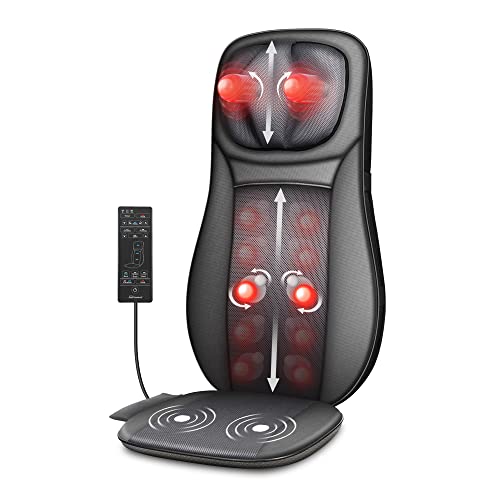
The Snailax Shiatsu Neck & Back Massager Chair Pad is included with its nature stated plainly: it is not a chair and cannot fix a chair’s geometry. What it does — strapped onto your existing seat with its integrated strap — is deliver shiatsu kneading across the full, upper, or lower back or held on one spot, a rolling massage along the spine’s curve, gentle heat, two levels of seat vibration, and an adjustable neck massage for users roughly 5’3″ to 6’3″, in sessions the maker sets at up to 15 minutes, three a day. As an interim comfort layer while you save for, or wait to choose, a real chair, it is honest value.
Strengths
- Adds kneading, heat, and rolling comfort to the chair you already own.
- Sitting back to enjoy it is itself a small posture rehearsal.
- Moves between home, office, and vehicle seats in a minute.
Trade-offs
- It cannot correct a bad chair’s seat depth or missing lumbar geometry.
- Corded power and 15-minute sessions bound its role to breaks.
- Comfort only — no therapeutic claims are made or implied.
| Color | Grey and Black |
| Size | 1 Count (Pack of 1) |
| Dimensions | 31.889763747 x 17.322834628 x 6.8897637725 inches |
| Weight | 14.4843706134 pounds |
Used with clear eyes, the Snailax earns its slot: the end-of-day stiffness that a slumped day deposits is exactly what its kneading addresses, and the ritual of sitting fully back — into the pad, against the chair’s back — for a 15-minute session is a daily rehearsal of the position your next chair will make permanent. Buy it as a bridge and a comfort, in that order, and let the chairs above be the destination.
Choose the Snailax if a new chair must wait a season. Skip it as a long-term plan — geometry first, always.
Best for: Interim comfort on an existing chair / Not suited for: A substitute for a supportive chair
Comparison Table
| Pick | Color | Dimensions | Weight | Check price on Amazon |
|---|---|---|---|---|
| FLEXISPOT ErgoX Premium Ergonomic Office Chair | Black | — | 38 pounds | Check price on Amazon |
| Ticova Ergonomic Office Chair | Black | — | 17.5 Kilograms | Check price on Amazon |
| Hbada P5 Ergonomic Office Chair | Black | — | 44 pounds | Check price on Amazon |
| SIHOO M18 Ergonomic Office Chair | Charcoal | 27.5 x 21 x 11 inches | 31.526103466 pounds | Check price on Amazon |
| HON Ignition 2.0 Ergonomic Office Chair | Black | 28.5 x 27 x 44.5 inches | — | Check price on Amazon |
| Snailax Shiatsu Neck & Back Massager Chair Pad | Grey and Black | 31.889763747 x 17.322834628 x 6.8897637725 inches | 14.4843706134 pounds | Check price on Amazon |
How to Choose the Best Chairs for Bad Posture
Diagnose your slump’s shape first
Slumps have signatures. The percher slides forward because the seat is too deep or the desk too far. The curler rounds the lower back because the lumbar is absent or misplaced. The craner pushes the head forward because the monitor is low and the chair’s back offers no reason to sit back. Each signature indicts a different specification — depth, lumbar, or the desk itself — and the honest shopper names theirs before spending, because the chair that fixes a percher (depth adjustment) is not the chair that fixes a curler (lumbar depth), and no chair fixes a craner’s monitor.
Demand lumbar adjustment in two axes
Height alone moves the bump along your back; depth decides whether it supports or shoves. The pair together — Ticova and FLEXISPOT territory — let you place support on your curve at your pressure. If a chair offers only a fixed lumbar, your spine must match its designer’s guess, and the odds are unkind.
Check the seat like you mean it
Sit fully back in any candidate, physically or by its measurements: your back should meet the backrest while two or three fingers fit between the seat edge and your calves. A waterfall edge forgives a centimeter; nothing forgives three. If your legs are short, weight this test double — it is the smaller sitter’s whole posture story, and the reason the Hbada exists in this guide.
Plan the habit, not just the chair
The chair changes the geometry; you must still change the defaults. Pair the purchase with two anchors: a five-minute setup done properly on day one, and a standing break rhythm that gives the new posture somewhere to reset. The sitters who report transformation bought the chair and kept the appointments; the chair alone, however good, negotiates with a habit that has had years to entrench — give it allies.
Know when the answer is not furniture
Pain that persists in a well-fitted chair, numbness or tingling, weakness, or a posture change you can see progressing month to month — these are referrals, not shopping problems. This guide’s chairs serve everyday slumping and stiffness. Anything beyond that deserves a professional’s eyes, and seeking them is not a failed purchase; it is the correct next step, taken promptly.
How Do You Retrain a Slump, Week by Week?
Week one is setup and awareness: fit the chair by this guide’s sequence, then simply notice — without self-scolding — each time you find yourself in the old position, and reset. Noticing is the training; the chair makes each reset comfortable, which is what makes the noticing sustainable. Week two adds the break rhythm: stand, walk, and stretch briefly at the top of each hour, anchoring it to something you already do so it survives busy days. Week three is refinement: revisit the lumbar depth and seat settings with a fortnight’s evidence, because the right settings at day fourteen are rarely the guesses of day one.
By week four the new position should feel less like a posture and more like where you sit — the supported shape becoming the default because the chair rewards it hourly. Progress is measured in afternoons: the day the 4 p.m. slump does not arrive is the day the system declares itself. Keep the breaks even then; they are not a phase of the program but its permanent maintenance.
Problem: You keep sliding down into the old slump by midday — Check seat depth and pan angle first; a seat that lets you slide is set too deep or tilted forward. Then check your feet: dangling feet drag the pelvis under, so plant them or add a footrest.
Problem: The lumbar feels right in the morning and wrong by evening — Bodies change across a day. A dynamic lumbar, or a mid-day one-notch depth adjustment, accommodates the drift; do not suffer the morning’s setting out of loyalty to it.
Problem: Your neck and shoulders still round forward — Look beyond the chair: raise the monitor, bring the keyboard closer, and set the armrests to carry your forearms. The chair supports the back; the desk arranges the front.
Problem: You bought the chair but never adjusted it — Book twenty minutes with it now, following the setup sequence in order. An unadjusted ergonomic chair is an ordinary chair with expensive potential.
Problem: Standing breaks keep getting skipped — Shrink them. A one-minute stand-and-walk kept beats a five-minute routine abandoned. Attach it to water refills, and it anchors itself.
The Chair Is Half the System
It is worth stating the whole model plainly, because this keyword’s shoppers are often sold a single-product fantasy. Posture at a desk is produced by a system: the chair’s geometry, the desk’s heights, the monitor’s position, the sitter’s break rhythm, and the strength and mobility the sitter brings to all of it. The chair is the system’s largest single lever — it touches you for eight hours — which is why this guide exists and why its six picks were audited so strictly. But the sitter who fits a FLEXISPOT perfectly and then hunches over a low laptop for the evening has upgraded half a system. Fit the chair with this guide; fit the desk with the workstation guides in this program, including Best Task Chairs For Home Office for the daily-driver perspective; and keep the breaks. The slump was built by a system, and a system is what retires it.
Reading Your Old Chair’s Confession
Before the new chair arrives, interrogate the old one — it knows exactly how you slump. A cushion compressed at the front edge confesses perching. A backrest polished at the top confesses a sitter who leans back without lumbar contact below. Armrests worn on their front halves confess shoulders that creep forward and drag. Read the confession and bring it to the new chair’s setup: perchers start with depth, curlers with lumbar depth, craners with the monitor. Your old chair’s wear patterns are the most honest ergonomic assessment you will ever receive, and they are free.
Movement: The Chair’s Necessary Partner
No honest posture guide ends at the chair, because the slump is partly a movement deficit wearing a furniture costume. The body that sits well for an hour and then walks, reaches, and changes state for five minutes returns to the chair a different sitter — circulation moved, joints visited through their ranges, the spine reminded it has options beyond the one the desk imposes. This is ordinary physical common sense, offered as such and not as treatment: build the day in chapters, let the chair support the sitting ones excellently, and let your own motion handle the transitions. The sitters who transform their posture fastest pair the new chair with the smallest sustainable movement habit — the hourly stand, the stairs, the walk while the call runs — rather than an ambitious exercise program that collapses by February. The movement-friendly chairs and habits in Best Chairs For Adhd are natural allies here, since a chair that permits motion and a day that schedules it are the same philosophy at two scales.
The Home-Office Slump Is a Room Problem Too
Working from home adds a specific slump vector the office never had: the migration. The day begins at the desk, drifts to the sofa with the laptop for the afternoon call, ends at the kitchen table for the last emails — and two of those three stations have no lumbar, no arm support, and a screen at lap height pulling the head down for hours. The fix is partly discipline and partly furniture geography: one real chair at one real desk, defended as the day’s headquarters, with the migrations treated as breaks rather than workstations. The home-office version of that headquarters — chair, desk, and screen arranged as a system — is built out in Best Work From Home Chairs For Back Pain, and it matters more for slumpers than any single product in this guide, because a habit fed by three bad stations cannot be starved by one good one. Choose the chair here; then give it a room worth sitting in.
Stories From the Slump: Three Patterns and Their Fixes
Abstract advice lands better with cases, so consider three composite sitters — assembled from the patterns this guide’s research encounters constantly — and what actually fixed each. The first is the percher: a writer who had sat for six years on the front four inches of a deep, handsome chair, back nowhere near its backrest, wondering why her shoulders lived beside her ears. Her chair was not broken; it was simply too deep for her legs, so she had voted with her body for the only position available. The fix was not effort or exercise — it was a chair with adjustable seat depth, set once, which put her back against a lumbar for the first time in her career. Her shoulders’ complaint resolved as a side effect of geometry, which is how most posture stories actually end.
The second is the curler: a developer whose budget chair had a fixed lumbar bump positioned, by population average, two inches above his actual curve — so his lower back received no support at all and rounded into the gap for a decade of working days. He had bought cushions, plural, each migrating and disappointing. The fix was a two-axis lumbar, moved down and in until contact became support; the cushions went to a charity shop, and the lesson he now gives juniors is this guide’s thesis in one sentence: support you cannot position is decoration. The third is the craner: a manager whose chair was genuinely excellent and whose neck ached daily, because her laptop sat on the desk at lap height and her head spent eight hours traveling down to meet it. No chair could have fixed her, and none did; a riser and a separate keyboard did, in an afternoon, for the price of a team lunch.
The three patterns share a moral worth the whole section: the slump always has a specific mechanical cause, the cause is always findable, and the fix is always cheaper than the suffering — provided the diagnosis comes before the purchase. That is why this guide insists on naming your slump’s shape before shopping, why its chairs were chosen for adjustability rather than ideology, and why its final advice to every reader is the same: sit in your current chair, right now, and ask where your back is unsupported, where your feet are, and where your screen is pulling your head. The answers are your specification sheet. The chairs above are simply the best answers the pool can offer to it.
What to Expect, Month by Month
Set the calendar honestly, because the slump’s retirement is measured in months and the sitter who expects a transformation by Friday will return a good chair on Saturday. Month one is mechanical and conscious: the chair is fitted, the desk is corrected, and the sitter notices the old position a dozen times a day and resets it — a mildly annoying month in which the main evidence of progress is that the resets exist at all. The back may even file new complaints in this month, as muscles that had outsourced their work to the slump are asked to participate again; ordinary stiffness in a transition is common, while pain — sharp, radiating, or persistent — is not a transition symptom and belongs, as this guide has said throughout, in professional hands.
Month two is where the compound interest starts. The resets per day fall by half, then by half again; the afternoon slump window shrinks from hours to minutes; and the sitter begins catching the old posture in other people’s chairs — restaurants, meetings, the car — which is the surest sign the new default has installed itself, because the body now reports misfit the way it once reported support. Month three is the quiet one: the chair disappears, the desk disappears, and what remains is simply working, in a body that ends the day approximately as comfortable as it began it. That anticlimax is the entire prize, and it is worth stating plainly because it is so easy to miss: success in posture does not feel like anything. It feels like the absence of the thing you used to feel. Judge your chair at month three by that absence, keep the breaks and the quarterly re-fit that protect it, and the slump becomes what it should always have been — a chapter in your sitting’s history, not its permanent address.
The Slump in the Rest of the House
Before the final verdict, one more territory deserves the audit, because the desk is not where most people spend most of their sitting — it is merely where they spend their most supervised sitting. The evening’s sofa, deep and armless in the wrong places, hosts three hours of the day’s least supported posture, often with a phone at lap height completing the curl that the workday began. The car adds its hour, the dining table its meals, the bleachers and waiting rooms their anonymous contributions. None of these seats needs to become an ergonomic project; the desk chair remains the correct place to spend the serious money, because it hosts the longest, stillest, most repeated sitting of the day. But the sitter who has learned support at the desk starts making small, free corrections everywhere else — a cushion behind the back on the sofa, the phone raised on a stand, the car’s lumbar rolled a notch further — and those corrections, multiplied across every seat in a life, are the difference between a posture program that works eight hours a day and one that works whenever its owner is sitting at all.
That is the deepest sense in which the right chair “fixes” bad posture: not by holding one spine in one office, but by teaching one sitter what supported feels like, so thoroughly that their body begins demanding it everywhere. The slump was learned the same way, one bad seat at a time, over years. Its replacement is learned seat by seat as well, and the desk chair — the longest-held, most-adjusted, most intimate of them — is simply where the re-education starts. Start it there, with the chairs above, and let the lesson spread through the house at its own pace. Posture, in the end, is not a position. It is a preference your body can be taught, and a good chair is the most patient teacher it will ever have.
One more honest boundary before the verdict, because this keyword attracts promises the way a porch light attracts moths: no chair in this guide, and no chair anywhere, will correct a structural condition, heal an injury, or substitute for the assessment of a clinician when pain is the presenting symptom rather than ordinary end-of-day fatigue. The distinction matters and is easy to hold — fatigue that fades with rest and position is furniture’s territory; pain that persists, sharpens, radiates, or arrives with numbness or weakness is not, and the kindest thing a buying guide can do with that second category is refuse to sell it anything and point it, promptly, toward professional hands. Everything recommended here is recommended for the first category alone, as comfort engineering for habitual slumping — a real problem, honestly addressed, inside its proper borders.
Begin tonight, if you like, with the free version of everything above: sit in your current chair, notice the slump arrive, reset once against whatever support exists, and notice how different the next ten minutes feel. That small experiment costs nothing and previews the entire purchase — the chair you are about to buy simply makes that reset available all day, every day, with support shaped to hold it.
Common Buying Mistakes
Buying a “posture corrector” chair with a fixed aggressive curve
A chair that shoves your spine into its designer’s ideal will be fought by lunchtime. Support must be adjustable to your curve, at your pressure — the difference between a coach and a brace.
Skipping the setup session
Every adjustable chair in this guide is ordinary until it is fitted. Twenty minutes, in sequence, is the purchase’s second half. Do not leave it in the box.
Blaming the chair for the desk’s sins
A low monitor and a distant keyboard will slump a sitter in a throne. Audit the whole station before concluding the chair failed.
Treating the massage pad as the solution
The Snailax is a bridge and a comfort, honestly labeled. Geometry problems need geometric answers; let the pad serve while the chair decision matures, not instead of it.
Expecting a transformation in a week
Habits built over years renegotiate over weeks. Judge the chair at week four, by the afternoons, not at day two by the novelty.
Final Recommendation
For the fullest slump-reversal toolkit, the FLEXISPOT ErgoX Premium Ergonomic Office Chair leads this guide: seat depth that lets your back reach its support, dynamic lumbar that stays with it, and adjustments for every dimension the slump exploits. On a budget, the Ticova’s two-axis lumbar is the essential buy — see its Check on Amazon listing for the current configuration. Smaller sitters should start with the Hbada; interim comfort, with the Snailax. Fit the chair, fix the desk, keep the breaks — and let the supported position become, again, simply where you sit.
Frequently Asked Questions
Can a chair really improve bad posture?
A well-fitted chair makes good posture the comfortable, default position and stops training the slump — which is the honest, substantial contribution furniture can make. It supports the habit change; the sitter, the desk setup, and daily movement complete it. Claims beyond that belong to marketing, not to this guide.
What is the single most important feature for a slumper?
Lumbar support you can position — in height and, ideally, depth — with seat depth a close second, because depth decides whether your back reaches the lumbar at all. The FLEXISPOT adjusts both; the Ticova adjusts the lumbar in both axes at a budget price.
I am petite and every chair feels wrong. What should I buy?
A chair dimensioned for smaller frames — the Hbada P5 in this guide, designed for sitters from about five feet, with its lumbar and headrest landing where a shorter spine needs them, and a footrest for the dangling-feet problem that drags petite sitters into slumps.
Is a massage pad a good substitute for a new chair?
No — and this guide labels the Snailax an add-on for exactly that reason. It adds genuine comfort and a reason to sit back, which helps while you choose or save for a chair with the right geometry. It cannot change your current chair’s depth, curve, or support.
How long until a new chair makes a difference?
Comfort differences arrive in days; habit differences in weeks. Expect the first week to be setup and noticing, and judge the change at about a month, by whether the late-afternoon slump still runs your sitting. Persistent pain at any point is a reason to consult a professional, not to wait out the month.
Should I choose mesh or foam for posture recovery?
Either, if the geometry is right. Mesh keeps you in contact with the support through warm days — the SIHOO and HON pattern — while shaped foam can offer a more cushioned fit. Decide by your room’s temperature and your preference; the lumbar and depth specifications matter more than the material.


