Disclosure: As an Amazon Associate, dailyhomedecorating.com earns from qualifying purchases. Links to Amazon on this page are affiliate links; they cost you nothing extra. Prices and availability change often, so check the current Amazon listing before you buy.
By three in the afternoon, the search for the best work chairs for lower back pain stops being abstract. It is the moment you notice you have been perched on the front half of your seat for an hour, that your lower back feels like a fist slowly tightening, and that standing up requires a small negotiation with your own body. A chair cannot fix a back, and this guide will not pretend otherwise — chairs are furniture, not treatment. What the right chair can do is stop making things worse: support the curve of your lower back where it actually is, let you change position before stiffness sets in, and fit your body closely enough that you are not bracing against the furniture all day.
The six picks below were chosen on those comfort mechanics: lumbar support that adjusts in position (and in two cases, in depth or dynamically), seats that spread pressure instead of concentrating it, and tilts that invite movement. One pick is not a chair at all but a massage chair pad, included honestly as an add-on for the chair you already own. If your discomfort is persistent or worsening, a clinician — not a chair listing — is the right next step; this guide’s job is to make your sitting hours as supportive as furniture can make them. Related comfort-first comparisons live in Best Chairs For Back Posture and Best Work From Home Chairs For Back Pain.
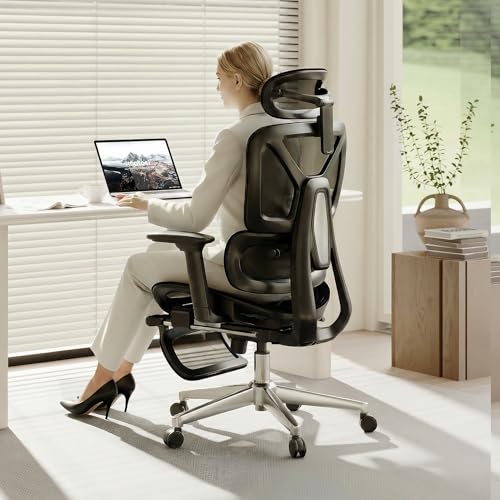
Where to Buy
Every pick below is sold on Amazon, where you can check the current price, configuration, and return terms before you buy. For a comfort-critical purchase, the return window matters — buy where trying the chair at your own desk is practical.
- FLEXISPOT ErgoX Premium Ergonomic Office Chair — Check on Amazon
- Ticova Ergonomic Office Chair — Check on Amazon
- SIHOO M18 Ergonomic Office Chair — Check on Amazon
- HON Ignition 2.0 Ergonomic Office Chair — Check on Amazon
- Steelcase Series 1 Ergonomic Office Chair — Check on Amazon
- Snailax Shiatsu Neck & Back Massager Chair Pad — Check on Amazon
In this guide
Quick Picks
| Pick | Badge | Why it earns its place |
|---|---|---|
| FLEXISPOT ErgoX Premium Ergonomic Office Chair | Best Overall | Dynamic lumbar support that follows your posture, with a five-level back and adjustable seat depth for a precise fit. |
| HON Ignition 2.0 Ergonomic Office Chair | Best Budget | Commercial mesh chair whose lumbar support encourages alignment, backed by a full warranty. |
| Ticova Ergonomic Office Chair | Best Premium | Lumbar support adjustable in height and depth, 3D armrests, and a pressure-spreading foam seat. |
| SIHOO M18 Ergonomic Office Chair | Best for Home Office | Adjustable lumbar support and headrest with a breathable mesh back and a wide cushion. |
| Steelcase Series 1 Ergonomic Office Chair | Best for Easy Setup | Weight-activated controls and adaptive bolstering support you automatically, with no dialing-in. |
| Snailax Shiatsu Neck & Back Massager Chair Pad | Best Add-On | A shiatsu massage pad with heat that turns a decent existing chair into a comfort station for breaks. |
Key Takeaways
- Lumbar support only helps where it touches: choose a chair whose support adjusts to the height — and ideally the depth — of your own lower back curve.
- Movement is the second support: a tilt that lets you shift and recline gently prevents the frozen posture that stiffens backs by afternoon.
- Seat depth and a waterfall front edge matter to your back more than cushion softness, because thigh pressure changes how your pelvis sits.
- Fit takes days to judge; use the return window and adjust one setting at a time.
- A chair supports comfort — it does not treat pain. Persistent or radiating pain belongs in a clinician’s office, and this guide’s picks are framed accordingly.
How These Picks Were Chosen
The pool was filtered for chairs with real lumbar engineering: adjustable lumbar height as a minimum, with preference for depth adjustment, dynamic support that follows posture, and seat designs that keep the pelvis neutral. Chairs with a fixed decorative lumbar bump were excluded, because a bump in the wrong place is worse than none — it pushes where your back does not curve and leaves the curve itself unsupported. Armrest adjustability mattered too, since shoulder tension travels downward and changes how you sit within the hour.
Testing and certification signals were weighed: BIFMA-tested chairs and makers who publish fit ranges and capacities earned preference, because comfort claims you cannot verify are just adjectives. The massage pad was included under a different standard — it is not a chair and is not presented as one — because many readers of this keyword own a structurally fine chair and are looking for comfort they can add to it, particularly heat and massage during breaks.
Throughout, the language standard is comfort and support. Manufacturers’ own phrases about relieving everyday muscle fatigue after long sitting are reported as such; nothing here promises diagnosis, treatment, or cure, because no chair can honestly promise those.
The 6 Best Best Work Chairs for Lower Back Pain — Reviewed

FLEXISPOT ErgoX Premium Ergonomic Office Chair
Our badge: Best Overall
The FLEXISPOT ErgoX Premium Ergonomic Office Chair leads this guide because its lumbar support is dynamic: instead of a pad fixed at one height, the support follows your posture as you shift between upright work and reclined thinking, and the back itself adjusts across five levels. Add adjustable seat depth — the fit detail that decides whether your pelvis can sit back into the support at all — a 3D headrest, 3D armrests, breathable mesh, and a nap footrest, and you have the most complete comfort system in this roundup, for users roughly 5’1″ to 6’2″ with a stated maximum of 400 lb.
Strengths
- Dynamic lumbar support tracks your back through posture changes instead of meeting it in one position only.
- Adjustable seat depth lets you sit fully back into the support without pressure behind your knees.
- Five-level back, 3D arms and headrest, and a footrest cover work, calls, and genuine breaks.
Trade-offs
- The fit takes an evening to dial in; impatient owners will underuse it.
- Recline and footrest need floor depth behind and in front of the desk.
- Premium position in the range.
| Color | Black |
| Size | Overall Depth 44″ |
| Weight | 38 pounds |
The ErgoX’s insight is that lower back comfort is a moving target. The curve of your back at 9 a.m., upright and fresh, is not your curve at 4 p.m., tired and leaning. Static supports are set for one of those moments; dynamic support stays in contact through both, which is why owners of this style of chair describe the end of the day differently. The seat depth adjustment deserves equal billing: if the seat is too deep, you cannot reach the backrest without slouching, and no lumbar system can help a back that never touches it.
FLEXISPOT builds the chair on a class 4 gas lift with premium materials and offers mesh airflow or a cushioned seat feel in the range, so the comfort system can be matched to your climate. For the worker whose back dictates their chair budget, this is the deliberate, invest-once answer.
Choose the ErgoX if your lower back is the reason you are shopping and you will invest the setup time. Skip it if you want automatic simplicity — the Steelcase below — or your workspace is a shallow nook.
Best for: All-day workers who want lumbar support that moves with them / Not suited for: Set-and-forget buyers or tight workspaces

Ticova Ergonomic Office Chair
Our badge: Best Premium
The Ticova Ergonomic Office Chair offers the other route to the same destination: a lumbar support you position precisely, adjustable in both height and depth, so it fills your back’s curve with exactly the prominence your body prefers. The seat is 3.4 inches of high-density foam in a W-shape with a waterfall edge that spreads pressure and keeps circulation moving in your thighs, the headrest is a large curved foam piece adjustable in height and angle, and the 3D armrests carry thick, soft padding. The back rocks to 130 degrees with adjustable resistance.
Strengths
- Two-axis lumbar adjustment fits the widest range of back curves precisely.
- W-shaped, waterfall-edge foam seat supports the pelvis evenly for long sits.
- Breathable, high-tensile mesh back keeps the support system cool.
Trade-offs
- Precision takes iteration; expect several days of small adjustments.
- Foam seat softens across years, unlike suspension systems.
- High-back recline needs depth behind the desk.
| Color | Black |
| Size | 70D x 26W x 54H cm |
| Weight | 17.5 Kilograms |
Depth adjustment is the connoisseur’s feature because backs differ in curvature, not just in height. A shallow curve wants a gentle presence; a deep curve wants real fill. Ticova lets you set both coordinates, and the difference between lumbar support that is present and lumbar support that is right is the difference between a chair you tolerate and a chair you seek out. The chair passed BIFMA testing and a static pressure test, and the maker’s return policy suits the try-and-tune process this chair invites.
Through a long day, the Ticova’s comfort is systematic: pelvis spread on the W-seat, lower back filled by the tuned pad, shoulders dropped onto the padded 3D arms, head met by the curved headrest only when you lean back to think. Each contact point does one job well, and the sum is a chair that long-hour workers consistently describe as disappearing.
Choose the Ticova if you want maximum personal control over your lumbar fit. Skip it if you prefer the chair to decide for you. Programmers and other long-shift workers will find kindred picks in Best Chairs For Computer Programmers.
Best for: Precise fitters whose back curve needs depth control / Not suited for: Buyers who want instant, automatic setup

SIHOO M18 Ergonomic Office Chair
Our badge: Best for Home Office
The SIHOO M18 Ergonomic Office Chair is the balanced comfort pick: adjustable lumbar support, an adjustable headrest, 2D armrests, a wide cushion, and a breathable mesh back, providing four support points for users roughly 5’6″ to 6’2″. It passed BIFMA testing and a static pressure test, supports up to 150 kg, and carries free replacement parts during its warranty period — the practical credentials behind its comfort claims.
Strengths
- Adjustable lumbar support positioned where your curve needs it.
- Wide cushion and breathable mesh suit long, warm workdays.
- Tested construction with parts support during the warranty.
Trade-offs
- Lumbar depth is not separately adjustable as on the Ticova.
- Shorter users may find the seat deep.
- Eight-step assembly, though straightforward.
| Color | Charcoal |
| Size | Pack of 1 |
| Dimensions | 27.5 x 21 x 11 inches |
| Weight | 31.526103466 pounds |
The M18’s comfort philosophy is coverage: head, back, hips, and hands each get a considered surface, and the lumbar support adjusts through the range where most backs curve. For the majority of home workers, that is the whole requirement — support in the right place, air moving across the back, a seat wide enough to change position in, and a tilt lock for the working angle. It is the chair to recommend when someone asks for a good back-friendly chair without a research project attached.
Its versatility across the household — work, study, gaming — also matters to backs, in an indirect way: a chair that fits its main user properly and gets used for everything is a chair whose settings stay dialed to that user, instead of being reset by a rotation of different furniture.
Choose the M18 if you want proven, adjustable lumbar comfort at the middle of the range. Skip it if your back needs depth-specific tuning — that is the Ticova’s specialty.
Best for: Home workers who want adjustable lumbar comfort without complexity / Not suited for: Users needing depth-adjustable lumbar support

HON Ignition 2.0 Ergonomic Office Chair
Our badge: Best Budget
The HON Ignition 2.0 Ergonomic Office Chair takes the commercial approach to back comfort: a mid-back mesh panel that promotes airflow, lumbar support designed to encourage alignment, and arms adjustable in height and width, on a chair that supports up to 300 lb and carries the HON Full Warranty. There is no depth dial and no dynamic mechanism — instead, there is a support shape refined across enormous numbers of office users, which is its own kind of evidence.
Strengths
- Alignment-focused lumbar support in a breathable mesh back.
- Commercial durability and a full warranty at a household position.
- Width-adjustable arms help different bodies share the chair.
Trade-offs
- Lumbar position is less personal than the adjustable leaders here.
- Mid-back height offers no head support.
- Plain, corporate styling.
| Color | Black |
| Size | Oversized |
| Dimensions | 28.5 x 27 x 44.5 inches |
The Ignition’s comfort case rests on breadth and honesty. Its standard tilt encourages the small movements that keep a back from stiffening, its mesh keeps summer workdays bearable in rooms without strong cooling, and its support encourages the alignment that most sitters drift out of by afternoon. For a first back-conscious chair — or a shared household chair where no single back can dictate the settings — it is the safest purchase in this guide.
Facilities buyers choose it because failure rates are low and the warranty is real; a home buyer inherits both. If your back needs are about everyday support rather than precise tuning, the Ignition delivers it without the flagship price or the flagship setup.
Choose the Ignition if you want dependable, alignment-minded support on a budget. Skip it if your back has already told you it needs personalized depth — believe it, and buy the Ticova or FLEXISPOT.
Best for: Budget and shared chairs that need honest, alignment-focused support / Not suited for: Backs requiring precise, personal lumbar tuning

Steelcase Series 1 Ergonomic Office Chair
Our badge: Best for Easy Setup
The Steelcase Series 1 Ergonomic Office Chair supports your back the way a good mattress supports sleep: without asking you to manage it. Weight-activated controls respond to your body, flexible edges and adaptive bolstering keep pressure off your forearms and thighs, and optional 4D arms and a headrest extend the system. It assembles in under two minutes, weighs 29 pounds, and this configuration is specified for carpet floors.
Strengths
- Automatic support that adapts as you shift, with no settings to get wrong.
- Adaptive bolstering gives a pressure-free sit across postures.
- Research-led design from a maker whose specialty is seating.
Trade-offs
- No manual lumbar depth control for those who need a specific fill.
- Carpet configuration only, in this listing.
- Restrained, professional styling.
| Color | Graphite |
| Size | Carpet (Pack of 1) |
| Dimensions | 23.75 x 27 x 41.25 inches |
| Weight | 29 pounds |
Steelcase’s contribution to back comfort is the removal of user error. Many chairs with excellent lumbar systems spend their lives misadjusted, because owners set them once, approximately, and never revisit them. The Series 1’s weight-activated approach means the support you get on a distracted Monday is the support the chair was designed to give. For shared chairs especially — where one user’s perfect settings are another’s problem — automatic adaptation is a genuine back feature, not a convenience.
The chair’s light weight and space-efficient frame suit home offices that reconfigure often, and its flexible seat edges quietly solve the thigh-pressure problem that changes pelvic position and, with it, lower back posture.
Choose the Series 1 if you want research-backed support with zero setup burden. Skip it if your back needs a specific, manually tuned lumbar depth.
Best for: Shared chairs and owners who want automatic, correct support / Not suited for: Precision tuners who need manual depth control
Snailax Shiatsu Neck & Back Massager Chair Pad
Our badge: Best Add-On
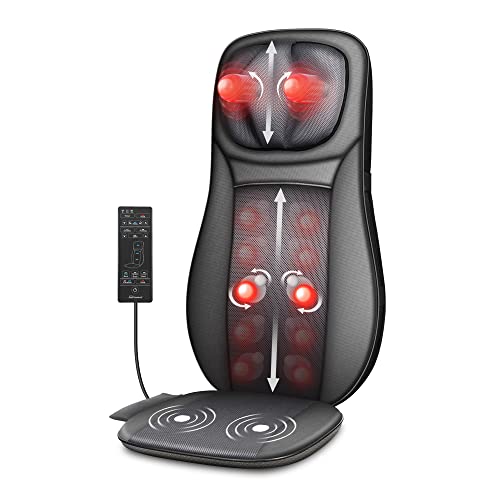
The Snailax Shiatsu Neck & Back Massager Chair Pad is not a chair, and this guide presents it as exactly what it is: an add-on that transforms a structurally sound existing chair into a comfort station. Four rotating shiatsu nodes travel the full back, upper back, or lower back, or hold on a spot; a rolling massage follows the spine’s curve with adjustable width; gentle heat and two levels of seat vibration complete the system; and the neck massage adjusts for users roughly 5’3″ to 6’3″. An integrated strap secures it to office chairs, recliners, sofas, and dining chairs, and the maker recommends sessions of up to 15 minutes, up to three times a day — guidance this guide repeats because comfort tools have sensible limits.
Strengths
- Targeted lower-back shiatsu with spot mode, heat, and rolling massage in one pad.
- Fits most chairs with a securing strap; moves between home and office easily.
- Adjustable neck massage and a detachable flap let you soften or intensify the contact.
Trade-offs
- It is a break-time comfort device, not a work chair or a treatment; your chair still needs to fit you.
- Corded power means an outlet within reach of the chair.
- Deep-kneading intensity is too much for some users even with the comfort flap.
| Color | Grey and Black |
| Size | 1 Count (Pack of 1) |
| Dimensions | 31.889763747 x 17.322834628 x 6.8897637725 inches |
| Weight | 14.4843706134 pounds |
The pad’s honest role in a back-comfort strategy is the break. Fifteen minutes of heat and kneading at lunch, in the chair you already own, can reset how the afternoon feels — the manufacturer frames it as relieving everyday muscle fatigue after work and long sitting, and that is the right scale of claim. Paired with a chair that fits — any of the five above — it covers the two halves of comfort: support while you work, and deliberate relaxation while you do not.
It also serves the household beyond the desk: the same pad straps to the living-room recliner in the evening. For a reader whose chair is fine but whose back wants more, this is the purchase that respects both facts.
Choose the Snailax if your chair fits you and you want heat and massage for breaks. Skip it as a substitute for a chair that does not fit — fix the chair first. More add-on comfort ideas are compared in Best Chairs For Neck Support.
Best for: Owners of well-fitting chairs who want heat and shiatsu for breaks / Not suited for: Anyone expecting a pad to fix a badly fitting chair
Comparison Table
| Pick | Color | Dimensions | Weight | Check price on Amazon |
|---|---|---|---|---|
| FLEXISPOT ErgoX Premium Ergonomic Office Chair | Black | 10.0787401472 x 10.0787401472 x 20.6299212388 inches | 38 pounds | Check price on Amazon |
| Ticova Ergonomic Office Chair | Black | 27.165354303 x 9.842519675 x 20.866141711 inches | 17.5 Kilograms | Check price on Amazon |
| SIHOO M18 Ergonomic Office Chair | Charcoal | 27.5 x 21 x 11 inches | 31.526103466 pounds | Check price on Amazon |
| HON Ignition 2.0 Ergonomic Office Chair | Black | 28.5 x 27 x 44.5 inches | — | Check price on Amazon |
| Steelcase Series 1 Ergonomic Office Chair | Graphite | 23.75 x 27 x 41.25 inches | 29 pounds | Check price on Amazon |
| Snailax Shiatsu Neck & Back Massager Chair Pad | Grey and Black | 31.889763747 x 17.322834628 x 6.8897637725 inches | 14.4843706134 pounds | Check price on Amazon |
How to Choose the Best Work Chairs for Lower Back Pain
Find your curve before you shop
Sit against a wall or lie on the floor and notice the space behind your lower back: that hollow is what a lumbar support must fill. Shallow curve, gentle support; deep curve, more prominent support. Then shop for adjustability that can reproduce your shape — height adjustment at minimum, depth if your curve is pronounced. A chair whose support can be positioned is a chair that can be right; a fixed bump is a gamble on the designer’s average back being yours.
Seat depth decides whether support can work
If the seat is too deep, you will perch forward to spare your knees, and your back will never meet the lumbar support at all. If it is too shallow, your thighs hang unsupported and your pelvis rolls. The right depth leaves a fist’s clearance behind your knees while your back rests fully against the chair. Adjustable seat depth — the FLEXISPOT’s quiet superpower — removes the guesswork for bodies at the ends of the range.
Movement is a feature, not a luxury
Backs stiffen in stillness. A chair with a well-tuned tilt — one that lets you lean back with gentle resistance, shift forward for intense work, and lock only when you choose — keeps your posture varying through the day, and varied posture is comfortable posture. When you test a chair, test its in-between positions, not just upright and fully reclined; your day is lived in between.
Armrests are back equipment too
Unsupported arms hang from your shoulders, and shoulder tension rewrites your sitting posture within the hour — usually into a slump that undoes the lumbar support below. Armrests should meet your elbows with your shoulders fully relaxed, and adjust in height at least, ideally in width and depth as well. The 3D arms on the Ticova and FLEXISPOT exist because this contact point matters that much.
Judge over days, and keep the box
A back-critical chair cannot be judged in a showroom minute. Buy where the return window is real, set the chair up in sequence, change one adjustment at a time across several days, and let your back’s end-of-day report make the decision. If a chair cannot be tuned to you within that honest trial, returning it is the system working — the next chair on this list may fit your curve better.
How Should You Set Up Your Chair and Desk for Back Comfort?
Set the chair first, in order: feet flat on the floor; seat depth with a fist behind your knees; lumbar height filling the curve above your belt line, and depth until the support feels like a resting hand; armrests at relaxed-elbow height; tilt tension so you can lean with gentle pressure. Then set the desk to the chair — screen top near eye level so your head is not pulling your back forward, keyboard where your forearms rest level, and frequently used items inside the arc you can reach without twisting.
Then build the day around movement: stand or walk briefly every half hour or so, change your recline angle between tasks, and use a timed break — the Snailax pad’s 15-minute session is a natural one — to reset. The chair is the foundation, but the habit is the house; the most supportive chair ever made still asks its owner to move.
Problem: The lumbar pad feels like a fist in your back — Reduce its depth if adjustable, or lower it slightly; support should fill your curve, not push you out of the seat. If it cannot soften, the chair’s support shape does not match your back.
Problem: You slide forward and slump by afternoon — Check seat depth and tilt tension. A too-deep seat or a tilt that dumps you forward will slump anyone; a slight rearward seat angle and correct depth restore a neutral pelvis.
Problem: Your back is fine at work but stiffens in the evening — Your sitting day may be well supported but unbroken. Add scheduled standing and walking breaks; chairs support posture, and movement does the rest.
Problem: The headrest pushes your head forward — Raise it and angle it back so it meets you only in recline. A headrest that touches you while typing is set wrong, whatever the chair.
Problem: One side of your back tires more than the other — Look at your desk, not just your chair: a monitor off-center, a phone cradled habitually, or a wallet in a back pocket all twist a sitting day. Center the screen and empty the pockets.
What a Chair Can and Cannot Do for Your Back
Honesty serves buyers better than hype in this category, so here is the plain version. A well-fitted chair can remove the furniture as a source of strain: it can support your curve, spread pressure, keep your feet grounded and your arms weightless, and invite the movement that keeps sitting tolerable. It cannot strengthen muscles, correct a medical condition, or substitute for activity, sleep, and — when pain persists, radiates, or follows an injury — professional assessment. Any listing that promises to cure back pain is selling you a story, and the chairs in this guide were chosen partly because their makers describe comfort in supportable terms.
The productive way to think about the purchase is as one leg of a three-legged stool: chair fit, work habits, and general movement. This guide can sell you the first leg with confidence — the picks above are genuinely good at it. The other two legs are free, and they matter just as much. Readers building the full comfort picture may also find Best Chairs For Bad Posture useful, since posture habits and chair fit are two names for the same daily negotiation.
The Afternoon Test: Judging a Chair by 4 p.m.
When you trial a chair, ignore the first impression and collect the afternoon evidence. At 4 p.m., ask four questions. Am I sitting the way the chair intends, or have I escaped its design — perched, slumped, or sitting sideways? Where exactly is my discomfort, in the vocabulary of places: lower back, hips, shoulders, backs of thighs? Did I change position because I wanted to, or because I had to? And how do I feel in the first minute after standing — loosening up, or unfolding?
A chair that passes the afternoon test four days running is your chair, whatever its specifications said. A chair that fails it in the same place every day is telling you which adjustment — or which different chair — you need. Keep notes; backs are eloquent but memories are short, and the return window rewards the buyer who can name the problem precisely.
The Supporting Cast: Footrests, Monitor Height, and the Floor
A chair does not sit in a vacuum, and three companions decide whether its support survives contact with your real desk. The first is what your feet rest on: feet that dangle or perch change your pelvis, and your pelvis changes your back, so a floor at the right height — or a footrest where the desk is tall — is back equipment. Two picks in this guide, the FLEXISPOT and the Hbada pattern of chairs, build footrests in for breaks, but the working-hours version is simpler: flat feet, fully supported, all day.
The second companion is the screen. A monitor set too low pulls your head forward, and your lower back pays for your head’s position within the hour, because the spine is one structure making one set of compromises. Raise the screen until its top sits near eye level — with books, a stand, or an arm — and the chair’s lumbar work stops being undermined from above. The third companion is the floor itself: a chair that cannot roll freely gets dragged and twisted into position dozens of times a day, and every drag is a small rotation your back absorbs. The right casters for your floor, or a rug or mat chosen for rolling as Best Rugs For Desk Chairs explains, protect your back as surely as they protect the floorboards.
Reading Your Own Sitting: A Self-Audit in One Workday
Before you spend anything, spend one workday observing the sitter you actually are, because the best chair for a lower back depends on habits no listing can see. Notice, at three points in the day, where your body has drifted: most people discover they perch forward during intense work, slump sideways during calls, and lean on one armrest while reading — three different chairs’ worth of demands in a single day. Notice what your current chair does during each drift: does it follow you, fight you, or abandon you? And notice the transitions: how you sit down (most people drop the last inches, which is why dynamic load matters more than static ratings) and how you stand (arms pushing where, back unfolding how).
Write the three observations down and bring them to the reviews above. The percher needs seat depth discipline and a lumbar support that stays in contact when they return to the backrest. The call-slumper needs armrests that adjust in width and a tilt that makes reclined calls a supported posture instead of a collapse. The one-arm leaner needs symmetric, sturdy arm support and a back that does not punish asymmetry. Every back in this guide’s audience will recognize itself in one of those portraits — and the chair that matches the portrait is a better purchase than the chair that merely tops a list, including this one.
When Two People Share One ‘Back Chair’
Homes increasingly contain two workers and one good chair, and the negotiation deserves a strategy rather than a daily coin flip. If your schedules differ, the chair can genuinely serve both — provided its fit philosophy tolerates resetting. Automatic chairs reset themselves; manual chairs need a household convention, such as photographed settings or marked positions, so each user restores their fit in under a minute. If your schedules collide, the honest answer is two chairs at different levels: the precision chair for the back that needs it most, and a sound, simpler chair — the HON pattern — for the other desk. What does not work is one partner enduring the wrong chair in silence; backs keep receipts, and the resentment arrives with interest. Treat the second chair, when it comes, as the success of the system rather than an extravagance, and buy it by the same fit-first rules as the first.
Travel, Hot Desks, and the Second Chair Problem
Hybrid workers increasingly split their week between a home desk and an office hot desk, and their backs notice the discontinuity. You cannot carry your tuned chair with you, but you can carry its lessons: photograph your home chair’s settings, learn the two or three adjustments that matter most to your back — usually lumbar height, seat height, and arm height — and spend the first two minutes at any unfamiliar chair reproducing them approximately. Most office chairs yield to that much attention. For the home base, the lesson runs the other way: because you sit in it fewer days, resist the temptation to accept a mediocre fit on the grounds that it is only part-time. Part-time sitting in a wrong chair produces full-time consequences on exactly the same schedule.
The Chair Is a Habit Machine
Finally, consider what your chair trains. A chair that rewards sitting back — support that meets you there, arms that hold the reclined book, a tilt that makes leaning pleasant — trains a varied day without a single resolution. A chair that only tolerates one upright position trains endurance, and endurance is what backs file complaints about. When you choose among the picks in this guide, you are not only choosing foam, mesh, and mechanisms; you are choosing the posture habits your next thousand workdays will rehearse. Choose the chair that makes the good habits the easy ones.
A Note on Standing Up
The last test of a back chair happens standing up. A chair at the right height, with armrests positioned to take your weight, lets you rise in one smooth motion that your back barely notices. A chair too low, too deep, or too soft turns every rise into a small lift performed by your spine. When you trial the picks in this guide, stand up from them deliberately and judge that moment too — you will perform it thousands of times, and your back keeps the total.
Building the Rest of the Back-Friendly Desk
The chair carries most of the load, but the desk around it votes too. A monitor at eye level ends the forward-head lean that no lumbar support can out-argue; a keyboard at elbow height keeps your shoulders out of your ears; and a footrest — even a sturdy box — lets shorter sitters keep their feet planted without dangling pressure behind the knees. Add a sit-stand rhythm if your desk allows it, not because standing is magic but because variety is: the back that changes position every half hour complains less than the back frozen in even the best chair. None of this replaces the chair decision; all of it multiplies the chair’s benefit, which is why the shoppers who report the happiest backs tend to have arranged the whole station, not just bought a seat.
Common Buying Mistakes
Buying the softest seat in the store
Plush feels wonderful for ninety seconds and lets your pelvis roll and slump for eight hours. Supportive, pressure-spreading seats — the W-shaped foam and dynamic systems here — win by afternoon, which is when backs vote.
Accepting a fixed lumbar bump
If the support cannot move to your curve, it is decoration. Height adjustment is the minimum; depth or dynamic movement is better. A bump in the wrong place is worse than an honest flat back.
Ignoring seat depth
The most skipped specification in chair buying decides whether your back ever reaches the support. Measure, adjust, or choose a chair that adjusts — in that order.
Expecting the chair to do everything
A perfect chair under a badly set desk, in an unbroken sitting day, still produces a stiff human by Friday. Set the desk to the chair, and move on schedule.
Keeping a chair your back rejects
Return windows exist for bodies, not just defects. If a week of honest tuning does not convince your back, exchange the chair. Loyalty to a purchase helps no one’s spine.
Final Recommendation
For most readers, the FLEXISPOT ErgoX Premium Ergonomic Office Chair is the strongest answer: dynamic lumbar support, adjustable seat depth, and a complete fit system that keeps your lower back supported as your posture changes through the day. If you prefer to set your support precisely and leave it, the Ticova is the connoisseur’s alternative — compare it through its Check on Amazon listing. On a budget, the HON Ignition delivers honest alignment support, and if your current chair already fits, the Snailax pad adds the break-time half of comfort. Buy the fit, tune it patiently, move often — and let a clinician, not a listing, handle anything beyond comfort.
Frequently Asked Questions
What type of chair is best for lower back comfort?
A chair whose lumbar support adjusts to your back’s curve — in height at minimum, and ideally in depth or dynamically — with a seat depth that lets you sit fully back into that support, and a tilt that encourages small movements. The FLEXISPOT and Ticova in this guide represent the dynamic and the precision approaches respectively.
Is a firmer or softer seat better for my back?
Supportive beats soft. A seat that spreads pressure and holds your pelvis neutral — like a W-shaped foam seat or a well-tensioned mesh — keeps your lower back in its supported position through the day. Very soft seats feel kind initially and let posture collapse gradually, which backs notice by afternoon.
How should lumbar support be positioned?
It should fill the inward curve of your lower back, roughly at and just above belt level, with a pressure that feels like a resting hand — present, not pushing. Set the height first, then the depth if your chair offers it, and judge by how your back feels at the end of a full session, not the first minute.
Can a massage chair pad replace a good chair?
No. A pad like the Snailax adds heat and massage for breaks, which many people find genuinely relaxing for everyday muscle fatigue, but it cannot correct a chair that fits badly. Fit the chair first; add the pad for the recovery half of the day if you enjoy it.
How long should I trial a chair before deciding?
Give it the better part of a week of real work, adjusting one setting at a time. Backs need days to report honestly, and most early problems are a single mis-set adjustment. Keep the packaging and buy where the return window comfortably covers that trial.
When should I see a professional instead of buying a chair?
When pain is persistent, worsening, radiating into a leg, accompanied by numbness or weakness, or follows an injury — and whenever it worries you. A chair is a comfort purchase; those symptoms deserve assessment in their own right, and no furniture decision should delay it.


