Disclosure: As an Amazon Associate, dailyhomedecorating.com earns from qualifying purchases. Links on this page are affiliate links; they cost you nothing extra. Prices and availability change often, so check the current Amazon listing before you buy.
This wall shelves review starts with a simple observation: a wall shelf is the hardest-working few inches in a home. It holds the books you are actually reading, the plant that softens a hard corner, the mugs that no longer fit in the cupboard and the photograph that makes a rental feel owned. Yet for something so simple — a board, a way of fixing it to a wall, and a finish — wall shelves vary enormously in how solid they feel, how honestly they age and how forgiving they are of imperfect walls and first-time installers. This review works through the category properly: what wall shelves are, how the main mounting styles differ, how they perform room by room, where they genuinely shine, where they honestly disappoint, and which specific sets earn their place as prose-first picks you can shortlist with confidence.
Key Takeaways
- The mounting system matters more than the board. A shelf is only ever as strong as its fixing into the wall, and studs beat anchors every time.
- Wall shelves divide into floating, visible-bracket, rail and corner styles, and each suits a different room and load.
- They excel at display, light storage and small-room organisation, and they struggle with truly heavy, dense loads.
- Board material and finish decide longevity: solid-feel wood and sealed finishes shrug off daily life better than thin printed wraps in steamy rooms.
- Installation is a one-afternoon skill. Done carefully — level, stud-first, correct anchors — it is the difference between a shelf you trust and one you tiptoe around.
The short verdict: wall shelves suit almost any home that has run out of surfaces before it has run out of things, and they reward buyers who choose the mounting style for the wall and the load, not just the photograph. They do not suit anyone hoping to hang a library, a microwave or a television from two screws in plasterboard, and no honest review should pretend otherwise.
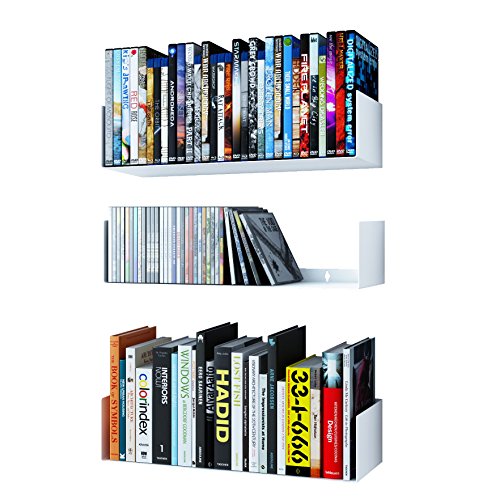
What Wall Shelves Are and Where They Fit in This Wall Shelves Review
A wall shelf is any horizontal storage surface fixed directly to a wall rather than supported by a frame standing on the floor. That sounds obvious, but the definition matters because it explains the whole category: with no legs and no carcass, every bit of strength comes from the wall fixing, and every bit of visual effect comes from the board and what you put on it. A bookcase carries its load down to the floor; a wall shelf negotiates with the wall itself, which is why the conversation about wall shelves is always, underneath, a conversation about studs, anchors and honest loads.
The first family is the floating shelf, where a concealed bracket frame hides inside or behind the board so the shelf appears to hover. Floating shelves are the default choice for modern living rooms, bedrooms and bathrooms because the clean line suits display: plants trail, frames lean, and nothing visual interrupts the arrangement. The second family is the visible-bracket shelf, the traditional board on metal or wooden brackets. Brackets look honest and industrial or farmhouse depending on finish, they are generally the most forgiving style to install strongly, and they suit kitchens, hallways and utility spaces where function leads. The third family is the rail or track system, uprights fixed to the wall with adjustable brackets that can move as needs change — the closest wall shelves come to a bookcase in flexibility. Finally there are corner shelves, which turn dead corners into display, and picture ledges, shallow shelves with a lip made for frames and art.
Where do wall shelves fit in a home? Everywhere a surface is missing. Above a desk they hold reference books and a lamp. In a bathroom they replace the cupboard you do not have. In a kitchen they keep everyday dishes and jars within reach and free a run of worktop. In a hallway they catch keys and post. In a child’s room — mounted well out of climbing reach and never above the bed — they hold the bedtime story rotation. The pattern is consistent: wall shelves are light-to-medium storage and display, deployed in the gaps furniture cannot reach.
It is equally useful to say where they do not fit. They are not a substitute for a wardrobe, a pantry or a garage rack. Dense loads — long runs of hardback books, stacks of stoneware, cast iron, appliances — concentrate weight in a way wall fixings dislike, and those loads belong on furniture or on properly engineered shelving fixed into masonry or multiple studs by someone confident in the work. A good wall shelves review should leave you knowing both sides of that line, because most disappointment with wall shelves comes from asking them to cross it.
In this guide
Design, Build and How a Wall Shelf Is Put Together
Start with the board. Solid wood boards feel substantial, can be sanded and refinished, and age with character; they are also heavier, which the fixing must allow for. Engineered boards — a manufactured core with a veneer or laminate skin — are lighter, flatter and more consistent in colour across a set, which is why most multi-shelf sets use them. Their weakness is the edge: chip the skin or let steam swell the core and the board rarely recovers, so engineered shelves belong in dry rooms or in bathrooms with decent ventilation. Metal and glass shelves occupy the modern end of the category; glass in particular is a display material, lovely for plants and perfume bottles, unforgiving of clutter.
Next, the fixing, because this is where quality actually lives. A floating shelf typically uses a bracket frame with horizontal rods that the board slides onto, locked by small set screws. Better frames feel rigid in the hand, have well-spaced fixing holes so you can hit studs, and include hardware for more than one wall type. A visible-bracket shelf depends on the bracket’s triangulation and the screws you choose; a flimsy bracket flexes, and a flexing bracket makes even a fine board feel cheap. Rail systems depend on the uprights being fixed into studs along their length. In every style, the screws and plugs included in the box are a clue to the maker’s honesty: sets that include proper wall plugs for masonry and guidance for stud walls are sets designed by people who expect their shelves to stay up.
Finish is the third build decision. Painted and lacquered finishes wipe clean and suit kitchens and bathrooms. Oiled and waxed wood looks warm and can be refreshed at home, but marks more easily. Printed wood-effect wraps have improved enormously and can look convincing at a glance, though they read as flat under close inspection and cannot be repaired. Whatever the finish, run a hand along the underside and edges before you hang a shelf: rough edges and thin finish at the back are where moisture and dust do their slow work.
Setup, at a glance, follows the same rhythm for every style in this review. Decide the height by what the shelf will hold and who must reach it. Find the studs. Mark level. Fix the bracket or board. Load gradually and sensibly. The detailed, safety-first version of that process lives in our installation guide, linked below, and it is worth reading before your first hole rather than after your first mistake.
How This Review Judged Wall Shelves
A review of a category this broad needs stated criteria, or it becomes a pile of opinions. Five tests shaped every judgement in this wall shelves review. The first is fixing confidence: how the shelf attaches, whether the bracket or frame feels engineered rather than decorative, and whether the included hardware respects more than one wall type. The second is board honesty: what the shelf is actually made of, how the edges and underside are finished, and whether the surface will survive the room it is marketed for. The third is daily usability: whether objects sit securely, whether the depth suits real things rather than ornaments only, and whether the shelf invites use or demands tiptoeing.
The fourth test is ageing. Shelves are semi-permanent; you will look at them for years. Finishes that can be wiped, refreshed or repaired score well; finishes that fail all at once — peeling wraps, swelling cores, rusting brackets in steam — score badly, however pretty the first photograph. The fifth test is installation forgiveness: clear instructions, sensible hole spacing that can find studs, and hardware that does not assume every wall is identical. A shelf that only works in perfect conditions is a shelf designed for a showroom, not a home.
Two things this review deliberately does not do. It does not print load figures for specific products, because a shelf’s safe load depends on your wall, your fixings and your installation far more than on a number in a listing — treat capacity qualitatively, keep loads sensible, and let studs and correct anchors do the work. And it does not treat styling photographs as evidence. Every set looks good holding three objects in daylight; the judgements below are about brackets, boards and finishes, which is where shelves actually succeed or fail.
Performance in Real Use, Room by Room
Living Room Display and Books
The living room is where wall shelves earn their reputation. A run of two or three shelves above a sofa or in an alcove does what no sideboard can: it gives books, plants, ceramics and art a composed, architectural home and leaves the floor clear, which makes the whole room feel larger. In practice, mixed loads work best — a short stack of books lying flat, a plant with room to trail, one or two objects with breathing space. Long unbroken rows of upright hardbacks are the living-room load that tests fixings most, so keep book runs modest, spread them across fixings, and let furniture carry the library. Styling-wise, wall shelves reward restraint: the shelf disappears when the arrangement has rhythm, and shouts when every inch is filled.
Kitchen Storage and Everyday Reach
In kitchens, wall shelves trade cupboard doors for speed. Everyday plates, bowls, glasses and jars live in the open, visible and grabbable, and cooking flows faster for it. The honest costs are dust and grease: open shelves near a hob need a wipe-down rhythm, and delicate items belong elsewhere. Bracket shelves and rail systems suit kitchens best because they tolerate frequent loading and the occasional knock, and a shelf with a rail or lip keeps jars honest on a busy morning. Keep the heaviest stoneware low or in cupboards; wall shelves should carry the daily rotation, not the full crockery archive.
Bathroom and Laundry Duty
Bathrooms are where wall shelves solve a real problem — most have almost no storage — and where material choice matters most. Steam is relentless, so sealed finishes, metal, or wood sets designed for bathroom use cope best, and a shelf with a towel bar underneath doubles the function of the same fixings. Decant toiletries into a tray or basket on the shelf and the room calms down instantly. In laundry rooms, shelves above machines hold detergents and folded linen within reach; again, keep containers closed, loads modest, and fixings appropriate for a wall that may be tiled, which needs the right drill bit and patience rather than force.
Bedroom, Hallway and Desk Duty
In bedrooms, a shelf can replace a nightstand in a small room, hold a lamp and the current book, and free the floor for a cleaner look — but never mount a shelf above the bed itself, where anything falling lands on a sleeping person. Hallway shelves work as a landing strip: a shallow shelf for keys, post and sunglasses, ideally paired with hooks below. Above a desk, shelves are close to perfect — reference books, stationery and a plant at eye level, worktop clear — provided the lowest shelf sits high enough that you never crack your head standing up. Across all these rooms the pattern from this wall shelves review holds: light, daily, reachable things thrive on wall shelves; heavy, rare or precious things mostly do not.
The Picks in Detail
Six sets anchor this review. Each is presented prose-first with a pick slot, so the publishing step can attach verified listings later; judge them here on style, fixing approach and room fit, and always check the current listing before you buy.
BAYKA Wall Shelves
The BAYKA Wall Shelves are rustic wood wall shelves with a warm, farmhouse-leaning finish and visible bracket styling. In daily use they behave the way this style of shelf should: the board gives you a true, flat display surface, the mounting system decides how confident the shelf feels once loaded, and the finish decides how well it survives the room it lives in. Treat it as a mid-tier option and judge it on bracket quality, board feel and the hardware in the box rather than on styling photos alone.
Best for: living rooms, bedrooms and entryways where the shelf itself is part of the decor. Not suited for: bathrooms with heavy steam unless the finish is sealed and the room is ventilated well. As with every shelf in this guide, mount it into studs wherever you can, or use the correct anchors for your wall type, and keep the load sensible and qualitative — display and everyday storage, not a warehouse.

Wallniture Wall Shelves
The Wallniture Wall Shelves are practical solid-feel wood shelves, including kitchen and bathroom sets with a towel bar underneath. In daily use they behave the way this style of shelf should: the board gives you a true, flat display surface, the mounting system decides how confident the shelf feels once loaded, and the finish decides how well it survives the room it lives in. Treat it as a mid-tier option and judge it on bracket quality, board feel and the hardware in the box rather than on styling photos alone.
Best for: kitchens, bathrooms and laundry rooms that need storage and a hanging rail in one footprint. Not suited for: anyone chasing a completely invisible, hardware-free floating look. As with every shelf in this guide, mount it into studs wherever you can, or use the correct anchors for your wall type, and keep the load sensible and qualitative — display and everyday storage, not a warehouse.

SRIWATANA Wall Shelves
The SRIWATANA Wall Shelves are lightweight wood floating shelves with a simple, clean profile that suits small walls. In daily use they behave the way this style of shelf should: the board gives you a true, flat display surface, the mounting system decides how confident the shelf feels once loaded, and the finish decides how well it survives the room it lives in. Treat it as a entry-tier option and judge it on bracket quality, board feel and the hardware in the box rather than on styling photos alone.
Best for: small rooms, renters styling a nook, and light display such as plants and paperbacks. Not suited for: heavy hardback runs or stoneware, which belong on stud-mounted shelving or furniture. As with every shelf in this guide, mount it into studs wherever you can, or use the correct anchors for your wall type, and keep the load sensible and qualitative — display and everyday storage, not a warehouse.
AMADA Wall Shelves
The AMADA Wall Shelves are floating shelves that include storage-minded variants such as a small drawer for clutter control. In daily use they behave the way this style of shelf should: the board gives you a true, flat display surface, the mounting system decides how confident the shelf feels once loaded, and the finish decides how well it survives the room it lives in. Treat it as a mid-tier option and judge it on bracket quality, board feel and the hardware in the box rather than on styling photos alone.
Best for: entryways and bathrooms where small loose items need to disappear, not just display. Not suited for: open, gallery-style display where a drawer front breaks the line you want. As with every shelf in this guide, mount it into studs wherever you can, or use the correct anchors for your wall type, and keep the load sensible and qualitative — display and everyday storage, not a warehouse.

Love-KANKEI Wall Shelves
The Love-KANKEI Wall Shelves are rustic floating shelves with a torched-wood look that reads warm against white and grey walls. In daily use they behave the way this style of shelf should: the board gives you a true, flat display surface, the mounting system decides how confident the shelf feels once loaded, and the finish decides how well it survives the room it lives in. Treat it as a entry-tier option and judge it on bracket quality, board feel and the hardware in the box rather than on styling photos alone.
Best for: farmhouse, rustic and warm-modern rooms, and plant-and-frame styling. Not suited for: sleek minimalist rooms where a heavily grained finish fights the scheme. As with every shelf in this guide, mount it into studs wherever you can, or use the correct anchors for your wall type, and keep the load sensible and qualitative — display and everyday storage, not a warehouse.
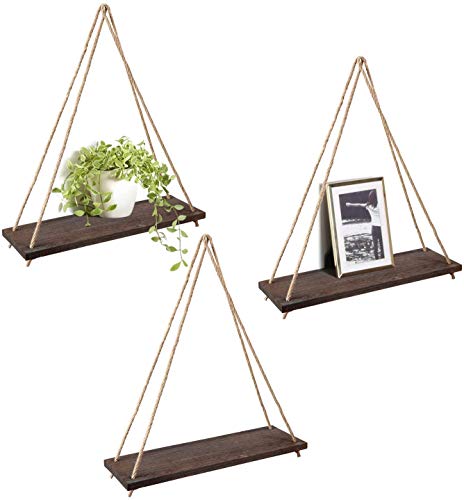
Mkono Wall Shelves
The Mkono Wall Shelves are wall-mounted wood shelves with a decorative, slightly boho feel, often styled with plants. In daily use they behave the way this style of shelf should: the board gives you a true, flat display surface, the mounting system decides how confident the shelf feels once loaded, and the finish decides how well it survives the room it lives in. Treat it as a entry-tier option and judge it on bracket quality, board feel and the hardware in the box rather than on styling photos alone.
Best for: plant shelves, bedroom corners and reading nooks that need charm as much as storage. Not suited for: utility storage in garages or workshops, where plainer heavy-duty shelving fits better. As with every shelf in this guide, mount it into studs wherever you can, or use the correct anchors for your wall type, and keep the load sensible and qualitative — display and everyday storage, not a warehouse.
Strengths and Trade-Offs
Strengths
- They use vertical space that furniture cannot reach, adding storage without taking floor area — decisive in small rooms and rentals with limited layouts.
- They make a room feel composed. A well-arranged shelf run reads as architecture, giving books and objects a deliberate home instead of surface clutter.
- They are adaptable. Rearrange the objects and the room changes character in minutes, with no new furniture and no cost beyond an afternoon.
Trade-offs
- Everything on open shelves is on display, including the dust. Open storage needs a light, regular wipe-down, especially in kitchens and hallways.
- Capacity is honestly limited. Wall shelves are light-to-medium duty; asking them to carry dense, heavy loads is how shelves sag, tilt or fail.
- Installation is permanent-ish. Holes can be filled, but wall shelves ask more commitment than a freestanding unit you can simply move.
How Wall Shelves Compare With the Alternatives
Against a bookcase, wall shelves win on space and looks and lose on capacity and forgiveness: a bookcase carries far more, hides clutter behind its own structure, and can move house with you, while shelves keep floors clear and rooms light. Against cupboards and cabinets, shelves win on speed of access and cost, and lose on dust protection and visual calm. Against picture ledges, general wall shelves are the more flexible tool, while ledges are better purely for art. The table below summarises the comparison that runs through this wall shelves review.
| Option | Best at | Weakest at | Choose it when |
|---|---|---|---|
| Floating wall shelves | Clean display, small rooms | Heavy loads | Looks lead and loads are light |
| Bracket wall shelves | Honest strength, kitchens | Minimalist looks | Function leads and walls vary |
| Bookcase | Capacity, books | Floor space | You own a real library |
| Wall cupboard | Hidden storage | Access speed, openness | Clutter must disappear |
Most real homes end up mixing all four, and that is the healthiest conclusion a review can reach: shelves for the daily and the beautiful, furniture for the heavy and the hidden.
Styling Wall Shelves So They Look Intentional
Because this is a review of how shelves live, not just how they fix, styling deserves its own section. The arrangements that work share three habits. First, they group: objects in small clusters with space between them read as composed, while an even spread of single items reads as storage that escaped. Second, they vary height and depth — a lying stack of books, something tall, something trailing — because the eye reads rhythm, not inventory. Third, they repeat one material or colour across the run, a thread of wood, ceramic or green that ties separate shelves into one idea.
The arrangements that fail share habits too. Filling every inch turns display into overflow. Lining up identical small objects at identical spacing creates a shop shelf in the worst sense. And placing the most precious item at the shelf’s front edge, above a hard floor, is a risk no photograph justifies. Work in odd-numbered groups, leave genuine empty space, keep fragile things back from edges and out of reach of children and pets, and step across the room to judge the result — shelves are read from a distance, so style them from one.
Seasonal flexibility is the quiet reward. The same shelf that holds summer plants and paperbacks can hold candles and greenery in winter, and a hallway shelf can rotate from sunglasses to scarves without a single new fixing. That adaptability is a large part of why this review rates the category so highly for renters and small homes: the hardware stays, the room evolves.
Who Should Buy Wall Shelves — and Who Should Skip Them
Buy wall shelves if your rooms have run out of surfaces, if you rent and need storage that reads as intentional rather than improvised, if you are styling a living room, bathroom or kitchen around display and daily reach, or if a small room needs storage that keeps the floor visibly clear. Buy them, too, if you enjoy arranging objects — shelves reward people who like to curate, and they make that hobby part of the room.
Skip them, or at least pause, if the load you have in mind is genuinely heavy, if your walls are in poor condition and cannot take fixings confidently, if you hate visible objects and dusting in equal measure, or if the only available wall is above a bed, a cot or a sofa where people sleep. In those cases a bookcase, a cupboard or a different wall is the honest answer, and our linked guides below explore each of those routes.
Before you buy, run this checklist. Measure the wall and the objects, not just the gap. Identify your wall type and where the studs run. Decide the mounting style for the load, not the photograph. Confirm the set includes hardware appropriate to your wall, or plan to buy the correct anchors separately. Check the finish against the room’s moisture and sunlight. And read the installation guide first, so the shelf you choose is one you can actually hang well.
Setup, Care and Maintenance Essentials
Setup quality decides everything, so the essentials bear repeating. Always fix into studs where you can; where you cannot, use anchors genuinely rated for the wall type — toggle-style anchors for hollow plasterboard, proper plugs for masonry — and never hang anything heavy on bare plasterboard alone. Never mount shelves above a bed or a cot. Check for hidden cables and pipes before drilling, keep the shelf level, and load it gradually, watching for any tilt or movement in the first days.
Care is light but real. Dust shelves and objects together on a regular rhythm so neither gets ahead of you. Wipe kitchen shelves more often, because grease travels. Keep bathroom shelves ventilated and dry containers before replacing them. Once or twice a year, check fixings for movement, confirm set screws on floating brackets are snug, and touch up finishes before small marks become permanent. Treated this way, a decent set of wall shelves is a decade-long fixture, not a seasonal experiment.
Final Verdict
This wall shelves review lands where most honest testing lands: wall shelves are one of the best value-for-space upgrades in a home, provided you respect what they are. Choose the mounting style for your wall and load, buy the best bracket and board your tier allows, install stud-first and level, and style with restraint. Do that, and the six picks above — and the wider category they represent — will quietly organise and elevate room after room. Ask them to be a library, a pantry and a climbing frame, and no brand can save the idea. The shelf is simple; the judgement is the product.
If you take only three habits from this review, take these. First, plan the fixing before the shelf: know your wall, find your studs, and let that knowledge choose the style. Second, buy for the room’s real conditions — its steam, its sun, its traffic — rather than for a photograph taken in someone else’s. Third, load like a sceptic and style like an editor: gradually, toward the wall, with space left over. Homes that follow those three habits rarely have a shelf story to tell, and in this category, no story is the happiest ending there is.
Wall Shelves in Small Homes and Compact Rooms
Small homes are where this review’s enthusiasm is easiest to justify, because the maths is unavoidable: floor area is the scarcest resource in the home, and wall shelves spend none of it. A narrow hallway gains a landing strip for keys and post. A box bedroom gains a nightstand’s function without the nightstand. A studio flat gains a visual divider’s worth of display on a wall that was doing nothing. In each case the shelf is not decoration added to storage; it is storage that could not exist in any other form.
Compact rooms also expose weak choices fastest. A shelf that is too deep crowds a small room at eye level and makes it feel narrower, so shallow shelves earn their keep in hallways and small bedrooms even though they hold less. A finish that fights the wall colour fragments a small space visually, while a shelf that matches or complements the wall lets the objects provide the contrast. And in a small bathroom, one well-placed shelf with a towel bar routinely outperforms a cluttered windowsill, a wobbly over-loo unit and a cupboard door that cannot open fully — combined.
The small-home rule that follows from all of this: buy shelves room by room, not house-wide in one gesture. Live with the first run, learn what you actually reach for, and let that evidence shape the next wall. Shelves reward iteration because the objects tell you the truth about your habits within a fortnight.
Reading a Wall Shelf Listing Like a Reviewer
Listings are written to sell, but they also leak the truth if you read them the way this review reads them. Look first for the mounting system: photographs or diagrams of the bracket, the frame or the fixings tell you more than any lifestyle image. A listing that hides how the shelf attaches is asking you not to ask. Look second for the hardware list: sets that name the wall plugs and screws included, and that acknowledge different wall types, are sets designed by people who expect questions.
Look third at the board description. Genuine material language — the type of wood, the kind of core, the finish method — signals a maker describing a product. Vague luxury adjectives with no material behind them signal a wrap over a lightweight core, which may still be the right purchase at an entry tier, provided you buy it with open eyes and keep it out of steam. Look fourth at the edges in photographs: finished edges and a finished underside are small mercies you will appreciate every time you dust.
Finally, read the questions-and-answers and the critical end of customer feedback for the same recurring themes this review tests: tilt, hardware quality, finish accuracy against the photographs, and whether the shelf felt solid once loaded. Patterns matter more than any single verdict, and a set whose complaints cluster on packaging rather than structure is usually a safer buy than one whose praise is all about the unboxing.
Common Mistakes This Review Sees Repeatedly
The first mistake is choosing by photograph and discovering the fixing later: the shelf arrives, the bracket is flimsy or the holes cannot reach a stud, and the project stalls or gets bodged. The second is symmetrical — buying the strongest shelf and hanging it in the weakest way, with the included screws pushed into bare plasterboard because the wall felt solid enough. Walls lie; stud finders and correct anchors do not.
The third mistake is loading on day one as if the shelf were furniture: full book runs, stacked stoneware, everything at the front edge. Load gradually, keep weight toward the wall, and let the first week be a test the shelf can pass. The fourth is ignoring the room: unsealed wood-effect boards in a steamy bathroom, pale finishes in fierce sun, kitchen shelves directly above the hob’s grease plume. Each is a small decision that compounds daily.
The fifth mistake is measuring the gap and nothing else. Objects have heights; arrangements need headroom; the person reaching the shelf has a comfortable range and a stretch they will resent every morning. Tape the outline on the wall, live with it, adjust it, and only then commit. Every one of these mistakes is cheap to avoid and annoying to reverse, which is precisely why a review should name them.
Sets, Singles and Mixing Styles: What This Review Recommends
Most wall shelves are sold as sets, and sets are the right default for a single wall: matched boards, matched finishes and a composed run without guesswork. Buy the set for the wall you are dressing now, and resist the economy of a giant bundle split across rooms, because finishes that match under one light diverge under another and the savings evaporate into visual noise. Singles earn their place for a specific job — one shelf above a desk, one ledge in a hallway — where a set would force shelves you do not need onto walls that did not ask for them.
Mixing styles across a home is not only allowed, it is usually better than uniformity. Bracket shelves in the kitchen, floating shelves in the living room and a towel-bar shelf in the bathroom is not inconsistency; it is each room getting the tool it needs. What should stay consistent is the quality bar: the same insistence on honest brackets, appropriate fixings and finishes suited to the room. Style can wander; standards should not.
One more practical pattern from reviewing this category: stagger, do not stack, when you hang multiple shelves on one wall. Offsetting runs creates movement and lets tall objects breathe, while a rigid grid of identical shelves can read as shelving-by-spreadsheet. Leave one shelf in a run emptier than feels natural. Negative space is what separates a display from a storage overflow, and it costs nothing.
And a final buying rhythm worth adopting: one wall at a time, fully finished. A completed wall — hung level, loaded sensibly, styled with restraint — teaches you more about your home and your habits than five half-planned walls, and it keeps the project enjoyable rather than turning the whole house into a pending task.
Longevity: Buying Shelves Once, Properly
A last lens this review applies is time. A wall shelf is a small piece of joinery you will see every day for years, and the cheapest set bought twice is dearer than the sound set bought once. Longevity comes from repairable materials, finishes that can be refreshed rather than replaced, and brackets that do not fatigue. It also comes from buying a style your home can grow with: neutral boards and honest wood tones survive redecoration, while novelty finishes date with the trend cycle that produced them.
There is a quiet sustainability point here too. Shelves that stay up, stay useful and can move house with you — unbolted, holes filled, rehung in the next home — are storage with a long service life and almost no waste. Choose boards you would be happy to rehang in a different room in five years, keep the spare hardware in a labelled bag, and note which anchors suited which wall. Future you, mid-move with a drill in hand, will be grateful for all three habits.
The same logic applies when a shelf finally does come down. Fill holes promptly, keep a small pot of the wall paint, and a removed shelf leaves almost no trace — one more reason the category suits renters and first homes so well. Few storage upgrades are this reversible, and reversibility is a form of value that rarely appears in listings but matters enormously in real life.
What a Longer, Slower Check Reveals About This Wall Shelves
A single review session can flatter or condemn a wall shelves unfairly, so this section slows the judgement down and looks at what only repeated, ordinary use tends to reveal. Run the wall shelves through your least favourite version of its job first, not the easiest demonstration: the awkward corner, the rushed weekday timing, the fuller load, the lower light, or whatever condition in your routine makes this category work hardest. Think about who else will use the wall shelves and what they will do differently: shorter reach, less patience, stronger habits, no interest in the manual, and a tendency to leave things wherever they were last set down. When something about the wall shelves disappoints, change one variable at a time — position, setting, timing, load, accessory or technique — and give the change a fair trial, because changing three things at once leaves you with a better or worse result and no idea why.
If a problem with the wall shelves repeats in the same spot or the same stage of the job, treat the pattern as the clue — patterns point to setup, surface or technique, while random problems point more often to the individual unit. Finish the longer check by looking at wear points rather than features: the hinge, seam, edge, wheel, latch, surface or joint on a wall shelves that moves, flexes or gets handled most is where its second year is decided, whatever its first week felt like. A well-judged wall shelves explains itself to that second person without a lecture, with controls, grips, openings or adjustments that make sense on contact, and that intuitiveness is worth recording because guests, partners and teenagers will all test it. Decide in advance what good enough looks like for the job the wall shelves does in your home, because chasing a flawless result usually costs more time than the flaw itself, and most households are happier with a reliable ninety percent they actually repeat.
Keep a short note of what you adjusted on the wall shelves during the first month, even just a line on your phone, since those notes turn vague impressions into a setup you can repeat, share or troubleshoot months later. Photograph your setup once the wall shelves is working well — the position, settings, arrangement or layout you settled on — so that after a move, a deep clean or a seasonal break you can recreate the arrangement that worked instead of rediscovering it. If you want a concrete listing check, take a name already shortlisted in this guide, such as BAYKA Wall Shelves, Wallniture Wall Shelves and SRIWATANA Wall Shelves, and verify that exact wall shelves listing against the measurements and compatibility questions above, field by field, rather than trusting the headline description alone. Look at replacement parts and consumables for the wall shelves while you are still comparing, confirming that the pieces most likely to wear, clog, tear, fade or get lost can actually be obtained without replacing the whole product.
Measure before anything else, and measure the wall shelves in its working state rather than its packed or folded state, because handles extend, lids open, cords trail, doors swing and users stand somewhere, and all of that belongs in the measurement. Keep the packaging of a larger wall shelves until those first ordinary tests are done, flattened if space is tight, because re-boxing an awkward shape from scratch is the hidden difficulty inside many otherwise straightforward returns. Watch for edge cases in your own home: the pet that investigates everything, the child who treats every new object as furniture, the guest who uses force where you use familiarity, and the weather, light or season that changes how a wall shelves behaves. For troubleshooting, start with the boring causes first: power, water, fit, blockage, alignment, a full container, a loose connection or a setting changed by the last person who used the wall shelves, because boring causes account for most apparent failures.
Consider the cleaning rhythm honestly: a wall shelves that needs attention after every use suits a household that enjoys small rituals, and frustrates a household that wants to finish a job and walk away, so match the upkeep to the temperament, not the intention. Plan the storage home for the wall shelves before it arrives, naming the exact cupboard, corner, shelf, hook or stretch of floor, because a product without a home migrates around the house and slowly becomes the clutter it was bought to reduce.
Frequently Asked Questions
Are wall shelves strong enough for books?
Yes, within honest limits. Short runs of paperbacks and a modest stack of hardbacks are exactly the load wall shelves handle well, especially when fixings land in studs. Long, unbroken rows of heavy hardbacks are a different load entirely and belong on a bookcase or on shelving engineered and fixed for it. Spread book loads across the shelf, keep the heaviest volumes near the brackets, and if a shelf ever tilts or moves, unload it and improve the fixing rather than hoping it settles.
Which wall shelf style is best for a bathroom?
Choose sealed finishes, metal, or wood sets designed for bathroom use, because steam attacks boards and finishes relentlessly. A shelf with a towel bar underneath doubles the value of the same fixings. Keep the room ventilated, dry bottles before putting them back, and prefer a tray or basket on the shelf so small items stay grouped and the surface wipes clean in seconds. In very steamy, unventilated bathrooms, metal and glass age more gracefully than any wood-effect board.
Can I hang wall shelves in a rental?
Usually, with permission and a repair plan. Holes from shelf fixings are fillable, and a neat job with filler and a paint touch-up is a normal end-of-tenancy task, but check your agreement first because some landlords restrict drilling. Where drilling is off the table, a bookcase or an over-door solution is the honest alternative. If you do hang shelves in a rental, keep the set modest, fix into studs so holes stay few and purposeful, and photograph the wall before and after.
Floating or bracket shelves — which should I choose?
Choose floating shelves when the look leads: living rooms, bedrooms and styled bathrooms where hidden hardware keeps the line clean. Choose bracket shelves when function leads: kitchens, hallways and utility spaces, where visible brackets are generally more forgiving to fix strongly and suit a working room’s character. Both fail the same way — through poor fixings — and both succeed the same way, into studs or with correct anchors, so the deciding factor is honestly the room, not the strength myth.
How high should wall shelves hang?
Hang shelves for the person reaching them and the objects they hold. Above a desk, the lowest shelf should clear your head comfortably when you stand. In a kitchen, everyday dishes belong at a natural reach, not a stretch. Above a sofa, leave enough clearance that nobody’s head meets the shelf when they sit back. There is no universal height because rooms and people differ; mock the position up with painter’s tape, live with the outline for a day, and only then drill.
How do I stop a floating shelf from tilting?
A tilt almost always traces back to the bracket: rods not fully seated, set screws not snug, fixings that missed the stud, or a load that exceeds what the fixing can hold. Unload the shelf, remove the board, check the bracket is level and firmly fixed, reseat the board fully and tighten the set screws. If the bracket itself flexes under a sensible load, the honest fix is a better bracket or a move to stud fixings — not more weight on hope.
Related Guides and Picks
Wall shelves work best as part of a system, so keep exploring before you drill anything. These guides cover the companion decisions — choosing, installing, judging value and comparing storage that sits on the floor instead of hanging on the wall.
- are wall shelves worth it
- how to choose wall shelves
- how to install wall shelves
- wall shelves buying guide
- wall shelves pros and cons
- wall shelves reviews
- our main wall shelves picks by budget
- wall mirror ideas that pair well above shelves
- bookcases for small spaces, compared
- bookshelf picks for heavier book storage


