Disclosure: As an Amazon Associate, dailyhomedecorating.com earns from qualifying purchases. Links on this page are affiliate links; they cost you nothing extra. Prices and availability change often, so check the current Amazon listing before you buy.
Every honest account of wall shelves pros and cons has to hold two truths at once: wall shelves are among the most space-efficient, room-transforming storage a home can buy, and they are limited, visible, dust-collecting boards that punish bad installation and heavy loads without mercy. This article sets out the wall shelves pros and cons in full — the genuine advantages, argued properly, and the genuine disadvantages, not softened — then translates both sides into what they mean for different households, compares shelves against the alternatives in context, and finishes with the buying and care habits that shrink the cons list in practice. If you finish this page still wanting shelves, you will want them for real reasons.
Key Takeaways
- Pros: floor space saved, daily speed, composed looks, adaptability, reversibility and long service life when installed properly.
- Cons: honest load limits, everything on display including dust, installation commitment, wall dependence and vulnerability to steam and knocks in the wrong materials.
- Most cons are conditional — they shrink dramatically with stud-first installation, correct anchors, matched materials and sensible loads.
- The pros are structural and permanent; the worst cons are usually the receipt for a skipped decision.
The Pros of Wall Shelves
Pro: They Spend No Floor Space
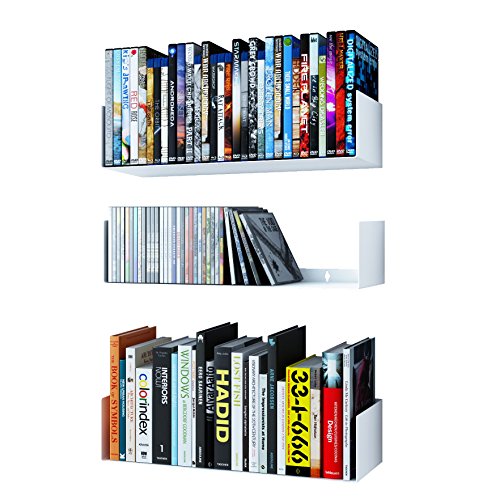
The defining advantage, from which most others flow. Wall shelves store in the vertical dimension that furniture cannot reach, which means a small room gains storage without losing the floor area that makes it liveable, a hallway gains a landing strip without narrowing, and a bathroom gains a cupboard’s function where no cupboard could stand. In homes where floor space is the binding constraint — studios, small rentals, box bedrooms — this is not one benefit among many; it is the reason the category exists, and no floor-standing alternative can replicate it at any price.
Pro: They Make Daily Life Faster
Open shelves remove the two frictions of closed storage: finding and reaching. The daily dishes, jars, towels, keys and current books sit visible and grabbable, and the seconds saved compound across every morning and evening in the house’s busiest rooms. Kitchens cook faster, bathrooms run smoother, hallways stop accumulating the day’s debris on the floor or the stairs. It is a modest-sounding pro that owners consistently rank first after a year of use, because it is paid out daily rather than admired occasionally.
Pro: They Make Rooms Look Composed
A well-arranged shelf run reads as architecture: it gives a room a designed horizontal, a place for books, plants and objects to form a deliberate composition, and a visual calm that surface clutter never achieves. Unlike furniture, which imposes its own bulk and style, shelves mostly disappear behind what they hold, which makes them the rare storage that improves a room’s looks while performing its storage. For renters and small homes especially, shelves are how a room stops looking temporary.
Pro: They Adapt Without New Purchases
The hardware stays; the arrangement evolves. The same shelf that holds summer plants holds winter candles; the hallway shelf rotates from sunglasses to scarves; the child’s high shelf becomes the teenager’s display without a single new hole. This adaptability means the purchase keeps fitting a changing household, and restyling costs an afternoon’s attention rather than money — a pro that compounds quietly across years and life stages.
Pro: They Are Reversible and Portable
Shelves unbolt, holes fill, and the entire decision can be undone in an afternoon or carried to the next home in the back of a car. Compared with built-ins, fitted wardrobes or heavy furniture, wall shelves are storage with an exit strategy, which makes them uniquely suited to renters, first homes and any household whose shape is still changing. Reversibility also lowers the stakes of trying: one wall, judged after a season, is a cheap experiment with a permanent upside if it succeeds.
Pro: They Can Serve for Decades
A sound shelf, fixed into studs or with correct anchors, kept within its load band and given a twice-yearly minute of attention, is a decade-scale fixture. There is nothing to wear out electronically, nothing to obsolete, and finishes on honest boards can be refreshed rather than replaced. Few storage purchases offer that ratio of service years to cost and effort, and it reframes the category: bought well, a shelf is infrastructure, not decor.
In this guide
The Cons of Wall Shelves
Con: Their Load Limits Are Real
The defining disadvantage, and the one marketing works hardest to blur. Wall shelves are light-to-medium storage: display, daily dishes, modest book runs. Dense loads — long hardback rows, stoneware archives, appliances — concentrate force in ways wall fixings dislike, and no brand repeals that physics. Households whose storage problem is genuinely heavy will find shelves the wrong tool, and using them anyway produces the sag, tilt and failure stories that give the category an undeserved reputation among people who simply asked too much of it.
Con: Everything Is on Display, Including the Dust
Open storage has no door to close on a bad day. Contents are visible, arrangements must be maintained to look intentional, and dust settles on shelves and objects alike, demanding a light but permanent rhythm of wiping — worst on quiet display shelves, least on shelves in daily use. For households that find visible objects stressful or dusting a genuine burden, this con is not a detail; it is a daily experience, and it should be weighed at full strength.
Con: They Depend Entirely on the Wall
A bookcase carries its load to the floor; a shelf negotiates with the wall, and some walls negotiate badly. Crumbling plaster, damp, awkward stud positions, hidden services crossing the only good spot — any of these can shrink a shelf plan or veto it outright, and the installer discovers the wall’s terms only by investigating them. This dependence is manageable with detectors, stud-first planning and correct anchors, but it is a real con: the product’s performance is co-authored by a wall you did not choose.
Con: Installation Is a Commitment and a Skill
Shelves require holes, a level, the right fixings and an unhurried afternoon — and they punish shortcuts in proportion. A rushed install on the wrong anchors is worse than no shelf at all, because it fails later, under load, rather than immediately under supervision. The skill is learnable and this cluster’s installation guide teaches it fully, but the con stands: unlike furniture, a shelf cannot be unboxed into usefulness, and households unwilling to install properly, or to hire someone who will, should choose furniture instead.
Con: The Wrong Material Ages Badly in the Wrong Room
Steam swells unsealed engineered boards, grease films kitchen shelves near the hob, fierce sun fades finishes unevenly behind objects, and knocks chip edges that cannot be repaired on wrapped boards. None of this is mysterious, and all of it is avoidable by matching material to room — but the con is that the category offers many ways to mismatch, and the damage is slow, cumulative and usually irreversible by the time it is obvious. A shelf in the wrong room does not fail dramatically; it tires, publicly, for years.
Con: They Can Encourage Clutter Creep
A shelf’s capacity invites filling, and filling invites overflow: the composed arrangement of month one becomes the storage sprawl of month six, at which point the shelf is blamed for a curation failure. Open shelves amplify whatever discipline a household brings to them — editors get galleries, accumulators get visible evidence. This con is behavioural rather than structural, but it is one of the most commonly reported, and it belongs on the honest list.
What the Trade-Offs Mean for You
For the small-home household, the ledger is lopsided in shelves’ favour: the floor-space pro is worth more than every con combined, provided loads stay honest and the dust rhythm is accepted as rent. For the renter, reversibility outweighs the commitment con, because the exit is cheap and the transformation is daily. For the cook and the busy family, the speed pro pays at the busiest hours, and the kitchen cons — grease, wiping — are manageable with sealed finishes and placement away from the hob.
For the collector of books or heavy objects, the ledger flips: the load con is not a caveat but the whole story, and the honest reading of this wall shelves pros and cons account is to buy the bookcase and use shelves, if at all, for the current rotation only. For the household that needs hidden storage or hates visible maintenance, the display con is decisive in the same way. The trade-offs do not average out into a universal score; they sort households, and being sorted correctly is the entire value of reading them.
There is one more household worth naming, because it is the most common of all: the undecided one, with ordinary walls, ordinary loads and a mild case of every pro and con on the page. For that household the trade-offs recommend the experiment this cluster keeps returning to — one wall, mid-tier, installed impeccably, judged after a season. The ledger of a real wall in a real home outweighs any article’s, including this one, and the experiment’s cost is an afternoon plus a tube of filler held in reserve.
Wall Shelves in Context: A Comparison
| Option | Strongest pro | Sharpest con | Best for |
|---|---|---|---|
| Wall shelves | Zero floor space, speed, looks | Load limits, dust, wall dependence | Display and daily light storage |
| Bookcase | Capacity and forgiveness | Floor space, visual bulk | Libraries and heavy collections |
| Wall cupboard | Hidden, dust-free storage | Slower access, visual weight | Clutter that must vanish |
| Picture ledge | Perfect for leaning art | Does nothing else | Frames and records |
The table’s lesson is that the alternatives do not refute shelves; they bound them. Most considered homes end up owning shelves plus one neighbour from this table, each doing the job its pros describe and avoiding the job its cons forbid.
How to Buy Smart, Given Both Lists
Buying smart means purchasing the pros and pre-paying the cons. Choose the type for the job — floating for display, brackets for work, drawer and towel-bar variants where clutter or hanging doubles the value. Match material to the room’s moisture, grease and sun before its colour. Audit the hardware in the listing — bracket rigidity, fixing spacing that can meet studs, hardware for real walls — and add the correct anchors for your wall to the same order. Four cluster regulars illustrate the personalities; each is prose-first with a pick slot, so check the current listing before buying.
BAYKA Wall Shelves
The BAYKA Wall Shelves are rustic wood wall shelves with a warm, farmhouse-leaning finish and visible bracket styling. In daily use they behave the way this style of shelf should: the board gives you a true, flat display surface, the mounting system decides how confident the shelf feels once loaded, and the finish decides how well it survives the room it lives in. Treat it as a mid-tier option and judge it on bracket quality, board feel and the hardware in the box rather than on styling photos alone.
Best for: living rooms, bedrooms and entryways where the shelf itself is part of the decor. Not suited for: bathrooms with heavy steam unless the finish is sealed and the room is ventilated well. As with every shelf in this guide, mount it into studs wherever you can, or use the correct anchors for your wall type, and keep the load sensible and qualitative — display and everyday storage, not a warehouse.

Wallniture Wall Shelves
The Wallniture Wall Shelves are practical solid-feel wood shelves, including kitchen and bathroom sets with a towel bar underneath. In daily use they behave the way this style of shelf should: the board gives you a true, flat display surface, the mounting system decides how confident the shelf feels once loaded, and the finish decides how well it survives the room it lives in. Treat it as a mid-tier option and judge it on bracket quality, board feel and the hardware in the box rather than on styling photos alone.
Best for: kitchens, bathrooms and laundry rooms that need storage and a hanging rail in one footprint. Not suited for: anyone chasing a completely invisible, hardware-free floating look. As with every shelf in this guide, mount it into studs wherever you can, or use the correct anchors for your wall type, and keep the load sensible and qualitative — display and everyday storage, not a warehouse.

SRIWATANA Wall Shelves
The SRIWATANA Wall Shelves are lightweight wood floating shelves with a simple, clean profile that suits small walls. In daily use they behave the way this style of shelf should: the board gives you a true, flat display surface, the mounting system decides how confident the shelf feels once loaded, and the finish decides how well it survives the room it lives in. Treat it as a entry-tier option and judge it on bracket quality, board feel and the hardware in the box rather than on styling photos alone.
Best for: small rooms, renters styling a nook, and light display such as plants and paperbacks. Not suited for: heavy hardback runs or stoneware, which belong on stud-mounted shelving or furniture. As with every shelf in this guide, mount it into studs wherever you can, or use the correct anchors for your wall type, and keep the load sensible and qualitative — display and everyday storage, not a warehouse.
Mkono Wall Shelves
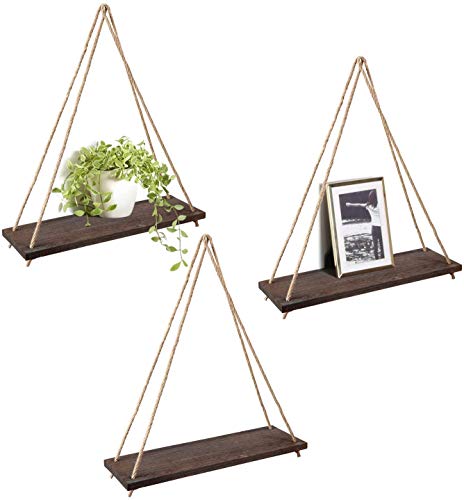
The Mkono Wall Shelves are wall-mounted wood shelves with a decorative, slightly boho feel, often styled with plants. In daily use they behave the way this style of shelf should: the board gives you a true, flat display surface, the mounting system decides how confident the shelf feels once loaded, and the finish decides how well it survives the room it lives in. Treat it as a entry-tier option and judge it on bracket quality, board feel and the hardware in the box rather than on styling photos alone.
Best for: plant shelves, bedroom corners and reading nooks that need charm as much as storage. Not suited for: utility storage in garages or workshops, where plainer heavy-duty shelving fits better. As with every shelf in this guide, mount it into studs wherever you can, or use the correct anchors for your wall type, and keep the load sensible and qualitative — display and everyday storage, not a warehouse.
Setup and Care That Reduce the Cons
Nearly every con on the list has a corresponding habit that shrinks it. The load con shrinks with stud-first installation, correct anchors — toggle-style for hollow plasterboard, proper plugs for masonry — and the discipline of keeping heavy things on furniture. The wall-dependence con shrinks with a detector sweep before every hole and a stud map photographed for the future. The ageing con shrinks with sealed finishes in steamy and greasy rooms, ventilation, and placement away from the hob and the fiercest sun.
The dust con shrinks with use — daily shelves barely dust — plus larger, fewer objects and one deliberately spare shelf per run. The clutter-creep con shrinks with a job sentence per shelf and a seasonal re-edit that takes ten minutes. The commitment con shrinks with tape-testing the layout for a day before drilling. What remains after all that shrinking is the honest residue: shelves are light-duty, visible storage that needs a wall and an afternoon. For the right household, that residue is a small price; this article’s job was to make sure you pay it knowingly.
There is a rhythm to all of this worth stating plainly, because households that adopt it stop experiencing the cons as a list at all: install once, properly; load once, honestly; then maintain in minutes, twice a year, forever. The cons of wall shelves are front-loaded — they live in the choosing and the hanging — while the pros are back-loaded across years of mornings. Any accounting that only looks at the first weekend will get this category exactly backwards.
Bottom Line
The wall shelves pros and cons do not cancel out; they describe a tool with a clear territory. Inside the territory — sound walls, light-to-medium loads, display and daily storage, proper installation — the pros dominate and compound for years. Outside it — heavy loads, unsound walls, hidden-storage needs, shelves above beds — the cons are decisive and the alternatives win. Buy inside the territory, install like it matters, and keep the small maintenance rhythm, and the balance of this page will read, in your home, heavily in favour of the pros.
If you take one sentence from this entire accounting, take this one: the pros are what shelves are, and the cons are mostly what happens when shelves are asked to be something else. Respect the distinction at the choosing stage — wall, job, load, material, hardware — and the two lists stop being a dilemma and become what they should have been all along: a description of a good tool, used properly, in the rooms it was made for.
Wall Shelves Pros and Cons, Weighed Room by Room
Lists flatten what rooms differentiate, so here is the same ledger at room resolution. Living room: the composition pro and the floor-space pro both peak here, while the cons stay mild — dust on display shelves is the main tax, paid gladly by households that enjoy arranging. Kitchen: the speed pro peaks and so do two cons, grease and wiping, which is why the kitchen verdict depends on sealed finishes, distance from the hob and an honest answer about your cleaning temperament. Bathroom: the storage pro can be transformative — the room often has no alternative — while the ageing con peaks under steam, making material choice the whole ballgame.
Bedroom: the nightstand-replacement pro is excellent and the placement rule is absolute; beside the bed the ledger is strongly positive, above it the discussion ends. Hallway: small pros, small cons, and a daily usefulness out of proportion to both — the landing strip is the shelf as pure function. Home office: the clear-desk pro against the head-clearance condition, a trade every desk worker should take. Child’s room: the most asymmetric ledger in the home, where the pros are real but the cons are safety-shaped, and safety outranks every other line on the page.
Pros and Cons by Shelf Type
Floating shelves concentrate the looks pro and the installation con: the cleanest line in the category, bought with the most demanding bracket work and the least forgiving seating. Bracket shelves invert that trade — structure visible, installation forgiving, working rooms served best — and their con is purely aesthetic, which many rooms experience as a pro wearing farmhouse or industrial dress. Rail systems own the adaptability pro outright and pay for it with the largest wall commitment and the most hardware on display.
Picture ledges are the extreme specialists: a perfect score on their one pro, art display, and a con list that is simply everything else. Corner shelves rescue dead space — a unique pro — at the price of small capacity and awkward dusting geometry. Drawer and towel-bar variants add a pro the base category lacks, hidden or hanging function, and pay with moving parts and a busier silhouette. Reading the types this way turns the pros and cons from a verdict on a category into a selection tool, which is what they were always for.
The Pro and the Con Nobody Mentions
The unlisted pro is behavioural: shelves make ownership visible, and visible ownership gets edited, used and enjoyed rather than stored and forgotten. Books get read or released, objects justify their places, and rooms slowly fill with things that earn their visibility. Owners rarely attribute this to the shelves, but the pattern is consistent enough across households to deserve its place on the pro list.
The unlisted con is decision fatigue at the wall: because shelves are semi-permanent and highly visible, choosing them can stall a room’s whole decoration while the household deliberates. The cure is procedural — tape the layout, run one wall as a trial, judge after a season — but the con is real, and it explains why so many homes have one beautiful shelf and four bare walls awaiting a verdict that a single afternoon could have delivered.
How the Balance Shifts Over Time
In month one, the pros are mostly visual and the cons are mostly hypothetical, which is why first impressions of shelves are unreliable in both directions. By year one, the daily pros — speed, space, order — have compounded into the household’s normal, while the cons have either been shrunk by habit or have declared themselves as mismatches of material, load or room. By year five, the surviving shelves have become invisible in the best sense, and the failed ones have become stories. The practical lesson is to weight your decision toward the year-one and year-five ledgers: choose for the household’s Tuesdays and its patience, not for the photograph of the first weekend.
One more temporal pattern deserves honesty: enthusiasm for restyling fades, and that is fine. A shelf does not need seasonal reinvention to justify itself; a stable arrangement that serves daily life for years is the pro list fulfilled, not neglected. The households happiest with their shelves at year five are rarely the ones still rearranging them.
A Fair Hearing for the Cons: Three Failure Stories
Abstract cons persuade less than concrete ones, so here are the category’s three classic failures, told fairly. The tilt: a floating run installed between studs on the included screws, loaded with books on day one, announcing itself over a month as a slow forward lean. Every element was a skipped step — no stud plan, no correct anchors, no gradual load — and the shelf was blamed for all three. The swell: an unsealed engineered set in an unventilated bathroom, crisp for a season, then softening at the edges until the whole run looked tired at two years old. The material was not defective; it was misplaced, and the room collected its debt slowly.
The sprawl: a beautiful living-room run, perfectly installed, filled within a month to a state its owners described as visual noise, then resented as if the shelf had done it. The installation was flawless and the curation never happened. Three stories, three different cons — load, material, clutter — and one shared moral: the cons on this page are rarely surprises. They are the predictable receipts of specific skipped decisions, which means the pros are available to any household willing to make those decisions in the first place.
What Renters and Owners Weigh Differently
The same ledger reads differently depending on tenure. Renters weight reversibility and deposit safety heavily: the commitment con shrinks because the exit is a tube of filler, while the wall-dependence con grows because the walls are not theirs to experiment on — stud-first, minimal, purposeful holes are the renter’s whole strategy. Owners weight longevity and integration: a shelf that will serve a decade and survive redecorations earns a premium in their ledger, and the installation con shrinks because skills and tools accumulate across projects.
Families in motion weight portability; settled families weight permanence; both are reading the same pros and cons correctly, because the lists do not change — the weights do. That is the deepest reason this article refuses a single score: a score would smuggle in one household’s weights and present them as everyone’s truth.
The Safety and Environmental Ledger
Safety belongs in a pros and cons account, not as a pro — shelves are not safe or unsafe in themselves — but as the condition that governs several cons. Installed stud-first, anchored correctly for the wall, loaded qualitatively and kept away from beds, cots and climbing routes, a shelf’s risk profile is unremarkable household furniture. Installed carelessly, the load con and the wall con combine into the category’s only genuinely serious downside. The asymmetry is the point: the worst outcome on this page is entirely governed by the cheapest inputs — a detector sweep, a stud, the right anchor, a refusal.
Environmentally, the ledger leans positive for the same reason it leans long-lived: small material, no energy in use, decades of service when bought and hung well, and a second life in another room or home. The negative entry is the disposable pattern — flimsy sets cycled quickly, failed fixings damaging goods — which is, once again, the mismatch pattern wearing another costume. Buy once, hang properly, keep for years: the environmental pro is simply the longevity pro viewed from further away.
Scoring the Ledger for Your Own Household
Close the article by weighting it yourself. Take the six pros and six cons and mark each as decisive, relevant or irrelevant for your rooms, your walls and your temperament. Decisive cons — heavy loads, unsound walls, hidden-storage needs, a shelf that would have to live above a bed — end the discussion in that room regardless of the pros. Decisive pros — a small home’s floor famine, a bathroom with no storage, a renter’s need for reversible transformation — end it the other way. Everything marked merely relevant is negotiable through the buying and care habits in this article, and that negotiation is where most households will honestly land: shelves, chosen with open eyes, in the rooms where their pros are structural and their cons are small.
A Week in the Life of Both Lists
Abstractions settle when they are scheduled, so here is one ordinary week on each side of the ledger. Monday morning, the speed pro: breakfast dishes taken from the open kitchen shelf without a cupboard door opened, keys lifted from the hallway shelf on the way out, the bathroom tray delivering everything the morning routine needs at arm’s height. Wednesday, the composition pro: a guest asks about the plant arrangement on the living-room run, and the room collects a compliment that belongs, structurally, to a board and two brackets. Friday, the adaptability pro: ten minutes restyling the bedroom shelf for the season, no purchase, no tools, a room that feels quietly new.
Now the cons’ week, in the same house. Saturday’s clean includes the dust pass across the display shelves — six minutes, honestly counted, folded into the room’s routine rather than resented as a separate tax. Sunday brings the discipline con: a new heavy book set arrives and goes, by household rule, to the bookcase rather than the tempting shelf, a small refusal nobody regrets by Monday. And once in the week, the visibility con flickers — a cluttered corner of the entryway shelf, cured by a two-minute edit rather than a door that does not exist. That is the true texture of both lists in a well-matched home: the pros arrive as daily ease, the cons as small scheduled payments. Households whose cons arrive as surprises and failures are, almost always, households whose installation or matching skipped a step.
What the Two Lists Mean for Your Budget
Budgets should follow the ledger. Money spent strengthening the pros is well spent: the mid-tier bracket and board for the working rooms, the finish matched to steam and grease, the format that doubles function. Money spent shrinking the cons is equally well spent and more often forgotten: the correct anchors, the detector, the tray that corrals the bathroom, the bookcase that takes the heavy load off the shelf’s conscience. The wasteful pattern is the reverse allocation — premium styling on a shelf whose fixings are entry-grade hope, or a houseful of shelves bought before a single wall was understood. Read the pros and cons as a spending plan and they will allocate your budget better than any tier chart.
Myths That Distort Both Lists
Four myths reliably corrupt this decision, two inflating the pros and two inflating the cons. The first pro-myth is the photograph: the belief that a shelf’s styled image predicts your room, when it predicts only the stylist’s afternoon. The second pro-myth is the capacity implication — language in listings that lets buyers imagine furniture-grade loads on wall fixings — which this article has spent its length refusing, because the load con is physics, not pessimism.
The first con-myth is that shelves always fall down, a belief fed by failure stories whose installation details, when examined, contain the cause every time: wrong anchors, missed studs, ignored detectors, heroic loads. The second con-myth is that dust makes open shelving unliveable, a belief that survives contact with actual owners poorly — daily-use shelves barely dust, and display shelves ask minutes a week. Strip all four myths away and the lists on this page are what remains: substantial pros, conditional cons, and a decision that belongs to your rooms rather than to anyone’s marketing or anyone’s cautionary tale.
The Last Word on Balance
Balance, in the end, is not a midpoint between the lists; it is a fit between the lists and a life. The pros of wall shelves are the kind that grow more valuable the longer a household stays in its home and the more its rooms are used. The cons are the kind that shrink the moment they are planned for — the right anchor bought in advance, the heavy book routed to the bookcase without resentment, the tray placed before the bottles multiply. A household that plans for the cons gets to keep the pros almost undiluted, which is why this article, having argued both sides at full strength, lands where it lands: in the right rooms, on the right walls, at the right loads, the pros win — and they win for years.
Read the two lists once more before you buy anything, not to memorise them but to notice which items make you nod and which make you wince. The nods are your household’s truth and the winces are its instructions. Buy where the nods cluster, plan where the winces point, and the balance this article could only describe in general will resolve, on your own walls, into something better than an argument: a home that works the way you live.
And if the lists leave you genuinely torn, remember that this is one of the most reversible decisions in the home. One wall, honestly installed and honestly judged, converts an abstract debate into lived evidence within a season — and lived evidence is the one reviewer whose verdict no household has ever needed to argue with.
That, finally, is the fairest summary of both lists: the pros are strong enough to be worth testing, and the cons are manageable enough that the test is safe to run — provided the testing itself follows the rules this page has repeated, about walls, loads and the places shelves must never go. Test well, and the page’s work is done; the wall will take it from there, one way or the other, and it will not be ambiguous about which list it believed. Walls, in this category, are the final and most honest reviewers of all — they keep the only score that matters, silently, every day, for as long as the shelf is asked to serve.
Quick Verdicts for Specific People
The student in a small rented room: pros decisive — floor space, reversibility, a room that feels like yours — with the renter’s discipline of permission, studs and filler. The new parent: pros real but fenced by the safety rules, with the nursery configuration strict and the rest of the home free to enjoy the speed and order. The keen cook: pros strong in the working kitchen, cons priced honestly in wiping and placement. The book collector: cons decisive for the collection itself, pros welcome for the current dozen. The minimalist: a surprising split — shelves can serve minimalism beautifully at one edited run per room, or violate it entirely as visible accumulation, and the difference is purely the household’s editing hand.
The frequent mover: portability pushes the ledger firmly positive, provided hardware is kept and walls at each stop are read fresh. The heritage-home owner: the wall-dependence con leads, fixings spread wide and loads stay light, with furniture carrying what the plaster should not. Seven households, seven different readings of the same two lists — which is, for the last time on this page, the point of publishing both lists in full.
One More Pro, One More Con, for Honesty’s Sake
The pro that rarely gets printed: shelves are honest furniture. They show their structure or hide it by a declared trick, they display exactly what they hold, and they make no promise they cannot keep — the dishonesty in this category enters through marketing language and skipped installations, not through the object. Homes furnished with honest objects tend to run honestly, and there is a quiet satisfaction in storage that never pretends.
The con that rarely gets printed: shelves expose the household to itself. Every object on display is a small public decision, and guests read shelves the way they read bookshelves — as autobiography. Most households enjoy that; some find it unexpectedly exposing, and a few discover that what they wanted was not storage but privacy for their possessions. That is a legitimate discovery, and the cupboard exists for it. Knowing which household you are is, as ever on this page, the whole decision.
Living With the Trade-Offs: A Week-by-Week Reality Check for a Wall Shelves
A pros-and-cons list is a snapshot, but living with a wall shelves is a film, and this section follows the trade-offs across the first weeks when novelty fades and routine takes over. In week one, most owners notice the headline advantage of a wall shelves constantly, because every use is a comparison with whatever came before it, while the headline drawback feels minor simply because it is still new. If you already own a wall shelves, run the same week-by-week check backwards and note which drawback you have genuinely stopped noticing and which one still earns a small sigh, because that sigh is the most honest review you will ever read. By week three the pattern usually reverses: the advantage becomes invisible background, part of how the room or routine simply works now, while any recurring friction with the wall shelves — a awkward reach, a fiddly clean, a storage squeeze — is the thing you feel on every single use.
Seasonal thinking helps more than expected: a wall shelves bought in one season will meet different light, humidity, mud, heat, guests and routines in another, so judge its size, storage and upkeep against the hardest season it will face. Decide in advance what good enough looks like for the job the wall shelves does in your home, because chasing a flawless result usually costs more time than the flaw itself, and most households are happier with a reliable ninety percent they actually repeat. For troubleshooting, start with the boring causes first: power, water, fit, blockage, alignment, a full container, a loose connection or a setting changed by the last person who used the wall shelves, because boring causes account for most apparent failures. Keep the packaging of a larger wall shelves until those first ordinary tests are done, flattened if space is tight, because re-boxing an awkward shape from scratch is the hidden difficulty inside many otherwise straightforward returns.
Use a simple decision checklist at the end: the wall shelves fits the measured space, suits the real frequency of the job, matches the household’s cleaning temperament, has obtainable parts, and has a named storage home — five yeses make a confident order. Test the wall shelves in the first week under deliberately ordinary conditions rather than saving it for a special occasion, so that any problem surfaces while returning, exchanging or adjusting your setup is still simple. Share the checklist result with anyone who shares the space, since a wall shelves chosen by one person and resented by another rarely survives, however sensible the purchase looked on paper. If a problem with the wall shelves repeats in the same spot or the same stage of the job, treat the pattern as the clue — patterns point to setup, surface or technique, while random problems point more often to the individual unit.
Per-use costs forgive nothing, so weigh any drawback that appears every time you reach for the wall shelves — noise, wobble, awkward controls, slow setup, difficult emptying or cleaning — far more heavily than its position on a balanced list suggests. Finally, remember that the best wall shelves for your home is the one whose size, habits and upkeep disappear into your routine, leaving only the result behind — a cleaner surface, a better-lit seat, a tidier shelf, an easier job — week after ordinary week. Consider the cleaning rhythm honestly: a wall shelves that needs attention after every use suits a household that enjoys small rituals, and frustrates a household that wants to finish a job and walk away, so match the upkeep to the temperament, not the intention. If you want a concrete listing check, take a name already shortlisted in this guide, such as BAYKA Wall Shelves, Wallniture Wall Shelves and SRIWATANA Wall Shelves, and verify that exact wall shelves listing against the measurements and compatibility questions above, field by field, rather than trusting the headline description alone.
Think about who else will use the wall shelves and what they will do differently: shorter reach, less patience, stronger habits, no interest in the manual, and a tendency to leave things wherever they were last set down. Photograph your setup once the wall shelves is working well — the position, settings, arrangement or layout you settled on — so that after a move, a deep clean or a seasonal break you can recreate the arrangement that worked instead of rediscovering it. Keep a short note of what you adjusted on the wall shelves during the first month, even just a line on your phone, since those notes turn vague impressions into a setup you can repeat, share or troubleshoot months later. Read the manual’s warnings page for the wall shelves even if you read nothing else, because that page is a compressed list of every way the product has ever been misused, and it tells you exactly which of your own habits needs adjusting.
Frequently Asked Questions
What is the biggest disadvantage of wall shelves?
The load limit, because it is physical and permanent. Wall shelves are light-to-medium storage by nature: display and daily things thrive, dense and heavy loads belong on furniture. Every other con — dust, visibility, installation effort — can be managed with habits, but no habit changes what a wall fixing can honestly carry. Households that respect the limit rarely meet the category’s failure stories; households that test it tend to meet them personally.
Do wall shelves damage walls?
They make holes, which is not the same thing. Properly installed shelves — stud fixings or correct anchors, no exploratory drilling — come down cleanly, and the holes fill invisibly with basic filler and a paint touch-up. Damage enters the story through bad installation: oversized holes from wrong anchors, torn plasterboard from failed fixings, or a shelf that pulls out under an unreasonable load. Installed and loaded properly, a shelf’s lifetime mark on a wall is close to zero.
Are floating shelves better than bracket shelves?
Neither is better in general; they trade different pros and cons. Floating shelves win on looks — the clean, hovering line — and ask more of installation precision. Bracket shelves win on forgiveness and working-room function, and wear their structure honestly as part of the style. Strength is decided by fixings in both cases. Choose by the room’s job and your confidence, and the comparison resolves itself.
How do I reduce dust on open shelves?
Use them. Shelves in daily service — kitchen dishes, bathroom bottles, hallway keys — barely accumulate dust because handling is cleaning. For display shelves, keep fewer, larger objects so wiping is a gesture rather than an excavation, keep one shelf in each run deliberately spare, and fold a quick dry-cloth pass into the room’s regular clean. Households that adopt those three habits consistently report that dust drops off their complaints list within a month.
Are wall shelves safe in a child’s room?
Only in a strict configuration: mounted high and out of climbing reach, loaded lightly with soft items, fixings checked often, and never — under any circumstances — above the bed or the cot. A reachable shelf will eventually be tested by a climber, so the child’s own books and toys belong on low, stable furniture. Within those rules, a high shelf for the parents’ rotation is a genuine help; outside them, this article’s answer is an unqualified no.
Do the pros outweigh the cons overall?
For most households with sound walls and sensible loads, yes — and the margin grows with every year of service, because the pros compound daily while the cons shrink with habit. The exceptions are specific and identifiable: heavy storage needs, unsound or undrillable walls, a requirement for hidden storage, or a strong dislike of visible maintenance. If none of those describes you, the balance of this page is your answer.
Related Guides and Picks
The pros and cons are the judgement; the companions below provide the choosing method, the installation sequence, the value analysis and the deep reviews — plus the floor-standing alternatives for the jobs where the cons win.
- are wall shelves worth it
- wall shelves review
- wall shelves reviews
- wall shelves buying guide
- how to choose wall shelves
- how to install wall shelves
- our main wall shelves picks by budget
- wall sconce picks for shelf lighting
- bookcases for small spaces, compared
- bookshelf picks for heavier book storage


