Disclosure: As an Amazon Associate, dailyhomedecorating.com earns from qualifying purchases. Links on this page are affiliate links; they cost you nothing extra. Prices and availability change often, so check the current Amazon listing before you buy.
These solar garden lights reviews take a different approach from a single-product test: they compare the main styles households actually shortlist — plain pathway stakes, garden and border lights, flame-effect pieces and contemporary deck-leaning designs — and judge each on charging honesty, build, placement forgiveness and how the effect holds up across seasons. If you are choosing between named options rather than learning the category, this is the comparison to read, and every pick below is presented prose-only until its listing is rechecked at publication.

Key Takeaways
- No single winner: the best style depends on whether the job is wayfinding, borders or atmosphere.
- Plain pathway stakes are the safest first purchase for most gardens.
- Flame-effect lights win compliments and lose on practical guidance — buy them as accents.
- Panel position, battery access and seal quality separate lasting sets from short-lived ones.
In this guide
Solar Garden Lights Reviews: The Shortlist at a Glance
Battery and panel quality are the invisible half of every solar light, and they explain most of the gap between a set that delights and a set that disappoints. Listings compete on appearance because appearance photographs well, but the parts that decide year-two performance are the cell that stores the charge and the panel that gathers it. You cannot fully test either from a listing page, which is why replaceable-battery designs, clear care information and a maker who explains charging honestly are worth more than dramatic brightness claims. Buy the light whose maker talks about shade and seasons, not the one that promises daylight at midnight.
Pathway stake lights are the backbone of the category: a small panel on top, a lens below it, and a spike that pushes into soil or lawn edge. They are the easiest solar lights to live with because they move in seconds, need no fixings, and forgive the trial and error that every good layout requires. Their limits are equally clear — the output is a gentle pool rather than a beam, and in hard ground, gravel or paved areas the stake format simply has nothing to grip, which is where wall, deck and surface-mounted styles earn their place.
Decorative solar lights sell an effect rather than illumination: flickering flames, colour-changing orbs, crackle-glass globes and shapes that read as ornaments by day. Judged as decoration they can be delightful, transforming a patio corner or a pot grouping after dusk, but judged as lighting they disappoint anyone who expected to see by them. The honest way to shop this end of the category is to decide which job you are buying — atmosphere or wayfinding — and refuse to let a pretty photograph blur the two, because a layout usually needs a backbone of plain pathway lights with decorative pieces used as accents.
Buying in sets is the category’s blessing and trap. A matched set makes a path look intentional and keeps colour and brightness consistent, but it also multiplies any weakness — a fragile stake or a sealed, short-lived battery is now that weakness many times over. A sensible pattern is to prove a design in a small number first, live with it through bright and dull weather, clean it, move it, and only then extend the run. Gardeners who expand a proven layout almost always end with a better garden than those who commit the whole budget on day one.
BEAU JARDIN Solar Garden Lights
Position in this guide: a classic pathway style with a decorative patterned glow, best suited to front walks and borders where a warm, traditional look matters more than raw brightness. Treat this as a prose-only shortlist entry until its listing is rechecked at publication, and compare its current listing details before you buy, because pack contents and finishes in this category change without much notice.
Across these reviews this remains the reference point for a traditional front path: decorative enough to look deliberate, plain enough to disappear into a border, and at its best when its panel gets an unobstructed sky.
Best for: households whose garden matches the role described above. Not suited for: deep shade, or anyone expecting wired-light brightness from a solar panel.

GIGALUMI Solar Pathway Lights
Position in this guide: a widely chosen pathway option in a simple stake format, suited to lining both sides of a path in matching sets and to renters who want light without any wiring. Treat this as a prose-only shortlist entry until its listing is rechecked at publication, and compare its current listing details before you buy, because pack contents and finishes in this category change without much notice.
A dependable pathway choice for households who want a run of matching lights without drama. Its strength is consistency along a route; its weakness is the same as every stake light in ground that turns rock hard in a dry summer.
Best for: households whose garden matches the role described above. Not suited for: deep shade, or anyone expecting wired-light brightness from a solar panel.
URAGO Solar Garden Lights
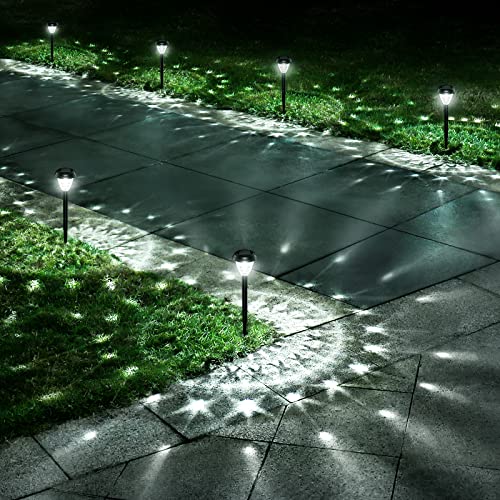
Position in this guide: a garden-focused option often chosen for beds and borders, where the light is meant to sit among planting rather than dominate a hard surface. Treat this as a prose-only shortlist entry until its listing is rechecked at publication, and compare its current listing details before you buy, because pack contents and finishes in this category change without much notice.
Judged among border lights, this earns its place by sitting comfortably among planting rather than on show. It rewards the front-edge placement rule and punishes being buried in the middle of a lush bed.
Best for: households whose garden matches the role described above. Not suited for: deep shade, or anyone expecting wired-light brightness from a solar panel.
Maggift Solar Garden Lights
Position in this guide: a straightforward stake light approach suited to smaller gardens, pots and starter layouts where simplicity and easy repositioning matter most. Treat this as a prose-only shortlist entry until its listing is rechecked at publication, and compare its current listing details before you buy, because pack contents and finishes in this category change without much notice.
For small gardens, pots and first layouts, this simple approach is easy to recommend: easy to place, easy to move, and honest about being a gentle accent rather than a flood of light.
Best for: households whose garden matches the role described above. Not suited for: deep shade, or anyone expecting wired-light brightness from a solar panel.
SOLPEX Solar Lights
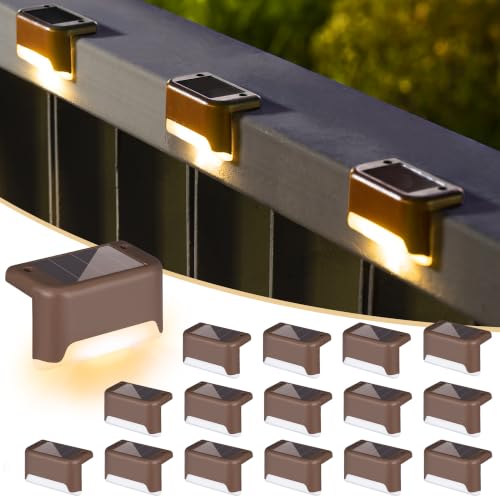
Position in this guide: a pathway and deck-leaning option that suits households wanting a cleaner, more contemporary outline along edges, steps and low walls. Treat this as a prose-only shortlist entry until its listing is rechecked at publication, and compare its current listing details before you buy, because pack contents and finishes in this category change without much notice.
In contemporary spaces this style reviews well because the night effect matches the daytime tidiness. It suits edges and steps in paved gardens better than loose, informal planting.
Best for: households whose garden matches the role described above. Not suited for: deep shade, or anyone expecting wired-light brightness from a solar panel.

TomCare Solar Lights
Position in this guide: a flickering flame-effect style that trades a steady beam for movement and atmosphere, making it a patio and seating-area choice rather than a pure wayfinding light. Treat this as a prose-only shortlist entry until its listing is rechecked at publication, and compare its current listing details before you buy, because pack contents and finishes in this category change without much notice.
The most reviewed-with-feeling pick here: owners tend to love the atmosphere and forgive the practical limits. Place it where people sit, not where people navigate.
Best for: households whose garden matches the role described above. Not suited for: deep shade, or anyone expecting wired-light brightness from a solar panel.
How These Reviews Judged Charging and Brightness
Brightness claims in this category should be read with generous scepticism. Without a wired supply, output is bounded by what a small panel gathered that day, so the same light is genuinely brighter after a clear June day than after a murky November one. Comparing models by their best-case claims therefore misleads; compare them by construction, battery access, panel size and position, and by how gracefully they fade. A light that dims gently late in the evening is behaving normally, not failing, and planning layouts that look good at moderate brightness is the real skill in solar lighting.
Panel orientation sounds technical but is mostly common sense. A small panel tilted toward the open sky collects more than one lying flat under a overhanging leaf, and a panel that faces the brightest part of your sky will outperform one turned toward a wall. Many stake lights fix the panel angle for you, which is fine in open ground and limiting under trees. Where a design allows a separate or adjustable panel, a few minutes spent aiming it at unobstructed sky pays back every single evening. Treat placement as part of the product, because with solar lighting it genuinely is.
Honesty about limits is what separates a useful guide from a sales pitch, so here it is plainly: solar garden lights are accent and wayfinding lights. They mark edges, soften darkness, guide feet and flatter planting, but they do not replace a wired light over a work area, a security light by a door, or a lamp you read by. Households who buy them for the jobs they are good at tend to love them; households who secretly wanted floodlights tend to call them useless within a week. Neither reaction is about the product — both are about the match between expectation and physics.
Beds that look open in spring can become shaded tunnels by July, when shrubs leaf out and perennials reach full height. A light that charged happily in April may struggle by midsummer simply because the garden grew around it, and the fix is rarely a new light — it is a small move sideways into a gap, or a light trim of the planting that leans over the panel. Gardeners who build a quick seasonal check into their routine, glancing at panels when they deadhead or weed, keep a layout performing instead of wondering why it faded.
Build Quality, Weather and Battery Life
Buying in sets is the category’s blessing and trap. A matched set makes a path look intentional and keeps colour and brightness consistent, but it also multiplies any weakness — a fragile stake or a sealed, short-lived battery is now that weakness many times over. A sensible pattern is to prove a design in a small number first, live with it through bright and dull weather, clean it, move it, and only then extend the run. Gardeners who expand a proven layout almost always end with a better garden than those who commit the whole budget on day one.
Winter storage is a genuine choice rather than a rule. Hardy pathway lights often stay out all year and cope, but decorative and flame-effect styles last longer when the worst frosts are spent in a shed, cleaned, switched off and stored dry. If you leave lights out, expect shorter winter run times and check that meltwater is not sitting in the head. Either way, a light brought in or checked over in autumn should have its panel wiped and its battery state considered before spring, so the first long evenings of the new season start with a full, healthy charge.
The rechargeable battery inside most solar garden lights is a consumable, not a lifetime part, and planning for that fact changes how you judge value. After extended use a battery gradually holds less charge, and the symptom is a light that still switches on cheerfully at dusk but fades much earlier than it once did. On models that open for battery access, replacing the tired cell with the same type restores the light for a fraction of replacement cost. On sealed models, that fading is effectively the end of the product’s life, which is worth weighing before you buy a large matching set.
Water finds its way into outdoor products eventually, so a brief inspection habit matters. Look for condensation misting inside a lens, green tinge on contacts, or a stake that has loosened and lets the head wobble and pool rainwater. Catching moisture early — drying the unit in a sheltered spot, reseating a cap, tightening a connection — saves lights that would otherwise fail quietly over a wet month. Lights that live in lawn edges also meet strimmers and mower wheels, so a quick visual pass while you tidy edges keeps small damage from becoming a write-off.
Which Style Suits Which Garden
Formal Paths and Front Gardens
Spacing shapes whether a path feels guided or merely dotted. Lights placed too far apart leave pools of darkness that make a route feel broken, while lights crowded together waste money and flatten the effect into a runway. A staggered rhythm along a path — alternating sides, tightening near steps and gates, relaxing along straight stretches — usually looks more natural than rigid pairs. Live with a layout for a few evenings before you finalise it, moving stakes is free, and the garden at night always reveals spacing problems that daylight hides completely.
The most common placement mistake is also the most understandable: putting the light where the effect is wanted instead of where the panel can work. A stake tucked deep inside a border glows beautifully in a catalogue photograph and starves in a real garden, because the planting that frames it also shades it. The working compromise is the front edge of the bed, the sunny side of a shrub, or a small clearing among low planting — positions where the panel sees open sky while the glow still washes across leaves and paths. When in doubt, favour the panel; a well-charged light in a slightly plainer spot beats a starved light in the perfect one.
Informal Borders and Planting-Led Gardens
Decorative solar lights sell an effect rather than illumination: flickering flames, colour-changing orbs, crackle-glass globes and shapes that read as ornaments by day. Judged as decoration they can be delightful, transforming a patio corner or a pot grouping after dusk, but judged as lighting they disappoint anyone who expected to see by them. The honest way to shop this end of the category is to decide which job you are buying — atmosphere or wayfinding — and refuse to let a pretty photograph blur the two, because a layout usually needs a backbone of plain pathway lights with decorative pieces used as accents.
Pathway stake lights are the backbone of the category: a small panel on top, a lens below it, and a spike that pushes into soil or lawn edge. They are the easiest solar lights to live with because they move in seconds, need no fixings, and forgive the trial and error that every good layout requires. Their limits are equally clear — the output is a gentle pool rather than a beam, and in hard ground, gravel or paved areas the stake format simply has nothing to grip, which is where wall, deck and surface-mounted styles earn their place.
Patios, Decks and Small Gardens
String, festoon and fairy-style solar lights hang their charm overhead, across fences, pergolas and shrubs, and they depend on a separate panel finding sun while the bulbs sit in shade — a genuine advantage in a leafy garden. Their weakness is the same as their charm: they are ambience, not guidance, and they tangle, sag and catch wind if strung carelessly. Fitted with a little tension, a sensible panel position and realistic expectations, they are often the fastest way to make an ordinary seating corner feel like an occasion, especially paired with a few stake lights marking the way back to the house.
Pathway stake lights are the backbone of the category: a small panel on top, a lens below it, and a spike that pushes into soil or lawn edge. They are the easiest solar lights to live with because they move in seconds, need no fixings, and forgive the trial and error that every good layout requires. Their limits are equally clear — the output is a gentle pool rather than a beam, and in hard ground, gravel or paved areas the stake format simply has nothing to grip, which is where wall, deck and surface-mounted styles earn their place.
Strengths and Trade-Offs Across the Shortlist
- Strength: complete freedom of layout, with no cable dictating where light can go.
- Strength: matched sets keep colour and brightness consistent along a route.
- Strength: decorative styles add genuine atmosphere for very little effort.
- Trade-off: every style fades in the same dull week, because they share the same sky.
- Trade-off: sealed batteries cap the lifespan of otherwise sound lights.
- Trade-off: stake formats are useless on paving without a different mounting style.
Battery and panel quality are the invisible half of every solar light, and they explain most of the gap between a set that delights and a set that disappoints. Listings compete on appearance because appearance photographs well, but the parts that decide year-two performance are the cell that stores the charge and the panel that gathers it. You cannot fully test either from a listing page, which is why replaceable-battery designs, clear care information and a maker who explains charging honestly are worth more than dramatic brightness claims. Buy the light whose maker talks about shade and seasons, not the one that promises daylight at midnight.
Weather resistance deserves a calm, practical reading. Any light sold for garden use should shrug off rain, but there is a difference between a light that survives a shower on a patio and one that lives all winter in a sodden border. Seals around the battery compartment, the fit of caps and lenses, and how the head sheds water all matter more than a headline claim. If your garden is exposed, coastal or simply very wet, favour simpler, sturdier constructions with fewer joints and moving effects, and accept that decorative pieces may live a more sheltered life near the house.
Colour of light changes a garden more than brightness does. A warm glow flatters brick, timber, skin and most planting, and it is what most households picture when they imagine a garden in the evening. A cooler, whiter light can look crisp against stone and modern paving but can also feel stark among leaves. Mixed sets bought at different times often clash quietly, so if a unified look matters, buy the run of a path from one family of lights in one go, and add decorative pieces deliberately rather than accidentally accumulating five slightly different whites along the same route.
Setup, Care and Maintenance Essentials
The rechargeable battery inside most solar garden lights is a consumable, not a lifetime part, and planning for that fact changes how you judge value. After extended use a battery gradually holds less charge, and the symptom is a light that still switches on cheerfully at dusk but fades much earlier than it once did. On models that open for battery access, replacing the tired cell with the same type restores the light for a fraction of replacement cost. On sealed models, that fading is effectively the end of the product’s life, which is worth weighing before you buy a large matching set.
Winter storage is a genuine choice rather than a rule. Hardy pathway lights often stay out all year and cope, but decorative and flame-effect styles last longer when the worst frosts are spent in a shed, cleaned, switched off and stored dry. If you leave lights out, expect shorter winter run times and check that meltwater is not sitting in the head. Either way, a light brought in or checked over in autumn should have its panel wiped and its battery state considered before spring, so the first long evenings of the new season start with a full, healthy charge.
Water finds its way into outdoor products eventually, so a brief inspection habit matters. Look for condensation misting inside a lens, green tinge on contacts, or a stake that has loosened and lets the head wobble and pool rainwater. Catching moisture early — drying the unit in a sheltered spot, reseating a cap, tightening a connection — saves lights that would otherwise fail quietly over a wet month. Lights that live in lawn edges also meet strimmers and mower wheels, so a quick visual pass while you tidy edges keeps small damage from becoming a write-off.
Final Verdict
Read together, these reviews point to a simple order of purchase: prove a plain pathway style on your main route first, add a border style where planting deserves depth, and only then spend on flame or decorative pieces for the corners where people linger. That sequence, plus honest placement, is what separates the gardens that glow from the gardens that merely own lights.
Review Notes: Details That Separate the Shortlist in Practice
Reflections and surfaces play a part that daylight shopping never reveals. Pale paving bounces a modest glow surprisingly far, making a small light feel generous, while dark soil and dense planting absorb the same output and ask for lights placed a little closer together. Water — a pond edge, a bird bath, even a wet path after rain — doubles a light’s presence with a reflection that costs nothing. Gardeners who notice these surfaces can achieve with placement what others chase with brighter products, and the effect always looks more natural because it belongs to the garden rather than to the fixture.
A word about gifts and inherited sets, because many gardens acquire solar lights that way. A gifted set deserves the same fair trial as a bought one: clean panels, sunny positions, one adjustment round, and judgement after a bright day rather than a dull one. Pieces that still do not suit the routes often find a second life as accents in pots on a sunny step, where expectations are lower and charm matters more. Very few solar lights are truly useless; most are simply standing in the wrong job, and reassigning them costs nothing but a minute’s thought.
Colour consistency deserves a second mention because it is the detail visitors notice without naming. A path lit in one warm tone feels calm and intentional, while a path that drifts between warm and cool from light to light feels accidental, even when every individual light is performing perfectly. The cause is usually piecemeal buying across months or brands. If you inherit a mixed set, group the similar tones together by zone rather than alternating them, and let any future purchases pull one zone at a time toward a single family, so the garden improves with every addition instead of merely growing.
Ground conditions matter more than most buyers expect. Soft loam takes a stake cleanly and holds it upright, while stony ground bends spikes, clay bakes hard in a dry summer, and loose gravel lets a light lean a little further every week until the row looks drunk. The practical answers are unglamorous: make a pilot hole with a hand tool in hard ground, firm soil around each stake rather than merely pushing it in, and check uprights after heavy rain when the ground softens. A layout that stands straight reads as quality all by itself, whatever the lights cost, and a leaning layout undermines even genuinely good products.
Seasonal rituals keep a layout performing without ever becoming a chore. In spring, wipe panels, reseat stakes loosened by frost and move lights that new growth will shade. In summer, glance at panels when you water pots, and enjoy the longest, brightest evenings of the year. In autumn, clear fallen leaves off panels promptly, because a single leaf can shade a small panel almost completely. In winter, decide which lights earn storage and which stay as markers, and lower your expectations kindly. Four light touches a year is the entire maintenance contract, and it is a fair price for what the lights return.
A detail that rarely appears in listings is how a light behaves at the end of an ordinary evening rather than at its start. Every solar light is at its best just after dusk, when the battery is fullest, and the differences between designs show themselves later, in how gracefully the glow softens as the charge is spent. A well-matched light fades like a candle burning down, still present, still useful as a marker, simply quieter. A poorly matched one falls off a cliff. When you assess any set, resist judging it in the first hour and take your real reading later in the evening, because that later character is the one you will actually live with for most of the night.
When a whole set ages together, replacement strategy matters. Replacing one failed light in an old matched run with a new piece often stands out, because the newcomer is brighter and its colour slightly different from its weathered neighbours. Gardeners who keep one spare from the original purchase avoid that patchwork, and those who did not can replace in a small group at a natural break — from a gate, say, or around a corner — so the change reads as a new zone rather than a repair. Thinking in zones, as with colour, height and style, turns maintenance into quiet design.
Finally, keep the purpose of the whole exercise in view on the evenings when you assess a layout. The goal was never a bright garden; it was a garden you can move through calmly, sit in comfortably and enjoy looking at after dark, with planting suggested rather than exposed and routes implied rather than announced. Solar garden lights serve that goal precisely because they are gentle, and every judgement in this guide — about placement, panels, batteries and seasons — is really a judgement about protecting that gentleness from the two things that spoil it: starved charging and inflated expectation.
Children, dogs and visiting feet are part of the real specification of a garden light. A stake placed exactly on the line a football takes, or where a dog rounds a corner at speed, will be knocked, and the question is whether it survives the knock gracefully — bending back, reseating, carrying on — or cracks at the stem. In family gardens it is worth favouring sturdier, simpler constructions along play routes and saving delicate decorative pieces for beds and pots where traffic never goes. Matching the toughness of the light to the life of that corner is a buying skill no listing can teach.
Height changes the character of a solar light more than its appearance in a photograph suggests. A low light hugs the ground, marking edges and throwing its pool exactly where feet fall, while a taller light lifts the glow into planting and onto faces, becoming part of the scene rather than a guide beneath it. Routes generally want the lower, ground-hugging behaviour, and borders and seating corners can enjoy the taller presence. Mixing heights along one route usually looks restless, so choose a height per zone and hold it, the same discipline that applies to colour and style throughout a considered layout.
There is a quiet environmental argument for choosing serviceable designs that goes beyond one garden’s satisfaction. A light whose battery can be replaced stays in the ground for years, while a sealed light becomes waste the day its cell tires, however sound its housing remains. Multiplied across a whole path of matching lights, that difference is the difference between a small bag of spent batteries over a decade and a whole set of discarded lights. Buyers cannot fix the category’s design habits alone, but favouring replaceable batteries rewards the makers who build for repair, and it saves the buyer money at the same time.
The first week with a new set teaches more than a month of reading, if you pay attention deliberately. Note which lights are still glowing when you go to bed and which have faded, then walk the positions the next day and ask why: a shadow you had not noticed, a panel filmed with pollen, a shrub that leans further than you thought. Most layouts need exactly one round of this honest adjustment — a move here, a trim there, a swap between a strong and a weak position — and after that round the garden and the lights settle into a working understanding that lasts for seasons.
More Practical Notes Before You Decide
When you extend a proven set, buy the extension in one go from the same family rather than dribbling pieces in across a season. Makers quietly revise finishes, colour temperatures and even heights between production runs, and pieces bought months apart can differ just enough to break a route’s rhythm. A single extension purchase keeps the new zone internally consistent, and if the family has changed slightly, the difference sits at a natural break between zones instead of alternating along a path where the eye compares every light with its neighbour.
One practical test tells you more about a position than any amount of daytime guessing: stand the light there for two full days before judging it, because a single bright afternoon can flatter a spot that spends the rest of the week in a fence’s shadow. Two days smooths out the luck of the weather and shows the position’s true character, including the dull morning that reveals whether the panel ever really sees the sky. Gardeners who give positions this short probation period make far fewer disappointing permanent choices, and the lights they keep are the ones whose performance they actually understand.
Think about the view from inside the house as well as the view within the garden. A layout that looks balanced from the patio may present a stray, glaring point from an upstairs window, or leave the one route used every night — from door to gate, or door to bins — oddly unmarked while a decorative corner glows. Walk the plan from both directions and check it from the windows you actually look out of after dark. Garden lighting is scenery and signage at once, and the households who check both roles are the ones who stop adjusting their layouts.
There is a simple hierarchy for troubleshooting that saves money in this category. Position first, because shade explains most failures. Panel cleanliness second, because film is invisible until you wipe it and see the cloth. Battery third, because a tired cell mimics every other fault. Only after those three should a light itself be suspected, and by then most lights have already recovered. Owners who follow that order replace very few lights; owners who start by replacing lights often discover the new one behaving exactly like the old one, in the same shaded, dirty position.
Mulch, gravel and lawn each treat a stake differently across a season. Bark mulch swallows low lights as it is topped up, gravel migrates and loosens stems, and lawn edges meet the strimmer with predictable results. A small, deliberate clearing around each stake — a hand’s width of bare ground or a flat stone beneath the light — keeps the base visible, the stem safer and the panel above the splash zone where mud would otherwise film it after every rain. These tiny courtesies to the hardware are invisible in photographs and decisive in service life.
Consider, too, what the lights ask of the garden’s other inhabitants. Ground-nesting insects, hedgehogs on their rounds and birds settling at dusk all use the dark, and a garden lit edge to edge offers them less of it. Keeping one corner deliberately unlit — a wildlife patch, a compost corner, the far end beyond the last bed — costs the layout nothing and gives the night back to the creatures who owned it first. Many gardeners find the contrast improves the lit areas too, because light reads as light only where darkness survives beside it.
Documentation sounds excessive for garden lights until the second season, when you cannot remember which family the far path uses or when its batteries were last renewed. A single note — on a phone, in a gardening diary — recording the family name, where each run lives and any battery changes turns future buying from guesswork into a lookup. It also settles arguments with yourself about whether a light has truly faded or was always the dim one at the shady end, because the note remembers what memory politely revises.
It is worth understanding what dusk sensors do and do not do. The light switches itself on when the panel stops seeing daylight, which is elegant until a light is placed where a porch lamp, a street light or a neighbour’s security light shines on the panel all night — then the solar light may decide it is never night at all and stay off. If a light refuses to wake while its neighbours glow, check for artificial light falling on its panel before assuming a fault, and move it a short distance into genuine darkness, where its own simple logic works exactly as intended.
When you extend a proven set, buy the extension in one go from the same family rather than dribbling pieces in across a season. Makers quietly revise finishes, colour temperatures and even heights between production runs, and pieces bought months apart can differ just enough to break a route’s rhythm. A single extension purchase keeps the new zone internally consistent, and if the family has changed slightly, the difference sits at a natural break between zones instead of alternating along a path where the eye compares every light with its neighbour.
One practical test tells you more about a position than any amount of daytime guessing: stand the light there for two full days before judging it, because a single bright afternoon can flatter a spot that spends the rest of the week in a fence’s shadow. Two days smooths out the luck of the weather and shows the position’s true character, including the dull morning that reveals whether the panel ever really sees the sky. Gardeners who give positions this short probation period make far fewer disappointing permanent choices, and the lights they keep are the ones whose performance they actually understand.
Think about the view from inside the house as well as the view within the garden. A layout that looks balanced from the patio may present a stray, glaring point from an upstairs window, or leave the one route used every night — from door to gate, or door to bins — oddly unmarked while a decorative corner glows. Walk the plan from both directions and check it from the windows you actually look out of after dark. Garden lighting is scenery and signage at once, and the households who check both roles are the ones who stop adjusting their layouts.
There is a simple hierarchy for troubleshooting that saves money in this category. Position first, because shade explains most failures. Panel cleanliness second, because film is invisible until you wipe it and see the cloth. Battery third, because a tired cell mimics every other fault. Only after those three should a light itself be suspected, and by then most lights have already recovered. Owners who follow that order replace very few lights; owners who start by replacing lights often discover the new one behaving exactly like the old one, in the same shaded, dirty position.
After the Boxes Are Gone: Long-Term Ownership Notes From Solar garden lights Reviews
Most solar garden lights coverage stops at unboxing, yet almost everything that decides owner satisfaction happens afterwards. The first evening tells you about finish and first impressions; the third month tells you about durability, upkeep and whether the design still suits the way your household actually behaves. This section looks at the ownership phase in detail — the settling-in period, the first signs of wear worth watching for, and the small habits that separate owners who stay pleased from owners who start browsing replacements. If you are weighing BEAU JARDIN Solar Garden Lights, GIGALUMI Solar Pathway Lights or any similar design, treat the points below as the questions a good long-term review should answer.
The Settling-In Period: What Changes in the First Weeks
New materials and mechanisms relax. Fabrics soften, joints settle, finishes lose their showroom sharpness, and moving parts either bed in smoothly or start to complain. With a solar garden lights, use the first fortnight deliberately: operate everything daily, check fixings once after the first week, and keep a mental note of any sound, wobble or resistance that was not there on day one. Changes that stabilise after a small adjustment are normal settling; changes that keep progressing are early warnings, and they are far easier to raise with a seller while the purchase is recent.
Wear Worth Watching, and Wear Worth Ignoring
Not all wear is failure. Honest materials in the home decor & lighting category develop a patina — slight softening of edges, gentle colour shifts where hands and light fall — and most owners come to like it. The wear that matters is functional: looseness that returns after tightening, surfaces that mark from ordinary use rather than accidents, parts that need persuading, and finishes that fail at edges and corners first. Check those high-contact zones on any solar garden lights you already own, and look for honest close-up photographs of exactly those zones when you judge a replacement.
Beware of buying for the household you hope to become; the solar garden lights that serves the household you already are will be used this week, not someday. A tape measure, a spirit level and ten patient minutes prevent more solar garden lights regrets than any amount of comparison shopping after the fact. When a listing is vague about a dimension, material or included part that matters to you, treat the vagueness itself as information and look for a clearer seller. Photograph your room at the time of day you will use the solar garden lights most, and compare candidates against that light rather than against bright midday photographs. Small households should weight compactness and easy storage more heavily, while large households should weight durability and simple operation, because the failure modes differ.
Ownership rewards attention in small doses. A solar garden lights that is checked monthly and cleaned gently will usually outlast a neglected premium model, and it will certainly stay pleasanter to live with. Judge any review — including the detailed assessments earlier in this guide — by whether it helps you through this long middle phase of ownership, because that phase, not the unboxing, is where the money is really spent.
Frequently Asked Questions
Which solar garden light style is best for a front path?
A plain pathway stake style is the most reliable choice, because its steady, downward pool is designed for exactly that job and matched sets keep the route looking intentional. Keep decorative and flame styles for the doorstep or a bench, where atmosphere matters more than a clear view of the ground.
Are more expensive solar lights always better?
Not always, because placement can defeat any price point, but spending a little more often buys better seals, a larger panel and access to the battery, which are the things that decide second-season performance. Judge value by construction and battery access rather than by brightness claims on the box.
Why do my new lights look dimmer than the pictures?
Listing photographs are taken in ideal conditions, often with a fully charged battery on a clear summer evening, and sometimes with camera exposure doing quiet favours. Your garden’s shade, season and panel cleanliness set the real level. Clean the panels, check positions at different times of day, and judge the set after a bright day before concluding anything.
Should I buy one large set or mix styles?
Buy the main route as one matched family so the colour and fade stay even, then mix deliberately at the edges — a flame piece at a bench, an uplight at a small tree. Mixing the route itself usually looks accidental, while mixing accents looks designed.
How long should a decent set last?
With clean panels, sensible placement and a battery that can be replaced when it tires, a decent set should serve for multiple seasons. Sealed designs and shaded, waterlogged positions shorten that considerably, which is why care and position belong in any honest lifespan discussion.
What should I check first if several lights fail together?
A shared failure usually means a shared cause: a run of dull weather, new shade from growing planting, or panels all filmed with the same pollen or dust. Clean every panel, note where shadows now fall, and give the set a bright day before replacing anything.
Related Guides
Keep exploring with these companion guides: are solar garden lights worth it, how to choose solar garden lights, solar garden lights buying guide, solar garden lights pros and cons, solar garden lights review, solar pathway lights for a clearer route, outdoor string lights for seating areas, outdoor lights for planters, raised garden beds to light around.