Disclosure: As an Amazon Associate, dailyhomedecorating.com earns from qualifying purchases. Links on this page are affiliate links; they cost you nothing extra. Prices and availability change often, so check the current Amazon listing before you buy.
This led strip lights review looks at the product class the way a household actually meets it: one roll, one remote, one room that needs to feel better after dark. Rather than pretending a single model can stand for every strip on sale, it examines what the standard colour-changing strip does well, where its limits honestly sit, and which named alternatives fix which weakness. By the end you should know whether this simple product belongs in your home, where it should run, and what to check before any adhesive is peeled.
Key Takeaways
- Verdict: the basic colour-changing strip is the easiest atmosphere upgrade in home lighting.
- Best for: bedrooms, media walls, shelves and under-cabinet runs in dry rooms.
- Not suited for: replacing main lighting, wet locations, or anyone wanting automation.
- Judge any strip on its warm white and its lowest dim setting, not its party colours.
- Install once, carefully: test the route for an evening before committing the adhesive.
The short verdict is that the class earns its popularity. Few products change how a room feels this much, this cheaply in effort, with this little risk to the room itself. The qualifications are equally clear: a basic strip is a remote-controlled accent, not a smart system and not a ceiling light, and every unhappy owner we can imagine bought it expecting one of those two other things. The sections below separate the genuine strengths from the marketing haze, then compare the named picks that represent the class at its best.
In this guide
Led Strip Lights Review: What a Basic Strip Is and Where It Fits
A basic LED strip is a flexible circuit board populated with small light-emitting diodes, supplied as a roll with a low-voltage power adapter and, in most home kits, a handheld remote. It is accent lighting, not a replacement for the main light in a room. Its job is to wash a wall, outline furniture or glow from a hidden edge so the room feels layered. Everything good and bad about the category follows from that simple role: strips excel where light should be indirect and decorative, and they disappoint anyone who expects them to illuminate a workspace like a ceiling fitting.
The popular home format is the colour-changing strip, which can step through saturated colours as well as whites of different warmth. That flexibility is why one product ends up in so many different rooms: warm and dim behind a television on Friday, soft gold above kitchen cabinets on Sunday morning, and an unapologetic purple in a teenager’s bedroom in between. A single-colour strip can be the better tool when you know the exact job, such as a steady warm glow under cabinets, but most households value the ability to change their mind, and the colour-changing format is the default for good reason.
Control on a basic strip means a remote, and sometimes a simple companion app over a direct wireless connection, rather than a smart-home platform. That distinction matters more than any other in this category. A remote-controlled strip does what you tell it while you are in the room, and nothing when you are not. It cannot follow schedules on its own, join routines with other devices or answer to voice assistants unless the specific kit says so. Buyers who understand that boundary are almost always happy; buyers who blur it are the ones leaving disappointed comments about a product that never promised more.
Fitting the class into a home means thinking in layers, and the guidance in our led strip lights buying guide expands the same framework. A strip will not rescue a room with no other light, but it will transform a room that has adequate light and no atmosphere, which describes most living rooms and bedrooms in the evening. Its natural partners are the lamps you already own: see how seating-centred layering works in lamps that work over sectional sofas.
Design, Build and Setup
Length is the first practical decision, and it is a measuring job, not a guessing job. Walk the route the strip will take with a tape measure, including the drops and turns, then choose the kit that covers that route with a little to spare. Spare strip can be trimmed at the manufacturer’s marked cutting points; missing strip cannot be stretched. Joining extra lengths is possible on some kits with connectors, but every join is a small compromise in neatness and reliability, so a single correctly sized run beats a patchwork almost every time.
Power deserves the same forethought. The adapter in the box is matched to the kit in the box, and it expects a reachable socket near the start of the run. Plan where that adapter will live before you peel any adhesive, because a strip that starts beautifully and ends with a cable dangling across a doorway will irritate you daily. Cable clips, a short extension lead kept tidy, or choosing a different starting corner solves nearly every power problem people blame on the strip itself.
Adhesive is the category’s weakest link, and honesty about it saves frustration. The backing on home strips sticks well to smooth, clean, dry surfaces — painted wood, laminate, glass, metal, the underside of cabinets — and poorly to dusty, textured, greasy or freshly painted ones. Wiping the route with a suitable cleaner and letting it dry fully transforms results. Even then, corners and ends benefit from small mounting clips, which hold the strip mechanically instead of asking glue to fight gravity and warmth forever.
Build quality in this class announces itself in small ways: how flat the strip lies, how confidently the connectors click, how the remote’s buttons feel, and whether the control box looks like it will survive being nudged by a vacuum cleaner. None of the picks in this review is a luxury object, and none needs to be. What separates the tiers is consistency — of colour along the run, of adhesive grip, of dimming steps — rather than any single headline feature. Pay for consistency if the strip will be seen daily; save on the tiers if it will glow behind furniture.
Performance in Real Use
Behind the television
Mounted on the back of the screen or the unit beneath it, a strip throws a soft halo onto the wall that reduces the contrast between a bright picture and a dark room. Eyes tire more slowly, films feel more cinematic, and the room gains a focal glow that no one has to look directly at. Keep the colour neutral or warm for viewing, and save the saturated colours for music and games, where the shifting light is part of the fun rather than a distraction from the screen.
Behind the headboard
A headboard run is the bedroom classic because it replaces the jolt of an overhead light with a wash you can read the room by. It is enough light to find clothes, check on a child or read a few pages, and gentle enough not to fully wake a sleeping partner when dimmed low. Warm settings suit the hour; if your strip’s warm white leans orange, drop the brightness rather than shifting cooler, because low and warm reads as calm while bright and cool reads as office.
Under kitchen cabinets
Under-cabinet runs are the hardest-working job a strip can do, turning shadowed worktops into usable space and making evening kitchens feel welcoming instead of clinical. This is the one common use where a steady warm or neutral white matters more than colour tricks, and where the strip should be mounted toward the front edge of the cabinet underside so light falls on the work surface rather than the wall. Keep strips and cables clear of steam and splashes unless the kit carries a suitable moisture rating.
Along shelves and bookcases
A strip along the top or front edge of shelving turns storage into display. Books, ceramics and plants pick up definition, and the room gains the layered look that designers achieve with far more expensive fittings. The trick is concealment: the strip itself should be invisible from normal standing and sitting positions, with only its light visible. If you can see the diodes, you will see dots; angle the strip, recess it behind a lip, or accept a diffuser channel for a smoother line.
Colour quality separates a pleasant glow from a garish one. Cheap diodes can render whites with a blue or green cast and make skin tones and food look odd, which is why a strip that delights as a purple party light can disappoint as an everyday warm white. If the strip will spend most of its life on white or warm settings — under cabinets, behind a headboard, above a desk — judge it on those settings first. Saturated colours forgive a lot; warm white forgives nothing, and it is the setting most adults actually live with.
Dimming is where a strip earns its evening job. The best home lighting after dark is low, warm and indirect, and a strip hidden behind a pelmet, headboard or media unit delivers exactly that without glare. Check that the remote dims in steps fine enough to find a genuinely low level, because a strip whose lowest setting is still bright will end up switched off. Smooth fading between levels is a small luxury that quickly feels essential in bedrooms, where the light is often the last thing adjusted before sleep.
Strengths and Trade-Offs of the Class
Strengths
- Transforms a room’s evening feel for very little effort or disruption
- Flexible enough for furniture, shelves, screens and cabinets in one product
- Remote control that every member of the household can use instantly
- Trimmable at marked points, so one product fits many routes
- Low running warmth and load compared with the lighting it supplements
Trade-offs
- Accent light only — it cannot replace a room’s main lighting
- Adhesive is unreliable on textured, dusty or greasy surfaces
- No schedules, voice control or automation in the basic format
- Far ends of over-long single runs can look dimmer
- Removal can lift paint, so routes should be chosen deliberately
How It Compares: The Named Alternatives
The six picks below are the versions of this class we would actually shortlist, each representing a different priority. They are presented prose-only here, with a pick slot the publishing pipeline will match to a verified listing, because the honest differences between them are about character, not about a specification arms race.
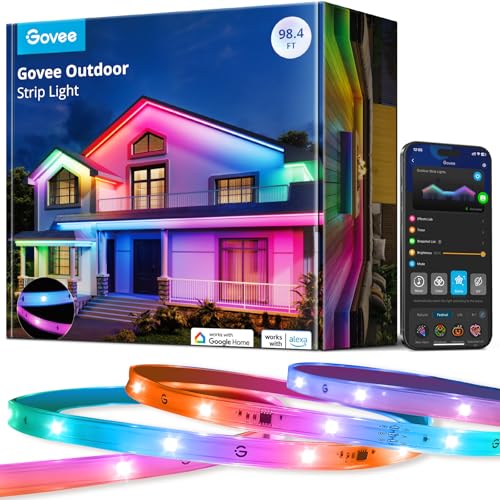
Govee LED Strip Lights — Best Overall
The Govee LED Strip Lights in their standard, remote-controlled form are the easiest version of this product to recommend to a first-time buyer, because the experience is balanced rather than extreme in any one direction. The colours are vivid without turning every wall into a fairground, the remote covers the everyday jobs of switching, dimming and stepping through colours without forcing you into a phone, and the strip itself flexes cleanly around the gentle corners that bedrooms and living rooms actually contain. Treat it as the sensible centre of the category: not the cheapest way to light a room, and not a programmable light show, but the version least likely to annoy you in month three.
Best for: readers of the badge above who want a mid-tier strip without smart-home complexity. Not suited for: anyone expecting voice control, automation or whole-house scenes from a basic strip.
Strengths
- Balanced colour and brightness for everyday rooms
- Remote handles daily control without a phone
- Even look along sensible single runs
Trade-offs
- Adhesive still needs a clean, smooth surface
- Basic remote control, not scene programming
- Long multi-room runs need planning, not one box

DAYBETTER LED Strip Lights — Best for Long Runs on a Budget
The DAYBETTER LED Strip Lights are the value workhorse of the group, the sort of kit people buy when the plan involves a whole bedroom perimeter, a long hallway or a teenager’s room that needs transforming this weekend rather than eventually. The appeal is coverage: generous length in the box, a straightforward remote, and colours that read clearly at the modest brightness levels accent lighting actually uses. Nobody should mistake it for a premium build, and the materials feel built to a price, but the effect per room is exactly what most buyers are chasing, which is why this name comes up so often in this category.
Best for: readers of the badge above who want a entry-tier strip without smart-home complexity. Not suited for: anyone expecting voice control, automation or whole-house scenes from a basic strip.
Strengths
- Generous coverage for whole-room plans
- Simple remote that anyone in the house can use
- Forgiving way to learn where you want light
Trade-offs
- Lighter build feel than mid-tier strips
- Adhesive needs clips on tricky surfaces
- Remote is basic, with limited finesse
Lepro LED Strip Lights — Best Simple Remote Strip
The Lepro LED Strip Lights suit buyers who want the effect without the ecosystem. This is a strip for people who look at app-controlled lighting and feel tired: plug it in, stick it up, point the remote, done. The colour palette covers the warm-to-cool everyday range as well as the saturated party colours, the dimming steps are usable rather than theatrical, and the whole kit has the unfussy character of a torch you keep in a drawer. It is a particularly good match for guest rooms, rentals and under-cabinet runs where the next person to use the light should not need instructions.
Best for: readers of the badge above who want a entry-to-mid-tier strip without smart-home complexity. Not suited for: anyone expecting voice control, automation or whole-house scenes from a basic strip.
Strengths
- Genuinely simple for guests and rentals
- Flexible strip suits short, awkward runs
- Usable dimming steps for evening light
Trade-offs
- No scheduling or advanced scenes
- Power supply sized to the kit only
- Finish is functional rather than premium

Nexillumi LED Strip Lights — Best for Bedrooms and TV Walls
The Nexillumi LED Strip Lights have built their reputation in bedrooms and behind televisions, and that focus shows in the details that matter for those two jobs. The glow is easy to dim down to the low levels a bedroom actually wants at night, the colours shift smoothly rather than in visible jumps when you are fading between evening shades, and the kit is commonly bought in the shorter lengths that fit a headboard or a screen without leaving a coil of spare strip to hide. If your plan starts and ends with one room’s mood, this is the pick shaped most closely to it.
Best for: readers of the badge above who want a mid-tier strip without smart-home complexity. Not suited for: anyone expecting voice control, automation or whole-house scenes from a basic strip.
Strengths
- Smooth dimming for low evening light
- Well suited to headboards and TV walls
- Composed colours for mood lighting
Trade-offs
- Not aimed at whole open-plan spaces
- Deliberately simple feature set
- Long runs need a different pick
MINGER LED Strip Lights — Best for Music and Teen Rooms
The MINGER LED Strip Lights lean into the playful end of the category: responsive colour changing, a music-reactive mode that pulses with whatever is playing, and the kind of saturated palette that makes a gaming desk or a teen bedroom feel like a different place after dark. This is the strip to buy when the brief is energy rather than calm. Setup follows the same peel, stick and plug pattern as the rest of the group, and the remote keeps the effects within reach without a phone, which matters when the audience is a room full of friends rather than one patient adult.
Best for: readers of the badge above who want a entry-to-mid-tier strip without smart-home complexity. Not suited for: anyone expecting voice control, automation or whole-house scenes from a basic strip.
Strengths
- Music-reactive mode suits younger rooms
- Saturated colours for gaming setups
- Remote control keeps effects phone-free
Trade-offs
- Calmer rooms will not use its tricks
- Lighter build and adhesive
- Effect-first brightness, not task light

Tenmiro LED Strip Lights — Best for Multi-Roll Coverage
The Tenmiro LED Strip Lights answer a specific problem: what to buy when one strip is not enough and the plan covers two walls, a long L-shaped room or a bedroom and the hallway outside it. Multi-roll kits let you run separate lengths from their own supplies, which sidesteps the dim far-end problem that haunts over-long single runs, and the Tenmiro packages that idea at a sensible tier. Each roll behaves like a normal basic strip — remote control, familiar colours, peel-and-stick fitting — so the learning curve stays flat even as the coverage grows.
Best for: readers of the badge above who want a mid-tier strip without smart-home complexity. Not suited for: anyone expecting voice control, automation or whole-house scenes from a basic strip.
Strengths
- Separate rolls avoid dim far ends
- Even coverage for large or L-shaped rooms
- One damaged section is easy to replace
Trade-offs
- Needs more than one power point
- Two remotes to manage
- Colour matching between rolls is manual
Who Should Buy It and Who Should Skip It
Buy the class if your rooms feel flat after dark, if you rent and cannot rewire, if a television wall or headboard is crying out for a glow, or if you want seasonal and party flexibility stored in a product that takes no cupboard space. The decision framework in how to choose the right strip step by step turns that instinct into a checklist, and the balanced account in the honest pros and cons of strip lighting is worth ten minutes before you commit.
Skip it, or at least pause, if what you really want is light that turns itself on when you come home, answers to voice commands or joins scenes with other devices — that is the smart strip’s job, compared directly in led strips compared with smart light strips. Skip it too if the only route available is a wet, steamy or outdoor one and the kit is a basic indoor model. A strip bought for the wrong job helps no one, least of all the strip.
Setup, Care and Maintenance Essentials
Setup follows a calm order: measure, unroll and test the strip switched on while it lies flat, rehearse the route with loose tape, clean and dry the surface, then stick, clip the corners, connect the adapter and only then tidy cables. The full walkthrough lives in how to install a strip cleanly and safely. Care afterwards is minimal: dust with a dry cloth while off, keep the remote findable, and check joins if a section ever sulks.
- Only ever cut a strip at the manufacturer’s marked cutting points, and make cuts with the power disconnected.
- Use the adapter supplied with the kit, matched to that strip, rather than borrowing a supply from another product.
- Never switch a new strip on while it is still coiled on its reel; unroll it fully first so warmth cannot build up in the coil.
- Keep indoor strips away from wet areas unless the kit carries a suitable moisture rating, and keep adapters and connectors dry in every location.
- Route cables so they cannot be tripped over, trapped under doors or pinched by furniture, and keep them clear of heat sources.
- Switch off and unplug before adjusting, re-sticking or cleaning a run, and let adhesive and surfaces, not force, do the holding.
Final Verdict
The basic LED strip is that rare thing, a product whose reputation is roughly accurate. It will not light your life, automate your home or survive being treated as outdoor equipment, but as a remote-controlled layer of glow it improves ordinary rooms out of all proportion to its cost and effort. Choose a pick whose character matches your room — balanced, budget, simple, bedroom-focused, playful or multi-roll — install it once with patience, and it will quietly earn its place every evening.
Think of a strip as the room’s third layer of light. Most rooms already have an overhead layer and a lamp layer; the strip adds the low, indirect layer that makes the other two look deliberate. When a room feels flat, the answer is rarely more brightness — it is usually contrast, and contrast is precisely what a hidden line of light creates against ordinary walls and furniture.
The cheapest design upgrade in the whole category is concealment. A strip you cannot see, whose light you can, looks like architecture; a strip you can see looks like a product. Lips, pelmets, the undersides of things and the backs of things are your friends, and five minutes spent finding the hidden route is worth more than any feature on the remote.
Going Deeper: Living With a Strip Day to Day
Warmth, described without numbers, is the setting language that matters most. At the warm end a strip glows the colour of late afternoon and candlelight, flattering wood, skin and soft furnishings; at the cool end it turns crisp and blue-white, closer to an overcast morning. Neither is better in the abstract. Warm suits rest, cool suits alertness, and the everyday mistake is leaving a restful room on a working setting because nobody bothered to change it. When you test a strip, test the exact warmth your room will live on, at the brightness it will live at, after dark. A strip judged at noon on its brightest cool setting has not been judged at all.
Layering deserves a slower explanation, because it is the whole design case for this product. A ceiling light fills a room evenly and flattens it in the process. A lamp pools light where someone sits and leaves the edges vague. A strip draws the room’s outline — the line of a shelf, the edge of a ceiling, the silhouette of a headboard — and gives the eye a frame. Rooms that feel expensive after dark almost always have all three layers present and rarely have any of them at full power. The strip is the cheapest of the three to add and the only one that can be added without moving furniture or calling anyone.
Consider the route from the perspective of someone sitting down. Most strip mistakes are visible only from the chair, the bed or the sofa: a line of individual diodes reflected in a dark television screen, a bright run catching the eye above a bookcase, a cable crossing a skirting board at ankle height. Walk the route standing, then sit in every seat the room offers and look again. The installation that survives this double inspection is the one that disappears, and disappearance is the aesthetic goal — light with no visible source reads as architecture rather than equipment.
Renters develop the sharpest installation instincts in this category, because every decision has a removal cost attached. Their accumulated wisdom is worth borrowing even by owners: mount on furniture rather than walls wherever the effect allows, prefer clips to adhesive on any surface you would have to make good, keep a photographic record of the route, and store the remote somewhere the next occupant’s equivalent — a guest, a child, a future you — will actually find. A strip installed to renter standards can serve a decade of addresses; one installed carelessly may not survive a single move.
Children change the calculation in two directions at once. The appeal rises, because no other product turns a bedroom into a spaceship, a stage or a reading den at the press of a button. The care required rises with it: cables fully out of reach, receivers and adapters where small hands cannot investigate them, remotes treated as household objects rather than toys, and settings whose default is calm even if the repertoire is wild. Done by an adult with those rules in mind, a strip is among the most enjoyed objects in a family home; done casually, it is a cord in a child’s room, which no effect justifies.
There is a small ritual worth adopting on the first evening: the house tour. Once the strip is installed and the room is dark, stand at the doorway with the remote and step slowly through the settings, watching the room rather than the strip. Note which two or three settings genuinely change how the room feels and which are novelties. Set the best of them as the default, and let the rest wait for occasions. Households that perform this ritual settle into their lighting; households that skip it keep a demo running for months and slowly stop using the product altogether.
The remote deserves a home, and the home deserves to be chosen deliberately. A strip whose remote migrates — sofa arm, coffee table, under a cushion, inside a toy box — is a strip that gets used at whatever setting it was left on, which is how garish defaults are born. A small dish by the bed, a hook by the door, a consistent drawer: any fixed point works. This sounds beneath the dignity of a buying guide until you count how many smart-home automations exist mainly to compensate for controls that were never given a place to live.
Sound-reactive modes repay a moment’s thought about where they belong. In a room built for music and games they are the headline feature, turning the walls into part of the entertainment. In a room built for conversation they are an interruption with a power supply. The same strip can be both, in different rooms, which is why this cluster keeps returning to fit over features: the question is never whether an effect is good, but whether your evenings contain the moments it was made for. Buy for your actual calendar, not for the household in the advertisement.
When two strips share a room, matching them matters more than matching them to the catalogue. Two runs of the same settings from the same family of products will agree with each other; two unrelated bargains may render the same named colour visibly differently, and the eye notices disagreement across a single wall mercilessly. If a room will eventually hold two runs, buy them together, or accept the second as a separate zone with its own default. Zones are not a failure — a warm reading end and a cooler working end is a legitimate design — but they should be a decision, not a surprise.
Cable management is the unglamorous half of every good installation, and it is worth treating as a design task rather than an afterthought. The adapter lead should hug edges, disappear behind furniture legs and arrive at the socket without crossing a single walking line. Where it must be visible, it should run straight and deliberate; a cable that sags in curves announces itself as an accident. Ten minutes with clips at the end of the job is the difference between an installation visitors admire and one they politely describe as fun.
A word about testing colours against your own walls. Paint is not neutral: the same warm setting that looks golden against a cream wall turns muddy against grey-green and theatrical against deep blue. This is not a flaw in the strip or the paint; it is how coloured light and coloured surfaces have always negotiated. It is also why the rehearsal evening — strip loosely taped, room dark, household voting — outperforms any amount of specification reading. Your walls are the screen this product projects onto, and they get a vote.
Longevity in this category is mostly a story about being left alone. A strip that is installed once, dusted occasionally and neither re-stuck nor re-routed will commonly serve for years without drama. The ones that fail early usually share a biography: moved twice, stretched at a corner, powered from a borrowed adapter, or run at maximum in a hot enclosed channel. Gentleness is not a metaphor here; it is the maintenance schedule. Choose the route as a long-term decision and the product will repay the compliment.
If a strip will serve an older relative’s home, the priorities rearrange themselves kindly. Brightness for safe movement matters more than colour range; a remote with clear, honest buttons matters more than an app; a hallway or bathroom-adjacent route — dry, always dry — matters more than a party trick. Set a single sensible default, write nothing down because nothing needs writing down, and check the installation on your next visit. Simplicity, in that house, is not a compromise. It is the feature the whole category was quietly built around.
Seasonal use deserves more credit than it gets in most discussions of value. A strip installed for ordinary evenings becomes, without further spending, the household’s decoration engine: amber for autumn gatherings, deep colours for winter festivals, team colours on match days, pastels for birthdays. Decorations usually demand storage, assembly and tolerance; this one demands a button. Families who entertain often find the occasions, spread across a year, justify the purchase more thoroughly than the nightly glow that was the original reason for buying.
There is an honest environmental footnote, and it is mostly reassuring. A strip at evening levels draws very little, contains no consumables, and — installed once and kept — avoids the churn of novelty lamps bought and discarded. Its footprint is dominated by the simple fact of owning one more electronic object, which argues for buying the right one once rather than the wrong one twice. The greenest strip, like the cheapest, is the one whose route was measured before it was ordered.
Buyers sometimes ask whether a strip can be too long for a small room, and the answer is that glow obeys proportion. A short run behind a television transforms a bedsit; a full perimeter in the same room can feel like a shop display. Scale the installation to the room’s size and to the number of other light sources competing with it. In small spaces, one well-hidden run almost always beats two visible ones, and the money saved on the second run buys the clips and channel that make the first one look built-in.
The dotted look — individual diodes visible as a row of bright points — is the aesthetic fault most likely to bother a careful owner, and it has three cures. Distance helps: a strip far from the eye reads as a line. Angle helps: aimed at a wall or ceiling, the strip shows its light rather than itself. A diffuser channel helps most, spreading the points into a continuous bar, at the cost of a little brightness and a little money. Which cure suits you depends on the route, but knowing the fault has cures at all separates the informed buyer from the disappointed one.
Finally, a note on taste, because this product sits closer to decoration than to appliance. There is no correct colour for a living room, no correct brightness for a bedroom, and no authority whose settings you should copy. The strips that get loved are the ones whose owners iterated — a warmer default here, a dimmer film setting there — until the room felt like theirs. Treat every guide, including this one, as scaffolding for that iteration rather than as a verdict, and the product will do the rest.
Heat is modest but real. LEDs on a strip run far cooler than the bulbs they replace, yet a strip powered while still wound on its reel traps warmth in the coil, which is why every maker’s instructions warn against switching a new kit on before unrolling it. In normal use, mounted flat with air around it, a home strip warms gently and stays comfortable. Enclosed channels, insulation pressed against the strip and long runs at maximum brightness in hot rooms are the situations to avoid, and they are all avoidable with ordinary care.
A strip is also a commitment to a route. Once stuck, moving it usually costs the adhesive its grip and sometimes costs paint its finish, so the wise pattern is to test first: hold or loosely tape the strip in place, live with the effect for an evening, and only then commit. Renters should be especially deliberate, favouring routes on furniture rather than walls, and clips over adhesive where removal matters. The product is inexpensive; the surfaces it touches may not be, and a little rehearsal protects both.
Colour discipline separates homes that look styled from homes that look random. Pick two or three settings your household actually loves — typically a warm white for evenings, one soft colour for films or music, and one bold colour for occasions — and let the rest of the palette be a toy for the first week only. Rooms settle when their light settles.
If two people share the room, agree the default setting together. Strips generate a surprising number of small domestic negotiations because one person’s energising cool light is another person’s waiting-room. A warm, dim default that both of you can live with, changed deliberately for occasions, keeps the peace and the effect.
Photograph your installation before you tidy the cables away. If a section ever fails or you want to extend the route, a picture of where the control box sits, which direction the strip runs and where the cuts were made will save a archaeological dig behind the furniture. It takes ten seconds and future-you will be grateful.
Strips age gracefully when they are treated gently. Dust them with a dry cloth while switched off, avoid pressing hard on the diodes, and resist re-sticking them repeatedly, because adhesive and the strip’s backing both tire. A run installed once, carefully, commonly outlasts several redecorations of the room around it.
When a section of a long installation misbehaves, suspect the joins and the power before the strip itself. Connectors work loose, adapters get swapped during cleaning, and receivers get buried behind new furniture. A methodical check from the socket outward fixes most faults without replacing anything, and it is always cheaper than a new kit bought in frustration.
Guests notice light before they notice furniture. It is why a modest room with a warm glow behind the sofa feels welcoming and an expensive room under a bare ceiling bulb feels unfinished. If you entertain, the strip’s real return on investment is that first impression, repeated every time someone walks in after dark.
Children read strips as pure magic, which is a reason to install them thoughtfully in family homes: receivers and remotes at heights that suit your rules, cables fully out of reach and out of mouths’ way, and calm settings as the household default. The product is low-voltage and forgiving, but the installation should still be an adult’s work, checked once and then left alone.
A strip pairs naturally with lamps rather than replacing them. The lamp gives a pool of light where someone sits; the strip gives the room its outline. Together they let the overhead light stay off for entire evenings, which is both the aesthetic goal and, for most households, the point at which the purchase quietly justifies itself.
After the Boxes Are Gone: A Long-Term Second Look at the Led strip lights
Most led strip lights coverage stops at unboxing, yet almost everything that decides owner satisfaction happens afterwards. The first evening tells you about finish and first impressions; the third month tells you about durability, upkeep and whether the design still suits the way your household actually behaves. This section looks at the ownership phase in detail — the settling-in period, the first signs of wear worth watching for, and the small habits that separate owners who stay pleased from owners who start browsing replacements. If you are weighing Govee LED Strip Lights, DAYBETTER LED Strip Lights or any similar design, treat the points below as the questions a good long-term review should answer.
The Settling-In Period: What Changes in the First Weeks
New materials and mechanisms relax. Fabrics soften, joints settle, finishes lose their showroom sharpness, and moving parts either bed in smoothly or start to complain. With a led strip lights, use the first fortnight deliberately: operate everything daily, check fixings once after the first week, and keep a mental note of any sound, wobble or resistance that was not there on day one. Changes that stabilise after a small adjustment are normal settling; changes that keep progressing are early warnings, and they are far easier to raise with a seller while the purchase is recent.
Wear Worth Watching, and Wear Worth Ignoring
Not all wear is failure. Honest materials in the home decor & lighting category develop a patina — slight softening of edges, gentle colour shifts where hands and light fall — and most owners come to like it. The wear that matters is functional: looseness that returns after tightening, surfaces that mark from ordinary use rather than accidents, parts that need persuading, and finishes that fail at edges and corners first. Check those high-contact zones on any led strip lights you already own, and look for honest close-up photographs of exactly those zones when you judge a replacement.
Remember that guests experience your led strip lights without instructions, so anything that needs explaining, warning or demonstrating is worth simplifying before it is worth defending. Plan for the led strip lights to be moved at least twice in its life — for cleaning, redecorating or a change of room — and favour designs that forgive being shifted, tilted or carried. Look at the edges and undersides when you judge build quality, because those are the places makers save money first and the places owners discover last. Ask how the led strip lights behaves on your worst floor, wall or surface rather than your best one, since homes are uneven and listings are photographed in perfect rooms.
Ownership rewards attention in small doses. A led strip lights that is checked monthly and cleaned gently will usually outlast a neglected premium model, and it will certainly stay pleasanter to live with. Judge any review — including the detailed assessments earlier in this guide — by whether it helps you through this long middle phase of ownership, because that phase, not the unboxing, is where the money is really spent.
Frequently Asked Questions
Can led strip lights replace a room’s main light?
Not honestly, no. A strip is accent lighting: it washes walls, outlines furniture and glows from hidden edges, and even a bright one spreads its output so thinly along its length that a room lit by strips alone feels dim and shadowless in the wrong way. The households happiest with strips use them as the low, indirect layer alongside a ceiling light or lamps, and switch the main light off for evenings rather than forever. Treat the strip as atmosphere and the lamps as illumination, and both do their jobs properly.
Where should I never put an indoor led strip?
Keep a basic indoor strip out of wet and steamy places unless the kit is rated for that exposure: inside showers, directly above hobs, outdoors in weather, or anywhere splashes routinely reach it. Adapters and connectors should stay dry in every installation. Also avoid enclosed spaces where the strip would be pressed against insulation or fabric, and never run cable where it will be walked on, trapped by doors or chewed by pets. Dry, ventilated, reachable routes cover almost every good installation in a home.
Can I cut an led strip to fit my shelf?
Yes, but only at the manufacturer’s marked cutting points, with the power disconnected, and with the understanding that the trimmed piece beyond your run is a spare, not a promise. Cutting anywhere else damages the circuit and kills the section. Measure twice, plan the cut before peeling the adhesive, and if the remaining length would be genuinely useful elsewhere, look for the correct connector rather than improvising joints. Corners deserve the same respect: bend gently for wide turns or use corner connectors for sharp ones instead of folding the strip flat.
Why does the far end of my strip look dimmer?
Because power enters at one end and the strip itself resists it a little more with every section it passes, so over-long runs fed from one end fade as they go. The honest fixes are shorter runs, feeding a long route from the middle where the kit allows it, or splitting the plan into two kits with their own adapters, which is why multi-roll picks exist. Joining extra lengths onto an adapter that was sized for the original kit makes the problem worse, not better, and can overwork the supply.
Do led strip lights use much electricity?
Strips are among the lightest electrical loads in a home, sipping power compared with the lamps and appliances around them, especially at the dim levels accent lighting usually runs at. The practical cost question is not the running but the habit: a strip left glowing all night in an empty room is still waste, however small. A remote within reach and a household routine of switching off handle it. If energy matters to you, dimming is doubly kind, because a dimmed strip both looks better and draws less.
Related Guides and Ideas
Keep exploring the same corner of the house with these companion reads.