Disclosure: As an Amazon Associate, dailyhomedecorating.com earns from qualifying purchases. Links on this page are affiliate links; they cost you nothing extra. Prices and availability change often, so check the current Amazon listing before you buy.
A wall shelves buying guide exists because the category looks simpler than it is. A shelf is a board and a fixing — until you meet the real decisions: floating or bracketed, wood or engineered, deep or shallow, one long run or a staggered pair, and above all, what your wall is made of and where its studs run. This wall shelves buying guide walks those decisions in the order they actually matter, explains every criterion in plain language, profiles the buyers each shelf type suits, and finishes with the shortlist of sets worth your money, presented prose-first with pick slots so the reasoning stands on its own. Read it before you shop and the shopping itself becomes the easy part.
Key Takeaways
- Start with the wall, not the shelf: construction, stud positions and hidden services decide which shelves you can hang well.
- Choose the mounting style for the load and the room — floating for looks, brackets for work, rails for flexibility, ledges for art.
- Match board and finish to the room’s moisture, sunlight and traffic; that match decides how the shelf ages.
- Treat load qualitatively: wall shelves are light-to-medium duty, and studs plus correct anchors are the real strength specification.
- Buy per room and per wall, in sets sized to the arrangement, and mock the layout up with tape before drilling.

What Wall Shelves Do and the Main Types in This Wall Shelves Buying Guide
Wall shelves store and display on vertical space that furniture cannot use. That single job splits into four types, and naming them clearly is the foundation of this wall shelves buying guide, because most bad purchases are a type error — the right shelf in the wrong family.
Floating Shelves
A floating shelf hides its bracket inside or behind the board, so the shelf appears to hover. It is the display type: clean lines, nothing visual between your objects and the wall. Floating shelves suit living rooms, bedrooms and styled bathrooms, and they ask the most of installation, because the hidden bracket must be level, fully seated and fixed into studs or correct anchors before the board conceals the evidence. Loads should stay light-to-medium and styled rather than stacked.
Bracket Shelves
The traditional board on visible brackets is the working type. The load path is honest and visible, brackets can be positioned to meet studs, and the format tolerates the knocks and cycles of kitchens, hallways and utility rooms. Brackets also carry a look — industrial, farmhouse, traditional — so in a bracket shelf you are buying structure and style in the same object. For first-time installers and working rooms, this is the most forgiving family in the guide.
Rail and Track Systems
Uprights fixed to the wall, brackets that slot in and move: the rail system is the flexible type, the closest wall shelves come to a bookcase’s adaptability. Choose it when the storage must evolve — a growing child’s room, a workshop wall, a pantry-in-progress. It asks for the most wall commitment, with uprights fixed into studs along their length, and repays it with shelves that reconfigure in minutes.
Corner Shelves and Picture Ledges
Corner shelves turn dead angles into display for plants and small objects. Picture ledges are shallow shelves with a retaining lip, made for frames, art and records that lean rather than stand. Both are specialists: wonderful at their one job, wrong for general storage. A balanced home often mixes a specialist with a generalist type, and this buying guide’s profiles below show the combinations that work.
In this guide
Top Picks at a Glance
| Badge | Pick | Why | Tier |
|---|---|---|---|
| Best Overall | BAYKA Wall Shelves | Rustic wood, visible brackets, forgiving and handsome | Mid |
| Best for Kitchens and Bathrooms | Wallniture Wall Shelves | Towel-bar formats double the function of the fixings | Mid |
| Best for Hiding Clutter | AMADA Wall Shelves | Drawer variants close the door on small-item chaos | Mid |
| Best for Small Walls | SRIWATANA Wall Shelves | Light, quiet floating profile | Entry |
| Best Rustic Warmth | Love-KANKEI Wall Shelves | Torched grain does the decorating for you | Entry |
| Best for Plants and Corners | Mkono Wall Shelves | Decorative, boho-leaning charm | Entry |
Badges are starting points, not verdicts. The criteria sections that follow explain how to test any shelf — including these — against your own wall, room and load, and the mini-reviews after them give each pick its honest best-for and not-suited-for.
How Strong Does a Wall Shelf Need to Be?
Strength is the criterion buyers most want quantified and the one this wall shelves buying guide most firmly refuses to fake. A shelf’s real capacity is produced by four things together: the bracket or frame, the board, the fixings, and the wall itself. Change the wall and the same shelf changes character completely, which is why honest guidance stays qualitative. Think in three bands. Light duty is display: plants, frames, paperbacks, toiletries. Medium duty is everyday storage: the daily dishes, a modest book rotation, kitchen jars in sensible numbers. Heavy duty — long hardback runs, stoneware stacks, appliances — is not a wall shelf band at all; it belongs on furniture or on engineered shelving fixed by someone who treats it as construction.
Within your band, strength is earned at installation. Screw into studs wherever the bracket layout allows — a stud fixing is the single biggest strength upgrade any shelf can receive, and it costs nothing but planning. Where studs cannot be met, use anchors genuinely designed for the wall: toggle-style anchors that spread load behind hollow plasterboard, proper plugs that grip masonry. Never hang anything heavy on bare plasterboard alone, and never let a shelf’s marketing photograph overrule your wall’s reality. If a shelf must carry the upper end of medium duty, choose bracket or rail formats whose fixings you can place deliberately, and spread the load across the shelf rather than concentrating it at the centre.
Which Size and Depth Should You Choose?
Size a shelf by its objects and its room, in that order. Gather the actual things the shelf will hold — the tallest book, the widest pot, the tray of bottles — and let them set the depth: too shallow and objects overhang and feel precarious; too deep and the shelf crowds the room, wastes its own surface and tempts overloading. Length follows the wall’s composition: a run should relate to what sits below it, roughly echoing the width of a sofa, desk or bath, rather than spanning the wall because it can.
Height is a human measurement, not an aesthetic one. Everyday items belong in the comfortable reach band of the shortest regular user; display can sit higher; nothing should require a stretch over a hob, a bath or a sleeping person. In hallways and other pass-through spaces, shallower shelves protect shoulders and keep the route feeling wide. Mock every dimension up with painter’s tape at full size — tape is the cheapest consultant in this entire buying guide, and the day you spend living with the outline will correct more mistakes than any measurement taken once.
Which Material and Finish Will Age Best in Your Room?
Materials decide how a shelf looks in year three, so buy for the room’s conditions before its palette. Solid-feel wood is the long-life choice for dry rooms: warm, repairable, and able to be refreshed as finishes tire. Engineered boards with veneer or printed finishes are the consistent, lighter, set-friendly choice, excellent in dry rooms at sensible loads, with one non-negotiable caveat — their edges and cores dislike steam and standing water, and damage there does not repair. Metal brings a modern line and shrugs off bathroom moisture; glass displays beautifully and shows every fingerprint and speck of dust.
Finish is material’s partner. Painted and lacquered finishes are the wipe-clean workers for kitchens and family rooms. Oiled and waxed woods are the warm decorators that reward occasional refreshing. Pale finishes brighten dark rooms and hide dust; dark finishes ground pale rooms and confess every speck. Sunlight is the forgotten condition: a shelf in fierce daily sun will fade unevenly behind its objects, so rotate arrangements occasionally and expect character rather than perfection. The rule that survives every room in this wall shelves buying guide: sealed and appropriate beats beautiful and wrong, every single time.
How Much Hardware Quality Is Enough?
Hardware is where shelf quality actually lives, and it is the section of a listing buyers skip. Do not. A rigid bracket or frame, fixing holes spaced so they can plausibly meet studs, screws and plugs included for more than one wall type, and instructions that acknowledge different walls — these are the signatures of a set designed to stay up. Flimsy brackets flex, and flex is the seed of every tilt, sag and eventual failure story in this category.
You do not need professional-grade hardware for domestic shelves; you need honest hardware, correctly used. Budget a small allowance for proper anchors matched to your walls, because the plugs in the box are a starting point, not a promise. Keep spare screws and the shelf’s fittings in a labelled bag after installation. And treat any set whose listing hides its mounting system entirely as a set asking not to be bought — in a category this simple, concealment is a confession.
How to Prioritise by Use Case
The styled living room prioritises looks and composition: floating or rustic bracket shelves, mid-tier boards, loads kept to display and a modest book rotation. The working kitchen prioritises access and wipeability: bracket shelves or rail systems, sealed finishes, the daily rotation only, heavy crockery in cupboards. The small bathroom prioritises survival and doubling: bathroom-appropriate finishes, towel-bar formats, drawer variants for the bottle army, ventilation as a partner. The renter prioritises reversibility: modest runs, stud fixings, few purposeful holes, a filler-and-paint plan, and permission checked before the first drill.
The child’s room prioritises safety above every other criterion in this guide: shelves high and out of climbing reach, light soft loads only, fixings checked often, and never — under any styling temptation — a shelf above the bed or the cot. The home office prioritises ergonomics: the lowest shelf clearing your head as you stand, reference loads spread and modest, and the worktop kept clear below. Read your own household into these profiles, because the right shelf is the one whose priorities match the room’s real life, not its photograph.
The Picks, Reviewed in Miniature
BAYKA Wall Shelves
The BAYKA Wall Shelves are rustic wood wall shelves with a warm, farmhouse-leaning finish and visible bracket styling. In daily use they behave the way this style of shelf should: the board gives you a true, flat display surface, the mounting system decides how confident the shelf feels once loaded, and the finish decides how well it survives the room it lives in. Treat it as a mid-tier option and judge it on bracket quality, board feel and the hardware in the box rather than on styling photos alone.
Best for: living rooms, bedrooms and entryways where the shelf itself is part of the decor. Not suited for: bathrooms with heavy steam unless the finish is sealed and the room is ventilated well. As with every shelf in this guide, mount it into studs wherever you can, or use the correct anchors for your wall type, and keep the load sensible and qualitative — display and everyday storage, not a warehouse.

Wallniture Wall Shelves
The Wallniture Wall Shelves are practical solid-feel wood shelves, including kitchen and bathroom sets with a towel bar underneath. In daily use they behave the way this style of shelf should: the board gives you a true, flat display surface, the mounting system decides how confident the shelf feels once loaded, and the finish decides how well it survives the room it lives in. Treat it as a mid-tier option and judge it on bracket quality, board feel and the hardware in the box rather than on styling photos alone.
Best for: kitchens, bathrooms and laundry rooms that need storage and a hanging rail in one footprint. Not suited for: anyone chasing a completely invisible, hardware-free floating look. As with every shelf in this guide, mount it into studs wherever you can, or use the correct anchors for your wall type, and keep the load sensible and qualitative — display and everyday storage, not a warehouse.

SRIWATANA Wall Shelves
The SRIWATANA Wall Shelves are lightweight wood floating shelves with a simple, clean profile that suits small walls. In daily use they behave the way this style of shelf should: the board gives you a true, flat display surface, the mounting system decides how confident the shelf feels once loaded, and the finish decides how well it survives the room it lives in. Treat it as a entry-tier option and judge it on bracket quality, board feel and the hardware in the box rather than on styling photos alone.
Best for: small rooms, renters styling a nook, and light display such as plants and paperbacks. Not suited for: heavy hardback runs or stoneware, which belong on stud-mounted shelving or furniture. As with every shelf in this guide, mount it into studs wherever you can, or use the correct anchors for your wall type, and keep the load sensible and qualitative — display and everyday storage, not a warehouse.
AMADA Wall Shelves
The AMADA Wall Shelves are floating shelves that include storage-minded variants such as a small drawer for clutter control. In daily use they behave the way this style of shelf should: the board gives you a true, flat display surface, the mounting system decides how confident the shelf feels once loaded, and the finish decides how well it survives the room it lives in. Treat it as a mid-tier option and judge it on bracket quality, board feel and the hardware in the box rather than on styling photos alone.
Best for: entryways and bathrooms where small loose items need to disappear, not just display. Not suited for: open, gallery-style display where a drawer front breaks the line you want. As with every shelf in this guide, mount it into studs wherever you can, or use the correct anchors for your wall type, and keep the load sensible and qualitative — display and everyday storage, not a warehouse.

Love-KANKEI Wall Shelves
The Love-KANKEI Wall Shelves are rustic floating shelves with a torched-wood look that reads warm against white and grey walls. In daily use they behave the way this style of shelf should: the board gives you a true, flat display surface, the mounting system decides how confident the shelf feels once loaded, and the finish decides how well it survives the room it lives in. Treat it as a entry-tier option and judge it on bracket quality, board feel and the hardware in the box rather than on styling photos alone.
Best for: farmhouse, rustic and warm-modern rooms, and plant-and-frame styling. Not suited for: sleek minimalist rooms where a heavily grained finish fights the scheme. As with every shelf in this guide, mount it into studs wherever you can, or use the correct anchors for your wall type, and keep the load sensible and qualitative — display and everyday storage, not a warehouse.
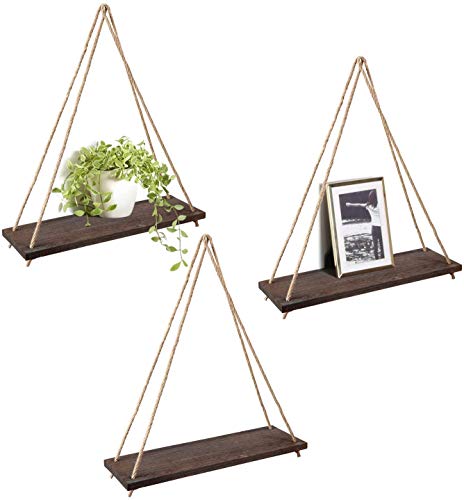
Mkono Wall Shelves
The Mkono Wall Shelves are wall-mounted wood shelves with a decorative, slightly boho feel, often styled with plants. In daily use they behave the way this style of shelf should: the board gives you a true, flat display surface, the mounting system decides how confident the shelf feels once loaded, and the finish decides how well it survives the room it lives in. Treat it as a entry-tier option and judge it on bracket quality, board feel and the hardware in the box rather than on styling photos alone.
Best for: plant shelves, bedroom corners and reading nooks that need charm as much as storage. Not suited for: utility storage in garages or workshops, where plainer heavy-duty shelving fits better. As with every shelf in this guide, mount it into studs wherever you can, or use the correct anchors for your wall type, and keep the load sensible and qualitative — display and everyday storage, not a warehouse.
First Setup and Care Essentials
Setup follows the rhythm this guide has repeated deliberately: plan the position with tape, find the studs, check for hidden cables and pipes before drilling, fix the system level, seat the board fully, snug every set screw, and load gradually over the first days while you watch for movement. Keep the shelf’s spare hardware and your wall notes — which anchors, which studs — in one labelled place; future adjustments and house moves both get easier.
Care is a rhythm, not a project. Dust shelves with the room’s regular clean, wipe kitchen shelves against grease more often, dry bathroom items before they go back, and ventilate steamy rooms. Twice a year, check fixings for movement and finishes for early wear, and deal with both while they are small. A shelf bought by this guide and kept on this rhythm should give a decade of unconsidered daily service — which is the entire point of buying it properly once.
Mistakes to Avoid
The classic buying mistake is choosing by photograph: the set arrives, its bracket holes cannot meet your studs, its finish sulks in your light, and the project becomes improvisation. The second is buying one personality for the whole home, leaving the bathroom with a dry-room board and the kitchen with a display shelf. The third is ignoring the box: assuming the included plugs suit your wall, when your wall has not been consulted. The fourth is over-length and over-depth — shelves sized to the wall’s maximum rather than the objects’ needs, crowding rooms and inviting overload.
The fifth mistake is treating this wall shelves buying guide’s load bands as pessimism. They are the opposite: they are what lets a shelf be loaded confidently for years instead of hopefully for a month. Every mistake on this list is cheap before purchase and annoying after it, which is why the guide exists in this order — wall first, type second, material third, hardware always, and the shopping last.
Budgeting by Tier, in Words Rather Than Numbers
This guide prints no prices, deliberately: they change constantly, and a buying decision built on a stale number is a bad decision wearing a precise costume. Tiers are the honest currency. Entry-tier shelves buy you style and light duty — a styled nook, a plant moment, a renter’s first wall — and ask for gentle rooms and modest loads in return. Mid-tier shelves buy you substance: more rigid brackets, boards with better edges and finishes, hardware that respects real walls, and the confidence to use the shelf daily in a working room. Premium spending buys you materials and longevity — solid wood that can be refinished, hardware engineered rather than adequate, finishes that age into character.
The budgeting mistake is not choosing a tier; it is mixing the tier’s expectations. An entry shelf loaded like a premium one disappoints. A premium shelf bought for a spare-room wall that holds two frames is money asleep. Allocate by room importance: the kitchen and living room, used hourly and seen by everyone, deserve the strongest tier you can justify; the guest room’s decorative shelf does not. And always hold back a small part of the budget for the unglamorous essentials — proper anchors for your wall type, a stud finder if you do not own one, filler and paint for the inevitable learning curve. Those items protect every other pound or dollar in the project.
Four Worked Room Plans
Plans make criteria concrete, so here are four, built from this guide’s shortlist. The small rental living room: one run of rustic bracket shelves above the sofa, loaded with the current book rotation, two plants and framed prints, fixed into studs with few, purposeful holes and a filler plan agreed with the landlord. The shelf carries the room’s personality so the furniture can stay simple and movable — exactly the division of labour renting rewards.
The family kitchen: bracket shelves or a rail run on the wall away from the hob’s plume, holding the daily dishes and jars at comfortable reach, with a towel-bar format near the sink for the working cloths. Heavy stoneware and the slow cooker stay in cupboards below. The wipe-down rhythm is weekly and honest, and the shelf earns its place every single morning by making breakfast faster.
The compact bathroom: one towel-bar shelf above the door-side wall or beside the mirror, bottles corralled in a tray, towels hanging beneath, spare stock hidden in an AMADA-style drawer variant if the layout allows a second shelf. Ventilation runs after every shower. Nothing on these shelves is precious, everything is reachable, and the room that had no storage now behaves as if it has a cupboard.
The reading bedroom: a quiet floating shelf beside the bed — never above it — with the lamp, the current novel and a small plant, plus a Mkono-style corner shelf for the overflow of a beloved paperback collection. The palette stays calm, the loads stay light, and the room’s last and first sights of the day are composed rather than cluttered. Four rooms, four different right answers, one consistent method: wall first, type second, material third, hardware always.
Questions to Ask Before You Commit to Any Set
Run any candidate shelf through these questions, in this order, and let a bad answer stop the purchase. How does it fix to the wall, and can those fixings meet my studs? What is the board actually made of, and is the underside finished? What hardware is in the box, and does it suit my wall type or must I add the correct anchors? Is the finish sealed for my room’s moisture and sun? What will I honestly load onto it, in which of this guide’s three bands does that load fall, and does the shelf’s type match that band?
Then the two lifestyle questions. Will I enjoy this object being permanently on display, dust and all, in this room’s light? And if I move or redecorate, can this shelf come with me or find a second life on another wall? A set that passes the five practical questions and both lifestyle ones is a buy. A set that fails any practical question is a no, however beautiful its photograph — photographs are the one thing in this category that is guaranteed not to hold your books.
Styling as Part of the Buying Decision
Styling belongs in a buying guide because the wrong depth, colour or format cannot be styled away later. Buy depth for your objects: measure the widest thing you love, not the average thing you own. Buy colour against your wall in your light — order of operations matters, and a shelf that matches the wall disappears politely while a contrast shelf becomes a feature you must then honour with good objects. Buy format for your habits: households that accumulate small things should buy the drawer variant now rather than apologising to an open shelf forever.
And buy with the arrangement half-planned. If you can already name the five or six objects a shelf will hold, the size is probably right. If you are buying shelves in search of objects to justify them, the cart is ahead of the life, and the honest purchase is one shelf, lived with, before the run is extended. Shelves reward editors; they expose collectors of shelving itself.
When the Right Answer Is Not a Wall Shelf
A buying guide earns trust by naming its own limits. If the load is a real library, buy the bookcase. If the clutter must vanish from sight, buy the cupboard. If the wall cannot be drilled or cannot be trusted, buy furniture. If the room is a garage or workshop with genuinely heavy tools, buy purpose-built racking. Wall shelves are the right answer for display, daily light storage and small-space organisation on sound walls — a large and honourable territory that does not need to annex the rest of the house to justify itself.
Understanding Your Wall Types Before You Shop
Since the wall is the specification, this wall shelves buying guide owes you a plain-language tour of the walls you are likely to meet. Stud walls — timber or metal framing behind plasterboard — are the most common in modern homes, and they are good news: the studs are superb fixings, and the spaces between them are manageable with toggle-style anchors designed for hollow boards. Your whole strategy on a stud wall is to design the shelf layout around the stud positions, which a stud finder reveals in minutes, and to treat between-stud fixings as the supporting act, never the headline for anything heavy.
Solid masonry — brick, block or stone with a plaster skin — is the strongest wall of all once you are through the plaster: proper plugs grip it confidently and bracket shelves in particular feel immovable. The skills it asks are a suitable drill and bit, patience, and respect for the fact that old masonry can hide anything, including the services you must not touch. Tiled walls, usually in kitchens and bathrooms, add a surface problem to the structural one: drill the tile correctly with the right bit and no hammer action until you are through the glaze, or fix into grout lines where the layout allows, and always seal around bathroom fixings so water cannot wander in behind.
The difficult walls deserve honesty too. Very old lath-and-plaster can crumble around fixings; some lightweight partition systems offer little to grip; walls in poor repair should be repaired before they are asked to carry anything. In each case the buying decision changes: lighter shelves, more fixings spread wider, loads kept to display — or the floor-standing alternative, chosen without shame. A wall assessed honestly before shopping is the difference between a shelf that feels inevitable and one that feels like a gamble.
The Complete Pre-Purchase Walkthrough
Here is the whole guide compressed into one walkthrough you can perform with a tape measure and a phone camera. Stand in the room and name the job: display, daily storage, clutter control, or a child’s carefully safe corner. Photograph the wall straight-on. Mark the furniture line below it and the ceiling line above it, and tape the shelf outline at full size, at the height the shortest regular user can reach comfortably for daily things. Live with the tape through one full day of the room’s real use — cooking, working, bathing, passing with laundry baskets — and adjust without mercy.
Now interrogate the wall: construction, stud positions, the detector’s verdict on cables and pipes anywhere near the outline. Interrogate the objects: gather them, measure the extremes, assign them to this guide’s load bands, and evict anything heavy to furniture without negotiation. Interrogate the shortlist with the questions from the previous section. Only now — wall known, objects known, questions answered — does the purchase happen, with the correct anchors added to the same order if the box’s hardware does not match your wall. Followed once, this walkthrough feels slow. Followed as a habit, it is why some households never have a shelf story to tell.
Companions Worth Buying Alongside Shelves
A shelf rarely succeeds alone, and a small part of any sensible budget belongs to its companions. Bookends or a lying-stack habit keep book runs honest. Trays and low baskets corral the small objects that otherwise migrate across a bathroom or entryway shelf and make dusting a lift-and-wipe gesture instead of an excavation. A rail, hooks or a towel bar beneath a shelf doubles the function of the same fixings, which is why formats that include them score so well in this guide. Felt pads under heavy-based objects protect finishes, and a small level, a stud finder and the correct anchors — already mentioned, worth repeating — protect everything else.
Lighting is the companion buyers forget and then retrofit awkwardly. A shelf run lit by a nearby sconce or a lamp below it looks intentional at night instead of merely present, and planning the light at purchase stage costs nothing but thought. Our related picks below cover wall lighting that pairs well with shelves. Buy the companions in the same order as the shelf and the project finishes in one afternoon instead of trailing through a month of small parcels.
A Short Glossary for Shelf Shoppers
Plain language helps at the checkout, so here are the terms listings use, translated. A floating shelf hides its bracket; a bracket shelf shows it; neither word says anything about strength. A stud is the vertical framing timber or metal behind plasterboard, and it is the best fixing your wall owns. An anchor or wall plug is the device that lets a screw grip a wall that is not a stud — toggle types for hollow board, expansion plugs for masonry — and using the correct one for your wall is non-negotiable. A set screw is the small screw that locks a floating board onto its bracket rods; snug ones are the difference between solid and subtly mobile.
Veneer is a thin skin of real wood over a core; laminate and printed wrap imitate wood without being it, and each can be the right buy at the right tier in the right room. Load bands in this guide — light display, everyday storage, and the heavy loads that belong on furniture — are deliberately qualitative, because your wall co-authors every capacity figure. Tier language — entry, mid, premium — describes positioning and expected substance, not a promise; the bracket in your hand outranks the adjective on the page.
Two more terms complete the shopper’s vocabulary. A picture ledge is a shallow shelf with a lip, designed for leaning frames rather than standing objects, and it should never be asked to do a general shelf’s job. A rail system is a pair of wall uprights with movable brackets, bought when the storage must reconfigure over time. Knowing which family a listing belongs to — and which family your room needs — is most of what this guide exists to teach.
Final Buying Advice From This Guide
If this wall shelves buying guide has a single sentence, it is this: the wall chooses the shelf more than you do, and the buyers who accept that end up with shelves they never think about again — the highest compliment storage can earn. Meet your wall first. Choose the type for the room’s work, the material for the room’s conditions, the hardware for the load’s honesty, and the style last, with the lights on and the tape still on the wall. Buy per room, in sets sized to real arrangements, with the correct anchors in the same basket.
Then install like the second half of the purchase, because it is: studs first, level always, services checked before every hole, loads added gradually. Keep the spare hardware, note the stud positions on a phone photo of the bare wall, and give the shelf its twice-yearly minute of attention. Do all of that and the humble wall shelf becomes what this guide believes it is — the best value-for-space decision in the home, bought once and enjoyed daily.
One more encouragement for the hesitant: this decision is unusually reversible. A shelf can move walls, move rooms and move homes; holes fill; finishes forgive. The cost of a well-bought shelf installed carefully is an afternoon, and the cost of waiting for perfect certainty is another year of cluttered surfaces. Use this guide to make the choice sound, then make it, and let the wall start earning its keep.
Delivery Day: Inspecting Shelves Before They Meet the Wall
The last buying skill happens at your front door. Unpack the set fully before installation day and inspect like a reviewer: boards flat on a table to check for warp, edges and undersides finished, finish colour honest against the listing’s photographs in your room’s light. Lay out the hardware and count it against the instructions; test the bracket’s rigidity in your hands; confirm the board seats fully onto its frame if the set is floating. A flaw found now is a painless return; the same flaw found with holes in the wall is a saga.
Keep the packaging until the shelf has been up a week and loaded, and keep the instructions permanently — they name the hardware you will want again when the shelf moves rooms or homes. This small ceremony of inspection is the buying guide’s final gate, and it takes ten minutes.
While you inspect, photograph the bracket and hardware beside the instructions. If anything is ever missing, damaged or in question later, that photograph answers in seconds what memory would fumble — a tiny habit that separates buyers who finish projects cleanly from buyers who improvise them.
A Pre-Purchase Measurement and Compatibility Audit for Your Wall Shelves
Use this audit in the final ten minutes before you order a wall shelves, because that is when most buying-guide advice stops being abstract and starts being a tape measure, a doorway and a return label you would rather not need. Write down three numbers for the wall shelves you are considering: the footprint where it will sit or be stored, the largest dimension it reaches in normal use, and the clearance it needs so doors, drawers, lids, handles or moving parts can work without catching. Compatibility is the second audit, and for a wall shelves it means checking what it must work alongside: the surfaces, fittings, power or water access, storage and other pieces already in your home decor & lighting setup that the new purchase has to cooperate with every day. Use a simple decision checklist at the end: the wall shelves fits the measured space, suits the real frequency of the job, matches the household’s cleaning temperament, has obtainable parts, and has a named storage home — five yeses make a confident order.
Check the floor, wall, ground or surface the wall shelves will meet, since level, texture, moisture and finish decide more about everyday performance in home decor & lighting settings than most shoppers expect when they are comparing listings on a screen. Consider the cleaning rhythm honestly: a wall shelves that needs attention after every use suits a household that enjoys small rituals, and frustrates a household that wants to finish a job and walk away, so match the upkeep to the temperament, not the intention. Seasonal thinking helps more than expected: a wall shelves bought in one season will meet different light, humidity, mud, heat, guests and routines in another, so judge its size, storage and upkeep against the hardest season it will face. Keep the packaging of a larger wall shelves until those first ordinary tests are done, flattened if space is tight, because re-boxing an awkward shape from scratch is the hidden difficulty inside many otherwise straightforward returns.
Shortlist discipline helps here: keep two wall shelves options that pass the audit and let one fail on paper, because comparing a clear pass against a clear fail teaches you more about your real priorities than comparing three near-identical maybes. If you want a concrete listing check, take a name already shortlisted in this guide, such as BAYKA Wall Shelves, Wallniture Wall Shelves and SRIWATANA Wall Shelves, and verify that exact wall shelves listing against the measurements and compatibility questions above, field by field, rather than trusting the headline description alone. Read the manual’s warnings page for the wall shelves even if you read nothing else, because that page is a compressed list of every way the product has ever been misused, and it tells you exactly which of your own habits needs adjusting. Test the wall shelves in the first week under deliberately ordinary conditions rather than saving it for a special occasion, so that any problem surfaces while returning, exchanging or adjusting your setup is still simple.
Watch for edge cases in your own home: the pet that investigates everything, the child who treats every new object as furniture, the guest who uses force where you use familiarity, and the weather, light or season that changes how a wall shelves behaves. Photograph your setup once the wall shelves is working well — the position, settings, arrangement or layout you settled on — so that after a move, a deep clean or a seasonal break you can recreate the arrangement that worked instead of rediscovering it. Share the checklist result with anyone who shares the space, since a wall shelves chosen by one person and resented by another rarely survives, however sensible the purchase looked on paper. Decide in advance what good enough looks like for the job the wall shelves does in your home, because chasing a flawless result usually costs more time than the flaw itself, and most households are happier with a reliable ninety percent they actually repeat.
Look at replacement parts and consumables for the wall shelves while you are still comparing, confirming that the pieces most likely to wear, clog, tear, fade or get lost can actually be obtained without replacing the whole product. Measure before anything else, and measure the wall shelves in its working state rather than its packed or folded state, because handles extend, lids open, cords trail, doors swing and users stand somewhere, and all of that belongs in the measurement. Think about who else will use the wall shelves and what they will do differently: shorter reach, less patience, stronger habits, no interest in the manual, and a tendency to leave things wherever they were last set down. Finally, remember that the best wall shelves for your home is the one whose size, habits and upkeep disappear into your routine, leaving only the result behind — a cleaner surface, a better-lit seat, a tidier shelf, an easier job — week after ordinary week.
Frequently Asked Questions
What is the most important thing to check before buying wall shelves?
Your wall. Its construction, where the studs run, and whether hidden cables or pipes cross your planned position decide which shelves you can hang well and how strong the result can be. Buyers who start with the wall choose brackets that can meet studs, plan the right anchors for the gaps, and never discover a problem with a drill already in hand. Buyers who start with the photograph inherit all three problems at once. The wall is the specification; the shelf is the accessory.
Floating or bracket shelves for a first purchase?
For a first purchase, bracket shelves are the more forgiving teacher: the fixings are visible, adjustable and easy to land on studs, and the working look suits kitchens, hallways and living rooms alike. Floating shelves are the better choice once looks lead the decision and you are comfortable levelling a hidden bracket precisely. Neither is stronger by nature — installation decides that — so choose by room and confidence, and read the installation guide before the parcel arrives.
How do I know what size shelf to buy?
Let the objects decide. Gather what the shelf will actually hold, note the tallest and widest pieces, and choose a depth that seats them fully without crowding the room. Then let the furniture below set the length — a run that echoes a sofa, desk or vanity reads as designed, while a wall-maximum span reads as storage overflow. Mock the final outline in painter’s tape and live with it for a day; tape corrects more sizing mistakes than any chart.
Are expensive wall shelves worth it over entry-tier sets?
Worth is decided by service, not tier. A mid-tier set with a rigid bracket, honest board and hardware for real walls will out-serve an entry set in a busy room, and outlast it by years. An entry set bought knowingly for light display in a dry room is excellent value and no compromise at all. The waste is only ever the mismatch: heavy hopes on light hardware, or premium spending on a shelf whose room needed a worker, not a jewel. Match tier to duty and both ends of this guide’s shortlist make sense.
Can wall shelves work in a bathroom?
Yes, with bathroom rules. Choose sealed finishes, metal, or sets designed for bathroom use; expect steam to test every edge; ventilate the room; dry items before replacing them; and favour formats that multiply function, such as a towel bar beneath the shelf or a drawer that hides the bottle clutter. Avoid unsealed engineered boards in unventilated bathrooms, where swelling is a matter of time. Treated as a materials decision rather than a style decision, bathroom shelving is one of the category’s best uses.
What if my walls cannot take shelves?
Some walls honestly cannot: crumbling plaster, certain hollow constructions with nothing sound to fix into, or a rental agreement that forbids drilling. In those cases the right purchase is not a braver anchor but a different product — a bookcase, an over-door organiser, or furniture with vertical storage. This guide would rather lose the sale than bless a fixing it does not trust, and our related guides below cover the floor-standing options in the same detail.
Related Guides and Picks
This wall shelves buying guide is the planning document; the companions below supply the deep review, the step-by-step choosing and installation help, the value judgement and the honest pros and cons, plus floor-standing alternatives for heavy loads.
- wall shelves review
- wall shelves reviews
- how to choose wall shelves
- how to install wall shelves
- are wall shelves worth it
- wall shelves pros and cons
- our main wall shelves picks by budget
- wall mirror ideas that pair well above shelves
- bookshelf picks for heavier book storage
- entryway bench ideas for the wall below


