Where to buy
Check the latest price, availability and delivery on Amazon. Orders are placed on Amazon. We may earn a commission from qualifying purchases.
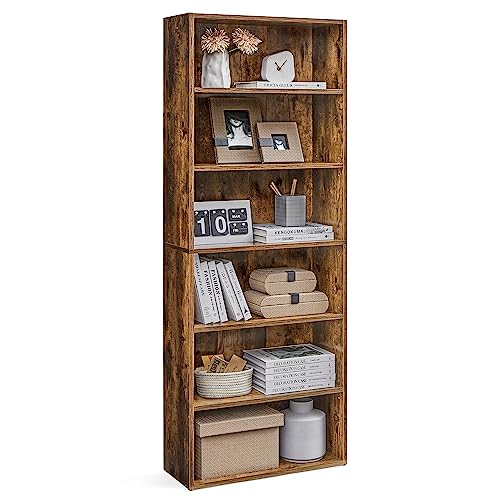
- Best overall: VASAGLE CUSTOS Collection 6-Tier Bookshelf, Rustic Brown (ULBC166X01) — Check on Amazon
- VASAGLE 6-Tier Bookshelf with Steel Frame, Rustic Brown and Ink Black (ULLS101B01) — Check on Amazon
- Sauder 5-Shelf Bookcase, Cinnamon Cherry (Select Collection) — Check on Amazon
- VASAGLE 4-Tier Bookshelf with Steel Frame, Rustic Brown and Ink Black (ULLS60BX) — Check on Amazon
- Furinno Turn-N-Tube 5-Tier Multipurpose Shelf, Sonoma Oak/White — Check on Amazon
- Furinno LUDER 5-Tier Bookshelf, White (11055) — Check on Amazon
Read the full guide ↓
Disclosure: As an Amazon Associate, dailyhomedecorating.com earns from qualifying purchases. Links to Amazon on this page are affiliate links; they cost you nothing extra. Listing details such as price and availability change often, so check the current Amazon listing before you buy.
Finding the best bookshelf under $100 is mostly a matter of matching three things: the wall you have, the books you own, and the way your household actually lives. A bookshelf under $100 has one job that more expensive furniture marketing tries to distract you from: hold a real collection — books, baskets, games, the objects a living room accumulates — without wobbling, sagging or looking like warehouse racking. The good news is that this budget now buys genuinely useful furniture. Steel frames, adjustable shelves and closed-back bookcases from established makers all live under $100, and the differences between them are practical rather than cosmetic: how much each shelf can carry, whether the shelves move, how wide the unit stands, and how honestly the maker states its limits.
This guide compares six verified bookshelves that sit under $100: two six-tier VASAGLE models (one wide and adjustable, one tall and narrow on a steel frame), a classic wide Sauder bookcase with an enclosed back, a mid-height X-braced VASAGLE, and two Furinno designs — one that twists together with no tools at all, and one slim closed-back cube shelf. Between them they cover almost every wall a bookshelf might be asked to fill, from a three-foot living-room run to a sixteen-inch gap beside a sofa.
Our short answer: start with the VASAGLE CUSTOS six-tier if you want the most flexible storage, choose the steel-frame VASAGLE if your wall space is narrow but tall, and pick the Sauder if you want the traditional wide-bookcase look. The Furinno pair serve lighter loads and easier moves. Every pick below explains who it suits, what it does well, and — just as important — its honest limitation, because at this price every design trades something away.
In this guide
Quick Picks: the best bookshelf under $100 at a glance
In a hurry? This table matches each bookshelf to the job it does best. Every pick is detailed in full below, with its specifications, strengths and honest limitation.
| Best for | Pick | Why it stands out | Link |
|---|---|---|---|
| Best overall | VASAGLE CUSTOS Collection 6-Tier Bookshelf, Rustic Brown (ULBC166X01) | Six full tiers at a standard 23.6-inch width is the most usable storage you can get in this budget without going wide, and the CUSTOS frame lets you move shelves to fit tall art books, binders or a row of storage baskets instead of forcing everything into identical cubes. | Check on Amazon |
| Best tall and narrow | VASAGLE 6-Tier Bookshelf with Steel Frame, Rustic Brown and Ink Black (ULLS101B01) | At just 15.7 inches wide but over six feet tall, this is the pick that turns a dead sliver of wall — beside a sofa, between a door and a window — into a full column of storage, and the steel frame gives it a firmer feel than all-board budget shelves. | Check on Amazon |
| Best wide traditional bookcase | Sauder 5-Shelf Bookcase, Cinnamon Cherry (Select Collection) | This is the classic wide bookcase shape: nearly three feet across, five shelves, three of them adjustable, with an enclosed back that keeps books from sliding through and gives the whole unit a finished, traditional look that open industrial frames do not try for. | Check on Amazon |
| Best mid-height everyday shelf | VASAGLE 4-Tier Bookshelf with Steel Frame, Rustic Brown and Ink Black (ULLS60BX) | Four tiers at counter height is an underrated shape: the top surface stays usable for a lamp, a plant or the book you are actually reading, the X-braced steel frame shrugs off daily knocks, and nothing towers over the room. | Check on Amazon |
| Best tool-free assembly | Furinno Turn-N-Tube 5-Tier Multipurpose Shelf, Sonoma Oak/White | The Turn-N-Tube system twists together by hand — no Allen key, no cam locks, no swearing — which makes this the shelf renters and first-apartment shoppers reach for, and it comes apart just as fast when the lease ends. | Check on Amazon |
| Best slim closed-back cube shelf | Furinno LUDER 5-Tier Bookshelf, White (11055) | The LUDER is the narrowest true bookcase here — under sixteen inches wide with a closed back, so books stay put and the silhouette stays tidy — and its cube layout takes fabric bins neatly, which is how small homes actually stay organized. | Check on Amazon |
How these picks were chosen
We shortlisted bookshelves sold by established furniture makers with verifiable Amazon listings, published dimensions and stated load information, then judged them against the needs behind the search for the best bookshelf under $100. We did not include any model whose specifications we could not verify, and we have flagged load limits and trade-offs rather than repeating marketing language. Prices move constantly, which is why this guide never prints a static product price: the budget in the keyword is the ceiling, and the live listing is where you check the current price on Amazon.
- Verified load information: we favored makers that publish per-shelf or per-unit limits (the Furinno LUDER lists per-cube loads; the Turn-N-Tube lists a 75 lb unit limit) over vague ‘sturdy’ claims.
- Usable shelf geometry: tier count, width, depth and whether shelves adjust — a shelf that cannot fit your tallest book is decoration, not storage.
- Frame construction: steel frames and X-bracing for steadiness, closed backs for keeping books in place, and wall-anchor provisions on tall units.
- Assembly and moving reality: tool-free designs, part counts and unit weight, because budget furniture gets assembled on living-room floors and moved more often than premium pieces.
- Finish and footprint fit: whether the unit looks at home in a living room and whether its dimensions suit typical walls, alcoves and corners.
One more filter mattered: honesty about tier. At under $100, no bookshelf is solid hardwood, and none should be loaded like it is. The picks that survived are the ones whose makers state their materials and limits plainly — engineered wood, particleboard and steel, with numbers attached — because a shelf you understand is a shelf that lasts.
Detailed reviews
VASAGLE CUSTOS Collection 6-Tier Bookshelf, Rustic Brown (ULBC166X01)
Key specs: 6 open tiers; 9.4″D x 23.6″W x 63.3″H; engineered wood shelves with a wood-grain finish; adjustable shelf heights on the CUSTOS frame; freestanding floor unit.
Six full tiers at a standard 23.6-inch width is the most usable storage you can get in this budget without going wide, and the CUSTOS frame lets you move shelves to fit tall art books, binders or a row of storage baskets instead of forcing everything into identical cubes.
In everyday terms, that makes this the default recommendation for a general collection. Applied to this model: The shelf’s geometry is the story — 6 open tiers — and everything about how it behaves in a room follows from that. Shelves at this height and spacing decide which books stand upright, which lie in stacks, and where baskets and decor can live, so read the dimensions against your own collection before the finish sways you.
Living with the CUSTOS day to day, the adjustable shelves are what you notice most. A row of tall cookbooks can stand beside a basket of chargers, and when the collection changes — and collections always change — the shelves move instead of the books being exiled to a closet. The six-tier height also changes how a room reads: it gives a living room a library wall feeling without built-ins, especially when two are placed side by side. Keep the heaviest rows on the lowest two tiers, leave the top tier for plants and light display, and the unit feels composed rather than crammed. Dusting open shelves is the recurring chore, as with every open design here, but the flat engineered-wood surfaces wipe clean quickly and the rustic finish hides the everyday marks that a gloss white surface would advertise.
Who it suits: Choose it if you want one bookshelf that behaves like a small library wall: mixed books, baskets and display pieces in one place.
Pros:
- Six tiers — the joint-tallest count in this roundup at this width
- Adjustable shelves swallow tall books and baskets that fixed cubes reject
- Warm rustic brown finish reads like furniture, not flat-pack storage
- Standard footprint suits a living-room wall, hallway or home office
Honest limitation: Engineered wood, not solid timber — keep heavy loads spread across shelves rather than stacked in one corner, and anchor it to the wall as the maker directs.
Choose / skip: Choose it if you want one bookshelf that behaves like a small library wall: mixed books, baskets and display pieces in one place. Skip it if your spot is narrower than about two feet — look at the slim Furinno LUDER or the narrow VASAGLE steel-frame model below instead.
VASAGLE 6-Tier Bookshelf with Steel Frame, Rustic Brown and Ink Black (ULLS101B01)
Key specs: 6 tiers; 11.8″D x 15.7″W x 73.2″H in this narrow configuration; particleboard shelves on a steel frame; industrial rustic brown and ink black finish.
At just 15.7 inches wide but over six feet tall, this is the pick that turns a dead sliver of wall — beside a sofa, between a door and a window — into a full column of storage, and the steel frame gives it a firmer feel than all-board budget shelves.
In everyday terms, that makes this the default recommendation for a general collection. Applied to this model: The shelf’s geometry is the story — 6 tiers — and everything about how it behaves in a room follows from that. Shelves at this height and spacing decide which books stand upright, which lie in stacks, and where baskets and decor can live, so read the dimensions against your own collection before the finish sways you.
The steel-frame VASAGLE earns its keep in the places other furniture ignores: the fifteen inches beside a wardrobe, the pier of wall between a door frame and a window, the end of a hallway that currently holds a leaning stack of books. Six tiers at that width is a surprising amount of library — enough for a serious paperback habit plus games and a plant or two at the top. The frame’s black steel also does quiet visual work, outlining the shelves so the unit reads as a deliberate column rather than a stack of boxes. Respect two things and it will serve for years: anchor it, because tall and narrow is the geometry that anchoring exists for, and do not force wide art books onto shelves that were designed for standard volumes standing upright.
Who it suits: Choose it when floor width is the scarce resource but ceiling height is free.
Pros:
- Narrow 15.7-inch width fits gaps other bookshelves cannot use
- Steel frame with cross support feels steadier than board-only rivals
- Six tiers at full height — serious vertical storage per inch of floor
- Industrial finish pairs well with metal-and-wood living rooms
Honest limitation: The narrow shelves will not take wide art books or big baskets lying flat, and at 73.2 inches tall wall anchoring is not optional — plan for it before you load a single book.
Choose / skip: Choose it when floor width is the scarce resource but ceiling height is free. Skip it if your collection is mostly oversized coffee-table books — the wider CUSTOS or the Sauder will serve them better.
Sauder 5-Shelf Bookcase, Cinnamon Cherry (Select Collection)
Key specs: 5 shelves (three adjustable); 13.23″D x 35.28″W x 69.76″H; engineered wood in a Cinnamon Cherry finish; enclosed back panel; adjustable shelves rated by the maker for everyday book loads.
This is the classic wide bookcase shape: nearly three feet across, five shelves, three of them adjustable, with an enclosed back that keeps books from sliding through and gives the whole unit a finished, traditional look that open industrial frames do not try for.
In everyday terms, that makes this the default recommendation for a general collection. Applied to this model: The shelf’s geometry is the story — 5 shelves (three adjustable) — and everything about how it behaves in a room follows from that. Shelves at this height and spacing decide which books stand upright, which lie in stacks, and where baskets and decor can live, so read the dimensions against your own collection before the finish sways you.
The Sauder is the pick for people who think of a bookcase as furniture first and storage second. The enclosed back, the crown-style top and the warm cherry finish give it a presence the open frames deliberately avoid, and the wide shelves take the long, unbroken runs of books that make a home library look like a library. Assembly is the traditional flat-pack ritual — cam locks, dowels, a back panel to square up — and it rewards patience: build it in the room it will live in, because at nearly three feet wide and seventy inches tall, moving it between rooms afterwards is a two-person negotiation with every doorway. Once placed and loaded heavy-low, it is the most ‘permanent’ feeling unit in this guide, and for a study or a formal living room that permanence is exactly the point.
Who it suits: Choose it if you have a proper wall to fill and want a bookcase that looks like permanent furniture.
Pros:
- Widest shelf runs in the roundup — long, unbroken rows of books
- Three adjustable shelves plus an enclosed back panel
- Traditional cherry finish suits formal living rooms and studies
- A long-established furniture maker with widely available support
Honest limitation: It is the heaviest, widest unit here, assembly is a bigger job than the tool-free Furinno, and the 35-inch width simply will not fit apartment nooks — measure before you fall for it.
Choose / skip: Choose it if you have a proper wall to fill and want a bookcase that looks like permanent furniture. Skip it for rentals you may leave soon or for any spot under three feet wide.
VASAGLE 4-Tier Bookshelf with Steel Frame, Rustic Brown and Ink Black (ULLS60BX)
Key specs: 4 tiers; 11.8″D x 26″W x 47″H; particleboard shelves on a steel frame with X-shaped back bracing; rustic brown and ink black industrial finish.
Four tiers at counter height is an underrated shape: the top surface stays usable for a lamp, a plant or the book you are actually reading, the X-braced steel frame shrugs off daily knocks, and nothing towers over the room.
In everyday terms, that makes this the default recommendation for a general collection. Applied to this model: The shelf’s geometry is the story — 4 tiers — and everything about how it behaves in a room follows from that. Shelves at this height and spacing decide which books stand upright, which lie in stacks, and where baskets and decor can live, so read the dimensions against your own collection before the finish sways you.
Four tiers sounds modest until you live with the shape. The top of the VASAGLE 4-Tier sits at about counter height, so it works as a surface — a reading lamp, a cup of tea, the novel in progress — while the shelves below hold the supporting cast. The X-bracing at the back is not decoration: it is what keeps a steel-and-board shelf feeling planted when it is bumped by a vacuum cleaner or a passing hip. This is the unit that suits a reading chair pulled close, a hallway that needs a landing place for books and keys, or a bedroom corner where a tall unit would loom. Its limit is honest arithmetic — four shelves hold less than six — so choose it when the location matters more than the maximum count.
Who it suits: Choose it for a reading corner, a hallway wall or anywhere a tall unit would dominate the room.
Pros:
- Mid height keeps the top shelf within easy reach of everyone
- X-braced steel frame — notably steady for the price tier
- Top surface doubles as display or lamp space
- Compact enough for living room, study or bedroom corners
Honest limitation: Four tiers is the least storage here, and the open industrial look will not satisfy anyone shopping for a traditional closed-back bookcase like the Sauder.
Choose / skip: Choose it for a reading corner, a hallway wall or anywhere a tall unit would dominate the room. Skip it if maximizing book count per dollar is the whole point — the six-tier models hold far more.
Furinno Turn-N-Tube 5-Tier Multipurpose Shelf, Sonoma Oak/White
Key specs: 5 tiers; 11.6″D x 23.6″W x 57.4″H; composite wood shelves on Turn-N-Tube posts; tool-free twist-together assembly; listed weight limit 75 lb for the unit, with light per-shelf loads.
The Turn-N-Tube system twists together by hand — no Allen key, no cam locks, no swearing — which makes this the shelf renters and first-apartment shoppers reach for, and it comes apart just as fast when the lease ends.
In everyday terms, that makes this the default recommendation for a general collection. Applied to this model: The shelf’s geometry is the story — 5 tiers — and everything about how it behaves in a room follows from that. Shelves at this height and spacing decide which books stand upright, which lie in stacks, and where baskets and decor can live, so read the dimensions against your own collection before the finish sways you.
The Turn-N-Tube’s party trick is real: the posts twist into the shelves by hand, the whole unit rises in minutes, and it comes apart just as quickly without a box of screws to lose. That makes it the natural shelf for a first apartment, a dorm-adjacent year, a spare room that changes purpose, or any home where furniture gets rearranged seasonally. The trade is written into its listed limits — this is a shelf for paperbacks, magazines, plants and lighter decor, loaded with respect for its 75-pound unit rating. Treated that way, it is a cheerful, useful piece: the Sonoma Oak and white palette brightens corners, the five tiers give a small collection room to breathe, and when life moves, the shelf moves with it instead of being left behind on the curb.
Who it suits: Choose it if easy assembly, easy moving and a light footprint matter more than maximum load.
Pros:
- Genuinely tool-free assembly and disassembly in minutes
- Light enough to move between rooms or homes without help
- Five tiers at a friendly standard width
- Sonoma Oak and white finish brightens small rooms
Honest limitation: The honest trade-off is capacity: the listed 75 lb unit limit and light per-shelf loads mean paperbacks and decor, not a wall of hardcover reference books — respect the limit or choose a steel-frame pick.
Choose / skip: Choose it if easy assembly, easy moving and a light footprint matter more than maximum load. Skip it for heavy textbook or vinyl collections — the VASAGLE steel-frame models carry that brief better.
Furinno LUDER 5-Tier Bookshelf, White (11055)
Key specs: 5 tiers in a closed-back cube layout; 9.4″D x 15.8″W x 52″H; engineered wood; listing rates each cube at up to 30 lb and the unit at 150 lb evenly distributed; can be placed vertically or horizontally.
The LUDER is the narrowest true bookcase here — under sixteen inches wide with a closed back, so books stay put and the silhouette stays tidy — and its cube layout takes fabric bins neatly, which is how small homes actually stay organized.
In everyday terms, that makes this the default recommendation for a general collection. Applied to this model: The shelf’s geometry is the story — 5 tiers in a closed-back cube layout — and everything about how it behaves in a room follows from that. Shelves at this height and spacing decide which books stand upright, which lie in stacks, and where baskets and decor can live, so read the dimensions against your own collection before the finish sways you.
The LUDER thinks in cubes, and cubes think in categories: one for paperbacks, one for a fabric bin of games, one for the children’s books, one for the photo albums. That compartment logic is why it suits real households better than its modest size suggests — everything has a box to belong to, and the closed back means nothing migrates through the unit and down the wall. Placed vertically it is a slim tower for a narrow wall; laid horizontally it becomes a low bench-height shelf under a window or a television. The shallow depth is its boundary: measure your tallest and deepest books against the cube openings, because a cube shelf that cannot take your atlases is a shelf you will resent. For standard books and bins, few designs under $100 organize this much per inch.
Who it suits: Choose it for narrow walls, kids’ rooms, dorms and anywhere bins-plus-books is the storage plan.
Pros:
- Slim 15.8-inch width and shallow 9.4-inch depth for tight spots
- Closed back keeps books and bins from drifting through
- Cube compartments pair perfectly with standard fabric bins
- Rated per-cube loads are generous for its size class
Honest limitation: Cube openings limit very tall books, and the shallow depth means oversized volumes will overhang — check your tallest book against the cube height before ordering.
Choose / skip: Choose it for narrow walls, kids’ rooms, dorms and anywhere bins-plus-books is the storage plan. Skip it if your shelves must hold tall binders or art books standing upright in every row.
Comparison table
| Pick | Size (D x W x H) | Build | Best for | Link |
|---|---|---|---|---|
| VASAGLE CUSTOS 6-Tier | 9.4″ x 23.6″ x 63.3″ | Engineered wood, adjustable shelves | Best overall | Check on Amazon |
| VASAGLE 6-Tier Steel Frame | 11.8″ x 15.7″ x 73.2″ | Particleboard on steel frame | Best tall and narrow | Check on Amazon |
| Sauder 5-Shelf Bookcase | 13.23″ x 35.28″ x 69.76″ | Engineered wood, enclosed back | Best wide traditional bookcase | Check on Amazon |
| VASAGLE 4-Tier | 11.8″ x 26″ x 47″ | Particleboard on steel frame, X-brace | Best mid-height everyday shelf | Check on Amazon |
| Furinno Turn-N-Tube 5-Tier | 11.6″ x 23.6″ x 57.4″ | Composite wood, tool-free posts | Best tool-free assembly | Check on Amazon |
| Furinno LUDER 5-Tier | 9.4″ x 15.8″ x 52″ | Engineered wood, closed-back cubes | Best slim closed-back cube shelf | Check on Amazon |
How to choose the best bookshelf under $100 for your room
Start with the wall, not the catalogue. Measure the width you can genuinely give up, the depth the room can spare without blocking a door swing or a walkway, and the height your ceiling and your reach allow. Then measure your books: the tallest volume sets the shelf spacing you need, and the deepest sets the shelf depth. A bookshelf chosen against those four numbers almost never disappoints; one chosen from a photo alone often does.
Match the frame to the load. Paperbacks, novels and decor are light work that any pick here handles. Hardcovers, textbooks, binders and vinyl are heavy work: favor steel frames, shorter spans and closed backs, keep the heaviest rows on the lowest shelves, and respect the maker’s published limit — the Furinno LUDER, for example, lists per-cube and total loads, and the Turn-N-Tube lists a modest unit limit that suits light collections. Sagging begins as a millimeter and ends as a replacement shelf.
Decide open versus closed back. Open frames (both steel VASAGLE models, the CUSTOS, the Turn-N-Tube) show the wall, feel lighter and let air and light through — good in small or dark rooms. Closed backs (the Sauder, the LUDER) keep books from sliding through, hide wall imperfections and read as more formal furniture. Neither is better; they are different rooms asking different questions.
Plan the anchor before the books. Any tall or narrow unit should be fixed to the wall with its anti-tip kit, into a stud where possible. Do it during assembly, while the unit is empty and movable. Load heavy items low, light items high, and re-check the fixings after the first month — new furniture settles, especially on carpet.
Think in zones, not shelves. The bookshelves that stay tidy are organized by use: current reading at hand height, reference and heavy volumes low, display and light objects high, and a basket or bin wherever small things accumulate. Six-tier units make zoning easy; four- and five-tier units demand a little more discipline but reward it by staying visibly calm.
Leave room to grow — or don’t. A collection that is still growing deserves the six-tier headroom of the CUSTOS or the tall VASAGLE. A collection that is finished deserves the right-sized unit and nothing bigger: an exactly-filled shelf looks intentional, while a half-empty large one looks like storage waiting to happen. Buy for the library you have plus one shelf, not for the library of a different life.
Setting up your bookshelf: assembly, anchoring and the first load
Assembly order matters more than assembly speed. Build the unit in the room where it will live, on a blanket or the flattened box to protect both floor and finish, and keep every fitting in a bowl — cam locks and screws are professionally easy to lose in carpet. Tighten in stages rather than fully at each step: flat-pack panels pull square as the final fittings close, and a unit tightened crooked at step two stays crooked at step twenty. The exception is the Turn-N-Tube, which twists together by hand and squares itself as the posts seat; its whole appeal is that the ritual takes minutes.
Before a single book goes on, position the empty unit, check it sits flush against the wall — thick baseboards can hold a shelf an inch off the wall, which is why some units wobble; a small gap is normal, a rocking unit is not — and fit the anti-tip anchor into a stud. Then load in the order the physics prefers: heaviest books on the lowest shelves, spread across the span rather than piled in the middle; medium rows in the middle; paperbacks, decor and anything fragile up high. Leave the unit a day, then re-check level and fixings: composite materials and carpet both settle under new weight.
The first styling pass is also functional. Bookends or horizontal stacks keep vertical runs from leaning — leaning books stress spines and look tired — and a bin or basket on the shelf nearest the door catches the small objects that otherwise colonize every surface. In the first month, notice which shelf you actually use most; the best-organized bookshelf is the one rearranged once, deliberately, after real life has voted.
Care, longevity and knowing when a shelf has done its job
Budget bookshelves die of three causes: water, overload and movement. Keep them out of persistently damp rooms, wipe spills the day they happen — engineered wood and particleboard swell where liquid sits — and dust with a dry or barely damp cloth rather than soaking spray cleaners into the edges. Respect the load limits not as legal fine print but as the actual engineering of the piece: a shelf that has begun to bow has already told you its verdict, and redistributing that load immediately can save it, while ignoring the bow cannot.
Moving is the other silent killer. If a unit must travel, empty it completely, remove adjustable shelves and fittings into a labeled bag, and — for the tool-free and steel-frame designs — consider full disassembly; a loaded or half-loaded shelf carried by its top rail is a shelf being dismantled by gravity. At the new home, re-anchor before reloading. None of this is precious: these are working pieces of furniture, and a few minutes of care at each transition is the difference between a two-year shelf and a ten-year shelf.
Finally, judge a bookshelf by the room it gives you back. The right unit turns piles into a wall of order, makes books findable, and gives objects a place to be displayed rather than stored in shame. When a shelf has done that for years at under $100, it has not been a compromise purchase — it has been one of the best-value objects in the house.
Common mistakes to avoid
- Buying by tier count alone and discovering the shelves are too shallow or too short for your actual books — measure your tallest and deepest book first.
- Ignoring the load limit: a unit rated for light loads will sag under a full row of hardcovers, and sagging composite shelves do not recover.
- Skipping the wall anchor on tall, narrow units, especially the 73-inch steel-frame VASAGLE — anchoring is part of the product, not an accessory.
- Placing a wide bookcase like the Sauder without measuring doorways and the target wall, including baseboards and outlets.
- Loading the top shelves heaviest: heavy rows belong low, light display pieces belong high, on every unit in this guide.
Most bookshelf regret traces back to one of those five errors rather than to the product itself. The units in this guide are honest examples of their designs; matching the design to your wall, your load and your household is the part only you can do — and the measurements and limits quoted for every pick are there to make that match a deliberate one.
A quick decision shortcut
If you have read this far and still feel torn, decide by elimination. Cross off any unit whose width or depth fails your taped measurements — in shelving, fit is not negotiable. Cross off any unit whose published load limit fails your heaviest shelf of books, weighed honestly rather than hopefully. Of what remains, choose by the room’s life: the steadiest frame for the busiest household, the lightest build for the most mobile one, the most furniture-like finish for the most formal room, and the most flexible shelving for the collection that is still changing. That process leaves one name standing in almost every case, and it is the same name the detailed reviews point to for that situation. Trust the elimination, place the order, and spend the energy you saved on the enjoyable part: deciding which books earn the eye-level shelf. And when the shelf is built, anchored and loaded, step back and check the room rather than the unit: if the wall looks calmer, the floor looks clearer and the books you love are suddenly within reach of the chair you actually sit in, the choice was right — whatever the spreadsheet of dimensions said along the way.
Final recommendation
For most homes, the VASAGLE CUSTOS 6-Tier is the bookshelf under $100 to buy first: six adjustable tiers at a standard width handle the widest mix of books and storage. If your wall is narrow, the steel-frame VASAGLE turns height into storage; if your wall is wide and your taste traditional, the Sauder is the classic answer. The VASAGLE 4-Tier owns the reading-corner brief, the Turn-N-Tube owns easy moves, and the LUDER owns the slim gap. Match the shape to your wall and the load to your books, anchor anything tall, and any of the six will earn its floor space.
What under $100 realistically buys in a bookshelf
It helps to know what this budget is and is not. Under $100 buys engineered wood, particleboard and powder-coated steel, manufactured efficiently and shipped flat — and in the hands of established makers like VASAGLE, Sauder and Furinno, that formula produces shelves that hold real collections for years. It does not buy solid hardwood, dovetailed joinery or heirloom weight, and any listing at this price claiming those things is telling you something about its honesty rather than its quality. The makers here state their materials plainly, which is one reason they were shortlisted.
Within the budget, money flows to three different virtues, and the picks divide along those lines. Spend on frame and you get the steel VASAGLE models: steadier, taller, more load-tolerant. Spend on furniture presence and you get the Sauder: enclosed back, traditional finish, the look of a permanent bookcase. Spend on convenience and you get the Furinno pair: tool-free assembly or bin-friendly cubes, lighter builds that trade maximum load for minimum fuss. The CUSTOS splits its budget between tier count and adjustability. None of these is the ‘correct’ allocation — the correct one is the virtue your household will actually use every day.
Two costs hide outside the sticker and are worth planning for. The first is the anchor: some kits are included, some are a small separate purchase, and either way it is part of owning a tall shelf safely. The second is organization: a pair of fabric bins for cube shelves, or bookends for open ones, turns a good shelf into a tidy system for a small extra outlay. Neither changes which pick is right, but both change how finished the result feels — and feeling finished, rather than merely stored, is what most people searching this keyword are really shopping for.
A last word on timing: prices and availability on these models move with sales cycles, and finishes sell out unevenly — the rustic brown of a VASAGLE or the white of a LUDER may be the variant that disappears first. Because this guide prints no static prices, the live listing is the authority at the moment you buy: check the current price on Amazon, confirm the finish and dimensions on the variant you are actually ordering, and the bookshelf that arrives will be the one this guide described.
FAQ
How many books does a bookshelf under $100 actually hold?
It depends on width and tier count more than price. A six-tier, 24-inch-wide unit holds several hundred paperbacks or a mixed library of books and baskets; a slim 16-inch cube shelf holds far fewer but fits where the big unit cannot. Count your linear feet of books — a standard shelf foot holds roughly eight to ten average hardcovers — and match it to the shelf widths listed for each pick.
Are bookshelves under $100 sturdy enough for hardcover books?
The steel-frame and closed-back models here are, within their published limits. Spread heavy rows across lower shelves, respect per-shelf ratings where the maker gives them, and anchor tall units to the wall. The tool-free Turn-N-Tube is the exception: its listed unit limit suits paperbacks and decor rather than full hardcover rows.
Do I really need to anchor a bookshelf to the wall?
For tall or narrow units, yes — it takes minutes, prevents tip-over, and makers design these units expecting it. It matters most with children, pets, uneven floors or carpet, and on any unit over about five feet tall.
What is the difference between a bookshelf and a bookcase?
In practice, very little: listings use the words interchangeably. Bookcases tend to be the wider, enclosed-back, traditional shape (like the Sauder here); bookshelves are often open and lighter. Shop by dimensions, shelf adjustability and load limits, not by which word the title uses.
Can I put a TV or heavy decor on top of these shelves?
Keep weight low and centered, and never exceed the maker’s limit. A small plant or lamp on a mid-height unit like the VASAGLE 4-tier is a normal use; a television belongs on a rated TV stand, not a budget bookshelf.
How do I stop shelves from sagging over time?
Do not overload a single span, distribute heavy books toward the shelf ends where support is strongest, keep units out of damp rooms, and choose steel-frame or shorter-span designs if your collection is mostly heavy reference books.
Related guides
Still deciding? These guides cover the neighboring budgets and the closest alternative shapes:


