Where to buy
Check the latest price, availability and delivery on Amazon. Orders are placed on Amazon. We may earn a commission from qualifying purchases.
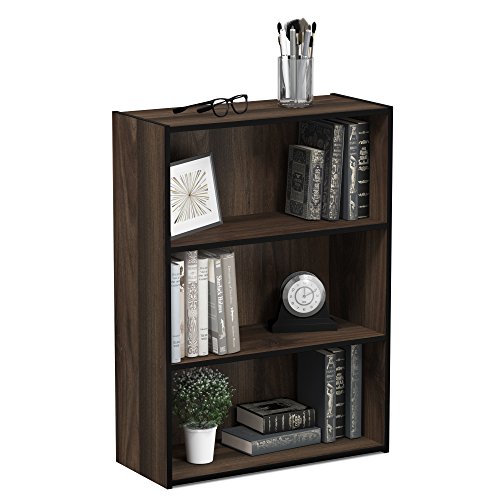
- Best overall under $50: Furinno PASIR 3-Tier Book Shelf, Columbia Walnut (11208CWN) — Check on Amazon
- VASAGLE CUSTOS Collection 3-Tier Bookshelf, Rustic Brown (ULBC163X01) — Check on Amazon
- Furinno Turn-N-Tube 5-Tier Multipurpose Shelf, Classic Tubes, Sonoma Oak/White (18032OK/WH) — Check on Amazon
- Furinno Turn-N-Tube 5-Tier Corner Display Rack, Beech (99811BE/WH) — Check on Amazon
See 2 more Amazon options
- HOMIDEC 6-Cube Storage Organizer, Black — Check on Amazon
- ClosetMaid Cubeicals 6-Cube Storage Organizer, White — Check on Amazon
Read the full guide ↓
Disclosure: As an Amazon Associate, dailyhomedecorating.com earns from qualifying purchases. Links to Amazon on this page are affiliate links; they cost you nothing extra. Listing details such as price and availability change often, so check the current Amazon listing before you buy.
Finding the best bookshelf under $50 starts with an honest admission: at this price you are not buying heirloom furniture, you are buying organised floor space. The good news is that $50, spent carefully, buys a genuinely useful case — three to five real shelves, enough capacity for a working book collection, and a finish that does not embarrass the room. The bad news is that the under-$50 shelf market is also full of undersized racks photographed to look bigger than they are, shelves rated for featherweight loads, and flat-pack kits missing the one part that makes them stable. This guide separates the two groups.
We judged every candidate on the same practical tests: published dimensions measured against real books (a standard hardcover is roughly 9 to 10 inches tall and up to 7 inches deep), the manufacturer’s stated weight limit per shelf and in total, whether the design includes a back panel or an anti-tip option, how the unit assembles, and how it survives being moved — because budget furniture gets moved more than any other kind. Six picks survived, and they are deliberately different from one another: a low wide case, a design-led case, two tall tube shelves, and two cube systems. One of them fits your room; the trick is knowing which problem you actually have.
Our headline answer: for most people, the Furinno PASIR 3-tier is the best bookshelf under $50 because it behaves most like a real bookcase — fixed shelves, a back panel, and a 40 lb per-shelf rating — at the lowest effort. If your problem is a bare corner, skip straight to the Turn-N-Tube corner rack. If your problem is clutter rather than books, the cube systems will serve you better than any open shelf. The detailed reviews below explain who each pick suits, where each one honestly falls short, and the measurements to check before you order.
In this guide
Quick Picks: The Best Bookshelf Under $50 at a Glance
In a hurry? This table matches each shelf to the job it does best. Every pick is a different shape on purpose — match the shape to your room first, then read its full review below.
| Buyer type | Pick | Why it stands out | Link |
|---|---|---|---|
| Best overall under $50 | Furinno PASIR 3-Tier Book Shelf, Columbia Walnut (11208CWN) | 9.7 x 23.7 x 31.5 inches (D x W x H); 3 open shelves; composite wood with laminated finish; each shelf rated up to 40 lb, 120 lb total; back panel included; about 19.4 lb | Check on Amazon |
| Best-looking budget case | VASAGLE CUSTOS Collection 3-Tier Bookshelf, Rustic Brown (ULBC163X01) | 9.4 x 23.6 x 32 inches (D x W x H); 3 open shelves; CUSTOS collection open-compartment design; rustic brown finish; anti-tip kit included in the range | Check on Amazon |
| Most shelf space for the money | Furinno Turn-N-Tube 5-Tier Multipurpose Shelf, Classic Tubes, Sonoma Oak/White (18032OK/WH) | 11.6 x 23.6 x 57.4 inches (D x W x H); 5 shelves; composite wood with plastic classic tubes; 75 lb total weight limit; tool-free assembly; about 20.9 lb | Check on Amazon |
| Best for a dead corner | Furinno Turn-N-Tube 5-Tier Corner Display Rack, Beech (99811BE/WH) | 11.6 x 11.6 x 57.7 inches (D x W x H); 5 corner shelves; composite wood shelves with plastic tubes; tool-free assembly; about 9 lb | Check on Amazon |
| Most flexible layout | HOMIDEC 6-Cube Storage Organizer, Black | 6 modular cubes, each cube about 11.8 x 11.8 x 11.8 inches; plastic panels with metal frame connectors; supplied with a small mallet/hammer for assembly; reconfigurable | Check on Amazon |
| Best with fabric bins | ClosetMaid Cubeicals 6-Cube Storage Organizer, White | 6 cube compartments; laminated wood construction; can be used vertically or horizontally and stacked with other Cubeicals units; designed to fit Cubeicals fabric drawers; white finish | Check on Amazon |
How These Picks Were Chosen
Because this is the general under-$50 guide, we deliberately included one pick from each structural family — boxed case, open designer case, tube shelf, corner tower and cube system — so the comparison teaches you the trade-offs of the whole price band, not just of six near-identical cases. Every pick had to publish full dimensions and a weight limit, be sold by its brand or an established retailer channel, and have a realistic chance of arriving, assembling and holding books without drama.
Our baseline screens applied to every candidate, whatever the list: the manufacturer had to publish full dimensions and a weight limit; the design had to be sold through its brand’s normal retail channels; and the shelf had to be a genuine bookcase or book-storage system rather than a decorative rack photographed at a flattering angle. We cross-checked dimensions and specifications against manufacturer listings and retailer data, and we dropped several popular budget shelves whose published numbers contradicted each other between sources — if we cannot verify what a shelf is, we do not recommend it.
Within those screens, ranking followed use, not specifications alone. A shelf with a slightly lower weight rating but the right shape for the job outranks a stronger shelf in the wrong shape every time, because furniture that fits gets used and furniture that does not fit gets replaced. Price was treated as a band, not a promise: listings move, so every pick is presented with a check-price link rather than a printed figure, and the under-$50 framing of this guide reflects the tier these products are sold in rather than a price we can guarantee on the day you shop.
Detailed Reviews: Best Bookshelf Under $50, Pick by Pick
Furinno PASIR 3-Tier Book Shelf, Columbia Walnut (11208CWN)
Best for: Best overall under $50. Key specs: 9.7 x 23.7 x 31.5 inches (D x W x H); 3 open shelves; composite wood with laminated finish; each shelf rated up to 40 lb, 120 lb total; back panel included; about 19.4 lb. Check on Amazon to see the current listing, finishes and delivery options.
The PASIR is the bookshelf most people picture when they set a $50 ceiling: a low, wide, three-shelf case in composite wood with a back panel, side panels and a proper plinth-style base rather than exposed posts. At just under 32 inches tall it sits below most window sills and below the arm of a standard sofa, which makes it unusually easy to place. The shelves are fixed, and that is a deliberate trade: fixed shelves cannot be adjusted for a tall art book or a storage basket, but they also cannot slip off pegs, and the whole frame feels noticeably more rigid than peg-and-post designs at this price once it is screwed together.
Capacity is the headline. Furinno rates each shelf at up to 40 lb and the unit at 120 lb in total, which is generous for a case this size and this light. In practical terms, a full row of hardcover novels across the 23.7-inch width is well inside the limit, and the back panel stops books sliding through and adds shear strength that open-post shelves lack. The laminated Columbia Walnut finish wipes clean with a dry or slightly damp cloth, and the colour hides dust better than a pure white or black finish does between cleanings.
Assembly is a flat-pack job with screws and dowels rather than a tool-free twist-together build, so allow a quiet half hour, a Phillips screwdriver and a clear patch of floor. The instructions are pictorial. One honest warning: composite-wood panels at this price chip if you over-torque screws, so drive them snug, not forced. Once built, the case is light enough at about 19 lb to slide sideways for vacuuming, yet planted enough not to skate across hard floors when you pull a book out.
As the general-purpose benchmark in this guide, the PASIR sets the standard the others are judged against: if a pick cannot beat it on capacity, looks or flexibility for your specific room, the PASIR is the one to buy.
Pros
- Highest per-shelf rating in this guide at up to 40 lb
- Back panel adds rigidity and stops books sliding through
- Low 31.5-inch height fits under windows and sofa arms
- Wipeable walnut laminate hides dust between cleanings
Honest limitation: the shelves are fixed, so very tall books and large baskets may not fit a level, and the screw-together build is the slowest of the low cases here.
Choose it if you want the most bookcase-like behaviour — fixed shelves, a back panel and the strongest per-shelf rating — in a low, easy-to-place case. Skip it if you need adjustable shelves, a tall unit, or tool-free assembly.

VASAGLE CUSTOS Collection 3-Tier Bookshelf, Rustic Brown (ULBC163X01)
Best for: Best-looking budget case. Key specs: 9.4 x 23.6 x 32 inches (D x W x H); 3 open shelves; CUSTOS collection open-compartment design; rustic brown finish; anti-tip kit included in the range. Check on Amazon to see the current listing, finishes and delivery options.
The VASAGLE CUSTOS 3-tier is the design-led option in this price band. VASAGLE builds it around an open-compartment look — clean rectangular frames, no visible tube posts, and a rustic brown finish that reads as furniture rather than storage hardware. At 23.6 inches wide and 32 inches tall it is almost exactly the same footprint as the Furinno PASIR, so the choice between them is about construction feel and looks, not size: the CUSTOS presents a more minimal, footless silhouette that sits flush and tidy against a wall.
In use, the three open compartments suit a mixed load better than a pure book wall: a run of paperbacks on one level, a plant and a framed print on another, a woven basket on the third. Because the shelves are open at the sides, very small paperbacks can lean if you do not use a bookend, so budget a pair of simple metal bookends if your collection is mostly mass-market editions. The surfaces wipe clean, and the rustic finish is forgiving of the small scuffs that budget furniture inevitably collects.
Assembly follows the usual VASAGLE pattern of labelled parts and a hex key in the box, and the brand’s instructions are among the clearer ones in flat-pack furniture. Take the anti-tip advice seriously with any 32-inch case in a busy room: it is short enough that many owners skip anchoring, but a top-heavy load of hardcovers on the top shelf changes the physics, and the strap takes minutes to fit where a wall stud allows it.
For a first purchase, the CUSTOS is the pick when the shelf will live somewhere visible — a living room wall you look at every evening — and the small premium in effort over the PASIR buys a noticeably tidier silhouette.
Pros
- Cleanest, most furniture-like silhouette in the price band
- Open compartments suit mixed books-and-decor styling
- Clear instructions and labelled parts for assembly
- Rustic finish forgives everyday scuffs
Honest limitation: open sides mean small paperbacks need bookends to stay upright, and the design-led finish still sits on a budget composite frame — treat it as smart everyday furniture, not a premium case.
Choose it if the shelf will be on show in a living room and you want the tidiest budget silhouette with room for styled objects as well as books. Skip it if you need a back panel, maximum hardcover capacity, or the absolute lowest effort build.
Furinno Turn-N-Tube 5-Tier Multipurpose Shelf, Classic Tubes, Sonoma Oak/White (18032OK/WH)
Best for: Most shelf space for the money. Key specs: 11.6 x 23.6 x 57.4 inches (D x W x H); 5 shelves; composite wood with plastic classic tubes; 75 lb total weight limit; tool-free assembly; about 20.9 lb. Check on Amazon to see the current listing, finishes and delivery options.
If the corner rack is the specialist, the 5-tier Multipurpose is the generalist: a full 23.6-inch width across five levels, reaching 57.4 inches tall. That is the most linear shelf space in this roundup, and it changes what a $50 budget can hold — a realistic home for a couple of hundred paperbacks, or a mixed wall of books, baskets, games and a printer. Furinno lists a 75 lb total weight limit, so distribute hardcovers across the lower and middle shelves instead of filling the top with atlases.
The classic-tube design twists together without tools, like the corner version, but the wider rectangular shelves and curved tube profile give it a slightly more furniture-like stance in Sonoma Oak and white. The open construction keeps it feeling light in a room and makes cable runs for a lamp or a charger simple. The trade-off is the same as all tube furniture: the shelves are thinner than a boxed case’s panels, long-term sag is possible if you park maximum loads in the middle of a shelf for years, and it will never feel as planted as a screwed-together bookcase with a back panel.
For renters and first flats it is often the smartest buy in this list, because the same unit can start as a bookcase, become a kitchen overflow shelf, then a hallway display without a single screw being driven. When you move, it breaks down into a bundle of panels and tubes that fits in a car boot. Just respect the weight limit, keep the heaviest shelf at the bottom, and anchor it if children or large dogs share the room.
Judged purely on shelf-inches per dollar, this is the value champion of the six; general buyers with a long book run and a bare wall should start here and only look elsewhere if they need a back panel or a lower profile.
Pros
- Most linear shelf space of any pick here
- Tool-free build that knocks down flat for moving
- Full 23.6-inch width takes real book runs
- Two-tone finish suits living rooms, not just storage corners
Honest limitation: the 75 lb total limit is real — this is a paperback-and-mixed-storage unit, not a hardcover archive — and open tube shelves will never feel as rigid as a boxed case with a back panel.
Choose it if you have one free wall patch and the largest possible amount of shelving to put on it for paperbacks and mixed storage. Skip it if you cannot anchor a tall unit where children climb, or your collection is mostly heavy hardcovers.
Furinno Turn-N-Tube 5-Tier Corner Display Rack, Beech (99811BE/WH)
Best for: Best for a dead corner. Key specs: 11.6 x 11.6 x 57.7 inches (D x W x H); 5 corner shelves; composite wood shelves with plastic tubes; tool-free assembly; about 9 lb. Check on Amazon to see the current listing, finishes and delivery options.
The Turn-N-Tube corner rack solves a different problem from the low cases: it monetises the dead corner. The footprint is just 11.6 inches square, yet it stacks five shelves to 57.7 inches, so the storage-per-square-foot is the best in this roundup by a wide margin. The shelves are shaped for corner placement, which means each level is a display surface more than a book row — expect a handful of paperbacks, a plant, a speaker or framed photos per tier rather than a library run.
Assembly is the famous Furinno party trick: the plastic tubes twist together by hand, no tools, and the whole unit genuinely goes up in minutes and comes apart just as fast. That makes it the easiest pick here to move house with, to lend, or to reconfigure. At about 9 lb it is also the lightest piece in this guide, which is a blessing for carrying and a warning for loading: keep heavier items on the bottom tiers, treat the upper shelves as display space, and do not use it as a step or a climbing frame for children or pets.
The beech-and-white finish is bright and neutral, and the open sides mean dusting is a quick wipe rather than an excavation. What it will not do is swallow a serious book collection: the corner geometry wastes the middle of each shelf for long book runs, and the plastic tube construction flexes more than a screwed case if you overload it. Judged as vertical display storage for awkward corners, though, nothing else under $50 does the job as neatly.
As an all-round purchase it only makes sense if you truly have a corner doing nothing — but most rooms do, and converting that corner frees the low case you already own for the things it does better.
Pros
- Five shelves on an 11.6-inch-square footprint
- Genuinely tool-free assembly in minutes
- Light enough to move with one hand
- Turns a dead corner into display storage
Honest limitation: corner geometry shortens every book row, the plastic-tube frame flexes if overloaded, and it is a display shelf first and a library second.
Choose it if you have a free corner and need display and light storage without surrendering any real floor space. Skip it if your priority is long rows of heavy books rather than display and light storage.
HOMIDEC 6-Cube Storage Organizer, Black
Best for: Most flexible layout. Key specs: 6 modular cubes, each cube about 11.8 x 11.8 x 11.8 inches; plastic panels with metal frame connectors; supplied with a small mallet/hammer for assembly; reconfigurable. Check on Amazon to see the current listing, finishes and delivery options.
The HOMIDEC is not a bookcase in the traditional sense, and that is exactly its appeal. Six modular cubes, each roughly 11.8 inches in every dimension, click together with connectors into the shape your room needs: a low 3-by-2 sideboard, a 2-by-3 tower, an L under a window, or two separate 3-cube stacks either side of a TV. Standard fabric bins made for 11-inch cube storage drop straight in, turning open shelves into hidden storage in seconds.
Each cube swallows a row of upright paperbacks, a stack of magazines, board games, vinyl, toys or folded throws. The plastic panel construction will not match a wood case for sheer book weight — load books in the bottom cubes and keep the top cubes for lighter things — but for the mixed clutter that actually fills living rooms, the cube format is more honest storage than open shelves, because the bins hide the mess instead of displaying it.
Assembly uses the supplied mallet to seat the connectors, and the first cube is the fiddly one; after that the rhythm is quick. The huge practical win is reversibility: when you move, redecorate or simply change your mind, the whole thing knocks down into a flat stack of panels and a bag of connectors. No other pick in this guide can change shape after purchase, and for households whose storage problem keeps changing, that flexibility is worth more than a prettier finish.
For a general household the HOMIDEC is the hedge against an uncertain future: whatever shape your storage problem becomes next year, this is the one pick that can become it too.
Pros
- Reconfigures into any layout — tower, low case or split stacks
- Accepts standard 11-inch fabric bins for hidden storage
- Knocks down flat; individual cubes are cheap to replace
- Each cube fits books, games, vinyl or folded textiles
Honest limitation: plastic panels are not built for maximum book weight in every cube, assembly with the mallet is noisy, and the utilitarian look will not suit every living room.
Choose it if your storage problem keeps changing shape, or your space is an awkward shape no standard case fits. Skip it if you want a traditional furniture look or maximum per-shelf book weight.
ClosetMaid Cubeicals 6-Cube Storage Organizer, White
Best for: Best with fabric bins. Key specs: 6 cube compartments; laminated wood construction; can be used vertically or horizontally and stacked with other Cubeicals units; designed to fit Cubeicals fabric drawers; white finish. Check on Amazon to see the current listing, finishes and delivery options.
ClosetMaid’s Cubeicals line is the established-name option among cube storage: a laminated wood 6-cube unit that can stand vertically as a narrow tower or lie horizontally as a low bench-height case, and can be stacked with matching units when your storage needs grow. The wood construction feels a step more substantial than panel-and-connector cubes, and the crisp white finish suits bright, simple rooms.
The cubes are sized for ClosetMaid’s own fabric drawers, which are widely sold separately, so you can mix open display cubes with closed fabric bins in whatever ratio your clutter demands — books visible, chargers and remotes hidden. As a bookshelf, a horizontal Cubeicals makes an excellent low library under a window, and the flat top doubles as a display surface for a lamp or plants, something open tube shelves cannot offer as confidently.
Assembly is a conventional screw-and-dowel flat-pack build, slower than the tool-free picks here but with a more rigid result. Anchor it when used vertically or stacked, as with any tower. The honest limitation is depth and cube size: oversized art books and tall hardcovers may not stand upright in a cube, so measure your tallest books before committing — this is a system for standard books and everyday storage, not an archive case.
The Cubeicals earns its place in a general roundup as the system buy — the unit you can add to, stack and accessorise with matching fabric drawers over time rather than replace.
Pros
- Established brand with widely available matching fabric drawers
- Works vertically, horizontally or stacked with matching units
- Wood construction feels more substantial than panel cubes
- Flat top doubles as a display or lamp surface
Honest limitation: cube openings limit book height, so oversized art books may have to lie flat, and the fabric drawers that complete the system are sold separately.
Choose it if you want a system you can add to over time, with the option of fabric drawers to hide clutter inside a tidy grid. Skip it if your books are mostly oversized, or you want an open-shelf look rather than a cube grid.
Comparison Table
The six picks side by side on the numbers that decide fit: footprint, height, shelf count and how the unit is built. Weight limits are the manufacturers’ published figures; treat them as ceilings, not targets.
| Pick | Dimensions (D x W x H) | Shelves | Construction | Assembly |
|---|---|---|---|---|
| Furinno PASIR 3-Tier | 9.7 x 23.7 x 31.5 inches (D x W x H) | 3 | Composite wood, back panel | Screws and dowels |
| VASAGLE CUSTOS 3-Tier | 9.4 x 23.6 x 32 inches (D x W x H) | 3 | Composite wood, open frame | Hex key, labelled parts |
| Furinno Turn-N-Tube 5-Tier Multipurpose | 11.6 x 23.6 x 57.4 inches (D x W x H) | 5 | Composite shelves, plastic tubes | Tool-free twist-together |
| Furinno Turn-N-Tube 5-Tier Corner | 11.6 x 11.6 x 57.7 inches (D x W x H) | 5 | Composite shelves, plastic tubes | Tool-free twist-together |
| HOMIDEC 6-Cube Organizer | 6 modular cubes, each cube about 11.8 x 11.8 x 11.8 inches | 6 cubes | Plastic panels, metal connectors | Mallet and connectors |
| ClosetMaid Cubeicals 6-Cube | 6 cube compartments | 6 cubes | Laminated wood cube frame | Screws and dowels |
What a $50 Budget Really Buys in a Bookshelf
It helps to know where the money goes. In an under-$50 bookshelf, most of the cost is the panels themselves — composite wood or particleboard with a laminated surface — plus the hardware bag and the box it ships in. What you are not paying for is solid timber, joinery, or thick shelves, and that sets realistic expectations: these are five-to-ten-year furniture pieces for ordinary loads, not lifetime casegoods. The laminate is not a weakness in daily use; it is what makes the surface wipeable, consistent in colour, and cheap enough to hit the price at all.
The engineering differences that matter at this price are quiet ones. Fixed shelves resist racking better than adjustable pegs. A back panel, even a thin one, dramatically stiffens a rectangular case because it stops the frame parallelogramming under load. Tube-and-panel designs trade that stiffness for tool-free assembly and feather weight. Cube systems trade it for shape. None of these is the ‘right’ answer in the abstract — the right answer is the one whose trade-offs match your load, your room and how often you move.
Load ratings deserve a sceptical read. A per-shelf figure is the number to trust and to obey; a total figure tells you the frame’s overall limit. Ratings assume the load is spread evenly, not concentrated in the middle, and they assume the unit is assembled correctly and standing on a level floor. If your collection is mostly hardcovers, treat the rating as a ceiling you stay visibly under, distribute weight across shelves, and favour the boxed cases in this guide over the open tube designs.
Finally, budget for the unglamorous extras at the same time as the shelf: felt pads for hard floors, a wall anchor strap if one is not included, and a pair of bookends for open designs. Together they cost very little, and they are the difference between a cheap shelf that feels cheap and one that quietly does its job for years.
How to Choose the Best Bookshelf Under $50
Start with the load, not the look
Count what the shelf must hold before you fall for a finish. A shelf of hardcovers weighs roughly 1 to 1.5 lb per inch of width, so a full 24-inch row can reach 25 to 35 lb. Compare that with the per-shelf rating, not the total: a unit rated 120 lb overall but 15 lb per shelf will still sag under your novels. Paperback-heavy and mixed-media loads are far kinder, which is why the tube and cube picks work well for general storage even with modest ratings.
Match the footprint to the room’s dead zones
Low cases (around 32 inches tall) belong under windows, under wall art and beside sofas. Tall narrow units belong in corners and in the gap between a wardrobe and a wall. Measure the floor patch, then measure the door swing and the path you walk — a shelf that fits the wall but blocks the route to the kitchen will annoy you daily. Leave an inch of clearance behind any case for skirting boards and cables.
Decide whether you need a back panel
A back panel stops books sliding through, adds rigidity and hides a scruffy wall; it also makes the case heavier to move and can trap dust. Open designs feel lighter in small rooms and are easier to clean behind. Families with toddlers and anyone storing small items usually do better with a back panel or cubes; display-led rooms do fine open.
Plan the anchor before you build
Any shelf over about 30 inches tall, and any shelf a child might climb, should be anchored to a stud or a proper wall fixing. Check what your wall is made of before ordering fixings, and if you rent, ask — many landlords accept a single small anchor hole far more readily than they accept the damage claim from a toppled bookcase.
Assembly, Stability and Care: Getting Budget Furniture Right
Every pick in this guide arrives flat, and the first hour decides how the next years go. Build on a soft surface — a rug or the flattened shipping box — so panels do not scratch. Lay out every part and check it against the parts list before driving a single screw; discovering a missing panel at step nine is the classic flat-pack misery, and it is avoidable at step zero. Keep screws finger-tight until the frame is complete and square, then tighten in a cross pattern so the case pulls itself true instead of twisting.
Stability is a system, not a feature. A level floor, an even load with the weight low, and a wall anchor where height or household demands it — together these make even the lightest tower in this guide behave. Check level with the shelf empty: a wobble found now is a pad or a shim; a wobble found loaded is a problem. On carpet, expect tall units to settle over the first week and re-check them once the pile has compressed.
Care is mercifully simple for every finish here. Dust with a dry or barely damp cloth; water left standing is the enemy of composite wood, so wipe spills immediately and never soak a shelf edge, where the laminate seal is thinnest. Keep budget cases out of persistently humid rooms if you can, and if a shelf must live in a bathroom-adjacent space, the plastic-panel cube is the tolerant choice. Once a year, walk around with the hex key or screwdriver and snug any joint that has worked loose — thirty seconds per shelf that doubles the furniture’s working life.
And a word on the end of the story: when a budget shelf eventually retires, its panels, tubes and cubes separate easily for reuse elsewhere — a garage shelf, a donation, a child’s next room. Furniture that comes apart as easily as it went together rarely truly goes to waste, which is one more reason the knock-down designs in this guide punch above their price.
Matching the Six Picks to Real Rooms
The living room that does everything
Most under-$50 shelves end up in the main living room, where they share space with the TV, the sofa and the household’s entire paper trail. In that room, the low cases win: a PASIR or CUSTOS under the window or beside the sofa keeps books at reading height and leaves the wall above free for art or the television. Resist the urge to put the tallest unit next to the TV — mismatched heights either side of a screen make a room feel improvised. If the living room is also the home office, give work books the cube treatment instead: a HOMIDEC or Cubeicals bay with bins separates the job from the evening better than any open shelf can.
The bedroom and the spare room
Bedrooms forgive budget furniture almost everything except noise and wobble — a case that creaks when you pull a book out at midnight will be replaced. Boxed cases with back panels are the quiet ones; tube shelves should be loaded evenly so nothing shifts. In a spare room that doubles as storage, the 5-tier Multipurpose earns its keep precisely because nobody has to look at it daily: maximum capacity, minimum ceremony, and it can be emptied and flattened the week a guest actually arrives.
The hallway, the landing and the odd gap
Transitional spaces are where the corner rack and the cubes shine, because hallways punish depth above all else. A corner tower at the end of a hall turns a turning-space into a small library without narrowing the passage. Cubes deployed two-high along a landing wall hold the overflow — cookbooks, manuals, the board games — that never quite belonged anywhere. Measure these spaces with the doors open, not closed: the shelf that fits with the door shut but blocks it at ninety degrees is a return waiting to happen.
When to buy two cheap shelves instead of one
There is a point — roughly a hundred and fifty books, or books in two rooms — where a second under-$50 unit beats one bigger case. Two low cases flank a sofa or a window symmetrically, spread the load across two sets of shelves, and can be rearranged independently forever. The cube systems make this painless because the second unit always matches the first. Buy the pair in the same finish in the same order if you can; budget laminates drift slightly between production runs, and a near-match is more visible than a deliberate contrast.
Common Mistakes to Avoid
Trusting the photo instead of the dimensions
Budget listings are photographed wide-angle in empty rooms. A ‘bookcase’ that is 20 inches wide holds a fraction of what a 24-inch case does. Always read the dimension line and compare it with a tape measure against your wall and your tallest book.
Loading the top shelf heaviest
Weight belongs low. Heavy hardcovers on the top shelf of a tall unit raise its centre of gravity and invite tipping and tube flex. Put the atlases at the bottom and the paperbacks and plants up top.
Skipping the wall anchor to save ten minutes
The anchor strap is the cheapest safety device in furniture. Fit it, especially on tall and cube units, and especially in homes with children, cats or enthusiastic dogs.
Over-tightening flat-pack screws
Composite wood strips and chips when screws are forced. Snug is strong; one extra quarter-turn is how panels split. If a joint feels loose, check alignment before adding force.
Buying one shelf when the room needs a system
A single under-$50 case rarely ends a storage problem. If you can see yourself needing more within a year, start with a stackable or modular system so the second purchase matches the first.
Final Recommendation
If you want one answer: buy the Furinno PASIR 3-Tier Book Shelf, Columbia Walnut (11208CWN). It is the pick in this guide that fits the widest range of real rooms for this brief, and it is the one we would hand to a friend shopping with the same budget and the same constraints.
If your room or your load points the other way, the Furinno Turn-N-Tube 5-Tier Multipurpose Shelf, Classic Tubes, Sonoma Oak/White (18032OK/WH) is the deliberate alternative — it trades the winner’s all-round balance for a specific strength the reviews above spell out. Either way, measure your space, check the current listing, fit the anchor if your household needs it, and load heavy at the bottom. Do those four things and an under-$50 shelf stops being a gamble and becomes what it should be: the cheapest storage you will ever buy per book it holds.
FAQ
How many books does a bookshelf under $50 actually hold?
A 24-inch-wide, 3-tier case holds roughly 60 to 90 standard books depending on thickness; a 5-tier tower of the same width can hold 120 or more paperbacks. Count your collection’s shelf-inches — measure a sample row and scale up — rather than guessing from book counts.
Are bookshelves under $50 sturdy enough for hardcovers?
Some are. Look for a per-shelf rating of 30 lb or more and a back panel or boxed construction for hardcover-heavy loads, and keep the heaviest rows on the lowest shelves. Tube and cube designs are better matched to paperbacks and mixed storage.
Do I really need to anchor a small bookshelf?
For low 3-tier cases in adult-only rooms, anchoring is prudent but less critical. For anything tall, stacked, or in a home with children or pets, yes — anchoring is a few minutes of work that removes the main safety risk of budget furniture.
What is the difference between a bookcase and a bookshelf at this price?
In practice, very little: sellers use the words interchangeably. Judge by dimensions, shelf count, construction and weight rating rather than by which noun the listing chose.
Can I put a TV or a printer on a budget bookshelf?
Only if the item’s weight is well inside the per-shelf rating and the shelf depth fits the item’s feet. A small printer on the bottom shelf of a rated case is reasonable; a TV belongs on furniture designed for it.
Related Guides on This Site
Shopping a bigger budget or a different room? These guides on this site cover the neighbouring tiers and briefs: