Where to buy
Check the latest price, availability and delivery on Amazon. Orders are placed on Amazon. We may earn a commission from qualifying purchases.
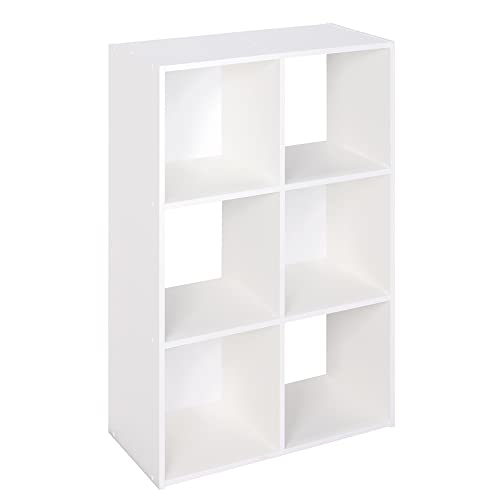
- Best overall for families: ClosetMaid Cubeicals 6-Cube Storage Organizer, White — Check on Amazon
- Furinno PASIR 3-Tier Book Shelf, Columbia Walnut (11208CWN) — Check on Amazon
- HOMIDEC 6-Cube Storage Organizer, Black — Check on Amazon
- VASAGLE CUSTOS Collection 3-Tier Bookshelf, Rustic Brown (ULBC163X01) — Check on Amazon
See 2 more Amazon options
- Furinno Turn-N-Tube 5-Tier Multipurpose Shelf, Classic Tubes, Sonoma Oak/White (18032OK/WH) — Check on Amazon
- Furinno Turn-N-Tube 5-Tier Corner Display Rack, Beech (99811BE/WH) — Check on Amazon
Read the full guide ↓
Disclosure: As an Amazon Associate, dailyhomedecorating.com earns from qualifying purchases. Links to Amazon on this page are affiliate links; they cost you nothing extra. Listing details such as price and availability change often, so check the current Amazon listing before you buy.
Choosing the best bookshelf for families under $50 is a safety exercise first and a storage exercise second. A family shelf gets climbed on, crashed into, used as a goal post and emptied onto the floor at least once a week, so the questions that matter are different from a quiet home office: How low is it? Can it be anchored? Are there sharp corners, small parts or wobbly joints? And when — not if — it gets covered in fingerprints, juice and sticker residue, can you wipe it clean and carry on?
We therefore ranked this list with family-specific filters on top of the usual ones. Low, wide cases beat tall towers because a child can reach the second shelf without climbing and because a low centre of gravity resists tipping. Cube systems score highly because fabric bins turn ‘tidy up’ into a game a four-year-old can actually win, and because a damaged cube is a smaller loss than a damaged bookcase. Every pick here can be anchored, every finish wipes clean, and we flag honestly where a design needs adult supervision rather than pretending any budget shelf is child-proof.
The short answer for most households: start with the ClosetMaid Cubeicals used horizontally, with fabric drawers in the bottom cubes and books up top — it is low, stable, wipeable and grows with the child. If you want a conventional bookcase shape for picture books and early readers, the Furinno PASIR is the family workhorse. The reviews below walk through each option by the age and chaos level of the home it suits.
In this guide
Quick Picks: The Best Bookshelf for Families Under $50 at a Glance
In a hurry? This table matches each shelf to the job it does best. Every pick is a different shape on purpose — match the shape to your room first, then read its full review below.
| Buyer type | Pick | Why it stands out | Link |
|---|---|---|---|
| Best overall for families | ClosetMaid Cubeicals 6-Cube Storage Organizer, White | 6 cube compartments; laminated wood construction; can be used vertically or horizontally and stacked with other Cubeicals units; designed to fit Cubeicals fabric drawers; white finish | Check on Amazon |
| Best low bookcase for kids’ books | Furinno PASIR 3-Tier Book Shelf, Columbia Walnut (11208CWN) | 9.7 x 23.7 x 31.5 inches (D x W x H); 3 open shelves; composite wood with laminated finish; each shelf rated up to 40 lb, 120 lb total; back panel included; about 19.4 lb | Check on Amazon |
| Best for toys plus books | HOMIDEC 6-Cube Storage Organizer, Black | 6 modular cubes, each cube about 11.8 x 11.8 x 11.8 inches; plastic panels with metal frame connectors; supplied with a small mallet/hammer for assembly; reconfigurable | Check on Amazon |
| Best-looking family-room case | VASAGLE CUSTOS Collection 3-Tier Bookshelf, Rustic Brown (ULBC163X01) | 9.4 x 23.6 x 32 inches (D x W x H); 3 open shelves; CUSTOS collection open-compartment design; rustic brown finish; anti-tip kit included in the range | Check on Amazon |
| Most storage for a busy household | Furinno Turn-N-Tube 5-Tier Multipurpose Shelf, Classic Tubes, Sonoma Oak/White (18032OK/WH) | 11.6 x 23.6 x 57.4 inches (D x W x H); 5 shelves; composite wood with plastic classic tubes; 75 lb total weight limit; tool-free assembly; about 20.9 lb | Check on Amazon |
| Best for a playroom corner | Furinno Turn-N-Tube 5-Tier Corner Display Rack, Beech (99811BE/WH) | 11.6 x 11.6 x 57.7 inches (D x W x H); 5 corner shelves; composite wood shelves with plastic tubes; tool-free assembly; about 9 lb | Check on Amazon |
How These Picks Were Chosen
For the family list we applied extra screens: no pick could rely on glass, every pick had to offer a realistic anchoring path, finishes had to be wipeable laminates or washable panels rather than raw or delicate surfaces, and we favoured designs whose failure mode is graceful — a scuffed cube or a replaceable bin rather than a collapsed case. We also weighted reachable height heavily, because a shelf a child cannot reach is a shelf a child will climb.
Our baseline screens applied to every candidate, whatever the list: the manufacturer had to publish full dimensions and a weight limit; the design had to be sold through its brand’s normal retail channels; and the shelf had to be a genuine bookcase or book-storage system rather than a decorative rack photographed at a flattering angle. We cross-checked dimensions and specifications against manufacturer listings and retailer data, and we dropped several popular budget shelves whose published numbers contradicted each other between sources — if we cannot verify what a shelf is, we do not recommend it.
Within those screens, ranking followed use, not specifications alone. A shelf with a slightly lower weight rating but the right shape for the job outranks a stronger shelf in the wrong shape every time, because furniture that fits gets used and furniture that does not fit gets replaced. Price was treated as a band, not a promise: listings move, so every pick is presented with a check-price link rather than a printed figure, and the under-$50 framing of this guide reflects the tier these products are sold in rather than a price we can guarantee on the day you shop.
Detailed Reviews: Best Bookshelf for Families Under $50, Pick by Pick
ClosetMaid Cubeicals 6-Cube Storage Organizer, White
Best for: Best overall for families. Key specs: 6 cube compartments; laminated wood construction; can be used vertically or horizontally and stacked with other Cubeicals units; designed to fit Cubeicals fabric drawers; white finish. Check on Amazon to see the current listing, finishes and delivery options.
ClosetMaid’s Cubeicals line is the established-name option among cube storage: a laminated wood 6-cube unit that can stand vertically as a narrow tower or lie horizontally as a low bench-height case, and can be stacked with matching units when your storage needs grow. The wood construction feels a step more substantial than panel-and-connector cubes, and the crisp white finish suits bright, simple rooms.
The cubes are sized for ClosetMaid’s own fabric drawers, which are widely sold separately, so you can mix open display cubes with closed fabric bins in whatever ratio your clutter demands — books visible, chargers and remotes hidden. As a bookshelf, a horizontal Cubeicals makes an excellent low library under a window, and the flat top doubles as a display surface for a lamp or plants, something open tube shelves cannot offer as confidently.
Assembly is a conventional screw-and-dowel flat-pack build, slower than the tool-free picks here but with a more rigid result. Anchor it when used vertically or stacked, as with any tower. The honest limitation is depth and cube size: oversized art books and tall hardcovers may not stand upright in a cube, so measure your tallest books before committing — this is a system for standard books and everyday storage, not an archive case.
For families this is the benchmark: used horizontally it is low enough for a child to use independently, the cubes corral everything from board books to toy cars, and a fabric drawer hides the mess in the ten minutes before grandparents arrive.
Pros
- Established brand with widely available matching fabric drawers
- Works vertically, horizontally or stacked with matching units
- Wood construction feels more substantial than panel cubes
- Flat top doubles as a display or lamp surface
Honest limitation: cube openings limit book height, so oversized art books may have to lie flat, and the fabric drawers that complete the system are sold separately.
Choose it if you want a system you can add to over time, with the option of fabric drawers to hide clutter inside a tidy grid. Skip it if your books are mostly oversized, or you want an open-shelf look rather than a cube grid.
Furinno PASIR 3-Tier Book Shelf, Columbia Walnut (11208CWN)
Best for: Best low bookcase for kids’ books. Key specs: 9.7 x 23.7 x 31.5 inches (D x W x H); 3 open shelves; composite wood with laminated finish; each shelf rated up to 40 lb, 120 lb total; back panel included; about 19.4 lb. Check on Amazon to see the current listing, finishes and delivery options.
The PASIR is the bookshelf most people picture when they set a $50 ceiling: a low, wide, three-shelf case in composite wood with a back panel, side panels and a proper plinth-style base rather than exposed posts. At just under 32 inches tall it sits below most window sills and below the arm of a standard sofa, which makes it unusually easy to place. The shelves are fixed, and that is a deliberate trade: fixed shelves cannot be adjusted for a tall art book or a storage basket, but they also cannot slip off pegs, and the whole frame feels noticeably more rigid than peg-and-post designs at this price once it is screwed together.
Capacity is the headline. Furinno rates each shelf at up to 40 lb and the unit at 120 lb in total, which is generous for a case this size and this light. In practical terms, a full row of hardcover novels across the 23.7-inch width is well inside the limit, and the back panel stops books sliding through and adds shear strength that open-post shelves lack. The laminated Columbia Walnut finish wipes clean with a dry or slightly damp cloth, and the colour hides dust better than a pure white or black finish does between cleanings.
Assembly is a flat-pack job with screws and dowels rather than a tool-free twist-together build, so allow a quiet half hour, a Phillips screwdriver and a clear patch of floor. The instructions are pictorial. One honest warning: composite-wood panels at this price chip if you over-torque screws, so drive them snug, not forced. Once built, the case is light enough at about 19 lb to slide sideways for vacuuming, yet planted enough not to skate across hard floors when you pull a book out.
In a family room the PASIR’s low height is its safety feature — everything is reachable without climbing, the back panel keeps picture books from vanishing behind the case, and the walnut laminate shrugs off the daily wipe-down.
Pros
- Highest per-shelf rating in this guide at up to 40 lb
- Back panel adds rigidity and stops books sliding through
- Low 31.5-inch height fits under windows and sofa arms
- Wipeable walnut laminate hides dust between cleanings
Honest limitation: the shelves are fixed, so very tall books and large baskets may not fit a level, and the screw-together build is the slowest of the low cases here.
Choose it if you want the most bookcase-like behaviour — fixed shelves, a back panel and the strongest per-shelf rating — in a low, easy-to-place case. Skip it if you need adjustable shelves, a tall unit, or tool-free assembly.

HOMIDEC 6-Cube Storage Organizer, Black
Best for: Best for toys plus books. Key specs: 6 modular cubes, each cube about 11.8 x 11.8 x 11.8 inches; plastic panels with metal frame connectors; supplied with a small mallet/hammer for assembly; reconfigurable. Check on Amazon to see the current listing, finishes and delivery options.
The HOMIDEC is not a bookcase in the traditional sense, and that is exactly its appeal. Six modular cubes, each roughly 11.8 inches in every dimension, click together with connectors into the shape your room needs: a low 3-by-2 sideboard, a 2-by-3 tower, an L under a window, or two separate 3-cube stacks either side of a TV. Standard fabric bins made for 11-inch cube storage drop straight in, turning open shelves into hidden storage in seconds.
Each cube swallows a row of upright paperbacks, a stack of magazines, board games, vinyl, toys or folded throws. The plastic panel construction will not match a wood case for sheer book weight — load books in the bottom cubes and keep the top cubes for lighter things — but for the mixed clutter that actually fills living rooms, the cube format is more honest storage than open shelves, because the bins hide the mess instead of displaying it.
Assembly uses the supplied mallet to seat the connectors, and the first cube is the fiddly one; after that the rhythm is quick. The huge practical win is reversibility: when you move, redecorate or simply change your mind, the whole thing knocks down into a flat stack of panels and a bag of connectors. No other pick in this guide can change shape after purchase, and for households whose storage problem keeps changing, that flexibility is worth more than a prettier finish.
For families the HOMIDEC’s killer feature is triage: one cube per child, one cube per category of chaos. When a cube panel eventually loses an argument with a toy truck, you have lost one cube, not one bookcase.
Pros
- Reconfigures into any layout — tower, low case or split stacks
- Accepts standard 11-inch fabric bins for hidden storage
- Knocks down flat; individual cubes are cheap to replace
- Each cube fits books, games, vinyl or folded textiles
Honest limitation: plastic panels are not built for maximum book weight in every cube, assembly with the mallet is noisy, and the utilitarian look will not suit every living room.
Choose it if your storage problem keeps changing shape, or your space is an awkward shape no standard case fits. Skip it if you want a traditional furniture look or maximum per-shelf book weight.
VASAGLE CUSTOS Collection 3-Tier Bookshelf, Rustic Brown (ULBC163X01)
Best for: Best-looking family-room case. Key specs: 9.4 x 23.6 x 32 inches (D x W x H); 3 open shelves; CUSTOS collection open-compartment design; rustic brown finish; anti-tip kit included in the range. Check on Amazon to see the current listing, finishes and delivery options.
The VASAGLE CUSTOS 3-tier is the design-led option in this price band. VASAGLE builds it around an open-compartment look — clean rectangular frames, no visible tube posts, and a rustic brown finish that reads as furniture rather than storage hardware. At 23.6 inches wide and 32 inches tall it is almost exactly the same footprint as the Furinno PASIR, so the choice between them is about construction feel and looks, not size: the CUSTOS presents a more minimal, footless silhouette that sits flush and tidy against a wall.
In use, the three open compartments suit a mixed load better than a pure book wall: a run of paperbacks on one level, a plant and a framed print on another, a woven basket on the third. Because the shelves are open at the sides, very small paperbacks can lean if you do not use a bookend, so budget a pair of simple metal bookends if your collection is mostly mass-market editions. The surfaces wipe clean, and the rustic finish is forgiving of the small scuffs that budget furniture inevitably collects.
Assembly follows the usual VASAGLE pattern of labelled parts and a hex key in the box, and the brand’s instructions are among the clearer ones in flat-pack furniture. Take the anti-tip advice seriously with any 32-inch case in a busy room: it is short enough that many owners skip anchoring, but a top-heavy load of hardcovers on the top shelf changes the physics, and the strap takes minutes to fit where a wall stud allows it.
In a shared family living room — as opposed to a playroom — the CUSTOS earns its place by looking like adult furniture while still being low, anchorable and wipe-clean; keep the top shelf for adult books and breakables.
Pros
- Cleanest, most furniture-like silhouette in the price band
- Open compartments suit mixed books-and-decor styling
- Clear instructions and labelled parts for assembly
- Rustic finish forgives everyday scuffs
Honest limitation: open sides mean small paperbacks need bookends to stay upright, and the design-led finish still sits on a budget composite frame — treat it as smart everyday furniture, not a premium case.
Choose it if the shelf will be on show in a living room and you want the tidiest budget silhouette with room for styled objects as well as books. Skip it if you need a back panel, maximum hardcover capacity, or the absolute lowest effort build.
Furinno Turn-N-Tube 5-Tier Multipurpose Shelf, Classic Tubes, Sonoma Oak/White (18032OK/WH)
Best for: Most storage for a busy household. Key specs: 11.6 x 23.6 x 57.4 inches (D x W x H); 5 shelves; composite wood with plastic classic tubes; 75 lb total weight limit; tool-free assembly; about 20.9 lb. Check on Amazon to see the current listing, finishes and delivery options.
If the corner rack is the specialist, the 5-tier Multipurpose is the generalist: a full 23.6-inch width across five levels, reaching 57.4 inches tall. That is the most linear shelf space in this roundup, and it changes what a $50 budget can hold — a realistic home for a couple of hundred paperbacks, or a mixed wall of books, baskets, games and a printer. Furinno lists a 75 lb total weight limit, so distribute hardcovers across the lower and middle shelves instead of filling the top with atlases.
The classic-tube design twists together without tools, like the corner version, but the wider rectangular shelves and curved tube profile give it a slightly more furniture-like stance in Sonoma Oak and white. The open construction keeps it feeling light in a room and makes cable runs for a lamp or a charger simple. The trade-off is the same as all tube furniture: the shelves are thinner than a boxed case’s panels, long-term sag is possible if you park maximum loads in the middle of a shelf for years, and it will never feel as planted as a screwed-together bookcase with a back panel.
For renters and first flats it is often the smartest buy in this list, because the same unit can start as a bookcase, become a kitchen overflow shelf, then a hallway display without a single screw being driven. When you move, it breaks down into a bundle of panels and tubes that fits in a car boot. Just respect the weight limit, keep the heaviest shelf at the bottom, and anchor it if children or large dogs share the room.
For a big family the Multipurpose is the volume answer, but it comes with a family condition: anchor it, load it heavy-side-down, and treat it as adult-height storage rather than a shelf young children use unsupervised.
Pros
- Most linear shelf space of any pick here
- Tool-free build that knocks down flat for moving
- Full 23.6-inch width takes real book runs
- Two-tone finish suits living rooms, not just storage corners
Honest limitation: the 75 lb total limit is real — this is a paperback-and-mixed-storage unit, not a hardcover archive — and open tube shelves will never feel as rigid as a boxed case with a back panel.
Choose it if you have one free wall patch and the largest possible amount of shelving to put on it for paperbacks and mixed storage. Skip it if you cannot anchor a tall unit where children climb, or your collection is mostly heavy hardcovers.
Furinno Turn-N-Tube 5-Tier Corner Display Rack, Beech (99811BE/WH)
Best for: Best for a playroom corner. Key specs: 11.6 x 11.6 x 57.7 inches (D x W x H); 5 corner shelves; composite wood shelves with plastic tubes; tool-free assembly; about 9 lb. Check on Amazon to see the current listing, finishes and delivery options.
The Turn-N-Tube corner rack solves a different problem from the low cases: it monetises the dead corner. The footprint is just 11.6 inches square, yet it stacks five shelves to 57.7 inches, so the storage-per-square-foot is the best in this roundup by a wide margin. The shelves are shaped for corner placement, which means each level is a display surface more than a book row — expect a handful of paperbacks, a plant, a speaker or framed photos per tier rather than a library run.
Assembly is the famous Furinno party trick: the plastic tubes twist together by hand, no tools, and the whole unit genuinely goes up in minutes and comes apart just as fast. That makes it the easiest pick here to move house with, to lend, or to reconfigure. At about 9 lb it is also the lightest piece in this guide, which is a blessing for carrying and a warning for loading: keep heavier items on the bottom tiers, treat the upper shelves as display space, and do not use it as a step or a climbing frame for children or pets.
The beech-and-white finish is bright and neutral, and the open sides mean dusting is a quick wipe rather than an excavation. What it will not do is swallow a serious book collection: the corner geometry wastes the middle of each shelf for long book runs, and the plastic tube construction flexes more than a screwed case if you overload it. Judged as vertical display storage for awkward corners, though, nothing else under $50 does the job as neatly.
In a playroom corner this rack keeps display items, story-time props and the current favourite toys visible and reachable, while its light build means it belongs in a supervised corner, not a climbing zone.
Pros
- Five shelves on an 11.6-inch-square footprint
- Genuinely tool-free assembly in minutes
- Light enough to move with one hand
- Turns a dead corner into display storage
Honest limitation: corner geometry shortens every book row, the plastic-tube frame flexes if overloaded, and it is a display shelf first and a library second.
Choose it if you have a free corner and need display and light storage without surrendering any real floor space. Skip it if your priority is long rows of heavy books rather than display and light storage.
Comparison Table
The six picks side by side on the numbers that decide fit: footprint, height, shelf count and how the unit is built. Weight limits are the manufacturers’ published figures; treat them as ceilings, not targets.
| Pick | Dimensions (D x W x H) | Shelves | Construction | Assembly |
|---|---|---|---|---|
| ClosetMaid Cubeicals 6-Cube | 6 cube compartments | 6 cubes | Laminated wood cube frame | Screws and dowels |
| Furinno PASIR 3-Tier | 9.7 x 23.7 x 31.5 inches (D x W x H) | 3 | Composite wood, back panel | Screws and dowels |
| HOMIDEC 6-Cube Organizer | 6 modular cubes, each cube about 11.8 x 11.8 x 11.8 inches | 6 cubes | Plastic panels, metal connectors | Mallet and connectors |
| VASAGLE CUSTOS 3-Tier | 9.4 x 23.6 x 32 inches (D x W x H) | 3 | Composite wood, open frame | Hex key, labelled parts |
| Furinno Turn-N-Tube 5-Tier Multipurpose | 11.6 x 23.6 x 57.4 inches (D x W x H) | 5 | Composite shelves, plastic tubes | Tool-free twist-together |
| Furinno Turn-N-Tube 5-Tier Corner | 11.6 x 11.6 x 57.7 inches (D x W x H) | 5 | Composite shelves, plastic tubes | Tool-free twist-together |
What a $50 Budget Really Buys in a Bookshelf
It helps to know where the money goes. In an under-$50 bookshelf, most of the cost is the panels themselves — composite wood or particleboard with a laminated surface — plus the hardware bag and the box it ships in. What you are not paying for is solid timber, joinery, or thick shelves, and that sets realistic expectations: these are five-to-ten-year furniture pieces for ordinary loads, not lifetime casegoods. The laminate is not a weakness in daily use; it is what makes the surface wipeable, consistent in colour, and cheap enough to hit the price at all.
The engineering differences that matter at this price are quiet ones. Fixed shelves resist racking better than adjustable pegs. A back panel, even a thin one, dramatically stiffens a rectangular case because it stops the frame parallelogramming under load. Tube-and-panel designs trade that stiffness for tool-free assembly and feather weight. Cube systems trade it for shape. None of these is the ‘right’ answer in the abstract — the right answer is the one whose trade-offs match your load, your room and how often you move.
Load ratings deserve a sceptical read. A per-shelf figure is the number to trust and to obey; a total figure tells you the frame’s overall limit. Ratings assume the load is spread evenly, not concentrated in the middle, and they assume the unit is assembled correctly and standing on a level floor. If your collection is mostly hardcovers, treat the rating as a ceiling you stay visibly under, distribute weight across shelves, and favour the boxed cases in this guide over the open tube designs.
Finally, budget for the unglamorous extras at the same time as the shelf: felt pads for hard floors, a wall anchor strap if one is not included, and a pair of bookends for open designs. Together they cost very little, and they are the difference between a cheap shelf that feels cheap and one that quietly does its job for years.
How to Choose the Best Bookshelf for Families Under $50
Put the child’s shelves at the child’s height
Books for under-sevens belong below about 32 inches. Low cases and horizontal cube units let children choose and reshelve their own books, which is the entire point of a family bookshelf. Reserve tall units for adult storage and say so clearly in the house rules.
Anchor first, load second
Fit the anti-tip strap before the first book goes on, while the case is empty and easy to move. Anchor into a stud where possible; use proper hollow-wall fixings where not. Re-check the strap after the first month — new flat-pack joints settle.
Use bins to make tidying winnable
Open shelves demand a standard of neatness children cannot meet. Fabric bins in the lower cubes turn the standard into ‘everything in a bin’, which they can. Label bins with pictures for pre-readers.
Round the risk: corners, edges and small parts
Check assembled shelves for sharp corners at head height for a toddler, and keep any assembly spares — screws, caps, Allen keys — out of the house’s small hands entirely. Wipeable finishes matter more than beautiful ones; choose the surface you can clean at 7pm without thinking.
Assembly, Stability and Care: Getting Budget Furniture Right
Every pick in this guide arrives flat, and the first hour decides how the next years go. Build on a soft surface — a rug or the flattened shipping box — so panels do not scratch. Lay out every part and check it against the parts list before driving a single screw; discovering a missing panel at step nine is the classic flat-pack misery, and it is avoidable at step zero. Keep screws finger-tight until the frame is complete and square, then tighten in a cross pattern so the case pulls itself true instead of twisting.
Stability is a system, not a feature. A level floor, an even load with the weight low, and a wall anchor where height or household demands it — together these make even the lightest tower in this guide behave. Check level with the shelf empty: a wobble found now is a pad or a shim; a wobble found loaded is a problem. On carpet, expect tall units to settle over the first week and re-check them once the pile has compressed.
Care is mercifully simple for every finish here. Dust with a dry or barely damp cloth; water left standing is the enemy of composite wood, so wipe spills immediately and never soak a shelf edge, where the laminate seal is thinnest. Keep budget cases out of persistently humid rooms if you can, and if a shelf must live in a bathroom-adjacent space, the plastic-panel cube is the tolerant choice. Once a year, walk around with the hex key or screwdriver and snug any joint that has worked loose — thirty seconds per shelf that doubles the furniture’s working life.
And a word on the end of the story: when a budget shelf eventually retires, its panels, tubes and cubes separate easily for reuse elsewhere — a garage shelf, a donation, a child’s next room. Furniture that comes apart as easily as it went together rarely truly goes to waste, which is one more reason the knock-down designs in this guide punch above their price.
Setting Up a Family Bookshelf Age by Age
Babies and toddlers: board books at floor level
For the under-threes, the bookshelf is really a browsing bin. Board books are thick, heavy for their size and read face-out, so the bottom cube of a Cubeicals or the lowest shelf of the PASIR — spines out is fine, covers out is better — is the whole system. Keep that lowest zone exclusively theirs: the lesson ‘my books live here’ lands early when the shelf is genuinely reachable. Everything above toddler height should be either adult stock or soft, light items that cannot hurt if pulled down, because eventually everything reachable gets pulled down once.
Ages four to seven: the independence years
Early readers need volume and order they can maintain: picture books upright in one bay, early readers in another, and a bin for the library books that must not migrate. This is where cube systems pull away from cases — a child can reshelve into a cube without understanding alphabetical anything. Face-out display matters more than capacity at this age; a single current favourite propped on top of a low case sells reading better than fifty spines. Rotate stock monthly from a storage box rather than crowding the shelf.
Ages eight to twelve: series, homework and hobbies
Chapter-book series arrive in dozens and homework needs a flat, dependable shelf for folders and reference books. The PASIR’s strong shelves and back panel handle this stage best among the low cases, while the HOMIDEC flexes again — one cube for the current series, one for hobby kit, one for school. This is also the age to hand over an anchor check and a dusting cloth as a genuine responsibility: children who maintain their own shelf treat the whole system better.
Teenagers and the shared family room
Teenagers need a shelf that does not look like a toy system, which is where the CUSTOS earns its place in a family list — it reads as a normal bookcase in a shared room while staying low and anchorable. Give teens a defined territory (one full case or two full shelves) with no parental styling rights, and keep the family’s shared shelves separate. The 5-tier Multipurpose, anchored and adult-loaded, works as the household’s back-catalogue: reference, cookbooks, the games everyone plays but nobody owns.
Common Mistakes to Avoid
Buying a tall tower for a toddler’s books
Tall, light tube shelves are the worst combination within reach of a climbing child. If a tall unit is your only option, anchor it, load the bottom, and keep children’s items on the adult-managed shelves only.
Leaving the anchor strap in the box
The strap is not optional packaging. Most tip-over incidents involve furniture that came with an anchor nobody fitted. Ten minutes, one stud, done.
Storing heavy items up high ‘out of reach’
Heavy items stored high become falling items. Heavy belongs low; light and soft belongs high. Out of reach should mean behind a door or in a latched bin, not on a high open shelf.
Expecting open shelves to stay tidy
They will not, and the daily friction is not worth it. Build the system around bins and low expectations, and keep one ‘display shelf’ for the things that genuinely look good.
Ignoring the wipe test
Raw finishes, fabric-covered panels and intricate mouldings all fail family life. If you cannot imagine cleaning jam off it with a cloth, do not buy it for a family room.
Final Recommendation
If you want one answer: buy the ClosetMaid Cubeicals 6-Cube Storage Organizer, White. It is the pick in this guide that fits the widest range of real rooms for this brief, and it is the one we would hand to a friend shopping with the same budget and the same constraints.
If your room or your load points the other way, the Furinno PASIR 3-Tier Book Shelf, Columbia Walnut (11208CWN) is the deliberate alternative — it trades the winner’s all-round balance for a specific strength the reviews above spell out. Either way, measure your space, check the current listing, fit the anchor if your household needs it, and load heavy at the bottom. Do those four things and an under-$50 shelf stops being a gamble and becomes what it should be: the cheapest storage you will ever buy per book it holds.
A Note on Second-Hand and Hand-Me-Down Shelves
Family shelves often arrive free — a relative’s old case, a neighbour’s cube unit — and free is a legitimate family strategy. Accept them with three checks. First, stability: rock the empty unit diagonally; a case that racks noticeably has loose joints that need glue and screws before it meets a toddler. Second, completeness: missing shelf pegs, a missing back panel or a missing anchor strap all change what the furniture is, so replace the parts or demote the unit to a garage. Third, surface: older laminates that are peeling at the edges will peel faster under family use, and flaking finishes do not belong in a child’s room. A hand-me-down that passes all three checks is the best-value family bookshelf there is; one that fails the first belongs in the shed, not the nursery, whatever it cost.
FAQ
What is the safest type of bookshelf for young children?
A low, wide, anchored case or a horizontal cube unit. Low height removes the climbing incentive, width and weight resist tipping, and anchoring removes the residual risk. Avoid tall, light, open tube shelves in unsupervised children’s spaces.
Should a family bookshelf have doors?
Doors help with dust and visual calm but add pinch points and cost. At under $50, fabric bins in cubes achieve most of the benefit — hidden clutter, no hinges — for less money and less risk.
How do I stop picture books falling behind the shelf?
Choose a case with a back panel, like the PASIR, or push cube units flush to the wall. Bookends and shallow storage boxes on open shelves also stop the slow migration of books into the void.
Can children assemble or move these shelves with us?
Children can help with the tool-free tube and cube builds — twisting tubes and seating cube connectors are genuinely good helping jobs — but adults should do all screw work, all anchoring and all final stability checks.
How many children’s books fit in a 6-cube unit?
A single cube holds roughly 15 to 25 picture books or 20 to 30 early readers depending on size, so a 6-cube unit with three cubes given to books stores a solid home library for one or two children, with cubes left over for toys and bins.
Related Guides on This Site
Shopping a bigger budget or a different room? These guides on this site cover the neighbouring tiers and briefs:


