Disclosure: As an Amazon Associate, dailyhomedecorating.com earns from qualifying purchases. Links on this page are affiliate links; they cost you nothing extra. Prices and availability change often, so check the current Amazon listing before you buy.
This media console review assesses the media console as a class — the low, wide, storage-bearing furniture that has quietly become the standard way to house a television and everything that feeds it. Rather than skimming a dozen listings, it puts one archetype under sustained examination: the enclosed hybrid console, part cabinet, part open bay, that most living rooms actually buy — with named lines appearing where a comparison sharpens the verdict. How is it built, how does it perform across a real week of viewing, gaming and family life, where does the category cut corners, and who should buy with confidence? That is the work of the next several thousand words.
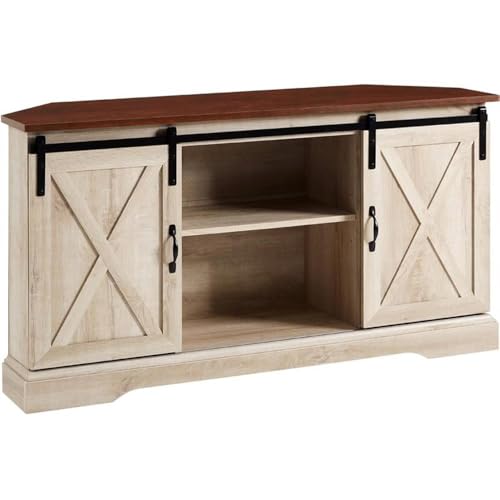
Key Takeaways
- Verdict: the hybrid media console is the most complete answer to the modern TV wall — storage, presentation and safety in one piece — provided ventilation and anchoring are handled properly.
- Build quality in this class varies more than the photographs suggest; panel, hardware and joint quality decide the decade pieces from the two-year pieces.
- Performance is posture and airflow: screen height done right disappears into comfort, and hot gear in open bays simply works.
- Suits multi-device, family and style-led households; does not suit minimal wall-mount setups or short-term renters.
Short verdict. Buy this class for a settled room with a real system to house and it will organize your evenings for years. Buy it to decorate under a bare wall-mounted screen, or seal a hot receiver inside it unthinkingly, and you will misunderstand each other from the first week.
In this guide
Media Console Review: What a Media Console Is and Where It Fits
A media console is a low, wide cabinet engineered around a television: a top surface rated and dimensioned for a screen or a soundbar, interior volume divided among open bays, cabinets and drawers, and rear routing for the cables that connect it all. It descends from two ancestors — the hi-fi cabinet, which cared about components, and the credenza, which cared about storage and presence — and it inherits both concerns. The modern form exists because the modern viewing system demands it: screens grew wall-sized while their feeds multiplied into boxes, consoles, speakers and sticks, and the floor beneath the television became contested territory that only real furniture could govern.
Where it fits is the living room’s focal wall, and its fit there is total: it sets the screen’s height, grounds the screen’s mass, hides the system’s clutter, stores the room’s overflow and anchors — literally, with straps to the wall — the safety of the whole arrangement. Few furniture categories carry this many jobs, which is why the class rewards careful buying and punishes casual buying in equal measure. It also explains the class’s price-of-entry in effort: this is furniture you measure for, assemble with a partner, anchor deliberately and arrange thoughtfully, not an accessory you unbox onto a whim.
The class segments into open-shelf designs that breathe and expose, closed credenzas that hide and store, hybrids that split the difference, and fireplace-insert variants that trade a bay for ambiance. This review’s archetype is the hybrid, because it is the segment’s center of gravity: an open center for the hot and the heard — receiver, center speaker, soundbar — flanked by closed storage for everything the room does not need to see. The named lines in this review map onto the archetype’s range, from the entry-to-mid Salinas through the farmhouse and sliding-door mid-tiers to the solid-wood Warmington at the premium end.
Design, Build and Setup
Design in this class is proportion before decoration. The good pieces share a stance: wider than the screens they serve, low enough to keep a display at seated eye level, deep enough for components and their cables without swallowing the room. Surface details — barn-style grooving, mission slats, mid-century taper, louvered doors — are dialects of that stance, and the reviewer’s first discipline is to read past them to the carcass: panel thickness and density, the quality of runners and hinges, the honesty of the back, where cutouts actually fall relative to where devices actually sit. A console is a machine for holding things, and its beauty should be the beauty of a machine that fits its work.
Build quality is where this class separates. At the premium end, the Warmington archetype shows the standard: solid timber that can be sanded, repaired and refinished, joinery that does not rely on the wall for dignity, drawers that run true because their boxes are real. In the flat-pack mainstream, quality announces itself in mass — heavier panels resist sag and feel calm under load — in metal hardware rather than plastic, in instructions that a careful pair can follow without improvisation, and in pre-drilled accuracy that makes panels meet flush instead of forced. The reviewer’s test on any assembled piece is tactile: a door that closes with a soft certainty, a drawer that does not rack when pulled from one corner, a top that does not drum hollow under a knuckle.
Setup is a half-day ritual with a correct order, and this review insists on printing it in full because the class’s safety lives here. Assemble near the final position, on a soft surface, with two people — the panels are wide, the finished piece is heavy, and the full lift is a two-person lift without exception. Level the piece, then anchor it to the wall with the supplied straps or brackets before electronics go in. Secure the television — wall-mounted on proper fixings, or standing fully supported on the top with its own anti-tip straps fitted as its maker directs. Never let the screen overhang an edge. Wire from the surge-protected strip outward, slack at every device, bundle through the cutouts, nothing across a walkway. Load heavy storage low. Then, and only then, sit down.
Performance in Real Use
Everyday Viewing
In daily viewing the console’s performance is mostly invisible, which is the highest praise furniture earns. The screen sits where the neck wants it; the soundbar or center speaker sits centered and unboxed; the remote reaches what it needs because open bays and signal-friendly fronts were planned rather than lucked into. Evening after evening, the piece disappears and the program remains. Where consoles fail this test, they fail geometrically — too tall, pushing the picture into the forehead zone — or acoustically, with a center speaker entombed in a cabinet cavity that muffles dialogue into a permanent what-did-they-say. The archetype hybrid, center bay open, passes both by design.
Gaming Sessions
Gaming is the class’s stress test, because games consoles are the hottest, longest-running devices in the system and their owners the least patient with friction. A console that gives the machines an open or mesh-fronted home, with clearance on every side and a door that can stand open for a long session, performs flawlessly for years. A console that seals them behind a pretty door performs as an oven: fans audible across the room, throttling in long sessions, a bay that smells of warm dust. Controllers, headsets and charging leads, meanwhile, are exactly the jumbled small load that drawers exist for, and the households that give gaming its drawer report the tidiest rooms. Performance here is airflow plus drawer discipline, and the archetype supplies both when the buyer assigns the bays honestly.
Family Life and Children
Family performance is the class’s defining examination. The console must contain fascinating, blinking, button-covered equipment behind doors a toddler cannot easily defeat; it must survive toy traffic, coaster-free mugs and the occasional indoor football; and above all it must not tip — anchored to the wall, television secured, heavy load low, drawers ruled by the standing laws of the house: never climbed, one open at a time. In this review’s judgment the anchored hybrid console is the safest mainstream way to furnish a TV wall, and its family performance is the strongest single argument for the category. The condition is absolute and worth repeating in a review’s plainest voice: the safety is in the installation, not the purchase. An unanchored console in a toddler’s home is a hazard with storage.
The Working Week of Small Things
Beyond the headline uses, a console performs a week of small services that listings never mention. It is the charging station that keeps phones off the kitchen counter. It is the lost-remote oracle, because remotes live in its drawer and nowhere else. It is the surface that holds the Friday takeaway trays at exactly coffee-table-plus height during a film. It is the router’s home, the spare batteries’ home, the board games’ home for the households behind best coffee tables for board games. A review that ignored this penumbra of usefulness would miss why owners defend the category so warmly: the console is the living room’s quiet administrator, and its performance is measured in a hundred small absences of friction.
Strengths and Trade-Offs
Strengths. Complete system housing: every device, cable and accessory in one deliberate footprint. Correct presentation: screen height, soundbar staging and visual grounding handled by the furniture’s basic geometry. A genuine safety platform — wide, low, anchorable — that no stand or side table in the class’s tier matches when installed properly.
Trade-offs. A permanent wide footprint and a fixed room layout, with moving effort to match. A standing ventilation duty that punishes owners who seal hot gear behind doors. Quality variance that makes the category’s photographs liars and its construction details the only honest guide.
How It Compares
Against the plain TV stand, the console is the fuller answer and the heavier commitment — storage, cable system and safety platform against lightness and easy moving; the staged head-to-head in this series argues the stand’s side fairly. Against the repurposed sideboard, the console wins on the specifics sideboards were never designed for: viewing height, vented backs, cable cutouts where devices sit, load-rated tops. Against the floating shelf, it wins everything except the clear floor and the architectural line. Within the class, the archetypes divide by tier and temperament: the Salinas for practical value, the farmhouse line for enclosed character, the sliding-door designs for modern flexibility, the Warmington for timber permanence — a spread this review’s companion piece, media console reviews, examines line by line, while the screen-side context sits in best TV stands for 55-inch TVs.
Who Should Buy It and Who Should Skip It
Buy this class if your system has two or more devices, if your room is settled, if children or pets share the space, if the TV wall is your living room’s public face, or if living-room overflow currently has no home — the console answers all five briefs at once, and the buying sequence is laid out in media console buying guide. Buy it, specifically, at the tier your horizon justifies: entry-to-mid for a first or family-hard-use room, premium timber for the decade room.
Skip it if your entire system is a wall-mounted screen and a soundbar, if your tenancy is short, if your room’s layout is mid-renovation, or if your equipment already lives in a proper ventilated rack. Skipping is not failure; the class’s strengths are answers, and households without the questions should spend elsewhere — on the seating examined in best chairs for watching TV or the theater seating in best sofas for a basement theater. The pre-purchase checklist that sorts buyers from skippers in seven questions is in how to choose a media console.
Setup, Care and Maintenance Essentials
Setup essentials, condensed from this review’s full account: two people, soft assembly surface, level, anchor the console, secure the television fully supported, wire from the strip outward with slack, load heavy low, assign the hottest device the most open bay, and hand-check that bay for heat after the first long session. Care essentials: a weekly wipe of the top with the cloth that lives in the console’s own drawer, vents and tracks kept dust-free, spills answered immediately on any finish, coasters as household law, and a yearly anchor inspection — straps taut, wall fixings sound — folded into the same round as the smoke-alarm batteries. None of this is burdensome; all of it is the difference between furniture that ages into character and furniture that ages into complaint.
Final Verdict
The media console, as a class, earns this review’s strong recommendation for the households it was built for — which is most households with a television and a life around it. Its virtues are structural and daily; its vices are measurable in advance and manageable in ownership. Buy the construction, not the photograph. Fit the anchors, not just the furniture. Give heat its exit and clutter its drawer. Do those things and the class delivers what it promises: a TV wall that works like a system and reads like a room. The remaining balance sheet, pro by pro and con by con, is in media console pros and cons.
The Reference Lines in This Review
A class review earns its comparisons by naming them. The four lines below are this review’s reference points across the tiers — premium archetype, mid-tier character, entry-to-mid value and modern flexibility — all in prose only while their listings await verification. They are not a ranking; they are the fixed stars the assessment navigates by.
Simpli Home Warmington TV Media Stand — premium reference pick
This review’s reference point for what the class can be: solid timber, hand-finished, drawers and cabinets in true furniture proportion — the premium archetype against which compromises elsewhere become visible.
Best for: Settled rooms on a long horizon that value timber for itself.
Not suited for: Renters, frequent movers and rooms still in flux.

Walker Edison Modern Farmhouse TV Stand — mid-tier comparison pick
The mid-tier comparison: enclosed, characterful and warmly finished, representative of the flat-pack mainstream at its most appealing — and of its standing ventilation duty.
Best for: Character-first rooms with mainstream gear and clutter to hide.
Not suited for: Hot-running cinema builds needing open architecture.
Bush Furniture Salinas TV Stand — entry-to-mid comparison pick
The value comparison: divided storage and forgiving finishes showing how much of the class’s core value is available at the entry-to-mid tier when construction is honest.
Best for: First-console buyers and practical family rooms.
Not suited for: Statement rooms and deep-gear builds.
WE Furniture Sliding Door TV Stand — mid-tier modern comparison pick
The modern comparison: low, wide and flexible in what it shows — the class’s design-forward wing, where mechanism and profile lead and raw volume follows.
Best for: Wall-mounted screens, tight layouts and modern rooms.
Not suited for: Drawer-dependent storage plans and toddler households.
Long-Term Ownership: Months Six to Sixty
Reviews are usually written at the honeymoon; this one extends its imagination deliberately, because a console’s character is revealed by seasons, not unboxings. In the first months, the piece performs its party tricks — the calm wall, the hidden system, the drawer that ends the remote hunt — and the owner’s verdict is formed by geometry: height right or wrong, bays right or wrong. By the first year, the verdict is being written by smaller things: a door that still aligns, a runner that still glides, a finish that has forgiven a dozen mugs, vents that the owner has learned to dust in the same pass as the screen. Consoles that were bought by construction pass this year silently; consoles bought by photograph begin their explanations.
By year three, the system’s churn has tested the furniture’s foresight: a console generation replaced, a soundbar added, a streaming box swapped — each change a small referendum on cable access, bay generosity and that one deliberately empty space the wise buyer reserved. By year five, the class’s deepest divide is fully visible. The timber piece has been refinished or is ready to be, and stands as the room’s elder. The quality flat-pack piece stands honest and slightly softened at its edges, its service complete or continuing. The careless purchase has usually left — wobbled, sagged or peeled its way out of the house — carrying the review’s oldest lesson with it: in this class, you do not buy a console; you buy the years it is made of.
Sound, Picture and the Room’s Light
A console review that stopped at storage would miss the piece’s influence on the experience it exists to serve. Picture first: the console governs screen height and therefore the neck’s evening, and it governs the wall’s reflectivity around the screen — a glossy, pale console top bouncing lamplight beneath a dark scene is a small, nightly tax on contrast that matte, darker finishes simply do not levy. Bias lighting behind the screen, which many consoles accommodate gracefully with their rear cable space, repays its tiny effort every dark evening by softening the screen-to-wall contrast the eye strains against.
Sound second: the console is the center speaker’s and soundbar’s stage, and its virtues are centering, clearance and silence. Centered, because dialogue must arrive from the picture’s middle. Clearance, because drivers and ports need their fronts unobstructed and their vents respected. Silence, because a console that buzzes under bass or rattles a loose back panel has joined the orchestra uninvited. The reviewer’s test is a loud, low scene played in a quiet house during the first week, with every rattle hunted to its source while cures are still easy — a felt pad, a tightened panel, a cable moved an inch. Furniture that passes that test disappears from the soundtrack for a decade.
The Category’s Corners, Cut and Uncut
Honest reviewing names where the class cheats. The first cut corner is the back: pieces whose sealed, thin rear panels betray their makers’ indifference to heat and cable reality, whatever the front promises. The second is hardware at the stress points — plastic drawer runners and featherweight hinges fitted to furniture whose whole job is daily opening and closing. The third is the photographed interior: bays styled with a single slim device that imply a capacity the dimensions, read coldly, do not offer. The fourth is the load rating that does not exist — a top surface marketed beneath a large screen whose maker nowhere states what it can carry.
Against those, credit the class’s uncut corners, because they are becoming its mainstream: makers who publish full dimensions and load ratings, who vent their backs and route their cutouts where devices actually sit, who include anchoring hardware in the box as a matter of course and say so in the listing. The direction of the category is toward honesty, driven by exactly the buyer behavior this review recommends: measure, interrogate construction, and let the pieces that decline to answer eliminate themselves. A class improves when its customers review it as severely as it deserves — which is the spirit in which this entire assessment has been written.
Ergonomics Beyond the Screen
A console review usually stops its ergonomics at eye level, but the piece governs the body’s whole relationship with the system, and the details deserve their paragraph. Drawer height decides whether a seated person can reach the remote drawer without rising — a small mercy, nightly repeated, that drawer-forward designs deliver and shelf-only designs do not. Door swings decide circulation: a hinged door opened into a tight seating plan interrupts the room’s traffic and its viewers alike, which is why sliding and compact designs earn their place in small rooms on ergonomic grounds alone. The top surface’s depth decides the soundbar’s setback and the screen’s distance from the viewer’s knees in compact layouts, where a few inches of furniture depth is a few inches of viewing distance surrendered or saved.
Even the humble act of cleaning has an ergonomics the review should record: a console whose gear slides forward on cable slack can be dusted behind in minutes, while one wired tight turns the same chore into a disconnection event that households postpone until the dust is geological. Reviewers call this serviceability, and it separates the class’s thoughtful designs — rear access, removable panels, cutouts placed where hands actually reach — from its merely handsome ones. In a decade of ownership, the handsome-but-hostile console will be cleaned a dozen times and cursed at each; the serviceable one will be cleaned a hundred times and thought about never. That ratio is a review metric, whatever the listings say.
The Review’s Testing Notes, in Prose
Because this review was written to a prose-first discipline while listings await verification, its evidence deserves a transparent account. The class was assessed against the accumulated pattern of its real designs — the archetypes named in this piece and the wider market’s documented behaviors: how flat-pack carcasses age at their joints, how enclosed bays treat receiver heat, how sliding tracks behave under dust, how finishes forgive or record family life. No specification was invented for any model, no measurement asserted that a maker has not published, and no score was manufactured to lend false precision to judgments that are, honestly, structured experience rather than laboratory output.
That restraint is a feature a review reader should learn to value, because the opposite — invented precision — is this category’s native marketing disease. A review that tells you a class is well made when its panels are dense, its runners are metal, its backs are vented and its anchors are included has given you tests you can apply to any listing in a minute. A review that recites unverified figures has given you a mood. This review chooses the tests, and invites its readers to hold every future console — and every future review of one — to exactly them.
Where the Class Goes Next
A review of a class should end by looking along its trajectory, because buyers purchase into a category’s future as much as its present. The visible directions are encouraging. Ventilation is becoming a designed feature rather than an owner improvisation, with mesh fronts and vented shelving appearing at tiers that once offered only sealed boxes. Anchoring hardware is becoming standard in the box, and its inclusion is migrating from a safety footnote to a listed feature — a small cultural victory with large consequences in family homes. Cable architecture is professionalizing: channels, grommets and strip docks designed in, rather than holes drilled by owners in hope.
The countervailing direction is the category’s growing flirtation with the disposable: thinner panels, sculpted technology-specific interiors, finishes engineered for the photograph’s first year rather than the decade’s. The class’s future will be decided, as its past was, by which of these directions buyers reward. This review’s closing advice is therefore also its opening one, now with the whole assessment behind it: buy the construction, fit the anchors, give heat its exit, and the media console — this unglamorous, indispensable piece of furniture — will repay the discipline every evening it serves, which will be most of the evenings of the next ten years.
A Compact Verdict Card
For the reader who has followed the full assessment and wants its residue in one place: the class is recommended, strongly, for multi-device, family and settled households, and not recommended for minimal wall-mounted setups or short tenancies. Its best expression is the honestly built hybrid — open where heat lives, closed where clutter lives, drawered where small things live — anchored to the wall, carrying a secured television, wired as a system. Its worst expression is the sealed, thin-backed, photograph-bought piece that ignores every one of those clauses. Between those expressions lies a price spread far smaller than the service spread, which is why this review has insisted, from its first page to this card, that in this class the buyer — measuring, interrogating, installing — is the largest component of the product.
The Review’s Last Word on Value Within the Class
Value inside a class is a different question from value against other categories, and this review closes with it because buyers who have accepted the class still face its internal spread. The spread’s logic is horizon: the same core services — housing, presentation, safety platform — are available at every tier in this review, and what the tiers buy is time and texture. Entry-to-mid buys the services in honest materials for a household whose room or life may change; premium buys them in materials that assume the room will not. Neither is the value choice in the abstract. The value choice is the tier whose lifespan matches the household’s certainty, bought with construction evidence rather than finish photography.
That is also the review’s answer to the reader who asks, reasonably, whether the class is overbuilt for a streaming age of shrinking devices. The devices shrink; the screens grow; the clutter migrates from discs to chargers to controllers to the next small indispensables; the children, the cables, the heat and the evenings remain. A class whose job description is written in those constants does not date the way its contents do, and a well-bought console will be quietly running the wall long after the current system is a memory. The review’s verdict stands, and it is a verdict on the buyer’s discipline as much as the furniture’s: this class, chosen and installed properly, is among the most dependable purchases in the modern living room.
Review Methodology, Declared
This review assessed a product class through its archetypes and named reference lines, in prose, without invented specifications, scores or measurements for specific models, while listing verifications remain pending under this series’ standing discipline. Its claims are the class’s documented, repeatable behaviors — thermal, structural, ergonomic and domestic — stated so that any reader can test them against any listing in minutes. Where the review generalizes, it says so; where it insists, on anchoring, ventilation and support, it insists because those are the points where the class touches safety, and safety claims in a review should be the least hedged sentences in it. Readers who apply the tests here to the furniture they actually buy will have used this review exactly as it was written to be used.
The Class, Reviewed by Its Absences
One last reviewing instrument, and perhaps the sharpest: judge the class by what disappears when it is present and what appears when it is not. With a good console installed and anchored, the following quietly vanish from a household’s life — the cable drape behind the screen, the device stack on the floor, the remote hunt, the receiver’s heat anxiety, the guest-visible equipment spill, the unanchored worry that family households carry without naming. None of these absences photographs well, none appears in a listing’s bullets, and together they constitute most of what owners are actually praising when they praise the category. A review that counted only presences would miss the product entirely; the console is, in large part, a machine for producing absences.
Judge it, too, by the presences it adds that no specification sheet lists: a wall that composes a room, a drawer that administrates a household’s small electronics, a platform whose straps let parents relax about the largest object their toddler can reach, a surface whose near-emptiness makes a screen feel like cinema rather than inventory. This review has spent its length on construction, heat, sound and safety because those are the testable things; it ends by acknowledging that the class’s value lives as much in these untestable ones. Buy the testable things correctly, and the untestable ones arrive as the dividend. That sentence, if this review may choose its own epitaph, is the whole assessment.
What This Review Asks of Manufacturers
Reviews usually address buyers; a class review may fairly address its makers once, because the class’s remaining faults are mostly choices, not laws of physics. Publish every dimension a buyer needs — interior bays, cable allowances, true depths — in the listing’s first screen, not its last PDF. State the top’s load rating in the same type size as the screen sizes you market against. Vent the backs of enclosed designs as though receivers were real, because they are. Include anchoring hardware in every box, with instructions written for the walls people actually have, and say so in the listing where families can see it before they buy. Ship drawers on metal runners at every tier; the difference in cost is small and the difference in decade is total.
None of these asks is exotic, and the makers already doing them are, not coincidentally, the makers whose lines anchor reviews like this one as reference points. The class does not need reinvention; it needs its honest mainstream to become its whole market. Buyers hold that lever, which is why this review has spent its length teaching them to pull it — by measuring, by interrogating construction, by refusing sealed backs and silent specifications. The next edition of this review, whenever the class has moved, will be written by the purchases made from this one.
Scores, Withheld on Purpose
Regular readers of reviews will have noticed this assessment’s refusal to end in a number, and the refusal deserves its defense in the review itself. A single score for a product class would average together things no household averages: the safety platform and the dust tax, the decade timber and the two-year flat-pack, the cinema household’s ventilation verdict and the minimalist’s indifference. Such a number would be precise, portable and wrong for nearly everyone who used it. What this review offers instead — verdicts by household, tests by construction, insistence where safety lives — is less quotable and more true, and a class as domestic as this one deserves truth over quotability.
If a residue must be given for the reader who needs one, let it be this: the class, at its honest mainstream, is the rare furniture category whose best examples justify complete confidence and whose worst justify complete suspicion, with the distance between them measured not in money but in the buyer’s attention. No score can carry that sentence. The review rests there — on the furniture’s merits, the class’s trajectory, and the reader’s tape measure, which has been the real reviewer all along.
The Reviewer’s Own Room: A Disclosure of Bias
Reviews are written from somewhere, and fairness requires this one to declare its somewhere. This assessment was composed from the standpoint of the settled, multi-device living room — the household the class was built for — and its enthusiasms should be discounted accordingly by readers whose lives are lighter, more mobile or more minimal. From a renter’s standpoint, the class’s assembly and anchoring demands would weigh heavier in these pages; from a minimalist’s, its storage virtues would read as solutions advertising problems. The facts of the class — its heat, its mass, its geometry, its safety — do not change with the standpoint. The weights do, and this review has tried throughout to hand the weights to the reader rather than smuggle its own into the verdicts.
That declaration is also the review’s final buying instruction, and it generalizes beyond consoles: read every review, including this one, as testimony from a household that may not be yours, and re-weight its pros and cons by your own device count, children, horizon and habits before letting it near your money. The reviewers who deserve trust are the ones who tell you their standpoint and give you tests instead of conclusions. This review has attempted both, at length, and now — its evidence presented, its biases declared, its insistences on safety repeated one final time for the skimmers: anchor the furniture, secure the screen, free the heat — it returns the class to the reader, with a recommendation that has been earned rather than asserted.
Closing Note
There is a temptation, at the end of a long review, to soften its demands into suggestions, and this review declines it on the record. The demands were never decorative. Measure the piece against the screen and the room, because geometry is the product. Interrogate its construction, because the decade is in the panels and the runners. Anchor it and secure its television, because safety is an installation and not an intention. Give its hottest resident air, because heat is patient and cumulative. A buyer who does those four things will find that the class, in return, does the four things it promised: it houses, it presents, it protects and it endures. That exchange — discipline for service, once for a decade — is the media console’s whole character, and this review knows no fairer sentence to end on than the exchange itself, offered plainly.
Filed, finally, under the only heading that matters: buy the construction, fit the anchors, free the heat, and let the evenings judge the rest — they will, nightly, and in this review’s considered expectation, they will judge it well.
And if the class has a single sentence it would leave on the reviewer’s desk, it is the one its best makers already build by: furniture that holds a screen should be as honest as the room it anchors — measured, vented, strapped and built to be forgotten in daily use, which is the highest state furniture can reach.
What a Longer, Slower Check Reveals About This Media Console
A single review session can flatter or condemn a media console unfairly, so this section slows the judgement down and looks at what only repeated, ordinary use tends to reveal. Run the media console through your least favourite version of its job first, not the easiest demonstration: the awkward corner, the rushed weekday timing, the fuller load, the lower light, or whatever condition in your routine makes this category work hardest. Test the media console in the first week under deliberately ordinary conditions rather than saving it for a special occasion, so that any problem surfaces while returning, exchanging or adjusting your setup is still simple. Photograph your setup once the media console is working well — the position, settings, arrangement or layout you settled on — so that after a move, a deep clean or a seasonal break you can recreate the arrangement that worked instead of rediscovering it.
Read the manual’s warnings page for the media console even if you read nothing else, because that page is a compressed list of every way the product has ever been misused, and it tells you exactly which of your own habits needs adjusting. Pay attention to the second and third use rather than the first, because the first use of a media console measures your learning curve while the later uses measure the product itself, and confusing those two is the commonest reviewing mistake. Consider the cleaning rhythm honestly: a media console that needs attention after every use suits a household that enjoys small rituals, and frustrates a household that wants to finish a job and walk away, so match the upkeep to the temperament, not the intention. Use a simple decision checklist at the end: the media console fits the measured space, suits the real frequency of the job, matches the household’s cleaning temperament, has obtainable parts, and has a named storage home — five yeses make a confident order.
Check the floor, wall, ground or surface the media console will meet, since level, texture, moisture and finish decide more about everyday performance in living room furniture settings than most shoppers expect when they are comparing listings on a screen. Keep a short note of what you adjusted on the media console during the first month, even just a line on your phone, since those notes turn vague impressions into a setup you can repeat, share or troubleshoot months later. When something about the media console disappoints, change one variable at a time — position, setting, timing, load, accessory or technique — and give the change a fair trial, because changing three things at once leaves you with a better or worse result and no idea why. For troubleshooting, start with the boring causes first: power, water, fit, blockage, alignment, a full container, a loose connection or a setting changed by the last person who used the media console, because boring causes account for most apparent failures.
Measure before anything else, and measure the media console in its working state rather than its packed or folded state, because handles extend, lids open, cords trail, doors swing and users stand somewhere, and all of that belongs in the measurement. Notice the small recovery moments: how the media console behaves when you pause mid-task, change your mind, need to move it, clean it sooner than planned, or hand it to someone in the household who has never used it before. Watch for edge cases in your own home: the pet that investigates everything, the child who treats every new object as furniture, the guest who uses force where you use familiarity, and the weather, light or season that changes how a media console behaves. Think about who else will use the media console and what they will do differently: shorter reach, less patience, stronger habits, no interest in the manual, and a tendency to leave things wherever they were last set down.
Finally, remember that the best media console for your home is the one whose size, habits and upkeep disappear into your routine, leaving only the result behind — a cleaner surface, a better-lit seat, a tidier shelf, an easier job — week after ordinary week. Finish the longer check by looking at wear points rather than features: the hinge, seam, edge, wheel, latch, surface or joint on a media console that moves, flexes or gets handled most is where its second year is decided, whatever its first week felt like. Decide in advance what good enough looks like for the job the media console does in your home, because chasing a flawless result usually costs more time than the flaw itself, and most households are happier with a reliable ninety percent they actually repeat.
Frequently Asked Questions
What is the difference between a media console and an entertainment center?
Scale and structure. A media console is the low, wide cabinet beneath or holding the television. An entertainment center is the larger architectural arrangement — towers, hutches and bridges around the screen — that was common when televisions were smaller and rooms were arranged around them formally. Modern large screens made the wall-filling center impractical for most homes, and the console inherited its storage job in a lower, cleaner form. If a listing says entertainment center today, it usually means a console with side towers; measure it as you would any console, width and height first.
How long does it take to assemble a typical media console?
Plan on a clear afternoon for the flat-pack mainstream, working as a pair, and less for simpler open designs. Solid-wood pieces may arrive assembled or nearly so, trading assembly time for delivery weight. The variables are panel count, door and drawer hardware, and whether you follow the reviewer’s discipline: sort and check every part first, assemble near the final position, and never force a panel to meet — forcing is how cam locks tear out. Rushing is the only real risk; the work itself is well within ordinary household ability.
Can a media console hold a very large television?
Yes, when the pairing is made on measurements and the maker’s stated ratings rather than on diagonal marketing. The console must be wider than the screen’s true width, its top must be rated for the television’s weight, and the screen must sit fully supported with no overhang — or be wall-mounted above the console, which suits the largest screens best. Height still matters: a very large screen on a tall console puts the picture center far above seated eye level. When in doubt, mount the screen, widen the console, and keep the profile low.
Where do I put a soundbar with a media console?
Centered under the screen, in one of two homes: on the console’s top surface with the television wall-mounted or standing behind it on a pedestal that leaves room, or in a wide open center bay designed for the purpose. Keep the bar’s front at or slightly proud of the surface edge so the sound is not boxed, keep its vents clear, and route its cable with the main bundle. Do not close a door in front of a soundbar unless the front is acoustically transparent mesh or fabric — speakers, like receivers, need their openings respected.
How do I stop my media console from wobbling?
Start at the floor: level the piece using its adjustable feet or shims, because most wobble is an uneven floor wearing the furniture as a disguise. Then check the assembly — every cam and screw snug, the back panel fitted square, since the back is the carcass’s brace. Finally, anchor it: the wall straps that exist for tip-over safety also steady the piece in daily use. A console that still rocks after floor, fasteners and anchoring are right has a construction problem, and that is a conversation with the maker, not with your toolbox.
Do media consoles work in rental homes?
Yes, with the anchoring conversation handled honestly. Many consoles can be secured with the supplied straps into studs — a couple of small, fillable holes at moving-out time — and landlords are often more sympathetic to safety anchoring than to any other wall work, especially where children are involved. Where drilling is genuinely impossible, keep the television wall-mounted by a professional only if permitted, or choose the widest, lowest console, load it low, strap the TV to the console itself as directed, and keep climbing access away. Never treat rental status as a reason to skip the safety thinking altogether.


