Affiliate disclosure: Daily Home Decorating participates in the Amazon Associates program and may earn from qualifying purchases through links in this guide, at no extra cost to you. Product images and catalog details below were retrieved through Amazon Creators API. We have not physically tested these items. Confirm the current configuration, dimensions, power needs, delivery, warranty, and seller terms on the live listing before buying.
The best sofas for a basement theater are chosen around the room, not just the screen. The sofa must fit down the stairs, leave a clear route through the room, and recline without hitting a wall or blocking a door. It should also suit how many people will watch together and how much time they spend seated. A large power sectional can offer built-in cup holders and storage, while a standard sofa with separate recliners may be easier to arrange in a tight basement.
Basement rooms often have columns, low ceilings, utility access, narrow stairs, and limited daylight. These constraints can make delivery and layout as important as the seating style. This guide covers measurements, recliner clearance, power access, seating plans, upholstery, delivery, and setup. Product examples are live-listing starting points, not tested rankings. Product pages and variants change, so verify every detail before ordering.
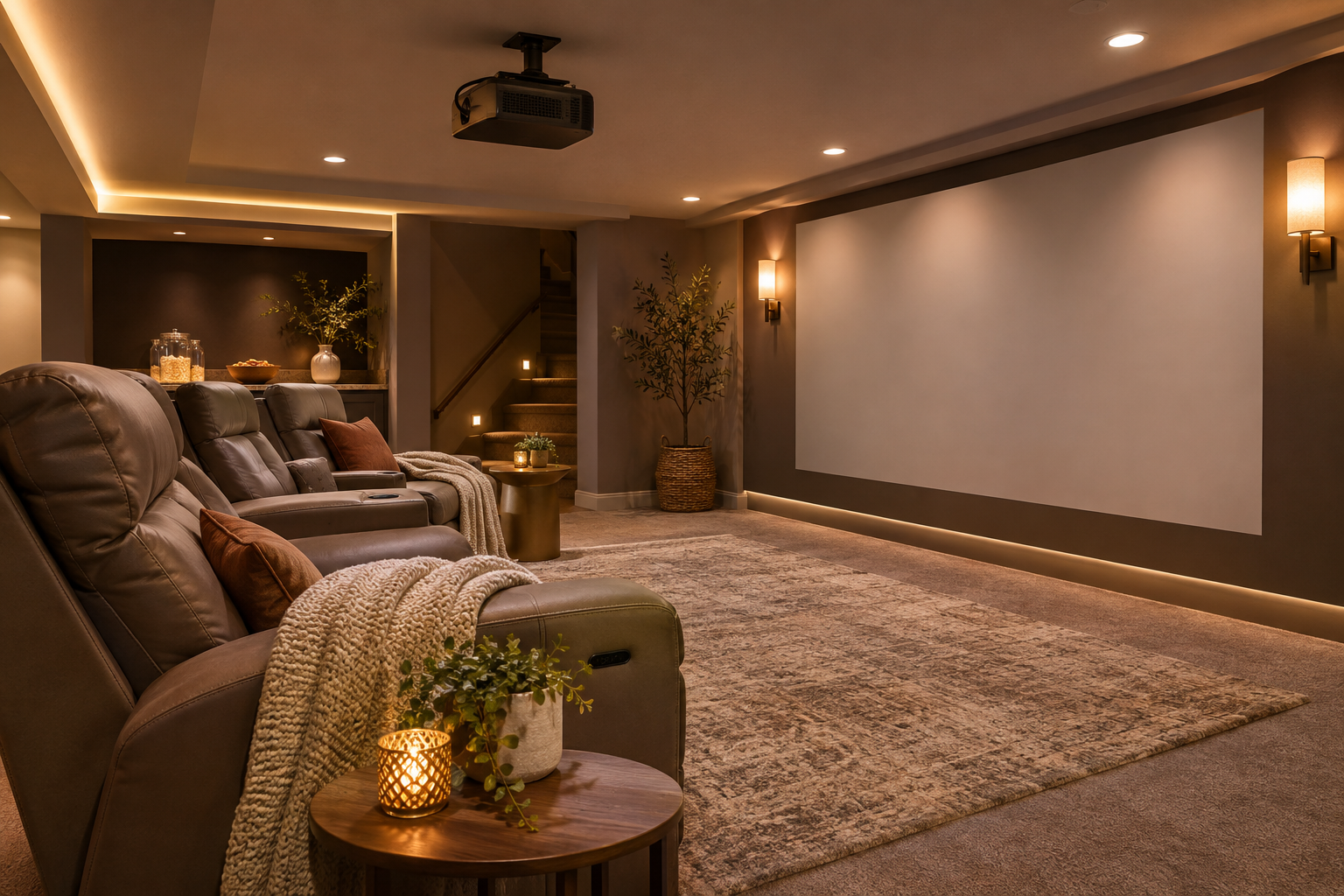
Map the room before choosing a sofa
Draw a simple plan that shows the screen, walls, doors, stairs, support columns, windows, vents, outlets, and any utility panels that must remain accessible. Measure the room at floor level and at the sofa’s expected back height. Note any soffits, beams, or sloped ceilings that may affect sightlines. Measure the pathway from the stairs to the final location, including every turn and landing.
Measure the sofa’s closed width and depth, then mark the footprint on the floor with tape. For a recliner or power sectional, use the manufacturer’s stated open depth and required wall clearance. If those details are missing, ask the seller or manufacturer instead of estimating from the product photograph. Consider the space needed for footrests, cup holders, side tables, and people walking past the seats.
Basement access can be a limiting factor even when the finished room has ample space. Ask for the carton dimensions, number of packages, and whether backs or arms detach. Measure the narrowest stair point, hallway turn, and door opening. Confirm who is responsible if a delivery team cannot bring the item into the room. A sofa that reaches the curb but cannot pass the stairs is not a usable bargain.
Choose a sectional, sofa, or separate recliners
Power reclining sectional
A power sectional can provide several seats, a chaise or corner section, and shared storage in one arrangement. It may suit a family room where viewers sit together. The large footprint and multiple power connections require careful measurement. Confirm which side the chaise or console occupies and whether the sectional can be reversed. Some modular pieces connect in a fixed order, so verify the exact layout before checkout.
Power mechanisms need electricity, and cords must be routed where people will not trip or catch them under a moving part. Check outlet locations and the manufacturer’s instructions for the power supply. Do not use an extension cord unless the product maker permits it. Keep outlets and any required access panels available after furniture is installed.
Manual recliner sofa
A manual reclining sofa may avoid a power connection and can be simpler to place when outlets are scarce. It still needs clearance for the footrests and operating handles. Check whether each seat reclines independently and whether the middle seat is fixed. In a narrow room, make sure the open seats do not block the path to the stairs or another row of seating.
Sofa plus individual recliners
A standard sofa paired with one or two recliners can offer more layout flexibility than a single large sectional. Separate pieces can be easier to move through a stairway and can leave a central route open. The tradeoff is that they take floor area in different places and may look less integrated. Measure each piece and arrange the plan before buying.
Three API-listed reclining sectional examples
The examples below were returned through Amazon Creators API and illustrate different home-theater seating configurations. Listing claims about power, storage, ports, or capacity are not independent test results. Open each page to verify the current model, selected color, dimensions, delivery, and warranty. A product title that mentions a feature does not guarantee that every variant includes it.

This listing describes a multi-seat power reclining sectional with a console and storage features. Check the actual footprint, chaise side, number of powered seats, and cable arrangement. Verify the open depth and the manufacturer’s clearance instructions. A sectional with several seats can be convenient for a group but may dominate a compact basement or make a narrow route difficult.

This example is presented as a power reclining sectional with console features. Compare its configuration with the room plan and identify which positions recline. Ask whether the backs detach for delivery and whether the included power components reach the intended outlet. Confirm the exact variant and package count before scheduling delivery.

This listing is described as a five-seat power sectional for home theater use. Confirm dimensions, seating positions, the selected upholstery, and all included accessories on the live page. Do not assume that every seat reclines or that every feature shown in a promotional image is included in the selected configuration.
Plan seat count and sightlines
Choose seating for the people who regularly watch together, then decide whether occasional guests need extra seats. A huge sectional can add capacity but may make a basement feel crowded. A smaller sofa plus a movable chair can better serve a household that watches in different group sizes. Keep the screen visible from each main seat and consider whether a tall back blocks the view from the row behind it.
Use the screen maker’s recommendations for viewing distance and height. The ideal arrangement depends on screen size, resolution, room shape, and viewer preference. Place the primary sofa first, then add secondary seating without narrowing the route to the exit. If you plan risers or a second row, check ceiling height and local building requirements with a qualified professional before construction.
Consider the room’s sound system as well. A very deep sectional can change how sound reaches side seats, while a tall back may block a rear speaker. Follow the speaker manufacturer’s placement recommendations and test the room before finalizing the furniture. Keep speaker stands and cables out of the footrest path.
Check reclining clearances and movement
A recliner needs enough room to extend. Some designs move forward as they recline, while others need additional space behind the back. Use the exact manufacturer instructions for the selected model. Do not assume that a “wall hugger” label means the sofa can be placed directly against a wall; verify the required distance and motion path.
Leave room for people to walk around the sofa when seats are open. A reclining footrest can obstruct a doorway, console, or aisle. Plan for both viewing and entry: guests should be able to reach a seat without stepping over a footrest or squeezing between furniture. If there is a second row, keep its route clear when the front seats recline.
Test any manual or power mechanism if possible. Check whether the controls are easy to reach and whether the footrest closes smoothly. Keep children and pets clear while a seat moves. Stop using a mechanism that catches, makes unusual noises, or appears damaged and contact the manufacturer or a qualified repair person.
Power, USB ports, and cable routing
Powered recliners need a safe, accessible connection. Before buying, check which side the power cord exits and whether the cable can reach the outlet without crossing a walkway. Keep the cord away from moving joints, heater vents, and areas where it can be pinched. Follow the product instructions and local electrical requirements. Use an electrician if an outlet needs to be added or moved.
USB charging ports can be convenient, but they do not replace a properly placed outlet for every device. Confirm what ports are included and where they are located. Plan charging cables so guests do not stretch them across the room or leave them near a moving footrest. Keep remote controls in a consistent location so they are easy to find.
Do not overload a power strip or hide it under upholstery. Maintain access to plugs, adapters, and any transformer. Leave enough slack for normal seat movement without creating a loop that can catch on the mechanism. Check the cord route after moving the sectional or changing the room layout.
Choose upholstery for a basement
Basements can be cooler, more humid, or darker than upper rooms. Choose upholstery that fits the local environment and cleaning routine. Read the manufacturer’s care code and avoid placing a sofa against a damp wall. Address moisture or water intrusion before installing upholstered furniture. If the room has a dehumidifier, keep its air path unobstructed.
Leather and faux leather can be easy to wipe, but they may feel cool and can be slippery. Fabric can feel warmer and come in more colors, but texture and cleaning needs vary. A dark color may hide some marks while showing dust or lint. A lighter fabric can brighten a basement but may need more frequent care. Judge the selected material and finish rather than a generic label.
Check whether cushion covers unzip and whether the seller offers replacement covers or cushions. The product page may not include all care details, so consult the manufacturer where possible. Avoid using an unapproved cleaner on fabric or leather. A protective throw can help with everyday wear, but it should not interfere with power mechanisms or block vents.
Lighting and atmosphere
Basement theater rooms often rely on controlled lighting. Make sure guests can still find the stairs and walkways when the screen is on. Use low-level path lighting where appropriate and keep cords secured. Do not position a floor lamp where it can be struck by an extended footrest or block circulation.
Seat material and color affect how the room feels under dim lighting. Very dark upholstery can blend into a dark room, while a lighter tone can help define the seating area. Consider the screen reflection, existing wall color, and how the sofa looks when the lights are on for cleaning. Request swatches when available rather than relying only on photographs.
Leave a place for drinks and remotes that does not require guests to reach across a reclining seat. A sectional console can provide storage, while a side table may work better with a separate sofa. Keep table edges out of the mechanism path and provide enough space to stand up safely.
Delivery through basement stairs
Measure the route all the way from the truck to the final room. Record door widths, stair width and height, landing dimensions, ceiling height at turns, and any hallway pinch points. Ask the seller for carton dimensions and the assembled dimensions. A sectional may arrive in several boxes, and each piece can have a different access challenge.
Clarify whether delivery includes stairs, room placement, assembly, and packaging removal. Some carriers stop at the first threshold. If the delivery team cannot bring the item downstairs, find out whether the order can be returned and who pays for the return. Schedule delivery when someone can inspect the item and document damage before the carrier leaves.
After delivery, check each box and part against the packing list. Keep all hardware until the sectional is assembled and tested. Follow the manufacturer’s assembly sequence and do not improvise connectors or use substitute fasteners. If a component is damaged or missing, contact the seller before using the sofa.
Keep the room usable for more than movies
A basement theater may also be used for games, reading, or family gatherings. Choose seating that supports those activities without leaving the room locked into one arrangement. A sectional can define the viewing area, while an ottoman or movable chair can provide flexible seating. Make sure the center of the room remains clear enough for everyday movement.
Storage in a console can hold remotes and small accessories, but it should not become a place for loose batteries or cords that children can access. Keep blankets clean and dry. If the room has a wet bar or snacks, choose a layout that allows easy cleaning and does not place upholstery directly beside a spill-prone surface.
Check the sofa’s depth and seat height against the people who use it. Very deep seats may be comfortable for lounging but less convenient for shorter viewers. Removable back cushions or footrests can change the feel. Try the actual model if possible, or compare its measurements with seating you already find comfortable.
Budget for the full seating setup
Compare the sofa price with delivery, assembly, stairs, power accessories, side tables, protective covers, and any required electrical work. A large power sectional can cost more to deliver and install than a standard sofa. Include the cost of replacement parts or upholstery cleaning in your long-term estimate. Prices and promotions change, so compare exact configurations at checkout.
Do not choose by the first amount shown in a search result. Select the correct color, side, number of seats, and power configuration. Check whether the listed price includes every sectional piece and whether a console or ottoman is separate. Verify the seller, return policy, warranty, and delivery date. Take screenshots or save the listing details for your purchase records.
For a home theater, it may be more cost-effective to buy fewer comfortable seats than to fill the room with a large sectional that restricts movement. Think about the usual group size, not the maximum number of people you host once a year. Leave a clear space for future maintenance and access to utilities.
Common layout and buying mistakes
- Buying a sectional before measuring the basement stairs and turns.
- Ignoring open recliner depth and the manufacturer’s clearance instructions.
- Choosing a power sofa without planning outlet access and cable routing.
- Blocking an exit, utility panel, vent, or path with the sofa or footrest.
- Assuming every seat reclines or every pictured feature is included.
- Forgetting delivery, assembly, stairs, and return terms.
- Using a cleaner that is not approved for the upholstery.
- Leaving the room too dark to move safely when the screen is on.
These mistakes can turn an attractive purchase into an awkward room. Measure the open and closed layouts, verify delivery, and inspect the live listing before checkout. Keep manufacturer instructions for operation and care in a place you can find later.
Related guides
For reclining features and upholstery comparisons, see our massage sectional sofa guide and microfiber dual reclining sofa guide. If you need a surface for drinks or remotes, our coffee table guide for reclining sofas discusses clearance and layout. Measure the exact room and sofa before buying.
Final checklist
Confirm the room plan, screen location, seat count, closed and open dimensions, stair access, power route, upholstery care, seller terms, and delivery service. Leave a clear route to the exit and utilities. Verify which seats recline and test the controls after assembly. Keep cords outside moving parts and make sure the viewing area remains comfortable with every seat open.
The best basement theater sofa is one that fits the room and how your household watches. A sectional may suit a larger group, while separate pieces can work better in a narrow basement. Use measurements, manufacturer instructions, and verified product details to make the choice. A thoughtful layout makes movie nights more comfortable without sacrificing access, care, or everyday use.
Plan for children, pets, and visitors
If children use the room, make the path around seating easy to understand and keep remotes, cords, and small accessories organized. Explain how the recliners work and ask children not to play on a moving footrest. Keep food and drinks on stable tables rather than balancing them on the upholstery. A washable cover can help with everyday mess, but choose one that stays secure and does not obstruct a powered mechanism.
For pets, consider shedding, nails, and whether animals are allowed on the furniture. A tightly woven cover or washable throw can protect the preferred seat, but inspect it for loose threads. Keep pet beds nearby so the animal has another comfortable place to settle. Remove a cover if the pet chews or pulls at it, and follow the sofa maker’s cleaning advice.
Visitors may not know where to find the recliner controls or how much room a seat needs. Keep a simple note by the seating area and show guests the operating sequence when needed. Do not let someone force a stuck mechanism. If the room is part of a rental or shared property, give clear instructions about the power controls, snacks, and where to return remotes.
Inspect the room after installation
After the sofa is assembled, open each seat and walk through the room as if you were carrying a drink or reaching the stairs. Confirm that doors, storage, and utility access still work. Sit in every seat and check sightlines to the screen. Listen for unusual rubbing or clicking when mechanisms move, and verify that no cord is stretched or pinched.
Take a photo of the final layout and record the product model, assembly date, and any care instructions. This makes it easier to restore the arrangement after cleaning or service. Check the floor beneath the sofa after a few days for scuffs or trapped cables. If the sofa has connectors between sections, inspect them periodically and tighten only as the instructions allow.
Acoustic comfort and upholstery placement
Seating placement can affect both comfort and sound. Keep the sofa from pressing against wall panels, speaker stands, or subwoofer vents unless the equipment maker permits it. Large upholstered surfaces can absorb some reflected sound, but the effect depends on the room and material. If audio sounds uneven, adjust the speaker setup or consult an audio professional rather than rearranging furniture in a way that blocks safe circulation.
Do not place the sofa in front of a return-air grille, access hatch, or equipment cabinet. Leave service space around electronics so they can be ventilated and reached. Keep food and drinks away from receivers and power supplies. The seating layout should support the viewing experience while still allowing a person to reach controls and shut off equipment.