Disclosure: As an Amazon Associate, dailyhomedecorating.com earns from qualifying purchases. Links on this page are affiliate links; they cost you nothing extra. Prices and availability change often, so check the current Amazon listing before you buy.
The makeup mirror vs lighted makeup mirror question is really a question about your room: a plain makeup mirror borrows whatever light your home provides, while a lighted makeup mirror brings its own. This makeup mirror vs lighted makeup mirror comparison judges both sides fairly — the plain mirror’s simplicity, honesty and freedom from power against the lighted mirror’s control, consistency and rescue of dim rooms — and ends with a decision path based on your light, your space and your routine rather than on fashion.
Quick verdict. Choose the plain makeup mirror if your makeup spot already enjoys good natural or well-placed light, if you value zero upkeep, or if the mirror will travel. Choose the lighted makeup mirror if your bathroom is dim, windowless or lit from overhead only, if you get ready before dawn, or if colour accuracy is where your routine keeps failing. Most households in modern, unevenly lit homes land on the lighted side; most routines blessed with a bright window land on the plain side and never miss the wires.
Key Takeaways
- The contest is decided by your room’s light, not by the mirrors: audit your light first.
- Plain wins on simplicity, price tier, portability and having nothing to charge, plug or fail.
- Lighted wins on consistency, pre-dawn reliability and foundation honesty in dim rooms.
- A plain mirror in genuinely good light equals a lighted mirror; a plain mirror in bad light loses daily.
- Hardwired lighted models are an electrician’s installation; plug-in and rechargeable are not.
In this guide
Makeup Mirror Vs Lighted Makeup Mirror: The Comparison at a Glance
Light source. Plain: the room’s, for better or worse. Lighted: its own, even and frontal by design. Consistency. Plain: varies with weather, season and hour. Lighted: the same every morning. Power. Plain: none, ever. Lighted: cord, batteries or rechargeable, with cords kept dry and clear of the sink. Portability. Plain: total. Lighted: good in rechargeable form, poor when corded. Upkeep. Plain: a cloth. Lighted: a cloth plus a charging or battery habit. Cost tier. Plain: entry for honest glass. Lighted: mid and up for good light. Failure modes. Plain: essentially none beyond breakage. Lighted: flat batteries, tired cords, and light that can age. Neither column is a caricature; both mirrors show the same face, and the whole argument is about the light it is shown in.
Criterion One: Light Quality and Honesty
The best makeup light imitates an overcast morning: bright, diffuse and coming from in front of you rather than above you. That is why ring-style and edge-lit designs exist — they put the light where the mirror is, so the face in the glass is the face that is lit. Bare, exposed bulbs at the sides can work beautifully too, in the classic dressing-room style, as long as they sit at face height and are shielded enough not to glare. Glare is the failure mode to avoid: a light you cannot look toward comfortably will push you to tilt your head, and a tilted head applies lopsided makeup. If a mirror offers more than one colour setting, treat the neutral daylight setting as home base and the others as previews — warm for evening venues, cooler for office light — rather than as your main working light.
Criterion verdict: lighted wins wherever the room’s light is weak, warm or overhead; plain draws level — genuinely level — in a bright, neutral, frontal light that some lucky bathrooms and dressing areas honestly have.
Criterion Two: Magnification and Detail Work
Distance is the hidden variable in every magnified mirror. A magnifying surface only stays in focus inside a fairly narrow band of distance, and that band shrinks as magnification rises. Sit too far back and the image blurs no matter how good the glass is, which is why people sometimes conclude a strong mirror is faulty when really their chair is simply in the wrong place. This is also why a magnified mirror suits a seated vanity, where your distance is repeatable, better than a shared bathroom where you lean over a sink at whatever range the taps allow. If several people will use the mirror, or your eyesight is changing, a moderate strength used at a comfortable, consistent distance will serve you better than an extreme strength used at the edge of its focus. Test your natural working distance before you commit to a strength.
Magnification itself is a draw — both sides offer it in the same pairings — but the lighted side uses it better in poor rooms, because a magnified view under weak light is a larger, dimmer uncertainty, while a magnified view under its own even light is a working instrument. In a bright room the advantage evaporates and the plain mirror’s magnified side performs identically. Criterion verdict: a tie on the feature, a lighted win on the conditions detail work is usually done in.
Criterion Three: Power, Placement and Daily Friction
Power is a quiet lifestyle decision disguised as a specification. Corded mirrors never run flat and suit a permanent vanity with an outlet nearby, but the cord must be routed where it cannot trail through sink water or across a wet counter, and it sets a limit on where the mirror can live. Battery mirrors free the placement completely and are the travellers’ friend, at the cost of batteries that fade at the worst moments and light that dims as they weaken. Rechargeable mirrors split the difference — cord-free day to day, topped up occasionally — and suit most modern routines best, provided you build the small habit of charging before the mirror is fully flat. Whichever you choose, keep cords and chargers dry, out of the sink basin and away from splashes, as a matter of unthinking routine.
The plain mirror’s counter-argument is a life with none of this paragraph in it: no outlet hunt, no charge anxiety, no cord routed around a wet counter, a mirror that works in a blackout and travels in a drawer. Friction is a real criterion because daily tools are abandoned over friction, not over specifications. Criterion verdict: plain wins on freedom and simplicity; lighted wins only where its power arrangement is genuinely convenient — a rechargeable by a dressing table, a corded beside an outlet — and loses where it is improvised.
Criterion Four: Installation and Safety
Wall-mounted mirrors ask for respect at installation, because glass plus gravity is unforgiving. The fixings must land in wall studs wherever possible; where a stud is not available, use proper wall anchors that are rated for the mirror’s weight and suitable for your wall material, and follow the anchor’s own instructions rather than improvising. A swing-arm mirror multiplies the load when it is extended, so the mount deserves more care, not less, than the mirror’s static weight suggests. Two placement rules are absolute. First, never hang a heavy glass mirror over a bed, a pillow area or anywhere a person sleeps or reclines beneath it. Second, check the mount periodically — a thirty-second wiggle test every few months catches loosening long before it becomes a fall. Done properly, a wall mirror is a decades-long fixture; done casually, it is the riskiest object in the bathroom.
Both sides can be wall-mounted and both obey the same rules — studs or rated anchors, no heavy glass over beds or pillows. The lighted side adds one professional boundary: plug-in and rechargeable models are household-simple, while hardwired lighted mirrors and cabinets belong to a licensed electrician working on GFCI-protected bathroom circuits. Criterion verdict: plain wins narrowly, because it never raises the wiring question at all.
Criterion Five: Cost and Longevity
Price tiers in this category buy different things than people expect. The entry tier buys honest glass and simple light — perfectly serviceable mirrors whose frames, finishes and hinges feel plain rather than premium. The mid tier buys better light quality, smoother mechanisms, rechargeable convenience and finishes that survive a steamy bathroom with grace. The premium tier buys design, sensor convenience and light engineered to imitate daylight closely, in objects that look like furniture rather than tools. What money does not buy is a different reflection: a well-chosen entry mirror shows the same face as a premium one. Spend where your daily friction actually lives — if that is dim bathroom light, buy light; if it is a cluttered counter, buy the wall mount or the folding design; if it is eyesight, buy the right magnification in decent glass.
Longevity tilts plain: glass and a frame have almost nothing in them to age, while lighted models add batteries that tire and electronics that can fail — though a well-kept lighted mirror still serves for years, and its light is the thing its owner uses most. Criterion verdict: plain wins on lifetime simplicity and entry cost; lighted justifies its tier only through daily use of the light, which loops the whole comparison back to the audit of your room.
Strengths and Trade-Offs of Each Side
Plain makeup mirror — strengths: zero upkeep beyond cleaning; works anywhere, in any light the world provides, forever; the cheapest honest glass in the category. Plain — trade-offs: hostage to the room’s light; inconsistent across hours and seasons; no rescue for a dim bathroom. Lighted makeup mirror — strengths: even, frontal, controllable light; the same reflection every morning; foundation honesty in rooms that otherwise lie. Lighted — trade-offs: power to manage and cords to keep dry; a higher tier for good light; more to age, charge and eventually fail. Read fairly, neither list shames its side — they describe two different bargains with your home.
Who Each Option Suits, and Who Should Skip Each
The plain mirror suits the window-blessed, the traveller, the minimalist, the household with excellent bathroom lighting already installed, and the buyer whose routine is quick and whose eyes are content. It should be skipped by the pre-dawn starter, the windowless-bathroom renter, and anyone whose foundation keeps surprising them outdoors. The lighted mirror suits exactly those skippers, plus colour-critical routines, glasses-wearers who need light and magnification together, and anyone whose makeup time happens at the dark edges of the day. It should be skipped by the genuinely well-lit, by counters with no dry cord route and no charging discipline, and by buyers who know the light would be a novelty used for a week. Suitability, in this comparison, is not a ranking — it is a matching exercise, and both mirrors have households where they are unambiguously right.
Where to Buy: Representative Models for Each Side
On the lighted side, the representatives below cover the corded default, the cord-free all-rounder and the angle-giving tri-fold; on the plainer side of the family tree, the magnification specialist shows what an unlighted-leaning, glass-first purchase looks like. All are presented in prose while listing verification is pending.

Conair Double-Sided Lighted Makeup Mirror
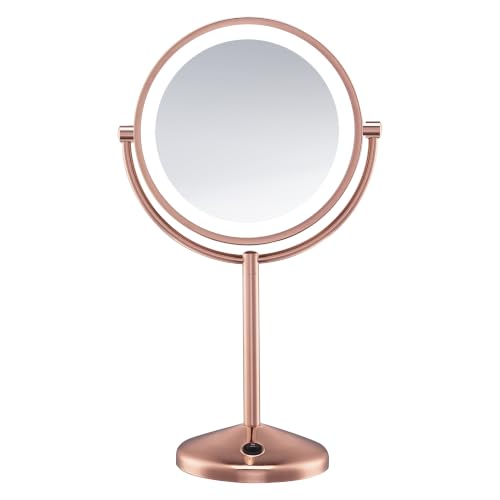
The Conair Double-Sided Lighted Makeup Mirror is a corded tabletop design from one of the longest-running names in personal care mirrors, built around a flip frame with a regular reflection on one side and a magnified view on the other, ringed by its own lighting. As a first mirror or a guest-bathroom extra, this is the sensible shape of purchase: a familiar format, a flip between the honest view and the magnified one, and light built in so a dim room stops being an excuse. Its corded nature suits a fixed spot beside an outlet. Positioning: entry-to-mid tier, priced by tier rather than by gimmick — check the current listing for the live figure. Best for: readers of this guide whose routine matches that shape. Not suited for: anyone whose space or habits contradict the format, however good the glass.
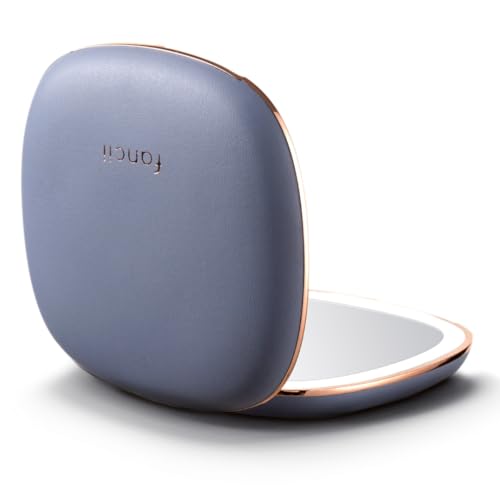
Fancii Mila LED Lighted Vanity Mirror
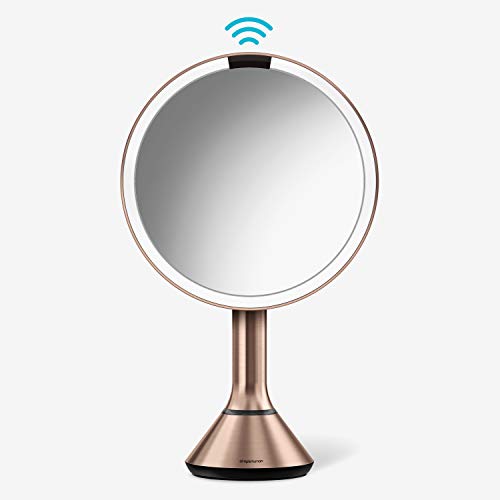
The Fancii Mila LED Lighted Vanity Mirror is a rechargeable LED vanity mirror from a beauty-tools brand known for portable, design-led mirrors, with touch controls and a clean, cord-free silhouette once charged. Rechargeable mirrors live or die by habit: if you are happy topping up a charge the way you charge a phone, this format is the most flexible in the category. Its portability also makes it the natural travel upgrade for anyone whose hotel bathrooms keep disappointing them. Positioning: mid tier, priced by tier rather than by gimmick — check the current listing for the live figure. Best for: readers of this guide whose routine matches that shape. Not suited for: anyone whose space or habits contradict the format, however good the glass.
KEDSUM Trifold Lighted Makeup Mirror
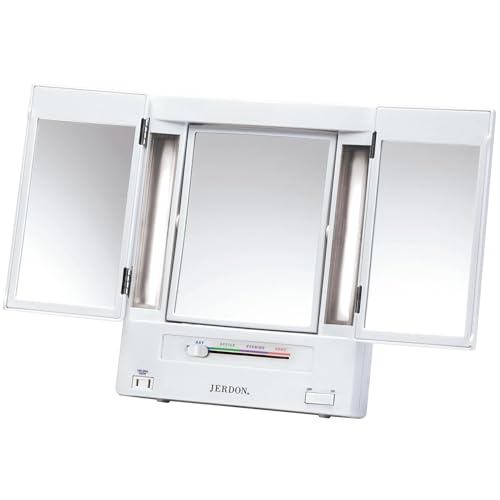
The KEDSUM Trifold Lighted Makeup Mirror is a folding three-panel lighted mirror that opens out to show your face and both profiles at once, then closes flat enough for a drawer, popular with shared bathrooms and smaller vanities. As a first lighted mirror it teaches good habits cheaply: check the front, check the sides, fold away. The centre panel does the daily work while the wings handle hair and profile days. Judge examples on hinge stiffness — the panels must hold the angle you set, not drift. Positioning: entry tier, priced by tier rather than by gimmick — check the current listing for the live figure. Best for: readers of this guide whose routine matches that shape. Not suited for: anyone whose space or habits contradict the format, however good the glass.

Zadro Dual Sided Vanity Mirror
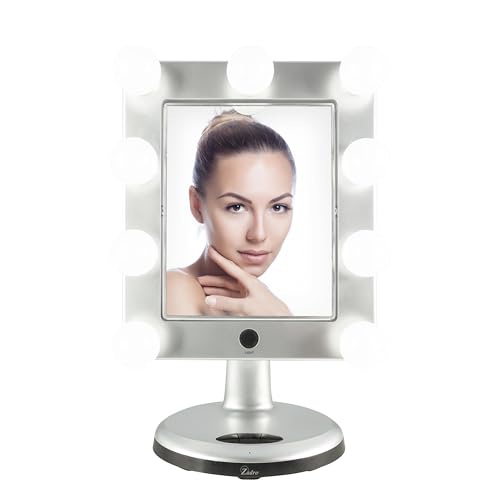
The Zadro Dual Sided Vanity Mirror is a dual-sided vanity mirror from a brand that has specialised in magnification mirrors for decades, typically finished in polished metal tones and aimed at a permanent dressing-table spot rather than travel. Zadro’s long focus on magnification shows in the details that matter: a flip mechanism that feels deliberate and glass chosen for close work. It suits someone who knows magnification is their main event and wants a mirror that treats it that way, in a finish that sits comfortably on a grown-up dressing table. Positioning: mid tier, priced by tier rather than by gimmick — check the current listing for the live figure. Best for: readers of this guide whose routine matches that shape. Not suited for: anyone whose space or habits contradict the format, however good the glass.
How to Decide: Four Questions
One: at the hour you actually get ready, in the room you actually use, is the light on your face even, frontal and neutral? If yes, the plain mirror is enough and this comparison is over. Two: if not, can the room be fixed more cheaply than the mirror — or are you renting the bad light along with the walls? A lighted mirror is the fix that moves with you. Three: does your routine contain detail work that magnification serves? Both sides offer it, but detail in dim light belongs to the lighted side. Four: will you honestly sustain the power habit — the charge, the dry cord? If not, the plain mirror’s silence wins. Answer in order and stop at the first decisive answer; most households are decided by question one alone, which is as it should be, because this contest was always about your room.
Final Recommendation by Use Case
For the dim or windowless bathroom: lighted, rechargeable if outlets are scarce, corded if a dry route to a GFCI-protected outlet exists, hardwired only via an electrician. For the bright dressing area: plain, and spend the saved tier on better glass. For the shared family bathroom: lighted, because it forgives everyone’s hours and the room’s moods. For travel and second mirrors: plain, or the lightest rechargeable you will actually charge. For the colour-critical professional routine: lighted at the premium tier, where the light is engineered rather than merely present. Whichever side you land on, the companion guides in this cluster — the makeup mirror buying guide for the full field and how to choose a makeup mirror for the step-by-step — will turn the decision into a specific, well-fitted purchase.
The year’s turning changes the mirror’s job. In summer, morning light arrives early and strong, and a mirror near a window may need its own light only for detail. In winter, the whole routine happens in the dark, and the mirror’s light becomes the sun’s understudy for months — the season when dim or warm-only mirrors are found out, and when the daylight check at the window moves to midday, after the makeup is already being worn. Households that get ready across seasons learn to distrust any judgement made in only one kind of light, which is the deep reason dimmable, neutral-leaning mirrors earn their keep: they hold the reflection constant while the year swings around it. Consistency, again, is the feature hiding inside all the others.
Foundation matching is the highest-stakes judgement a mirror hosts, and it is a judgement about undertone as much as depth. The reliable method: apply candidate shades in stripes along the jaw, let them settle for a few minutes while the product oxidises slightly, then judge in the most neutral light available — the mirror’s daylight-leaning setting, or a step to the window. The shade that disappears against both face and neck is the match; a shade judged only on the face will betray you at the jawline in daylight. A mirror with a colour cast of its own corrupts this test silently, which is why the white-card check at unboxing matters. Blush and bronzer submit to the same discipline: quantity judged at life size, placement judged in profile where possible, enthusiasm restrained by the knowledge that close views exaggerate everything.
A makeup mirror quietly reorganises the morning around a seat. Instead of a routine scattered between a bathroom mirror, a bedroom window and a phone camera, everything migrates to one station: products within reach, brushes in order, both scales of view a flip apart. That consolidation is an underrated benefit, because a routine with a home base gets faster and calmer at the same time. Lay the station out like a cockpit — daily products on the dominant-hand side, occasional items behind, a small tray for the tools in flight — and the mirror becomes the anchor of a workspace rather than an object on a surface. People who make the switch often report that the routine shrank by minutes without any step being cut; the minutes were in the walking, the leaning and the re-checking, and the mirror removed all three.
Bathrooms are hostile environments for optics. Steam condenses on cool glass, moisture hunts the edges of the silvering, and the daily cycle of fog and dry repeats for years. A mirror that lives over a sink should be chosen and treated with that climate in mind: sealed edges, finishes that shrug off humidity, and ventilation doing its share — an extractor fan or an open door after showers slows the ageing of everything in the room, mirrors included. The fog itself has workarounds, from warming the room before a shower to the simple patience of doing makeup after the air clears, and many routines migrate to a bedroom vanity for exactly this reason. None of this is a reason to fear a bathroom mirror; it is a reason to buy one built for the climate it will actually live in.
The Hybrid Answer Most Homes Actually Land On
Many households resolve this comparison by refusing its terms: a plain mirror as the room’s permanent furniture — the big bathroom glass, honestly lit by decent room lighting — plus a lighted vanity mirror as the working instrument at the seat. The plain mirror does the whole-face, whole-body, two-person work; the lighted mirror does the detail and the colour. Priced as a pair, the combination usually lands near the premium single mirror, and it outperforms it, because each tool is doing the job its side of this comparison wins. If you are furnishing a bathroom from scratch, consider the hybrid the default plan and let a single-mirror answer be the compromise that space or budget imposes, rather than the other way round.
The Dawn Test: A Fair Way to Run This Comparison at Home
Before choosing a side, run the experiment the comparison deserves. Tomorrow, do your makeup exactly as usual, then take a hand mirror to the brightest window in the house and compare what the two lights told you. If they agree, your room has been passing the light test all along, and the plain side of this comparison wins your household honestly. If they disagree — if the window reveals quantity, colour or blending your bathroom hid — you have measured the exact gap a lighted mirror exists to close, and its size tells you the tier the fix deserves. One morning, two lights, no opinions: it is the cheapest research in the category, and it converts this entire article into a personal answer.
Picture the weekday morning the mirror actually serves. The alarm has done its worst, the light outside is either absent or unhelpful, and there are twenty minutes between the shower and the door. This is not the tutorial’s morning; nobody is blending for an audience of cameras. The mirror’s job in this morning is triage: even out the base, wake the eyes, make the brows agree, check the whole at life size, leave. A mirror that serves triage well — quick to its angle, honest in its light, flip ready — is worth more than a beautiful one that must be fetched, unfolded, plugged and persuaded. When you evaluate any design, run this morning against it in your imagination, because this morning, repeated two hundred times a year, is the product you are actually buying.
Picture the guest scenario: a friend staying over, a borrowed bathroom, a routine performed in someone else’s light with someone else’s mirror — or, more often, with no suitable mirror at all. Hosts who keep a simple, decent mirror in the guest space perform a small kindness that guests remember out of proportion to its cost, and the folding and rechargeable designs serve here precisely because they ask nothing of the room. It is a minor scenario in the arithmetic of buying, but it reveals the category’s social truth: a good mirror is hospitality equipment as much as beauty equipment, and the households that understand that are the ones whose spare rooms feel finished.
Video calls deserve their own sentence, because they have quietly become a daily mirror of their own — and a badly lit one, usually from below or above at a laptop’s convenience. Many people now keep the vanity mirror’s habits for calls: face lit frontally, camera near eye level, the plain view’s honesty applied to what colleagues will see. A lighted mirror near a desk earns a second career here, and more than one household has discovered that the makeup mirror bought for mornings is, by afternoon, the best-lit seat in the house for being seen. Tools that serve two rituals justify their footprint twice over.
Artists also maintain their tools like instruments, and the mirror is first among them: glass cleaned before work, not after complaints; hinges and arms checked as part of setup; a failing light treated as a stopped job rather than a nuisance to work around. The home translation is modest — a cloth that lives at the station, a weekly wipe, a charge topped up on a schedule rather than on a crisis — but the mindset is the transferable part. A mirror treated as an instrument returns instrument-grade reliability; a mirror treated as bathroom clutter returns clutter-grade surprises, usually at the least convenient hour of the week.
There is also the mistake of the single data point: one bad morning blamed on a new mirror, one good photograph credited to it. Mirrors should be judged across a week of varied mornings — early and late, rushed and slow, glasses and lenses — because their value is statistical, an average lifted across hundreds of repetitions. The buyer who understands this tests patiently and returns rarely; the buyer who judges on day one churns through the category collecting first impressions. Given that the whole promise of the product is consistency, judging it inconsistently is the one error that guarantees dissatisfaction regardless of which mirror eventually wins.
Small ergonomic details compound. A mirror that tilts with one finger gets adjusted; a mirror that needs two hands and a wrestle stays at yesterday’s angle and quietly mis-serves today’s user. A base that yields counter edge for forearms to rest on steadies the whole upper body. Light controls reachable without breaking position — a touch surface, a dial at the frame’s edge — keep the working posture intact through adjustments. Even the chair participates: a stool that swivels lets the window check happen without standing, and a seat at the height that puts the mirror’s centre at eye level is worth more than any single feature on the mirror itself. Ergonomics is the category’s least marketed virtue and its most felt one, morning after morning.
What About the Room’s Own Lighting Upgrade?
A third contestant deserves its hearing: neither mirror, but better room light — frontal sconces or a properly placed fixture that fixes the bathroom for every user and every task. Where a renovation is already planned, this is often the wisest spend, and the mirror question then resolves plainly in favour of the plain mirror, beautifully lit by the room. But the comparison must be honest about thresholds: room lighting means an electrician, a protected circuit, and a project measured in days and decisions, while a lighted mirror means an unboxing. Households between renovations, renters, and anyone whose bad light is one room’s quirk rather than a whole-home project will keep landing on the lighted mirror as the pragmatic champion — not because it is the best imaginable light, but because it is the best light that arrives this week.
Finish interacts with the room’s climate as much as its palette. Polished and brushed metals shrug off bathroom humidity best and age into their surroundings; painted and wooden frames belong in drier rooms, where they bring warmth a metal cannot. Black frames ground pale rooms and show dust honestly; bright metallics bounce a little extra light around the glass, a trivial but real contribution. Whatever the finish, the test is tactile: edges smooth, corners finished, no sharp seam where fingers will travel daily during flips and tilts. A mirror is handled more than most furniture, and its finish is a daily handshake, not a photograph.
Children and teenagers enter the picture too, usually at the stage of first routines — skincare, braces checks, early makeup experiments. A household mirror at a sensible height with moderate magnification serves those years gracefully, and the safety rules scale with it: stable bases over tippy stands, mounts checked as part of household routine, and nothing heavy hung where anyone sleeps beneath it. The mirror that serves a household rather than a person should be bought a size up in sturdiness and a step down in specialisation, because its users will span more heights, eyes and habits than any single routine predicts.
The packing rules are simple and worth stating: glass travels closed, padded, and away from hard edges in the case; cords and chargers travel in the same pouch every time so the kit is checkable at a glance; and a rechargeable mirror travels charged, because the first night is when it is needed. A mirror that survives a year of luggage has proven more about its hinges and case than any showroom handling can, which is why the folding designs that endure develop loyal followings entirely out of proportion to their price tier.
Cleaning the station is part of the same system. Products leak, powders migrate, and a mirror at the centre of it collects the evidence. A weekly reset — glass polished gently, tray wiped, expired products evicted — keeps the reflection honest, because a dusty mirror in a dusty station makes everything look softer than it is, including the face. The reset takes minutes and pays in judgement quality, which is the currency this entire category trades in.
Light behaves differently in each of those rooms, too. Bathrooms concentrate hard, reflective surfaces that bounce light unpredictably; bedrooms soften everything with fabric; hallways borrow whatever the nearest doorway offers. A mirror moved between rooms will seem to change character — the same glass, the same lamp, a different verdict — which is not the mirror being inconsistent but the room revealing its share of the reflection. This is why the final judgement of any mirror should happen in the room it will live in, at the hour it will work, and why moving a disappointing mirror before replacing it is the cheapest experiment in the whole category.
Stepping back from the criteria, the comparison resolves into a single sentence each side can sign. The plain mirror says: give me a decent room and I will never ask you for anything again — no charge, no cord, no thought — for as many years as the glass survives. The lighted mirror says: give me any room at all, however dark, however early, and I will make it decent, at the small standing price of being fed and kept dry. Households are not choosing between a good and a bad mirror; they are choosing which of those two promises their home needs kept. Answer that, and every criterion in this article falls into place behind the answer, which is why the comparison was always going to be settled by the room, the hour and the routine — never by the mirrors themselves.
Notice what this comparison never needed: a single number. No brightness figure, no magnification statistic, no score out of ten decided any criterion, because the decision lives in qualities a household can observe directly — the light in a room at dawn, the honesty of a reflection beside a window, the presence or absence of an outlet where a cord can run dry. That is worth stating plainly in a category whose marketing prefers figures, because figures can be compared without understanding, while the judgements that actually predict satisfaction — evenness, neutrality, friction, fit — must be seen to be believed. Run the dawn test, answer the four questions, and the comparison concludes itself with more certainty than any specification sheet could offer.
If a household still splits after all of it — one partner lit, one partner plain — the hybrid from earlier in this article is the peace treaty: the room keeps its honest plain glass, the seat gets its lighted instrument, and the comparison retires undefeated in both directions. Many long-running households quietly live exactly there, which may be the most realistic verdict this page can offer: the versus in the title is a useful argument, but the home is under no obligation to pick only one winner.
Both sides, fairly heard, also agree on more than the versus format suggests. Both want the plain view kept sacred as the final judge. Both want the glass tested with a straight edge and the colour checked against daylight. Both want mounts respected, cords kept dry where cords exist, and the mirror placed at the height of the person rather than the convenience of the wall. A household that honours those shared principles will be well served by either contestant, which is the deepest fairness this comparison can offer: the loser of the argument, properly chosen and properly used, is still a good mirror. Choose by your room, install and place with care, verify at the window — and whichever side of the title you land on, the mornings will notice the difference. That shared floor of quality is why this category rewards deciding at all far more than it rewards deciding perfectly, and why the worst outcome available is not the wrong mirror but the unexamined one, bought on a photograph and judged never.
One scenario quietly favours the plain side more than any criterion above admits: the mirror that will outlive its room. Plain glass moves house, changes rooms and survives renovations without asking anything of the new walls, while a hardwired lighted installation is a commitment to a specific bathroom in a specific house. Households that move often, or that are furnishing a home they expect to leave, should weight that portability honestly — it is the plain mirror’s oldest argument, and in a mobile life it can be the decisive one.
Decide by the room, verify by the window, and keep the plain view sacred — a household that does those three things has extracted everything this comparison, and indeed this category, has to give, whichever mirror ends up on the wall or the vanity.
Run the dawn test tomorrow, before you buy anything at all, and let your own window cast the deciding vote in this comparison for your household’s mornings ahead.
It costs one morning and settles the question.
Where the Choice Is Really Made: Makeup Mirror Versus the Alternative in Practice
Comparisons are usually argued on headline features, but the better test puts the makeup mirror and the alternative through the same rooms, the same tasks and the same awkward moments. This section sets out that shared test, so the decision rests on differences that will actually be felt.
Start With Your Space and Your Routine
When you compare delivery options for a makeup mirror, factor in where the item will be left and who will move it to its final spot, since the last few metres are where damage and strained backs happen. Write down the three tasks you will do most often with the makeup mirror and score each shortlisted option against those tasks alone, ignoring features you are unlikely to touch. Think about the end of the makeup mirror’s life with you as well, including whether it could move to another room, be passed on, or be stored without damage when your needs change. Check the dimensions given in the listing against your own measurements rather than relying on the room name in a photograph, since staged photos routinely make Beauty & Personal Care pieces look smaller than they are.
Ask what you would give up, not just what you would gain, by choosing the makeup mirror over the alternative, since every either-or choice in Beauty & Personal Care trades one kind of convenience for another. Where the makeup mirror has a surface you will set things on, lean on, or load, consider the heaviest realistic load in your household rather than the lightest display load in the photos. Apply the same checks to each shortlisted example, whether that is the KEDSUM Trifold Lighted Makeup Mirror; the Fancii Mila LED Lighted Vanity Mirror; the Zadro Dual Sided Vanity Mirror, because consistent testing is what makes the differences between models visible. Decide in advance which single feature you would refuse to compromise on, and let that one priority settle ties between otherwise similar makeup mirror choices.
When Small Problems Appear
Read the listing for what it does not say as carefully as for what it does, because missing information about materials, assembly or care is itself a useful signal when you compare makeup mirror options. Keep the fittings, spare parts and instructions that come with the makeup mirror together in one labelled place, because the part you need in a year is always the one that was put somewhere safe. Finally, judge the makeup mirror against the life you actually lead this year, not the tidier or more ambitious life in the listing photographs, and the choice will usually make itself. Where the makeup mirror meets the floor, the wall or another surface, check what protects both sides, because scuffs and marks in those contact zones are the most common early complaint.
Consider the busiest version of the day, not the calmest one, and ask whether the makeup mirror still works when people are hurrying, carrying things or sharing the same space. If the makeup mirror and its rival each win on different days of the week, choose by your busiest day, because that is when the wrong choice will be felt most sharply. Seasonal checks suit most Beauty & Personal Care items well, so tie a quick inspection of the makeup mirror to a job you already do, such as changing clocks or clearing gutters. Think about the season in which the makeup mirror will work hardest, and judge it against that season rather than the mild week in which you happen to be shopping.
The best makeup mirror for a rented home may differ from the best for an owned one, because fixings, marks and alterations carry different consequences in each case.
A Short Decision Checklist
- Packaging kept until the makeup mirror has passed its first trial in place
- Assembly needs, tools required and whether help is needed
- The measured space, including clearance to use and clean around the makeup mirror
- Who will use the makeup mirror most, and any limits they have
- What your current arrangement does well that the makeup mirror must not lose
- How the makeup mirror will be cleaned in an ordinary week
- What your current arrangement does badly that the makeup mirror must fix
- Where the makeup mirror and its accessories will be stored when not in use
Taken together, these checks take only a little time, yet they answer the questions that decide whether the makeup mirror suits your home, your household and your routine, and they do so before money changes hands rather than after.
Frequently Asked Questions
Can a lighted mirror replace good bathroom lighting?
It can compensate for it, which for renters and old bathrooms amounts to nearly the same thing. A lighted mirror puts even, frontal light exactly where makeup decisions happen, bypassing the overhead shadows that make ordinary bathroom lighting so treacherous. It will not light the whole room for cleaning or bathing, and it should not be asked to. Think of it as task lighting for your face. If you are renovating anyway, plan both: decent general light plus a mirror whose own light you control. Until then, the mirror is the cheaper renovation.
What colour light is best for applying makeup?
The most neutral, daylight-like light you can get, because it is the light your face will be judged in most often. Warm light is flattering and forgiving — pleasant, but it hides undertone mistakes and encourages heavier application. Very cool light is honest to the point of cruelty and can make healthy skin look sallow. Neutral is the working referee. If a mirror offers several colour settings, make neutral your home base and use the warm and cool settings as previews of evening venues and office lighting, not as your primary judgement light.
Should a makeup mirror be corded, battery or rechargeable?
Match the power to the placement. Corded suits a permanent vanity with a nearby outlet and never runs flat, but the cord must be routed dry and clear of the sink. Battery models go anywhere and travel well, with light that fades as the cells weaken. Rechargeable designs are the modern default for most homes: cord-free in daily use, topped up occasionally, and happy on a desk or in a bathroom with no spare outlet. There is no wrong answer, only mismatches — a corded mirror with no outlet nearby is a return waiting to happen.
Is it safe to install a lighted mirror myself?
Plugging one in, yes; wiring one in, no — that distinction is the whole answer. A plug-in or rechargeable mirror needs only sensible handling: dry hands, cords clear of sink water, and a GFCI-protected bathroom outlet. A hardwired mirror, lighted cabinet or any installation that opens a wall or taps a circuit is a licensed electrician’s job in most homes, full stop. Bathrooms combine water and electricity at close quarters, and the protection systems only work when the installation is done properly. Hire the wiring; enjoy the mirror.
Why does my makeup look different in daylight than in my mirror?
Because light is an ingredient in every colour judgement, and your mirror’s light differs from the sun’s. Warm bathroom light flatters skin and hides mismatches; step outside and foundation lines, blush strength and undertone errors announce themselves. A neutral, daylight-leaning mirror light narrows that gap, which is its entire purpose. The practical routine: apply under your mirror’s most neutral setting, then do a final check near a window before leaving. If the two disagree, believe the window and adjust the mirror habit — the daylight check is the one the world will grade.
Are tri-fold mirrors worth the extra counter space?
If hair is part of your routine, yes; if it is makeup alone, they are a luxury rather than a need. The side panels show profiles, partings, earrings and the back of a style — views a single mirror simply cannot give you — and they fold away to a slim slab when closed. Measure the opened width against your counter before buying, since a tri-fold at full stretch is wider than people expect. For a pure makeup routine at a small vanity, a double-sided tabletop usually spends the same space more efficiently.