Disclosure: As an Amazon Associate, dailyhomedecorating.com earns from qualifying purchases. Links on this page are affiliate links; they cost you nothing extra. Prices and availability change often, so check the current Amazon listing before you buy.
This makeup mirror review puts the product class itself on trial: one archetypal design — the double-sided, lighted tabletop mirror that most households actually buy — examined for build, light, glass and daily performance, with the other formats appearing where comparison sharpens the verdict. If you want the makeup mirror review that tells you whether the category’s standard-bearer deserves its place on your vanity, and exactly where its honest limits are, start here.
Key Takeaways
- Verdict: the double-sided lighted tabletop is the category’s right default — buy it for detail and light, not decor.
- Best for: seated vanity routines with any close work. Not suited for: tiny counters or drill-free wall hopes.
- Glass quality and hinge feel separate the good examples from the pretty ones within a minute of handling.
- The magnified side is a tool for moments; the plain side remains the judge.
- Care is minutes a month; placement and the flip-and-verify rhythm decide satisfaction more than brand.
Short verdict. As a class, the lighted double-sided tabletop mirror earns a confident recommendation for anyone whose routine contains detail work, and a polite pass for anyone whose does not. The design’s dominance is not marketing momentum; it is the shape that answers the most routines with the fewest compromises.
In this guide
Makeup Mirror Review: What a Makeup Mirror Is and Where It Fits
Makeup mirrors sort into a handful of families. Tabletop mirrors sit on a stand or base and suit a dedicated vanity or dressing table; they are the easiest to angle and the easiest to move. Handheld and compact mirrors trade size for portability and live in bags and drawers. Wall-mounted mirrors free the counter entirely and often swing out on an arm, which makes them naturals for small bathrooms — at the price of a fixed position and a proper installation. Tri-fold designs open side panels so you can see your profile and the back of a hairstyle, then fold flat. Lighted versions of any family add their own illumination; unlighted versions borrow the room’s light. The right family follows from where you actually do your makeup, which is a question about your home and habits, not about the mirrors themselves.
Within that landscape, the reviewed archetype sits at the centre for a reason. It asks nothing of walls or wiring beyond, at most, a nearby outlet or a charging habit. It offers both scales of view in one flip. Its light travels with it from bedroom vanity to bathroom counter. Rivals beat it on single axes — a wall arm saves more space, a tri-fold shows more angles, a sensor mirror lights more cleverly — but the archetype’s balance is the point under review, and balance is what a daily tool is actually made of. The detailed findings below therefore read as a verdict on the design first and as a template for judging any specific model second.
Design, Build and Setup
The archetype’s anatomy is simple: a weighted base, a stem or frame that tilts, and a mirror that rotates within its ring to present either face. Simplicity is a virtue under review — there is little to break, and what can break announces itself honestly. The build points that separate the good examples are consistent across brands. The base must be heavy enough that flipping the mirror never skates it across the surface. The rotation must be smooth with a whisper of resistance, holding the angle you leave. The tilt must survive the small daily knocks of brushes and elbows without drifting. Finishes must tolerate a steamy room and a damp cloth without clouding. Setup is measured in minutes: unbox on a soft surface, seat the mirror, route any cord dry and clear of the sink, charge if it charges, and do the first routine before judging anything.
Cheap glass also reveals itself in the flat reflection. Look for a true colour: some inexpensive mirrors carry a faint green or grey cast from the glass itself, and a cast you stop noticing is still quietly shifting every foundation decision you make. Silvering quality matters over time as well, especially in steamy bathrooms, where moisture creeps in at the edges of poorly sealed mirrors and leaves the familiar blackened freckles at the corners. A mirror that lives in a dry bedroom ages more gracefully than the same mirror over a sink. None of this requires laboratory testing — your eyes, a straight edge and a white sheet of paper held beside the reflection will tell you most of what you need within a minute of unboxing.
Performance in Real Use
Foundation and Base Work
Base work is the plain side’s shift, lit evenly and judged at life size, and the archetype performs it exactly as well as its light allows. With a neutral, frontal light the perennial errors — the jawline step, the too-warm shade, the under-eye brightness that seemed subtle indoors — become visible at the moment they can still be fixed, which is the entire economic argument for the category compressed into one step. The magnified side contributes here only as a spot-check for edges and blending around the nose and hairline. A mirror whose light is warm-only or dim will underperform in this section no matter how fine its glass, which is why light quality, reviewed as evenness and colour honesty, is weighted so heavily in the final verdict.
Eye Detail: Liner, Lashes and Brows
Magnification is the feature most people shop for and the one most often misunderstood. A plain mirror shows your face at life size, which is exactly what the world sees, and for foundation, blush and an overall check that honest view is the right one. A magnified side enlarges a small area so you can work on brows, lashes, liner and stray hairs with control. The trade-off is field of view: the stronger the magnification, the smaller the patch of face you see at once and the closer you must hold your face to keep the image sharp. Gentle magnification forgives distance and posture; strong magnification demands you lean in and stay still. Neither is better in the abstract. What matters is matching the strength to the task, and keeping a true-size view within a flip or a step back so detail work never replaces the whole-face check.
In practice the detail session runs like this: glasses off, magnified side up, chin level, one eye worked in short passes with flips to the plain side between them. The archetype’s virtue is that the flip costs nothing — a rotation, not a relocation — so the verify rhythm actually happens instead of being skipped the way it is when the plain mirror is across the room. Liner symmetry, the category’s most-lost battle, is won or lost in those flips. Brows benefit most of all: shape is a whole-face property judged in the plain view, while the individual hairs are the magnified side’s business, and the archetype keeps both judgements one second apart.
Hair, Profiles and the Final Check
Here the archetype concedes ground honestly. A flat double-sided mirror shows the front superbly and the profile barely; partings, earrings and the back of a style belong to the tri-fold’s wings or to a second mirror. Users whose routine is half hair should weight that concession heavily — it is the one structural limit no quality of glass fixes. The final whole-face check, though, is the archetype’s home ground: plain side, room distance, a turn toward the window. Routines that end there leave the house correctly, and a review that did not say so plainly would be selling the magnified side at the expense of the truth.
Shared Bathrooms and Second Users
Placement decides whether a good mirror feels good. The centre of the mirror should sit near eye level in the position you actually use it — seated at a vanity or standing at a sink — because a mirror you stoop or stretch toward will tilt your head and skew everything you apply. Light should fall on your face, not on the mirror: a window to the side is lovely, a window behind you turns you into a silhouette, and a bright window behind the mirror is fine because the glass simply borrows it. Leave working room in front of the mirror for brushes, bottles and elbows, and think about the second user if the space is shared. A mirror placed for a tall partner and used daily by a shorter one is a daily small frustration that an adjustable or tilting design quietly solves.
Strengths and Trade-Offs
- Strengths: both scales of view one flip apart, which makes the verify rhythm effortless.
- Strengths: self-contained light that rescues dim rooms without renovation or permission.
- Strengths: no installation — the archetype is working within minutes and moves house when you do.
- Trade-offs: it claims prime counter permanently, unlike wall or folding formats.
- Trade-offs: profiles and hair backs are outside its geometry; tri-folds own that ground.
- Trade-offs: light quality varies enormously between examples, and the archetype cannot rescue a bad lamp.
How It Compares
Against the wall-mounted swing arm, the archetype wins on commitment — no drilling, no studs, no permanence — and loses on space, since the arm’s mirror owns no counter at all. Against the tri-fold, it wins on footprint and simplicity and loses on angles. Against the premium sensor mirror, it wins on price tier and loses on light sophistication and hands-free grace. The named examples below are the comparison set in prose, pending listing verification: a magnification specialist, a rechargeable all-rounder, a tri-fold for angles, and the premium benchmark. Read them as the four directions a buyer can trade from the archetype’s centre, not as a ranking.

Zadro Dual Sided Vanity Mirror
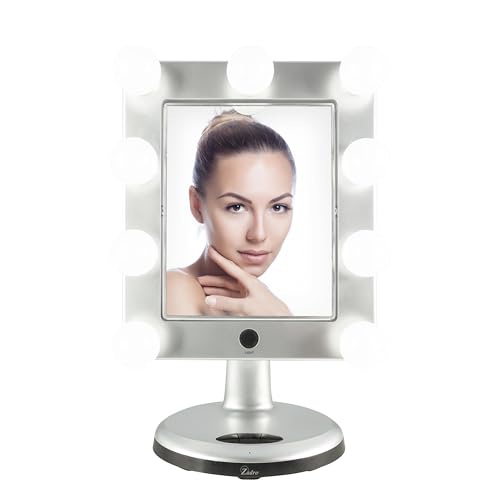
The Zadro Dual Sided Vanity Mirror is a dual-sided vanity mirror from a brand that has specialised in magnification mirrors for decades, typically finished in polished metal tones and aimed at a permanent dressing-table spot rather than travel. Zadro’s long focus on magnification shows in the details that matter: a flip mechanism that feels deliberate and glass chosen for close work. It suits someone who knows magnification is their main event and wants a mirror that treats it that way, in a finish that sits comfortably on a grown-up dressing table. Positioning: mid tier, priced by tier rather than by gimmick — check the current listing for the live figure. Best for: readers of this guide whose routine matches that shape. Not suited for: anyone whose space or habits contradict the format, however good the glass.
Fancii Mila LED Lighted Vanity Mirror
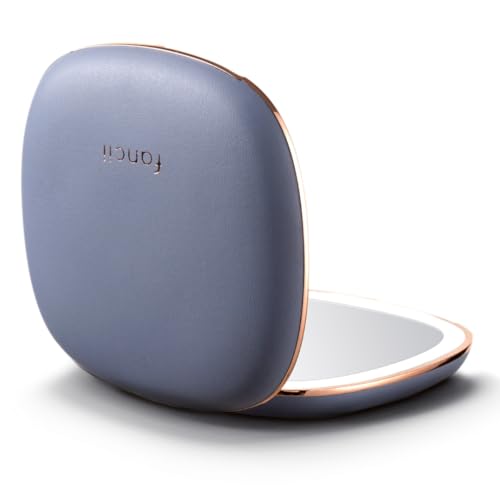
The Fancii Mila LED Lighted Vanity Mirror is a rechargeable LED vanity mirror from a beauty-tools brand known for portable, design-led mirrors, with touch controls and a clean, cord-free silhouette once charged. The appeal here is freedom from the cord. Charged, it goes wherever the light and the chair are best — a bedroom desk, a bathroom with no spare outlet, a suitcase. Touch controls keep the face of the mirror clean, and the design-led styling means it does not have to hide when guests use the bathroom. Positioning: mid tier, priced by tier rather than by gimmick — check the current listing for the live figure. Best for: readers of this guide whose routine matches that shape. Not suited for: anyone whose space or habits contradict the format, however good the glass.
KEDSUM Trifold Lighted Makeup Mirror
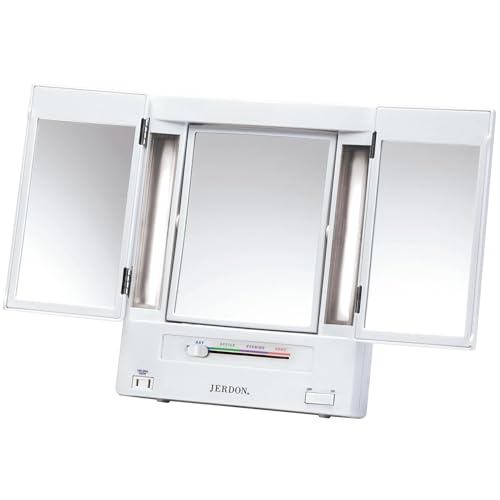
The KEDSUM Trifold Lighted Makeup Mirror is a folding three-panel lighted mirror that opens out to show your face and both profiles at once, then closes flat enough for a drawer, popular with shared bathrooms and smaller vanities. As a first lighted mirror it teaches good habits cheaply: check the front, check the sides, fold away. The centre panel does the daily work while the wings handle hair and profile days. Judge examples on hinge stiffness — the panels must hold the angle you set, not drift. Positioning: entry tier, priced by tier rather than by gimmick — check the current listing for the live figure. Best for: readers of this guide whose routine matches that shape. Not suited for: anyone whose space or habits contradict the format, however good the glass.

simplehuman Sensor Mirror
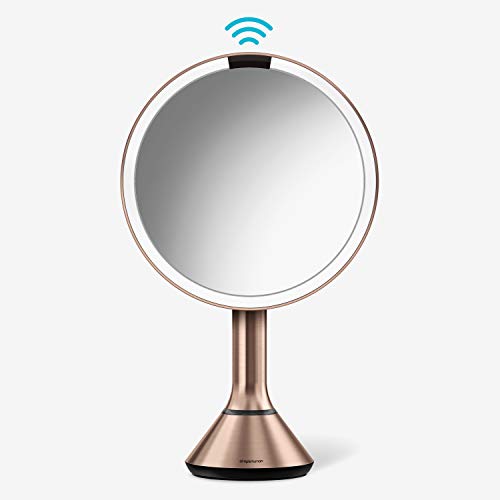
The simplehuman Sensor Mirror is a sensor-activated mirror from a design-focused home brand, built to light up as your face approaches and to mimic natural sunlight as closely as the brand can manage, in a brushed metal finish. The premium argument is light quality and effortlessness: the mirror wakes as you approach, aims to reproduce daylight faithfully, and asks nothing of your hands mid-routine. For someone who does makeup daily and values colour accuracy — matching foundation to neck, judging blush honestly — that light is the product. Positioning: premium tier, priced by tier rather than by gimmick — check the current listing for the live figure. Best for: readers of this guide whose routine matches that shape. Not suited for: anyone whose space or habits contradict the format, however good the glass.
Who Should Buy It, and Who Should Skip It
Buy the archetype if you have a vanity or a workable counter, a routine with detail in it, and light you do not fully trust. Buy it if you wear glasses, if you are setting up a first real routine, or if you rent and need the category’s benefits without touching a wall. Skip it if your counter cannot spare the footprint — go wall-mounted with a proper install, or folding. Skip it if hair styling dominates your mirror time — go tri-fold. Skip the whole category, finally, if your routine is two minutes in good light; the review’s honesty about limits applies to the category as much as to the design. The buying checklist is short: glass true under a straight edge, hinge smooth and holding, light even and neutral, base planted, cord or charge plan sensible for your room.
Setup, Care and Maintenance Essentials
Mirrors ask for little care, but the little matters. Clean the glass with a soft microfibre cloth and a light touch; harsh, gritty cleaners scratch coatings, and soaking the edges invites moisture behind the silvering, which is how the black edge freckles begin. Spray the cloth, not the mirror, so liquid never runs into the frame or the electrics of a lighted model. Dust the frame and hinges, keep the flip mechanism of a double-sided mirror moving freely, and store folding mirrors closed so the glass faces are protected. In a steamy bathroom, a quick wipe after a shower and reasonable ventilation slow the ageing of both glass and finish. Treat the mirror as a piece of optical equipment rather than furniture and it will return the favour for years.
For the wider comparisons, the cluster’s makeup mirror reviews compared page sets this archetype among its rivals, and makeup mirror pros and cons keeps the full ledger.
Final Verdict
The double-sided lighted tabletop mirror is the rare category standard-bearer that deserves the title. It is not the best mirror for every job — profiles, tiny counters and premium light all have their champions — but for the central job of a daily makeup routine it combines proximity, two scales of view and self-contained honest light in an object that asks almost nothing of your home. Buy a good example, place it at eye level, learn the flip, and it will quietly improve every morning it serves. That is as much as any tool can promise, and this one delivers it.
Skin looks different under every light it meets, and a good routine plans for the translation. Makeup applied for an office day should survive cool overhead light; makeup for an evening venue will live in warm dimness, where heavier definition reads as normal. Mirrors with multiple colour settings let you preview those translations at the vanity instead of discovering them in photographs. Use the settings as destinations, not as home: apply in neutral, preview in the venue’s setting, adjust only what the preview proves needs adjusting. The users who look consistently right in every room are rarely using different products — they are using the same products with a translation step built into the mirror routine.
Sequence matters at the mirror. Skincare first, while the plain view judges hydration and redness honestly. Base next, still on the plain side, because quantity decisions belong to the life-size view. Detail after — eyes, brows, lips — on the magnified side, in passes, with flips between. Powder and setting last, judged at arm’s length, because that is the distance the day will see. A mirror that supports this sequence with an easy flip and honest light is doing quiet choreography work. A mirror that fights it — stiff hinge, warm-only light, a base that wanders — adds seconds of friction to every transition, and friction at transitions is where routines quietly fall apart.
Evenings invert the problem. Makeup applied in bright bathroom light for a dim venue will read stronger than intended under candlelight and restaurant warmth, while makeup applied in cosy lamplight may vanish under street lighting on the way. The mirror cannot solve the venue, but a colour-setting preview — apply in neutral, glance in warm — narrows the surprise. This is a small discipline with an outsized effect on photographs, which are, in the end, where most makeup is ultimately judged by its wearer.
Cleaning the station is part of the same system. Products leak, powders migrate, and a mirror at the centre of it collects the evidence. A weekly reset — glass polished gently, tray wiped, expired products evicted — keeps the reflection honest, because a dusty mirror in a dusty station makes everything look softer than it is, including the face. The reset takes minutes and pays in judgement quality, which is the currency this entire category trades in.
A Week With the Archetype: The Diary Version
Day one is novelty: the flip delights, the light impresses, everything takes longer than usual because the tool is being explored rather than used. Day three is the honest day — the morning the light catches a foundation mismatch that the old bathroom mirror had been hiding for months, and the review’s central claim stops being theoretical. Day five is when the rhythm sets: detail, flip, verify, window, door, in a sequence that has stopped feeling like a method. Day seven is the verdict day, and the verdict is rarely about the mirror’s features at all; it is about whether the routine feels owned — seated, lit, unhurried — in a way it did not before. Products that survive to day seven as invisible infrastructure have passed the only review that cannot be faked, and the archetype, in its good examples, passes it routinely.
What Would Make It Better
A fair review names the design’s headroom. The archetype would be better with a tilt range generous enough to serve both a seated user and a standing partner without compromise, with light memory that returns to yesterday’s dimming rather than resetting to full, and with edges sealed as standard at every tier rather than as a premium courtesy. It would be better, too, if more examples treated the plain side with the same optical respect as the magnified one, since the plain side delivers the verdicts. None of these wishes overturns the recommendation; they describe the gap between a very good category standard and a perfect one, and they give buyers a sharp checklist for distinguishing the best current examples from the merely adequate.
Picture instead the slow Saturday version: nowhere to be until evening, hair to do properly, the full routine with time to enjoy it. This morning asks different things — angles for the hair, patience for the detail, light that stays pleasant company for an hour. The tri-folds and generous tabletops come into their own here, and the small compromises of footprint stop mattering because time has replaced space as the abundant resource. A household’s mirror must serve both mornings, which is why versatility — the flip, the fold, the dimmer — keeps beating specialisation in real homes, and why reviews that judge only the Saturday mirror or only the weekday mirror each miss half the truth.
Picture the guest scenario: a friend staying over, a borrowed bathroom, a routine performed in someone else’s light with someone else’s mirror — or, more often, with no suitable mirror at all. Hosts who keep a simple, decent mirror in the guest space perform a small kindness that guests remember out of proportion to its cost, and the folding and rechargeable designs serve here precisely because they ask nothing of the room. It is a minor scenario in the arithmetic of buying, but it reveals the category’s social truth: a good mirror is hospitality equipment as much as beauty equipment, and the households that understand that are the ones whose spare rooms feel finished.
The deepest mistakes in this category are errors of sequence rather than of product. Applying detail before base, so the magnified work gets disturbed by everything that follows. Judging colour before the product has settled, since creams and foundations shift subtly as they warm on skin. Finishing one eye completely before starting the other, which guarantees asymmetry, instead of alternating steps so both sides evolve together. Checking the result only in the mirror that made it, never in a second light. Each of these is free to fix and invisible in any product listing, and together they account for more disappointing mornings than any defect of glass or lamp. A good mirror supports the right sequence — flip for the alternation, neutral light for the settled judgement, a plain view for the verdict — but the sequence itself is the owner’s craft, and it improves every mirror it touches.
The camera has become the mirror’s second audience, and it is a stricter one. Photographs flatten, exaggerate contrast and report colour with a literalism the eye forgives, which is why a face that passed the mirror can fail the front camera an hour later. The mirror routine that anticipates photography adds two habits: a final check at the distance a photograph is usually taken — arm’s length, not nose-close — and a glance under the brightest light available, since flash and daylight both behave like auditors. None of this argues for heavier makeup; it argues for verified makeup, blended at the edges where cameras hunt for lines. A mirror with honest light narrows the gap between the face you approved and the face the camera returns, and for anyone whose work or celebrations live partly in photographs, that narrowing is a core feature, not a bonus.
Professional makeup artists, who work on other people’s faces under deadline, organise their mirrors by principles worth stealing. Their light is ruthless about neutrality, because a face that must survive photography cannot be built on flattery. Their working distance is fixed and repeatable, often marked by habit into the furniture itself. They check the work at multiple distances — close for detail, arm’s length for quantity, across the room for the whole effect — because each distance reveals a different class of error. And they distrust any single mirror’s verdict, cross-checking against the room’s light before declaring a face finished. A home routine that borrows even two of these habits — the fixed distance and the multi-distance check — gains most of what the professional’s setup provides, at no cost beyond attention.
Different rooms make different mirrors right. The main bathroom prizes steam tolerance, compact footprints and mounts that survive humidity and haste. The bedroom vanity prizes looks, size and the seated ritual, and forgives a cord along a skirting board that a bathroom never would. The guest room prizes legibility — a mirror a visitor understands in three seconds — and the drawer or shelf that hides it between visits. The hallway or dressing corner, increasingly where routines migrate in small homes, prizes slimness and borrowed light. When a mirror disappoints, it is worth asking whether it is a bad mirror or a good mirror in the wrong room, because the second problem is solved by a move rather than a purchase, and households routinely own the right mirror in the wrong place for years before noticing.
Ergonomics sounds like office vocabulary until you have done a full routine standing on one foot, leaning over a sink, neck craned toward a wall. The seated vanity is the ergonomic answer the category keeps rediscovering: a chair at the right height, elbows supported, the mirror at eye level, both hands free and steady. Steadiness is not a comfort luxury — it is the mechanical basis of every clean line you draw, because a hand attached to a strained body trembles at exactly the frequencies eyeliner punishes. If your space allows only standing, the swing-arm mirror is the ergonomic compromise, floating the glass out to meet you so the lean shrinks to a tilt. Judge every setup by a simple test: at the end of the routine, do your neck and shoulders feel like they were present? If they feel like they were working, the setup — not your technique — is the first thing to fix.
Durability, Projected
A review of a mirror that will be flipped twice a day for years owes the reader a durability projection, and the archetype’s is favourable precisely because its mechanism is simple. The flip bearing and the tilt joint are the wear points; in good examples both are metal, generously sized and replaceable in feel — smooth on day one and designed to stay that way. The glass, kept from scouring and edge-soaking, does not degrade on any timescale a household plans in. The light is the honest uncertainty: rechargeable cells tire over years, cords chafe where they are pinched, and a review that promised otherwise would be guessing. The practical reading is that the archetype’s mechanical life exceeds its electrical life, and buyers who weight longevity highest should lean corded and simple, accepting the outlet’s leash as the price of the longest service.
The Competition’s Best Arguments, Answered
Each rival’s strongest claim deserves the review’s direct answer. The wall arm says: your counter back. True — and if the counter is the scarcest surface in your home, that claim wins and this review’s archetype should lose your purchase. The tri-fold says: your profile, your hair, your angles. True — and routines that are half hair should follow it. The premium sensor mirror says: light as it should be, without lifting a finger. True — and daily colour-critical users should pay for exactly that. The archetype’s claim is narrower and, for the central routine, decisive: both scales of view, self-contained light, no installation, no commitment, at the tier most households can justify without a debate. A review that pretends one design wins every argument is selling; this one would rather hand you the arguments and let your routine referee.
Bathrooms are hostile environments for optics. Steam condenses on cool glass, moisture hunts the edges of the silvering, and the daily cycle of fog and dry repeats for years. A mirror that lives over a sink should be chosen and treated with that climate in mind: sealed edges, finishes that shrug off humidity, and ventilation doing its share — an extractor fan or an open door after showers slows the ageing of everything in the room, mirrors included. The fog itself has workarounds, from warming the room before a shower to the simple patience of doing makeup after the air clears, and many routines migrate to a bedroom vanity for exactly this reason. None of this is a reason to fear a bathroom mirror; it is a reason to buy one built for the climate it will actually live in.
Shape is partly taste and partly optics. Round and oval mirrors soften a room and centre the face pleasingly, which is why they dominate dressing tables; their working area concentrates in the middle, so a round mirror needs a little more diameter than a rectangular one to give the same usable width at the edges. Rectangular mirrors maximise usable area for their footprint and suit shared use and hair work, where width at the edges is real working space. Frameless designs disappear into modern rooms and clean easily; framed designs protect the glass edges — the most vulnerable part of any mirror — and carry the room’s style. There is no optical champion here, only honest trade-offs between area, protection and looks, and the right answer is the one whose compromises you will never notice because they match your habits.
The mirror’s constituency is wider than makeup. Precise shaving — the jawline, the neck, the edges of a beard — is detail work of exactly the kind magnification and frontal light serve, and a shared vanity mirror often ends up serving two routines that both thought it was bought for the other. Skincare inspection, contact lens handling, tweezing, even the humble check for spinach in the teeth before leaving: the mirror is really a close-work station for the face, and households that buy it under that description argue about it less and use it more. If the purchase is being debated at home, reframing it as shared equipment rather than a beauty luxury is not spin — it is an accurate description of how these mirrors actually live.
Travel exposes what a home mirror quietly provides: light that exists, at a height that works, in a room you control. Hotel bathrooms offer none of these reliably, which is why frequent travellers develop mirror opinions out of proportion to the object’s size. A folding travel mirror with its own light and moderate magnification is insurance against the worst-lit bathroom in the itinerary, and it earns its luggage space on business trips and event travel where the face is part of the work. At home, the same folding design often becomes the second mirror — the guest room’s, the teenager’s, the one that lives in a drawer. Judged as insurance rather than equipment, travel mirrors should be bought for protection and battery manners first and optical ambition second.
Mirrors are among the safest secondhand purchases in the home, because their virtues are inspectable and their failures announce themselves. Glass can be tested on the spot with a straight edge and a white card; hinges and arms confess their condition to one working of the mechanism; finishes show their history honestly. The cautions are electrical and structural: a secondhand lighted mirror deserves a careful look at its cord, plug and charging port, and any sign of heat damage or amateur repair ends the negotiation; a secondhand wall mirror deserves new fixings rather than trust in whatever screws arrive in the bag, and its mount in your home should be planned as fresh work into your studs or your anchors. Bought with those two cautions, a used mirror is the category’s quiet bargain — yesterday’s premium tier at tomorrow’s entry price.
One aspect this review has deliberately weighted, and readers should know it: the archetype was judged as a tool for the routine as it is actually lived — timed, tired, occasionally interrupted — rather than as an object of contemplation. Under contemplation judging, the premium rivals gain, because their materials and theatre reward attention. Under lived-routine judging, the archetype’s instant readiness, forgiving flip and absence of ceremony gain, because a tool that must be admired before use loses seconds it never repays. Neither judging is wrong, but they produce different winners, and a review owes its readers the disclosure of which one governed. If your mornings are closer to contemplation — unhurried, ritualised, pleasurable in themselves — weight the premium end of the comparisons above more heavily than this verdict does. If your mornings are a launch sequence, the archetype’s score stands as printed.
Scores, then, in the only currency this review trades in. For detail work, the archetype earns its keep completely — the flip-and-magnify system is the best tool the category offers at its tier. For colour judgement, it earns it exactly as far as its light is honest, which in the good examples is far. For space, it spends more than its rivals and must be forgiven knowingly. For durability, its simplicity promises years and its electrics set the limit. For value, it sits where the category’s value has always sat: in the middle tier, in the plain design, used daily. A reader who recognises their routine in those five sentences has the whole review; the preceding pages were the evidence, and evidence, unlike verdicts, can be re-weighed by every reader who arrives with a different morning.
It remains only to say what would change this verdict. A rival design would have to match the archetype’s flip-and-verify ease, beat its light honestly, and ask less of the counter — all at a comparable tier — before the recommendation moved. Nothing in the current field does all three at once, which is precisely what being the category standard means. Until one does, the verdict stands, and it stands for the unglamorous reasons this review has spent its length on: proximity, honesty and a hinge that simply works.
Under the Surface: The Makeup Mirror Details That Decide Long-Term Satisfaction
Listings present a makeup mirror at its best, so this section slows the assessment down and looks at the evidence an individual model offers: its construction, its finish, its listing detail and the checks you can run before and just after it arrives. The aim is a verdict based on inspection rather than impression.
Start With Your Space and Your Routine
A return is easiest when you have kept the packaging until you are sure, so give the makeup mirror a fair trial period in its real position before you break down boxes and dispose of padding. Take a break between shortlisting and ordering if you can, and return to the listings with fresh eyes, because fatigue makes almost any makeup mirror look acceptable late in a long search. Dust, moisture, sunlight and heat each age Beauty & Personal Care items in different ways, so match the finish and material of the makeup mirror to the conditions of the room or outdoor spot it will occupy. Do not let a single impressive feature distract you from a basic mismatch in size, capacity or care needs, since basics decide satisfaction long after features stop being novel.
When you examine a makeup mirror in detail, work from the largest element to the smallest, checking overall proportions first, then construction, then finish, and only then the small features sellers emphasise. If two options look nearly identical, compare the parts you will touch every day, since those contact points decide whether a makeup mirror feels solid or flimsy after the novelty wears off. Apply the same checks to each shortlisted example, whether that is the Fancii Mila LED Lighted Vanity Mirror; the KEDSUM Trifold Lighted Makeup Mirror; the simplehuman Sensor Mirror, because consistent testing is what makes the differences between models visible. A makeup mirror that fits on paper can still fail in daily use if a doorway, a corner, a cupboard door or a walkway cuts into the space it needs, so trace the full path from delivery to final position.
When Small Problems Appear
Plan where the packaging and any old item being replaced will go on delivery day, a small step that prevents a rushed, careless first setup of the new makeup mirror. Compare how each option handles the in-between moments, such as being half full, partly open, moved aside or used in a hurry, because daily life happens mostly in those moments. Finally, judge the makeup mirror against the life you actually lead this year, not the tidier or more ambitious life in the listing photographs, and the choice will usually make itself. If the makeup mirror will be seen every day, its proportions matter as much as its function, so hold the listing dimensions up against a familiar piece nearby to judge the visual weight honestly.
Measure the space where the makeup mirror will live, including the clearance needed to use it, move around it and clean behind or beneath it, and keep those numbers beside you while you compare options. Pay attention to how the makeup mirror is described for the parts you cannot see, and treat vague language there as a reason to ask questions rather than as reassurance. Read the listing for what it does not say as carefully as for what it does, because missing information about materials, assembly or care is itself a useful signal when you compare makeup mirror options. Households with children or pets put different demands on a makeup mirror than the listing photographs suggest, so judge edges, stability and cleanability against your real household, not a styled one.
Look for the detail photographs in the listing, not just the wide shots, and zoom in on edges, joints, fasteners, controls and finishes, which is where build quality usually shows itself first. If the listing offers accessories for the makeup mirror, decide which ones solve a problem you already have, and set aside the ones that only solve problems the listing itself invented.
A Short Decision Checklist
- The one feature you will not compromise on
- Where the makeup mirror and its accessories will be stored when not in use
- How the makeup mirror will be cleaned in an ordinary week
- What your current arrangement does badly that the makeup mirror must fix
- The material and finish, matched to light, moisture and wear in its spot
- What your current arrangement does well that the makeup mirror must not lose
- Who will use the makeup mirror most, and any limits they have
- The main job the makeup mirror must do, written in one sentence
Taken together, these checks take only a little time, yet they answer the questions that decide whether the makeup mirror suits your home, your household and your routine, and they do so before money changes hands rather than after.
Frequently Asked Questions
Is a makeup mirror better than a regular bathroom mirror?
For detail work, yes; for an overall check, they are equals. A bathroom mirror shows the whole face at life size and remains the honest final judge, but it fixes you at sink distance under whatever light the room happens to have. A makeup mirror moves the reflection to you, adds magnification for close tasks and, in lighted versions, brings its own even light. Most good routines use both: detail at the makeup mirror, verdict at the bathroom mirror before leaving.
Why does my makeup look different in daylight than in my mirror?
Because light is an ingredient in every colour judgement, and your mirror’s light differs from the sun’s. Warm bathroom light flatters skin and hides mismatches; step outside and foundation lines, blush strength and undertone errors announce themselves. A neutral, daylight-leaning mirror light narrows that gap, which is its entire purpose. The practical routine: apply under your mirror’s most neutral setting, then do a final check near a window before leaving. If the two disagree, believe the window and adjust the mirror habit — the daylight check is the one the world will grade.
Do I need magnification if I wear glasses?
Quite possibly — glasses are exactly why many people discover magnified mirrors. Eye makeup requires removing the glasses, and without them the plain mirror may sit outside your clear focus range. A magnified side brings the detail back into reach. Choose the strength by sitting at your real vanity distance and testing, not by ordering the strongest available: too much magnification shrinks the visible area and shortens the working distance uncomfortably. Pair it with strong, even light, since light and magnification solve the same problem together better than either does alone.
How do I clean a makeup mirror without damaging it?
Spray a soft microfibre cloth, never the glass itself, and wipe gently. Liquid sprayed directly runs to the edges, where it can creep behind the silvering and start the black freckling that ruins old bathroom mirrors. Keep gritty or abrasive cleaners away from both glass and frame finishes, unplug a lighted mirror before cleaning around its switch or cord, and never soak any part of it. A quick wipe after steamy showers slows moisture damage. Five gentle seconds after use beats an aggressive scrub every few months.
How long should a makeup mirror last?
A well-made one should last many years — glass and hinges have no natural expiry. What ages mirrors is environment and handling: steam creeping into unsealed edges, abrasive cleaning, knocks to the frame, and, in lighted models, batteries and charging habits. A mirror kept in a dry bedroom typically outlasts the same mirror over a steamy sink. Buy sealed edges, metal where parts move, and a finish suited to your room’s humidity, then clean gently and keep mounts checked. Treated that way, a makeup mirror is closer to furniture than to a consumable.
Where should a makeup mirror go in a small bathroom?
Where it steals the least counter and borrows the best light. A wall-mounted swing-arm design frees the sink entirely and folds back when not in use, but it needs a stud or properly rated anchors and a clear swing path. If drilling is out, a slim tabletop or a folding tri-fold that lives in a drawer keeps the counter clear. Face the mirror toward the room’s best light where you can, keep cords out of the sink and off wet surfaces, and check that cabinet doors clear whatever you install.